Feeds:
Posts
Comments

SOUNDTRACK: CRASS-Christ: The Bootleg (1989).

I had heard about Crass as being a political force to be reckoned with–they formed an anarchist commune that worked with other artists and on behalf of political causes.  So why not start with a CD that says on the cover: “Suggested Retail Price $4.98.”

So I bought this CD before hearing anything else by them.  It’s a live recording from 5.2.1984, and it’s a noisy muddled mess.  You can hear occasional words in the noise (although most of the clearest things are soundbites from the likes of Thatcher and other politicians).  These surround the songs which are mostly just noisy distorted guitars (more because of the sound quality of the recording I believe).

I’ve obviously never seen Crass, but this bootleg suggests that they were a visceral force (there’s so much screaming!).  There are a few moments of clarity where you can hear their anti-establishment lyrics, but for the most part this is a terrible place to discover Crass.

I suppose if you know the band, it’s a worthy addition, but I have to assume the proper albums sound better and make more of an impact.

[READ: Week of July 9, 2010] Letters of Insurgents [Sophia’s Fifth Letter]

This week’s reading comes from Sophia.  Her letter was nearly 80 pages long, so we get her POV exclusively.

Sophia’s tone has changed yet again. This time, it’s summed up when she dismisses Yarostan’s comparison of her life in the garage (and more about that soon) with his experiences during Magarna:

The only similarity between your experiences during the Magarna uprising and my experiences in the garage is that they both began at the same time.  But I’ll let you be the judge of the similarities and the differences; you’ve scolded me enough for my comparisons and contrasts (338).

Sophia opens with two surprises: she was just in jail and Tina has left their house.  [The way it’s worded: she is “no longer with us” (331) was rather a tease.] Continue Reading »

SOUNDTRACK: BISON B.C.-“Two Days Booze” (2010).

Bison B.C. are a hardcore metal band from Vancouver.  I was surprised to hear them on CBC Radio 3, but that’s one of the great things about the online radio station: the diversity is amazing!

Bison B.C. is heavy with growling vocals that I didn’t understand at all.  In between bombastic notes, they had include some guitar riffs that broke the bombast.  The biggest surprise comes at around the 4 minute mark (quite a long song for the genre, although it seems that all of their songs are at least 5 minutes) when the song slows down to a few single notes (and a quiet bass). That’s when the choir (?) of male voices sings an Oh, oh section.

I listened to a few songs from their earlier discs, and it seems that they are going in a far darker direction with this new one.

[READ: June 30, 2010] “Kierkegaard Unfair to Schlegel”

Before I start let me say that this article was my first chance to plumb the depths fo the New Yorker online (subscriber back issues services) and it’s really awesome.  I printed out some great looking ads from the fifties and sixties!  I also enjoyed looking at the very first issues of the magazine.

This short story article was bandied about among David Foster Wallace fans as being a pioneer for Brief Interviews and other DFW stylings.

It opens with an answer to a question, which appears to be a therapy session. And it’s quite funny.  But from there, the story gets broken down into several sections. Each one is more Q&A (except the 4th one which is just a series of Qs. Continue Reading »

SOUNDTRACK: PDF FORMAT-“Waiting for M1D1 Interface”

I cracked up at the name of this band: PDF Format.  And then I heard the music, which sounds pretty much like what a PDF might sound like if you tried to play it in iTunes.  It is one of the most over the top electronic sounding songs I’ve heard in a long time.  It’s very processed, very retro and surprisingly catchy.

It’s an instrumental, it’s pretty long and it has three distinct sections, the third of which is very pretty and, while synthy, is not really electronic sounding at all.  Other songs, which are not instrumental include “Report on Water” which is a fascinating mix of crazily processed vocals (like an old computer voice) and very analog vocals.  Again, very catchy once you get passed the oddness of the processed sound.

I just listened to the wonderfully titled “SYSTEM OVERRIDE /// EROROOEROO ($($” which rocks and is catchy and very cool.  Initially I wasn’t all that impressed by this guy, but after a few listens, it’s really great.  And good luck searching for them online…with those song titles and that band name, you’ll be amazed at all the weird things that come up.

[READ July 6, 2010] “The Kid”

This was a confusing story.  I’m not sure what it was that confused me so much, whether it was the character names, the fact that it started with one character and then focused on another or just the fact that the “kid” in the story is deliberately trying to confuse people.

It opens with a kid in an airport.  No one knows what language he speaks, and although they try many different ones, he simply doesn’t answer or respond to anything they say.

The story then jumps to follow Elroy Heflin, an American solider assigned to Latvia.  While in Latvia, he begins dating a woman named Evija.  He is deployed elsewhere but finds himself sending money to her to support their son Janis, whom he never sees. Continue Reading »

SOUNDTRACK: SHAD-“The Old Prince Still Lives at Home”(2007).

Canadian rapper.  Oxymoron?  Not at all.  I had heard about Shad from CBC Radio 3.  The single, “Yaa I Get It” is fantastic.  And I have ordered his new CD TSOL based on it.  (No idea what TSOL stands for).

CBC Radio 3 contains a whole bunch of tracks from his first two discs.  His music is kind of slow and loping, but it’s his lyrics that are really fantastic.  He’s clever, funny and very thoughtful.  “Yaa I Get It” has this opening couplet: “Maybe I’m not big, coz I don’t blog or twitter, heh, not that I’m bitter.”  Or this amusing couplet from “I Don’t Like to”  “I don’t really like to start verses with I you  know, but… iTunes eyepatch, I’m in the same boat where the pirates be”

This earlier album sounds a bit more R&B to me, but there’s a few really great tracks on it.  “The Old Prince Still Lives at Home” reminds me of the Fresh Prince’s style (a comical look at the waste of time that is the dentist).  But he takes it a step further when, midway through the song the music stops.  Shad explains that he couldn’t afford the whole beat.  And they just “have to vibe with it” until the end.

It’s a bit gimmicky, but he’s right, the track is really strong.

[READ: July 4, 2010] “Dayward”

The photo opposite this story is of a terrifying Rottweiler bearing its fangs.  I mention this because it is so striking (the other stories mostly had drawings to accompany them.  This photo is also scarily appropriate for the story, which is about two young slaves escaping from their master.  The kicker is that slavery has already been outlawed, but who says the masters have to let them go peacefully?

When Lazarus told his mistress that he and his sister were going to reunite with their family in New Orleans, she told them that they would have half a day’s start and then she’d release the dogs on them.  Evidently she wasn’t joking. Continue Reading »

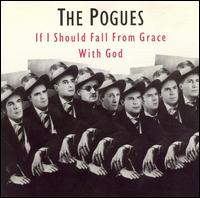
SOUNDTRACK: THE POGUES-If I Should Fall From Grace with God (1988).
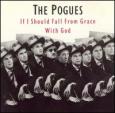
So the cover of this album has James Joyce on it (and a hilarious pastiche of the rest of the band).  I guess we know what we’re in for, then.  This is the Pogues third album and the one that tamed the wildness of their first shambling discs into a (somewhat) presentable collection of songs.  And, jaysus, it’s fantastic.

The Pogues seamlessly blended punk and traditional Irish music (and on this disc they expanded into latin & middle eastern motifs too).  The first track opens with a fast paced Irish whistle playing what is pretty darn close to a jig.  And then Shane MacGowan (whose teeth are not to be believed–or if you are lucky, not to be seen) sings his slurred, fantastic lyrics.  MacGowan always presented such a contradictory figure for this band of well dressed resctable players.  And it’s often confusing wondering how he became the front man of this band.  But he adds that certain something to make the band unforgettable.

“Fairytale of New York” is one of the most gorgeous, sad Christmas anthems ever.  It’s a duet with the much missed Kirsty MacColl and it’s moving and charming, even with the lyrics: “you scumbag, you maggot, you cheap lousy faggot, happy Christmas me arse, I pray God it’s our last.”

Then you get a crazy instrumental, “Metropolis” fast paced, manic energy and a great riff (and of course, let’s not forget the quoted musical passage too).

What’s surprising is when you get a tender ballad like, “Thousands Are Sailing.”  Lyrically it is stunning, and you wonder why is Shane singing it with that slurry voice of his.  And then you realize it works perfectly as a drunken lament.  And then you get to the chorus, and you stop caring and just enjoy the song.

They even throw in a couple of traditional songs, like “South Australia” and “Medley” (which incorporates “Rocky Road to Dublin.”)  But after “Fairytale,” I think my favorite track is “Fiesta” which is a Spanish/Mexican sounding song with loud horns and absurd faux Spanish lyrics.  Ole!

And, just so we know, it’s not all drinking and rollicking, Shane also wrote “Birmingham Six.”  “There were six men in Birmingham / In Guildford there’s four / That were picked up and tortured / And framed by the law / And the filth got promotion / But they’re still doing time / For being Irish in the wrong place /And at the wrong time / In Ireland they’ll put you away in the Maze
In England they’ll keep you for seven long days”

The Pogues would release two more albums before Shane MacGowan took off. And they’re all pretty darn good, but I’ve always been partial to this one.

[READ: Week of July 12, 2010] Ulysses: Episodes 1-3

This is my third time reading Ulysses.  The first time I was a freshman or sophomore in college and I signed up for a James Joyce class because, get this, the Canadian band Triumph had released a CD called Thunder 7 which was supposedly based on the 100-letter words in Joyce’s Finnegans Wake (which I had bought and found impenetrable).  Our teacher was intense and tried to scare everyone off (which worked for some, but not me).  The class was hard (first assignment : read The Odyssey over the weekend for a quiz on Monday).  I enjoyed Dubliners and Portrait of an Artist as a Young Man, but I thought Ulysses was pretty daunting.

I read it again when I re-took the class with the same teacher (not for credit this time, but because I wanted to, imagine that).  And that time I learned to really appreciate what Ulysses had going on for it.  I was also inspired by it to try to write challenging fiction, paying careful attention to every single word, and even possibly using different writing styles in the same book.  (The world appreciates that that never panned out).

But so the careful attention thing: Joyce spent seven years working on Ulysses.  Every single word was charged with meaning.  He even made up his own words.  And it’s very apparent that he was the inspiration for countless modern authors (for better or worse).

I’m excited to pick the book up again.  In part, because it was ranked number 1 on the MLA list of books, but also because for twenty-some years I’ve felt the book was fantastic.  And I wanted to see if I would enjoy it without guided instruction.

I was curious about which edition to read.   Since my class, when there was only really one edition available, many many editions have been published.  There’s a great discussion about this at Infinite Zombies, and I considered getting the third one Judd mentions.  But when I consulted with my old professor, he said the Gabler edition is still the best, so I went with that one.  And that edition is littered with all the notes I took from class and from the supplemental resources.

I decided not to read the supplemental resources this time (although I can;t help but look at my notes), to see what I can get from the story AS A STORY.

I remember a bunch from the class, but one thing that I distinctly remember is that to get everything out of Ulysses, you need to understand Catholicism (the mass in particular), The Odyssey, European history–especially Irish history, and popular Irish culture circa 1920.  It also helps to know Latin.  And these are all things that Joyce would have known and his audience probably would have known.  Every year we move away from its publication, means we know less about what he was writing about.  But that’s all the little details and jokes and blasphemies.  I wanted to see (with some background, which certainly gives me an advantage) if I could enjoy the story without all the help.

So… Continue Reading »

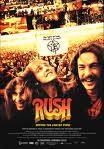
[WATCHED: July 11, 2010] Beyond the Lighted Stage

I had heard about this film around the time that I read .  I was pretty excited about it, and then evidently everyone I know went to the TriBeCa Film Festival and saw it (except me).  And then everyone saw it on VH1 (except me), so I bought the DVD instead.

This film is really fantastic.  Obviously, it helps if you’re a Rush fan, but Geddy and Alex in particular are funny and interesting (even if they think they are boring).  And the film is expertly edited.  They cover 40 years of Rush’s history in 90 minutes.  This leads to a rather cursory look at their history, so the film doesn’t get mired in details, but there are tidbits of fun for die-hards. Continue Reading »

SOUNDTRACK: THE SALTEENS-“Frequency” (2010).

I immediately enjoyed the poppy sensibilities of The Salteens. And I knew I’d want to listen to them on CBC Radio 3 again.  There are quite a few tracks available online there.

This one comes from their new EP, Moths.  A little research shows that they’ve actually been around for quite awhile and even appeared on Yo Gabba Gabba! (early 21st century’s badge of coolness).  It is very poppy, features male/female duet vocals and is immensely catchy.

It’s so catchy, in fact that I played their CBC radio songs over and over.  While I liked some better than others (I wasn’t too keen on “Sunnyside Street”), their twee pop was so joyful that I found myself singing along.  They are definitely twee, but not treacly, and in that respect that are very indie sounding (like a less bummed out Death Cab for Cutie or an early Cardigans).

Their arrangements are always pretty simple, but they range from guitars to keyboard to horns (“Nice Day” is almost all drums with the simplest piano and occasional horns).  And it contains the humorous couplet: “I know you think that I’m gay, but I just play the part”

[READ: July 5, 2010] “Lenny Hearts Eunice”

I’ve really enjoyed Shteyngart’s novels, so I was pleased to see him included in 20 Under 40.  This short story is set in another of his future dystopia, complete with a shlubby main character.

It opens with the obvious (yet very satisfying in this case) technique of a diary entry.  This works really well because the narrator is so strong (not physically) and quirky.  Lenny begins this diary because he is in love with Eunice Park, a young Korean woman with whom he shared a moment (and later an intimacy).  And he intends to win her over.

Lenny is a Research Coordinator of the Post-Human Services Division of the Staatling-Wapachung Corporation, a corporation bent on making everyone (especially its employees) immortal.  Of course, since Lenny is an older, out of shape nebbish, who has just spent a year in Rome gorging on carbs, his future looks bleak.  Rome is where he met Eunice by the way. Continue Reading »

SOUNDTRACKDEAD KENNEDYS-Fresh Fruit for Rotting Vegetables (1980).

Punks often marry politics to their music.  And none moreso than the Dead Kennedys.  I found out about them around the Frankenchrist album, but it’s this one that introduced Jello Biafra to the world.

What I loved about the Dead Kennedys is that they set out to offend everyone–unless you actually listened to their lyrics. The first track, “Kill the Poor” seems like it a horrifying encouragement to do just that, but if you read the lyrics: “Efficiency and progress is ours once more/Now that we have the Neutron bomb/It’s nice and quick and clean and gets things done/Away with excess enemy/But no less value to property/No sense in war but perfect sense at home.”   As was recently commented, Dick Cheney may have seen the sarcasm there.

“Let’s Lynch the Landlord” is a song that Sophia and Yarostan could get behind: “I tell them ‘turn on the water’/I tell ’em ‘turn on the heat’/Tells me ‘All you ever do is complain’/Then they search the place when I’m not here.”

The biggest track of the disc was “Holiday in Cambodia,” a song so catchy that Dockers actually asked to use it in a commercial (!).  Cause nothing sells jeans like: “Play ethnicky jazz/To parade your snazz/On your five grand stereo/Braggin’ that you know/How the niggers feel cold/And the slums got so much soul.”

The thing that I especially liked about the DKs was that although they played hardcore (some brutally fast and crazily short songs), they didn’t limit themselevs to just that.  They had actual guitar riffs, they tinkered with styles and genres (surf and rockabilly among others), and they even slowed things down from time to time (all the better to hear the lyrics).

Even if the band disintegrated into lawsuits, it’s fair to say that they inspired plenty of kids to take an interest in what was going on around them.

Pol Pot.

[READ: Week of June 25, 2010] Letters of Insurgents [Yarostan’s Fifth Letter]

Because Sophia’s letter is very long, this week it’s only Yarostan’s letter for Insurgent Summer.  It opens with Yara annoyed about the tone of Sophia’s letters and her surprise that Yarostan is so quick to want to open the latest one.   But indeed, Yarostan feels compelled to apologize for “the way I treated your earlier letters.  I did treat you as an outsider, as a person with whom I couldn’t communicate about my present situation.  I was wrong” (283).  [It’s very nice of him to admit that he was wrong].  But that doesn’t mean that he is going to lighten up in his discussions with Sophia: “it seems to me that …critical appreciation is not an expression of hostility but is at the very basis of communication and friendship” (285).  Mirna also chimes in (with rather high praise):

Sophia is a born troublemaker, just like Jan and Yara.  She shares Jan’s recklessness as well as his courage.  I’m glad for her sake that she was taken away from here even if her emigration caused her some pain.  There’s no room here for people like that.  If she’d stayed she would have disappeared years ago in a prison or concentration camp (283). Continue Reading »

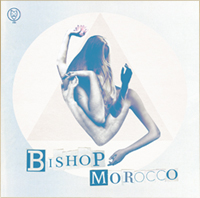
SOUNDTRACK: BISHOP MOROCCO-“White City” (2010).

I’d never heard of Bishop Morocco.  Then they played this song on CBC Radio 3.  “White City” is a fascinating confluence of influences.  It sounds somehow late 80s/early 90s yet the the electronic drum sound is decideldy retro, early 80s.

The guitars are heavuily vibratoed.  As are the vocals.  It’s a surpiringly full sound given the limited instrumentation (it’s pretty much guitars and drums).  And it’s quite gloomy (circa The Cure’s Pornography), and yet once the chorus kicks in (still vibratoed, but now major chords) the song perks up (some).

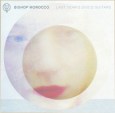
The CBC site has 4 songs by them, and each one confirms that the early New Order/Cure sound is what they’re shooting for.  The cover of their EP “Last  Year’s Disco Guitars” really seems to encapsulate their sound (more so than their album cover does).  I enjoyed the song but after a few listens, I grew kind of bored by it.

[READ: July 4, 2010] “The Entire Northern Side was Covered with Fire”

Rivka Galchen is a completely new author to me.  This was a weird little story that I enjoyed quite a lot, because even though it seemed to be all over the place, narrative-wise, it was actually quite focused.  The narrator is an author who has a burgeoning fan base: male prisoners, who write letters. But of equal importance is that at the time that she sold her movie, her husband had just left her.  Out of the blue.

Although perhaps not out of the blue.  Because in a very humorous (darkly humorous) bit, we learn that all of her friends knew of her husband’s site: i-can’t-stand-my-wife.blogspot.com.   Continue Reading »

SOUNDTRACK: QUICKSILVER MESSENGER SERVICE-Quicksilver Messenger Service (1968).

For me, QMS have always been mythical–like a unicorn or a gryphon–I had no real proof that they existed, but I have seen glimpses.  I think that this record, along with Steely Dan’s Aja and all of the records of Lee “Scratch” Perry were on every first page of every Columbia House ad and catalog ever.  And yet, I had never heard them or known anyone who listened to them.

Well, thank you vacation house iPod!  The first QMS album was here and I got to listen to it!  All these years I assumed that QMS, with that weird name were some kind of southern rock band like Molly Hatchet or Badfinger.  Boy was I wrong!  They are steeped in the psychedelic sounds of the late 60s (their lead singer even wrote the sixties’ anthem “Get Together”–although he never recorded it).  Much of the story about the band seems to involve the main guy’s drug bust which kept him, well, out of the band.

But anyway, the music sounds not like Jefferson Airplane, and other psychedelic bands of the era.  But I think mostly it’s the recording style more than the music (lots of echo and reverb and very tinny guitars) that keeps that sound together.  It’s a sound that I like in small doses (and in big hits) but one which I don’t enjoy a lot of–it seems like if I’ve heard it on classic rock radio, then I like it, otherwise, not so much.

The disc has a couple of long instrumental sections which are interesting.  The 12 minute “The Fool”, in particular is home to lots of exploration.  But it feels like they didn’t go far enough since none of the songs are fully instrumental.

Nevertheless, it’s nice to finally know what the band sounds like; maybe it would have been a penny well spent.

[READ: July 3, 2010] “What You Do Out Here, When You’re Alone”

This story begins in medias res.  We know that something has happened, that Max calls it the Accident and that his wife doesn’t.  Max’s wife Lilli was disliked by his brothers (they’d even had an intervention, trying to convince him to dump her), but Max was always defending her, so that was no big deal.  She always acted like she didn’t care what anyone thought of her.  Until they moved to the Oaks, when she became Martha Stewart in an attempt to fit in with everyone else.  Max didn’t try to fit in.

But that has nothing to do with the accident.  Rather, the accident concerns their son, Harley.  He did not adjust to the Oaks well at all, and he goes off and gets into trouble and has, well, an accident.  Lilli blames Max, and Max has been stuck in inertia for three weeks since it happened.

The story starts out confusing but intriguing.  The confusion was deliberate, I believe; the reader knows very little of what is going on with this accident, even when all the details are revealed.  And yet it’s the glimpses of the hidden information that keep you riveted.  Especially as more details, more horrible details, come to light. Continue Reading »