Feeds:
Posts
Comments

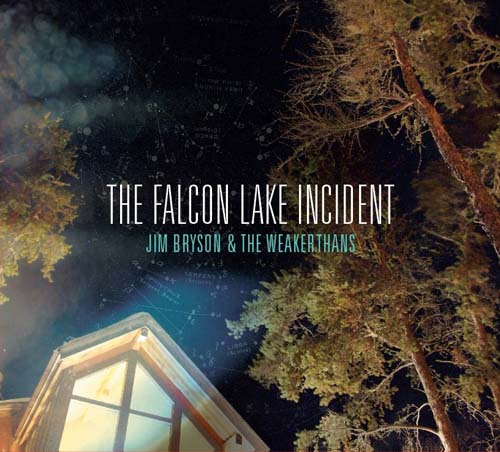
SOUNDTRACK: JIM BRYSON & THE WEAKERTHANS-The Falcon Lake Incident (2010).

I don’t know who Jim Bryson is (he’s a Canadian folk singer, duh), but I do know The Weakerthans.  And since this CD is always listed in The Weakerthans’ discography, I thought it was worth investigating.

All of the songs have a Weakerthans feel, there is no question (I mean, they play all the music).  And while I like the album quite a lot, I feel like without John K. Samson’s voice, the disc is missing something.  Nevertheless, the album is a wonderful folky album, a great mix of upbeat and slow tracks.

“Metal Girls” is a wonderful upbeat folk rocker.  It’s incredibly catchy.  “Fell Off the Dock” is a much slower, sadder song with the final repeated line, “everybody loved it here, but you.”  “Wild Folk” ups the tempo again.  “Constellation” is another slow song, this one with beautiful harmonies.

“Freeways in the Frontyard” has even better harmonies, from Jill Barber–a kind of minor key harmony that works very well.  “Up All Night” is another more uptempo track that could easily be an adult alternative hit.  “Kissing Cousins” is a slight track that seems like it should be funny but isn’t really.  “Decidedly” is one of my favorite tracks on the disc.  It’s boppy with a fun chorus: “Why would you ever grow leaves just to watch ’em fall off again.”

The first and last tracks feel more like filler or intro/outro than real songs.  But that’s okay.  It’s a tidy little album of very pretty songs.  And the tempo changes keep everything interesting for half an hour or so.  You can’t complain about that.

And in case you were wondering, the Falcon Lake Incident is a reported UFO encounter near Falcon Lake, Manitoba, Canada claimed to have occurred on May 20, 1967 (thanks Wikipedia).

[READ: January 19, 2012] “Happy New Year”

Of course, I wish I had read this article earlier in the month, but then I only found out about it a couple of days ago.

This is an article (I assume from the editor of The Lotus Magazine) which bemoans the loss of the New Year’s Day tradition of going to (pretty much) anyone’s house for meals and snacks and drinks and good times.

The article states that it may have been about 35 years ago (circa the 1880s) that the Dutch custom was abandoned.  Before then, people in New York City would throw open their doors and it was:

a breach of etiquette to omit any acquaintance in these annual calls, when old friendships were renewed and family differences amicably settled.  A hearty welcome was extended even to strangers of presentable appearance.

Indeed, it seems that certain houses were known for:

particular forms of entertainment.  At one was eggnog; at another, rum punch; at this one, pickled oysters; at that, boned turkey, or marvelous chocolate, or perfect Mocha coffee, or, for the connoisseur a drop of old madeira, as soft as rainwater and as delicate in flavor as the texture of the glass from which it was sipped. Continue Reading »

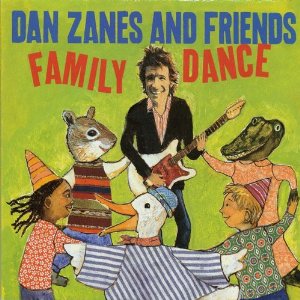
SOUNDTRACK: DAN ZANES-“Wonderwheel” (2002).

This track comes from Zanes’ Family Dance album and from the For The Kids compilation.

Dan Zanes is a wonderful troubadour of kid’s folk rock.  The funny thing about many of his songs, like this one, is that it’s not really a kid’s song–there’s nothing about the lyrics that says “only children will like this.”  It’s just a generally happy song that is safe for all ages.

The song opens with a simple accordion melody and is about riding a wonderwheel (I’m not sure what that is actually–a ferris wheel?).  The melody is great and there’s a nice female vocal harmony.  The song reminds me of a poppier, happier version of a Richard and Linda Thompson song.  It feels olde, like a classic song that people have been singing forever, and yet it’s brand new.

Dan Zanes is going to be playing a show around here in February and I’m pretty excited to go.  He’s one’s of my favorite kid’s music makers.  His songs are clever and catchy and never pander to the lowest common denominator.

[READ: November and December 2011 and January 2012] The Secrets of Droon, Books 1-12

Every night, my wife and I read picture books to my kids before bed.  Once in a while I would read chapter books to my son (they’re usually a little too much for my daughter to focus on). Clark is 6, Tabitha is 4.

We had been reading The Magic Tree House (which both kids love) and then I hit upon The Secrets of Droon.  I knew of the series from the library, but I didn’t know a thing about it.  I thought that Clark might read it himself, but he asked me to read that first book to him (it may indeed be too much for him to be able to read and fully enjoy).  I’m glad he did, because it has begun a special evening ritual for us.

We try to read three or four chapters of a Droon book a night.  And he really follows along well.  There are times when he guesses what will happen, and he certainly remembers more about what happened than I do.  Sure there are a few things he doesn’t quite get–some of the books in the teens are, if not intense, then certainly mind-boggling: I don’t think a 6-year-old can really grasp time travel or the apparition of a character who has disappeared, but he certainly likes the good vs evil story and he thinks that Neal, the comic relief, is really funny.

We started with Book 2 (Book 1 wasn’t at the library), and continued through Book 6 before going back and reading #1.  He thought #1 would be boring because we’d gotten so far beyond that already, but even that book was good–and filled in a few questions that I had.

There are 36 books in the series (as well as 6 Special Edition books (we haven’t read any of those yet so I don’t know what that means)).

The first twelve books form a kind of arc.  I suppose it’s official as an arc (at least it seems to be in all of the official info about the series), because a problem runs through all the books and is then solved.  However, there’s no real mention of it as an arc in the books, the kids “finish” that task, but simply continue to go back for a new adventure in Book 13.

So, just what is this series about? Continue Reading »

I’ve more or less stopped counting milestones on this site.  But today I hit a quarter of a million views.  Sure, some site get that traffic in a day, but it’s not bad for a site that’s all about the books I’ve read.


And since I’m at 250,000, here’s a snapshot of my most popular posts: Continue Reading »

SOUNDTRACK: RADIOHEAD-“Supercollider”/”The Butcher” (2011).

These two songs came out some time after The King of Limbs.  They were available from a number of sites, like Stereogum and were also released as a 12″ vinyl.

I liked these when they came out (it’s Radiohead after all), but listening again now, sort of out of the Radiohead mindset, I’m a little more critical.

“Supercollider” is 7 minutes long and, surprisingly for a Radiohead song, it doesn’t really deviate from itself very much in all that time.  And I know that that’s the point, it’s a moody piece–much of King of Limbs was like that.  It’s an enjoyable song for its mood, but it’s not a very interesting song.  For many groups that’s a minor criticism, but for Radiohead I think it’s pretty big.

“The Butcher” on the other hand has my favorite thing about new Radiohead: skittery drum beats.  And while the bass line (which is all the melody you’ll get here) isn’t super complex, Yorke’s voice more than complements it by really nailing an interesting, slightly menacing tune.  And when you can finally get a grip on the lyrics at the end of the song, it all gels nicely.

Neither one of these songs would be out of place on Limbs, but then again, neither one would really stand out on Limbs either.

[READ: December 30, 2011] “Things I Learned from My Friend’s Dog”

Of all of the blog posts on Max Barry’s blog, this was the shortest.  But, given that it’s about dogs by a guy who has never owned a dog before I thought it would be fun to include it here.

The dog he’s watching is two years old (named Snow).  And Snow has taught Max what any dog owner knows:

There are smells (often bad) and sounds (surprisingly loud) that are specific to dogs.  Dogs have even worse selective hearing than people.  And my favorite, which I will quote: “If you step backwards (at any time), you will stand on Snow.” Continue Reading »

SOUNDTRACK: WILD FLAG-Live at the Black Cat, October 20, 2011 (2011).

It’s interesting to compare this show by Wild Flag with their SXSW show.  This set is longer, but they retain the same raw energy and intensity.  It also sounds as though the tour has been rough on Carrie’s voice, which sounds a bit strained and hoarse (even when she talks!).

They play most of their debut album, but they also throw in a couple of new songs and even a few covers.  Perhaps the most fascinating part is the 15 minute (!) version of “Racehorse.”  There’s a lengthy noodling section as well as a cool part where Carrie goes a little crazy asking about money.

Janet Weiss is absolutely amazing here too.  And the keyboards, definitely complement everything well, but they are always the most notable flubs, and there’s the same one as in the SXSW show (not as bad, but noticeable).

Without a doubt the most interesting thing is the hearing that Mary Timony gives guitar lessons in Washington DC.  She lives there and evidently earns extra cash by doing guitar lessons.  Wow.  How cool would that be?

Check out the show here.

[READ: January 15, 2012] The Influencing Machine

Brooke Gladstone is one of two reporters who works on NPR’s On the MediaOn the Media is an awesome show which dissects things that happen in the world and examines the way the media portrays the events.  They work pretty hard to see who is reporting bias, who is exposing bias and how things are getting out to the average media consumer.  It’s worth anyone’s time to read (it doesn’t take very long).  And it’s also fun and enjoyable.  As anyone who has heard the ending of On the Media: “and edited [dramatic pause] by Brooke” knows, there’s always a smirking grin attached to the program.

When I heard that this book came out I was pretty excited to read it.  And then I promptly forgot all about it.  Lucky for me, my wife can take a hint, and she got it for me for Christmas.

The first surprise of the book is that it is written as a graphic novel–illustrations by Josh Neufeld (who has drawn for Harvey Pekar’s American Splendor).  The funny thing about the illustrations is that I have no idea what Brooke Gladstone looks like (which I rather prefer about my NPR announcers), but I really like the cartoony style of her avatar (which reminds me of Elaine from Seinfeld and which inspired me to draw a kind of similar version on my drawing site.

On to the book.

This book works as a primer for understanding media ownership, media consolidation and media power.  The opening few chapters are going to be nothing new for anyone who has read Chomsky or Vidal on the media.  But since most people haven’t, it’s a wonderful way into some of these thorny issues of who tells us what and why. Continue Reading »

SOUNDTRACK: WILD FLAG-SXSW April 1, 2011 (2011).

Wild Flag has released one of the best albums of 2011.  I can’t stop listening to it.  So, it’s funny that this show has been sitting on NPR’s download page for months without me checking it out because I didn’t know who the band was until the album came out.  Wild Flag is Carrie Brownstein, Mary Timony and Janet Weiss (and a keyboardist who I will never remember because I never heard of the band she was originally in). 

This show at SXSW is one of their earlier shows.  It’s so early that one of the songs in the setlist appears on the album with a different title.  And the band is full of raw energy and passion. 

Although research shows that they’d been touring since November, Mary Timony seems somewhat hesitant in a few songs.  But Carrie Brownstein seems fired up to be playing again, and she rages and jumps around the stage, her voice as aggressive and fun as it was in Sleater-Kinney.  Janet Weiss, as ever, kicks massive ass on the drum kit.  man can she wail–she is a vastly underrated drummer. 

The band has great cohesion and they seem like they’re really enjoying themselves. 

 In many respects this band sounds like Sleater-Kinney (2/3 of the band are here).  But the addition of Timony’s lyrics and more gentle voice bring a cool change.  And the keyboards flesh out the songs in wonderful ways as well–for a band with no bassist, it’s funny that the most pronounced keyboards riffs are at the high end of the register.

There’s a few flubs during the set, in one of the more pronounced keyboard riffs, there’s a pretty major gaffe.  And sometimes it seems like they don’t know exactly how they should be harmonizing with each other (not true on the record at all).  And during the extended soloing of “Glass Tambourine” (6 minutes), I’m not really sure what Mary is up to.  But that’s okay.  The band is all about rawness, so that can be forgiven. 

While the album is better, this live show is a good introduction to the band. 

Since Carrie Brownstein worked for NPR I almost expect all of their shows to be available here.  But for now, watch the whole show here.

[READ: January 17, 2012] “Old Mrs. J”

Stephen Snyder translated this story that was originally written in Japanese.  It’s interesting to me when a work is translated from another culture.  Does the translator intend to keep the other culture obvious or does the translator try to make the story, in this case, more European or American.  There’s some inevitability in that, since the language is changed, and yet the sensibility of the original often remains.

I bring this up because I tend to think of Japanese writing as being very distinctive.  And yet this story didn’t really “read” very Japanese to me (Kiwi fruit aside).  It did read a little bizarre, but that was the fun part.

The story starts out simply enough: a young writer (who is a woman, although you don’t find that out until very late in the story unless, unlike me, you assume the main character is a woman because the author’s name is Yoko).  The author works late and sleeps in til noon or so.  It’s a quiet, peaceful place.  The landlady is older and somewhat feeble.  Until, that is, she gets into her garden and then she seems possessed by a fire. 

The landlady hasn’t really talked to the writer.  Then one day the writer hears the landlady in the garden cursing at a stray cat.  The landlady hates cats and curses them up and down.  Finally the writer tells her to put pine needles down, that cats hate prickly things on their feet.  This I did not know.

And they strike up a friendship.  The landlady reveals that her husband was no good and that he left her.  She also reveals that she gives massages.  And she begins leaving the writer vegetables from her garden.  Then one day, the landlady brings her a strange carrot with 5 “fingers” coming off of the central stalk.  The carrots are quite special.  And she keeps them a secret until sure enough, she begins growing lots and lots of them.  Even the newspaper comes to take a picture.

This idyllic story is interrupted in the last few paragraphs.  First by what seems like metaphorical scariness and then, ultimately, with reality.  It is a wonderfully realized story, wonderfully told and with enough hints of magical realism throughout that the ending isn’t totally unbelievable–even if it is quite unexpected.

SOUNDTRACK: ADELE-Tiny Desk Concert #112 (February 17, 2011).

Adele is one of the few pop superstars who I not only like but who I like quite a lot.  21 is a really great album.  And what this Tiny Desk Concert proves is that, whatever she is marketed as, she is not just a pop singer.

Adele sings three songs here (and she has a cold or something).  She does the biggie, “Someone Like You” which sounds even more naked and unprotected in this version, because the piano is mixed quite low.  Next is “Chasing Pavements,” a song I knew from when it was first released two years ago.  It’s got a straightforward adult alternative vibe and sounds great here.

The final track is “Rolling in the Deep” which is one of my favorite songs lately, even if I don’t quite understand what the lyrics mean.  But this is where you know that Adele’s voice is amazing.  She belts this song out like she’s in a massive concert hall, not a tiny office.  And she sounds incredible.  It’s a wonderful version of the song.

The funniest thing about this Tiny Desk Concert is hearing Adele talk.  I don’t know a thing about her.  And I had no idea that her speaking voice was so heavily accented. She sounds like some crazy teen from a British sitcom.  Especially when she cackles.  To hear her prattling on about something and then shift in a second to that amazing singing voice is a moment of mystery to behold.

Check it out here.

[READ: January 13, 2012] “A Brief Encounter with the Enemy”

Saïd Sayrafiezadeh has written some very cool stories (and some cool pieces for Five Dials).  But I have to admit I was a little concerned when I saw that this was going to be a military story.

Lately I’ve been reading outside of my comfort zone quite a bit.  And this is another one.  I just don’t like military stories.  I’m not a war guy, I don’t really like guns, and in my limited experience, military stories are about little more than degradation, death and violence, glorious violence.

But as I said, I’ve enjoyed Sayrafiezadeh’s varied stories quite a lot, so I wondered what his take on the issue would be.  And I was pleasantly surprised by the story.  Even though, really, the story (the bulk of it anyway) is kind of a downer.  Continue Reading »

SOUNDTRACK: MATANA ROBERTS-COIN COIN Chapter One: Gens de couleur libres [CST079] (2011).

This is an abrasive album.  Not only does it has some massively skronking free-jazz, but it is also aggressively political, dealing with slavery and race.   So, if the heart-rendered screams of Roberts don’t make you uncomfortable, the description of a woman on the auction block will do it.

I listened to this album a number of times and kept thinking that it would probably work much better live than on record.  Lo and behold, if I’d read the liner notes more closely I would have known that it was performed live.   (The final song has an introduction and cheers at the end, but none of the rest of the album indicates that it’s live).

I like free improv jazz (when I’m in the mood of course) and I also like noise jazz (John Zorn mostly).  So I’m not averse to a lot of the genre.  But there was something odd about this recording to me.  And this is where that whole “live” recording comes into play.  This music felt like it was being performed for an audience.  I don’t know what the difference is, but it’s one I heard.  I can imagine images going along with the show.   And because of that, I feel like I was missing a crucial element.

The liner notes don’t explain anything about the show itself, nor how this person apparently named Coin Coin relates to her (it seems vaguely autobiographical, but I’d love to know more).

There are moments of rather conventional beauty on this recording.  The song that contains the “Bid ‘Em In” section is a great singalong (of course, when you realize what you’re singing about, you’re horrified).  And there are some other sections where Robert’s voice melds perfectly with her band and with Gitanjali Jain’s backing vocals.

The final song is a very moving song written for her mother.

The only thing I really don’t like about the album is Roberts’ poetry-slam-type singing.  I have complained before about this type of sing-song delivery, which just irks me.  I can see that there are times on the album where it works, but for the most part it feels arbitrary (as it always seems to me).  And when you have crazy improv jazz you need something to hold it down.  The poetry slam lyrics don’t do that.

This is not for everybody, but it is certainly a powerful album.

[READ: January 16, 2012] Vicky Swanky is a Beauty

McSweeney’s has gotten me to like a lot of things that I never thought I would–a cooking magazine, a sports magazine, long out of print unheard of titles.  But they simply cannot get me to like flash fiction.  Okay, that’s not entirely true.  Deb Olin Unfurth is quite a master of the genre.  But man, I just cannot get into Williams’ short short stories.

The majority of these stories are two pages long.  This means 12 lines on the first page and anywhere from a quarter to a full-page on the second.  But there are also some stories that end after one page (12 lines).  So here’s the little drinking game I invited.  Since Williams’ stories end so arbitrarily, try to guess which ones end after those first twelve lines and which ones continue on to the next page (it’s not really a fair game because some stories end in ten lines or so, but you get the idea).

Take “Cockeyed” Continue Reading »

[LISTENED TO: January 12, 2012] Girl with Curious Hair
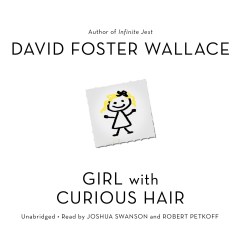
I saw a placeholder on Amazon for this audio book in early 2011.  And then I promptly forgot all about it.  My friend George just asked if anyone had heard it yet, so I decided to check it out.  I downloaded it through Audible.com.

And here’s my two cents about Audible.  Although it was free (for a 30 day trial), it was a lot of work.  The entire book (14 hours) downloaded in two files.  Each was about 7 hours with no breaks or chapters of any kind–just two huge 7 hour files.  Okay, I often download stuff and bring it into Audacity to make my own chapter breaks.  But you can’t import this file into Audacity because it is its own proprietary format and doesn’t want you to put it in MP3 format.  So, I had to burn it to CD (but not in MP3, only in WAV) and then put the CDs back in to iTunes to import them as MP3.  From there I could import them into Audacity and put tracks where I wanted.  That’s a lot of work to save $29.

I’m also going to say that I didn’t want a membership to Audacity because it costs $15/mo and the savings aren’t really that good anyhow.  Even kids books are about $10 each.  Oh, and just see how many hoops they have you go through to try and cancel.   Heavens to Betsy.

And but so on to the actual audiobook.

The book was read by Robert Petkoff (who is Reader A below) and Joshua Swanson (who is reader B below).  I don’t know anything about them, but their websites will give you more info about them.

I found the readings to be simply wonderful.  They were impassioned and articulate and dealt with some of DFW’s tongue twisting word choices with ease.  They also handle DFW’s dialect and accents with ease.  And while Swanson has a much much broader range of voices to play around with (his women voices are far superior to Petkoff’s), Petkoff also pulls of some amazing voices, especially in “John Billy.”  I never questioned what was happening.

Some of these stories are challenging and I admit I found them difficult to read.  But the audio versions seemed to really clarify things.  (There are all kinds of reasons why this could be so, but I’m not going to delve into that, for there lies madness).  Nevertheless, this was a great way to hear these stories.  Especially the ones that had heavy dialect.

“Little Expressionless Animals” [Petkoff] (90 minutes)
Petkoff sounds uncannily like Kyle McLachlan–no bad thing.  Although Petkoff doesn’t work too hard trying to do different voices, he puts in enough distinction to make the characters distinguishable.  (We have been listening to a lot of kid’s audio books, and the narrators of those are amazing with the kind of vocal acrobatics they can do!).  Petkoff is more subtle, but it is also effective–it’s not just a straight voice, which I think might get confusing especially in the dialogue scenes.

There is a hint of Alex Trebek’s voice when doing Alex Trebek, but he’s definitely not trying to mimic the voices of the celebrities.  For the most part, the voices are slight variations of the main narrator.  Indeed, during the later Faye and Julie dialogue section, he does slight differences between their voices to help distinguish the characters.  Which is quite helpful in the story.

This story works very well in audio book format.

One of the things that I loved about this story this time was really piecing together all of the various compnents.  Inclduing things like the revealtion of why Julie does poorly on the subject of animals.  It’s quite obvious when the story ends, but through the whole story you keep wondering, what is it about the animals?  I’m aslo intrigued at the number of gay characters in the book.

And, of course, this story has a major obsession with pop culture, especially TV.  And knowing (from interviews) that DFW sais he would just get sucked in to watching TV all day if it wa svailable, his tone (as is Petkoff’s) is perfect when dealing with the TV issues.

“Luckily the Account Representative Knew CPR” [Petkoff] (18 minutes)
Petkoff sounds slightly differnt than in “LEA.”  Since thist story has no dialogue, there’s not a lot of differentiation in the story.  His deadpan delivery is perfect for all of the details in the story. Although at the end, his “Help”s are quite empassioned, letting you know there’s a little bit more going on.

“Girl with Curious Hair” [Swanson] (50 minutes)
Swanson’s voice is of a much higher timbre, and it’s kind of fun to have two different voices in this book.  This story benefits quite well from an audio format.

The story is deliebrately flat and, I have to admit, is not terribly easy to read.  Swanson handles the flatness very well, he reads it incredibly deadpan and yet he puts enough inflection in it to keep it from being monotone.  I have to assume it wasn’t easy to read this.  I think that he has really made this disturbing character quite real.

Obsevrations about the story.  Hearing this story out loud was more shocking than reading it.  The explicit sex is pretty shocking for DFW and the revelation about what happened to Sick Puppy when he was a kid is prodoundly distrubing, especially when it is read in this non-inflected voice.  It was uncomforatble and very effetcive.

There were times when I wondered about the believability of the charcter.  The use of the word negro, the utter flatness of him. I realize that he is quite damaged, but at times it seemed like maybe this story was too much.  Which is a bit of a surprise, as I find DFW’s charcatersto be very real.

“Lyndon”  [Swanson] [1 hr 45 min]
I didn’t really enjoy “Lyndon” when I read the story.  It’s a little long and had many different things going on.  I kept wondering about Lyndon himself.  About what made DFW write a story based around Lyndon Johnson, around jhis life and politics.

But hearing this story read aloud, with the Swanson’s various voices and accents and newspaper stories all differentiated really brought this to life.  I felt like it was so much more vibrant and alive and passionate in this audio version.  I read in my post that i found the ending quite moving when I read the story, but it felt even more so, with Lady Bird’s quiet, dignified delivery, here.

Observations on the story.  How odd that he chose to make this story that is about a real, and quite famous and well studied person.  I don’t know a thing about Lyndon, so I have no idea how much of this is true (the few LBJ quiotes I looked up seem faked).  I don’t think I spent enough time thinking about the main character when I read the story.  Boyd is so fully realized and amazing that Lyndon is really superflous.  This is awonderfully emotive story.  And Swanson really does an amazing job.

“John Billy” [Petkoff] (1hr 10 min)
I thought “John Billy” was a real challenge to read.  The dialect is pretty crazy.  And the story is not exactly easy to begin with.  But much like Swanson in “Lyndon,” Petkoff’s voices are outstanding here.  The main voice of John Billy is great–he handles the accent and the crazy word choices that John Billy has with ease.  The story flows perfectly.  It’s really impressive.

And while the voice of Glory Joy isn’t wonderful (Petkoff’s women are just softer versions of his voice), he more than makes up for it with the amazing transformation of Simple Ranger.  In the reading, it is clear that Simple Ranger “grows younger” from a quiet, hard to hear older to a youthful loud charcater.  And Petkoff takes that literally so you can really hear him change into a man with a “curious plus haunting voice that was not…of his gravelly, gray-lunged voice somehow, his own, somehow.”  And then, later in the story Ranger’s voice changes again when he “whispered, the big sharp clear new Ranger in a smooth new clear young voice.”   But nothing prepared me for the voice of T Rex Minogue. It is stunning.  It’s an amazingly processed voice that is as malevolent as it is “mechanical.”  It’ s masterful.

As for the story itself, the whole saga of C.Nunn Jr is bizarre and wonderful, a crazy hyperbole of a story.  It also seems crazily over the top hearing it aloud (like in “GwCH”).  The whole story’s end with C Nunn’s eyes is preposterous (what is it with people’s eyes in this book?).  And yet it feels like the nonsense is there as a balance for the heaviness.

The story is funny and silly but by the end it gets incredibly dark and thoughtful.  It’s a challenge to listen to, especially the end, but I think it benefits from an audio version.

“Here and There” [Swanson] (55 min)
I found this story somehow more confusing while listening than when reading.  There’s so much back and forth with voices and the whole conceit that this is some kind of fiction therpay doesn’t really translate easily here.  I also found some of the more academic sections to be kind of dull in his reading.  It’s a challenge to read aloud and keep interesting, I’m sure, but I found this story to be the least successful of the collection.

“My Appearnce” [Petkoff] (58 minutes)
This is written in frist person from a woman.  Petkoff, who has quite a deep voice conveys a woman very well.  This is a great reading for this story.  He does “versions” of David Letterman and Paul Schaffer.  They are not impersonantions by any means, but he has the tone down perfectly.   The male voices whispering in her ear are done in a very simple whisepred voice.  Very effective.

This is a great story and the audio is also wonderful.

“Say Never” [Petkoff and Swanson] (42 minutes)
Petkoff does a very good job with the accents in this story.  Labov’s heavy Jewish accent is very impressive.  And although Mrs Tebof is not very different from Labov, it is different enough to convey the accent and the tone.   He also does Lenny’s voice, which is the bulk of the story.

Swanson also comes in this story as well, doing the voices of Mikey and Louis (two very distinct voices, even if they are both a little Hollywood Gangster from the 40s).  I would have been interesting to hear them interact more in the book somehow.

I was struck by this story more in the listening than the reading.  There’s something about hearing people say these things that makes them more shocking.  Especially the note that he sends to his family (talking about his wife’s lack of sex drive–gasp!).  This is another one of DFW’s stories that ends before something big happens.  It’s funny how many of his stories seem like preludes.

“Everything is Green” [Petkoff] (3 minutes)
It’s also amazing that this whole story is only 3 minutes and thirty seconds long.  Petkoff reads this story in a perfect DFW deadpan style.  He even does May Flys voice with a (slight) accent.

“Westward the Course of Empire Takes it Way”  [Swanson] (6 hours)
Swanson does an amazing job with this difficult story.  There are nearly a dozen charaters in here and he manages to keep them all separate and distinct.  It’s really great.  This is especially true late in the story, when they are in the car on the way to Collison.  He has six people in the car and he manages to make sthem all unique:  J.D. is dark and gravelly while DeHaven has a kind of Midwestern Stoner tone.  Tom Sternberg is neurotic and aggressive at the same time.  D.L. is snotty and presumptuous (although it may be Swanson’s weakest voice, it really conveys the character well).  Magda is exhausted.  And Mark is a solid late teenager.

Let’s not froget the pissed off Fertilizer salesman, the Avis clerk and the bartender.  And the narrator of course.

This story is also fairly complex and hard to follow (when reading).  There so much going on what with the narrator’s interruptions and the metafiction.

What I really noticed this time is how the parts that are not metafictional, the actual narrative of the story is really good, really strong and emotional.  Not to say that the more meta- sections of it are bad, they just don’t have the same kind of impact.  Of course, the whole point of the story is to play around with meta-fiction, so I’m not entirely sure how successful it is in that regard.

Nevertheless, it’s a fascinting look at youth in America.  And I have to say that it really works as a foreshdaowing of issues that he would explore more in his later stories and IJ.

Some things I notice din this listen.  DFW uses the word “plus” instead of “and” a lot.  It’s a fascinating word choice, and one that I think virtually no one uses.  Sometimes it’s effective and other times it’s very clunky.  I never noticed it while reading but it’s very obvious when listening.

I just read my review of the short story collection, which I think was kind of brief.  I feel like I got a lot more out of the book this time around. Of course this is my second reading so that makes sense as well.  It’s also interesting how I enjoyed some stories more and other stories less.

Overall though, this is an excellent audio book.

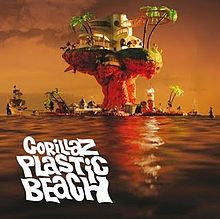
SOUNDTRACK: GORILLAZ-Plastic Beach (2010).

I have been a huge supporter of Gorillaz since the drew their way onto the music scene all those years ago.  It’s true that part of my love for the band was the art of Jamie Hewlitt, who I assume doesn’t really have any input anymore.  I also love Del the Funky Homosapien (who is also missing).  But I’m almost slavishly devoted to Damon Albarn, so I was pretty psyched when I heard they had a new album coming out and that it was getting rave reviews.

I was severely disappointed when I heard the record. 

“Welcome to the World of the Plastic Beach” features Snoop Dog who is phoning it in from a vacationland far far away.  He was more exciting on his cameo for The Lonely Island.  Even musically, it’s not very interesting.  “White Flag” is more promising, with the cool flute and string intro, but the rap by Bashy (which I wanted to like because of his accent) is just bland.  And Gorillaz must agree as the rap is less than a third of the song. 

“Stylo” has a cool bass line but the track overall is surprisingly discoey.  The Mos Def bit is interesting but I guess I’m not a fan of Bobby Womack, as I don’t care for his part of the song at all.  “Sweepstakes” has some interesting parts but the intermittent yelling of “Sweepstakes” kind of ruins it for me.  “Plastic Beach” features Mick Jones and Paul Simonon but you’d never know it.  And I actually don’t enjoy the manipulated voice much here, it sounds uncomfortably like early 80s technology.  “Cloud of Unknowing” is barely there at all (sorry Bobby Womack, I’m, not convinced)

It’s probably unsurprising that my favorite song with guests is “Superfast Jellyfish.”  I love De La Soul (although their “dopey” sounding rap is a bit much).  But I like that they play up the cartoon feel of the song (and the band).  I also didn’t even realize that the main singer was Gruff Rhys until a few listens in.  And since I love him, it all plays out nicely.  I also like “Glitter Freeze” because fun with keyboards can be interesting. I didn’t realize it was Mark E. Smith until recently.  I’m not really sure if that makes any difference since he just says a few words, but things are always more interesting when he’s around.  Of course, this song could have been 2 minutes instead of 4.  “Some Kind of Nature” features Lou Reed.  Reed has been hit or miss lately and this is more miss than hit.  “Empire Ants” features Little Dragon (unknown to me).  It is very slow to get to the interesting part, but when it does, the song is pretty cool.  The other song with Little Dragon, “To Binge” is wonderful.  It reminds me of a track from A Clockwork Orange and it also features some great lyrics. 

The few songs that I like on the album are ones that are credited to just Gorillaz.  “Rhinestone Eyes” is a bit lazy for my tastes, although the second part of the song really showcases the first decent melody on the disc, and the introduction of Damon’s voice is like a salve.  “On Melancholy Hill” has the best wispy keyboard intro this side of early 80s Madonna–a wonderful counterpoint to the title and lyrics.  “Broken” is actually a little too mellow for me, but again, the melody is a nice one.  “Pirate Jet” is a simple, dopey song that ends the album in a kind of limbo state.

I’m confused by all the rave reviews, especially the one that says the album is chock full of singles.  I mean, “Dare” now that’s a single.  I guess I just miss Del (and Russel) way too much.  And frankly, even the artwork is pretty lame on this one.

[READ: January 10, 2012] “Center of the Universe”

Simon Rich never fails to make me laugh. Sometimes his ideas are completely original.  Other times he takes a fairly common observation and runs with it into a land of lunacy.  And sometime he takes an idea that seems like it’s been done before but he puts a fun twist on it and makes it entirely his own.  Such is the case with this.

The very simple premise is that while God is busy creating the earth, his girlfriend is not only complaining that he never spends time with her, but she also feels slighted that he doesn’t seem to care how hard her job is.

A wonderful part of this scenario is that God has not yet finished making the earth–He’s only on the sixth day–but His girlfriend, Kate, is hanging out in Chelsea reading a magazine impatiently waiting for Him to show up.  Continue Reading »