Feeds:
Posts
Comments

SOUNDTRACK: RED BUDDHA-Raindance (2007).

My Aunt Marg gave me this disc for Christmas a few years ago.  She said that she knew it from a spa that she went to.  And I can totally tell. I don’t know anything else about the artist, and it’s even hard to find stuff about him online.

The disc has an Indian (Eastern) vibe (which surprises me given the name of the artist and the African-looking person on the cover).  It also has a real world music feel.

Sarod

Overall, I like the music quite a lot.  It’s certainly new agey, but not treacly new age or anything.  It showcases some cool world music without resorting to clichés.  However, I admit to not caring much for the spoken lyrics of the opening track,  “Sometimes.”  His voice is deep and distracting, especially over such mellow music.  Despite the very Indian feel of “Sometimes,” the rest of the disc explores other sounds as well.  “Kokou” has a 70s kind of organ and bongos (with more appropriately world musicy chanted vocals).  “Raindance” has a cool flute over some bongo beats (all very soothing…with crickets).

Veena

I really like “Girl from Orissa” with its cool Eastern instrumentation.  There’s a sarod, a veena and a sitar on the disc.  (Orissa is located on the eastern side of India).  “Khali Gandaki” also features this cool instrumentation. (The Khali Gandaki valley is in Nepal).

“Mswati” opens with some percussion. But this track differs because of the interesting riff that plays throughout the song (whether guitar or keyboard, I can’t tell).  “Touba” has a nice bassline, which really stands out on a disc with minimal bass. It also has some neat wah-wahed guitars.  And “Preaching of Buddha” has a kind of Dead Can Dance feel to the vocals (they’re my go-to band for world music).

Sitar

“Katarajama” (a pilgrimage site for Sri Lankans and South Indians) has a great riff to it, and it’s even better when the other instruments play along.  “Patan Part 1” also has a cool sitar riff.  Although if Part 1 is 8 minutes, how long is  the whole song?

The final song, “Sufi Kalaam” has a somewhat more sinister or perhaps just movie soundtracky sound (low bass chords underpin the beginning of the track).  There are chanted vocals and lead vocals in another language.  I rather like the song, but it doesn’t really fit on the disc.

The whole disc is definitely a background/new agey kind of deal.  I can hear it all (except the first and last songs) working well for a relaxing evening of massage.  Just don’t listen to it while driving!

[READ: February, 17 2012] “Lorry Raja”

“Lorry Raja” won Narrative magazine’s “30 Below” contest for 2011.  After the wonderful stories that came in second and third place I expected something pretty amazing to win.  And I was maybe a little disappointed by this story because of it.  And I think I have to blame a cultural disconnect for that.

This story is set in Karnataka, India, a poor state in the south of the country.  People there are so poor that they live in tents and work in the mines–smashing up rocks to get at the iron ore inside.  The children can’t afford to go to school, there’s no electricity and everyone is covered in a red dust from all of the dirt in the mines.

Madhuri Vijay is able to create a compelling story out of this harsh environment.   The story concerns one family as they struggle to survive under these conditions.  The father (I had a really hard time keeping the names straight, so I’m not going to include them here) had an accident and cannot work to his full capacity, so he is stuck working less lucrative jobs. The mother works smashing up iron ore.  The middle son, 12, works and plays around the mine (collecting a few rupees each day).  They put some money aside for his eventual education.  The older brother has just gotten a job as a lorry driver for the mines–he takes the ore out to the port cities.  He is only 14, and, being 14, he takes especial care of his lorry–cleaning it from all the red dust and driving it in a very proud manner.  So much so, that everyone starts calling him Lorry Raja.  There’s also a baby brother who doesn’t play much of a part except (in the way I read it) to show off how hopeless things are (the boy is playing in the dirt and when it is time to feed him, his mother just takes her breast out in front of everyone).

The story is narrated by the middle son.  And we watch as he grows jealous of his brother–the Lorry Raja.  We see the narrator break up rocks, spy on his mother, spy on his father (who is lowered by a rope in to a deep mine (!)).  And we see him talk to the owner of the mine (who has a car, a generator and drinks Pepsi).  And finally we see him spend some time with his brother’s ex-girlfriend (they broke up more or less once he started driving his lorry).

When the girl casually remarks that the narrator should get his lorry license and then he could drive her to China, that sets a new part of his life in motion.  (They are thinking about China because the “Lympic Games” (“Whatever they are” he says) are being played there this year). Continue Reading »

SOUNDTRACK: PETER BJORN AND JOHN-Falling Over (2005).

This is Peter Bjorn and John’s second album.  I enjoyed Writer’s Block and Living Thing and when I read that their earlier discs were just as good, i had to check them out to be sure.  Their first two discs are less polished, less slick.  Normally I’d say that automatically makes them better, but PB&J’s sound is pretty great with or without the production values.  This disc feels like  a transition disc, like something big is going to be coming soon (which it did).

The opening song is a pop masterpiece in the tradition of The Beatles (or more accurately, The Monkees–who wrote great pop songs with just a little less panache).  It is catchy right out of the block, with some interesting slower parts to add drama.  And Peter’s voice is perfect for this kind of pop convection.  It even opens with a Speak n Spell!  “Money” has a harder riff, but the chorus is trippy and fun.  “It Beats Me Every Time” is a darker song with a melody (and vocal style) that reminds me of Michael Penn (especially the chorus).  [I love Michael Penn and think he is vastly underrated].

“Does It matter Now?” is the first song that isn’t awesome.  It’s a fine song and there’s some great backing vocals in the middle of the track, but it’s not as good as the first three.  But “Big Black Coffin” springs back with a wonderful melody and chorus (and more Michael Penn style).

“Start Making Sense” is 2 minutes long and that’s fine, but it would probably drag if it were longer.  But then “Teen Love” is great, with a cool drum section that bridges to the a great chorus.  “All Those Expectations” is a slow guitar ballad.  It is sweet but a bit too long.  “Tailormade” ends the record on a good note, an interesting keyboard-based song with multiple parts and although the verses seems long the pay off in the chorus is worth it.

Strangely, the disc actually ends with what sounds like a demo, “Goodbye, Again Or.” If it’s not a demo, then it sounds like he’s in the next room. Maybe with the door shut.  I can’t really grasp the song as I’m so distracted by the recording.

My version of the disc has five bonus tracks.  I’m not sure that this is the kind of disc you want bonus tracks for, (my first listen I couldn’t believe this album was so long!) but, really, who says no to free music?

“(I Just Wanna) See Through” has a rock n roll guitar intro.  “The Trap’s My Trip” starts out slowly but adds drums with a wonderful introduction after two minutes and then brings in a  great rocking guitar.  It’s a wonderful b side.   “Punk’s Jump Up” is a fun little jam/practice.  While “Unreleased Backgrounds” is a slow guitar song.  These are nice bonus tracks.  Not essential but enjoyable.

This is a solid record from PB&J.  Even though some of the early songs are really catchy, nothing is as immediate as “Young Folks.”  But it’s still really strong.

[READ: February 15, 2012] “The Silence Here Owns Everything”

Continuing with Narrative magazine’s “30 Below” winners for 2011, this story won second place.  It was deceptively simple and I enjoyed it quite a lot.  The story was broken down into several sections (which I like), although all the action takes place over one  weekend.

It’s written in the first person from the point of view of a high school sophomore (I gather).  She and her best friend Kendra are walking home from school on a Friday afternoon.  Kendra has bruises on her face, which we assume are from her father.  It’s obvious that despite Kendra’s difficulties, the narrator looks up to her quite a lot (she may even have a crush on her, but that’s not really an issue).

The bulk of the story centers on the girls as they walk home, as they hang out at Kendra’s house, as they smoke some weed and as they fall asleep–you know, a typical high school weekend.  And Clodfelter captures the tone and details of the setting perfectly.  It feels completely real.  Especially when Kendra reveals that her boyfriend is coming over in the morning and the narrator wishes (but doesn’t say) that it could be just the two of them instead. Continue Reading »

SOUNDTRACK: PAT JORDACHE-Future Songs [CST076] (2011).

I love this Constellation release. It is one of my favorite releases of theirs in a long time.  This album sounds like a kind of TV on the Radio demo/tribute.  I don’t mean that in a knock-off way, but there are many elements about TV on the Radio that I recognize here (voice and musical style).  But the fact that a) Jordache plays all of the instruments himself and b) he keeps things simple, makes this an impressive release.

It opens with “Radio Generation,” which has a really cool bouncy guitar riff and bassline.  It doesn’t quite display the signature sound that I think of this album as having but it certainly points to it. “Get It (I Know You’re Going To) is where I hear the first signs of TV on the Radio.  Jordache sings with two voices at the same time–with his deep voice underpinning his higher voice.  It’s a great effect.  And the fiddly guitar bits are really interesting.

“Salt on the Fields” opens with some “wee ooh” vocals in a fairly high register but when the main vocals come in, they are processed and sound not unlike an old radio (and a singer who I can hear but whose name I can’t place) and then midway through, the song introduces a great guitar riff.  “Phantom Limb” features drums and looping from Merrill Garbus who I didn’t know when I first heard this album but who I now know is tUnEyArDs. And, heh, a little browsing tells me that they are in a band together called Sister Suvi.

“Gold Bound” feels more like a demo than the other tracks, it’s a very simple guitar melody with some echoed vocals.  It’s also the shortest song on here and it’s a nice change of pace.  It also ends with a strange excerpt from something else, a vulgar, rocking little piece advising you to run mother fucker.

“Song for Arthur” returns to that cool high-pitched ooo-ooing.  But “The 2-Step” changes things quite a bit.  An interesting processed guitar and loud echoey drums, but that voice is recognizably his.  There’s also more guitars than on other songs which brings a new texture to this album.

The final song “ukUUU” is a slow meandering piece. There’s some interesting sounds going on (reverse vocals and such) and a lengthy spoken piece about love, but it lacks the punch of the rest of the disc.

Nevertheless, this album is interesting, intriguing and a lot of fun.  I’m looking forward to more from him.

[READ: February 12, 2012] “Liability”

I recently saw that Narrative magazine picked three “30 Below” winners for 2011.  So I thought I’d see just what kind of short stories win their prizes.  This is the third place finisher.

I admit I was a little less than excited when I started reading the story.  It was written in second person, which I liked, but it seemed like a pedestrian story about “you ” and your wife.  How she is so beautiful and you feel you have let her down.  But my misgivings soon gave way.  And I think it was with this little section that won me over:

You crave energy and excitement, and to this end you have bought a beautiful condo downtown in the “bohemian quarter,” as the realtor pitched it, which means that it’s cheap enough for artists and poor black people.  That’s okay.  You love art and hate racism.”

By the middle of the next page, after the explanation of your wife’s job (guidance counselor in a poor school) we get to what turns out to really propel the story: “Although, to be honest, she has a small drinking problem.”  He diffuses this bold statement with a qualifier in the next paragraph: “But the drinking problem is only a problem sometimes, and the drinking problem is not a problem tonight.” Continue Reading »
[TO READ: Through May 7, 2012] Gravity’s Rainbow

Starting next week, I’m doing weekly posts about Gravity’s Rainbow.

Date Part. Section
Feb. 27 1.12
March 5 1.18
March 12 2.3
March 19 2.8
March 26 3.5
April 2 3.10
April 9 3.15
April 16 3.24
April 23 3.32
April 30 4.6
May 7 4.12

I’ve been meaning to read more Thomas Pynchon for years, and Gravity’s Rainbow always seemed like the place to start.  I’ve always felt daunted by the task (which is funny since I loved Infinite Jest (which is a lot bigger), but I have this idea that Pynchon is a lot harder to digest.

I will soon find out because the great folks over at Infinite Zombies are running a Gravity’s rainbow read.  And I’m in!

Unlike with some other books where I contributed to the main page, I won’t have much to say over at the IZ site.  I don’t even really have a sense for how much I’ll be able to integrate with IZ.  This is primarily because my work schedule doesn’t permit as much free blog time.  It’s also because I don’t really know what I’m in for.  But I will be posting weekly updates here. Continue Reading »

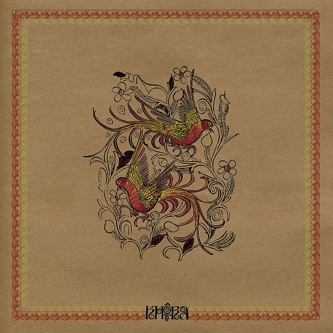
SOUNDTRACKKHÔRA’s-Silent Your Body Is Endless [CST071] (2011).

This is the third and final disc from Constellation’s MUSIQUE FRAGILE 01 collection.  Khôra is Matthew Ramolo doing solo work on the guitar.  But unlike any other guitar album you may have heard, this one is processed and manipulated so that much of the album sounds nothing like a guitar.

Most of the sounds on the disc are washes and waves of guitars that grow and fade.  Although the opening track “Natura Naturans” has a recognizable acoustic guitar melody, the washes are all processed guitar sounds.  This sound also has an echoing church bell, the kind of sound that would bot be out of place on a black metal album although this is as far from black metal as you can get.

The church bell, by the way is a field recording, and in addition to the guitars there are plenty of field recordings on the disc.

He generates a wonderfully expansive amount of moods as well.  There are haunting melodies like on “Body Aperbut also beautifully upbeat ones like on “Hushed Pulse of the Universe”

I find the artwork that accompanies the Khora album to be the most satisfying of all three.

[READ: February 15, 2012] Tres

Another month, another posthumous Roberto Bolaño release.  Tres is so-called because there are three pieces in it.  They are described as poems, although I have a hard time seeing them as such.  It has the Spanish title because it was originally published as Tres and the English version is actually a bilingual version with facing Spanish and English pages (translated by Laura Healy–I guess if Laura Healy translated it, it must be poetry as she is Bolaño’s poetry translator).

Tres is also amusing to me because it is so clearly a way to make a very small book seem bigger.  In addition to the facing pages of the text, most pages have a paragraph or two at most (short ones at that).  So it’s total 173 pages is really half that and then, given how much white space there is, it’s easily half that as well.  None of this is a complaint, it’s just an observation.

The reason I’m confused about calling it poetry is because of the three pieces only one “looks” like poetry (with line breaks and what not).  Indeed, the first piece, “Prosa del otoño en Gerona” literally translates as “Prose from Autumn in Gerona.”  The second piece (the one that looks like poetry) is called “Los neochilenos” or “The Neochileans” and the final one is a series of numbered paragraphs (again, with no poetry conventions) called “Un paseo por la literatura” or “A Stroll through Literature.”  I read each of these pieces three times primarily because I found them hard to follow and wondered what I was missing.  Multiple readings did help, although I find with Bolaño’s longer short pieces, the details are exquisite while the overall picture is a bit confused. Continue Reading »

SOUNDTRACK: THE FEELIES-Crazy Rhythms (bonus downloads) (2010).

The other day when I was playing Crazy Rhythms I noticed a little card that I had never noticed before.  It said that if I went to the label’s website, I could download bonus tracks.  That was pretty cool, so I did.

The are five tracks.  “Fa Cé-La” says it is a single version although it sounds even more spare and underproduced than the album version (and it’s a tad slower). “The Boy with the Perpetual Nervousness” and Moscow Nights” are demos.  “Boy” really sounds like a demo (the wood blocks are almost piercing!).  It’s interesting that the guitar solo, which sounds random on record was planned that way.  On “Moscow” the singer’s channeling Lou Reed pretty intently.

The next two tracks are live from a reunion tour in 2009.  I’m not exactly sure who was in the band, but that’s okay, the songs sound good.   “Crazy Rhythms” has a (simple) drum solo in the middle (more of a beat-keeping than a solo per se), and an extended jam towards the end song.  And the final song is a cover of Jonathan Richman’s “I Wanna Sleep in Your Arms,” at a frenetic two-minute pace.

Not bad for free downloads, eh?

[READ: December 31, 2011] “A Shade Less Perfect”

After reading all of those Max Barry blog posts, getting to read a real story is a real treat.

This is a very simple story of one-upmanship (a common trope of sitcoms–in fact just the other night Up All Night ran the “two brothers who must compete against each other at everything and never admit that they have failed at something” script).  And this story falls into the same general area, but Barry puts a surprising twist on the end.

Jonathan and Elizabeth are going to house of Jonathan’s boss, Dave.  Elizabeth likes Dave’s wife Julie.  They both had babies around the same time and met in birthing classes, so they are excited to catch up (it’s been about ten months since they’ve all seen each other).

Dave tends to lord everything over Jonathan at work.  Jonathan says he’s okay with this at work–Dave is his boss after all, but he doesn’t want to deal with it out side of work, too.  Naturally, Dave has a huge house and a convertible and every other material joy.  Even a nanny. Continue Reading »

[ATTENDED: February 11, 2012] Aga-Boom

This past weekend, my family attended Aga-Boom, a “theatre of physical comedy and circus arts.”  It was incredible, and it was hard to believe that this was performed at the Raritan Valley Community College theater, which is nice and all, but seems small potatoes for a troupe that was part of Cirque de Soleil and which has been in Vegas and on Broadway.

Aga-Boom‘s show is perfect for all ages–my kids loved it, but I may have laughed more than they did.  There are three clowns, an older woman, a goofy “large” clown and a kind of morose alien-looking clown.  None of these are you typical “clown make-up” type of clowns.  In fact, I found the lady clown’s make up to be amazing–astonishingly emotive and expressive.  And the morose clown was all white face with a completely fake nose and a simple red frown line for a mouth and yet wow, they could convey everything.

There are several set pieces.  The first is a joke about paper getting stuck to the lady clown.  It’s a good introduction to the paper conceit that runs through the show (the stage “curtain” is a large sheet of paper!  It morphs into this amusing/intimidating section where the morose clown (dressed like an astronaut with (a wonderful detail) a water cooler bottle on his head as a space helmet–is mad because the woman clown accidentally launched his ship into space.

Then comes the goofy clown who does some amazing juggling with a suitcase.  I’ve never seen anything like it.  Continue Reading »

SOUNDTRACK: ALEC BALDWIN reading “Lost and Found” (Selected Shorts September 10, 2011) (2011).

Alec Baldwin’s reading of Whitehead’s “Lost and Found” is really great.  His delivery is perfect and he strikes the ideal balance of humor and pathos, even if his inner-Boston peeks through this New York tale once in a while.  You can hear it for free at soundcloud.

[READ: February 12, 2012] “The Way We Live Now: 11-11-01; Lost and Found”

I didn’t know who Colson Whitehead was in 2001 (at the time of this piece, he had written two novels, neither of which have I read even now).  I read a lot of things about 9/11 after the attacks; however, I didn’t read everything (and really I didn’t want to try).

Strangely, the only way I found out about this is because my brother-in-law’s wife linked to the soundcloud page on Facebook the other day.   (I’m not sure what made her link to it now, either).

The amazing thing about this essay is that it was written less than a month after the attacks and yet it is it is humorous and wise (but not silly or light-hearted).  It strikes a perfect balance.  And in fact, doesn’t even mention the attacks by name.

The piece is more of an ode to New York City and how “No matter how long you have been here, you are a New Yorker the first time you say, ”That used to be Munsey’s’ or ‘That used to be the Tic Toc Lounge.'”  Your first memory of the City is how you will always think of the City.  Whether you were dragged there at Christmas time as child or to help a friend move. Continue Reading »

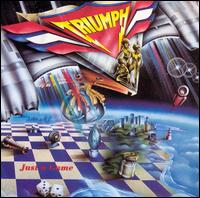
SOUNDTRACK: TRIUMPH-Just a Game (1979).

When I was a kid, my love of Rush was followed closely by my love of Triumph (I had a thing for Canadian power trios).  I’ve recently read a bunch about Triumph and was surprised to hear how acrimonious the band was.  Of course, I didn’t care about any of that back in the 80s.

This album was my favorite (even though Allied Forces was their major breakthrough).  In my gate-fold album the inner foldout was an actual board game.  How thoughtful!

It’s funny listening now, how much I liked this album back then because there is definitely some cheese here.  And I could never decide if I liked drummer Gil Moore’s songs or Rik Emmet’s songs best.  “Movin On” is a great hit but the backing vocals and “on and on” parts are kind of wimpy 70s rock–I must have blocked it out while jamming to the guitar solo.

Rik Emmet has since gone on to a successful solo career.  But on “Lay It On the Line,” the song that got me into them (thanks MTV) Rik rocks like he loves this band and this music.  The song features some serious guitar workouts and some impressive vocal acrobatics.

Perhaps, in hindsight, I like Rik’s songs better, as “Yong Enough to Cry” is pretty cheesy (it was fun to sing along to when I was 13 though–even if I never understood Gil’s pain, man).  But all of that was forgiven for the majesty of “American Girls.”  Sure, it’s also a cheesy song, but man it rocks.  As a young kid, I loved hearing the national anthem in the middle of the song.  And that solo is non-stop.

“Just a Game” is a powerhouse of a song although it’s a little long for what it is.  But then there’s the amazing “Fantasy Serenade” just over 90 second of beautiful classical guitar (a direction he’s go in much more after leaving Triumph).  It’s wonderful as a solo and it works as an amazing intro to the majestic “Hold On” (a song about music that doesn’t suck).  Although admittedly, the single version is better without the weird disco instrumental in the middle that really kind of puts a kibosh on the flow of the song.

The album ends with the strange (and quite long for what is it) “Suitcase Blues,” a 3 minute slow blues about touring.  But hey it showcases diversity, eh?

Even though many people compare Triumph to Rush, I think the more likely comparison is actually Kiss.  “American Girls” has a real Kiss vibe towards the end, and the opening chords of “Movin’ On” have a real Kiss feel.  Regardless, they played great metal/rock/prog and I’ll always love them for it.

[READ: February 12, 2012] Ready Player One

Do you like Rush? Do you like Monty Python?  Do you like the 80s?  (not those 80s, but cool 80s like Blade Runner, coin op video games, Family Ties, Square Pegs?)  Then you absolutely must read this book.  Especially if you like Rush, because how often does Rush form a plot point in a book?

Sarah was reading this book and she insisted that I read it (she has really been passing on the good suggestions lately!).  And when I heard her playing Rush a few days after reading this book (and she doesn’t like Rush), I knew I had to read it.

But what is it?  Well, It is basically the story of an online quest to find a secret egg and win a massive fortune.  The egg was placed in a virtual world by its creator, James Halliday.  Halliday was “a nerd uber-deity on the level of Gygax, Garriott, and Gates.”  He created amazing video games and ultimately the most amazing virtual reality space ever: OASIS.  (For Atari geeks, his inspiration for getting into creating video games in the first place was the Atari game Adventure).  Halliday was obsessed with the 19080s (the decade he grew up in), with technology and with geeky movies.  The only way to find this egg in OASIS is to know a thing or two (or 1,000,000) about the man who created it and the decade he loved.

If you were hooked by the first paragraph, you’ve already put this book on hold.  If you were hooked by the third paragraph, you know you have to put this book on hold.  If you’re not convinced yet let me back up.

It is the year 2044.  The earth is in a hellish state–there’s no fuel, there’s no jobs, people live in trailers that are stacked on top of each other.  Life sucks.  Except for OASIS.  OASIS is the virtual world created by Halliday.  At this stage in the world, OASIS is where most people go to school (cheaper and easier to do virtual teaching) and where many people spend most of their lives.  It’s depressing and horrible (and I actually didn’t enjoy the opening chapters all that much because it was really horrible and at a times a bit more caustic than I was expecting–but that changes quite a lot).

So Halliday invented OASIS as an idealized pace.  It was originally a multi-player game but soon became a new place to live, a kind of Eden.  It was free to join and you didn’t have to pay to play.  Although you needed credits to travel (or to build your own buildings or planets or whatnot), you could stay on the main world (which looks a whole hell of a lot nicer than the real world) and just hang out for free.  You can earn points through various achievements which would let you travel (or you could always hitch a ride with a friend) around the worlds.

Anyhow, when Halliday died, as his last will, he created a contest in OASIS.  Anyone who could find the three keys and unlock the three gates would win his entire fortune (billions of dollars) and total control of OASIS.

The protagonist (Wade in the real world, Perzival in the OASIS world) is telling his tale because he was the first avatar to find the first key to Halliday’s Hunt (it took over five years to find the first key).  If you played D&D, this section will make you smile.

When Perzival found the key he was suddenly famous because everyone on OASIS knew it was found.  Prior to this moment, the “leader board” which previously listed only Halliday, now suddenly lit up with Perzival’s name.  (Good thing OASIS avatars are anonymous, right?) Continue Reading »

SOUNDTRACKDALLAS GREEN-“The Gift” on CBC Kids’ Mamma Yamma (2012).

I have no idea what Mamma Yamma is (well, obviously it’s a kids’ show on CBC–Wikipedia tells me, “Mamma Yamma, who is played by puppeteer Ali Eisner, is a yam who represents Ontario as the owner of a fruit and vegetable stand in Toronto’s Kensington Market” so now we know).  It’s pretty low budget and quaint and actually rather funny.  Also, (given the few links I’ve seen on YouTube) it must host some pretty hip Canadians.

On this episode Dallas Green (who is City and Colour) sings a little tribute to Mamma.  here’s a brief intro and then he starts singing.  As one of the comments says, “Dallas Green: Phenomenal musician, terrible actor.”  And that’s pretty accurate.  If you can get through the awkward introduction (although I have to say Mamma Yamma is pretty funny…check out the clip with Jian Ghomeshi!), the song is really nice.

Dallas has a great voice.  Usually his songs are kind of angsty, but this one is really nice.  Not too many Dallas Green songs have the lyrics, “with jelly beans and sprinkles from front to back.”  I just hope that the kids aren’t running out to buy his proper album based on this.  It’s a rare treat for City and Colour fans.

[READ: November and December 2011 and January 2012] The Secrets of Droon, Books 13-SE#1

Even though I waited 12 books to talk about Droon the first time, this next section of books seems to have a definitive “arc” with SE #1 serving as a kind of transition. Book 13 introduces a new bad guy.  And although he doesn’t last all the way through to Book 16, Sparr is noticeably absent for this arc.  But just because Sparr is still missing, that doesn’t mean there’s a lack of trouble in Droon.

With this book, the series grows more magic based.  One of the first reviews I’d read of the series negatively compared it to Harry Potter.  I didn’t quite understand that since (in Books 1-12) the only magic came from the people who lived in Droon; the Upper World heroes didn’t have any.  Well, since book 12, Eric has gained magic and there is a bit more of a Harry Potter element now (remember HP was published in 1997, and really hit its stride around 2000).  I have no idea if Tony Abbott intended to give his main character magical powers from the beginning.  It’s possible, as there was magic in Droon, but Eric’s magic does add a new element to things.  He doesn’t use it often, it just seems to supplement things.  And remember, it’s not like wizardry is the point of Droon, the point has always been that the kids can work together to solve their problems (notice just how often Galen has to go away and can’t help any of them).  And, of course, this series is aimed at a younger group of kids.  Consider it a gateway book. Continue Reading »