When The Suburbs came out, it was hailed as a masterpiece and also panned as a hack job (more the former than the latter). It was impossible to listen to it without hearing raves and rants. And then Arcade Fire became a kind of punchline or punching bag, the band people loved to hate (although not as much as Nickelback). I didn’t write about this record then because I wanted to let the air clear. And then I kind of forgot about it. I pulled it out again recently and found that I really enjoyed it. It’s a long album with a lot of different tempos. It reminds me of the kind of albums I used to listen to as a kid, yes in the suburbs, in which I could absorb an entire hour in one sitting (preferably while driving).
It’s not as indie as their first album nor is it as dark as Neon Bible. Indeed, with the instrumentation and easy melodies, the album is almost pop (or more like radio friendly AOR music from the 70s and 80s). There’s orchestration (but Arcade Fire has always had orchestration, that’s why there are eight of them in the band). There’s heavy piano (which is possibly the most notable difference on this album–the keys have gone acoustic, which definitely makes the album sound more 70s than 2000s. And there’s big choruses.
“The Suburbs” starts the album, but it’s really hard to deny “Ready to Start”–a bouncy number with a very winning chorus (yes, nominated as song of the year, but deservedly so). “Empty Room” opens with a violin section that I assume is sampled (its sounds very classical and more as a quote than an introduction to the pumping, rocking song that follows.
“Private Prison” has great backing vocals in the chorus–Wim Butler and Régine Chassagne play off each other so well. “Suburban War” has a great guitar riff–melodic and pretty in its repetition. “Wasted Hours” is one of the few folky songs I can think of Arcade Fire playing–but it’s a traditional kind of folk–with la la la las–with a twist.
There are two tracks with a Part I and a Part II. In both cases the second part complements and surpasses the first part in terms of overall energy and catchiness. “Half Light II” is a beautiful soaring track and “Sprawl II” (the one with Régine singing lead), is one of the best tracks on the album (the way the “mountains beyond mountains” section soars is wonderful). That honor of best tracks also goes to “We Used to Wait” with its simple piano and cool guitar riff at the end of the verses.
The album feels like a lot of music I grew up with–radio friendly hits that perhaps Butler listened to as a kid, and as he reflects back on them he updates and deconstructs them. “Modern Man” and “Empty Room” feel this way. “Month of May” sounds like “Beat on the Brat” while “Deep Blue” opens with a vibe of “Happy Together” but moves beyond it to a massive (and massively good) chorus.
It’s safe to believe the hype–there’s nothing here that will blow your mind, but taken together it is a very satisfying collection of songs. I also just learned that there were 8 different covers created for the album (although they all look vaguely the same). The one above is the version I happened to get.
[READ: January 4, 2013] “Knowledge”
I didn’t know anything about Gordon Lish when I read this story. The name sounded vaguely familiar. Then I looked him up. Evidently Lish has been writing for a long time, although he hasn’t written much recently. He is more known for his editing than his writing.
This story is a self-obsessing tale in which the words that the narrator is saying are more important than what the words mean. So the beginning of the story has the narrator stumbling, repeating, reiterating and then alliterating (which he criticizes himself for doing) without really getting anywhere. He frets that everyone is watching him–the neighbors, the doorman–and that his sneaky actions were seen by all, especially when the masking tape stuck to him.
Strangely, as the story reaches its midway point we see that the narrator is Gordon Lish himself and he asks rhetorically if the reason he has removed the flyer from the telephone pole (hence the masking tape) is because he himself had something to do with the message on the flyer itself. Continue Reading »
SOUNDTRACK: BRAVE COMBO/BOB DYLAN-“Must Be Santa” (1991).
Brave Combo is a fun band that mixes more styles in one album than most bands do in their career. While they primarily play polka, the also play everything from folk to rock to klezmer. This song is an old song from Mitch Miller, but Brave Combo speed it up and spice it up with clarinets and fun instrumental frills. It’s fast and furious.
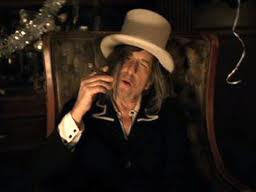
And if that wasn’t strange enough, Bob Dylan covered the song–and clearly covered the Brave Combo version when he made his Christmas album in 2009. Although Brave Combo didn’t write the song, Dylan’s cover is certainly in the polka style and he includes lyrics that Brave combo added:
Dasher, Dancer, Prancer, Vixen
Eisenhower, Kennedy, Johnson, Nixon
Dasher, Dancer, Prancer, Vixen
Carter, Reagan, Bush and Clinton.
Dylan singer faster than I’ve ever heard him. It’s a hoot. And the video is really funny too.
[READ: January 3, 2012] Hereville: How Mirka Met a Meteorite
I saw this book on the library shelf and the tagline (“Boldy Going Where No 11-Year-Old Orthodox Jewish Girl Has Gone Before”) made it sound like a lot of fun. Upon reading it, I can see it’s not quite what thought it was. It turned out to be much cooler. This also proves to be the second book in this series, although you don’t need the first book to appreciate this one.
Mirka, an orthodox Jewish girl has been grounded (for fighting a troll with a sword. Her stepmother, sick of her hanging around, offers to play Mirka in chess. If Mirka wins, her punishment is over. As with everything Mirka does, she is too brash, too hasty, which means that she will not win. But her stepmother takes pity and allows her to go outside–if she stays out of trouble. But because she is willful, Mirka runs right back to the troll. The troll, angered at being defeated by such a stupid girl (his insults at her are great), creates a meteorite and sends it hurtling towards the town of Hereville.
Mirka consults with the witch who helped her defeat the troll in the first place and the witch changes the meteorite into a girl who is the exact copy of Mirka. Although indeed, not an exact copy for Metty as she comes to be known is smarter, neater and better at basketball. Mirka thinks it would be great to have this twin around to help with chores but Metty winds up eating all her food (they can’t both be in the same place at once) including the big feast at Shabbos and making her look bad. Continue Reading »
I love when Viking (Lars Gottrich) publishes his year’s best lists on NPR. Between his Metal and his Outer Sound categories, there’s always something weird and cool to listen to that I would not have heard elsewhere. This year he may have outdone himself with one of the weirdest “songs” I’ve heard. In one sense there’s nothing weird about it–it’s very natural–but the fact that Holly recorded it, manipulated it, tinkered with it and released it on an album is fascinating.
It begins with Herndon (presumably) inhaling (a gasping, disturbing inhale) and then silence. A long silence. Which I believe is Herndon holding her breath. Then she exhales. And the process begins again. The ins-and exs-are manipulated a little bit, making them sound mechanical and somehow even more desperate. Nearing the end, the breath has been manipulated beyond all recognition as a human sound. And then it comes back, sounding more male than female. It’s staggering.
This should absolutely be used for some kind of soundtrack for something. It’s utterly unique and utterly fascinating. And, best of all, there’s a youtube clip for it–no video, just the album cover, which means you can just focus on the sound.
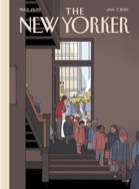
[READ: May 26, 2012] “The Lost Order”
I was delighted to see that Galchen had a new short story in the New Yorker.
The story concerns a woman who has lost a lot recently. She is standing in the kitchen not making spaghetti (an arresting opening if ever there was one). She is concerned that she needs to lose weight, so she is trying not to eat. She has also recently lost her job–she tendered her resignation (she likes that word, tender). Her husband has recently lost his wedding ring (it doesn’t “mean” anything–they don’t care for symbols). And she has just taken a phone call from a belligerent man who orders Chinese food from her. She listens to the entire order and even frets about making it. But of course, she doesn’t.
I loved the idea of the her taking the man’s order and promising 30 minutes. This actually happened to me once. I mis-dialed and the person on the other end took my order, but when I went to the (Chinese) restaurant to pick it up they had no idea what I was talking about. I did not, as this caller does, call back 50 minutes later and call the person a cunt. I just waited for my food with a new order. Because of my personal association with that part I would have liked more of that angle of the story, but it proves just to be one part of a disarming collection of happenings for the narrator. Continue Reading »
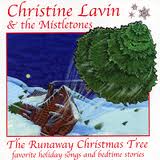
SOUNDTRACK: CHRISTINE LAVIN AND THE MISTLETONES-A Christmas / Kwanzaa / Solstice / Chanukah / Ramadan / Boxing Day Song” (2006).
I’ve always liked Christine Lavin, but she has fallen off my radar in recent years. I’m delighted that she’s still making cool (and funny) folk music. We quickly added this to our holiday playlist.
It’s an a Capella track done in a round. It opens with Christine wishing everyone a Happy Christmas and a happy new year (to an original melody). And then a male voice wishes you a happy Kwannza, a hip hop happy Kwanzaa (if you celebrate Kwanzaa). A third voice sings the same melody wishing happiness to all who celebrate Solstice. A second male voice now wishes you a happy Chanukah.
Then, in perfect harmony, third female and then male voices throw in Ramadan and, amusingly, Boxing Day. It’s a light-hearted take on multiculturalism, all wrapped up in a pretty melody.
[READ: January 1, 2013] Alison Dare: Little Miss Adventures
I recalled the Alison Dare comics from when I used to be an Oni Press fanboy (I still love Oni Press but I can’t keep track of comics anymore). Anyhow, Alison Dare is an all ages comic, so I brought a copy home for Clark from the library. But he didn’t like it. I wondered if it was because the main character was a girl, but i think it’s because the comic is black and white–he really only likes color comics. Huh. I also found that it may have been a little confusing for him–the writing was style was really engaging but not exactly straightforward. Maybe in a year or so he’d enjoy it.
But I enjoyed it.
This book collects the first three Alison Dare stories: Continue Reading »
SOUNDTRACK: TROUT FISHING IN AMERICA-“I Got a Cheese Log” (2004).
We bought the Trout Fishing in AMerica Christmas CD (Merry Fishes to All) this year. It arrived on the day before Christmas, so we didn’t get to listen to it too much). But I rather enjoyed the nonsense of this song–everybody else got exactly what they wanted for Christmas but “I got a cheese log.” It’s catchy (with piano, which is a bit unexpected for them) and the punchline of the chorus has a great wanh wanh sound.
But getting only a cheese log is enough to make anyone turn evil.
[READ: December 31, 2012] Vordak the Incomprehensible
Technically, according to the cover, the author of this book is Vordak the Incomprehensible, but I’m going by the copyright page.
C.’s school had a Scholastic book fair. I grabbed this book (with its large $2.50 sticker on the cover) figuring I could get him a surprise gift. Of course, the people who work the Scholastic Book Fair seem to have no idea that one might be trying to surreptitiously buy a book for the child one is with–imbeciles! brain-dead nincompoops!! (See the book is working, I feel more evil already). Anyhow, since C. saw it, I told him that he could “buy” it for me for Christmas. Which he rather liked. And so, I read it on the last day of 2012 (making sure he saw me read it).
This book is very funny and a lot of fun. I feel like it may be a year or two too old for him to really appreciate (like Wimpy Kid)–he would certainly laugh at most of the jokes, but I think it would be really really funny with a bit more, dare I say it, life experiences.
So the book is written by Vordak the Incomprehensible, an evil mastermind who is retiring. He is passing along every thing he knows to you, the reader, despite his utter lack of faith in your abilities. Continue Reading »
I didn’t know anything about Frank Ocean until I started looking at all of the Best Albums of 2012 lists. He was on everyone’s list and was pretty near the top of all of them. So it was time to check him out.
It turns out that he’s affiliated with the Odd Future collective, whom I’ve talked about in the past. But he’s also been on a lot of big name records. Channel Orange is his debut album (that’s not a mixtape) and the big surprise seems to be that this song (which he sang live on Jimmy Fallon) is about a male lover. And I guess that’s progress.
So Ocean sings a slow R&B style, and I have to say his voice reminds me of Prince a lot. Which is a good thing. I really like this song. It has gospelly keyboards (but in that Purple Rain kinda way). And a really aching vocal line. It’s really effective and it’s really simple. And I think that’s what I liked best about this song and others that I’ve heard–he’s really understated. Crazy, I know.
Now I do not like R&B, it’s one of the few genres that I just don;t get. And yet there’s something about this album (the tracks I’ve listened to) that is really compelling. It’s not awash in over the top R&B trappings, and it doesn’t try too hard. It’s just Frank (not his real name) and his voice over some simple beats. A friend of mine recently said that all of a sudden she “got” this album, and I think I may have to get it as well.
[READ: December 30, 2012] McSweeney’s #12
At the beginning of 2012, I said I’d read all of my old McSweeney’s issues this year. I didn’t. Indeed, I put it off for quite a while for no especial reason. Now as the year draws to an end, I’m annoyed that I didn’t read them all, but it’s not like I read nothing. Nevertheless, I managed to read a few in the last month and am delighted that I finished this one just under the wire. For those keeping track, the only issues left are 13, 14, 15, 16, 20, 10, 38, (which I misplaced but have found again) and 42, which just arrived today. My new plan in to have those first four read by Easter. We’ll see.
So Issue #12 returns to a number of different fun ideas. The cover: It’s a paperback, but you can manipulate the front and back covers to make a very cool 3-D effect (by looking through two eyeholes) with a hippo. The colophon/editor’s note is also back. Someone had complained that he missed the small print ramble in the beginning of the book and so it is back, with the writer (Eggers? Horowitz?) sitting in Wales, in a B&B, and hating it. It’s very funny and a welcome return.
As the title suggests, all of the stories here are from unpublished authors. They debate about what exactly unpublished means, and come down on the side of not well known. And so that’s what we have here, first time (for the mos part) stories. And Roddy Doyle.
There are some other interesting things in this issue. The pages come in four colors–each for a different section. The Letters/Intro page [white], the main stories [pink], the Roddy Doyle piece (he’s not unpublished after all so he gets his own section) [gray] and the twenty minute stories [yellow]. There’s also photographs (with captions) of Yuri Gagarin. And a series of drawing that introduce each story called “Dancewriting”–a stick figure on a five-lined staff. They’re interesting but hard to fathom fully.
The WordPress.com stats helper monkeys prepared a 2012 annual report for this blog.
Here’s an excerpt:
19,000 people fit into the new Barclays Center to see Jay-Z perform. This blog was viewed about 130,000 times in 2012. If it were a concert at the Barclays Center, it would take about 7 sold-out performances for that many people to see it.
[WATCHED: November-December 2012] Sherlock & Elementary
This has been the year of Sherlock Holmes for us. We loved the first Robert Downey Jr Sherlock Holmes movie. Sarah loved the second one (I fell asleep, but I don’t blame the film). And then U.S. TV began airing Elementary this year. It’s a contemporary version of Sherlock Holmes in which Watson is played by Lucy Liu–she is his “sober companion” trying to keep him off drugs and alcohol. I kind of like this conceit–it’s a fun twist on Watson, and yet it loses some of the interplay that is fabulous between Watson and Holmes, especially since Holmes (played by Johnny Lee Miller) seems to be trying to get away from Watson. Nonetheless, the show is quite enjoyable and is quintessentially Holmesian.
A back story note: Sarah and I do not like police procedurals. We don’t watch anything with any of the initials: SVUL&ONCISCSIER5-o, none of it. Even if t he show is supposed to be awesome, as soon as I hear “police” I refuse to watch it. And yet here we are hooked on Holmes. So what is it about these shows? Well, they focus on little clues (impossible clues, frankly). They rely on being really smart. And, this may be the key, they don’t rely on guns, police, judges, or any other tropes of police shows. They’re like puzzles…puzzles that you don’t mind not being able to figure out yourself because Holmes is so damned smart. I guess these are technically mysteries rather than cop shows, and that’s pretty cool. Continue Reading »
Sometime after I read Great Expectations, PBS aired this BBC production. I don’t know if it’s a movie or a mini series and I don;t really care, so I’m calling it a movie. So I thought I’ll just wait until after I watch the movie and then write my post about both. And now here were are, several months later. Sigh.
Anyhow, this movie version of the book was outstanding. One of the main criticisms leveled at movie versions of books is that your own imagination makes things far “more” than any film could. For instance monsters in your head are far more scary than any special effects could make them. But the opposite was true here. I never would have guessed that the people in the book could be so horrible, that the squalor could be so extreme and that the atmosphere could be so stifling–I assume years of good breeding made me forget just how bad things used to be
Part of the fault also belongs to Dickens–he was writing for a contemporary audience–for people who didn’t need to be told, for instance, how old Pip was (they would just know) or how old he would need to be to receive his inheritance. The story was serialized in a magazine, so it was very current. And so those of us with a great remove from daily life in 1850 don’t always get the details we need. This is not to say that Dickens himself was not a master writer or an evocative picture creator. He often includes lots of details they are very helpful, but some things are left out. So the movie filled in gaps and details that I didn’t know, and they brought the book to life in a way that reading it alone didn’t. Again, no disrespect to the book–it’s the same way that seeing Shakespeare is better than reading him). Continue Reading »
SOUNDTRACK: PHINEAS AND FERB-“We Wish You a Merry Christmas” (2010).
This song takes the music of We Wish You a Merry Christmas and modifies it to fit the show. Several characters get a verse, with my favorite coming from Isabella:
Oh, come tell me what’cha doin’ / All my relatives just flew in /From Mexico and Jerusalem / For the holidays
Both Christmas trees and menorahs / It can be confusing for us / When we break into a chorus / Of “olé” (¡Olé!) and “oy vey” (¡Oy vey!)
Although I usually find Doofensmirtz’ lines to be the best, I don’t care for his verse–it is forced and not terribly funny. But that is more than made up for with the end as it revisited the beloved figgy pudding:
All: We wish your every endeavor
Makes this the best Christmas ever
And we’re all so glad that we will never
Mention figgy pudding…
Dr. Doofenshmirtz: Oh, great. Well now we’ve mentioned it. Major Monogram: You know, no one would have noticed if you’d have just kept your mouth shut.
We recently added the entire Phineas and Ferb Holiday Favorites album to our Christmas music collection. Thanks, Swampy.
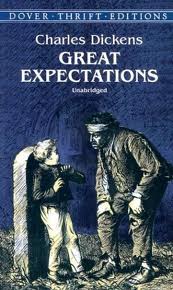
[READ: end of 2011-beginning of 2012] Great Expectations
I started this book over a year ago–Christmastime 2011 and I finished it in January of this year. And I imagined writing a grand, eloquent post about the book, so I bided my time, and have now delayed for almost a year and have basically forgotten everything significant I thought about saying about it. Never put anything off in the hopes that genius will strike.
So I read this book because my former coworker Stephanie talked about how much she liked it. I had never read any Dickens before (possibly Tale of Two Cities but that would have been in High School and doesn’t count). And Nick Hornby raves about Dickens in the pages of The Believer, so it seemed like a time to try him out. Back when I was in college I joined a book club and received The Oxford Illustrated Dickens–30-some volumes of all of Dickens’ work in beautiful hardcover editions. And I have lugged them with me to all my homes. And now I have finally read one.
I was as surprised by how surprised I was by the story. I knew the very basic outline and character names (thanks South Park), and from what I knew of Dickens, I thought I had the whole story figured out pretty early on. But no, there was more afoot than I would have ever guessed.
So, the story: Phillip ‘Pip’ Pirrip is a blaksmith’s apprentice. He was orphaned as a young babe and is currently living with his (terribly mean) older sister and her husband, a kindly blacksmith named Joe Gargery. One dark and spooky night (as only existed in 19th century England), Pip is out in the swampy foggy graveyard visiting his parents’ graves when he hears a fight. Two convicts have escaped from a prison ship and are fighting amidst the marshes. The “winner,” spies Pip and threatens him–unless he brings a nail file and food, he will kill the young boy. Pip is freaked and runs home to steal one of Joe’s files and a piece of pie that his sister has baked. The next day the police capture the criminals, and the one whom Pip helped gives Pip a long look and says that he stole the pie, which lets Pip off the hook from his sister’s wrath.
Meanwhile, up the road a piece, there’s an old dilapidated house with an old dilapidated woman living in it. She is Miss Havisham. The delightful thing about Dickens is that Miss Havisham is crazily over the top and yet, because of the time it was written, she is totally believable. (She may indeed have been based on someone Dickens knew). No one like Miss Havisham could exist now–she would be institutionalized in a heartbeat, but back then, this woman could be head of a household and have servants and simply be spoken of as a bit odd. For odd she is. Continue Reading »
 SOUNDTRACK: ARCADE FIRE-The Suburbs (2010).
 When The Suburbs came out, it was hailed as a masterpiece and also panned as a hack job (more the former than the latter). It was impossible to listen to it without hearing raves and rants. And then Arcade Fire became a kind of punchline or punching bag, the band people loved to hate (although not as much as Nickelback). I didn’t write about this record then because I wanted to let the air clear. And then I kind of forgot about it. I pulled it out again recently and found that I really enjoyed it. It’s a long album with a lot of different tempos. It reminds me of the kind of albums I used to listen to as a kid, yes in the suburbs, in which I could absorb an entire hour in one sitting (preferably while driving).