Feeds:
Posts
Comments

enchanteSOUNDTRACK: OS MUTANTES-Fool Metal Jack (2013).
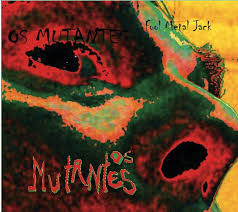
jackI first heard this album streaming on NPR.  I really enjoyed it and was surprised by how diverse and yet still kinda 1970s hippie-feeling it was.

I didn’t know anything about the music of Os Mutantes before hearing this disc.  In a nutshell (and the details seem pretty complicated), they released 6 albums from 1968-1974 and then broke up.  They reunited in 2009 and this is their second album after reuniting.

I don’t know what any of them did during the intervening years, but it is clear that the psychedelic vibe they explored the first time around never fully left them.  Because even though there are rocking numbers, there are plenty of groovy organs and songs about love on the disc.  And yet the first songs I heard from the album were really quite rocking, so I was surprised by the mellow vibe as the album progresses.

There’s precious little information about the record on the record jacket, but I do know that Sérgio Dias wrote all the music and is the lead singer.  The disc opens with a kind of introductory song, “The Dream is Gone.”  It has a slow opening with cool bass lines and Dias’ voice which is soft and kind of worn sounding.  There are some cool electronic effects sprinkled around and big harmonies.  This leads to the second song, the stomping anti-war track, “Fool Metal Jack” (which I talked about here).  It’s got a big fat bass and menacing riff (as befits a war song). The song is graphic and ugly (with a loud cough in the midst of a verse).  It’s followed by the big old sloppy sounding rocker “Picadilly Willie” with big 70s sounding vocals (I’ve mentioned before that it sounds like Frank Zappa song to me, and it still does). These two songs are so loud and noisy they really belie the psychedelic vibe that the rest of the disc presents.

“Gangjaman” has a reggae feel (with a big round bass) and fun backing vocals.  While “Lookout” has a kind of Santana live at Woodstock vibe–a slinky rocking guitar and big chords.  There’s also some traditional (I assume) Brazilian native singers.  “Eu Descobri” is sung by a female vocalist (in Portuguese I assume) it is a pretty, slinky song with flutes and a cello and echoed vocals.  It hearkens back to the late 60s but still sounds contemporary.

“Time and Space” has more big bass (the bass really sounds great on this disc), but this one is a slow acoustic umber with excellent harmonies.  I love the layered vocals that reminds me of good prog.  “To Make It Beautiful” is an absolute hippie track with lyrics like: “I need to create love with you my love.” It has his great falsetto and buzzy guitars.  It is so far away from the early rockers and yet to me the album doesn’t feel disjointed.  “Once Upon a Flight” is a synthy/guitar rocker, but in a very 70s style. It’s also got a big cello solo at the end.  “Into Limbo” is a jangly slow guitar song with Dias’ voice sounding great.

“Bangladesh” has a long acoustic guitar intro with a very middle eastern feel.  By the middle it turns into a kind of prayer with a repeated chorus of: “Hare Jesus Hare Buddha Hare Judas Hare Rama Hare Krishna Hare Lucifer.”  The final song “Valse LSD” is a complex acoustic song with male and female vocals.  It’s quite pretty.  It doesn’t really feel like the end of the disc (I would have ended with “Bangladesh”), but it’s a good summary of the album as a whole.

 Since I am unfamiliar with Os Mutantes’ earlier work, I can’t really say how this fits into their discography, but I think this is just a great album and I’m looking forward to hearing more of their earlier works.

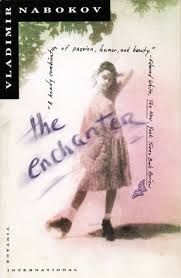
[READ: October 2, 2014] The Enchanter

naboI have had Nabokov on my list of authors to read for a long time.  I have read and enjoyed a few of his books and planned to read his oeuvre at some point, just not quite yet.  And then, as serendipity would have it, I stumbled on a book of his novellas (the Penguin classic edition) and decided to read them.  Because they aren’t really meant to be taken as one item, I’m going to mention them individually.

The Enchanter was Nabokov’s final work written in Russian.  It was never published during his lifetime.  The Notes to the story in the book suggests that Nabokov had a vague recollection of the story (with many details incorrect), but that he believed he discarded the original version when he moved to America.  He evidently found it after publishing Lolita, but did not feel compelled to publish it.  It was his son who translated and published it after his death.

The Enchanter is something of a precursor to Lolita in that it involves a man who is obsessed with adolescent girls.  What separates this from Lolita (although there are many similar plot contrivances) is the mental state of the protagonist.  He is disgusted by himself.  He knows what he does is wrong, he even imagines himself in animalistic ways.  And yet he cannot help himself.  (This is not to say that that is not present in Lolita, just that it is more or less the focus here). Continue Reading »

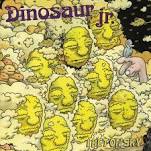
nobokov eyeSOUNDTRACK: DINOSAUR JR.- I Bet on Sky (2012).

ibetI have been so pleased with the reunited Dinosaur Jr.  I’ve enjoyed each of their albums, and feel like they really have hit a great stride of songwriting.  The only difference to me is that these songs are all pretty long, something I don’t really think of as a Dino Jr thing.  They do often have a few longer songs, but on this disc, 5 songs are over 5 minutes and two are nearly 5 minutes long.

As with the last album, I’m not sure why Lou Barlow agreed to reuniting.  Barlow is a great songwriter and has successful other projects.  He gets two (short) songs that he write and sings and that’s kind of it.  I mean, they sound great and really flesh out the album, but it seems like a weird thing for him to do unless he just likes playing the old Dino stuff again.

And then of course there’s Mascis.  It’s amazing how much of a slacker J Mascis sings like and yet what a careful and meticulous guitar player and songwriter he is.  And yes, it’s great to have Murph on drums, too.

“Don’t Pretend You Didn’t Know”  opens just like a great Dino Jr song—that guitar is unmistakable. It’s a fast rocker. With a big old Dino chorus. There’s a lengthy outro solo that really stretches out the song into a jam.  “Watch the Corners” is the other kind of Dino song, a chugger with big slow open chords and a nice riff. (and again a wonderful chorus).  “Almost Fare” is the other, other kind of Dino song, poppy with a kind of cute riff and a slow drawl in the vocals.  And “Stick a Toe In” is a slower ballad–the fourth kind of song that Masics writes so well. It has a nice chorus (with piano (!)) and some dramatic steps in the chorus.  Suffice it to say that although they all sounds like Dino Jr., it’s impressive how many styles of song Mascis writes so well.

Barlow’s first song is “Rude,” a short fast punk rocker.  At just under 3 minutes (with no solo) the song pounds along with a very funny chorus: “I wish I didn’t care cause caring is rude.”  Even though it changes the flow of the album, it just adds to the diversity that is Dino Jr.  In “I Know It Oh So Well” Mascis’ ringing guitar comes back  It’s a simple song with just a few chords and a simple interstitial riff, but he makes it sound very full.

“Pierce the Morning Rain” is the only short Mascis song on the disc (and perversely it gives the album its title).  It has a very heavy metal guitar riff and a super fast paced (and sung) tempo.  “What Was That” is a slow burner with many elements of classic Dino—a great solo in the background of the song and a cool riff along with Mascis’s patented delivery.  “Recognition” is Barlow’s other song. It almost makes 4 minutes.  It sounds more like part of the record (and, strangely, also like the popular Sebadoh tracks). You can really hear Barlow’s vocal style shine through and it’s a great counterpoint to all the Mascis on the disc.  It’s also great song—kind of slow and angular but with a cool fast riff in the bridge.  It also features a pretty wild (and un-Masics-like) guitar solo

“See It on Your Side”  is the last song and at nearly 7 minutes, it feels a little long.  Although that may be because the song seems to end and then starts again.  And yet, that end solo is pretty great.  It’s a very notable Mascis type riff that starts the song.  Even with all of the long songs, the disc still clocks in at around 45 minutes, which is really a perfect amount of Dinosaur Jr. consumption.  Looking forward to the next release.

[READ: October 1, 2014] The Eye

naboI have had Nabokov on my list of authors to read for a long time.  I have read and enjoyed a few of his books and planned to read his oeuvre at some point, just not quite yet.  And then, as serendipity would have it, I stumbled on a book of his novellas (the Penguin classic edition) and decided to read them.  Because they aren’t really meant to be taken as one item, I’m going to mention them individually.

The book includes a Foreword by Vladimir (his son Dmitri translated this with help from Vladimir) that talks a bit about when he wrote it and how he didn’t bother to include details about the location because it wasn’t important to the story (it’s a surprisingly casual foreword).

“The Eye” is a strange story (technically a novella or a very short novel) in which a man, despondent at the beating he receives, tries to kill himself and then believes that he does.

The narrator has been having an affair with a married woman named Matilda.  He’s been a little bored with her lately, and is pretty much over her.  But one night when the narrator is working as the house tutor for two boys (the boys are completely disrespectful to him and every scene with them is very funny), the cuckolded husband comes over and really beats him up.  Just really lays into him (the narrator’s protestations about this not even being his house are rather amusing).  I especially liked that the husband calls first and doesn’t tell him who he is “So much the better–it’ll be a surprise.” Continue Reading »

lostscrapSOUNDTRACK: THE XX-Coexist (2012).

coexGiven my proclivities towards noisy fast rock, there is no reason that I should like The XX, and yet I like Coexist quite a lot. It is such a spare album, but Romy’s voice is fantastic—so sensuous and breathy–that she can totally handle a song that is nearly a capella. So a song like “Angels” whose music consists pretty much entirely of a beautiful echoey guitar (and virtually nothing else except for some occasional soft percussion) is engrossingly intimate and not at all boring. In fact when that simple percussion eventually comes in, it’s like a revelation of sound accompanying her.

What also keeps the album interesting is that she is not the only singer (so there’s something for everyone). “Chained” has Oliver’s breathy, sexy voice as he more or less whisper/sings the lyrics. It has slightly more complex arrangements (meaning the drum is constant and there are quiet waves of synths). “Fiction” slowly builds with an ominous muted guitar motif and echoed chords. But when the chorus kicks in, that muted guitar grows loud and it’s almost overpowering (relatively, of course).   “Try” brings in a spooky kind of keyboards that is slightly unsettling under their mellow hushed duet of vocals.

The diversity of simple sounds that Jamie xx adds to each song are revelatory.  Even though each song is quiet and intimate, the sounds that he uses are so very different within that limited palate.  So “Reunion” sounds like a steel drums, before adding pulsing bass beats. “Sunset” has a slinky guitar and “Missing” introduces as drumbeat that is like a heart beat.  “Tides” has one of the loudest drum beats on the record, alternating with a delicate guitar line.

The simple bass line adds a really funky quality to “Swept Away.”  And when the claps and keyboard hits come in it feels almost like a dance song.

This is a great album for quiet nights and headphones.  Even if the songs seem to be mostly about lost love, it has a calming effect that is really enjoyable.  I’ll have to check out their debut as well.

[READ: September 30, 2014] The Lost Scrapbook

Some fans of David Foster Wallace speak well of Evan Dara (at least that’s how I’ve heard of  him).  I was unfamiliar with him and the fascinating story he has built around himself.  Evan Dara appears to be a pseudonym.  As one writer put it: “Hell, we don’t even now who Evan Dara is. Apparently, he is a male American in his 30s living in Paris.”  This, his debut novel, has attracted attention not only for being really weird, but for being really good.

What was fun about reading this was that I knew there were strange things afoot in the book, but I didn’t know what exactly (I really like to go into a book completely blind if I can).  So when the book started out with a conversation in which no character names were given (or even how many there were), I was prepared.  And while I didn’t really know what the subject they were talking about was, I figured that would be fine as well.  Then when four pages in the all caps word YIELD seemed to signal a change of narrator/perspective/something, I thought, okay this is what I’m in for.

Then I noticed that every paragraph which wasn’t conversation (with an em dash) was preceded by three ellipses (and ended with same).  A few pages later there’s an all caps TOW-AWAY ZONE which introduces another shift.

And somewhere around page 14 a sort of plot begins to form (although it’s unclear whether or not any of the earlier sections have anything to do with this one).  A man is shot…or not?  But then after the KEEP DOOR CLOSED section break, a new story develops.  A man with a Walkman (I was trying to decide if this was deliberately retro or intentionally set in the 80s, but that was unclear to me) is driving along to meet a man named Dave (at last a name!).  Dave is a filmographer who has been collecting fireflies for a video project.  And just as we near a kind of resolution of this section, it morphs, unannounced, mind you, into something else entirely–a discussion of music, specifically Beethoven and his decision to rework limited material into multiple variations.  It is fascinating and engaging and very well-considered, but it too ends before anything can be “resolved.” Continue Reading »

extremeSOUNDTRACK: QUEENS OF THE STONE AGE-…Like Clockwork (2013).

qotsa I have loved the earlier QOTSA albums, but I just couldn’t get into this one when it came out.  Perhaps it was too…subtle?  I put it aside, heard everyone rave about it and kind of forgot about it.  Well, I recently rediscovered it and now I get it.  It is just as good and complex as everyone said–I think I was just missing the subtleties, yes.

It’s still very QOTSA–Josh Homme is Josh Homme after all, but there are added elements–pianos, strings (!) and slower sections that add depth and bring really interesting sonic textures to their sound that make this album far more complex but no less sleazy fun.

The roaring sounds that are the guitars of “Keep Your Eyes Peeled” (accompanied by that bottom heavy bass are just fantastic.  “I Sat By the Ocean” has a chorus that goes from good to great when it builds to a second set of chords–it’s really irresistible.  I recall being surprised by the ballad “The Vampyre of Time and Memory.” Okay not a ballad exactly but a piano intro that turns into a classic rocker (complete with lengthy guitar solo).

“If I Had a Tail” is a wonderfully sleazy track with a great riff and a great sound.  It’s also got some of the more unusual lyrics I’ve heard–“If I had a tail, I’d own the place.  If I had a tail I’d swat the flies.”  It’s followed by “My God is the Sun” another great riff-based song where Homme’s falsetto is just another catchy element of the song.  It also has another great chorus (why didn’t I like this album last year?).

“Kalopsia” slows the disc down quite a lot–it’s a pretty, gentle song.  Until you get used to it being a mellow song and then it turns into a real rocker (and back again).  “Fairweather Friends” has another great riff and a funny ending with Homme cutting off his chorus and saying “I don’t give a shit about them anyway.”  “Smooth Sailing” reintroduces that sleazy falsetto.  It has a (another) great chorus and an amazing guitar riff that is slowly manipulated into sounding really alien.  It’s very cool.

Most of the songs are pretty standard length, but the final two songs really stretch out.  “I Appear Missing” pushes 6 minutes and has some slower elements, and a great guitar section that connects them all.  The five and a half-minute “Like Clockwork” also starts with a lengthy piano intro and then morphs into another classic rock soloing type song.

It’s one of the best albums of 2013 that I didn’t realize until 2014.  I do wish they lyrics sheet was included as I’m not really sure what he’s saying half the time, and I’m not sure if my guesses make any more or less sense than the actual words.

[READ: September 2014] The Extreme Life of the Sea

I saw this book when I took a tour of the Princeton University Press building.  I loved the cover and thought it seemed like a really interesting topic.  I was later pretty delighted to see it on display in my local library, where I grabbed this copy.

The book is small, but I was a little daunted by the tiny print size (old age or laziness?).  Nevertheless, I was quite interested in the subject, so I pressed on.

Interestingly, a lot of the information that I read in the book, my nine-year old son also knew about–he loves this kind of scary undersea information.  The difference here is that the Palumbis (a father and son team–Stephen is a Professor of Biology, Anthony is a science writer and novelist) write for adults and include a lot of the scientific information to support and explain all the stuff that my son knows–although he knew a surprising amount of detail as well.

And the writing was really enjoyable too.  Anthony knows how to tell a story.  The Prologue itself–about the battle between sperm whale and giant squid–is quite compellingly told.  And whenever an actual creature is involved–he engages us with the creature’s life cycle. Continue Reading »

gulpSOUNDTRACK: PET SHOP BOYS-Elysium (2012).

220px-PSB_ElysiumPet Shop Boys are known for big dancey singles.  And so perhaps it’s something of a surprise to get this album which is pretty but certainly low key.   It’s not like they haven’t written low key songs before, but there’s very little to get up and sing about here.

Which is not to say the album is bad.  It’s actually very good once you accept the lack of big songs.

Of course, having said that, there are one or two anthemic tracks, but the album overall is more introspective (unlike their album Introspective).  The title, Elysium refers to the afterlife where those chosen by the gods would live a happy (after)life, indulging in whatever they had enjoyed in life.  Yes, mortality is on Tennant’s mind.

“Leaving” opens the disc with a great chorus, which leads to this somber opening verse: “Our love is dead but the dead don’t go away.”  And that certainly sets the tone–nice synth rock, but nothing to loud and frenetic.  “Invisible” is a similarly low key song.   This is one of their quiet ballads, with just touches of synth melody: “I’m here but you can’t see me, I’m invisible.”  It’s a definite downer of a song but it’s very pretty.

Of course all that I said about mellow low key albums is belied by the third track: “Winner.”  This was written in time for the 2012 Olympics in London and it is very much an anthem about, well, winning.  It’s kind of obvious (although lyrically it is more in depth than many similar songs), but the melody is just simple and uplifting–(just what you’d want for Olympic documentaries).

“Your Early Stuff” is a much darker song–it is a song written to a “washed up” performer: “you’ve been around but you don’t look too rough and I still quite like some of your early stuff.”  It’s funny but also tender.  “A Face Like That” is the closest thing to a dance single on the album–it’s fast and synthy and the vocals are echoed and repeated.  But even the verses are more low-key than you might expect from the chorus.  “Breathing Space” is another pretty ballad.

“Ego Music” is another faster song, with a very funny premise: “ego music–it’s all about me.”  It’s a slight song but good for a laugh.

“Hold On” also aspires to anthemicness, but it is slower than a typical PSB anthem.  It also has a synth line that is vaguely classical.  Although of all the songs, this one is lyrically the most tautological:  “Hold on, there’s got to be a future or the world will end today.”  “Give it a Go” is a slower, simpler track. Not too memorable, although the chorus is bouncy and catchy h.

“Memory of the Future” has a great synth line and Tennant’s cool accompanying vocals–it’s a classic PSB song and one of my favorites on the disc.  Although I don’t love “Everything Means Something,” the final song, “Requiem in Denim and Leopardskin” is a great ending–slow but very catchy and rather wry and funny.

So this album overall is certainly more, dare I say it, “mature” for the Pet Shop Boys, but they haven’t lost any lustre in songwriting.

[READ: Summer 2013] Gulp

Yes, that date is correct, I read this book over a year and a half ago.  I meant to write about it then, but I loaned it out to someone and I like to have the book nearby when I write about it.  So I put it off and put it off and now that I have the book back, I will do my best to remember whatever I can about it.

But the thing about this book is that it was so memorable, I won’t have much trouble writing about it anyhow.

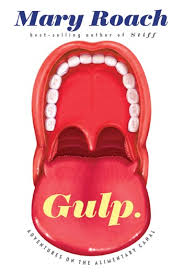
Mary Roach investigates the physical properties of eating from pre-digestion through to the end.  And she does it with thorough research and a boatload of humor (sometimes gross out humor, although she warns that that is not her intent–“I want you to say, ‘I thought this would be gross, but it’s really interesting.’  Okay, and maybe a little gross.” (19).

She begins with the nose.  Most people know that the nose contributes tremendously to your sense of taste.  But Roach really explicates how much.  She speaks to a woman, Langstaff, who is a professional sniffer and who is currently staffing the Olive Oil taste Panel at the Olive Center.  She is training novices to be be better at tasting flavors.  But Langstaff herself for instance rarely drinks beer for pleasure even though she is an expert at tasting it.

The most amusing (or not, depending) information here is that there are people who were paid to taste cat food.  Yes.  And that humans prefer cat food with a tuna or herbal flavor over those that taste “rancid,” “offaly,” “cereal” or “burnt.”

Fortunately, the second chapter shows that it is actually dogs who test the dog food.  It turns out that dogs and cats really shouldn’t enjoy dry dog food (cats and dogs are not grain eaters by choice).  Dry dog food was created as a means of convenience for people (and as a way to stop tinning food during the war).  As for your pets, “pet foods come in a variety of flavors because that’s what we humans like, and we assume our pets like what we like.  We have that wrong.  ‘For cats especially…change is often more difficult than monotony.'” (43).  Some other pet observations: cat’s can’t taste sweet (although dogs can and rodents are slaves to it).   Continue Reading »

 nothing canSOUNDTRACK: DJANGO DJANGO-Django Django (2011).

220px-Django_Django_Album_CoverI heard about this band when “Default” became a kind of alt rock standard.  It got a little overplayed, but there was something so catchy and yet so slightly odd about it that I really wanted to hear more.  So when I heard how catchy and fun “Hail Bop” proved to be, I knew it was time to check out the whole album.

And the album is full of quirky, delightful songs.  In fact, despite how weird the album cover art is, it actually represents the sounds of the album pretty well.  It’s a kind of arid looking desert but with a futuristic weird alien thing scampering amidst it.  Thus, there are acoustic twangy guitars underpinning the songs that are liberally sprinkled with oddball sci-fi sounds and tweaks of gloriously fun synths.

The album has a completely cohesive feel (which I believe comes from the sunny vibe and the beautiful harmonies), and yet there is a great amount of diversity in the music.  Many of the songs are synth heavy and catchy, but not dance rock at all.  “Waveforms” is a strange song with synths being manipulated over a heavy drum beat.  But it’s those vocals (especially in the chorus) that elevate the song above the mechanical nature of the music.  “Zumm Zumm” is even weirder with the kind of sci-fi effects that get thrown around, and yet that chorus once again is really pretty.  And “Default” sounds like it is skittering and repeating as it pounds away–a strange and infectious single.

But for all the weirdness, “Hail Bop” is a supremely catchy sweet song.  And “Firewater” is propelled by a low bass with acoustic guitars on top.   Reference points for me include Super Furry Animals and The Soundtrack of Our Lives, neither one glaringly obvious sign posts but they have that same harmony filled vibe.  See especially “Love’s Dart” another catchy song with a fun twangy Western feels.  There’s mellow guitar on “Hand of Man” and there’s a surf guitar stomper in “Wor” and more stomping drums in “Storm.”

My album contains some extra remixes.  I’m not a big fan of remixes so these are needless additions (and add about 20 minutes  to the total running time).  But that’s got little to do with the album itself, which is really a treat for fans of poppy quirky rock.

[READ: August 2014] Nothing Can Possibly Go Wrong

Sarah gave me this book for my birthday because we both like Faith Erin Hicks (and we both like First Second books).  And I was not disappointed.

Obviously, a title like this leads you to conclude that everything will go wrong, and it pretty much does.  The cover image doesn’t quite convey what’s at stake in the story, although closer inspection reveals a kind of geeks (the ones with glasses) and cheerleader (the ones in uniforms) vibe.  Which this story certainly has.

Nate and Charlie are old friends.  Charlie is the captain of the basketball team and Nate is the president of the robotics club.  But unlike a typical pairing of these two types, Charlie is laid back and totally mellow while Nate is neurotic and angry with a huge chip on his shoulder.

As the story opens, Charlie has just been dumped by his girlfriend, the head cheerleader. Charlie doesn’t seem so upset by it but Nate is furious (as usual).  Of course, he is mostly furious because he thinks that Charlie is still with Holly and because the cheerleaders have declared war on the robotics team.  Specifically, they are trying to take the science funding to use for new uniforms (can this actually happen in school?  It happens in fictional schools all the time).  Obviously there’s nothing that Charlie can do about it, so he just goes home, allowing Nate to stew.

But mellow Charlie also has a dark storyline.  There’s a note from his dad telling him to call his mom to which he says “Yeah, that’s not happening.”  We learn a smattering of information about why Charlie is mad at his mom, and it is clear that their feud is going to build to a head before the story ends.  So tension is definitely present in the story. Continue Reading »

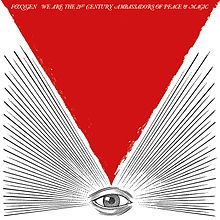
jun9SOUNDTRACK: FOXYGEN-We Are the 21st Century Ambassadors of Peace & Magic (2013).

foxyI had no idea this was Foxygen’s third album (they have a new album out this week as well).  I had only heard of this because of NPR.  And I was delighted with the band’s utterly retro feel and sound–so much retro that it is almost too much.  But they do it with such flair that it works.  Indeed, the whole feeling of this album is one of sampling all of recent music history–with elements thrown in haphazardly (but effectively) and really celebrating a whole 60s/70s vibe with a sprinkling of modern technology.

“In the Darkness” is a 2 minute piano heavy track with horns, big swelling vocals chorals and all kinds of joy.  “No Destruction” though is where the retro sound really shines.  Sounding like a Velvet Underground track with a sweeter singer (who is no less blase).  Except that the chorus rises into a glorious hippie happiness.  It also features funny lines like the deadpan, “There’s no need to be an assshole you’re not in Brooklyn anymore.”

“On Blue Mountain” opens with a kind of Flaming Lips vibe (deep morphing voices counting down), but Sam France has a much higher pitched voice as he sings the slow intro.  Once the song kicks in faster, the real hippy vibe (combined with some Rolling Stones and some girlie backing vocals) kick in.  There’s even a big friendly chorus (that reminds me of “Suspicious Minds”).  After almost 4 minutes, the song shifts gears entirely into a raucous sing along  (with what sounds like a children’s choir).

After the manic intensity of “Mountain,” “San Francisco” emerges as a sweet delicate flute filled hippie song.  This was the first song I heard by them and I loved it immediately–the simple melody, the delicate (funny) female responses, the swelling strings. it was delightful.  “Bowling Trophies” is a weird little less than two-minute instrumental that leads to the glorious “Shuggie.”  “Shuggie” is the least hippie song on the album and screams more of a kind of French disco pop, with some wonderful lyrics.  The chorus is just a rollicking good time and the wah wah synth solo is terrific.  At three and a half minutes the song is just way too short, although it seems that anything that last longer than 4 minutes will shift gears into something else eventually anyway.

“Oh Yeah” brings in a staggered kind of sound, with some interesting breaks and stops.  It also inserts some doo-wop into it.  I love how the end once again shifts gears into a “freak out” with a wild guitar solo and fast drums.  The title song is fuzzy and distorted (the vocals are nearly inaudible).  It’s fast paced but still very retro sounding (Jefferson Airplane?) except for the modern electronic and guitar breaks.  And of course, the last minute is entirely different from the rest of the song, as well.

The album ends with “Oh No 2,” a five-minute track that begins as a slow swelling almost soundtrack song.  Indeed, when the spoken word part (“I was standing on the bed, birds were landing on my head”) emerges later on, it comes close to The Rocky Horror Picture Show (which is not a bad thing), including the piano outro (with slightly out of tune voice).

This whole album could just be an obnoxious rip off of old timey sounds, but instead it’s more like a fun reference point for those who know the music and just a fun good time for those who don’t.  And at something like 35 minutes, it never overstays its welcome.

[READ: September 17, 2014] “The Bad Graft”

This year’s Summer Fiction issue of the New Yorker was subtitled Love Stories.  In addition to all of the shorter pieces that were included in this issue, there were also four fiction contributions.

This was the final story in this issue and, sadly for me, it was the one I liked least.  It has three sections: I. Germination; II. Emergence; III. Establishment.  And while I enjoyed (mostly) section I., I really didn’t enjoy the turn the story took once it entered section II and the “plot” emerged.

The story opens with two young (actually not that young) lovers traveling towards Joshua Tree.  This couple is madly in love and are basically eloping.  Except, of course, that they don’t want to ever get married, so it is a symbolic elopement.  On their first date they had decided to run away together.  They left their homes in Pennsylvania more or less unannounced, took all their money and drove to the desert.

Andy and Angie, for that is what their names are, prepared well with Andy having, among other things a large knife (note to Chekovians).  After a few days they are startled to discover how expensive this road trip is.  But they are undaunted because they are in love.  Of course, they are also exhausted and perhaps a little on edge.

When they arrive at Joshua Tree, it is 106 degrees.  The park ranger informs them that they have arrived in time to see the yucca moths do their magic with the trees.  he calls it, the ‘pulse event.”  The entire range of Joshuas is in bloom and the moths are smitten.  This sounds exciting but it is also sad, as the Joshua Teees may be on the brink of extinction and this massive blossoming is like a distress call.

With all of this set up, it is a total surprise when half way through the section, the story informs is that “This is where the bad graft occurs.” Continue Reading »

jun9SOUNDTRACK: NICOTINE-“Yesterday” (2005).

dudeSince this story is about a guy making up words to “Yesterday,” I thought I’d find a cover of it.  Evidently there are several hundred covers to choose from, so I chose this one, from a band I didn’t know.

As you might judge by the cover, this is a punk version of the song.  But what a little research tells me is that Nicotine is a Japanese punk pop band.  And you can hear in Howie’s vocals that although his English is quite good, his accent shows up at certain moments.

The guitar starts out nicely, in a non-punk way.  Then when the vocals kicks in, you will either love it or hate it camp.  Howie’s voice is kind of whiny/bratty sounding, making the song either funny or irritating depending.

After the first verse, the band turns into the kind of fast pop punk that NOFX does–speedy drums, heavy guitars, etc.  Interestingly, his voice doesn’t speed up for the verses which makes the contrast all the more striking.

The album pictured above is indeed a full album of Beatles covers (the band seems to do a lot of covers), most of which are entertaining enough to listen to more than once.

[READ: September 17, 2014] “Yesterday”

As this story opens the narrator says

As far as I know, the only person to put Japanese lyrics to the Beatles song “Yesterday” (and to do so in the distinctive Kansai dialect, no less) was a guy named Kitaru.  He used to belt out his own version when he was taking a bath:

Yesterday
Is two days before tomorrow
The day after two days ago.

While “Yesterday” features prominently in the story, it is really a story of love and romance and friendship.  The narrator met Kitaru at the coffee shop where they worked.  There is a great deal of emphasis placed on Kitaru’s use of the Kansai dialect (which I know little about except to know that it is not the dialect of Tokyo).  The strange thing about Kitaru (well, one of the strange things) is that he was born in Tokyo.  But he adopted the Kansai dialect because he was a fan of the Hanshin Tigers.  He was such a big fan that he learned their dialect to be able to communicate with the fans when he went to the games.  (Learning Kansai is apparently like learning another language).  He was so into it, that he spoke it all the time.

The narrator, on the other hand, grew up speaking Kansai but after living in Tokyo for a month, he became fluent in Tokyo Standard (which also shows how odd it for Kitaru to do this).

This is mostly set up to show how odd Kitaru is.  Kitaru is a super nice guy and is clearly smart (if he learned the dialect), and yet he has failed his college entrance exam twice.  This is a problem because his girlfriend, the very pretty Erika, got into college on her first try, and he says he can’t date her properly unless he is also in college.  He and Erika have known each other for ever and are romantic without actually “doing ” anything.  He admits that he thinks of her almost like a sister and can’t imagine touching her in that way.  They are super close, and he considers her his girlfriend, but that’s it. Continue Reading »

jun9SOUNDTRACK: THE PEANUT BUTTER CONSPIRACY-“It’s a Happening Thing” (1967).

pncWho would have guessed that a band from 1967 would come up with a name that seems relevant in 2014 (what with all the peanut allergies).  But they didn’t have that on their minds when they named the band.

I’m not sure that I knew of this band (they are mentioned in this story–although I had heard of the Flamin’ Groovies, also mentioned), although by now they seem like an obvious touchstone.  Because this is a major hippie band.  Indeed, this song seems almost quintessentially hippie.  The title, obviously.  But also the (sixties) fuzzy guitar, the super funky bass, the group vocals (very Jefferson Airplane).  The wild solo with even more fuzz on the guitar.  I especially enjoy the descending vocal line at the end of the chorus.

It’s a fun song, although kind of forgettable (possibly because of the lyrics).  After the chorus, the most repeated line is “Love is the grooviest thing up til now in the world.”  Up til now?

A little research says that the production on their second album is less obviously hippie, but this seems to be their most notable song.

Peace Man.

[READ: September 17, 2014] “Here’s the Story”

This year’s Summer Fiction issue of the New Yorker was subtitled Love Stories.  In addition to all of the shorter pieces that were included in this issue, there were also four fiction contributions.

This story takes a look at an already extant story and finds a story beneath it.  I didn’t realize this until about two paragraphs from the end of the story when it all came clear.  And then in retrospect I realized that there were a lot of hints thrown into the story and either I should have figured that out or, more likely, Gilbert made the hints minor and casual so that, like me, a reader might realize what he or she missed at the end of the story.

I’m not going to give anything away about the story; however, at the end of this post I’m going to put some of the hints that made me tilt my head at the story which proved to pay off in the end).

But without that information, the story was compelling but also frustrating.  Gilbert starts out the story so that you know there will be a sad ending: “It ends with his right hand griping her left…the plane is on final approach.”  The two people, both married meet and think about having an affair.  Both of them are pretty unhappily married with children and living in California.  But the story is told as an impartial report: “we also know that seven weeks earlier the Los Angeles Dodgers played their final game of the season.” Continue Reading »

jun9SOUNDTRACK: JOHN GRANT-“GMF” (live on The Late Show with David Letterman) (2014).

grantI was introduced to John Grant with this song.  And since the G stands for Greatest and the MF stands for what you think it does, I was really surprised to hear that he played this live on Letterman (Grant’s network TV debut, no less).

He sounds great live (his voice is rather gentle for such a song title).  He has a full band but the song is primarily acoustic guitar with swells of keys.  The backing vocals on the later verses really flesh out the song.  And it is immensely catchy.  I’ve been singing it to myself for days.

But the best part of course are the lyrics.

In the first chorus of this version he dares to sing the dreaded MF words, which get silenced (sophisticated recording keeps the music playing though).  The rest of the choruses he changes it to “I am the greatest living creature” which I find funny and possibly even better.  I also love the way the percentage of laughing you could be doing decreasing as the song ends.

They edited down the song (the original over 5 minutes), removing a middle section that adds dimension to the song, but is not missed in this version.

Even Letterman enjoyed it, saying those same bleeped words at the end of the song.  It’s a great live performance

[READ: September 17, 2014] “You Can Find Love Now”

This year’s Summer Fiction issue of the New Yorker was subtitled Love Stories.  In addition to all of the shorter pieces that were included in this issue, there were also four fiction contributions.

Interestingly, this one was very short as well (possibly shorter than some of the essays).

This story actually reads like a Shouts & Murmurs piece.  It is a funny conceit dragged to its logical ends.  In this case, the story pokes fun at online dating.

The story opens with a pitch from the dating company saying that after creating a profile, within 24 hours “you’ll be on your way to eternal happiness.”  The first joke comes when the profile creator writes, “Find me at cyclops15.  Cyclops 1-14 were taken.”  Then in his second typed section we learn that, indeed, he is really a cyclops: “I am eight feel tall and I have one giant eye.” Continue Reading »