 SOUNDTRACK: ROBYN-Body Talk Pt 1 (2010).
 Robyn’s Body Talk albums got a lot of praise in 2010. When I looked at them online, they were really cheap (and considered EPs), so I bought Pt 1. I was disappointed when I first listened because it seemed like such a sparse album, that I felt there wasn’t much to it. (Oh, and before I continue, yes, I knew that Robyn was a big time pop singer, but reviewers that I respected–like Sasha Frere Jones raved about the albums).
The opening song “Don’t Fucking Tell Me What to Do” is a really strange song. The verses are simply Robyn stating that different things are killing her. It’s strangely compelling despite the repetitiveness. There’s virtually no music (eventually a single keyboard line keeps a bare melody. And then the titular chorus. After two listens I found that I really liked the song even though the first time I heard it I totally blew it off.
“Fembot” is the first proper song, and it’s a simple twist on the stereotype of “woman as robot” since she, the fembot, embraces her sexuality (over a very simple catchy pop melody). “Dancing On My Own” is an even better song. Fuller, more complex and with a great chorus. Two songs seemed like they’d have been destined for Glee: “Cry When You Get Older” & “Hang with Me” they’re a bit too pop for my liking.
The second half of the disk is where it gets odd and interesting. “Dancehall Queen” has Robyn (a Swedish sing mind you) singing in a Jamaican dancehall accent–which, since I’m infrequently exposed to it, I really like). It’s super catchy (and I love when she sings “the riddim goes boom boom boom”). “None of Dem” is another odd song, with a great minor key transition in the chorus and music by Royksopp.
The disc ends with “Jag Vet e Dejlig Rosa” a sweet lullaby sung in Swedish.
The entire EP displays her impressive vocal range and styles. And even though I really didn’t like it at first it has not only grown on me but gotten my to consider getting Pt 2. (She released Body Talk Pt 1 (an EP) and Pt 2 (an EP) and then Body Talk which is a combination of some of 1 & 2 with more songs thrown in–a cash in, in my opinion).
[READ: April 30, 2011] “The Good Samaritan”
This was a rather dark story that explores people’s generosity and gullibility.
I was confused through the whole story because the main character’s name was Szabo, and I couldn’t figure out if the ethnicity of the character made a difference (I don’t think so) or even if that was his first or last name. But that’s a very minor criticism of an otherwise thoroughly engaging story. I was particularly delighted that while I thought Szabo was going to be a certain kind of character, he turned out to be something else entirely.
As the story opens, it reveals Szabo’s land. He doesn’t like to call it a ranch (the word is abused by developers), rather he calls it “the property.” I kind of assumed this story would be about a downtrodden rancher, but that turns out to not be the case at all. Szabo owns and runs “the property” as a not-very-lucrative side business. He grows racehorse-quality alfalfa hay for a handful of grateful buyers (he sells in small amounts which most dealers won’t). It’s true he barely breaks even, but he loves it. He loves everything about the property–the planting, the reaping and especially the John Deere, which he treats like a baby.
Then one day the baby bites back. While climbing on the tractor, Szabo slips and dislocates his shoulder. He calls on his secretary and she assists him to the hospital. His secretary, Melinda, is from his “real” job, and she is a saintly woman. I was delighted that the story went into so much detail about his “other” life and this woman who helps him. Szabo’s main career is as a kind of middle man for parts. He used to manufacture them, but he learned where the money was and took advantage of it Now he sits in an office (and “the property” is his release). But Melinda is his saving grace. She knows everything about him and what he wants and their history together is wonderfully explained. (more…)











 SOUNDTRACK: BILLY BRAGG-Talking to the Taxman About Poetry (1986).
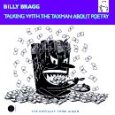 I’ve liked Billy for ages now. I’ve seen him live a few times, and I’ve always loved that his accent is so prominent when he sings. Over the years he has become somewhat less overtly political, but he is still a man of issues and causes.
 I Just Read About That...