Feeds:
Posts
Comments

Archive for the ‘Violence’ Category

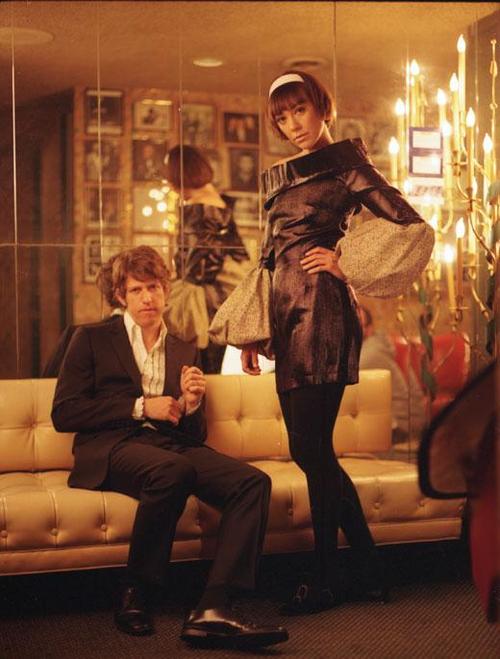
SOUNDTRACK: THE BIRD AND THE BEE-12 Days of Christmas (2008).

The+Bird+and+the+Bee++la+classeI first heard a bit of this song in a Sephora a few years ago.  Then they played it on New Girl (in two separate Christmas episodes).  But I never knew who the artist was. Then some kind soul pointed me to the band and lo, I found the track.

I don’t know much else about the Bird and the Bee, but this is hands down my favorite rendition of the 12 Days of Christmas.  In addition to the great, groovy sound (which reminds me of the Cocteau Twins), I just loved how…different the song sounded.  Turns out, according to their soundcloud page, “we changed the song so that every repeat is a completely different progression.”  I love it.

The song never gets boring and her voice is simply gorgeous.  I only wish it was available for sale or download or something.

[READ: December 16, 2013] Five Dials #27

I was a little harsh on Five Dials Number 26, but overall, it still kept up the greatness that has been Five Dials.  And #27 keeps up the excellence.  Since Five Dials likes globetrotting, this issue is based in and around Greece, the county that is in tumult.

This one also has letters from Our Glorious Readers.  One of the readers sensibly comments that the Berlin issue would keep her busy throughout the winter.  Wish I had doled mine out better.  I feel that Toronto gets a little knock from the editors who seem to think it is not as cool as Berlin.  I also enjoyed the reader’s description of Peter Stamm’s writing as being like skiing.

CRAIG TAYLOR-A Letter from the Editor: On Timelines and Greek Photographs
Taylor talks about the timelines that tend to appear in newspapers, most of which seem to talk about the collapse of something or other (like the Greek economy).  After visiting Athens, Five Dials felt it was time to bring some Greek writing to English readers. The letter talks about the contents within and gives good context to Dimitris Tsoumblekas’ photos which are quite good but are even better when you know what they are doing–especially the one about his father. (more…)

Read Full Post »

hawk SOUNDTRACK: BAD RELIGION-Christmas Songs (2013).

brThere’s been plenty of press about this Bad Religion Christmas album.  Greg and Brett have been interviewed on NPR’s Weekend Edition.

So what is a Bad Religion fan to make of this disc?  Bad Religion has, as its name states, no tolerance for any religion, especially Christianity.  So what the hell?

Well, as anyone who has grown up in America knows, these songs are ubiquitous.  But more importantly, these songs are quite good.  So why not give a try at punking them up.  What I appreciate about his album is that the band plays these songs absolutely straight.  Whatever their beliefs, they do not mess with the songs.  (I have absolutely enjoyed mocking versions of these songs, and I have many many goofy versions of them, but Bad Religion has never been goofy, so they sound like real Bad Religions songs–lyrics aside).

And so we get fifteen minutes (seriously) of great respectful punk renditions of traditional religious and secular Christmas songs.  In true Bad Religion form, the songs barely make it over 2 minutes long, but the lyrics are completely understandable and their harmonies are outstanding.  (Bad Religion has always had great harmonies but they are used to wonderful effect here).  Their version of “Hark, The Herald Angels Sing” is amazing (even if I find it unsettling that some of his rhymes are weird (like that he pronounces it BethleHAIM to rhyme with proclaim).  The acapella opening is really impressive (Brett was in choir as a kid).  When the band hits the line where the drums play a counterpoint (for just one line), it’s really fantastic.  “O Come, All Ye Faithful” is just straight out punk.  “God Rest Ye Merry Gentlemen” features some great backing vocals.  The Ramones-feel of “White Christmas” is a weird touch, but their delivery is spot on.

“The Little Drummer Boy” (a song I’m not terribly fond of in general) is quite good in this rendition–especially after hearing Brett say how complicated the measures are in this song.  It’s hard to do a bad version of “Angels We Have Heard on High” when you can harmonize as well as this band does.  And their version is great (I love the backing vocals on this as well).  Theirs is certainly the most aggressive version of “O Come O Come Emmanuel” I’ve ever heard (and I rather like it).  And “What Child is This?” has a solid riff to start with (it’s interesting to hear it on the guitar).  And again, the chorus is stellar.

They finish off the album with a remix of “American Jesus” a very anti-religion song (and perhaps a palette cleanser).  I didn’t notice how it is a remix, but it still sounds good.

Of course if you don’t like punk, you won’t like this, but I was really impressed with the care they put into these renditions.

[READ: December 24, 2013] Bad Santas

This book looks at the history of Christmas, but specifically at the creatures who caused mayhem and violence during the long winter holidays.  Indeed, our “traditional” Christmas celebration is a relatively new construct (you will be shocked to see how new it actually is).

kallikantzaroi_free_christmas_by_gpapanto-d5or453In Greece, during the twelves days of Christmas, goblins called Kallikantzaoi would steal things, destroy property and even abduct children.  In Finland, an evil goat called Joulupukki would demand gifts and punish evil children (he has since been turned into basically Santa Claus.

krampusAnd in parts of Italy and Germany, the witch Perchta would climb down the chimney.  But instead of giving presents to children, she would rip out their intestines and replace them with straw and stone.  (There’s a wonderful doll of Perchta here).  And anyone who has recently since the Grimm Christmas episode now knows of Krampus who is not only a real Christmas creature, (meaning Grimm didn’t make him up), he is still active and you can get Krampus cards.

(more…)

Read Full Post »

kawaiiSOUNDTRACK: BOB ATCHER AND THE DINNING SISTERS-“Christmas Island” (1950).

xmascocktailThere is something so charming and wonderful about white people co-opting Hawaiian music in the 50s.  I know fully well that there is nothing ‘authentic” about the whole AH-LOH-HA-AY business and that they have made it smooth and “sexy” for “bachelor pads” and all of that.  I know that I should be offended on everyone’s behalf.  And yet I can’t be.

I find bachelor pad kitsch to be fun (Esquivel’s Christmas Album is a perennial favorite), and so I was delighted to be introduced to this song from the 2007 NPR Holiday show.  I actually don’t know anything about Bob Atcher or the Dinning Sisters, but this song is a delightful trip through faux Hawaiian music–slide guitars and a very hula-feeling rhythm.

It even features Santa arriving on a canoe.  Yup, the whole simplification of Hawaiian/island culture is in poor taste, but man, it’s such a swinging and trippy take on a Christmas song.  And I’m sure no islanders were hurt in the making of the recording.  Aloha-ay.

[READ: December 15, 2013] Kawaii!

I’m fascinated by manga and the whole, as the subtitle says, Japanese culture of “cute.”  I don’t really get it.  I mean, I get it, that cute things are cute, but the whole cultural love of cute is so peculiar to me–especially when reading this book and seeing that it is a cultural explosion of cuteness.  This book was a great introduction to so many different aspects of this culture. (more…)

Read Full Post »

cover-10-9_largeSOUNDTRACK: SIGUR RÓS-“Svefn-g-englar” (1999).

220px-SvernCoverAThis was the first I heard of Sigur Rós.  I suspect my friend Lar told me about them and I was just blown away by the first track on this single–a 9 minute swelling, string-filled, otherworldly enterprise.

The first song on the single is “Svefn-g-englar.”  It opens with overlaying chords and the beat is kept by an echoing keyboard note.  It’s very spacey and mellow.  And the vocals are unlike anything i had heard before–not just falsetto, but practically alien falsetto.  There are noisy guitars but they work into the background washes of sound and don’t really register as guitars exactly.  Gorgeous soaring vocals on the chorus, which I’ve always heard as “its you” but is apparently “tjú.”  It’s otherworldly and beautiful  Then at 6:30 the drums kick in and the song gets grounded, taking on more gravitas as the chords grow louder.  This lasts for one minute as the song then slows itself back into its original style.

The second track is “Viðrar vel til loftárása.”  It has a louder bass and great chords.  This slow airy song is grounded by the acoustic piano–a very pretty melody with the strings behind it.  Jonsi’s vocal line is beautiful but mixed very low as if he is so far away.  The song ends with a great string section until the abrupt end.  It clocks in at 10 minutes.

Two live songs “Nýja lagið” and “Syndir Guðs” (live at the Icelandic Opera House, June 12, 1999) show that the band can work this magic live.  The guitar is more intense bring a bit more drama to the sound.  But Jonsi’s voice is still amazing in the live setting.  The first one is funny because you don’t really realize it’s live until the end when people start clapping.  And at 9 minutes it’s an amazing listen.  When it goes into a minor chord at around 5 minutes, it’s really something.

The final song “Syndir Guðs” comes from their debut album Von.  It is only 5 minutes, but it’s really quite good here.  It’s nice to see them translate their style to this older song.  The song is quite a short one for this EP, which totals nearly 35 minutes.  This is a great EP for fans of the band.  Hearing those live recordings is totally worth it.

[READ: December 2, 2013] “Daniel Boone, By Himself”

I don’t know a lot about Daniel Boone, truth be told.  So this story may be very accurate or maybe it’s based-on-actual-research about Boone’s possible mental state at the time of his death.  Or maybe he just made it all up.  Whatever the case, I did not enjoy it.

From the beginning, in which we learn the proper way to scalp someone, to the death of Boone’s son, the story was explicitly violent.  And while I’m no shrinking violet when it comes to violence, there just wasn’t much more to it. I’m sure that Boone’s life was nonstop violence, and that this story is not inaccurate in that way (I don’t even know if he had a son).

And perhaps it was that nonstop violence that prevented me from learning much about him in the first place. (more…)

Read Full Post »

jan2006 SOUNDTRACK: KURT WAGNER-Tiny Desk Concert #6 (October 8, 2008).

kurtI have never been a big fan of Lambchop.  It’s just not my kind of music—a little too slow for me.  But I really enjoyed Kurt Wagner in this Tiny Desk performance.  His guitar playing I really beautiful (I loved how he hit the high note on Bob Dylan’s  “You’re a Big Girl Now.”  He plays three Lambchop songs and two covers.

Wagner is from Nashville, and he has an air of Southern propriety about him–apologizing for taking up everyone’s time at work.  He sounds great doing the Dylan song, which I suppose is no real surprise.  The first Lambchop song is a pretty ballad called “Slipped Dissolved and Loosed.”

He is a charming and funny guy, joking about a few things (like working in an office) and then discussing about one of his songs, “National Talk Like a Pirate Day” (which is not as funny as the title might suggest).  Another song is titled “Sharing a Gibson with Martin Luther King Jr.” (and Wagner waves a fan of MLK Jr. (from a funeral home-(?)) to start the song.

The final song is a Don Williams song called “I Believe in You.”  I’ve never heard of him (and neither had anyone else in the studio).  It’s a really enjoyable, sweet song, and there’s a funny moment when sirens go past and he comments that at least they are in tune.  I still don’t think I’ll be listening to a lot of Lambchop, but I really liked this Tiny Desk show.

[READ: October 8, 2013] “Improvised, Explosive, & Divisive”

Two years after writing about his trip to Vietnam, Bissell returned to another war zone.  This time going to Iraq to get embedded (I suppose that’s the technical term for what he did) with some Marines at Camp Taqaddum in Iraq (17 miles from Baghdad).  This was during the Iraq war (and the Bush presidency), after Mission Accomplished, when the military was searching for a strategy for what to do in the situation.

This article shows interviews with Marines and makes assessments about our then current plans (such as they were) for how to extricate ourselves from a seemingly hopeless situation.  After Mission Accomplished the war went from a “war” to “stability and support operations against an insurgent element” or what is called MOOTW (military operations other than war).  And Bissell acknowledges that it barely seems like any resembling war in Iraq where the soldiers are headquartered.  They cannot drink alcohol, have sex or view pornography (they are trying to remain respectful of their host country), but at the same time they play softball and go to the gym, wear Co-Ed Naked Camel Watching T-shirts and have a Baskin-Robbins ice cream stand.  Not to mention DVD, video game consoles and Coke for sale in the PX.

Some of the article is technical—a side of the fighting that most readers probably don’t know. Like that the troops must be fully protected (and the vehicles as well) just to travel the relatively short distance between camps. (more…)

Read Full Post »

underwSOUNDTRACK: OZOKIDZ-“Germs” (2013).

ozokidsThis song is also on the WXPN Kids Corner CD.  Ozokidz is related to the band Ozomatli, who I don’t know all that much about.

The music in this song is very upbeat reggae with the main melody done on kazoos (I suspect this is all one person, but i don’t know for sure).  There’s also some kids’ instruments playing along.  The beat is fast enough that I might consider this ska.

This song is a lesson about germs.  It begins by telling us how to prevent germs from causing us trouble (washing your hands, mostly).  The second half talks about how some germs—some bacteria—are good for us (bacteria is rhymed with healing ya).  But certainly the most memorable part of the song is when he rhymes food with poo (and the song stops so a tiny voice can say “ew, he said poo”).

The message is a good one, and the delivery method is more fun than anything else.  Although it seems a little half-baked of an idea to me.

[READ: August and September 2013] The Underworlds series

I was delighted when I saw that Tony Abbott had a new series and I couldn’t wait to start reading it to the kids.  T. has been asking me to read the Droon series to her like I did for C.  But it is such a long series that I was happy to find something shorter to start with.  It turns out that this Underworlds series is aimed a little older than Droon.  It gets pretty dark, and I was a little worried about some of the concepts in it (the Underworlds are the realm of death after all–and hmm, she has been talking a lot about death lately…).  But in pure Tony Abbott fashion, this was an exciting series where nothing less than the fate of the world is at stake.  And there’s humor as well (although somewhat less than in his other series).  But what really sold me on this series was the way he uses classical mythology (accurately) to generate the basis and conflict of this story.

And even better than using these mythologies, Abbot merges them so that the different cultural underworlds run into each other and even join forces.  It is a great way to learn some mythology if you don’t know it (there are handy maps of the Underworlds) or to gain a more in-depth understanding of the mythologies.  By the end of the series, the kids will have encountered the Greek, Norse, Egyptian and Babylonian gods of the Underworld as well as some of the major scary guys that come out of the Underworld. (more…)

Read Full Post »

dec2004SOUNDTRACK: AWAY-Cities (2013).

awayAway is Michel Langevin, the drummer for metal band Voivod.  But on his first solo album he eschews all conventional music.  Rather, he has created an exercise in found sound and released it on the small label Utech Records.

The album is described as

Strong field recordings capture more than just the sound of an area, they capture a mood and spirit of the place and people. On Cities, local color and nature recordings clash with riots and discord, capturing the full human experience across the world. Literal and metaphorical “found music” appears: the booming stereo of a passing car or distant church bells, as does the rhythmic engine hum of a bus or the chirping of birds. This tour is a fast paced one, rapidly weaving through the geographic locations building a diverse, yet consistently engaging experience. The audio journey captured here perfectly reinforces the fact that, regardless of one’s location, the presence of music is never far, nor should it be.

What we get is a collection that sounds like a tour through the streets of the respective cities (nothing more specific than Europe is given, sadly).  We hear street noise and buskers playing (interestingly just about every type of music I have heard in Boston subways as well).

I only wish more information was given about just what Away was up to.  Where he was and, more importantly, how he recorded these sounds. The recording quality is amazing—the panpipes and harmonicas sound crisp and clean with no other ambient noise.  Did he ask the performers if he could record?  How did he get them so pristine especially since I assume they are in the streets?  And for the Europe ones, was there any given order to the way they were edited?  Is it the progression of their Voivod tour, or is it just random?  The mixing and sequencing is quite good, especially in the shorter pieces which really take you on a journey.  Not knowing what’s happening is maddening and part of the fun as you try to picture (especially if you use headphones) exactly what you are hearing.

“Montreal 2010” opens with the sound of travel until we zoom in on panpipes (for a few seconds).  This switches to a lurching shanty (sung, I suspect in French—it’s a little hard to hear).  Then from the shadows comes the sound of someone playing Leonard Cohen’s “Hallelujah” on the harmonica.

“Europe 2012” opens with someone playing what I suspect is a hammered dulcimer (exactly the kind of thing that buskers play in subway stations), it shifts to a jazz trio (sax, bass, drums) wailing away with traffic noises in the background.  After some busses and an accordion solo, there are delicate chimes.  Finally a bagpipe melody leads us away from the delicate chimes until we hear announcements in what sound like Russian and then French.  The track ends with fans chanting “Voivod Voivod.”

Montreal 2012 returns Away to near his home city.  This time the scene is much nosier—it could be joyous, it could be angry—there are whistles and horns, and by the end it seems like a joyous parade.  The noise diminishes as an operatic voice pierces through briefly until the drums return.  More street noises, including police sirens, French chanting and a train passing by as we return to yet more street drumming.  If this track had more context for the title it would probably be more enjoyable. And yet as the parade (for surely that is what it is ) marches past you feel like you’re there.

“Mexico City 2012” opens with a truck honking and street noise until we hear what sounds like an indigenous band playing, then some more flute music and church bells pealing. Then there are announcements in Spanish (by both a man and woman presumably in the church) and church organ music.  Pan pipes and drums bring us back into the street and what sounds like a market scene which ends with some Mexican music playing.

“Europe 2011” opens with some beautiful guitar or perhaps an Indian stringed instrument playing and some traditional Indian singing.  There’s some more music playing and cheering and then some peace as birds take us out of this short track.

“Montreal 2011” opens with banjo music (!).  And then the more typically French sounding violin moves us along.  More pan pipes and traffic noise progress us through the city.  Then two very different examples of accordion music meld until the noise of the train wipes them out.   The track fades out with a band playing a  jaunty accordion inspired track.

“Chicago 2012” ends the disc with a symphony orchestra tuning up (I presume) for a few minutes.  It’s a shocking cacophony.  Until someone shushes the noises and the birds return, playing us out of this aural tour.

You can stream, download or buy the CD  here.  Buying the CD gets you some of Away’s cool art (although I wish there was more).

[READ: October 8, 2013] “War Wounds”

Since I’ve been enjoying Tom Bissell’s book reviews, I thought I’d see what else he had written in Harper’s.  He seems to have a storied career with the magazine as a traveling journalist.  And this article dates back to 2004.

It is a personal article about himself and his father.  What I found fascinating about this is that his father was a Vietnam veteran, and I don’t know too much in the way of writing that concerns being the child of a Vietnam veteran.  There are a lot of books and films about the Vietnam experience for the soldiers, but not so much about the families that they returned to (as far as I know).  So it was interesting to read Bissell’s account of growing up with his father–who was a hard man and who wasn’t afraid to fight with his children (especially when drunk).

The man that Tom grew up with had a temper and didn’t much approve of Tom’s chosen profession.  But unlike many people of his generation, Tom didn’t feel that he had a particularly estranged relationship with his father.  What on earth possessed him to invite his father on a trip to Vietnam–to visit the sites where he lost friends and was himself wounded, is the stuff of journalism. (more…)

Read Full Post »

corin SOUNDTRACK: THE DISMEMBERMENT PLAN-“No One’s Saying Nothing” (2013).

IDismembermentPlan_CVR-a71cdf7d3b8dde6270c3a01bb56278949eddb5fa-s1 thought I knew The Dismemberment Plan, but I must have them confused with someone else, because this song doesn’t sound anything like what a band called The Dismemberment Plan ought to sound like (which is noisy and chaotic and probably death metal).  This song has big vocals, organ and piano.  Nevertheless, it is rather raucous and is quite fun (and has what sounds like a drill sound effect in the beginning and middle).

Lyrically, the song is odd–“If you press the space bar enough, cocaine comes out.  I really like this computer.”

But it has a very fun devil-may-care, throw in everything attitude that I really like it.  The entire album was streaming on NPR, and I’m looking forward to hearing more from them–including their back catalog work, to see if they ever sounded like what I thought they sounded like.

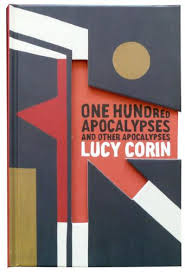
[READ: October 1, 2013] One Hundred Apocalypses and Other Apocalypses

I was excited to get this book because I thought the title was quite intriguing (and the crazy way the cover is cut out was also interesting).

There are four “stories” in the book.  The first three are about twenty pages each while the fourth is over 100 and is comprised of the titular 100 apocalypses (I didn’t count them).

“Eyes of Dogs”
This story contained marginalia (which is sort of like footnotes but not attached to anything specific). In this story a solider meets a witch and she tells him how to get money—climb down a hole and encounter three dogs.  He must wink at the first, blink at the second and hold his eyes closed for the third.  The story seems to be going along sensibly like a fairy tale but then it grows introspective and stops.  I was disappointed in this one.

“Madmen”
This story was utterly bizarre and yet by the middle of the story the bizarreness was explained and by the end I enjoyed it very much.  The premise of this story is that when children grow old they are given a madman to take care of (it is told matter of factly which makes you have to wonder if madman is code for something else.  When boys reach a certain age and when girl;s have their first period (which is an unfair division of genders) they get to go to the asylum and pick which madman (or woman) they want to bring home and care for.  The bulk of the story is at the asylum with the girl “interviewing” the candidates and her mother being mad at her choices.  Ultimately the story turns onto a nice moment between the girl and her dad, who may or may not have married his own madman.  As I said very weird, but satisfying.

“Godzilla versus the Smog Monster”
This was the most “real” of the four stories and it was my favorite.  A fourteen year old boy is watching “Godzilla vs the Smog Monster.”  He found the unlabelled video of it in his father’s sweatshirt drawer and assumed it was porn.  He’s bummed that it turns out to be this Godzilla movie.  In a parallel story, when the boy goes to school his class is watching live footage of California burning—and this burning is uncontainable.  The whole state is slowly engulfed in flames.  This fire, which seems to be some kind of attack obviously changes the minds of everyone in the story, including Sara, a girl who Peter thinks is pretty but who never talks to him.  But when she crashes her car in front of his house, he helps her and they go for a ride to a cave.  Images of the smog monster crop up in interesting ways.  Things get weird and less tangible, but because the beginning was so real it made the ending okay.

“A Hundred Apocalypses”
So this selection disappointed me because it proved to be 100 (I assume) flash fiction pieces.  And I have more or less come down against flash fiction these days.  Especially the kinds of stories that make an interesting “sketch” but aren’t really stories The other problem is that all 100 seemed to be about “apocalypses” which is a useless words when tossed around so much and which loses all meaning when there are 100 that seem to be about actual apocalypses.  Or something.  I also just learned that apocalypse means un-covering or revelation, not really the end of the world, but whatever.

There were probably 6 out of the hundred that I really enjoyed.  Sadly, I didn’t mark them and I don’t remember which ones they were.  The rest were okay or worse.

I am ready for flash fiction to go away.  And I fear that my beloved McSweeney’s is one of the prime generators of the genre, so perhaps they could knock it off for a bit.

Read Full Post »

aug2013SOUNDTRACK: KEVIN DEVINE & THE GODDAMN BAND-“Nobel Prize” (2013).

PrintI’d never heard of Kevin Devine before (he apparently has 7 solo albums out).  This track is his first single with his new (radio friendly it seems) band called The Goddamn Band.  Interestingly, the album is called “Bubblegum” and it’s that sentiment that sticks out with this song.

Over buzzy guitars and pounding drums, a screamed (but not unpleasant) voice comes piercing through the fuzz.  And once the guitars come in, it’s all bubblegum pop (fuzzy and distorted absolutely, but pure bubblegum chord structures).  The song (including the voice) remind me a lot of Cheap trick–simple, catchy melodies with vocals that are urgent and intense.  Even the quieter spoken word section sounds like Cheap Trick.  The very mellow bridge or chorus or whatever it is mixes things up when it brings in picked strings and a gentle vocal.

It’s catchy as hell and could fit into a lot of playlists of poppy rock.  At only 2 and a half minutes it’s a pop gem.  Too bad no DJ would ever say the band’s name.

You can hear it an NPR.

[READ: September 19, 2013] “The Way Things Are Going”

As the story opens we read the Gwen had insisted that “Ma and I” move to America (from South Africa). Gwen wanted them to move because “sooner or later…it would happen again.”  The narrator says that what had happened was actually her fault.  But really what difference did it make whose fault it was—once they were tying you up.  She only let them in the first place because she was trying to be mannerly.

The story flashes back to what happened. The narrator had been struck across the head with a gun, praying that the men would leave her alone—just take their few valuables and go.  And then she had to worry about her mother, who was upstairs by herself.  It was only the phone call (and the answering machine) which saved them from further damage because a neighbor said she’d be right over. (more…)

Read Full Post »

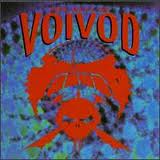
2013-10SOUNDTRACK: VOIVOD-The Best of Voivod (1992).

bestvoivodMost Best of records promise you a selection of popular songs from a band.  Voivod never really had any popular songs, so this is an interesting choice to start with.  This may also be the only Best of compilation of a band where people who like some of the songs almost assuredly will not like other songs.

As my posts about the band have indicated, Voivod changed drastically over their first six records (which is the  period this collection covers).  And so in twelve tracks and 50 some minutes you get the very diverse history of this very unusual band.  I’m not going to talk about each track (already done that), but I will list the songs

  • Voivod [War and Pain] classic screaming metal.

  • Ripping Headaches [Rrröööaaarrr] brutal, but I must say sounds a ton better than the original CD.  I wonder if this was remastered for the compilation).

  • Korgull the Exterminator [Rrröööaaarrr] hard to believe they used two songs from this album.

  • Tornado [Killing Technology] heavy but quite catchy.

  • Ravenous Medicine [Killing Technology] signs of complexity enter the heaviness.

  • Cockroaches [EP] a strange inclusion, almost a rarity.

  • Tribal Convictions [Dimension Hätross] very complex with some heaviness.

  • Psychic Vacuum  [Dimension Hätross] I’m surprised they didn’t pick other songs though from this album.

  • Astronomy Domine [Nothingface] their hit.

  • The Unknown Knows [Nothingface] very hard to choose just two songs from this masterpiece.

  • Panorama [Angel Rat] Their newest single and quite a departure from everything that has come before.

  • The Prow [Angel Rat] their prettiest number ever.  If you buy this CD for this song you’ll hate the early stuff.

Although Voivod fans (like Dave Grohl)

are diehard, anyone who would buy only a Best of record from the band is sure to be disappointed. There are so many phases of the band and they are so radically different from “Voivod” to “The Prow” that it’s almost not even the same band.  I’m very curious as to what sales for this album were like.  (Even the cover isn’t that inspired)

[READ: September 2013] The Walrus: Tenth Anniversary Issue

It’s hard for me to believe that The Walrus has been around for ten years (even they seem a bit surprised).  I still remember hearing about the magazine on Book TV from some Canadian channel that I just happened upon.

When I heard about it The Walrus seemed interesting–kind of like Harper’s and elements of the New Yorker but all about Canada.  I’ve been a Canuckophile for decades now, so it seemed like an interesting prospect.  And over the ten years of the magazine, while I haven’t written about every issue, I have read every article.  I have written about all of the short stories that they’ve published.

This issue eschews some of my favorite elements (the short articles in the front and the arts section in the back), but they make up for it with an oversized issue (twice as long as usual and the articles are all packed with content) and some fascinating articles.

And while there are none of the short articles from the front, there are “Time Capsules,” one page articles about things that have happened in the last ten years: The iPhone, Sports Concussions, Armed Drones, The Residential School Apology, Justin Bieber, Foodies, Hand Sanitizer and Cyberbullying.  It’s interesting to read about these phenomena from a slightly different perspective.  We know that Canada and the U.S. share many similarities but there are, at heart some core differences.  And it’s these differences that make you rethink a subject.  (more…)

Read Full Post »

« Newer Posts - Older Posts »