Mentioning Hüsker Dü during the Replacements reviews made me bust out their records too. Land Speed Record was their first release, and it always amazed me that their first record was a live record.
It is an amazing blast of hardcore punk.
It is poorly recorded, stupidly fast and impossible to follow. The CD is divided into two track (sides one and two) despite the 17 songs. Most of the songs are simple, balls-out screaming punk. In fact, it’s surprising how much you can tell it is Hüsker Dü given how shouty Bob Mould sounds.
In truth, it’s not entirely impossible to follow one song to the next (there are times when you can hear the choruses (“Guns at My School” and “Do the Bee” stand out). But really it’s a pretty shocking discovery for anyone familiar with their alterna-pop that would come later.
The one real highlight is the final song, “Data Control.” It slows the pace and adds some mood (although it’s not that easy to discern). But it contains a great deal of depth (for this album) and suggests that maybe the Hüskers were going to be more than a simple hardcore band.
The funniest part is that after the 25 minutes or so of noise, Bob Mould says, “we’ll be back for another set.”
[READ: Week of June 22, 2009] Infinite Jest[78 pages + endnotes]
So as I said, I’m going to be doing this Infinite Summer thing, reading 75 or so pages every week. I haven’t figured out what I’m going to say each week, just some observations and characters to help keep things straight. But there will be spoilers, so be warned.
Having read this before certainly helps put some context on things, even if I don’t remember a lot of the book. But, for instance, it helps to know ahead of time that the “Year” chapter headings have been subsidized. However, I don’t remember the chronology of them at this point. See below, footnote endnote for more on the chronology.
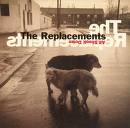
SOUNDTRACK–THE REPLACEMENTS–All Shook Down (1990).
And here we come to the end of the recorded history of the Replacements. 7 albums (and an EP). 4 and a half hours of recorded music. And a steady maturation from drunken punks to elder statesmen. Or really statesman (Paul Westerberg at the ripe old age of 31!). All of the reviews state that this was originally designed as a Westerberg solo album, and that the band barely played together on it at all. And it shows.
To me, this album just isn’t very good. It’s not that the songs are bad…I ‘ll always admit that Westerberg is a great songwriter. I’m just not inspired by them. The single, “Merry Go Round” is the most (there’s that word again) mature sounding rock tracks that Westerberg has written. And “Nobody” is a decent acoustic type rocker (although the drums are kind of boring). “Bent All Out of Shape” shows promise but never lives up to it.
“Sadly Beautiful” is another of Westerberg’s solid ballads. But it doesn’t stand out because the rest of the album isn’t that radically different. “Someone Take the Wheel” and “When It Began” are decent rockers, but the rest of the album is just sort of…there (except for the awful duet with Johnette Napolitano (whom I used to like but who i just find annoying all these years later).
Westerberg went on to do about a half dozen solo albums but I haven’t heard any of them.
There’s nothing wrong with a songwriter maturing, especially if you get to mature along with him or her. It’s just such a surprise to see it happen so quickly.
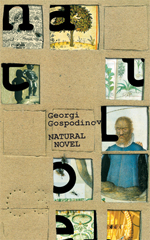
[READ: June 15, 2009] Natural Novel
My coworker and I were experimenting with our library’s catalog. We started searching for books in specific languages. We noticed that Bulgarian was one of the languages, and were surprised that our branch had anything in Bulgarian. It turned out that there was one book that was originally written in Bulgarian but which had been translated to English. It was this book. It sounded bizarre and fascinating. And it was only 136 pages. How could I pass it up? And what would it be about?
Well, that’s hard to answer.
The premise of a “natural novel” is that it is meant to be a man’s attempt to deal with the dissolution of his marriage. He starts to talk about the divorce several times, but he can’t really come to terms with it, and so, rather, he gets involved with other things. (more…)
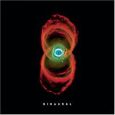
Binaural bursts forth with the rampaging “Breakerfall” and “God’s Dice.” The latter pauses only briefly for a chorus break. They are followed by “Evacuation,” a song that sounds a bit off kilter in this studio version but which blasts off on the live version. It’s got a great shouty chorus too.
“Light Years” is another wonderfully singalongable PJ track. The verses are delicate and, while the choruses don’t build, they are still very catchy. “Nothing as It Seems” is a haunting track that is dark and fantastic. The opening guitar riff sounds like it’s coming from the middle of a desert, and the rest of the song is great and great sounding too. “Thin Air” is another mid- tempo song that doesn’t wear out its welcome, and is fun to sing along to as well.
“Insignificance” is one of the great stop/start songs in PJ’s history. The staggered guitar work builds and stops, builds and stops and just gets better as it goes along. “Of the Girl” is one of those moody pieces that on previous discs sounded kind of throwaway, and yet this song has enough interesting nooks in it that it never gets dull. It doesn’t really ever bust out into big chorus, but the subtle changes are just as powerful. “Grievance” is also fantastic. Another staggered type of song with powerful lyrics and rocking verses and choruses. And when played live, this song is a behemoth.
“Rival” is one of those weird little songs that PJ throws in. An experiment that works more than some of t heir others. Followed by “Sleight of Hand” one of their more impressive ballads. Even though the chorus isn’t dramatically different, it’s still very powerful. “Parting Ways” is one of their best album enders in a long time. It’s another slow one, yet it doesn’t meander. There’s some nice guitar interplay that keeps the song interesting.
And then there’s “Soon Forget” a little number played on a ukulele. For another band this would be a gimmick yet Eddie’s sincerity pulls it off quite nicely. There’s also a hidden track at the end (evidently called “Writer’s Block”) which is the sound of a typewriter typing.
This was the disc that got me back into Pearl Jam, and it really is a great album. Most of their first barrage of live discs came from this tour, which may explain why I like these songs so much (I heard them all about 70 times, right?), but it’s a great place to start for latter-day Pearl Jam.
[READ: April 2007] The Life and Opinions of Tristram Shandy, Gentleman
I read this book a long time ago, in college, based on the recommendation of my friend Gene. I really enjoyed it and found it quite funny. Then, last year, I watched Tristram Shandy: A Cock and Bull Story, which is sort of a film adaptation of Tristram Shandy. A post about this movie could be just as long as the movie itself, but the short version is that the hilarious Steve Coogan is an actor in a production of the film of Tristram Shandy. As they are filming Tristram Shandy, the camera follows Coogan, the actor, as his neuroses get the better of him in both his professional and personal life. This Coogan stuff has absolutely nothing to do with the book, making the whole proceeding weird and wonderful. (more…)
Ten was a solid record, and although it had diversity within it, overall the sound was pretty consistent. On Vs., Pearl Jam mixed it up sonically and otherwise.
It opens with “Go,” a track that rocks harder than anything on Ten but which retains a great Pearl Jam chorus. “Animal” is also loud, with Eddie’s voice sounding incredibly rough and raw.
It’s on the 3rd track that PJ begin to really mix it up with their first ballad: “Daughter,” their first acoustic track. It’s catchy, and really works with Eddie’s voice. I can never listen to the next track “Glorified G” without thinking of my college roommate who spoiled it for me. And I’ll spoil it for you because every time you hear the chorus you will now think “glorified version of a pelican.” It’s not my favorite song anyway, as the chorus is kind of weird, but the verses are really strong and do redeem this track.
“Dissident” and “Blood” continue the great rocking vein. Although they are quite different from each other, (“Blood” being much harder) they both showcase Pearl Jam’s excellent rock aesthetic.
The track between them, “W.M.A.” is the other track on the disc that shows Pearl Jam’s experimental side. It’s percussion heavy and seems like a rambling track…it works much better live, actually.
“Rearviewmirror” on the other hand is PJ at their best, a fantastic rocking (but not too heavy) song with a great chorus, and excellent vocals by Eddie. Its complement is “Elderly Woman…” which highlights the other end of PJ’s spectrum: a sort of ballad that rocks more than you might think.
“Rats” and “Leash” are two rough, almost punk songs that continue to mix up the tempo and tenor of the disc. “Rats” seems to get ignored a lot even though its chorus is a good one, and “Leash” is another angry song that’s, again, enjoyable live.
“Indifference” ends the disc and it’s a song that I wasn’t all that excited about initially. However, again, after hearing the live versions, I gained a much better appreciation for the song and now I really enjoy it. All in all Vs, is a great step forward for Pearl Jam, strangely enough pulling them away from arena anthems and into more intimate areas.
[READ: April 16, 2009] The Book of Other People
I discovered this book by searching for A.M. Homes in our catalog. I was surprised I had never heard of it. The premise of this collection, put out by McSweeneys and benefiting 826 is that each author was asked to make up a character. The requirement was that the story would be named after the character. There were no other rules. And as such, you get a wide variety of stories about all different characters: people and otherwise. In fact, it’s surprising what a diverse collection of stories have arisen from this rather simple concept.
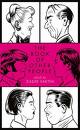
Zadie Smith is the editor and she wrote the introduction. I like to cover all of the written pieces in the book, but there’s not much to say about the introduction except that it fills you in on the details of the collection. She thanks Sarah Vowell for the idea but I gather that the rest of the work was done by her.
I’m not grousing about the different covers this time, I’m just showing the UK one. It has the same basic set up, including pictures by Daniel Clowes, but as you can see, it’s slightly different.
And check out this roster of talent that has written (or drawn) a story: it’s like a who’s who of contemporary young writers. (more…)
I’m not sure what’s up with the spelling of Arkestra (Sun Ra tribute, perhaps?), but “Lullabye” is certainly a misnomer. “Ampgrave” on the other hand is a pretty good summary of the music on this record.
The band is basically a drum and bass duo. And yet, they are so much more. The bass runs the show, with the bass lines being loud and furious. There are also several guests who provide horns, organ, violin and my favorite addition: “screaming.” This complete package makes for a loud, bruising, soulful unholy mess. And it’s really fun.
The disc won’t appeal to everyone. The opening track “Unite!!!!!!!!!!!!!!!!!” is where the “screaming” really comes to the fore, and will certainly scare off the weak-hearted. Which is a shame, as track 2 mellows out with some good soulful tunes (albeit utterly distorted, let’s not forget). There’s some other weird and wonderful tracks. “Y’Make Me Shake” is a great rocking track with excellent horns to provide nice moments of melody.
The disc ends with a great one-two punch of “Bulldozer of Love” and the wonderfully titled “Ass Worship” two noisy, chaotic tracks that find a killer melody under all that distortion.
I hate to use the White Stripes as a frame of reference because it’s kind of lazy, but they are a two-piece playing soulful, distorted rock. But the White Stripes are practically bubblegum pop when it compares to the racket these guys make. It’s a lot of fun, if you like your fun noisy.
[READ: March 31, 2009] This Book Will Save Your Life
While it didn’t save my life, I enjoyed this book very very much.
This book follows the life of Richard Novak. As the book starts, Richard seems like a type A workaholic who is too consumed with his work and routine to really enjoy anything. When he gets an inexplicable yet frightening pain, he calls 911 and is taken to the hospital. And this rather mundane opening leads to a hugely complicated back-story and a hugely complicated fore-story (?) in which all aspects of Richard’s life meet in a house in Malibu.
For, you see, Richard was something of an asshole. Richard’s ex-wife, is another Type A personality who is as absorbed in her work as he is in his. When he is offered a job in California, requiring him to leave New York, his wife said, go if you want to. And he did, leaving his wife and his son Ben (seven at the time) with minimal contact and, eventually, little participation in his son’s life. (more…)
SOUNDTRACK: ROLLING STONES-Rock and Roll Circus [DVD] (1968).
Probably the most interesting thing about this DVD was seeing Tony Iommi, future guitarist for Black Sabbath playing guitar for Jethro Tull! Let me repeat: the guy who played “Iron Man” was playing on a song with a flute solo!
Okay, with that out of the way, I’ll talk about the DVD.
The idea behind this event was to promote music in a new way, and the idea of a circus makes sense, so why not. Wikipedia gives a pretty lengthy explanation of the whole thing, so I won’t bother with all of the details.
Anyhow, I had heard about this DVD in context of The Who. I had read that The Who totally blew away the Stones at this event (apparently Mick Jagger agreed, which is why this was not available until 1996). Much of the Who’s performance is available in The Kids Are Alright movie.
But now with this DVD available, we get to see all of the acts in the circus:
Jethro Tull-“Song for Jeffrey.” Evidently they mimed their performance, but it’s still Tony Iommi.
The Who-“A Quick One While He’s Away.” Just amazing. Fantastic rollicking, amazing. It’s a crazy song, and it’s so full of energy. Yes, they blow everyone else off the stage.
Taj Mahal, a band I’m not familiar with, plays “Ain’t That a Lot of Love.”
Marianne Faithfull sings a surprisingly quiet rendition of “Something Better.” Her trademark voice hasn’t quite developed yet.
The Dirty Mac, who are John Lennon (vocals & rhythm guitar), Keith Richards (bass), Eric Clapton (lead guitar) & Mitch Mitchell (drums). They perform the Beatles song “Yer Blues” and then a jam called “Whole Lotta Yoko” which features Yoko Ono doing what she does best…caterwauling for what seems like much longer than 4 and a half minutes).
Then the Rolling Stones come out. The story is that they had been up playing for hours, and their set was finally recorded at 5AM. Whether or not that’s true, the set is really lackluster. I’m not a huge Stones fan, but I do love many of their songs. In fact, “You Can’t Always Get What You Want” and “Sympathy for the Devil” are two of my all time favorite songs. Sadly, the versions on this DVD are totally substandard, especially compared to the originals. Even “Jumpin’ Jack Flash,” a song that I don’t particularly love but which has a great opening riff sounds tired. I don’t know if it’s the amps, the sound board, or if they’re just really tired, but the set just doesn’t have it.
So, yeah, there’s not much to see with this disc. You do get Brian Jones jamming with the Stones. And of course, “A Quick One” is great. It’s also cool to see Tony Iommi, but since he’s not actually playing, it’s not that exciting. And, in fairness, Mick Jagger is a very good host, and he keeps his spirits and excitement level up pretty high throughout the show, especially when goofing around with John Lennon and the fans.
As a curiosity, this DVD was okay…I actually enjoyed the talking bits in between songs rather than the songs themselves.
[READ: March 25, 2009] “White-Bread Jesus”
It has taken me a very long time to read this story. I had been putting it off because it was kind of long. Then I started it and put it aside, and then finally I read most of it but didn’t have a chance to finish it. I found it again today under a pile of magazines and decided it was time to finish it up. None of that reflects on the story, though, honestly.
I was very intrigued by the story right from the get-go. In it, a preacher (Reverend Wesley Edwards) who is losing his faith, and really his mind, has something of a breakdown in church. He begins a dialogue with Jesus in which Jesus admits that the Bible is nonsense, and that he, Wesley, is really a prophet. (more…)
Even if you don’t speak or understand Swedish, Dungen plays music that is pretty universally understood. The album feels more or less like an all instrumental affair. There are some songs with words, but they are all sung in Swedish. So, no, I have no idea what he’s singing about, and in that respect it feels all instrumental.
Like the previous discs, 4 feels like a blast from the psychedelic days. It is trippy, at times loud and raucous, (with some amazing guitar workouts) and even has flutes on a few tracks.
The big difference between this disc and the previous releases is that there’s a lot more piano. This has an overall calming effect on the music. And in some ways, I think I don’t like this disc as much as previous ones.
The piano really comes to the fore on track 2 “Målerås Finest” which to me sounds like a a tribute to one Zappa’s instrumentals (it reminds me of “Peaches en Regalia,” although I don’t mean to suggest it’s a rip off at all). “Samtidigt 1 an 2” are the major instrumentals of the disc. They also remind me of Zappa in that they feels like a snippet from some crazy guitar jam session. (Zappa releases a lot of “songs” like this on his …Guitar… albums. On this disc, we’re privy to about 3 minutes of wild guitar solo but since they fade in and then fade out at the end we have no idea how long the jam went on. The final track “Bandhagen” also feels Zappaeque, but maybe it’s just the staccato notes that Zappa also uses to such good effect.
“Fredag” has a feeling like some of the more otherworldly Flaming Lips songs. And “Mina Damer Och Fasaner” has a choppy heavy metal sound that really stands out from the disc.
Really there isn’t a bad song on the disc, but for some reason it doesn’t move me quite as much as the others. I don’t want to bring a negative vibe to the review. I’m sure if this was the first Dungen CD I had, I’d think it was amazing, I just got spoiled by them.
[READ: February 14, 2009] More Information Than You Require
John Hodgman is a man you will no doubt recognize from the Mac Vs PC ads (he’s the PC). He’s also a contributor and guest on The Daily Show. When this book was released he promoted it on The Daily Show, and on the Sound of Young America. It sounded really funny. And I was delighted that Sarah got it for me for Christmas. (more…)
SOUNDTRACK: THE FLAMING LIPS-The Soft Bulletin (1999).
This album brought The Flaming Lips out from the underground (or one-hit wonder status) into the spotlight of Well Respected Bands. It made a whole bunch of best of 1999 lists and even a few best of the 1990s lists.
The album is a lot more commercial than their previous records. The choruses are catchy and they swell in beautiful strings. And the songs themselves display amazing songwriting prowess. Lyrically, the songs are also much deeper and more sophisticated. While writing this up, I learned that this record was something of a payback for Zaireeka. (They promised a more commercial release in exchange for the crazy experiment).
And yet despite all of that, in no way is this a sellout album, or an obvious contender for top 40 status. The lyrics are neither cynical nor ironic, they are simply human, emotional pleas for friendship, for love. It would be embarrassing if they weren’t so thoughtful.
“Race for the Prize” (two versions on the disc) is full of big, loud, brash drums, smashing away as a beautiful synth intro fades away into quiet verses and a very tender bridge. It’s followed by “A Spoonful Weighs a Ton” a delicate ballad, with a minor orchestral feel to it. At times the tinkling pianos are almost Disneylike. And then the big brash heavily distorted, and yet not unpleasant, bridge crashes in, keeping you dizzyingly off balance.
“The Spark That Bled” is yet another song with several different sections that meld nicely together. The opening is emotional and delicate: “I accidentally touched my head and noticed that I had been bleeding.” This portion morphs into the uplifting, impossible no to sing along with: “I stood up and I said Hey! Yes!” string chorus. And just to show that that’s not all they have, the next portion of the song is a smooth and funky guitar/synth shuffle.
“The Spiderbite Song” is the most obvious, by hardly the only, use of really cool and wholly unusual drums on this album. The track starts with an extremely fast (too fast for human) drum roll that flanges around into a martial beat. And it repeats this way throughout the song. The lyrics are an earnest appeal to friendship when one of the band members got a spider bite and there was concern that he would lose his hand.
“Buggin'” is a demented pop song about bugs. More wonderfully brash drums underscore a poppy verse about mosquito bites… This segues into “What is the Light?” a ponderous track with a drum like a heart beat. During their live show, they projected a giant eyeball whose iris changed color with each beat. The next track (the instrumental “The Observer”) uses the same heartbeat drum as its foundation too.
“Waitin’ for Superman” (two versions as well) is the most straightforward track on the disc. I think of it as an uplifting song because it is musically so upbeat, and yet lyrically it is quite sad. No wonder it wasn’t the huge hit it should have been. It’s followed by “Suddenly Everything has Changed” has another fantastic bassline. And, like the title, midway through the song everything changes into a spacey keyboard motif that is so airy it almost floats away.
“The Gash” opens with what sounds like some weird Beatlesey syncopation, but it continues with the heartfelt “will the fight for our sanity be the fight of our lives?” “Feeling Yourself Disintegrate” starts with such a fantastic opening: a voice drumming “bah rup bup bup bah rup up up up up.” And the drums eventually kick in following this same pattern. And once again the earnest lyrics: “Love in our life is just too valuable, to feel for even a second without it.” Fantastic.
I saw the Lips on this tour and their show remains one of the top 5 shows I’ve ever seen. Everything about the show was magical, from the band handing out little FM headphone sets so you could hear the whole show in stereo (!) to the video screens, to the simply jubilant atmosphere that the band sent out. My only regret is that this was the tour BEFORE they used the giant hamster ball or the bunny costumes. We did get hand puppets though (and real fake blood!)
I also just learned that the UK edition of the disc had a different song than the US version. Huh. And it was recently released in 5.1 surround sound mix. Who hoo!
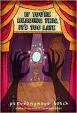
[READ: February 10, 2008] If You’re Reading This It’s Too Late
This is the sequel to Bosch’s The Name of this Book is Secret. I was really hooked by the first book, and was pretty excited to hear that the sequel had arrived. To see a summary of that book and for background info, click here.
At the end of book one, Cass and Max-Ernest were on the verge of joining the Terces Society. This book picks up several months later with the pair still waiting to hear from their secret contacts: either Owen or Pietro Bergamo.
One day at lunch, Cass receives a letter in secret code telling her to come to the docks. When they board the boat they are dismayed to see that it is full of Midnight Sun members (The Midnight Sun is the group of bad guys that they defeated in the first book. They include: Dr L. (twin brother of Pietro), Ms. Mauvais, and the Skelton Sisters). This boat trip puts in motion most of the events of the story. (more…)
Okay, get ready. Zaireeka comes as a 4 CD set. With a twist. Each CD is meant to be played simultaneously. So, you get yourself 4 boomboxes hit play at the same time and enjoy!
Each CD has some aspects of each song. So, on one disc you may get some vocals, maybe another has some guitars and sound effects. It all varies per disc. In fact, on one disc, track 6 is given a warning, perhaps my favorite warning ever on a CD: “This recording also contains frequencies not normally heard on commercial recordings and on rare occasion has caused the listener to become disoriented.”
And if you do a search for Zaireeka you will read the gamut of opinions about the disc and its ridiculousness or its social coolness. So I won’t go into that. I will say that one fine day many years ago I tried the experiment. I got 4 radios and synched up all the songs and it worked and it was a lot of fun. I also listened to the set in many different ways: Discs 1-4 individually. Discs 1& 2, discs 1&3, discs 1& 4, discs 2& 3, discs 2&4, discs 3&4 and then discs 1,2 & 3, discs 1, 2 & 4, discs 1, 3 & 4, and discs 2, 3 & 4. Phew. (I had a lot more free time on my hands back then). And since then, I haven’t really listened to the discs at all. Because, well, how often do you get a chance to listen to 4 discs at once?
So, online I found a stereo mixdown version of the disc. I know purists argue that that is simply not the way to listen to the disc, and they have a point…. Many of the effects are certainly lost, and since part of the point of the experiment is that the tracks are going to wobble and go out of synch, the mixdown does ruin the effect. However, if you actually want to hear the songs as songs, not as experiments, the stereo mixdown mix is the way to go (at least until they release the disc in a 5.0 DVD version (which evidently they might…maybe? in 2000, or maybe 2007, or who knows.))
But what about the songs? It’s hard to say that the songs are typical Flaming Lips songs, because that’s not really very meaningful. (Lips songs being off the wall at the best of times). However, the songs are designed to allow the different discs to go out of synch somewhat, creating echoes or even stranger sounds. As such, they are rather meandering pieces, somewhat lengthy, without a lot of heavy beats (that said, there are sections with very loud chaotic drums, they just don’t have other parts to synch up to). But this experiment allows the songwriting to shine through in th emost minute details. And it pays off on their next album in big time.
A track by track rundown goes:
“Okay I’ll Admit That I Really Don’t Understand” opens with a big drum splash and a fantastic bassline. Intermittent piano chords let you know that this song isn’t going to be typical. Fun effects and a swelling chorus add to the ambience. It’s a short song, but it sets the tone for the rest of the disc.
“Riding to Work in the Year 2025 (Your Invisible Now)” starts off in a chaotic jumble, but once it settles down it has yet has another fantastic bassline to start. The middle choral part is really beautiful, although that scream section is pretty jarring/creepy.
As the title, “Thirty-Five Thousand Feet of Despair” suggests, it’s a sad song about a depressed pilot. The effects include a plane taking off. The song is propelled by a heartbeat-like drum, and the echoing voices suit the experiment very well. There’s a “sane” vocal track and an “insane” vocal track.
“A Machine in India” is 10 minutes long. It’s got a long meandering middle section, but the slow keyboard melody remains constant. It’s also the first real occurrence of Wayne’s apparent obsession with vaginas (see Christmas on Mars). It begins sweetly as a nice acoustic song but it explores many sonic areas (according to theliner notes, Wayne and his wife were discussing her menstrual cycle, and that was the jumping off point of this song).
“The Train Runs over the Camel but Is Derailed by the Gnat” begins with a fascinating cacophony of drums and ends in a very sweet “na na na” chorus. In between you get yet another splendid trippy pop song.
“How Will We Know? (Futuristic Crashendos)” contains a shockingly high pitched sound (as warned) and yet the main body of the song is another of Wayne’s folky and very catchy melodies.
“March of the Rotten Vegetables” is probably my favorite track on the disc, despite the fact that it’s an instrumental. It starts with some really interesting squeaky sounds and a cool guitar riff. It morphs into yet another bombastic drum “solo” over a nice piano melody. The liner notes indicates there are bats involved, but I’m not quite sure I hear it.
“The Big Ol’ Bug Is the New Baby Now” is a spoken word piece in which Wayne relates a story about how his dogs treat a stuffed toy like a baby, until they get a “Big Ol’ Bug” which becomes, as you may guess, the new baby. Each disc has different ambient effects. As the song ends, a swelling chorus sings the title until the loudly barking dogs bring an end to the song and the experiment as a whole.
As I mentioned, the stereo mixdown version is one way to enjoy the music. But I must say that even listening one disc at at time can be fun (although really, that comes down to much more of an experimental music experience than anything else). The social aspect of the performance certainly appeals, but I’m pretty antisocial and can’t imagine that I’d ever do it.
If you like the Lips at all but have been afraid of this CD because of how ridiculous it is, it’s probably worth the outlay of funds to buy the set or download a track or two. It’s a fun disc that rewards patience, and, really, the songs are all very good. You could also look for the stereo mixdown, but really, you’d only be getting half the story.
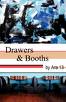
[READ: February 3, 3009] Drawers & Booths
Full disclosure: Ara 13 asked if I’d like to read his book and write about it. I looked up the book on Amazon, and it sounded cool, so I agreed.
Drawers & Booths is a work of metafiction. A simple definition of metafiction, in case you don’t know, is: “a type of fiction that self-consciously addresses the devices of fiction; metafiction does not let the reader forget that he or she is reading a fictional work” (for the full Wikipedia explanation click here.)
SPOILER ALERT: Generally I try not to give anything away when I review a book. Some things are unavoidable of course, but any major plot twists or surprises I try to leave for the reader to discover by him or herself. However, because this book is metafictional, and there are twists, surprises, and massive plot alterations throughout the book, the only way I can review it at all is to give some of these things away. I don’t think I ruin anything for anyone, but tread lightly if you want nothing revealed. (more…)
SOUNDTRACK: SUFJAN STEVENS–Joy! Songs for Christmas Vol. IV (2006).
This disc has only one guest on it: Bridgit DeCook. And she adds some very nice harmonies to some of the songs. It also contains only one short (less than a minute) instrumental: “The First Noel” (which is a lot of la las and is really nice)The rest of the disc stays around the 3-4 minute mark, with no long songs.
There are two full-length traditional Christmas songs: “Away in a Manger” in a a beautiful simple folk rendition. And there’s also the best rendition of “Little Drummer Boy” I’ve ever heard: it’s understated and moving with beautiful harmonies (and virtually no drums).
There are three Sufjan originals on this EP. “Hey Guys! It’s Christmas Time” has that distinctive Sufjan original sound. Even though the instrumentation is simple guitar (really fuzzy out in the opening notes), it is clearly an original and a good one. “Did I Make You Cry on Christmas? (Well, You Deserved It!)” is one of those songs that is stark and negative and yet it is so catchy. It’s something that Sufjan does very well. The third original is “The Incarnation.” It’s a brief instrumental, which sounds rather mournful.
The final song, “Joy to the World” is a bit more subdued than I prefer this song to be, but it’s still pleasant, and the unexpected guitar riff between verses is unusual but very cool.
[READ: January 5, 2009] “Meeting with Enrique Lihn”
I had been hearing a lot about how Bolaño had died while finishing up his latest and last novel 2666. And since the book was just released here, I had it in my head that he had just recently died. However, as most anyone knows, this U.S. edition is a translation; the book was actually published a few years ago. And Bolaño died in 2003. This doesn’t really make a big difference to anything, it just somehow means I didn’t “just miss” reading him while he was alive. But regardless, that has little impact on this story.
I just had to look up to see if Enrique Lihn was a real person (which shows my unsurprising dearth of knowledge about Chilean poets). (more…)
 SOUNDTRACK: HÜSKER DÜ-Land Speed Record (1982).
 Mentioning Hüsker Dü during the Replacements reviews made me bust out their records too. Land Speed Record was their first release, and it always amazed me that their first record was a live record.
 SOUNDTRACK–THE REPLACEMENTS–All Shook Down (1990).
 And here we come to the end of the recorded history of the Replacements. 7 albums (and an EP). 4 and a half hours of recorded music. And a steady maturation from drunken punks to elder statesmen. Or really statesman (Paul Westerberg at the ripe old age of 31!). All of the reviews state that this was originally designed as a Westerberg solo album, and that the band barely played together on it at all. And it shows.
 SOUNDTRACK: PEARL JAM-Binaural (2000).
 Binaural bursts forth with the rampaging “Breakerfall” and “God’s Dice.” The latter pauses only briefly for a chorus break. They are followed by “Evacuation,” a song that sounds a bit off kilter in this studio version but which blasts off on the live version. It’s got a great shouty chorus too.
 SOUNDTRACK: PEARL JAM-Vs. (1993).
 Ten was a solid record, and although it had diversity within it, overall the sound was pretty consistent. On Vs., Pearl Jam mixed it up sonically and otherwise.
 Zadie Smith is the editor and she wrote the introduction. I like to cover all of the written pieces in the book, but there’s not much to say about the introduction except that it fills you in on the details of the collection. She thanks Sarah Vowell for the idea but I gather that the rest of the work was done by her.
 SOUNDTRACK: LULLABYE ARKESTRA-Ampgrave [CST044] (2006).
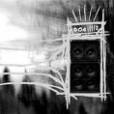 I’m not sure what’s up with the spelling of Arkestra (Sun Ra tribute, perhaps?), but “Lullabye” is certainly a misnomer. “Ampgrave” on the other hand is a pretty good summary of the music on this record.
 SOUNDTRACK: ROLLING STONES-Rock and Roll Circus [DVD] (1968).
 Probably the most interesting thing about this DVD was seeing Tony Iommi, future guitarist for Black Sabbath playing guitar for Jethro Tull! Let me repeat: the guy who played “Iron Man” was playing on a song with a flute solo!
 SOUNDTRACK: Dungen-4 (2008).
 Vill du tala svensk?
 SOUNDTRACK: THE FLAMING LIPS-The Soft Bulletin (1999).
 This album brought The Flaming Lips out from the underground (or one-hit wonder status) into the spotlight of Well Respected Bands. It made a whole bunch of best of 1999 lists and even a few best of the 1990s lists.
 SOUNDTRACK: THE FLAMING LIPS-Zaireeka (1997).
 Okay, get ready. Zaireeka comes as a 4 CD set. With a twist. Each CD is meant to be played simultaneously. So, you get yourself 4 boomboxes hit play at the same time and enjoy!
 SOUNDTRACK: SUFJAN STEVENS–Joy! Songs for Christmas Vol. IV (2006).
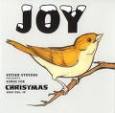 This disc has only one guest on it: Bridgit DeCook. And she adds some very nice harmonies to some of the songs. It also contains only one short (less than a minute) instrumental: “The First Noel” (which is a lot of la las and is really nice)The rest of the disc stays around the 3-4 minute mark, with no long songs.
 I Just Read About That...