Feeds:
Posts
Comments

Archive for the ‘Translators’ Category

SOUNDTRACKACID MOTHERS TEMPLE & THE MELTING PARAISO U.F.O.-Lord of the Underground: Vishnu and the Magic Elixir (2009).

A lot of AMT music sounds vaguely similar with Kawabata’s wild guitar noodling (and because they always play “Pink Lady Lemonade”) but this album really changes things up because Kawabata plays the bouzouki, saz and sitar which adds a Middle Eastern flavor to the proceedings.

There’s three songs on this album, one really short one, one really long one and one really really really long one.  The lineup is the same as other albums from this period, although the instrumentation has changed a bit:

  • Tsuyama Atsushi: monster bass, voice, acoustic guitar, alto recorder, flute, toy trumpet, kazoo, cosmic joker
  • Higashi Hiroshi: synthesizer, dancin’king
  • Shimura Koji: drums, latino cool
  • Kawabata Makoto: electric guitar, bouzouki, saz, sitar, organ, percussion, speed guru

“Eleking the Clay” is fourteen minutes long.  Kawabata plays a simple, fast, rocking riff on the bouzouki while Tsuyama Atsushi sings along.  At around five minutes Kawabata starts a wild solo while the rest of the band continues chugging along.  Near the end the keys take over and the bass starts going predictably wild.  It’s interesting to hear the familiar mixed with the new here.

“Sorcerer’s Stone of the Magi” is a short guitar piece at just under 4 minutes.  Acoustic guitar chords and a lead sitar play a bouncing melody while the singer sings along.  The track is full of bird song and chatter in the background.  A lovely pastoral piece.

“Vishnu and the Magic Elixir” is the monster song on this album at over 25 minutes long.  It starts off slowly with single notes on the sitar but the echoing notes almost give it a Western feel at the same time.  The trippy synth sounds make the song sound like Middle East meets the Old West in outer space.

Tsuyama starts adding in pig snorts and mocking laughter after and around 6 minutes some growling and singing are followed by the kazoo (!).  By around ten minutes the song starts to pick up the tempo with the bass really taking the lead and meandering around.  Kawabata’s solo starts to get intense around this time as well.  Then Tsuyama throws in some toy trumpet.  Things build and build and by 17 minutes it’s a full on wild freak out that lasts almost until the end of the song.  Although by 25 minutes the song stats to fade with echoing notes giving the song a proper ending.

And, yes, I don’t really know the difference between a bouzouki and a saz, so I could be wrong about what he’s playing.

[READ: May 1, 2021] “A Tranquil Star”

This very short story was translated from the Italian by Ann Goldstein.

The story concerns a star and its observer.  The star was a peaceful star and it was very big and very hot.  But words are meaningless on this scale, right?  Australia is very far, an elephant is very big, I can have a hot bath.

The thing was though, that the star was not so tranquil.  It was just hard to observe from earth.   Arab and Chinese astronomers were aware of the star, but Europeans were too busy with earthly pursuits to notice.  The Arab watched it for 30 years and watched how it performed differently at different times.

But when he died, the star took no notice. (more…)

Read Full Post »

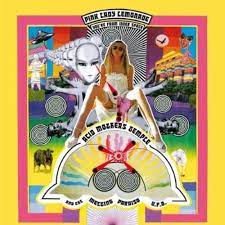
SOUNDTRACK: ACID MOTHERS TEMPLE & THE MELTING PARAISO U.F.O.-Pink Lady Lemonade ~ You’re From Inner Space (2011).

This album is something like the fortieth AMT album and somewhere in the middle of the band’s tenure with this lineup:

Tsuyama Atsushi: monster bass, voice, cosmic joker
Higashi Hiroshi: synthesizer, dancin’ king
Shimura Koji: drums, latino cool
Kawabata Makoto: guitar, guitar synthesizer, speed guru

The album consists of one song, the title track, broken into 4 parts all based around a simple, but rather lovely guitar melody

 “Part 1” is 32 minutes long.  It begins with the opening guitar melody which plays along with some trippy sounds.  Tsuyama is reciting the words (in Japanese?  English?  Gibberish?) and occasionally you hear the words “Pink lady Lemonade.”  At around 12 minutes drums and bass are added.  Once the bass starts meandering through some catchy riffs, Kawabata starts soloing.  It’s pretty far down in the mix (the main melody continues throughout).  Then around 22 minutes Tsuyama starts adding the monster bass–wild riffs that go up and down the fretboard.  With about 5 minutes left Kawabata starts playing s louder solo–louder than the rest of the music–and you can really hear him wailing away.   Part 1 fades out completely before jumping into Part 2.

“Part 2” is only 5 minutes, but it is utter chaos, with everyone making a big pile of noise–keyboard banging, sliding bass, thumping drums and wild, seemingly uncontrollable guitars.  It ends five minutes later with some warbling keys

Then comes “Part 3,” which runs just over the minutes.  It’s a faster chord version of the same guitar intro with slow bass notes and a big guitar solo.  It changes shape and adds some discoey bass lines.  About midway through the synths take over and while there is music in the background the song becomes mostly washes of sounds.

“Part 4” ends the disc at just over 18 minutes.  It picks up with the original guitar melody once more.  This time, it’s only a minute until the drums and bass kick in and the soling begins.  At five and a half minutes the guitar solo gets really loud and takes over.  The soloing is wild for over ten minutes and then around 13 minutes the song grows very quiet with only the lead guitar and the heavily echoed main riff playing.

There’s on online version here that has this entire record but adds six minutes at the end of the last part which is mostly the introductory melody and some washes of keys over the top.  i rather like this extra 6 minutes and it feels like a really nice ending.


[READ: May 1, 2021] “My First Passport”

This essay was translated from the Turkish by Maureen Feely.

Pamuk talks about people travelling from Turkey when he was young.  First it was his father, who left the country when Orhan was seven.  No one heard a word from him for several weeks when he turned up in Paris.  He was writing notebooks and regularly saw John-Paul Sartre.   He had become one of the penniless and miserable Turkish intellectuals who had been walking the streets of Paris.  Initially Orhan’s grandmother sent Orhan’s father money but eventually she stopped subsidizing her bohemian son in Paris.

When he ran out of money he got a job with I.B.M. and was transferred to Geneva.  Soon after Orhan’s mother joined his father but left Orhan and his brother with the grandparents.  They would follow when school was done.

Orhan sat for his first passport photo (included in the essay).  Thirty years later he realized that they had put the wrong eye color down–“a passport is not a document that tells us who were are but a document that shows what other people think of us.” (more…)

Read Full Post »

SOUNDTRACK: MR. BUNGLE-The Raging Wrath of the Easter Bunny Demo (2020/1986).

In 1986, Mr. Bungle released a demo tape called The Raging Wrath of the Easter Bunny.

In 2020, after a reunion tour of sorts, the band rerecorded the album, with some slight personnel changes. Original singer Mike Patton was still there as was masterful guitarist Trey Spruance and bassist Trevor Dunn.  But they had two impressive guests stars (who also performed live with them), Scott Ian (from Anthrax) on rhythm guitar and Dave Lombardo, drummer extraordinaire.

And thus they re-recorded the initial demo.  Fans of Mr. Bungle’s later genre bending work would be a little disappointed because this was pretty much a heavy heavy metal record.  But it is Mr. Bungle so you know there’s gonna be some weird stuff too.

The only song they don’t play from the original is “Evil Satan” which is more or less a goof anyway.

“Grizzly Adams” opens the album with a very pretty guitar instrumental. Spruance really shines with this moody, weird piece.  But even when the full band joins in in the last 30 seconds, it doesn’t prepare you for the heaviness to come.

“Anarchy Up Your Anus” is old school metal–heavy guitars with an Anthrax/Slayer vibe.  There’s even a lengthy scream after the opening drum fills.  This song has an opening narration by Rhea Perlman.  Yes.  Rhea Perlman.  The narration comes from the Chilling, Thrilling Sounds Of The Haunted House Disney album (on the demo they just played the audio from the record).

“Raping Your Mind” is out of sequence from the demo (it was originally song 6).  It continues with the heavy Anthrax-like riffage and some serious drumming.  There’s a cool middle moment where there’s two guitar solos and just bass and drums in the back–there’s some seriously wicked guitar soloing going on.

“Hypocrites /Habla Español o Muere” was originally a longer song, but they decided to shorten it and add this humorous cover of the Stormtroopers of Death song.  The title is mentioned in the first few seconds, then after 30 seconds, the song jumps into a bit of “la Cucaracha” and then segues into “Speak Spanish or Die.”

“Bungle Grind” is really heavy with some classic mosh sections and faster riffage.

“Methematics” is a new song.  It’s a bit more standard heavy metal and not so much early thrash until the double bass drums kick.  There’s lots of parts including a classic punk style in the middle.  This is more akin to the later, adventurous Mr. Bungle, but at 8 minutes it is a little long.

“Eracist” is another new song.  This one is great.  Really catchy with some good old fashion metal riffs and chanted chorus.  There’s a seriously heavy middle section, too.

“Spreading the Thighs of Death” was the third song on the demo.  It’s some good fast thrash with wicked chord changes and massive double bass drum.  There’s some really wild guitar soloing too.

“Loss For Words” is a Corrosion of Conformity cover.  It’s a pretty serious cover version.  Patton’s vocal delivery is even a little different.

“Glutton for Punishment” is another new song that fits into the classic riff an thump thrash.  There’s a whispered vocal part where you can actually hear the words!  And a fascinatingly fiddly guitar solo that left me wondering how he did it.

“Sudden Death” ended the demo and ends this as well.  A heavy chugging riff and super fast thrashing–it’s impressive that they can keep it up for seven plus minutes.  I rather liked the “yes/no” chanting at the end.

This album isn’t for everyone (as most Mr. Bungle albums aren’t).  But it does show off some quality old school metal and some serious skill for a band covering themselves 30 years later.

[READ: March 24, 2021] Zed

I saw this book in Barnes & Noble and fell in love with the cover.  I made sure to look for it at the library and was pretty psyched when it came in.

And I was pleased as soon as I started reading.

Set in the not too distant future, one tech company, Beetle, dominates the world.  I thought that Beetle was pretty inspired name.  It could be Apple (who have a connection to The Beatles, with Apple Records) and it looks a lot like the word Google, although I suppose it is probably closest to being about Amazon–with their online assistant Athena.

Nearly every citizen (the book takes place in London, but Beetle is global) wears a BeetleBand which monitors everything you do–like a Fitbit or Apple Watch on steroids.

It tells you when you are stressed or when you should hydrate or that you shouldn’t have that donut.  Indeed, everything is now really “smart”: fridges, doors, cars.  Everything in your house is monitoring you. And everyone has a Veep, a personal assistant who does everything for you (except for physical things, since it has no body). You pay for all the best stuff in Beetle bucks–the cryptocurrency that replaced actual  money as the dominant currency.  If you didn’t convert your pounds, euros or dollars, when the rate was good, you’re just stuck.

When the book says everyone, it’s really mostly everyone. There are some people who can’t afford such extravagance.  People who don’t work for Beetle get paid in regular money which isn’t very useful.  There are also neo-Luddites who want nothing to do with Beetle.  But they are carefully monitored by Beetle.

Most people work and communicate in a virtual world with avatars that are some version of themselves.  And most importantly, every person has a Lifechain–the algorithm that determines the longevity and happiness you should experience.  This predictions are pretty much never wrong and everyone uses them to judge people–employers, police, etc. Everything you do, every decision you make changes our Lifehchain, which changes you likelihood of doing x y or zed. (more…)

Read Full Post »

SOUNDTRACK: KISHI BASHI-“Honeybody” (2016).

I love Kishi Bashi and am always excited to see him live and to hear new music from him.

Much like the story, this song is remarkably cheerful and happy.  It feels different and special in Kishi Bashi’s canon.  All of the Kishi Bashi elements are there: strings, looping, soaring vocals, but there’s a few novel moments as well.

The chorus, for instance has an island feel.  The way he sings “Maybe sipping a Coca-Cola with me, babe” you can feel your feet in the sand.

But first there’s an orchestral string opening, following by some manipulated pizzicato plucking and Kishi’s singing

Then the chorus

Cause everybody wants a Honeybody someday
Mama said they don’t grow on them trees easy
Hands down on the ground
I’m begging you to please, Honeybody, please me

Followed by some lovely soaring oooh oooh oohs in the post chorus.

The song seems like it could just end with another repeated chorus, but after the post chorus, the song shifts gears to a buzzy synth sound.  The song turns vaguely electronic with a soaring violin as he sings the chorus to a new melody.

Delightful happy music. #stopasianhate (I mean, really, knock it off).

For a delightful twist on the song, check out this version with the Nu Deco Ensemble

[READ: March 13, 2021] “Honey Pie”

Most of Murakami’s stories are abstract or, at the very least, kind of puzzling  There’s usually some vaguely supernatural element to them that you’re never sure exactly how to read (and it usually doesn’t matter because the story is good.)  This story, which like most of the others was translated by Jay Rubin, is it only the most straightforward story of his that I’ve read, it is one of the most beautiful.

The story begins with a man telling a little girl a story.  The story is about Masakichi the bear, the all time number one honey bear.  The girl, Sala, asks many questions about the story–good, thoughtful questions (“Can bears count money?”).  The storyteller, Junpei, loved the girl and the questions.  The questions helped him to guide the story that he was making up.

Junpei was a professional writer, but these storytelling gigs were for his best friend Sayoko and her child Sala.  Sala had been having some terrible nightmares ever since the earthquake hit Kobe.  They don;t live near Kobe, but tit’s been on the news every day.  Sala fears that the Earthquake Man is in the house and she can’t settle down until she checks every single possible place in their house.  Finally Sayoko called Junpei because he stays up all night writing anyway. (more…)

Read Full Post »

SOUNDTRACK: PICTUREHOUSE-“Sunburst” (1998).

Picturehouse drummer Johnny Boyle was in the Irish Drummers book.  I was unfamiliar with them, but apparently they were pretty huge back in the late 1990s (at least in Ireland).  Boyle played on this album (Karmarama) and the follow up.

“Sunburst” was apparently all over Irish radio when it came out.  After a fun opening drumfill, this song falls into a gentle indie rock vein.  There’s some lovely harmonies, some nice gravelly vocals from singer Dave Brown and a big soaring “what a day” chorus.

The end of the song bops along on series of bah bah bahs and and a tasty fuzzy guitar solo.

It’s a delightful jangly pop song and was understandably a big hit

[READ: March 15, 2021] “Girl with Lizard”

I was sure that I had read this story, or something like it, before.  But this is the first story by this author that I have read.  This story and the resulting short story collection Flights of Love were translated by John E. Woods.

The story concerns a boy and a painting.  It was a painting of a girl looking at a lizard on the beach.  His mother and father called it “The Girl with the Lizard” and his mother referred to the girl in the painting as “The Jewish Girl.”  The painting played a large role in the boy’s childhood.  He napped under the painting every day during nap time.  He became very familiar with the details of the painting, which had a pride of place in his father’s office.

He became so familiar with it that when asked to describe a painting in detail for school, he was excited to write about this one.  He stared at the painting and took in all the details. He marveled that when he was little he had to look up at the girl and now that he was older the two were at eye level with each other.

His father admired the essay but told him that the painting was very important and it would be much better if people didn’t know they had it.  He said it was valuable and din;t want anyone to steal it.  He refused to say anything more about it and over the boy’s life, he never learned the provenance of the painting,  But his father certainly believed it was valuable. (more…)

Read Full Post »

SOUNDTRACK: RHEOSTATICS-Jasper Heritage Folk Festival-Night set (August 3 2001).

The guys played a 40 minute set earlier in the day (playing the entire Harmelodia album).  Then in the evening they returned for an hour long set of new songs and some classics.

Night of the Shooting Stars was coming out soon and they were primed to play some news songs.  There’s also not a lot of goofiness–it’s a short set and they need to get it all out.

You can really hear Dave B’s acoustic guitar in “Mumbletypeg” and “In It Now.”

When they play “Aliens,” Dave sings “Artenings Made of Gold” at the end.  “Record Body Count” runs a little long with a lengthy solo at the end.

“Legal Age Life” has a country feel and when they do the “12 Bar Blues” part, they credit NRBQ–I never realized it was a song before–just thought they were making it up.
Dave asks, “Do the people of your generation still do the twist?  Because i saw very little twisting.  You twist now but there’s no music.

After a lovely “King of the Past,” They’re going to take it down for a couple of long slow songs.  They’re very poetic and we know how much the people of japer die for the poetry.  “Saskatchewan” is first and then “We’re gonna crank up the Hitmaker 2000” for “We Went West.”  Introducing the song:

The first time we toured was in 1987 across Canada.  I bet that was before you were born.  Every verse is devoted to a province–not every province but the ones we went to.  Yes, Alberta’s in it.  [cheers] Wait, you haven’t heard the verse about Alberta.

Someone shouts a request and Dave says, “We’re going to do a new song, but thanks for the request.”  Up comes a good “P.I.N.”

The set ends with a great “Stolen Car.”  The acoustic really rings and the end has a wicked loud and wild solo from martin.

These short sets are definitely less fun than the full length ones, but they sound fantastic.

[READ: March 14, 2021] “Austerlitz”

About ten years ago I read the novel Austerlitz, from which this excerpt comes.  At the time I had written

I read about Sebald in Five Dials. And the glowing talk about him made me want to read one of his books (specifically, this one).

This excerpt is quite long, but so is the novel.   It’s essentially the first few sections of the the novel.  I had written

Austerlitz is a strange novel [translated by Anthea Bell] which I enjoyed but which I never really got into.  I feel like rather than absorbing me into its words, the book kind of held me aloft on the surface.  As such, I have a general sense of what happened, but I’d be very hard pressed to discuss it at length.

The basic plot summary is that an unnamed narrator runs into a man named Jacques Austerlitz.  Austerlitz talks to him at length about his life. They run into each other at various points over the years, and Austerlitz’ story is continued.  And literally, that is the book.  Now, of course, Austerlitz’ story is multifaceted and complex.  But we will never forget that this is a story within a story (it’s impossible to forget because the phrase “said Austerlitz” appears about 500 times in the book.

It was interesting to me that the details I wrote about this novel ten years ago were the same ones I kept from this reading, more or less.  (Particularly the part about how it says “said Austerlitz” all the time). (more…)

Read Full Post »

SOUNDTRACKNORA BROWN-GlobalFEST Tiny Desk (Home) Concert #136/148 (January 14, 2021).

Nora BrownGlobalFEST is an annual event, held in New York City, in which bands from all over the world have an opportunity to showcase their music to an American audience.  I’ve never been, and it sounds a little exhausting, but it also sounds really fun.

The Tiny Desk is teaming up with globalFEST this year for a thrilling virtual music festival: Tiny Desk Meets globalFEST. The online fest includes four nights of concerts featuring 16 bands from all over the world. 

Given the pandemic’s challenges and the hardening of international borders, NPR Music and globalFEST is moving from the nightclub to your screen of choice and sharing this festival with the world. Each night, we’ll present four artists in intimate settings (often behind desks donning globes), and it’s all hosted by African superstar Angélique Kidjo, who performed at the inaugural edition of globalFEST in 2004.

The third artist of the fourth and final night is fifteen year old banjo player Nora Brown.  Nora was born and bred in Brooklyn, but she has a huge affinity for Appalachian banjo music.

30 feet below the surface in Brooklyn, 10th grader Nora Brown brings incredible, surprising depth to the Appalachian music she plays. Over the course of her Tiny Desk Meets globalFEST concert, surrounded by innumerable globes and instruments, she infuses new life and energy into the traditional songs of Addie Graham, Virgil Anderson and Fred Cockerham. Nora weaves together songs and storytelling, speaking of the great history of the music that came before her and at which she excels.

Nor plays three songs. “The Very Day I’m Gone” is an Addie Graham song.  Graham was a singer from eastern Kentucky.  It is a slow piece that is primarily a bass riff with some high notes and very soft singing.

Her dad made the banjo she is playing.  As the song ends you can hear the shuttle train that runs back and forth about every seven minutes.

Nora has her school stuff on her tiny desk, since she’s been doing remote school learning.  And she’s a high school student which means she ends her sentences with, “So yeah”

“Miner’s Dream” is a Virgil Anderson tune.  He is from the Kentucky/Tennessee border and brought a bluesy touch to his banjo playing.  This one is a faster instrumental played on a snake head Gibson banjo, the bowl of which is over 100 years old.

“Little Satchel” is by Fred Cockerham.  The banjo she is playing is from John Cohen’s of the New Lost City Ramblers.   Roscoe Halcomb would use it when touring with John.  John recently passed away and the banjo is on its way to the Library of Congress.   The song has fast playing with a cool lyrical melody.  It’s my favorite of the three.

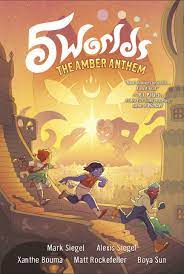
[READ: February 10, 2021] 5 Worlds Book 4

I had actually forgotten about this series, and was quite happy to see this book at the library.  This is book 4 of 5 (5 due out in May).

The book does a nice job of bringing us back up to speed in the first few pages–reintroducing everyone and reminding us what is going on.

Of all the books, this one was the most straightforward.  There’s not a lot of travels and we understand most of what’s going on by now.

Oona, Jax, An Tzu and Ram Sam Sam land on planet Ambrine in the town of Salassanra (where Ram Sam Sam is from).  They receive a mixed welcome.  Since they have lit 3 beacons things have not been great on all the worlds.  (The task is not completed, and the process is a little rocky).  Oona is met with some hostility although the planet people love her (she brought water to them after all).

But this task (to light the fourth (amber) beacon) seems pretty easy. The beacon is in a pyramid.  It’s right in front of them and they meet little resistance.  As Oona begins to dance she realizes this beacon is encrusted in indestructible amber.  She can’t break it, but old runes pop up and most likely lead to a clue. (more…)

Read Full Post »

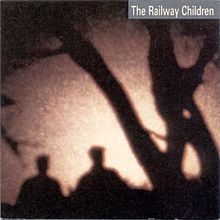
SOUNDTRACKTHE RAILWAY CHILDREN-“Brighter” (1987).

In Stuart David’s book, In The All-Night Café, he lists the songs on a mixtape that Stuart Murdoch gave to him when they first met.

Although I’ve been a fan of Belle & Sebastian for a long time, I knew almost none of the songs on this mixtape.  So, much like Stuart David, I’m listening to them for the first time trying to see how they inspire Stuart Murdoch.

In the book, David writes how much he does not like “rock,” especially music based around bluesy rock.  Most of these songs, accordingly, do not do that.  In fact, most of these songs are (unsurprisingly) soft and delicate.

A looping almost marimba-like sound opens before a jangly guitar and steady bass.  Here’s another song where the main instrument is the bass with guitar flourishes added on top.  This band reminds me of The Church (who had put outa couple of albums by now).

Singer Gary Newby has a nice crooning voice and the chorus is quite catchy.  The instrumental break allows the guitar to shine a bit with a meandering solo.  But the biggest surprise comes about 4 minutes in when there’s a drum solo of sorts–played on something like a metallic bongo.  After all of the short songs, this one pushes five minutes and is something of a surprise.

There’s some other good stuff on Reunion Wilderness, like “Gentle Sound” which I thought was a bit catchier.

[READ: January 30, 2021] “A Poor-Aunt Story”

In this story Murakami discusses a poor-aunt. I don’t know of this is a universal idea as I’ve never heard it before, although I do get where he’s coming from.

He says it was a beautiful day and he was out enjoying it when he suddenly had the idea of a poor aunt.  There wasn’t even a poor aunt around, the idea just came to him and it stuck.  He needed to write a story about a poor aunt.

He told his friend he wanted to write a poor aunt story.  She asked if he had a poor aunt.  He said no.  She said she did have a poor aunt bit didn’t want to write about her.

He admits that chances are “you don’t have a poor aunt relative, but you have seen one.”

Every wedding reception has a poor aunt.

No one bothers to introduce her.  No one talks to her.  No one asks her to give a speech.  She just sits at the table like an empty milk bottle.

When people look at the photo album they ask about her and the groom says she’s no one, just a poor aunt of mine.

He woke up the next day and a found that a poor aunt–a little one–was stuck to his back.

Nothing alerted him to her presence, he just felt it. She wasn’t heavy and didnt breathe across his shoulder. People had to look hard to see she was there.  But people did see her–she gives me the creeps, a friend said.  He said it felt like his mother was watching them.

The narrator was unable to see the poor aunt but other people cuid and they all saw her as something else–usually something unfortunate–a friend’s dog who had died.  Soon enough friends stopped calling him–they found it depressing.  But the media swooped in on him. He even made it on the show “Look What Else Is Out There.”  He tried to explain what had happened but the show tried to sensationalize him–looking for a horror story or a joke.

One of his friends said she wished it had been an umbrella stand on his back–that would be more pleasant to look at and more practical.  He could even have painted it different colors.

The poor aunt left him in autumn. He was on a train ride and watched as a mother tried to deal with her squabbling children.  The boy was teasing his sister–stealing her hat.  She was getting very upset and complaining to her mother.  The mother was trying to read and was getting angry at the daughter for bothering her. Finally the girl reached across the seat and slapped the boy’s face and took her hat, feeling very pleased with herself.

The mother was furious and made the girl sit in a different aisle–next to the narrator.  The child protested but the mother said “You’re not part of this family anymore.”  He wanted to say something to the girl, to cheer her up.  Like that she had done a good job, but he knew it would only confuse and frighten her so he said nothing.

Sometime during that interaction, the poor aunt left him.  He wasn’t aware of it, she was just gone.

This was one of Murakami’s first experiments with the short story form.  It was translated by Jay Rubin.

Read Full Post »

SOUNDTRACKNATU CAMARA-GlobalFEST Tiny Desk (Home) Concert #134/143 (January 12, 2021).

Natu CamaraGlobalFEST is an annual event, held in New York City, in which bands from all over the world have an opportunity to showcase their music to an American audience.  I’ve never been, and it sounds a little exhausting, but it also sounds really fun.
The Tiny Desk is teaming up with globalFEST this year for a thrilling virtual music festival: Tiny Desk Meets globalFEST. The online fest includes four nights of concerts featuring 16 bands from all over the world. 

Given the pandemic’s challenges and the hardening of international borders, NPR Music and globalFEST is moving from the nightclub to your screen of choice and sharing this festival with the world. Each night, we’ll present four artists in intimate settings (often behind desks donning globes), and it’s all hosted by African superstar Angélique Kidjo, who performed at the inaugural edition of globalFEST in 2004.

The third artist on the second night is Natu Camara from Guinea.

Natu and her band play four songs.
From a studio space in Brooklyn, Guinean native Natu Camara mixes West African soul, rock and pop music. As a builder of inter-cultural bridges, Camara uses her songs to bring people together, weaving a tapestry of musical stories and visions of her beloved home.

“Ka Hirdé” is a short introductory piece. The “boombastic” Kayode Kuti on bass and Matthew Albeck on guitar set the melody going while percussionist Gary Phes and drummer Oscar Debe propel it forward.  Camara and her backing singer Lindsey Wilson sound great together while Camara plays a percussive stick.

It’s a short introduction before the funky “Waa” which means “crying for your soul.”  There’s some great bass work behind this simple catchy song.  I love the way it builds with the sung “waa, waa”  until a grooving keyboard solo makes the song feel like a jam.

“Dimedi” means “child” and is dedicated to all the children around the world.  She says, “Let’s take care of the children so we can change the future.  We may not be here when the world is better but at least if we train them well maybe they will do better than our generation.”

The song is slow and mellow with just Camara singing and playing guitar and keyboard washes from John F. Adam.  Until the whole band joins in to flesh out the song.

“Arabama di” ends the set in a really fun way.  It has a kind of reggae intro with some super funky drums and a wild bass line.   By the end, the song has turned into a wild jam with everyone dancing (in their seats) and a wailing solo from Albeck.

[READ: January 14, 2021] “Christmas in Cochinchina”

This story comes from a collection called A Very German Christmas: The Greatest Austrian, Swiss and German Holiday Stories of All Time.  I don’t know if the whole collection was translated by Michael Z. Wise, but this story was.

This was a very simple story, full of memories of childhood.

The narrator’s class went to the World Panorama.  It was a small class trip and cost five pfennings.  The narrator didn’t have the money so the school paid for him.

Once you went inside and the darkness cleared, you could see a large cabinet. It was illuminated from within and has holes that you could look in.

After being told to sit, he saw the show begin.  There were scenes from Cochinchina (Vietnam).

The sky was an intense blue and the sun was radiant–the narrator quickly forgot it was December in Germany..

There were palm trees and men in pith helmets.  There were women with arousing breasts and loincloths

that certainly would have fallen off if one could have stopped the pictures.

There was a British man teaching naked children.  There were fishermen and swimmers.

And then a gong sounded and it was over. (more…)

Read Full Post »

SOUNDTRACKHIT LA ROSA-GlobalFEST Tiny Desk (Home) Concert #134/144 (January 12, 2021).

Hit La RosaGlobalFEST is an annual event, held in New York City, in which bands from all over the world have an opportunity to showcase their music to an American audience.  I’ve never been, and it sounds a little exhausting, but it also sounds really fun.

The Tiny Desk is teaming up with globalFEST this year for a thrilling virtual music festival: Tiny Desk Meets globalFEST. The online fest includes four nights of concerts featuring 16 bands from all over the world. 

Given the pandemic’s challenges and the hardening of international borders, NPR Music and globalFEST is moving from the nightclub to your screen of choice and sharing this festival with the world. Each night, we’ll present four artists in intimate settings (often behind desks donning globes), and it’s all hosted by African superstar Angélique Kidjo, who performed at the inaugural edition of globalFEST in 2004.

The second band on the second night is Hit La Rosa from Peru.

Kidjo says their music is like a psychedelic surf-punk cumbia.  That’s true, but in a rather restrained way.  The music is cool and a little wild but it never gets out of control.  They play three songs and again, the musicians’ names aren’t given.

From the candle-lit home of their lead singer, Hit La Rosa comes in hot and doesn’t stop until the final measure. The band explores the many facets of Peruvian cumbia music, infusing it with pop music, folklore, jazz and dancehall to produce its distinctive grooves and hooks. The band’s precise-yet-dreamlike music and punk sensibility all come together to make music that explores life’s shadowy sides. Despite living through a political crisis in Peru, the band brings a message of hope and joy in the midst of struggle and upheaval.

“La Montañita” has a latin drum opening with a weird echoing surf guitar intro.  Sliding bass and trippy keys propel this danceable song along.

“La Marea” opens with a mellow keyboard and slow bass and guitars.  After a coupe of minutes,a drum fill introduces the faster part of the song.  An echoing vibrato-filled guitar solo and trippy synths are accented with Peruvian percussion and drums and it all works really well together.

“Salvia” is trippy and moody with more of the vibrato guitar soloing.  I really like at the end of the song the juxtaposition of the looping guitar melody and the bouncing bass.

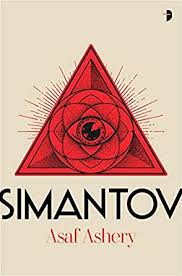
[READ: December 14, 2020] Simantov

This story (originally written in Hebrew and translated by Marganit Weinberger-Rotman) was a combination police procedural and eschatological novel about the end times.

I read the summary of the book at work, but the summary really doesn’t indicate just how supernatural the book is going to get.

It would greatly help to have a solid foundation in Biblical lore to fully understand what’s going on in this book.  I mean, the first chapter title contains a footnote:

The First Day of the Counting of the Omer*
*According to the Torah (Lev. 23;15) Jews are obligated to count the days from passover tp pentecost. This counting is a reminder of the link between the Exodus and harvest season.

Things are supernatural right from the get go.  Elijah the prophet comes to Earth to prepare for its smiting (it’s quite an elaborate introduction).  Elijah lands in Israel and leaves a trail of destruction all the way to Shamhazai’s mansion.

So, obviously it helps to know who Shamhazai is (I didn’t–Shamḥazai and his companion Uzzael or Azael are fallen angels of Nephilim).  The Nephilim are literal giants in the Bible–often taken as fallen angels.  That’s a lot of background for the first 9 pages.

The next chapter reminds the reader of the first humans created by God–Adam and Lilith.  Shamhazai was gaga over Lilith.

Incidentally, after reading the book I was looking at what other readers had thought.  One reader on Goodreads said she had to stop reading the book on page 10 after this sentence:

[Lilith] was dark and comely, her eyelashes fluttered like turtledoves, her perky breasts like two erect towers.

I’m going to admit that I found this simile to be really awkward (translation problem or just poor writing?).  I mean, even if Lilith were a giant, her breasts wouldn’t be like towers, right?  It’s hard to know even where to begin with a simile like that.  But I pressed on. (more…)

Read Full Post »

« Newer Posts - Older Posts »