Feeds:
Posts
Comments

Archive for the ‘The Future’ Category

SOUNDTRACK: SWANS-My Father Will Guide Me Up a Rope to the Sky (2010).

Three minutes of noise and pounding drums.  Monotone bass notes that hit as hard as the drums. An air of foreboding.  Yes, Swans are back.

The opening track of their new album is called “No Words/No Thoughts.”  The first part, the four minutes of instrumental, is clearly the No Words.  When M. Gira’s voice finally comes in, he’s not much happier than he was for his last Swans album.

The sounds of Swans are back, but the really big difference is that the menace is tempered somewhat.  I’m almost tempted to call it better production values. Early Swans was really scary…slow, ponderous and heavy.  And while those same qualities are here, it’s not quite as ponderous or heavy, and the pace is rather brisk on this first song.

But after this cacophony, we get the two minute a cappella “Liars.”  The music is only humming background vocals, but it is no less intense, especially when Gira’s sonorous voice reads a spoken section.  It’s very catchy (practically a first for Swans), but no less spooky.

“Jim” has some more cool harmonized backing vocals: a whole bunch of “Na Nas” which again, does not lessen the intensity of the song.  Although for old school Swans style, it’s track 4, “My Birth” with its creepy piano opening and bludgeoning noise for four minutes that shows that Swans are reaching back.

“You Fucking People Make Me Sick” opens with a Jew’s harp and then features guest vocals from Devandra Banhart and a child singing call and response.  While not as scary as some other tracks, it’s very creepy and not quite Devandra’s usually hippie fare.  It’s really good.  Especially the end instrumental part with dissonant piano and horns (!)

“Inside Madeline” is another song with 4 minutes of instrumental introduction before settling down into a relatively quiet song (more horns) that is far less sinister than most of these tracks.  “Eden Prison” has a wonderful circle high pitched guitar swinging around the background of the clattering noise.  It’s 6 minutes let up only briefly but the really convey claustrophobia.

The disc ends with the quiet “Little Mouth.”  It’s a slow ballad with whistling (!) and acoustic guitars in the background.  There’s a beautiful guitar solo which ends with Gira’s a cappella voice ending the disc.

I keep referencing Swans early music.  It’s true that their later stuff was far less scary and intense (“Can’t Find My Way Home” was a beautiful ballad which should have gotten more airplay than the original).  But this disc is certainly a call back to Swans’ roots.  Another thing is that Jarboe is not present on the disc (a first since their early days).

It’s a great return of a New York institution.

[READ: February 15, 2011] “Truncat”

This story is set in the same world as Down and Out in the Magic Kingdom, although it does not take place in The Magic Kingdom at all.  Rather, it is set in Toronto and is considered a quasi-sequel to the book even though none of the characters are the same either.  Although all of the elements of that novel are in place: deadheading, whuffie, and apparent age among other things.

Interestingly, this story gives more details about the world than Down and Out did.  Or at least it spells it out more clearly.  So we get:

Adrian’s father was apparent 22, hardly older-seeming than Adrian himself, though his real age was closer to 122.

It doesn’t explain everything, but it spells things out pretty clearly. (more…)

Read Full Post »

SOUNDTRACK: BIG DIRTY BAND-“I Fought the Law” (2006).

I just found out about this “supergroup” which was created for the Trailer Park Boys Movie.    The group consists of Geddy Lee and Alex Lifeson from Rush, drummer Jeff Burrows from The Tea Party and three people I don’t know: the singer from Three Days Grace, the singer/guitarist from Thornley and on lead vocals Care Failure from Die Mannequin.

I have to say that I’m not that excited by this cover.  The song has been covered so many times (some very good: The Clash, some very clever: The Dead Kennedys, and some terrible: many others).  And frankly there’s not much that you can do with this song.  It’s simple in structure with potential for shouting (which everyone likes), but little else.

For Rush fans, you can’t tell that Geddy or Alex are even on it.  So really it’s just a kind of metal-ish version of this old song.

Oh well, they can’t all be zingers.  You can hear it here.

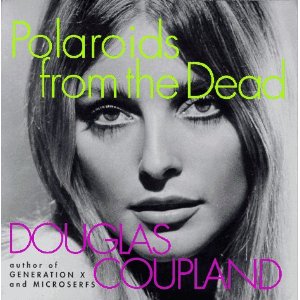
[READ: February 1, 2011] Polaroids from the Dead

After reading Shampoo Planet, I wanted to see if I remembered any of Coupland’s books.  So I read this one.  It’s entirely possible that when I bought this book I was disappointed that it was not a new novel and never read it.  Because I don’t remember a thing about this book.  (This is seriously calling into question my 90’s Coupland-love!).

But I’m glad I read it now.  It’s an interesting time-capsule of the mid-90s.  It’s funny to see how the mid 90s were a time of questioning authority, of trying to unmask fame and corporate mega-ness.  At the time it seemed so rebellious, like everything was changing, that facades were crumbling.  Now, after the 2000s, that attitude seems so quaint.   Reading these essays really makes me long for that time when people were willing to stand up for what they believed in and write books or music about it (sire nothing changed, but the soundtrack was good).

So, this collection is actually not all non-fiction.  Part One is the titular “Postcards from the Dead.”  It comprises ten vignettes about people at a Grateful Dead concert in California in 1991.  As Coupland points out in the intro to the book, this was right around their Shades of Grey album album In the Dark, and huge hit “Touch of Grey”, when they had inexplicable MTV success and it brought in a new generation of future Deadheads.  He also points out that this is before Jerry Garcia died (which is actually helpful at this removed distance).

These stories are what Coupland does best: character studies and brief exposes about people’s lives.  The stories introduce ten very different people, and he is able to create a very complex web of people in the parking lot of the show (we don’t see the concert at all).  As with most Coupland of this era, the characters fret about reality.  But what’s new is that he focuses on older characters more (in the first two novels adults were sort of peripheral, although as we saw in Shampoo, the mother did have millennial crises as well).  But in some of these stories the focus is on older people (Coupland was 30 in 1991, gasp!).  And the older folks fret about aging and status, just like the young kids do. (more…)

Read Full Post »

SOUNDTRACK: MONEEN-The World That I Want to Leave Behind (2010).

I’ve liked Moneen’s discs; they played an interesting mix of grungey noisey rock and incredibly poppy emo.  And their song titles were really long and often funny (“The Frightening Reality Of The Fact That We Will All Have To Grow Up And Settle Down One Day,” “There Are A Million Reasons For Why This May Not Work… And Just One Good One For Why It Will”).

The first sign that The World I Want to Leave Behind is different is that their song titles are all really short.  The longest one is the title of the album–which is the shortest song: a 2 minute quiet intro that features some noisy guitars at the end.   The rest are 1-3 words long.  Now, perhaps you can’t judge a band by that; however, their music, like thier song titles, has eschewed complexity and embraced pop.  (“Believe,” “Waterfalls,” “Lighters”).

Okay Moneen always had this component to it.  So it’s not like suddenly the band is all pop.  Take “Are We Really Happy with Who We are Right Now?” from the album of the same name .  The song is all emo vocals (including harmonies) but the music is punky and noisy.  It’s also got a lot of dissonance.  Similarly, “The Start to this May be the End to Another” (from their debut), opens with really blasting noise and then turns into a heavy emo track with loud and quiet sections.  They are certainly poppy, but there’s at least nods to noise.

This album removes all of that noise and chaos and settles into to some tried and true emo.  If you hate emo, you will hate this album.  There’s virtually no dissonance on the disc at all.

Okay, that’s not entirely true.  The second song, “Hold That Sound” opens with some noiy aggressive guitars (and interesting noisy effects) and “The Long Count” has some noisy heavy opening chords which propel through the track.  But unlike earlier records, the noise gets pushed to the background pretty quickly.  “The Monument” also shows some remnants of heaviness–there’s even screaming vocals at one point.

And yet, the aforementioned “Wateralls” and “Lighters” sound like Guster-lite (and I like Guster quit a bit).

The final song, “The Glasshouse” does rock pretty hard (although the harmonies are all still there and the emo certainly seeps in by the end with a piano break and the final 2 minutes being all gang vocals).

Okay so in fairnes to the band, they haven’t smoothed off all the rough edged, but the polished bits are really polished now.  The thing is, I kind of like emo, so despite my tone, I don’t really dislike this record.  I’m always diasppointed when a band moves more commerical, especially if they cut off their more interesting bits, but Moneen make good emo (if you allow that such a thing exists).  I don’t like all emo bands, but there’s still enough interesting stuff here to keep me coming back to it.  In fact, for all of its poppiness, “Believe” is a really fantastically catchy alt rock song which should be in heavy rotation somewhere, if it’s not already.

[READ: February 13, 2011] A Place So Foreign and 8 More

When I saw that Cory Doctorow had a book of short stories out, I was intrigued. I’ve enjoyed two of his books quite a bit, so what could he do with short fiction?

This is some of his earliest work and I found it a mixed bag.

The first story “Craphound” was great (and the origin of his website name).  It concerns going to flea markets and buying all kinds of crap.  When you do it a lot, you become a craphound.  But when you take a fellow craphound’s crap of choice for yourself, you break the unwritten rule.  That’s all well and good.  But in this story one of the craphounds is an alien, like from another planet.  And what he trades for his crap is pretty wild.  But why would he break the unwritten rule?  The story is a fun look at what happens when extra-terrestrials are a part of your life.

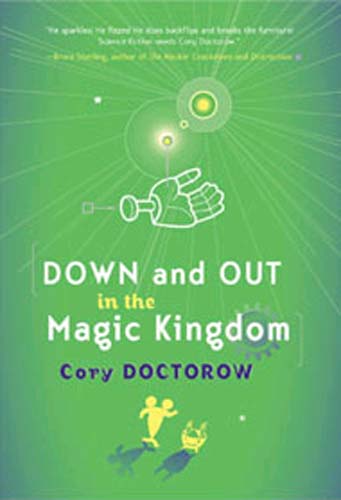
“A Place So Foreign” was my absolute favorite story in the book, and one of my favorite short stories in quite some time.  I’m happy to say that I read it last, so it totally ended the book on a high note. Despite the cover picture with an “alien” hand holding a suitcase, the story has nothing to do with that at all. (more…)

Read Full Post »

SOUNDTRACK: SHAD-TSOL (2010).

I first heard Shad on CBC Radio 3 online.  The track was “Yaa I Get It” and I really enjoyed it.  I haven’t listened to a lot of rap in the last few years; I’ve more or less grown bored by the genre, especially all the violence.  So, I was happy to hear this track, which was boastful but funny.

I decided to get the whole disc, and I wasn’t disappointed.  “Rose Garden” features a sample of “I Never Promised You a Rose Garden” which sets some of the tone of the disc.  But it’s on the next song “Keep Shining” that Shad’s uniqueness shines through.  This song is about women.  But not in any way that I’ve heard in rap before: “I can’t speak for women.  We need more women for that.”  And the inspiring final verse:

My mom taught me where to keep my heart.
My aunt taught me how to sing two parts.
My sis taught me how to parallel park,
and tried to teach me math but she way to too smart.
My grandma in the 80’s is still sharp.
My girl’s cousin is in activism in art.
They taught there’s no curls to tight, no mind too bright, no skin too dark to keep shining.

Later on the disc is “We Are the Ones” an oddball jam that sounds like one of those bizarre Atlanta rap tracks (funky vocals and all) and an amusing line about being Lost like Matthew Fox.  But his name checks aren’t all pop culture (Moredcai Richler gets a mention as does Glenn Beck (he “better duck like foie gras”).

And of course, there’s the wonderful “Yaa I Get It.”  With great horn blast samples and all kinds of noise competing for our attention.  Yet, throughout the lyrics stand out: “Maybe I’m not big cus I don’t blog or twitter…Dawg, I’m bitter.”  And there’s this wonderful couplet: The precision of my flows in terms of tone and diction/Is akin to that of the old masters of prose and fiction.”  Or take this lyrics from “Call Waiting,” “But what they say is hard for a pimp is harder for a man of faith.”

“Listen” has some great scratching on a heavy rocking track.  It’s followed by “At the Same Time.”  This is a mellow, sad song, which I don’t really like, yet which I find very affecting.  And lyrically, it’s great: “I never laughed and cried at the same time… Until, I heard a church pray for the death of Obama.  And wondered if they knew they share that prayer with Osama.”

The disc ends with “We, Myself and I” another noisy rocker and the one minute “Outro” an acapella rant.

Shad is a great rapper, doing interesting things and trying to make a difference.  He’s worth checking out.

[READ: November 1, 2010] “Marshall McLuhan”

I learned about this book because I’m a fan of Douglas Coupland.  And, as it turns out I’ve always had a vague interest in Marshall McLuhan, so it seemed like a sure thing. The problem was that the book was not readily available in the U.S.  So, I had to order it from Amazon.ca.  And, since you can’t get free shipping to a U.S. address from amazon.ca, I thought it would make sense to order 6 titles in the series, all of which I’ll post about this week.

So, here’s a shameless plug to the folks at Penguin Canada–I will absolutely post about all of the books in this series if you want to send me the rest of them.  I don’t know how much attention these titles will get outside of Canada, but I am quite interested in a number of the subjects, and will happily read all of the books if you want to send them to me.  Just contact me here!

Each book in the series has an introduction by John Ralston Saul, in which he explains the purpose of the series and states globally why these individuals were selected (“they produce a grand sweep of the creation of modern Canada, from our first steps as a democracy in 1848 to our questioning of modernity late in the twentieth century”).  It also mentions that a documentary is being filmed about each subject.

Perhaps the most compelling sentence in the intro is: “each of these stories is a revelation of the tough choices unusual people must make to find their way.”  And that’s what got me to read thee books.

This volume was probably a bad place to start in the Extraordinary Canadians series if only because it appears that Coupland’s volume is markedly different from the others.  Coupland being Coupland, he has all manner of textual fun wit the book.  The other authors seem to write pretty straightforward books, but you know something is up right away when you open the book and the first six pages comprise a list of anagrams of “Marshall McLuhan.”

On to Marshall McLuhan.  The Medium is the Message.  That’s about all anyone who has heard of McLuhan knows about him (and that he has a hilarious cameo in Annie Hall).

When I was a freshman in college, I took a class in Communications which focused an awful lot on Marshall McLuhan.  I didn’t like the teacher very much, but the message stayed with me all these years.   And so even though I’m not a student of McLuhan or anything, I was happy to relearn what I should have known about the man and his ideas.

(more…)

Read Full Post »

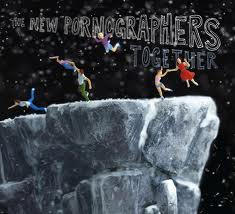
SOUNDTRACK: NEW PORNOGRAPHERS-Together (2010).

I enjoyed The New Pornographers’ debut album Mass Romantic, but I didn’t bother getting their later discs.  In the ensuing years, I’ve grown appreciative of both Neko Case solo and Dan Bejar’s Destroyer.  And, while I intend to get the NP’s middle discs, in the meantime, I am totally enamored of this one.

Their first disc sounded like a group of great songwriters doing their own thing.  This disc (their fifth) sounds like a group of great songwriters working together.  The album sounds cohesive and, frankly, wonderful.  It’s hard for me to pick a favorite song, because when the disc is over I find myself singing bits and pieces from so many of them.

The songs work well together, with different vocalists coming to the fore.  But there’s an overall cohesiveness to the disc.  Even the Dan Bejar songs (three on this disc), which sound very distinctly Bejar, act like a change of pace but retain the album’s style, rather than sounding like Bejar solo songs.

And I like the Bejar songs quite a lot (“Silver Jenny Dollar” is always in my head), but it’s the Newman songs (those sung by Neko Case and otherwise) which rise into the pop stratosphere.  The gorgeous delayed chorus of “Up in the Dark,” the beautiful cello of “Moves.”  Even a song like “Valkyrie in the Roller Disco” which opens a little quietly compared to the rest of the disc, pulls out a stunning chorus.

“A Bite Out of My Bed” is weird and wonderful and, of course, those first 6 songs are amazing.  “My Shepherd” is a stunning song and “Your Hands (Together)” is a catchy rocker which should have been a huge single.  Just when you think that “As a Rule” couldn’t possibly get any catchier, along comes a whistle solo.  Fabulous. And the album closer, “We End Up Together” has great group vocals and a nice return to those catchy strings from the opening.  It’s a great release from start to finish.

[READ: January 24, 2011] Down and Out in the Magic Kingdom

I loved Doctorow’s Little Brother.  And when I recently said I would be going to Disney, an astute reader said I should read Down and Out in the Magic Kingdom (which I’d never heard of).

Knowing what I know about Doctorow (this and all of his books are published under a Creative Commons license and if you go to his site, you can download the entire book for free), I expected that this book might bash Disney (the main source for our current copyright extension laws–see The Copyright Extension Act also known as The Mickey Mouse Protection Act).  The title also hinted at is as well.  But in fact, this book does not bash Disney World in any way.

Rather, it embraces the Magic Kingdom as a sort of traditional refuge, something that should be immune to technological update.  Of course, since it is a science fiction novel, it is also futuristic, full of bizarre technologies and lots and lots of behavior control.

The book opens in the undetermined future (although later in the book we learn that it’s probably sometime around 2069).  The Prologue is full of words that won’t be defined until later in the book (if at all):  “Deadhead” as a verb, “Bitchun Society,” and this whole sentence: “I took a moment to conjure a HUD with his Whuffie score on it.”

So, we know that this is not a typical story.  And it stays atypical.  Chapter One opens:

My girlfriend was 15 percent of my age, and I was old-fashioned enough that it bugged me. Her name was Lil, and she was second-generation Disney World, her parents being among the original ad-hocracy that took over the management of Liberty Square and Tom Sawyer Island. She was, quite literally, raised in Walt Disney World and it showed.

The story is set in Disney World.  Julius, the narrator who is 100+ years old but has been rebooted several times and appears 40, is dating Lil, who was 19 or so when they met.  And despite her youth and apparent airheadedness, they really hit it off.

As stated, her parents were more in less in charge of portions of Disney.  So, when they decide to deadhead, it puts Lil (and by proxy Julius) in charge.  Lil’s domain is the Hall of Presidents (and there’s fun insider knowledge about the Hall, and Lil is often seen with her head inside Abraham Lincoln).  Julius, meanwhile, loves loves loves The Haunted Mansion (and the story of his first time(s) there is really great).  And he works behind the scenes there now, constantly trying to make it better (shave a few seconds off here, make this part a little scarier, etc).

And all is great until Julius is killed. (more…)

Read Full Post »

SOUNDTRACK: BROKEN BELLS-Broken Bells (2010).
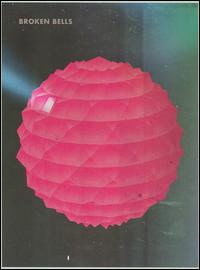
When I first played this disc I was really disappointed by it.  I’ve grown to expect crazy magic from Danger Mouse, and I assumed that this collaboration with James Mercer of The Shins would be crazy awesome.  But it seemed very mellow to me.  Mellow in a way that just kind of sat there.  So I put it aside for a while.

Then I listened to it again a little later and I found that I really liked it this time.  In fact, it rapidly grew into one of my favorite releases of 2010.

The disc is a wonderfully paced mixture of acoustic guitars, interesting keyboard sounds and, often, downright bizarre electronic choices (subtle, yet bizarre).  The weird sounds that open the disc, a kind of backwards keyboard, are disorienting but also very catchy.  And the song itself is instantly familiar.  It’s followed by “Vaporize” a simple acoustic number that bursts out with some great organ and (very) distorted drums.  It also features a fascinating horn solo!

“Your Head is on Fire” settles things down a bit with a mellow track which, after some cool introduction, sounds like a  pretty typical sounding Shins track (ie, very nice indeed–and more on this in a moment).

“The Ghost Inside” feels like a ubiquitous single.  I’m not sure if it is or if it’s just so catchy (with dancey bits and hand claps and a great falsetto) that it should be everywhere.  “Sailing to Nowhere” reminds me, I think, of Air.  And the great weird drums/cymbals that punctuate each verse are weird and cool.

One of the best songs is “Mongrel Heart” it opens with a western-inspired sound, but quickly shifts to a quiet verse.  The bridge picks up the electronics to add a sinister air (and all of this is accompanied by nice backing vocals, too).  But it’s the mid section of the song that’s really a surprise: it suddenly breaks into a Western movie soundtrack (ala Morricone) with a lone trumpet playing a melancholy solo.  And this surprise is, paradoxically, somewhat typical of the disc: lots of songs have quirky surprises in them, which is pretty cool.

Having said all this, there are a few tracks where it feels like the two aren’t so much collaborating as just playing with each other.  And that may have been my initial disappointment.  I was expecting a great work from a combined powerhouse, and I think what we get is two artists writing great stuff while seemingly respecting each other too much to step on each others toes.

There is another Broken Bells disc in the works.  And I have to assume that they’ll feel more comfortable with each other and simply knock our socks off next time.  But in the meantime we have this really wonderful disc to enjoy.

[READ: October 21, 2010] The Broom of the System

It dawned on me sometime last summer that I had never read DFW’s first novel.  I bought it not long after reading Infinite Jest and then for some reason, never read it.  And by around this time I had a not very convincing reason for not reading it.  DFW seemed to dismiss his “earlier work” as not very good.  I now assume that he’s referring to his pre-Broom writings, but I was a little nervous that maybe this book was just not very good.

Well I need not have worried.

It’s hard not to talk about this book in the context of his other books, but I’m going to try.  Broom is set in the (then) future of 1990.  But the past of the book is not the same past that we inhabited.  While the world that we know is not radically different, there is one huge difference in the United States: the Great Ohio Desert.  The scene in which the desert comes about (in 1972) is one of the many outstanding set pieces of the book, so I’ll refrain from revealing the details of it.  Suffice it to say that the desert is important for many reasons in the book, and its origin is fascinating and rather funny. (more…)

Read Full Post »

SOUNDTRACK: PEARL JAM-Halifax, Nova Scotia, Metro Centre, September 22, 2005 (2005).

This show came as a free download if you purchased Pearl Jam’s Backspacer CD.

Pearl Jam live shows really showcase the band’s strengths.  And no shows are better than when they go to a place for the first time.  This was their first trip to “Halifax to the Max” and the band sounds fantastic.

Even when Eddie Vedder forgets the words in the first verse of a song “Breath” (which he says they don’t normally play and hadn’t yet played in on the tour) and just shouts “FUCK!” the band continues and the songs starts again as if nothing happened (the crowd wildly supportive of course).

There’s also some surprise treats, like the often overlooked “Glorified G” (not anywhere close to being one of their best songs, but fun in a live setting).  I especially liked the snippet of Sleater-Kinney’s “Modern Girl” that the toss in at the end of “Not for You.”  Although the inclusion of “Bow wow wow yippe yp yippe yea” in “Blood” is certainly odd.

Eddie in particular has a lot of fun with the locals when he demands that they bring him a can of Keefe’s Irish Stout.  He gets sillier and sillier with them (describing what he assumes the beer must be like) until one is finally procured for him.  And the bit about “fetch me a new guitar, I shan’t be playing this one” was a great set up for a joke.

The only complaint is that my downloaded version ends with Bu$hleaguer but the setlist suggests that there should be two more songs (“Fortunate Son & Rockin’ in the Free World”).  Bummer, although I’ve heard those songs on enough bootlegs to not really miss them.  (New comments added February 26, 2011).

[READ: August 26, 2010] Echo: 23 & 24

The series continues to grow in intensity and depth.  After something of a cul de sac in episodes 21 & 22, number 23 burst forth with new excitement.

The biggest news (ha ha) is that the alloy is making Julie grow.  The revelation is done rather humorously because, as we knew already, she needed clothes.  And when Ivy buys her her normal size, the clothes are simply too small (which Ivy has a mocking field day with).  [The whole of Issue 23 is devoted to some female fighting.  Terry seems to have an ear for this sort of fighting because it sounds very believable. Although it did make me uncomfortable that his two main characters, both of whom are female devolve into this sort of sniping, at least it didn’t get really ugly.] (more…)

Read Full Post »

SOUNDTRACK: Philadelphia Radio Stations (circa 1990 and 2010)

There’s a Dead Milkmen song called “The Big Sleazy” in which the chorus is

“I hate MMR I hate YSP/You know that classic rock/Does not interest me.”

I’ve always been amused by the song, especially when I travel to Philly and hear these stations.  That song is from 1990, so 20 years later I’m not sure what the band would think of their new playlists.

But one thing I never really noticed before is the middle verse which is about one of my favorite Philly stations WXPN.  The verse is:

I hate what they’ve done to XPN
Those folk Nazis ruined my favorite station
I hate what they’ve done to XPN
If you hear it now it’s just a pale imitation.

Now, I have no idea what XPN was like before, but, yea, I can see that he folk Nazis are in charge.  Of course, I rather like that.  However, XPN also plays a bunch of artists who are broader than the folk label, so I wonder if they have changed even more since 1990.
History is fascinating, innit?

[READ: April 3, 2010] Trinity

Collins Gibson is a patron at our library.  He has been working on this book for a few years now.  The first time I looked at a bit of it, it was a novel.  I hadn’t seen him for a while and now he has brought the book back as a screenplay.

I didn’t read enough of the original novel to know whether this works better as a novel or a screenplay, but given the very visual nature of the story, it seems like screenplay fits the story better. And so, since Collins is a good guy, I’m going to do my part to get the word out about the story. (more…)

Read Full Post »

SOUNDTRACK: RHEOSTATICS-Static Box (complete) (2008).

I’ve decided not to review all of the volumes of this fabulous free box set.  Rather, since I have now finished it, I’ll sum up and say that it is a fantastic collection from start to finish.

The final disc has a series of great cover tunes.  And of course, there’s the final songs from the final Massey Hall show which are quite emotional, even all these years later.

There’s one or two songs that I probably would have left off for sound quality reasons (although usually they’re pretty interesting/essential for what they are).  There’s one 8 minute song, “Monkeys Will Come” that has quite poor sound quality.  However, it is a recording of the song that the Canadian government asked them to record for Canada Day in 2000.  And I assume there are no better recordings of it, so it’s nice to have.

The best part of this collection is that it allowed me to see which concerts were worth downloading in their entirety (the site has a ton of concerts for downloading…a ton!).  It also got me to track down the two Violet Archers CDs, which I’m quite excited to be getting soon.

And, while I’m in a Rheos mood.  Martin Tielli’s final CDs in his subscription collection just made their way to my house and they are weird and wonderful.  And, I just learned that Dave Bidini put out a solo record a few months back, so that’s worth tracking down too.  Go Rheos!  You are all very star.

[READ: January 12, 2010] Generation A

I was quite excited when this book finally came out.  I had been dipping into the Douglas Coupland back catalog (including watching JPod the TVseries), so this book is a treat.

Strangely, when I started reading the book I realized I had no idea what it was about.  At all.  So, the first thing to note is that it is not in any way a sequel to Generation X.  None of the characters are the same, the setting is not the same, there’s no connection whatsoever (or if there is I didn’t see it).  The premise of the title comes from a Kurt Vonnegut address.  It is quoted on the book jacket and in the book itself, so I won’t quote it here, but the gist is that young people were dismissed unfairly when labelled “Generation X,” so they should insist that they be called “Generation A,” the beginning of the alphabet, and the start of it all.

But when the book starts, it’s hard to understand what that has to do with anything.  Because, as we learn right away, the book is all about bees (which explains the yellow and black cover design). (more…)

Read Full Post »

SOUNDTRACK: BLACK SABBATH-Sabotage (1975).

Sabotage seems to be somewhat forgotten (maybe because of the creepy cover art 0f Ozzy in a kimono and fascinating platform shoes, Bill Ward in red tights with a codpiece (and visible underwear on the back cover), and Geezer and Tony’s mustaches).
But this album rocks pretty hard and heavy.
“Hole in the Sky” is a sort of spastic rocker with Ozzy screaming vocals over the top of the rocking track.
“Don’t Start (Too Late)” is the by now obligatory acoustic guitar piece.  But this one is different, for it has some really wild and unpredictable aspects to it.

“Symptom of the Universe” is another classic Sabbath track, a blistering heavy fast riff with the wonderful Ozzy-screamed: “Yeaaaaaahs!”  It then surprises you by going into an extended acoustic guitar workout for a minute and a half at the end.

“Megalomania” is a slow ponderous piece. Unlike the psychedelic tracks from the previous records, this one moves along with a solid back beat. It also has a great bridge (“Why doesn’t everybody leave me alone?”). They definitely had fun with the effects (echoing vocals, etc.) on this one.  And, like their prog rock forebears, this song segues into another rhythm altogether when we get the wonderfully fast rock segment.  And the humorous point where the music pauses and Ozzy shouts “Suck me!”

“Thrill of it All” is a pretty good rocker, which after a  pretty simple opening morphs into a slow, surprisingly keyboard-fueled insanely catchy coda.  “Supertzar” is a wonderfully creepy instrumental.  It runs 3 minutes and is all minor-keys and creepy Exorcist-like choirs.  When the song breaks and the bizzaro Iommi riff is joined by the choir, you can’t help but wonder why no horror film has used this as its intro music.

“Am I Going Insane (Radio)” is a very catchy keyboardy track.  It clearly has crossover potential (although the lyrics are wonderfully bizarre).  But it ends with totally creepy laughing and then wailing.    “The Writ” ends the album. It’s another solid rocker and it ends with an acoustic coda with Ozzy’s plaintive vocals riding over the top.

Sabotage has some truly excellent moments.  It’s just hard to fathom the amount of prog-rock tendencies they’ve been throwing onto their last few discs (we’ll say Rick Wakeman had something to do with it).

Black Sabbath made two more albums before Ozzy left.  I haven’t listened to either one of them in probably fifteen years.  And my recollection of them is that they’re both pretty lousy.  Maybe one of these days I’ll see if they prove me wrong.

[READ: December 16, 2009] McSweeney’s #7

This was the first McSweeney’s edition that I didn’t buy new.  My subscription ran out after Issue #6 and I never saw #7  in the stores.  So, I recently had to resort to a used copy.

This issue came packaged with a cardboard cover, wrapped with a large elastic band.

Inside you get several small volumes each with its own story (this style hearkens back to McSweeney’s #4, but the presentation is quite different).  7 of the 9 booklets feature an artistic cover that relates to the story but is done by another artist (not sure if they were done FOR the story or not).  I have scanned all of the covers.  You can click on each one to see a larger picture.

The booklets range from 16 to 100 pages, but most are around 30 pages.  They are almost all fiction, except for the excerpt from William T. Vollman’s 3,500 page Rising Up and Rising Down and the essays that accompany the Allan Seager short story. (more…)

Read Full Post »

« Newer Posts - Older Posts »