Feeds:
Posts
Comments

Archive for the ‘Surreal’ Category

SOUNDTRACK: PHISH-LivePhish 12.01.95 Hersheypark Arnea, Hershey, PA (2006).
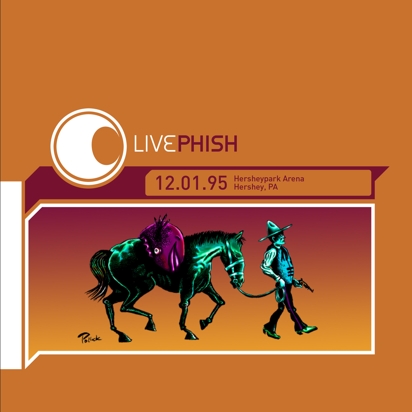
Speaking of 12.01.95 (see yesterday’s post), this show is the proper release from the soundchecks for the 11.14.95 disc set.

In addition to formal live releases and a series of 20 full show LivePhish releases (which were packaged in some horrible goo and have subsequently been ruined), Phish has also released some shows a but more formally as LivePhish archival “releases.”  I don’t know if there is any specific reason for the release of any of them, but they seem to out out two or so a year.

There’s a pretty thorough review and essay (with photos) by Kevin Shapiro about the show here.  And it provides a lot more context and Phish lore than I can, but I will quote him below.

The set opens with a fast rollicking version of “Buried Alive” (only 3 minutes long) which segues neatly into an intense “Down with Disease.” The seven minute song ends with Fish playing just high hats for a bit before seguing into “Theme form the Bottom” which is from Billy Breathes out the following year.

When that song ends they play into a fun fast version of “Poor Heart” which segues into “Wolfman’s Brother.”  The staccato ending sequences nicely into a 7 minute “Chalk Dust Torture.”

Then comes the wonderful surprise of “Colonel Forbin’s Ascent.”  As the song segues into “Fly Famous Mockingbird,” Trey takes some time to chat.  He tells the audience a brief history of the planet.  In the time of the ancient Greeks, philosophy, science and religion were all one thing.  Science and religion split off.  The Eastern style stated that everything is one.  Western style focused on matter vs spirit and gave rise to modern concepts of religion.  It seems like he’s getting very serious.  Then he talks about how eastern religious led to cows which led to milk which led to milk chocolate.  Chocolate.   The Mystical Land of Chocolate.  Then he says there is only one place where science religion and philosophy are one thing—Gamehendge.   And then he talks about the Rhombus which can be found in King of Prussia.  Find Wilson Dr.  (Although presumably this gives the truth behind the rhombus).  There’s parts near the end where the song fades in and out in a very cool way.

Then they play a fairly dark version of “Stash” and a rocking version of “Cavern” to end the set.  It’s interesting that “Chalk Dust,” “Stash” and “Cavern” were also on the 11.14.95 set).

Stash followed with a formidable jam that stretched out instrumentally, locking into a dissonant theme that ignited the highest improvisation of the set. The whole band linked up beautifully for this jam, evoking a Dave’s Energy Guide-ish vibe and at points recalling the expectation-smashing heights of the Orlando Stash weeks before. After Stash returned to terra firma, Cavern closed the set, leaving “15 minutes” of recovery and preparation before the even sweeter second set that defined this show.

Set two opens with a chess move from an 11-year-old boy (who is now in his thirties (!!!).  They begin the music with an a capella (doo-wop) version of “Halley s Comet.”  It ends with a cool segue into “Mike’s Song,” a 20 minute jam with a really long piano solo from Page ans a nice end that rumbles into “Weekapaug Groove.”  [Read Shapiro’s eloquent discussion about this transition].  There’s a quiet solo in the middle of the song with a brief clap-along.  But it pulls out of that to get noisy and chaotic by the end.  Things mellow out with “Mango Song” but the crowd erupts for a short (5 minute) fast version of “Wilson.”

Things get a little silly with Fish singing “Suspicious Minds.”  (I just found a video for this—Fish comes out weaving an Elvis Cape and a big glasses.  It ends with a fast “Hold Your Head Up” keyboard romp (with Trey on drums).

When things settle down Fish starts playing the high hats for “David Bowie,” but before the song begins, Trey sings “Catapult.”  And then before the song can begin again, in the trippy intro Trey starts moaning “Chocolate.”  There’s a brief Simpsons riff and a Do’h and then they launch into the song proper (about 2:30 into the song).  There is a long middle with lot so solos and then a fast, tidy ending.

The encore is a romping 7 minute “Suzy Greenberg.” It’s another great show.

Even if it is a bit shorter than the previous one–that personalized chocolate section and the Colonel Forbin’s is pretty great.

[READ: November 25, 2016] Eating Fish Alone/Country Cooking from Central France

I really enjoy Lydia Davis’ stories.  I always find them a little weird since most of the time they feel more like little diary entries rather than stories.  Each narrator seems to be pretty clearly her, and each story seems like a gripe she has about something that happened.

And yet, it is like the best diary entry you’ve ever read.   Most of her stories are a couple of paragraphs long.  I find I don’t really like the longer ones as much, which is kind of ironic given that the short ones seem so short.

So this is a collection of a few of her stories.

“The Mice” is a page and a half about how the mice in their house never go into their kitchen.  Their kitchen is sloppy and full of food–why wouldn’t the mice go there?

“Meat, My Husband” starts with the narrator saying that her husband really loves meat.  His favorite chidhood food was corned beef.  But she, being a healthy person (and perhaps a bit obsessive) hardly makes meat (or uses butter).  But her husband really enjoys a dessert–which he helps to make.

“Happiest Moment” is only one paragraph and is an interesting twist on happiness.

“Kafka Cooks Dinner” is much longer than the others and it gets a little repetitive.  It is told from the point of view of a man looking to make a meal for his dear Milena.  He puzzles over several different options.  He wonders if he should serve the same to her as he did to Felice.

“Eating Fish Alone” is a story all about the neurotic narrator trying to figure out when and what fish she can eat. She says she pretty much only eats it alone because of the smell  But she also a has a list of which fish she can eat–some is safe and others are not.  She often asks the waiters about the fish, even though they don’t know much about the food.  The end sees her eating a marlin steak.

Continuing with the food theme of this book, the other half of the book (flip it) is fully called Country Cooking from Central France Roast Boned Rolled Stuffed Shoulder of Lamb (Farce Double)

This is one of those stories that I never understand why they are written.  Lengthy and very detailed all creating something that is possibly funny, but I’m not sure if it is–making a story out of something that is just a goofy recipe.

It is a 24 page recipe for Farce Double–the specialty of La Tour Lambert.  It is an elaborate (beyond all reason) recipe that might make no sense to a foreigner.

You must marinade the giant lamb parts–in Paris they might use a bidet, you can use a bathtub.  After extensive details you get sentences like: at some previous moment, you will have made the stuffing for the quenelles.

There are clay pots and giant pits and marinating for days and all of that.

The only thing that interrupts the recipe is the song that is sung during a break in the roasting.  This song is about a blacksmith’s son who goes in search of his lost mother.  He finds several women who take care of him, making him believe that each is his mother until she “does for him what mother a never did for her son.”

The feast of farce double is a moment for friendships to be renewed, for enemies to forgive one another, for lovers to embrace.

Serves thirteen.

Uh huh.

Read Full Post »

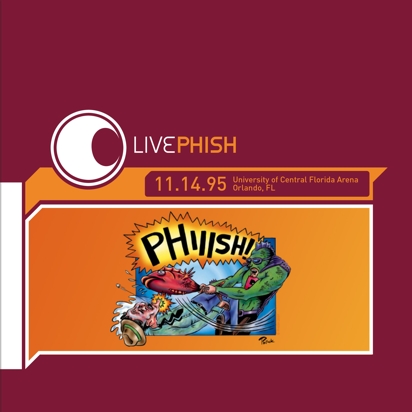
SOUNDTRACK: PHISH-LivePhish 11.14.95 University of Central Florida Arena, Orlando FL (2007).

In addition to formal live releases and a series of 20 full show LivePhish releases (which were packaged in some horrible goo and have subsequently been ruined), Phish has also released some shows a but more formally as LivePhish archival “releases.”  I don’t know if there is any specific reason for the release of any of them, but they seem to out out two or so a year.

Regardless, this show is pretty fantastic.

There’s a pretty thorough review and essay (with photos) by Kevin Shapiro about the show here.  And it provides a lot more context and Phish lore than I can and I’ve quoted some below.

Hoist had come out the previous year but Billy Breathes not for another ten months or so.

The show has a lot of whispered vocals from Trey (especially at the beginnings of songs—they’re audible, sure, but just seem quieter than usual).  The show starts off with a blast of “Chalk Dust Torture” and an extended 10 minute “Foam.”   The whispered vocals are especially noticeable on “Billy Breathes” but once the song really begins there are some great harmonies.

Then for the fifteen minute “Divided Sky,” which sounds amazing, there’s quite a long pause before the main riff starts—teasing the audience a bit.  Trey basically stands there, stock still for almost a minute and a half.

It’s always a treat to hear “Esther” which has a good jam going and so does “Free” (which is technically a new song), although it seems to go a little dark. Then there’s another quiet verse to start “Julius” before it really takes off. All three of those songs were about 9 minutes each.

That all settles down to a quiet almost unplugged bluegrass version of “I’m Blue, I’m Lonesome” [the notes mentioned above indicate: I’m Blue, I’m Lonesome featured a brave mandolin solo by Fish as well as some especially inflected vocals by temporary upright bassist Page].  The set with a great version of “Cavern.”

At the end of the song he talks about the audience chess move that anyone can get involved in.   And then in the beginning of set two, they mention the audience move.

There’s a very extended “Maze” (13 minutes) in which Trey is on fire, and then a fun “Gumbo” that in no way prepares you for what’s to come: the wild frenetic soling in a hugely extended version of “Stash.”  The song segues into other songs (“Manteca” and “Dog Faced Boy”) and back into “Stash” for a total of 40 minutes of jamming.  There’s some crazy feedback and noise in Trey’s solos.  There’s also a percussion slow down with just one note of piano and percussion keeping the song going. The liner notes break it up into three distinct songs: the first part is 15 minutes, then a break into the jazzy instrumental “Manteca” and then back into Stash for a total of 14 minutes and then Trey breaks into a quiet a capella version of “Dog Faced Boy” which segues into the ending solo of Stash which is feedbacky and crazy.  A total of almost 10 minutes.  The notes say:

The improvisational skill and grace demonstrated in this “Stash” set the standard for years to come.  Staccato guitar and clavinet accents began to lead into some incredible jamming with massive, swirling tension as the band weaved in and out of Stash’s theme in a loose, psychedelic approach. Deep rhythmic tribal incantation followed with Trey eventually switching to percussion and grooving into something akin to the ending of “Fee.” This jam continued, melting perfectly into a supercharged version of “Manteca,” played for the first time in a year and sandwiched between segments of Stash

There’s a brief respite with a beautiful, mellow “Strange Design.”  And then the band ramps up again with a 21 minute “You Enjoy Myself.”

Like parts of the show-stopping “Stash” and other versions from this year commonly ranked among the best ever, this “YEM” is amazing, intense and engaging, exploratory and rocking especially when teamed with Chris Kuroda’s phoenix-shaped lighting rig. A brief nod to Led Zeppelin’s “The Immigrant Song” punctuates the jam and the energy in the room and intensity of playing throughout kept the set flying as high as Trey and Mike’s mini-trampoline performance.

There’s also a (fairly mellow) vocal jam at the end, bringing the show proper to a close.

The encore is two songs, “The Wedge” which sounds a little different from the record and a fast and frenetic “Rocky Top.”  It is truly a great show.

The disc is a three CD set and includes two bonus Filler tracks.  There’s a goofy, fun version of “Poor Heart” (from a soundcheck on 11/14/95 and a really silly “Dog Log” (with someone speaking the refrain “to the john” over and over).  That one comes from a show on 12/01/95, which is pretty far away from this show, but is a fun addition.

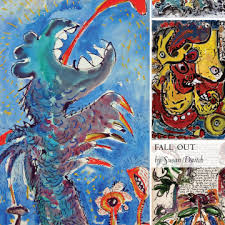
[READ: November 24, 2016] Fall Out

Madras Press publishes limited-edition short stories and novella-length booklets and distributes the proceeds to a growing list of non-profit organizations chosen by our authors. For this particular book, proceeds to benefit Women for Afghan Women.

This book is divided into four sections.  They could be short stories or they could be parts of a full story.  The pieces do fit together

Conduction
From 1951 to 1962, nuclear bombs were detonated in the Nevada Test site.  Buildings were destroyed, sand was turned to glass.  This story then jumps to Troy, New York in 1953.  Three students were tossing a ball around after a rainfall.  They went into a college building and tested a Geiger counter which showed ratings off the charts on the ball that had been in the puddle.

Night of the Avengers
On a given night, several people saw what looked like an ice cream cone made of light in the sky.   And then a local boy encountered the alien.  This section is actually a film made by director Zweig.  We learn about Zweig’s childhood working on the sets of Metropolis, and his difficulties in getting this low budget film made.  It’s an interesting plot–people blame the aliens for things that are going wrong, but the aliens are not responsible.  So they simply leave rather than taking the abuse.  There is also Dr. Exline, who is making a bio weapon.  He is the one responsible for all the troubles they’ve been having–won’t anyone listen? (more…)

Read Full Post »

kelly-linkSOUNDTRACK: THE DUDE OF LIFE & PHISH-Crimes of the Mind (1994).

Crimes of the Mind is the debut album from The Dude of Life, Steve Pollak, a childhood friend of Trey Anastasio and a lyrical contributor to many of Phish’s early songs. Phish is the backing band for the entire album.

The album was recorded in 1991 but wasn’t released until 1994. The Dude of Life performed several of these songs in a live setting with Phish on a number of occasions.

Of all of the “Phish” albums, this is the one I listen to the least.

The main riff of “Chalkdust Torture” was used in the song “Self” on this album.

Dude

“Dahlia” is a kind of sloppy rock song—it certainly has a Phish feel to it, but as soon as the vocals come in, you know it’s going to be different.  Lyrically, however, it sounds a lot like crazy early Phish—a song about a girl who is a little nuts and a really catchy melody.  The song has a weird climax with the sucking Cherry Charms Blow Pops line.

“Family Picture” opens with a watery bass, it has a kind of silly Phish-iness to it—you wouldn’t be surprised if Phish played it but again, although Dude’s voice makes it much sillier.  Once again there’s a fun chorus and a rather silly guitar solo.  “Self” is a wonderfully selfish song (“I don’t care about anyone but myself”).  I also like that he rhymes “bluer” with “sewer.”  Once the song starts rocking, it features the main riff as “Chalkdust Torture” and then it really takes off.

“Crimes of the Mind” is a simple song with a catchy chorus.  “She’s Bitchin’ Again” has a very cool guitar riff and motif, and while the lyrics are funny, the addition of the woman bitchin’ at him is a bit much (especially since her voice is quite unpleasant and isn’t quite singing).  “TV Show” is the first thing that’s close to a ballad.  It starts slowly but after the sound of keyboards building and ramping up, the song kicks into high gear with the chorus of “life is a TV show that should have been canceled long ago.”  “Trials and Tribulations” is a funny/weird romantic song about the Swiss Miss, Captain Crunch and Mr Clean, with a cute melody for the guitar riff.

“Lucy in the Subway” is of course a kind of follow up/piss take on “Lucy in the Sky with Diamonds.”  It sounds nothing like The Beatles’ song, being a simple, rather than psychedelic song, but that befits the tone about a girl down on her luck–she is “with daffodils” if you were wondering about the D).   “Ordinary Day” is the kind of simple song—singing about nothing happening—that makes you wonder how people write them.  “Revolution’s Over” is as close to punk as this line up will get—fast drums, fast tinny guitar and a quick riff.  The middle has some funky weird jam stuff

“King of Nothing” is a slow, almost ponderous song (except that Dude’s voice is more goofy than deep).

Since Pollak contributed much to Phish’s early silliness it’s not surprising that these songs are rather silly too.  But the band plays really well and holds it all together.

[READ: November 14, 2016] Stone Animals

Back in 2014, I ordered all 16 books from Madras Press. believing that I’d been told about a cool gem of a publisher.  And I had been. Unfortunately, after publishing the 16 books they seem to have gone out of business or so. They still have a web presence where you can buy remaining copies of books.  But what a great business idea this is/was

Madras Press publishes limited-edition short stories and novella-length booklets and distributes the proceeds to a growing list of non-profit organizations chosen by our authors.  The format of our books provides readers with the opportunity to experience stories on their own, with no advertisements or miscellaneous stuff surrounding them.

The format is a 5″ x 5″ square books that easily fit into a pocket.

Proceeds from Link’s book go to The Fistula Foundation.

Many of the books from Madras Press have been unusual–some of them downright surreal.  And this book, which finished up series 3, is no exception.

I started to read this when I was on a camping trip–I was tired and exhausted from a long day, and I genuinely thought I was having lack of concentration issues because this story didn’t really seem logical.  When I read it again in the light of day, it still didn’t exactly seem logical, but I was able to follow it a little better.

The story follows a family–husband and wife and two kids.  They are moving from New York City to the suburbs.  The house that they are purchasing has two giant stone rabbits on the front porch.  The children’s don’t want to leave the city exactly but the adults are pleased with the house. (more…)

Read Full Post »

SOUNDTRACK: RHEOSTATICS-Le Colisee, Quebec City, QC (November 30, 1996).

This is the same show that the Double Live version of “Saskatchewan” was taken from. It is also the show Dave wrote about in On A Cold Road.

This is also one of only two shows on Rheostatics Live that was recorded in Quebec.  Once again, they are opening for The Tragically Hip.

The show opens with some recording in French–no idea what it is–a hockey game?

The “Saskatchewan” is of course beautiful.  I love the way it gets really heavy near the end.  It’s also fun to hear a different recording of it (you can really hear them chanting “home Caroline, home Caroline.”

Next comes “Fat” one of the few songs they also played in Buffalo.  And then after a very brief “Digital Beach” they segue into “Claire.”  This version of “Claire” is really pretty on all counts.

As the band introduces themselves: “We are the Rheostatics,” you can hear someone in the audience shout slowly and clearly: “Bad. Time. To. Be. Poor.”  Dave asks what’s that man shouting?  “Bad. Time. To. Be. Poor.”  Martin shouts: “WHAT?”  The guy then deliberately shouts: “We came here to see you guys.”  I don’t think the band ever heard it, which is a shame as it’s such a nice sentiment and well executed.

The band plays “Four Little Songs” which is always fun live.  Afterwards, Martin says, “See four songs in one.”

Don (who is not as chatty as Dave Clark but does talk quite a bit) tells everyone “This next song [Bad Time to Be Poor] is the current single from our new record which you can buy here at the venue.”  Dave: “Well said, Donnie.”

The crowd is quite enthusiastic about the band prompting Dave to advise: “Save a bit for The Tragically Hip.”

This version of “Sweet Rich Beautiful Mine” does not feature Tamara Williamson, but it still sounds good.  Although toward the end of the song things get kind of staticky which is a bummer.  The warpy sound continues for a bit but it clears up near the beginning of “Dope Fiends.”  The song is wonderful.  At the end, Martin repeats “dark side of the moon” first quietly and then a lengthy falsetto on “moooooooooon.”   The guys mutter things during this section: “Pink Floyd,” “Side 2” before launching into the rocking ending.  The roaring song ends with a gentle version of the “You Are Very Star” lullaby, possibly the first version on the site.   There is whistling and falsetto lyrics as the band whispers good night.

It’s like a complete show in miniature.

[READ: June 21, 2017] “In the Palace of Cats”

This is The Walrus‘ Summer Fiction Issue with new fiction & poetry from 6 writers in total.  I won’t be reviewing the poetry, but I’ll be talking about the three short stories.

This story was really fun and weird.  It began as one thing, turned into a few other things and then resolved itself all with bizarre turns without ever losing its internal logic.

The story opens as a teen spy caper with Andrew bringing Hillary a message in secret code.  The message from Andrew is for Hillary so obviously no code is needed,  But they are spies, so everything must be encoded.   She goes off to decipher it–using a dictionary and selecting the word just prior to the word that Andrew wrote.

Greetings Math Princess.  The Candy Ninja is ready to move.

She was amused/dismayed that even copying words out of the dictionary he spelled one wrong: needeled (for needled). (more…)

Read Full Post »

SOUNDTRACK: JAY SOM-Tiny Desk Concert #634 (July 10, 2017).

I’d heard Jay Som’s “The Bus Song” and one other song from a few years back.  There was much I liked about the song.  I like the way the whole band chants “but I like the bus” during the second verse but more impressive is the way the chorus soars to great high notes (even more unexpected is the high notes that come from drummer Zachary Elsasser.

But aside from that I didn’t know much about Jay Som

Jay Som is the project of 23-year-old Melina Duterte, who has been creating music for the past 10 years or so on a multitude of instruments, from guitar to trumpet. Though she played every instrument on her newest record Everybody Works, her touring band here at the Tiny Desk gave a rougher edge to some of the more premeditated sounds on her wonderful album.

I know “The Bus Song” from All Songs Considered and that’s because:

Of the three songs they chose to bring to the Tiny Desk, one was a personal favorite from Everybody Works: “The Bus Song,” which is a perfect swirl of stream-of-consciousness:

Take your time
Won’t be long till our car breaks down
Your hands in mine
Feel like a firefighter when I take off your shoes

Before concluding with a thoughtful nod to her partner:

Take time to figure it out
I’ll be the one who sticks around
And I just want you to lead me
And I just want you to need me

It’s lyrics like this, alongside the comfy, no-frills directness of Duterte’s delivery, which make Jay Som feel so welcoming and refreshing.

Even though Melina is the leader of the band I was surprised to hear that the lead guitar work comes from Oliver Pinnell–she adds some great, interesting rhythm chords.   But mostly she focuses on singing. Her voice isn’t amazing or noteworthy, it’s just very nice and gentle (and tuneful).

“Baybee” opens with some fast high bass notes from Dylan Allard and then a soaring guitar line from Pinnell that sounds kind of like a synth.  Melina plays interesting chords to support him.  There’s cool moment when everything kind of slows down and grows woozy before resuming again.  The song is a little slick, but I like it.  She and Oliver play little solos off each other at the end.

Before the final song she says she’ll “wet my whistle,” and then says “well, it’s the end of the road. This is the last song ever.  We’re going to be gone forever.”

Oliver then chimes in, “I’m picturing the You Tube comments now, just like uhhh.” [I have no idea where he’s going with that].  Melina jokes, “Why are the so sweaty?”

Opening “I Think You’re Alright” she plays a chord, Oliver plays the same chord and then Dylan plays it.  It’s a smooth almost sultry song–again not what I expected from her.  Oliver sings high backing vocals.  The song feels like its coming to and end with Dylan scratching along the bass strings and then she and Oliver plays some slow chords that sure sounds like it’s going to end. And then she sings the slow final verse which ultimately ends pretty abruptly.

The set is pretty surprising given that the other song I know from her “1 Billion Dogs” is really fuzzy and almost shoegazey.  I’m curious to hear more from her.

[READ: May 10, 2017] “The Guide Dog of Hermosilla”

This is a fascinatingly told story translated by Martina Broner.

A man on his regular route sees a homeless man under a bridge.  The man has a dog.  The man doesn’t beg or really do anything.  And the dog seems to have infinite patience (the narrator is impressed with the dog–“his understated style was interesting.”

Then there’s this sentence:

One day, things were going well–I wasn’t getting laid off, not yet–and I wanted to show that I was grateful.

It’s the “not yet” part that I can’t tell if it’s supposed to be forecasting or concern.  But it hangs over the story like a cloud. (more…)

Read Full Post »

Frank Conniff–Twenty Five Mystery Science Theater 3000 Films That Changed My Life in No Way Whatsoever (2016)

tvfrankSOUNDTRACK: TA-KU & WAFIA-Tiny Desk Concert #577 (November 6, 2016).

Ta-ku & Wafia are Australian, and I knew nothing else about them.  So:

The chemistry between Australian singer-producer Ta-ku and his fellow Aussie singer-songwriter Wafia becomes apparent the instant you hear their voices intertwined in song. On their first collaborative EP, (m)edian, they draw on their individual experiences to touch on subjects like compromise in relationships as they trade verses and harmonize over hollow melodies.  With production characterized by weary low-end rumbles and resonant keys, the two float above the music, playing off each other’s harmonies.

Although the blurb mentions a few bands that the duo sounds like I couldn’t help thinking they sound The xx (although a bit poppier).

“Treading Water” especially sounds like The xx.  Both of their voices sound really close to that band (although Wafia’s high notes and r&b inclinations do impact that somewhat).  It’s funny that they are just sitting there with their eyes closed, hands folded singing gently.

“Me in the Middle” is another pretty, simple keyboard song with depth in the lyrics and vocals.

Introducing, “Love Somebody,” she says its their favorite on their EP and he interjects Go but it now, which makes her giggle.  Her voice is really quite lovely.  I could see them hitting big both in pop circles and in some alternative circles if they market themselves well.

[READ: November 10, 2016] 25 MST3K Films that Changed My Life in No Way Whatsoever

As you might guess from the title, Frank Conniff was involved with MST3K.  He was TV’s Frank and, as we learn from this book, he was the guy who was forced to watch every movie first and decide whether it could be used for the show.  This “job” was created because they had watched a bit of Sidehackers and decided it would be fun to use.  So Comedy Central bought the rights (“They paid in the high two figures”) and then discovered that there was a brutal rape scene (“don’t know why I need to cal it a ‘brutal’ rape scene any kind of rape ,loud or quiet, violent or Cosby-style, is brutal”) that would sure be hard to joke about (they edited it out for the show which “had a minimal effect on the overall mediocrity of the project.”

The book opens with an FBI warning like the videotapes except for this book it stands for Federal Bureau of Incoherence because the document contains “many pop culture references that are obscure, out of date, annoying and of no practical use to anyone.”   So each chapter goes through and explains these obscure references for us all. (more…)

Read Full Post »

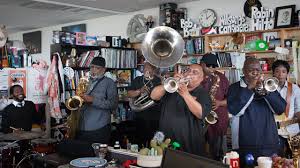
 SOUNDTRACK: DIRTY DOZEN BRASS BAND-Tiny Desk Concert #601 (February 28, 2017).

I have, of course, heard of the Dirty Dozen Brass Band. I’ve probably even heard them on a record or two that I own.  But I don’t really know much about them (in this Concert there are only 7 of them, I don’t know if they ever actually have a dozen members).

But nevermind, because man, do they swing.  And they swing with a big chunk of funk.

“Use Your Brain” is catchy as anything–with a great funk sound.   I love that the bass is all done by the sousaphone (Kirk Joseph).  I love the squeaky trumpet solo that gets played at the end of the song by Gregory Davis.  And I love everything in between.  A cool thing is that there is a guitar (played by Takeshi Shimmura) in the song which you can barely hear except during the moment when the horns are quiet and then you hear it do a great little funky chord riff.  It’s not prominent, but it is essential.

“Best of All” has a very different style (an almost Latin feel)–with Efrem Towns the “vocalist” doing r-r-r-r-r-r-r-r- vocal rolls.  I’m intrigued that for most of these songs the saxophone Kevin Harris (tenor sax) and Roger Lewis (baritone sax) play the main riff most of the time and the trumpets are often silent (until they totally take the song higher).  Like the great high note in the middle of the song.  The guitar is playing lots of little riffs that you can hear every one in a while–rounding out the song very nicely.  And the sousaphone makes some great rumbling sounds.  This song has a drum solo and I love that the drummer (Julian Addison)is placed up at the front of the band so you can really see him–his playing is fluid and that solo is funky and not showoffy.

“Tomorrow” has a funky bass–all coming from the sousaphone–and a real ska feel (especially as the guys sing the chorus “Tomorrow yeah yeah yeah yeah”).  There’s a great rollicking solo from the baritone sax.  Whenever Towns sings, he’s barely audible over the music of the horns–which is fine because hearing his voice is fun even if you can’t really hear what he’s saying.

For the final song, “My Feet Can’t Fail Me Now” Davis says:

This is the song where you all participate –you all been a little bit stiff, not moving.  (someone says , well it is NPR).  For this song we want you to participle. Don’t just stand there and clap like that, you know… move. Put your back into it.  Put your wiggle in the wiggle.  Drop it like it’s hot.  All that stuff you do behind closed doors do it now–well not all you do.

The song is super fun and dancey with a big chorus chant of “feet can’t fail me now, feet can’t fail me now.”  There’s some great horn and a cool wah wah guitar throughout the song.

The Dirty Dozen Brass Band show just how much diversity you can get with “just a brass band.”  This was a super fun concert.

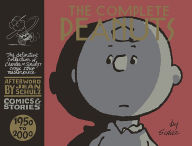
[READ: February 13, 2017] The Complete Peanuts Comics and Stories

This is the final book in the Complete Peanuts series from Fantagraphics.  It took 13 years–2 books a year–and here is the odds and ends collection to tie the series up.

There is an introduction by the editors of the series who explain just what this volume is:  The content has to be Peanuts, drawn by Schulz himself, and (when possible) with verification from Schulz’s widow, Jean.  Material that had not been seen before or was not in print in the twenty-first century got preferential treatment (no Happiness is a Warm Puppy, which is frequently reprinted).  So you’ll see dozens of strips not seen in any book and ones not printed in more than half a century. Six complete books are here– four story books, two volumes on life’s lessons.  Seven comic book stories, lots of single panel gags and lot of ads!

Then there is a Designer’s Note by Seth.  Seth has been behind all of these books (imagine dedicating 13 years of your life to something like this).  He says that he wanted these books to look and feel dignified and maybe even a bit sad.  He also wished to pay a personal tribute to Charles Schulz in his design.

He says that it was Schulz who first set him on the cartooning path.  He was the first artist Seth ever noticed: “Who is this magical person who signs his name in the last box of Peanuts?”  He never met the man and he’s not sorry about that–he has all he needs from the work itself.  He wants to think of this compete set as a monument to Schulz. (more…)

Read Full Post »

SOUNDTRACK: THE WESTERLIES-Tiny Desk Concert #576 (November 2, 2016).

The Westerlies call themselves “an accidental brass quartet,” (two trumpets and two trombones).  I don’t know if a brass quartet has a “standard make up,” but having only two instruments seems to make for an unexpected sound–one that feels more like a marching band than a swing or big band, but which is clearly not playing marching band music.  “Trumpeters Riley Mulherkar and Zubin Hensler and trombonists Andy Clausen and Willem de Koch can blow hard — after all, this is a brass band — but the surprise comes in their soft tones and subtle phrasing.”

The band doesn’t only play standards either.  For this Tiny Desk, they play three originals:

Clausen provides two tunes, beginning with “New Berlin, New York,” which sports a snappy theme, standing out like a bright tie on a smart suit. A scurrying pattern of interlocking notes furnishes the underlying fabric.  [I really like the staccato trombone notes which are really fast and bouncy.  Mulherkar  gets a pretty cool solo in the middle of the piece, but it sounds best when the two trumpets play together.  And yet there is another moment later on where it’s just one trumpet and one trombone and it sounds very cool.  I love watching the trombone play all of those fast notes].

Hensler’s “Run On Down” evokes the calm beauty of Washington’s San Juan Islands, north of the band’s former home base. [I love that he can get a different sound out of his trumpet without seeming to do anything different in his playing style. The song opens with two lonely sounding trumpets.  Midway through Clausen plays a sound like a person talking or humming.  I didn’t know you could change the tone and sound of a trombone like that].

Clausen ‘s closing number, “Rue Des Rosiers,” conjures up the circus-like vibe of a Parisian street scene. A whimsical theme gradually coalesces from fragments and grows into a rollicking amusement. [He introduces the piece by saying it was “inspired by a crazy old man riding a tricycle down the street of Paris. It was a giant tricycle and was wearing a beautiful bejeweled vest and there were windmills and horns and was something straight out of the circus.”  And boy, does this ever evoke circus music with the opening bass notes and the screaming trumpet.  The song slows down before building up into a rollicking circus piece.  And when one trumpet and one trombone put a mute on the sound gets all the more wild.  The piece ends with a variation on the traditional circus music before concluding].

[READ: June 2, 2016] Copper

After enjoying Kabuishi’s Explorer series I saw this book by him.

Copper was his first “comic strip” creation.  The story follows a boy named Copper who is quiet adventuresome and his dog Fred who is practical–and tries to keep him out of trouble.

In the introduction, Kabuishi says that the first comic (called Rocket Pack Fantasy) reflected his inner life at the time.  This proved to be his first published comic.  It was pretty dark (and black and white).  In that first one, he imagines wearing a rocket pack and then dropping bombs on a city.

But after a few more strips, Copper became more optimistic and Fred was there to question that optimism.  Kabuishi also added color. (more…)

Read Full Post »

SOUNDTRACK: DAKHABRAKHA-“Kolyskova” NPR’S SOUTH X LULLABY (March 21, 2017).

I loved DakhaBrakha’s Tiny Desk Concert.  It was mesmerizing and beautiful.  And so the performers came to SXSW and did a lullaby.  And as the blurb says, they brought their “cello, keyboard, accordion – and tall, wool hats! — to the balcony of the Hilton Austin hotel.”

This lullaby of “Kolyskova” quiets things down a bit.  The song opens with simple keyboard notes.  One of the women sings, and when they reach the end of the verse, the male accordionist sings a falsetto that matches the women’s tone.  The woman on drums makes a strange sound–like a baby crying or animal yelping.

Then he winds up singing lead on the second verse in that falsetto with the women singing backing vocals.  Then the cello and drums kick in to build the sound.   The third verse is sung by the cellist as the keys play a pretty melody.

The song is upbeat with lots of bouncy vocals, even though the lyrics seem rather dark.  ‘The band only ever calls it “Lullaby.” It’s a quiet, contemplative song that the band says is a “connecting of several lullabies” with “philosophical lyrics that [say] we have time for everything — time to laugh and cry, time to live and die.’

I love at the very end as the song slows down to just the keyboardist singing because the drummer adds a very cool breathing as a kind of percussion accompaniment.  And then as the camera pulls back the two attack the keyboard making a cacophony of fun notes.  I bet they’re a lot of fun live.

[READ: June 2 2016] Explorer: The Hidden Doors

This is the third (and I assume final) in a series of graphic novel short stories edited by Kazu Kibuishi, the creator of Amulet.

I really enjoyed the first one a lot and was pretty excited to read the rest. As with the other two I was delighted by the authors involved and the quality of these stories.

The three books are not related to each other (aside from thematic) so it doesn’t matter what order you read them in.

This book revolves around the theme of “hidden doors.”  I like the way each author takes a concept that seems like it would be pretty standard and turns their stories into things that are very different indeed. (more…)

Read Full Post »

SOUNDTRACK:  NINA DIAZ & Y LA BAMBA’s LUZ ELENA MENDOZA-“January 9th” & “Living Room” NPR’S SOUTH X LULLABY (March 20, 2017).

I was intrigued by this pairing because Luz Elena Mendoza has a shirt buttoned up to her neck and, from the angle of the first song, it appears that she has her long sleeves down, while Nina Diaz (originally from Girlfriend in a Coma) is wearing a sleeveless T-shirt with tattoos showing up and down her arms.  They seem somewhat mismatched.  Until they sing.  (And also during the second song when it becomes obvious that Luz Elena’s arms are covered in tattoos as well).

The two have never played together, but after NPR Music paired them in the courtyard of St. David’s Episcopal Church for a late evening performance, we’re beginning to wonder why not. They’ve both played the Tiny Desk (Diaz twice, once with Girl In A Coma) and both navigate complex emotions and notions of identity in their music. Also, they just sing beautifully together, Mendoza’s yodel swirling in Diaz’s gritty croon.

Luz Elena’s song “Living Room” is first.  She plays guitar and sings. It’s a short song with Nina’s nice high harmonies over Luz Elena’s deeper voice.  The blurb also notes: Mendoza shares a brand-new song here, “Living Room.” When the two harmonize its confession — “I feel like I’ve been undressing all my thoughts in front of you” — it is, in tandem, starkly intimate and separate.

Nina Diaz’ song “January 9th” is a bit more fun (partially because I know it from her Tiny Desk Concert, but also because it’s a bit more upbeat).  I like Diaz’ singing quite a bit.  Mendoza’s backing vocals add nicely to the “bad one/sad one” part of the chorus.  The blurb adds: “It’s a bluesy ballad with a through line of ’60s pop, a tribute to her late grandmother, cooed and howled into a warm Austin evening.”

Future collaborations should be called for.

[READ: June 27, 2016] Explorer: The Lost Islands

This is the second in series of graphic novel short stories edited by Kazu Kibuishi, the creator of Amulet.

The three books are not related to each other (aside from thematic) so it doesn’t matter what order you read them in.

This first one is all about “lost islands.”  What was neat about this book was that since the premise of an island is so broad, the stories were all very different. (more…)

Read Full Post »

« Newer Posts - Older Posts »