Feeds:
Posts
Comments

Archive for the ‘Sports’ Category

SOUNDTRACK: RHEOSTATICS-University of Calgary (September 5, 1992).

This set is also them opening for Barenaked Ladies, just following the release of Whale Music.  It comes four months after the previous show online and I love that the set is almost entirely different.

It opens with a slightly cut off “PROD.”  I can’t believe they’d open with that.  AS they pummel along, the song pauses and the band starts whispering “what are they gonna do?  I don’t know.”  Then they romp on.

Bidini says they have three records out.  The first you can’t get, the second is called Melville and this is “Record Body Count.”

They’d been playing “Soul Glue” for a long time, this one sounds full and confident.  Then they introduce “King of the Past,” as “a song about looking for Louis Reil’s grave site. You know who he is, right?  Canada’s first and foremost anarchist.”  It’s a gorgeous version.

When it’s over they announce “Timothy W. Vesely has picked up the accordion!”  (Earlier Dave said that anyone who could guess Tim’s middle name would in a free T-shirt). They play a fun if silly version of “Whats Going On.”

“Legal Age Life” is a fun folky romp.  They get very goofy at the end with everyone making funny sounds and then Clark shouting “everyone grunt like a seal.”  Bidini asks “Is Preston Manning in the audience tonight?”  Clark: “No fuckin way.”  Near the end of the song they throw in the fine line “Eagleson ripped off Bobby Orr!”

Martin almost seems to sneak in “Triangles on the Wall.”  This is a more upbeat and echoey version than the other live shows have.  The end rocks out with some big drums.

As they preapre the final song, Bidini says, “We’re going to play one more song and then we are going to leave like sprites into the woods.”  He asks if anyone knows “Horses” and if they wanna “sing Holy Mackinaws with us?”  But they need more than 1–we need at least 3.  The three “imposters” are named Skippy and His Gang of Fine Pert Gentlemen.  They are told to behave until the chorus or “I’ll get Steve Page to sic ya.”

Then, back to the audience he says, “This is a song about Peter Pocklington and what a fucking asshole he is.”  [Pocklington is perhaps best known as the owner of the Oilers and as the man who traded the rights to hockey’s greatest player, Wayne Gretzky, to the Los Angeles Kings].  The fans aren’t very vocal during the shouting, but the band sounds fanasttsic.  Just a raging set.  It segues into a blistering version of “Rock Death America.”

Not saying that they upstaged BNL at all, but that would be a hard opener to follow.

[READ: January 17, 2017] “The Quiet Car”

This is the story of a writer who had been granted a temporary teaching job at a prestigious University.  I don’t exactly know Oates’ history with Princeton, so I don’t know if she was ever in the same position as the character of this story, but I was secretly pleased when she mentioned the Institute of Advanced Study, so that it was obvious that the prestigious University was indeed Princeton.

But the story starts many years after he has left the University.  R— is standing on a train platform.  The story begins with this excellent observation: “nowhere are we so exposed, so vulnerable, as on an elevated platform at a suburban train depot.”

While R– is standing on the platform waiting for the train to New York City he notices that someone is unmistakably looking at him.  He has been recognized before–there’s a small subset of the population who really likes his books. And, in what is a wonderful detail that tells you a lot about this man: “if the stranger is reasonably attractive, whether female or male, of some possible interest to R—, he may smile and acknowledge the recognition.”

This detail proves important because as he gets on the train he begins to think about the stranger–he believes he recognized her face. (more…)

Read Full Post »

SOUNDTRACK: RHEOSTATICS-Railway Club Vancouver (March 16, 1988).

This is a “very good sounding show considering it is from 1988. This has a mix of unreleased songs, Greatest Hits songs, Melville songs and even a couple that would end up on Whale Music.”

Like the 1987 show here, this is also their last night in Vancouver. It’s hard to believe that previous show was the same band, as just a few months later (Nov-Mar), the sets are radically different.

It opens with the end of “Lyin’s Wrong,” and then moves into a fun version of Stompin’ Tom’s “Bridge Came Tumbling Down,” and then one of my favorite unreleased songs: “Woodstuck.”

The opening is to the tune of Neil Young’s “Needle and the Damage Done”

I called on Crosby and I called on Nash / I asked them if they want to buy some hash / Oh the deal is done / Hanging out with Stephen Stills, I asked him if he wants to buy some pills / Oh the deal is done.

And then the main body is a rocking bluesy number with the chorus: “You can’t go back to Woodstock baby, you were just two years old.   You weren’t even born” and a big chant of “BAD KARMA!”

Things slow down with a version of “Triangles on the Walls.”

During the banter, Dave Clark talks about going up Grouse Mountain in his jeans and he says he was automatically a “Wofuh”–as soon as you get into the skis you’re going to start saying “Woah… fuck.”

A great sounding “Dope Fiends” is followed by “Green Sprouts” which is “the silliest song of all… about the worms of New Jersey.”  “What’s Going On” has an accordion!  And “Italian Song” has them singing in over the top Italian with an almost ska beat and melody.

There’s a goofy, slap funk cover of “Take the Money and Run.”  It’s fast and rocking, but they leave out the signature five claps after some verses.  Nevertheless there are some great harmonies at the end.

They play an unreleased song “Sue’s Mining Town” which is a bit of a rocker, and then one from Greatest Hits (released the previous year) called “Churches and Schools.”  The set ends with a slow and pretty “Higher and Higher.”

This is the only place you can hear “Italian Song” and “Sue’s Mining Town” and one of the few places you can hear “Woodstuck” (except for this video)

[READ:August 28, 2016] Tennis Lessons

I’ve enjoyed some stories by Dyer but I was actually reading this because he reviews the new David Foster Wallace collection String Theory: David Foster Wallace on Tennis.

But it turns out that this is not so much a book review as a delightfully funny discussion of Dyer’s own tennis playing and how he also wanted to write a book about tennis–but never did.

Dyer proves to be a funny protagonist. In 2008, (age 50) he was about to sell his novel to a new publisher and he imagined writing a book about taking up tennis at age 50. Dyer is British and the popularity and success of Andy Murray was making tennis very popular in Britain again.  It seems like a great idea.

And then Dyer is honest with us:

as a perennial bottom feeder for whom writing has always doubled as a way of getting free shit, I as also hoping that a top-notch coach might be willing to give e free lessons in return for the massive exposure guaranteed by inclusion in the book.

(more…)

Read Full Post »

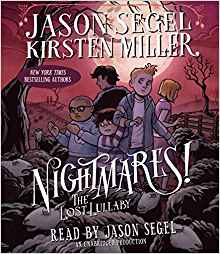
[LISTENED TO: December 2016] Nightmares! The Lost Lullaby

I was really excited to get this third volume of the Nightmares! series.

The previous book ended with the startling revelation that on the first day of the new school year, India Kessog (INK) is sitting in Charlie’s classroom.

INK and her sister ICK were responsible for creating the tonic that nearly destroyed Orville Falls–not to mention the Dream Realm, the Netherworld and the Waking World.

Charlie and his friends knew that INK was on this side of the portal and that her sister ICK was still in the nightmare realm, but they never expected that INK would come to them rather than then having to track her down.

INK is still dressed like she has always been–in old-fashioned clothes with a red bow–exactly the way that she (or ICK, they are twins) terrorized everyone’s dreams in Charlie’s town.  As INK walks through the school–observing everything very carefully–all of the kids keep their distance and stare and whisper.

When she sits down to eat, she is repulsed by the chicken nuggets–who wouldn’t be?  But she loves the tater tots.  That must make her okay right? (c’mon, EVERYONE loves the tater tots).  Charlie is just about to go approach her when his little brother Jack beats him to it.  And he starts talking to India (he calls her Indy) like she was his friend instead of a monster.  They seem to be having a good conversation until a new characters approaches. (more…)

Read Full Post »

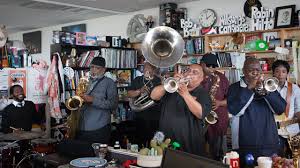
 SOUNDTRACK: DIRTY DOZEN BRASS BAND-Tiny Desk Concert #601 (February 28, 2017).

I have, of course, heard of the Dirty Dozen Brass Band. I’ve probably even heard them on a record or two that I own.  But I don’t really know much about them (in this Concert there are only 7 of them, I don’t know if they ever actually have a dozen members).

But nevermind, because man, do they swing.  And they swing with a big chunk of funk.

“Use Your Brain” is catchy as anything–with a great funk sound.   I love that the bass is all done by the sousaphone (Kirk Joseph).  I love the squeaky trumpet solo that gets played at the end of the song by Gregory Davis.  And I love everything in between.  A cool thing is that there is a guitar (played by Takeshi Shimmura) in the song which you can barely hear except during the moment when the horns are quiet and then you hear it do a great little funky chord riff.  It’s not prominent, but it is essential.

“Best of All” has a very different style (an almost Latin feel)–with Efrem Towns the “vocalist” doing r-r-r-r-r-r-r-r- vocal rolls.  I’m intrigued that for most of these songs the saxophone Kevin Harris (tenor sax) and Roger Lewis (baritone sax) play the main riff most of the time and the trumpets are often silent (until they totally take the song higher).  Like the great high note in the middle of the song.  The guitar is playing lots of little riffs that you can hear every one in a while–rounding out the song very nicely.  And the sousaphone makes some great rumbling sounds.  This song has a drum solo and I love that the drummer (Julian Addison)is placed up at the front of the band so you can really see him–his playing is fluid and that solo is funky and not showoffy.

“Tomorrow” has a funky bass–all coming from the sousaphone–and a real ska feel (especially as the guys sing the chorus “Tomorrow yeah yeah yeah yeah”).  There’s a great rollicking solo from the baritone sax.  Whenever Towns sings, he’s barely audible over the music of the horns–which is fine because hearing his voice is fun even if you can’t really hear what he’s saying.

For the final song, “My Feet Can’t Fail Me Now” Davis says:

This is the song where you all participate –you all been a little bit stiff, not moving.  (someone says , well it is NPR).  For this song we want you to participle. Don’t just stand there and clap like that, you know… move. Put your back into it.  Put your wiggle in the wiggle.  Drop it like it’s hot.  All that stuff you do behind closed doors do it now–well not all you do.

The song is super fun and dancey with a big chorus chant of “feet can’t fail me now, feet can’t fail me now.”  There’s some great horn and a cool wah wah guitar throughout the song.

The Dirty Dozen Brass Band show just how much diversity you can get with “just a brass band.”  This was a super fun concert.

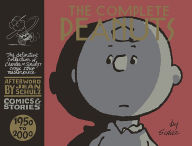
[READ: February 13, 2017] The Complete Peanuts Comics and Stories

This is the final book in the Complete Peanuts series from Fantagraphics.  It took 13 years–2 books a year–and here is the odds and ends collection to tie the series up.

There is an introduction by the editors of the series who explain just what this volume is:  The content has to be Peanuts, drawn by Schulz himself, and (when possible) with verification from Schulz’s widow, Jean.  Material that had not been seen before or was not in print in the twenty-first century got preferential treatment (no Happiness is a Warm Puppy, which is frequently reprinted).  So you’ll see dozens of strips not seen in any book and ones not printed in more than half a century. Six complete books are here– four story books, two volumes on life’s lessons.  Seven comic book stories, lots of single panel gags and lot of ads!

Then there is a Designer’s Note by Seth.  Seth has been behind all of these books (imagine dedicating 13 years of your life to something like this).  He says that he wanted these books to look and feel dignified and maybe even a bit sad.  He also wished to pay a personal tribute to Charles Schulz in his design.

He says that it was Schulz who first set him on the cartooning path.  He was the first artist Seth ever noticed: “Who is this magical person who signs his name in the last box of Peanuts?”  He never met the man and he’s not sorry about that–he has all he needs from the work itself.  He wants to think of this compete set as a monument to Schulz. (more…)

Read Full Post »

SOUNDTRACK: JOSHUA BELL & JEREMY DENK-Tiny Desk Concert #568 (September 30, 2016).

After hearing a pianist and then a violinist, it was fun to hear a duet of the two.

Joshua Bell and Jeremy Denk are masters of their crafts.  Although I did not know that:

Bell and Denk have been chamber-music partners for 10 years, and they’re a bit wound up on Brahms these days. They’ve released a new album, For the Love of Brahms, and they’re performing the music, along with that of Brahms’ friend Robert Schumann, in concerts.

They play three pieces, two Brahms, and one Schumann.  And they all sound spectacular.

Brahms: Violin Sonata No. 3, IV. Presto agitato
“You gotta love Brahms,” Joshua Bell says, a little short of breath. He’s wiping sweat from his brow after the big rock ‘n’ roll conclusion to the composer’s D minor Violin Sonata. Bell and the astute pianist Jeremy Denk play it with all the turbulence and tenderness Brahms demands, and it’s an invigorating way to open this Tiny Desk concert. [I love that the focus jumps back and forth from violin to piano, with interesting riffs and trills from one then the other.  I also love the way the melodies seem to creep around and sneak up on us].

Schumann: Romance, Op. 94, No. 2
Contrasting with the fiery Brahms, Schumann’s Romance, Op. 94, No. 2 unfolds like a song without words. Bell makes his 1713 Stradivarius sing, capturing the bittersweet tone of the music. When the theme comes around for the second time, he lightens bow pressure for a more intimate, almost whispered disclosure.

Brahms (arr. Joachim): Hungarian Dance No. 1
Another of Brahms’ close friends figures prominently in Bell and Denk’s final offering. Violinist Joseph Joachim was something like the Joshua Bell of Brahms’ day, as well as the man for whom the composer wrote his Violin Concerto. Joachim’s gift to Brahms was creating piano and violin arrangements of the composer’s Hungarian Dances.  Brahms’ Hungarian Dance No. 1, powered by a sweeping theme and chugging piano topped with pearly descending runs, whisks you to a smoky café where gypsy fiddlers battle for supremacy. Starting off on the low G string, Bell’s tone is as rich as dark chocolate, the feeling a touch wistful.  [I really love Hungarian dances.  It seems like every composer’s take on Hungarian music is excellent.  I love how the violin plays a very simple yet dark melody and the piano sprinkles in all of these descending notes in a fairly dramatic scale.  And then of course as all the dances do, it speeds up, careening around in wild abandon and fun.  Wonder what made Hungary such a lively place].

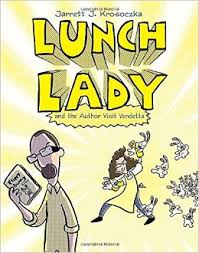
[READ: June 13, 2016] Lunch Lady and the Author Visit Vendetta

I rather like that the Lunch Lady books are sequential and mildly dependent on each other. Of course you can read them in any order you like, but reading them in the proper order allows you to see some continuity between books.

In the previous book, Dee mentioned that the author of the Flippy Bunny series was coming to the school. And in this book he does.

The kids are super excited that Mr Scribson is going to be there to read and sign books.  He is something of a primadonna though as he is upset that the reading will be taking place in the gym.  After his presentation, he signs books, but when Hector brings him a very old copy of the book Scribson says “I don’t sign opened books.”  Hector who has always love the Flippy Bunny books is devastated). (more…)

Read Full Post »

dressSOUNDTRACK: IMANI WINDS-Tiny Desk Concert #277 (May 29, 2013).

windsFor some reason this video and audio has been removed from the NPR site (no explanation is given).  But I found it elsewhere and was able to really enjoy it.

But they have left up the blurb:

When Igor Stravinsky began composing The Rite of Spring, his ballet for vast symphonic forces, he could hear the music in his head but couldn’t quite figure out how to write it down. It was just too complicated.

Today, 100 years after The Rite‘s premiere, the fearless musicians of Imani Winds make it all sound remarkably easy, given that they’ve condensed Stravinsky’s massive walls of sound down to just five instruments: bassoon, clarinet, flute (doubling on piccolo), oboe and French horn.

Make no mistake: Many of the jagged rhythms and crunching chords remain viscerally intact, albeit on a more intimate scale. As the group huddled behind Bob Boilen’s desk, bassoonist Monica Ellis noted the opposing ratios, saying, “It’s apropos in some strange way that we are playing one of the most massive pieces in some of the smallest instrumentation in one of the smallest settings that it could possibly be played in.”

The setting might be small, but in this clever arrangement by Jonathan Russell, we learn that a wind quintet, when called upon, can make a mighty and sonorous wail. Just listen to how the Imanis cap off “Dances of the Young Girls” with the entire quintet in full cry (at about 4:30 into the video). The bassoon repeats a fat bass line while the clarinet runs its snaky scales. The piccolo, in piercing chirps, serves as a foil to a frenzied oboe and snarling “whoops” from the French horn.

But not everything in The Rite is all pound and grind. Stravinsky’s transparent introduction, almost impressionistic, is a fluttering aviary of winds — even in the original — with individual colorings for each instrument. It’s all rendered beautifully here by Imani Winds, musicians brave enough to play David to Igor Stravinsky’s imposing Goliath.

This concert is fascinating to watch (and listen to) because even though this piece is familiar (to me) in theory, it’s apparent that I don’t really know it.  And I can see why this piece was so controversial when it came out–it is weird and chaotic and almost random at times.  I imagine that seeing it as a ballet might make it more cohesive, but it’s still pretty out there.

I love that the bassoon seems to be the primary instrument–one that doesn’t typically take center stage.

The group breaks up their selections into three primary chunks.

Selections from The Rite of Spring:

For “Introduction” the bassoon is the primary instrument playing the initial melody.  Then the clarinet and oboe give the whole thing an unsuaul sound–to say the least.  The French horn actually works as the the bass for this part.  It’s also neat watching the flautist switching between flute and piccolo.  I’m not sure when the second part “Augurs of Spring” begins, but I assume it’s when the bassoon repeats that initial melody and then the French horn plays a staccato bass note. The music sounds kind of threatening but whimsical at the same time.

Somewhere in here “Dances of the Young Girls”  begins.  I assume once the piccolo starts chirping and swooping.   And then the band grows very loud before abruptly stopping.

The second segment she describes as incredibly picturesque. “Ritual of Abduction” begins nosily with almost total chaos from all the instruments–the piccolo stands out as sharp and piercing.  As with the other segments, I’m not sure when “Spring Rounds” begins, but I have to wonder if this is when the music seems to go circular and then slow down. There are low notes from the French horn while someone is playing accent notes that sound, not off, but dissonant–providing stark contrast with the rest of the slow movement.  There are some blares of music from the French horn as well.

I’m guessing that “Dancing Out of the Earth”  begins with the fast bassoon melody: up down up down up down up down with trills and swirls from the flutes and clarinet.  It rises and rises very dramatically and then stops.

They tell us that it’s not possible to play the entire ballet so they have taken the “greatest hits” and for this show it’s the greatest hits of the greatest hits.  Consider it a deconstruction with five instruments. But it still evokes the spirit of this sacrificial dance.

She talks about how controversial this was in 1913, “when ballet was meant to be about… I was going to say flamingos…. fairies swans, the other water animals.”   This is the final moment the virgin who sacrifices herself dances herself to death.  And they are going to exemplify trombones and timpani and all that loud stuff (the French horn player laughs and says “Grr I am trombone”).

“Sacrificial Dance: The Chosen One” begins with a three note melody–again it is somewhat threatening.  There’s lots of little fast runs by the French horn with accents from everyone else.  It stops dramatically at one point and then resumes with so many different melodies.  And then comes the surprise ending with a rising flute line and then a low end from the horn.

Without taking away anything from Imani Winds, I ‘m sure this performance doesn’t do the whole thing any justice.  But it is amazing to imagine how much more there is to it.  And it is amazing that these five instruments can evoke so much.  It’s an uncomfortable and somewhat shocking first listen.  It’s amazing that is over 100 years old, although it sounds so contemporary.

I don’t know why it’s not on NPR any more. I found it on YouKu (whatever that is).  I have been able to watch it twice but on two other times I was unable to watch it.  So keep trying, it’s worth the effort.

[READ: May 5, 2016] The Boy in the Dress

David Walliams is best known (if he is known at all) as the tall one on the sitcom Little Britain.

I had no idea he wrote books (he has done over half a dozen children’s books), and I was happy to start with this, his first one.

This book is illustrated by Quentin Blake, who is best known (if he is known at all) as the illustrator for the Roald Dahl books.  So his simple, somewhat sloppy, style might look familiar.

The story is, as the title suggests, about a boy who wears a dress.  And the story is very funny–not because it makes fun of him for wearing a dress, oh no.  In fact, I love the story for going out of its way to show that it is normal that a boy might want to wear a dress. (more…)

Read Full Post »

sahrakSOUNDTRACK: NO BS! BRASS BAND-Tiny Desk Concert #280 (June 15, 2013).

nobsWith a name like No BS! Brass Band, you think you know what you’re getting: brass and lots of it.  And while that is true, the Band goes way beyond what I anticipated a brass band would sound like (nothing like the far more traditional Canadian Brass for instance).

The blurb states:

Funky and danceable, the NO BS! Brass Band takes after the full black-music continuum you hear in groups like Rebirth or the Hot 8. But it’s also proggy, and a bit brutalizing, and full of pride in a different Southern outpost. The group’s new album is called RVA All Day, after all.  [I don’t know what that last line refers to].

Recently, Koehler, Pace and nine other musicians piled into a bus and journeyed up the freeway to NPR Music’s Tiny Desk in Washington, D.C. They blasted us with songs from the new album — it was so loud, you could hear the music on the other side of the building, a floor down.

The band includes:  Lance Koehler, drums ; Reggie Pace, trombone ; Bryan Hooten, trombone/vocals ; John Hulley, trombone ; Dillard Watt, bass trombone ; David Hood, alto saxophone ; Marcus Tenney, trumpet ; Sam Koff, trumpet ; Ben Court, trumpet ; Taylor Barnett, trumpet and Stefan Demetriadis, tuba.  And they play three super high energy largely instrumental songs that are obviously jazzy but which also have elements of the most fun marching band you’ve ever heard along with some rapping, some chanting and lots and lots of clapping.

The first song is all about “RVA All Day.”  And yet since that’s all they chant, I still don’t know what it means.   While the whole band plays loudly and powerfully, there’s a few solo moments as well.  First a trombone solo followed by a sax solo, then a trumpet and a super wild trombone solo (he gets some truly great, crazy sounds from that thing).  And then a huge surprise, midway through the song is a rap through a megaphone.

“Run Around” has a sing along to begin the song (and again, vocals through the megaphone).  It is also lively and a lot of fun.  The final song, “Infamous”sounds a lot more jazzy/big band.  It’s got a really nice groove.  The middle has a section with just tuba and trumpet where the rest of the band claps and shouts “Ho!” and it sounds great.  It’s also interesting watching how the different players “store” their instruments in different ways while clapping.

No BS! Brass band will totally make you wiggle your hips.

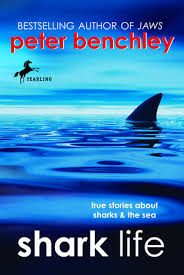
[READ: August 20, 2016] Shark Life

C. had to pick a book for summer reading and he chose this one.  He enjoyed it so much, that he encouraged me to read it too.  And I’m really glad I did.  Although it wasn’t until writing this that I realized that this book was adapted for young people by Karen Wojtyla.  And yet I can’t find any mention of a grown up version of this book anywhere.  So who knows.

Anyhow,  Peter Benchley (who died in 2006) is the author of Jaws, and this book is full of stories of his life in and on the sea.  For, in addition to being an author, Benchley was a diver and explorer.  And his tales are both exciting and full of conservationist ideas.

The book opens in 1974. After the success of Jaws, Benchley had been invited to Australia to be on The American Sportsman.  He was going to be swimming in a cage with sharks feeding around him.  They put him in the cage, strapped all kinds of good food to it and left him there (okay they were close by).  But a few things went awry and suddenly things weren’t quite as safe as they could be. The shark got caught in Benchley’s air line and then panicked.  And a panicking shark is never a good thing. (more…)

Read Full Post »

20SOUNDTRACK: ARTURO O’FARRILL-Tiny Desk Concert #303 (September 14, 2013).

arturo Arturo O’Farrill is not, as I expected, an Irish traditional musician.  He is, in fact, a Latin jazz pianist.  And the blurb states:

Latin jazz works best when the musicians involved are as fluent in Afro-Cuban rhythms as they are in the deep grooves and advanced harmonics of bebop. Arturo O’Farrill has that pedigree in his DNA: His father, Chico O’Farrill, was part of a groundbreaking group of musicians who created the mash-up of Afro-Cuban music and jazz back in late-’40s New York.

The octet you see in this video is a stripped-down version of the Afro Latin Jazz Orchestra, which is at least twice as large — don’t think I didn’t try to get the whole band behind Bob Boilen’s desk — and dedicated to both preserving the legacy of the elder O’Farrill and documenting the younger musician’s efforts to move the music forward.

The octet includes trombone, trumpet, sax, bongo, conga, drums, bass and of course, piano.  And they play three pieces (for quite a long set).

“In Whom…” has a good swinging feel with O’Farrill’s piano running wild.  At one point they cut to the conga player and the lady behind him is checking her phone (rudeness even in 2013!).  But it’s not all about the piano, there s sax solo and then a fairly lengthy bass solo.  Indeed there are many bass solo moments in this concert–Arturo certainly shares the spotlight.

The second song is “Compay Doug.”  He explains that “compay” means some who is not family but who is as close as family or maybe even closer.  The main melody has a cool fast/slow riff and then there’s another long bass solo.  There’s some great conga work in the middle of the song ( you can hear the percussionist use a rain stick, too).  Late in the song there a trumpet solo.  So even though this is ostensibly a pianist’s performance, there is much more–but don’t be fooled, his piano playing is intense!

The final song is called “Mass Incarceration Blues.” He says many years ago it was called “Blue State Blues,” then it became “Stop and Frisk Blues” and now it’s called “Mass Incarceration Blues.”  NPR’s Felix Contreras joins them (he ha so many cameos!).  There’s a super fast series of opening piano runs.  Then there’s a surprisingly fun (given the name) staccato melody and lots percussion.  And, as if to get everybody a moment to shine, this song includes a trombone solo, a sax solo and Felix even gets a conga solo.

[READ: July 5, 2016] Goes for the Gold

This book came out in time for the 2016 Summer Olympics, and Babymouse joins the swim team!

The book begins with her doing a fantastic dive (called the Reverse Messy Whisker Dive) only to wake up in her backyard kiddie pool.

Despite her fantasy of doing dramatic dives, she actually spends all of her time after school reading and eating cupcakes.  Her parents insist that she do something–join a team or whatever.  She chooses to join the school swim team, “The shrimps.”  She figures how hard can it be, “I mean, swimming’s not even a real sport.”

Well not when you wear the suit that Babymouse has on.  She is encouraged to wear a proper swimming suit and goggles and a cap (to much amusement of everyone).

But swimming proves to be hard–between trying to go straight, the way the chlorine dries out your fur and the whale living in her locker (Moby-Dick, anyone?), it’s more than just splashing in a pool.

Especially when we see the other team–actual sharks!  And is that a giant squid at  the bottom of the pool?

But The Shrimps are very good and when Felicia Furrypaws dismisses swimming as not even a real sport, Babymouse has second thoughts–or at least would rather stay up late eating cupcakes.  Will she feel guilty about letting her team down?  Of course, she will.

But what will she do about it?

Read Full Post »

two-worse  SOUNDTRACK: CHEICK HAMALA DIABATEN-Tiny Desk Concert #285 (July 6, 2013).

hamalaNPR Music has been the sole source of my exposure to music from Mali.  I have really grown to like its slightly unusual patterns which are all based on a fairly standard rock structure.  But unlike some of the other Mali musicians I’ve been exposed to, Diabaten does not play guitar.  He plays banjo and the ngoni (but there is plenty of guitar in the song too).

The blurb tells us

Malian tradition lies at the heart and foot-stomping soul of Cheick Hamala Diabate and his band, but their melodies and undeniable rhythms cut across age and ethnicity. Diabate primarily plays the ngoni and the banjo; think of the ngoni as a great-grandfather to the banjo and it all makes sense, because both instruments share the ability to convey melody and plucked percussive rhythm.

Diabate is from Kita in Mali and born into a family of griots, or storytellers; his first cousin is the legendary kora player Toumani Diabate. Cheick Hamala Diabate makes his home these days in a Maryland suburb a few miles over the D.C. line, and his musicians are American-born and inspired by this lively lyrical music, which often tells a tale about Mali and its people as part of the sway and shake.

“Mali De Nou” sounds fairly traditional–with all of the percussion.  And then about a minute and half in a noisy scratchy guitar solo plays over all of the music–a very Mali sound.  But it’s interesting that, for the beginning anyhow, Diabate isn’t doing all that much.  In fact, the song feels almost overwhelmed by percussion (but in a good way). There’s a shaker or two, big floor drums (congas?) and a drum held between the knees and there’s even that big round gourd drum.

There’s also a sax and a bass, the lead guitar and of course, Cheick’s banjo.  By the middle of the song,  Chieck does some lead banjo playing.  And then it sounds like he’s put some effects on the banjo making it sound almost like a kettle drum—he even plays the strings below the bridge.  He really gets a lot of cool sounds out of the instrument

After this song he chats briefly and wants to “Invite you guys to visit Mali, it’s a beautiful country, you’ll be more happy.”

For “Talcamba” he switches to the ngoni.  He explains that the original ngoni had 4 strings, but his has 7 so he can play…more.  This instrument can play reggae, salsa, everything.  This is when he says the American banjo is like the grandson of ngoni.

Tacamba is a dance from north Mali—you can move your body (he waves his arms).  There are vocals but they are mostly a chanted refrain   The solo on the ngoni isn’t a conventional solo, it’s him flicking the strings making a very interesting sound.  I could have used more close-ups of this instrument as you could barely see the strings, and I’d love to see how he fit 7 on that small neck.  Half way through the song it shifts gears and the tempo really picks up—there’s a fast guitar solo with all that percussion keeping up.  And then the percussionist puts down her shaker and starts dancing in the center of the room.  It feels inspired and impromptu and it’s a lot of fun to watch.  While she’s doing that, Cheick picks up a hand drum and starts creating a new rhythm.  It is joyful and celebratory.

For the final song, “Djire Madje,” he switches to acoustic guitar which he plays lefty upside down (so the high notes are at the top).  He plays the lead riff.  At one point the electric guitar is also playing a lead but in a very different styles and they work very well together.

[READ: October 10, 2016] The Terrible Two Get Worse

I really enjoyed The Terrible Two, and this sequel is just as enjoyable.  The pranks are bigger, but the victim has changed.  Why?

Because Niles Sparks’ and Miles Murphy’s pranks got their principal fired!

Principal Barkin was the perfect guy to play a prank on–he had no sense of humor, he was pretty jerky and his face got really purple when he was upset.  But Principal Barkin is nothing compared to his father.  We met his father in the previous book–he yelled a lot, especially at Principal Barkin.  You see, the principal’s father was the previous principal, and he was a tough guy–he took no guff from anyone.

So after a delicious opening prank, Niles and Miles set about to making a great prank on Photo Day.  One of the great things about these books is the illustrations (by Kevin Cornell).  Sometimes the text incorporates the illustrations into the story. Like with Picture Day–the hilariously bad “pictures” absolutely make the sequence.  But it’s what they do to Principal Barkin’s son (who has paid the extra $10 for a gray background) is frankly genius.

But even better is what they have done to the whole school photo– a prank many months in the making.

(more…)

Read Full Post »

cardboardSOUNDTRACK: MARY HALVORSON QUINTET-Tiny Desk Concert #267 (February 25, 2013).

maryI had never heard of Mary Halvorson before.  And that makes sense because she is an avant-garde free-jazz guitarist, a sound I like (sometimes) but one which I do not follow.  So a little background is in order:

As a sidewoman, [Mary Halvorson] is often tapped to play in open improvising situations….  Among her sonic signatures are craggy distortions, bent strings and delay-pedaled blurts through a hollow-body guitar….  Halvorson has now recorded two albums with her quintet, one with alto saxophone (Jon Irabagon) and trumpet (Jonathan Finlayson) up top. (The rhythm section is also among New York’s finest, with John Hebert on bass and Ches Smith on drums.) From the way her songs balance order and entropy, you can hear that she’s studied how golden-era hard bop blended those voices, and how later generations morphed, rephrased and imploded those ideas.

The Quintet plays two pieces.  I would have guessed they were improvised but not only do they have titles, they have sheet music!

“Love In Eight Colors” (No. 21) starts out as a slightly dissonant mellow jazz piece.  Then about 45 seconds in, Mary throws in an unusual guitar lick—a slightly weird note.  And then a minute later things get noisy until a simple trumpet solo takes over.  When the music resumes, Mary is playing some strangely discordant chords over the solo—everyone seems to be doing their own thing.  Around 4 minutes in, it turns into something new with an interesting, mesmerizing guitar solo riff.  When the band resumes, the sax takes over and the trumpeter literally stands stock still like a statue staring forward–it’s almost creepy.  At 8 minutes, they introduce a two-minute drum solo.  It’s fun to watch all the strange things he does—elbow on the drum head, vibrato with his hands changing the sound, clicking the sides of his drum.  Then the band resumes until the end.  And it’s more dissonance.

She introduces “Hemorrhaging Smiles” (No. 25) without smiling.  There’s a lot more melody in this song–the sax and trumpet sound groovy.  Even the guitar is pretty. Then she throws in a bizarre scale which cycles throughout the song.  It’s strangely addicting and I enjoyed hearing it every time it came back–even though it wasn’t exactly pretty.  The guitar has a lot of vibrato on it, although about six minutes in she switches the sound of her guitar to a bit more conventional sound and she plays a wicked solo. The second listen through made me appreciate what was happening a lot more.  Even if the song is pretty out there.

Mary Halvorson’ Quintet is not for everyone.  It might not be for many at all, but if you like your jazz free, check her out.

[READ: June 19, 2016] Cardboard

I’ve had mixed feelings about TenNapel’s books.  I loved Ghostopolis, and didn’t love Tommysaurus Rex.  So I picked this up with some hesitation.

But I found that I really enjoyed this weird book a lot.

For a kids’ graphic novel it’s actually quite long.  And, for a kid’s graphic novels there’s a few adult themes (like unemployment and widowhood) that a kid may not get or care about all that much (or maybe they would, what do I know).

As the book opens we see Mike, a big burly carpenter, begging for work.  But he gets nothing.  And as he walks away we see a very strange-looking man (TenNapel’s book are chock full of weird-looking characters) who offers to sell him a gift for his son.  Mike has no money, so he can’t buy the cool gift.  But the man says that for 78 cents (the exact amount in his pocket) he can have this giant cardboard box.

Mike is appalled at the idea of getting his son a box (even if it can be a creative play toy–ha!), but he’s got nothing else.  So he drives home with this box muttering “worst present ever.” (more…)

Read Full Post »

« Newer Posts - Older Posts »