Feeds:
Posts
Comments

Archive for the ‘Sexism’ Category

dirkSOUNDTRACK: ESMERINE-Lost Voices [CST116] (2015).
esmerine 2Esmerine’s previous album was recorded in Istanbul and featured a lot of Middle Eastern instruments.  This album was recorded in France and has an incredibly different tone than the previous one.   It doesn’t really have any unusual instruments.  Well, except for the darbuka (a drum) and the riq (a kind of tambouine), both of which appear on the track “Funambule.”  And these interesting items: the ekonting (a West African lute) and the sarod (an Indian lute).

This album has moments that rock a lot harder and louder than anything they’ve done before, but it also has some lengthy mellow moments too.

“The Neighbourhoods Rise” opens the disc with staccato strings and bass.  Then the cello and violin come in.  The song builds and grows more dynamic as drums enter the song, but at 3:30 the song bursts forth with big chords and loud drums.  There’s a great violin melody running through the exuberance.  Then the music all falls away leaving a lovely, sad cello and violin melody to take the song out.

“A River Runs Through This Town” opens with the most conventional sound of an Esmerine record–simple (loud) drumming and an acoustic guitar melody.  More instruments come in, adding complexity. I love that each instrument that comes in–marimba, cello–adds a new layer of notes to the mix until about 3 minutes in when it switches over to big chords.   The song works back and forth between these two styles and rocks much harder than any of their other songs.

“Pas Trop Pas Tropes” is a song of quiet marimba and lots of strings–the cello and violin are once again rather mournful, but very cinematic.  It doesn’t travel very far in its four minutes but it’s beautiful while its there.

“19/14” (can that be a reference to the time signature?) opens with marimba and drums and a deep upright bass (and I believe plucked cello).  When the staccato guitar (or is that the cello?) starts picking out notes the song gets even more interesting.  And then at 3 minutes an electric guitar solo bursts through the melody.  It’s probably the loudest thing the band has recorded yet.  Until the end of the song which gets even louder with pounding drums.  It’s fantastic.

After that, the album mellows out somewhat.

“A Trick of the Light” is but 2 and a half minutes.  It’s washes of keyboards and quiet cello/violin parts.  And then comes–a first for Esmerine, I believe–piano (played by Becky Foon).  The piano is simple but it stands out so dramatically on this track that it sounds amazing.

“My Mamma Pinned a Rose on Me” opens with a cool marimba melody and some ominous keyboard chords.  Some of the middle eastern instruments mentioned come out on this song.  It plays with variations on that simple marimba pattern with different instruments taking turns playing simple chords the top of it.  Somewhere round 5 minutes the song gets so mesmerizing that it nearly puts me in a trance.

“Funambule (Deux Pas de Serein)” opens with some thumping bass and rocks drums along with the Middle Eastern drum playing some cool accompaniment.   And then the nearly 8 minute song is off.   This song revisits the Middle Eastern sounds of the previous record, but with a difference–the drums make the song feel bigger and more intense until about 2 minutes in when the song shifts to a kind of screeching solo.  And then the song resumes with a much faster rhythm.  By 4 minutes the whole song is thudding away, powerful drums and a wall of sound.  When the wall wears itself out, the song’s denouement is more layers of cello and violin–beautiful intertwining melodies.

The final two songs are short.  “Our Love We Sing” is 3 and half minutes of synths and slow cello.  This song also features Becky Foon’s voice, singing wordless passages.  It builds and builds but has no grand climax.   The disc ends with “Lullaby for Nola” a simple piano twinkling and then strings accompany the lovely voice to create this slow, beautiful lullaby.

This album is not as cohesive as the previous one, but it really lets the band explore lots of different avenues.  I’m certainly looking forward to whatever they come up with next.

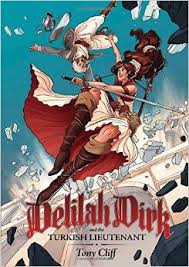
[READ: February 2, 2016] Delilah Dirk and the Turkish Lieutenant

I enjoyed this story quite a lot.  Cliff’s animation which was peculiar but ultimately very satisfying.  And more importantly, he tells a great story.

It opens in Constantinople in 1807.  The King has just begun a game in which the strongest men fight for as much gold and riches as they can grab

Then Chapter 1 shows us Delilah Dirk in prison.  And the guard Selim is reading off the extravagant list of charges against her.  These include–marksman, acrobat, swordsman, world traveler (alone!) and a woman with the ability to fly.  As we flashback to her meeting Selim in prison, we see her being quite cross at getting caught and just about to tell him.  Until she tastes his tea.  Then she reappraises him.

Turns out that Selim’s quite the man with a pot of spices.

As he relates Delilah’s exploits to the king, the king bursts out laughing–primarily because Delilah is a woman.  He doesn’t even think twice that she might try to escape until (and wee see this behind the scenes) she bursts through the wall to her rescue.  And takes Selim with her. (more…)

Read Full Post »

cute girlSOUNDTRACK: DO MAKE SAY THINK-Other Truths [CST062] (2009).

DMST-OtherTruthsCST062Other Truths is (so far) Do Make Say Think’s final album (they have been on hiatus since).  I’ve mentioned this album before, but here it has context with the others.

There are only four songs on this disc and it really feels like a culmination of what they have been exploring with their more recent output.  There is still experimentation (the shortest song is 8 minutes after all), but there aren’t the really strange sections like on the previous album (no weird drop outs or deconstructions).  And, in fact, they have embraced more of the catchiness that the last album hinted at.  The first song, “Do” (each song is named after one of the words in the band’s name) is one of the catchiest things they’ve done.  It’s easily my favorite song from them

I love the guitar lick that runs through “Do” a series of two note patterns that are surprisingly catchy.  The drums are wild throughout as the rest of the song chugs along nicely.  It’s 10 minute long though, and the whole thing is not that pattern.  About 2 minutes in the bass takes over, playing a similarly interesting riff before some dissonant guitars ring out and the band resumes with a new section of the song.  Some voices (from Akron/Family and Lullabye Arkestra) enter the song singing gentle ah’s as the song progresses.  The introductory riff resumes with some great additions.  Then the horns blow over the top–making the song soar higher and higher while the rest of the band plays in the background.  Around 7:30 the music all drops away except for some washes of keyboards.  The song continues like that with some quieter washes until the end.

“Make” is a 12 minute song which has tribal drums and simple guitar lines to start with.  The singing comes in around 2:30.  There’s some great moments in this song where the guitars play simple riffs that grow and build and then the horns come in again.  It’s a wonderful song with moments where the whole sounds of the song sounds so big and jubilant yet slightly menacing at the same time.  By about 9 minutes tape manipulation glitches it to a halt with the drums getting slower and slower and deeper and the guitars expanding out as slow as can be.  The last two minutes resurrect some ringing guitars and horns which grow and grow seem to be playing an elegiac coda for this song, It’s really beautiful, and it’s recorded so well it’s like you can hear the air being blown into them).

“Say” is also 12 minutes long.  It opens with what sounds like foghorns, or tubas getting distorted almost by a Doppler effect.  Then comes the rim shot drums and interesting effects sprinkled over the top.  At about 2 minutes another great, simple guitar riff comes in–DMST  has a way with making the simplest riffs sound great.  The whole band kicks in and plays along with the riff.   The song builds and ebbs, with the horns making the song feel huge.  For a brief middle section the song get quiet with a fast-picked guitar section and strings.  The end of this song (the last 2 minutes) also has a coda with horns but this one is mournful and quiet.  The chorus joins in again.  First with ohs and then with words.

“Think” ends the disc at a scant 8 minutes. It’s the quietest and most mellow song on the disc opening with jazzy drums and simple chords.  The slow guitar riff is lovely and there are dark voices humming along behind them.  Then you hear people talking in the distance, (I can’t make anything out) while a series of bass notes move the song forward.  By 4 and a half minutes a new guitar line comes in and the song gets a little bigger but it’s still slow.  The song never builds like the others; it stays quiet and slow, regretful and thoughtful, until it rings to a close.

This is a wonderful album full of all the great sounds of post-rock.

[READ: January 20, 2016] The Cute Girl Network

Imagine if you were a girl who moved to a new town and learned that there was a network of girls, cute girls, who kept tabs on all of the boys in town.  And the network was in place to keep you informed of what a doofus jackass your new boyfriend was.

It’s not a bad idea.  In fact a lot of good could come from it.  But sometimes informed choices have to have some personal experience as well.

And that’s where Jane and Jack come in.

Jane is new to Brookdale  Jane is pretty bad ass–she rides a skateboard and does amazing tricks.  She also works in a skate shop  She meets Jack when she wipes out in front of his soup kiosk.  He helps her out with a bottle of iced tea for her ailing coccyx and then just hopes that he’ll see her again.

Jack lives with Gil and Ruth.  Gil is a lunkhead who has been on a lot of first dates but few second ones.  Ruth hasn’t been on too many dates herself.  They both know that Jack is lazy (his previous wrote a song about him called “Layabout”) and a little dopey but he’s nice and kind-hearted and that’s what matters. (more…)

Read Full Post »

primatesSOUNDTRACK: OTIS TAYLOR-Tiny Desk Concert #120 (April 13, 2011).

otisOtis Taylor is a big, burly, bearded man who plays the banjo. His band consists of fiddle, drums and electric guitar and bass.

The songs are bluesy without being like the blues, and they are folky without really being like folk music.  And the way he plays the banjo is unlike any typical banjo song I’d heard before.

The blurb explains what makes his songs sound so different:  He plays a style of music he calls trance blues.

Taylor’s music is trance-inducing, and he achieves that effect by playing songs that are modal: Sometimes, they sit on one chord for the entire song. Taylor says that by doing that, by eliminating chord changes, you also eliminate reference points, so songs can run as long as 10 or even 15 minutes in length.

And it’s true.  The basic melody of he first song, “Ten Million Slaves” (which is only 4 minutes) stays the same throughout the song.  It’s the fiddle (played by Anne Harris) that throws the new notes and riffs into the song that keep it so interesting,

He does throw in a simple but affecting solo at the end of “Ten Million Slaves” but it’s more fun to watch him rock out the end of the song.  That song also appeared in Public Enemies, the Michael Mann movie.

He calls his music trance blues music, came from Mali and Mississippi Hill Country.

The main riff of “Ran So Hard The Sun Went Down” is instantly familiar and a little dark.  I love the middle jam section where it just seems to gets bigger and bigger (I guess that’s the trance).

For the third song, “Talking About It Blues,” Taylor switches to acoustic guitar.  This is a fairly simple blues song, but I love the guitar riff that punctuates the verses.  The verse is simple enough “my daddy cut down a tree, make a guitar for me.”  This song features a lengthy solo by J.P. Johnson.

The drums (by Larry Thompson “Bryant Gumball of the drummers,”) and bass (by new bassist Todd Edmunds) are really simple but they sound great and really punctuate the song.

It’s a short song that segues into the final song, “Think I Won’t” which has a heavy five note riff to open with.  I love that it takes him forver to end this song.  Saying one more time even though they do more than one more time.

I don’t really like blues songs that much.  But this band is really tight and the addition of the fiddle really makes these songs stand out. Plus after those cool droning blues songs I was hooked.

[READ: December 15, 2015] Primates

I had been planning to post magazine stories this week.  Then I learned that it is First Second’s ten-year anniversary and they are trying to promote it with the cool hashtag #10yearsof01.   Since I’ve read a bunch of First Second books in the last couple of months, I’m going to give them a deserved shout out by posting a few in a row and including that hashtag.

This is a non-fiction graphic novel from First Second and it is outstanding.  In a wonderfully kid-friendly style, it talks about the incredible work done by Jane Goodall, Dian Fossey, and Biruté Galdikas.  And the man behind their success, Leonard Leakey.

The story opens on Jane Goodall.  After visiting a friend in Kenya, she spoke to Dr Leakey (who tells of his childhood growing up in Kenya).  Through their meeting, Leakey gained funding and sent Goodall to Gombe to study chimpanzees in 1957.  She soon discovered them using tools and eating meat.   Her work caused them to, as the book puts it, “redefine tools, redefine Man or accept chimpanzees as human.”

Then she went further and learned so much more about chimpanzees, using techniques that were not exactly scientifically approved (sifting through dung, setting up places for them to eat) but wound up being amazingly effective.

Jane married Hugo, her photographer and then they were visited by Dian Fossey. (more…)

Read Full Post »

bpSOUNDTRACK: GRIMES-“Kill v. Maim” (2015).

grimesI don’t know Grimes very well at all.  When I first heard this song I didn’t really know what to think, but after repeated listens, I think it’s great.

It opens with a synth riff (and air horns) and one of Grimes’s many voices (this one is kind of childlike).  But by the end of the second line, she screams “they don’t know me” and that seems to set up the various personas in this song.

It’s the pre-chorus that I find so catchy–sung like the cheerleader chant “B-E-H-A-V-E aggressive.  B-E-H-A-V-E nevermore.”  And then the super fast chorus (with her voice lifted to an incredibly high pitch).

There’s a slower section with what I assume is her natural voice (which is quite lovely).  But it’s soon back to the fun chorus.  I need to hear more from her, but if this is her only good song, that’s okay.  It’s angry and you can dance to it.  Welcome to 2016!

[READ: December 20, 2015] Bitch Planet

This series is a great manifesto for the new year–don’t take shit from anybody.

Kelly Sue DeConnick is a force to be reckoned with.  In addition to presenting Captain Marvel as a woman (in the amazing series of that name) and making some other cool looking series that I intend to read, she has created this feminist masterpiece.  Bitch Planet addresses violence and injustice against women and the whole “prison culture” that is always titillating for men.  It pushes Orange is the New Black to even further extreme that a comic book can.

Designed in a retro style by Valentine De Landro, the book comes complete with ads for “crap” in the back of each issue.   Which you may actually be able to buy. (more…)

Read Full Post »

mannersSOUNDTRACK: MARTIN TIELLI-Hugh’s Room Toronto, ON (September 27, 2009).

hughsThis is the final solo show from Martin Tielli on the Rheostaticslive site.  And it’s a great final show.  The sound quality is excellent and the crowd is also really into it.

Martin says that it is the fourth show ever with this band which includes Martin Tielli – vocals, guitar
Selina Martin – acoustic guitar, vocals, bowed saw
Monica Guenter – piano, synth, viola, vocals
Greg Smith – bass, vocals
Ryan Granville-Martin – drums, vocals, glockenspiel

(That’s a lot of Martins).

They open with a Rheostatics song, “Dead is the Drunkest You Can get,” a mellow song that works really well and has outstanding backing vocals from Selina and Monica.  Then they play two Nick Buzz songs, “That’s What You Get for Having Fun” and “Love Streams.”

“Something Wild” introduces a lot of vocoder–his vocals sound very different from on the Danny Gross record.  “Underbrush” is very slow and dramatic.

There’s something about this band that really brings out the best of these songs.  “Voices from the Wilderness” is lovely and “I’ll Never Tear You Apart” is also lovely, done in a slower tempo.  Although Martin keeps correcting himself when he messes up the words.

When they get to “Hymn to the Situation” (an old Nick Buzz song) he says it was an audience request and he thought it was funny.  He asks that the audience cheer wildly when he says the word “axe” (which is what happens on the record).  His description of the song is very funny, saying that it is about love.  Not sex, which is disgusting and which is all you hear in the media.  He concludes, “Never confuse the savory and the sweet.”  The song is played entirely on the piano.

“Saskatchewan” is great.  Big and loud.  Although Martin plays some amazingly bad chords at the end of the song–presumably intentionally.  The guitar solo is played on a violin, which is also pretty neat.

The set list says that the song “Our Keepers” was supposed to be next, but it is not included.  Indeed, the set ends with “Saskatchewan” making this show only 55 minutes.  Nevertheless, it’s a great recording and a wonderful spanning of Martin’s solo career.

[READ: October 10, 2015] The Importance of Manners

I found this book at work and was intrigued by the blurb: a Dali-esque fable, and that it was “in the vein of Evelyn Waugh and PG Wodehouse.”  I was committed to the book when I saw that the print was huge and that the chapters were really short.  Not the best recommendation for reading a book, but if you’re looking for quick read, those are some good markers.

The story is a travelogue farce that involves religion, sex, more religion, death and the end of the world.

There are several main characters, although I suppose the main protagonist is Burt Darwin.  Darwin is concerned for his afterlife and he cycles through a different religion multiple times during the day to make sure he has all of his bases covered.  He also keeps a journal in which he must tell the truth because this will lead to a successful afterlife (according to some healer or another).

We next meet Lady Chanel Malory.  Chanel was a hand model, is quite pretty and is looking for adventure (sexual if possible).  But she is married to Lord Percy, an old stuck up aristocrat who says all the things you’d expect someone like him to say.  He also believes that Lady Chanel is French and she is happy to play up the charade of being French for most of the story (it cracks briefly).  The final main character is Sister Mary.  She is an exiled nun, but she dresses like Mother Theresa, blesses everything and everyone and considers everything including flossing to be blasphemous.

They are all on a cruise ship traveling to Africa (you can probably see already the kinds of jokes and scenes that are going to appear).  They meet angry Kings (one who calls Lord Percy “Hitler”), they meet a talking (at least to us) snake who is mad to be stepped on, we encounter Vodun gods (and sellers of Authentic African knickknacks (most likely made in China) and a spell that makes Sister Mary forget that she is a nun and remember the past that brought her there.

There’s even a couple of authorial interruptions.

While most of the book is made of comic episodes (and some are indeed very funny) there are also some intriguing subplots.  Like Lady Chanel’s connection to pirates (which is sadly never explored fully), there’s even the exorcism of a demon.

Oh, and there’s someone who is about to set off a nuclear bomb destined to blow up the whole word.  Although none of our cast know that, somehow one of them saves the entire world.

H.G. Watt is also known as Hande Zapsu Watt.  She was born in Istanbul but now lives in Scotland.  According to some information, she has published four more novels and four children’s books which have all been translated into several languages, but I can’t find any of them.

So this book was a little broad, with some fairly easy targets, and yet I enjoyed it quite a bit.  There was a lot that made me laugh including  the acknowledgments in which she thanks her editor “who edited all the way to page 42 before writing in the margin: “umm, isn’t this a bit racist?”  [The book is, but it attacks everyone mercilessly, so no one need feel singled out].

Read Full Post »

[ATTENDED: November 19, 2015] Zoyka’s Apartment

zoykaI was offered free tickets to this show.  I read a brief review, saw the word “farce” and decided it would be fun to go to it.

This play was written by Mikhail Bulgakov, an author I’ve heard of but know little about.  Turns out that all of his plays were banned by the Soviet government.  Including this one, even though it was not an anti-Soviet play.  After the banishment, he wrote to Stalin requesting permission to emigrate, but was denied.

As this play opens, there is a lectern at which an announcer reads a 1990 review of the play by Frank Rich in the New York Times (which you can read here).  Perhaps the most fascinating thing that I heard from the review was this:

Boris A. Morozov’s production of Mikhail Bulgakov’s ”Zoya’s Apartment” at the Circle in the Square. Mr. Morozov is resident director of the Maly Theater in Moscow. His New York cast is headed by such actors as Bronson Pinchot.

Since Pinchot is my new favorite audio book reader, I immediately paid attention. (more…)

Read Full Post »

academiaSOUNDTRACK: MARTIN TIELLI-“We didn’t even suspect that he was the poppy salesman.” (2001).

popptI wrote about this album once before, and while I made notes about it after listening to it again, I found out that they were pretty much exactly what I thought of the record four years ago.  So I’m going to simply repost the review here, but I’m going to add some new notes seamlessly intermingled.

Martin Tielli’s first solo disc is a proper solo release: it’s almost all him on acoustic guitar and his gorgeous alto voice.  I hadn’t listened to this disc in a while and I was delighted by how much of the disc I knew so well.

The opening track, “I’ll Never Tear Your Apart” is deceptively simple: beautiful harmonic’d guitars and his gentle voice.  There’s a great video to go with it here.  That is followed by the wonderful “My Sweet Relief” which sounds like a great Neil Young folk song: great verses an a strong chorus.  Lyrically, though, it is all Tielli.  “Double X” highlights Tielli’s beautiful acoustic guitar work.  It’s another great story song, this one about a destitute person hanging under a superstore with a K and an M.

“Voices in the Wilderness” is a simply beautiful song, a lovely guitar melody and Tielli’s high voice singing along.. I also love that the lyric  (mis)quotes Rush very nicely: “‘If you choose not to be free you still have made a choice,’ said a high and squeaky voice.”

“Farmer in the City” is the only track that Tielli didn’t write.  It’s a nearly 8-minute song by Scott Walker.  I had never listened to the original, but having now done so, I find the Walker version to be far superior.  Walker’s voice is so eccentric and wonderful.  So even though I love Martin’s voice, he just can’t compare to the original.   Also find Martin’s version to be just a little spare (the Walker version has lovely strings. Kevin Hearn plays celeste and Selina Martin plays wine glasses on the track.

It’s followed by the delightful “World in a Wall” which uses mice in the wall as a metaphor for a broken relationship (with wonderful detailed lines like: She’s like a mouse, I know she’s around It’s a gnawing sound. Leaves little brown poohs from a little pink bum.”

This is followed by “That’s How They Do It in Warsaw” which is the first really rocking song (it has bass and drums) and a voiceover in Polish by Kasia Zaton.

It’s coupled with a slightly less rocky but still loud track “How Can You Sleep?” (which makes another fun musical allusion, this time about Guided by Voices). It has a co-songwriting credit from Dave Bidini and has a kind of vocal allusion to Bob Dylan, although I doubt it is about him.

“She Said ‘We’re On Our Way Down’” is a song that I really want to enjoy more.  But It is so spare and Martin’s vocal line is so abstract, that I can never really get int it. But the guitar riff is really powerful and cool.  And yet, the song seems to eschew melody but then a gorgeous guitar or vocal line shines through and really sounds brilliant.  “From the Reel” is a beautiful, aching acoustic ballad.

The disc ends with the odd, seven minute “Wetbrain/Your War.”  The first part (wet brain) is kind of slow but it builds into a beautiful dark song about addiction.

This is a really beautiful album, although there are moments when I fell like Martin gets too delicate, it’s amazing to hear just what he can do when he’s on his own.

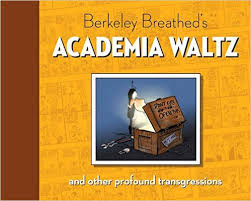
[READ: October 19, 2015] Academia Waltz

Way back a long time ago I was pretty excited to read all of the Bloom County reissue books.  Somehow I only got through Books 1 and 2, although I see now that five volumes were released in total.

Presumably at the end of that run, (which technically ended in 2011) comes this volume.  Academia Waltz is the strip that Breathed wrote back in college.  This book collects some (but apparently not all) of the strips.  It’s odd to not collect them all since there is also an art gallery with all kinds of original pieces (complete with edits and scribbled notes) that duplicate many of the earlier strips.

The first part collects pieces from Academia Waltz the 1979 collection.  The second part comes from Bowing Out, the 1980 Collection. (more…)

Read Full Post »

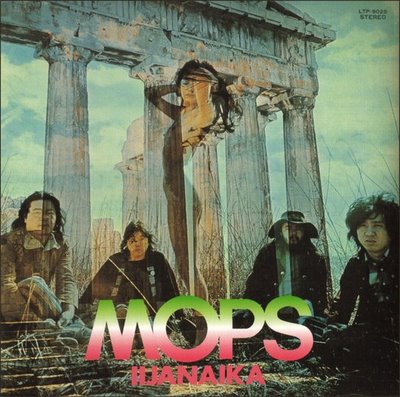
tokyoSOUNDTRACK: THE MOPS-“Goiken Muyo (Ilja Naika)” (1971)

mopsThe Mops were a Japanese psychedelic band who were inspired by American psychedelia.  They appear in one of the films below (Stray Cat Rock: Wild Jumbo from 1971) in a really weird scene in which the band is playing on the back of a flatbed truck (in the middle of another scene that has nothing to do with them).  They play their song and then drive away.  Weird.

Anyway, the song is pretty great.  There’s all kinds of interesting percussion (the film clip shows them playing stuff which most likely is not what they are playing).  But the studio version (linked to below) has great audio quality and a lot of depth in the bass and cool screaming guitars.

The band released possibly 9 albums (it’s a little hard to tell from their Wikipedia page).  With their first album being pretty psychedelic and this one (I assume their third) being much heavier and fuller sounding.

I had found a clip of the band from the movie.  Then I lost it and cannot find it anywhere.  But here’s the studio version dubbed over the movie clip

But really, check out the whole album, it’s pretty great.

[READ: October 10, 2015] Tokyo Grindhouse

The life cycle of a book at my work is pretty straightforward.  If I see it at all, I usually catalog it or send it on its way to someone else.  But for some reason this book came back to my desk three times.

I didn’t know a thing about Tokyo Grindhouse, I’d never heard of pinky movies, but if something keeps coming back you gotta check it out.  So it turns out that this book has about ten pages of text and the rest is pictures.

And the book is about “classic” exploitation films made in Tokyo from 1960-1970 (or so).  The text by Jack Hunter explains that women and violence have been in Japanese exploitation films since the 1950s.  Evidently there were some landmark films in the mid-fifties about topless pearl divers that set off a craze for topless women in films.  This morphed into movies where women were the victims of violence with translated titles such as Nude Actress Murder Case: Five Criminals. (more…)

Read Full Post »

woyzeckSOUNDTRACK: BUILT TO SPILL-There’s Nothing Wrong with Love (1994).

Theres_Nothing_Wrong_With_LoveThis is the second Built to Spill album.  They moved to a new indie label (Up Records) for this one.  For this album the line up changed to Brett Nelson, on bass and Andy Capps on drums.

For this album there aren’t too many long songs.  In fact many are 3 minutes or less.  And overall, the feel is more lo-fi, less experimental.  And yet it still sounds very much like Built to Spill.

“In the Morning” is pretty and catchy with some interesting guitar work that is downplayed in the mix. I like the rather surprising ending.  “Big Dipper” is insanely catchy with two separate styles of guitar solo at the same time.

“Car” is even catchier–one of their great early songs.  It’s got a great riff and verse.  And the strings add a lot to the song.  “Fling” opens with acoustic guitar and strings.  It’s a pretty song and only 2 and a half minutes.  “Cleo” is another slow song with some bursts of guitar greatness.

“The Source” has loud and quiet elements—big acoustic guitars and some crazy jamming moments towards the end.

“Twin Falls” is a stripped down and honest song.  It’s just him and his acoustic guitar (with some electric guitar soloing over the top) singing an honest, sweet ballad.

“Some” has slow and heavy elements as it tells a story about a guy. It’s the longest song on the dis and one of the few where Martsch just lets loose on guitar and wails (for a long time).  “Distopian Dream Girl” has a kind of sloppy feel to it (with the lead guitar being especially sloppy).  The lyrics about his stepfather looking like David’ Bowie are very funny. I love the way the mildly catchy verse turns into a big catchy chorus.

“Israel’s Song” has a groovy bass line unlike anything else on the disc.  And the disc proper ends with “Stab.”  The song opens slowly with some quiet electric guitar but it builds for 5 and a half minutes (the second longest song on the disc). By 2 minutes, the song has become a heavy guitar song getting faster and faster until it breaks into a slow guitar picked section with strings. As the song returns to that heavy fast section, it adds a long guitar solo–combing all of the elements of Built to Spill in one song.

Although this album isn’t as “experimental” as the first and doesn’t have too many weird sounds on it, they haven’t lost their sense of humor.  There is an unlisted track which is a “preview” of the next Built to Spill record.  It contains several snippets of “songs” that will appear next (a decent variety of styles, too).  Of course, none of these songs appear on the record and the date that they give for when it will come out is also false.  It’s pretty darn funny.  This album tends to get overlooked because their next full length was on a major label, but it’s still really solid.

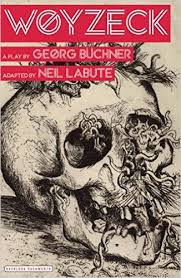
[READ: September 26, 2015] Woyzeck

Karl Georg Büchner died in 1837 at the age of 24. In his short life he wrote 4 plays and all kinds of nonfiction.  Woyzeck was unfinished and has been adapted many times for the stage and film.  And now it is LaBute’s turn.

Neil LaBute is one of the most misanthropic filmmakers I know of.  His films are super dark, (occasionally funny–but always dark) and he’s not afraid to address controversial issues.  So he seems like the perfect person to adapt (and add to) this play.

In the lengthy introduction, LaBute comments that if you didn’t spend time looking for buried treasure as a kid “your childhood may have been even worse than mine and therefore I want to spend no time imagining it.”  He says that Woyzeck is such a treasure. (more…)

Read Full Post »

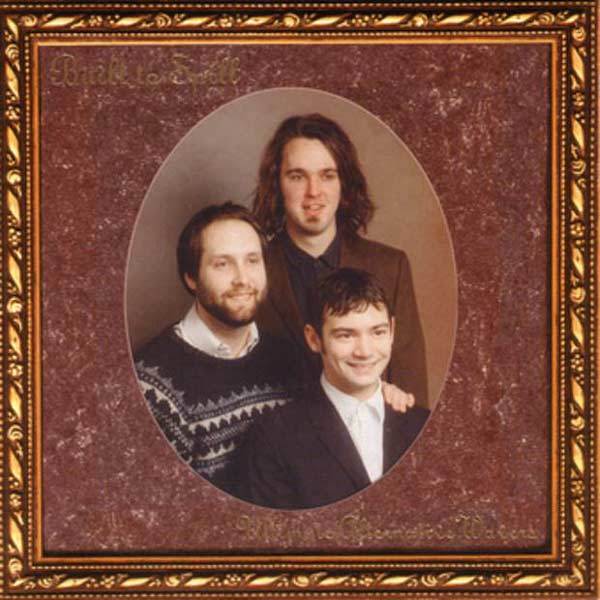
dfwSOUNDTRACK: BUILT TO SPILL-Ultimate Alternative Wavers (1993).

Bts I am going to see Built to Spill this Friday.  I was supposed to see them back in 2001, but then some bad things happened in New York City and their show was cancelled (or I opted not to go–I see on Setlist that they did play that night).  Since then, I have enjoyed each new album more than the previous one, so I am really excited to see them.

I thought it would be interesting to revisit their earlier records.  In reading about the band I learned that Doug Martsch was in Treepeople (which I didn’t know and who I don’t really know at all).  I also learned that his plan for BtS was to have just him with a different line up for each album.  That didn’t quite work out, but there has been a bit of change over the years.

Their debut album is surprisingly cohesive and right in line with their newer material.  It’s not to say that they haven’t changed or grown, but there’s a few songs on here that with a little better production could easily appear on a newer album.  Martsch’s voice sounds more or less the same, and the catchiness is already present (even if it sometimes buried under all kinds of things).  And of course, Marstch’s guitar skill is apparent throughout.  The album (released on the tiny C/Z label) also plays around a lot with experimental sounds and multitracking.  When listening closely, it gives the album a kind of lurching quality, with backing vocals and guitars at different levels of volume throughout the disc.

But “The First Song” sounds like a fully formed BtS song–the voice and guitar and catchy chorus are all there..  The only real difference is the presence of the organ in the background.  “Three Years Ago Today” feels a bit more slackery–it sounds very 90s (like the irony of the cover), which isn’t a bad thing.  The song switches between slow and fast and a completely new section later in the song.  “Revolution” opens with acoustic guitars and then an occasional really heavy electric guitar riff that seems to come from nowhere.  The end of the song is experimental with weird sounds and doubled voices and even a cough used as a kind of percussion.

“Shameful Dread” is an 8 minute song.   There’s a slow section, a fast section, a big noisy section and a coda that features the guys singing “la la la la la”.  Of course the most fun is that the song ends and then Nelson from The Simpsons says “ha ha” and a distorted kind of acoustic outro completes the last two minutes.

“Nowhere Nuthin’ Fuckup” is one of my favorite songs on the record.  There’s a sound in the background that is probably guitar but sounds like harbor seals barking.  I recently learned that the lyrics are an interpretation of the Velvet Underground’s “Oh! Sweet Nuthin.”  They aren’t exactly the same but are very close for some verses.  The rest of the music is not VU at all.  In fact the chorus gets really loud and angular.  I love the way the guitars build and then stop dramatically.

“Get a Life” opens with a wild riff that reminds me of Modest Mouse (who cite BtS as an influence), but the song quickly settles down (with more multitracked voices).  I love how at around 4 minutes a big swath of noise takes over and it is resolved with a really catchy noisy end section.  “Built to Spill” starts out slow and quiet, and grows louder with a catchy chorus.  In the background there’s all kinds of noisy guitars and superfuzzed bass.

“Lie for a Lie” is pretty much a simple song with s constant riff running throughout.  The verses are catchy, but the middle section is just crazy–with snippets of guitars, out of tune piano, a cowbell and random guitar squawking and even shouts and screams throughout the “solo” section.  “Hazy” is a slow song with many a lot of soloing.  The disc ends with the nine minute “Built Too Long, Pts 1,2 and 3”  Part 1 is a slow rumbling take on a riff (with slide guitar and piano).  It last about 90 seconds before Part 2 comes in.  It has a big fuzzy bass (with a similar if not identical riff) and wailing guitar solos.  Over the course of its five or so minutes it get twisted and morphed in various bizarre ways.  With about 30 seconds left, Chuck D shouts “Bring that beat back” and the song returns, sort of, to the opening acoustic section.

While the album definitely has a lot of “immature” moments (and why shouldn’t the band have fun?) there’s a lot of really great stuff here.

btstix

[READ: September 26, 2015] Critical Insights: David Foster Wallace

It’s unlikely that a non-academic would read a book of critical insights about an author.  Of course, if you really like an author you might be persuaded to read some dry academic prose about that author’s work.  But as it turns out, this book is not dry at all.  In fact, I found it really enjoyable (well, all but one or two articles).

One of the things that makes a book like this enjoyable (and perhaps questionable in terms of honest scholarship) is that everyone who writes essays for this collection is basically a fan of DFW’s work.  (Who wants to spend years thoroughly researching an author only to say means things about him or her anyway?).  So while there are certainly criticisms, it’s not going to be a book that bashes the author.  This is of course good for the fan of DFW and brings a pleasant tone to the book overall.

For the most part the authors of this collection were good writers who avoided a lot of jargon and made compelling arguments about either the book in question or about how it connected to something else.  I didn’t realize until after I looked at the biographies of the authors that nearly everyone writing in this book was from England or Ireland.  I don’t think that makes any difference to anything but it was unexpected to have such an Anglocentric collection about such an American writer (although one of the essays in this book is about how DFW writes globally).

Philip Coleman is the editor and he write three more or less introductory pieces.  Then there are two primary sections: Critical Insights and Critical Essays. (more…)

Read Full Post »

« Newer Posts - Older Posts »