Feeds:
Posts
Comments

Archive for the ‘Sex’ Category

[WATCHED: 2010]  The Inbetweeners

I don’t often write about one TV show at a time, but I’m on vacation this week, so I’m taking it easy.

One of our favorite new shows is (big surprise) a  British comedy (that is airing in the States on BBC America) called The Inbetweeners.  There’s not much terribly original about the premise of the show: four unpopular blokes in secondary school grouse about being unpopular and hatch ways of scoring with the [insert staggering variety of vulgar words for women here] in their class.  And I’m not exactly sure what it is about the show that is so [bleeping] funny.  Perhaps it is the simply brutally vulgar humor, or the excessively horny attitudes, or maybe it is the self-awareness of the vulgarity (by the not exactly prudish but at the same time creeped-out-by-his-friends narrator (“That sounds a bit rape-y, Jay”)), but the show never stops being stomach-hurtingly funny. (more…)

Read Full Post »

SOUNDTRACK: THE DEAD MILKMEN-Not Richard But Dick (1993).

After the mature Milkmen of Soul Rotation, they followed up with this mini disc (at 28 minutes it’s probably an EP (even the title suggests that maybe it’s an EP) but it’s not considered one).

This album is a bit more twisted that Soul Rotation, although it still offers some of this newer more mature music.

The two most twisted songs are the largely spoken-word “I Dream of Jesus.”  It’s a rant in which the singer (who now goes by the name Arr. Trad.) talks about his mother keeping Jesus in a bottle, and the ramifications that that can have.  (It also features a sung chorus of “Jesus Loves Me”).  “Let’s Get the Baby High” has vocals that are processed so who knows who is singing.  But the title is pretty much spot on for the content of the song.

And you can pretty guess who is singing “The Infant of Prague Customized My Van.”

Butterfly Fairweather once again sings the bulk of the songs.  And most of them are fast rockers. The first song, “Leggo My Ego” could have been a hit (with the cool keboard opening) and “Little Volcano” probably should have been a  hit, it’s very catchy.

He’s also on vocals for some of those mellow songs (that remind me so much of Dromedary Records’ Cuppa Joe.  In fact, “Not Crazy” could have been done by Cuppa Joe.

The final song is a wonderfully hilarious Lou Reed impersonation with simple guitar chords, and a tin whistle!  It’s a very mellow spoken word piece about “The Woman Who was Also a Mongoose”.

Not Richard But Dick is no longer in print (Hollywood Records really gave DM the shaft).  I’m not sure if it’s worth tracking down at this point, but there’s some interesting and fun stuff on this disc.

[READ: April 7, 2010] Antwerp

Continuing with Roberto Bolaño’s fascinating melange of styles, Antwerp (technically the first “novel” he wrote (circa 1980 although he didn’t have it published until 2002) is a series of numbered sections.  I’ve heard it described as a prose poem, and, given his (at the time) recent switch from poetry to prose, that makes sense.

I had read an excerpt from this some time ago, and I found it difficult to read as excerpts.  Unsurprisingly, I also found the entire thing a challenge as well.  And that’s because, wow, there is so much crammed into these 79 pages, and there are so many different points of view and so many unclear events (written in great detail, but trying to piece those events together…phew) that even after reading it twice, I’m still not entirely sure what’s going on. (more…)

Read Full Post »

SOUNDTRACK: THE DEAD MILKMEN-Soul Rotation (1992).

And lo, the Milkmen grow up.

This disc is not funny (well maybe, a little funny); mostly it is  “thoughtful” (and sometimes absurd).  But what is most striking about it is how mature (mellow) it is.  For this is the first album by The Dead Milkmen on Hollywood Records (a subsidiary of Disney).  This combination raises far more questions than is worth looking at.  But suffice it to say that even though this disc is the Milkmen, its a very different Milkmen.

The most obvious difference is that the majority (10 out of 13) of the songs are sung by the artist formerly known as Joe Jack Talcum, now known as Butterfly Fairweather (perhaps Hollywood knew that “”Punk Rock Girl” was their big hit?).  Past DM records were mostly sung by Rodney Anonymous (who goes by H.P. Lovecraft on this disc).  And his were the heavier, weirder, funnier, absurdist tracks, for the most part.  So, when the first four songs here are sung by Butterfly, you know something different is afoot.  Oh, there’s horns on the disc as well!

The disc feels like a pretty typical alt-rock band from the 90s.  But it’s missing the sass, it’s missing the vulgarity.  Basically, it’s kind of dull.

That’s not to say there aren’t good songs on here, because there are.  “If I Had a Gun” is a great screamy Butterfly song, and “Wonderfully Colored Plastic War Toys” is full of Lovecraft’s snark. As is “The Conspiracy Song” a lengthy rant of absurdity.

The rest of the songs drift between mellow and alt-rock rockers.  And it works as a product of the alt rock 90s.  It’s just not much of a DM album.

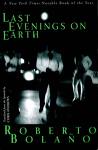
[READ: April 8, 2010] Last Evenings on Earth

I have been reading Bolaño’s short stories for a while now.  And so I have read a couple of the stories in this collection already. The stories in this collection were taken from his two Spanish collections of short stories: Llamadas telefônicas (1997) and Putas aseinas (2001).  And I have looked at about a dozen sources but I can’t find which stories came from which original collection (I like  to know these hings).  I can’t even find a table of contents for the original books.  Anyone want to help out?

I enjoyed these stories more than I expected to.  I have read some of his stories in The New Yorker and elsewhere, and I’ve been okay with them, but this collection blew me away.  Whether it’s being immersed in his writings or just having them all in one place, I was thrilled by this book.

There so many delightful little things that he does in his stories that I find charming or funny or something.  Like that his narrators are usually two or three people removed from the details.  Or if they’re not, they act like its been so long they doesn’t need to get all the details right:  “U insults and challenges him, hits the table (or maybe the wall) with his fist” (“Days of 1978”).

I also get a kick out of all the stories with the protagonist named B.  Which seems a not so subtle way of saying he’s the narrator (even though I ‘m sure these things never happened to him quite like it says (despite all the biographical consistencies with his own life).

The opening story “Sensini” has the narrator working as a night watchman at a campground (much like Enric in The Skating Rink…a bit of biography perhaps?).  A number of his stories are simply biographies of interesting characters (something he went to extremes with in Nazi Litearture in the Americas): “Henri Simon LePrince” a failed writer in Post-WWII France.  “Enrique Martin” a delightfully twisted story about jealousy (aren’t they all, though?) and acting impulsively and foolishly (aren’t they all though?).  This one featured  a riddle that I’m not even sure we’re meant to get:

3860+429777-469993?+51179-588904+966-39146+498207853

which the narrator thinks is a word puzzle. (more…)

Read Full Post »

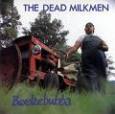
SOUNDTRACK: THE DEAD MILKMEN-Beelzebubba (1988).

Why the hell do you think they call it a burrow owl anyway?

Beelzebubba is pretty close to the pinnacle of The Dead Milkmen’s career.  Of the 17 songs, there’s only one or two that fall flat.  But there are so many that rise to greatness.  The wholly un-PC James Brown-mocking song “RC’s Mom” which is pretty much all about beating your wife is in hugely questionable taste, but the funk is quite funky.

The brilliant “Stuart” is the culmination of all of the white trash mocking/spoken word nonsense songs.  And then there’s the outstanding single “Punk Rock Girl.”  It is simultaneously catchy as all hell and yet whiny and kind of off-key.  It’s really magnificent and was suitably lauded.

The strange thing to me is that the actual released “single” was for “Smokin’ Banana Peels” (an EP with that title was released with an absurd number of dance remixes).

“Sri Lanka Sex Hotel” is an angry rant that references The Killer Inside Me and talks about having sex with everything.  It’s pretty bizarre, but is musically fantastic.

True, the back half of the disc suffers somewhat (“Howard Beware” and “Ringo Buys a Rifle” are just okay), but the disc ends with the sublimely vulgar “Life is Shit” a gospel-tinged song that matches Monty Python’s “Always Look on the Bright Side of Life” for faux uplift.

Future DM discs would feature some good songs, but the band pretty much peaked with this one.  I’m so bored I’m drinking bleach.

[READ: Week of April 5, 2010]  2666 [pg 637-701]

What a difference a week makes.  The style and writing of Part 5 is markedly different from Part 4.  It is far more laid back and focuses primarily on one individual, Hans Reiter (who we know from Part One is Archimboldi).

The Part opens with information about his parents: his father had one leg (he lost the other in WW1) and his mother was blind in one eye.

Hans’ father, after losing his leg, was in the hospital, expounding on the greatness of smoking.  (He even gives a smoke to a man wrapped head to toe in bandages–and smoke pours out from all the cracks).  When he left the hospital, he walked home–for three weeks.  And when he arrived back home he sought the one-eyed girl in the village and asked for her hand in marriage.

Hans Reiter was born in 1920. He proved to be unreasonably tall: (At 3 he was taller than all the 5 year olds etc).  And he was most interested in the seabed.  There is much information from his childhood of his love of the sea (when his mother bathed him, he would slip under the water until rescued).  At six he stole a book, Animals and Plants of the European Coastal Region, which he more or less memorized and was the only book he read.  And then he began diving, investigating the shoreline.

His father evidently hates everyone and thinks all nations are full of swine (except the Prussians).

Hans also enjoyed walking and he would often walk to the surrounding towns: The Village of Red Men (where they sold peat), The Village of Blue Women , The Town of the Fat (animals and butcher shops); or in the other direction, he went to Egg Village or Pig Village.  Or even further along was the Town of Chattering Girls (who went to parties and dances).

He almost drowned twice.  The first time he was initially mistaken for seaweed as he was floating in the water.  (After he had discovered laminaria digitata).  He also began to draw seaweed in his book.  (The seaweed connection is pretty thorough as he was described as looking like seaweed when he was born).  The tourist who saved him was named Vogel.  He believed in the general goodness of humanity, but he felt that he was a bad person for initially mistaking Hans for seaweed.  Vogel also talked endlessly about the virtues of masturbation (citing Kant as an example). (more…)

Read Full Post »

SOUNDTRACK: Philadelphia Radio Stations (circa 1990 and 2010)

There’s a Dead Milkmen song called “The Big Sleazy” in which the chorus is

“I hate MMR I hate YSP/You know that classic rock/Does not interest me.”

I’ve always been amused by the song, especially when I travel to Philly and hear these stations.  That song is from 1990, so 20 years later I’m not sure what the band would think of their new playlists.

But one thing I never really noticed before is the middle verse which is about one of my favorite Philly stations WXPN.  The verse is:

I hate what they’ve done to XPN
Those folk Nazis ruined my favorite station
I hate what they’ve done to XPN
If you hear it now it’s just a pale imitation.

Now, I have no idea what XPN was like before, but, yea, I can see that he folk Nazis are in charge.  Of course, I rather like that.  However, XPN also plays a bunch of artists who are broader than the folk label, so I wonder if they have changed even more since 1990.

History is fascinating, innit?

[READ: April 3, 2010] Trinity

Collins Gibson is a patron at our library.  He has been working on this book for a few years now.  The first time I looked at a bit of it, it was a novel.  I hadn’t seen him for a while and now he has brought the book back as a screenplay.

I didn’t read enough of the original novel to know whether this works better as a novel or a screenplay, but given the very visual nature of the story, it seems like screenplay fits the story better. And so, since Collins is a good guy, I’m going to do my part to get the word out about the story. (more…)

Read Full Post »

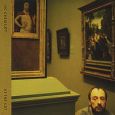
SOUNDTRACK: VIC CHESNUTT-At the Cut [CST060] (2009).

Vic Chesnutt died in December.  I have limited exposure to him, although I really enjoyed his previous Constellation release North Star Deserter.

This release (his second to last) shows him playing with much the same line up as North Star.  And it is just as harrowing and passionate as the other.

It opens with the fantastic “Coward” in which, stating how courageous it can be to be a coward her proudly sings “I am a Coward!”.  This track is one of the rocking ones on the disc, which is split pretty evenly between cacophonous rockers and slow moody acoustic pieces.  Another great rocker is “Chinaberry Tree.”  The lyrics are simple and the chorus is just the words Chinaberry Tree, but it is fantastic.

My preferences run to faster music, so I enjoy his noisier tracks to the simpler, acoustic ones.  And yet, lyrically, his songs are so moving that I easily get sucked into the narratives.  The most notable song on the disc is “Flirted with You All My Life” which is about death, specifically about his past suicide attempts.  It’s really moving.  And even the seemingly simple “Granny” is a well-written mood piece.

Chesnutt had all kind of physical problems (when he was 18 he was in a car accident and had been mostly paralyzed) and he had been in pain most of life.  It’s a shame he felt compelled to end his life, but we still have his music to enjoy.

[READ: March 27, 2010] Fever Chart

About half way through this first-person book, the narrator has a mental breakdown and tries to bite his hand off.  That should tell you right off the bat whether or not you want to read the book.  (Add to that that the narrator also has terrible bowel problems).

I had received an excerpt from McSweeney’s over the summer, and of all three books in the sampler, I enjoyed this one the most.  Little did I know how utterly surreal the story would get once that excerpt was over!

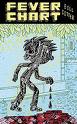
The cover of the book shows a man walking down the street with blood dripping from his hand.  This seemed like an odd choice to me.  However, for the bulk for the story, the narrator seems to be walking down streets with blood dripping from his hand (the one he eventually tries to bite off) so it perfectly encapsulates the tone of the book.

The story opens in the middle of a series of events from the narrator’s past (the first few sections are written in a wonderfully disjointed way that keeps the reader off balance).  Jerome Coe is currently living in an Apartment in Boston.  It has no heat.  His toilet is frozen solid and he is sleeping between his mattress and box spring to keep warm.  After ages of complaints to his landlord, one day the heat kicks on.  Full blast.  And Jerome cannot turn it off.  Soon, wallpaper is peeling of the walls and steam is flowing from his windows.  He is naked in his apartment and is preparing to run outside into the freezing weather just to escape the heat.

While he is standing outside, half-naked, a car pulls up and the driver, a woman named Tommy, asks him to jump in. (more…)

Read Full Post »

SOUNDTRACK: RUSH-Permanent Waves (1979).

When my friend Doug and I were hanging out back in the 80s, we both were getting into Rush at the same time.  And because this album was in black and white this was the last Rush LP we bought.  Imagine our surprise when it turned out to contain “The Spirit of Radio” one of the best hard rock anthems ever.

The cover art also featured a newspaper that read Dewey Defeats Truman.  But the band got in trouble for it from the Chicago Tribune!  I’ve never actually seen an actual cover with that headline (or the proposed fix: Dewei Defeats Truman).  Huh, thanks internet, here’s a picture of it.

The disc  also contains some (more) of my favorite Rush tracks.  “Freewill,” a fantastic “smart” song features some insane guitar and bass work in the middle sections.  And side one ends with “Jacob’s Ladder,” a 7 minute mini epic with precious few words that really evokes the simple concept of the sun’s rays bursting through clouds.  It’s surprisingly moving.

Side two features two more short tracks: Entre Nous suffers from side two syndrome: it would have been a hit if it was on side one.  While “Different Strings” is probably the last mellow song the band would write until the acoustic tracks on Snakes and Arrows.

For me, the best song is “Natural Science.”  A three-part mini 9 minute mini epic that features very cool lyrics, acoustic and electric guitar, a mid-song (short) drum solo and an incredibly intense heavy metal section.  And I have been really really psyched that they play this live again.

This disc marks an interesting transition from the prog rock heyday to the poppier commercial side that would soon arrive.  It’s a great mix of truly classic classic rock, real virtuoso performances and a couple of nice pretentious epics.  You’ll but it for Spirit of Radio, but you’ll get hooked by Natural Science.  “A quantum leap forward, in time and space….”

[READ: Week of March 29, 2010]  2666 [pg 565-633]

Before I start with the final week of the Crimes, I wanted to acknowledge everyone else who has been doing a great job in the endurance-o-rama that is the winter/spring 2666 online readathon.  I have been terribly remiss in mentioning (and even reading) as many of these posts as I would have liked (oh where does the time go).  But there’s some folks who have been doing a great job bringing up issues and suffering through The Part About the Crimes with me.

Obviously our friends at Bolanobolano are hosting this event and keeping wonderful track of details that I’m too exhausted to do myself.

And of course, the cohosts in Crimes, Infinite Zombies, are keeping tabs on all manner of thoughtful aspects of this book.

Steve, who I often read on IZ, also posts at his own site: A Solipsist’s 2666.

The Daily Snowman has been offering interesting thoughts, as well as a Paragraph of the Week (often from 2666).

Naptime Writing always offers thoughtful comments as well as a quote of the week.

Bleakonomy offers brief summaries and ideas, as well as non-2666 related thoughtful ideas.

Alone with Each Other offers that rarest of birds: someone who really likes The Part About the Crimes.

I haven’t been reading these blogs as much as I would have liked (and maybe someday I’ll post a comment to one of them long after we’ve all finished reading), but what I’ve read, I’ve appreciated.  So thanks for keeping me company out here.

And on to the last (and best) section of the Part About the Crimes.

I don’t know if the slow plodding death after death was like climbing a hill, but these last 68 pages were like speeding downhill with the top down.  So much was packed into it.  I was totally rejuvenated, thrilled to meet new (!) characters and totally unsurprised when the Part ended and absolutely nothing was resolved. (more…)

Read Full Post »

Sarah and I watched a bit of the third or fourth episode of this show when it aired on CBC.  But jumping into the middle of this show is difficult.  The characters are established pretty quickly, their quirks are all explained in the first episode, and it’s a bit hard to care about them without knowing their whole story.

So, when the show released on DVD, I decided to give the whole series a shot. And it has now given me a new favorite actor of the month: Sherry Miller who plays Mrs Jarlewski is just fantastic.  She’s like an older,  subtler version of perennial  favorite Portia de Rossi.

The show also introduced a cast of relative unknowns (who have all gone on to do more since then), and gave a wonderfully twisted role to former Growing Pains dad Alan Thicke (he’s an alcoholic, a philanderer and a wannabe (but not very good) actor).  And in a (presumably) unintentional nod to Growing Pains, his wife’s name is Carol, too.   (more…)

Read Full Post »

SOUNDTRACK: MONSTER MAGNET-God Says No (2001).

It’s not often I have a disc with the same name as a book.  But lo, here they are.  I’ve no idea if the album inspired Hannaham at all (or if he even knows of it) although the title track song does rather work well with the book, with lines like:

You won’t get caught if you don’t get queer/And you’ll be ready for a new frontier  You try and live And God says no.

I had loved Monster Magnet’s Powertrip quite a lot.  So, I was more than willing to get this follow up.  I’m a little disappointed in the disc overall, but I’m not entirely sure why.  It’s not quite a sharp as Powertrip, but it’s also not quite a trippy as their earlier stoner rock releases.

Having said that, there’s some great tracks here.  It opens very prominently with “Melt” and the phenomenal heavy rocker “Heads Explode” which features delightfully obscure lyrics like “I am a pillar of salt.  You’ll never be worse than me.”  And then comes, “Medicine 2001” another fast, chunky rocker.

There’s also some other way-out (for Monster Magnet) tracks, like the bluesy slide guitar sleaze of “Gravity Well.”

I think it’s the tracks at the end that kind of drag the disc a little bit “Queen of You” is an interesting slow track, but at nearly 7 minutes and coupled with the 7 minute “Cry,” it’s a bit too much all at once.  The final track, “Take It” is a weird, weird (for Monster Magnet) keyboard and drum machine track. It’s very mellow (and sounds like early Depeche Mode), and works as a weird experiment.  The actual final track is a bonus track, “Silver Future” which rocks once again.

I’m pleased that Monster Magnet experiments so much, but it feels like a full disc of MM songs with an extra EP of experiments tacked on.  I’m not sure what they could have done differently, but for some reason the disc falls a little short.

[READ: March 18, 2010] God Says No

This is a very simple tale of an overweight black man struggling with life in the 1990s.  The twist on the story is that he is not struggling because of his race or his size.  He is struggling because he is a good Christian man who is, without question, homosexual.

The book is written in first person and as such it reads like a memoir (although the main character has a different name than the author).  You can’t help but wonder how much of this book is true (although really it doesn’t make any difference), especially when one of  the characters dies.  It feels like tribute to an actual person.

The book opens with Gary Gray living in a dorm at a Christian college.  He is completely obsessed with his roommate, a hunky white guy who walks around in his boxers.  The roommate is clearly not interested in him, in fact he goes so far as to say he is repulsed by Gary (for being fat and black, in addition to anything else he may find flaw with). (more…)

Read Full Post »

SOUNDTRACK: BLUE ÖYSTER CULT-compilations and live releases (1978-2010).

For a band that had basically two hits (“Don’t Fear the Reaper” and “Burnin’ for You”) and maybe a half a dozen other songs that people might have heard of, BOC has an astonishing number of “greatest hits” collections.

Starting in 1987 we got Career of Evil: The Metal Years (1987), Don’t Fear the Reaper (1989), On Flame with Rock n’ Roll (1990), Cult Classic (which is actually the band re-recording their old tracks (!)) (1994), and the two cd collection Workshop of the Telescopes (1995).  There’s even Singles Collection, (2005) which is a collection of their European singles & Bsides.

This doesn’t include any of the “budget price” collections: E.T.I. Revisited, Tattoo Vampire, Super Hits, Then and Now, The Essential, Are You Ready To Rock?, Shooting Shark, Best of, and the 2010 release: Playlist: The Very Best of).

The lesson is that you evidently won’t lose money making a BOC collection.

I don’t know that any of these collections are any better than the others.

The 2 CD one is for completists, but for the most part you’re going to get the same basic tracks on all of them.

And, although none of them have “Monsters” for the average person looking for some BOC, any disc is a good one.

Regardless of the number of hits they had, BOC was tremendous live.  And, as a result, there have also been a ton of live records released.  Initially the band (like Rush) released a live album after every three studio albums. On Your Feet or On Your Knees (1975) Some Enchanted Evening (1978) and Extraterrestrial Live (1982) were the “real releases.”

Then, in 1994 we got Live 1976 as both CD and DVD (which spares us nothing, including Eric Bloom’s lengthy harangue about the unfairness of…the speed limit).  It’s the most raw and unpolished on live sets.  2002 saw the release of A Long Day’s Night, a recording of a 2002 concert (also on DVD) which had Eric Bloom, Buck Dharma an Allan Lanier reunited.

They also have a number of might-be real live releases (fans debate the legitimacy of many of these).  Picking a concert disc is tough if only because it depends on the era you like.  ETLive is regarded as the best “real” live disc, although the reissued double disc set of Some Enchanted Evening is hard to pass up.  Likewise, the 2002 recording is a good overview of their career, and includes some of their more recent work.

If you consider live albums best of’s (which many people do) I think it’s far to say that BOC has more best of’s than original discs.  Fascinating.  Many BOC fans believe that if they buy all the best of discs, it will convince Columbia to finally reissue the rest of the original discs (and there are a number of worthy contenders!) in deluxe packages.  I don’t know if it will work, but I applaud the effort.

[READ: October 2009-February 2010] State By State

This is a big book. And, since it’s a collection essays, it’s not really the kind of big book that you read straight through.  It’s a perfect dip in book.  And that’s why it took me so long to get through.

I would love to spend a huge amount of time devoting a post to each essay in the book.  But, well, there’s 51 (including D.C.) and quite a few of them I read so long ago I couldn’t say anything meaningful about.  But I will summarize or at least give a sentence about each essay, because they’re all so different.

I’ll also say that I read the Introduction and Preface last (which may have been a mistake, but whatever).  The Preface reveals that what I took to be a flaw in the book was actually intentional.  But let me back up and set up the book better.

The catalyst for the book is the WPA American Guide Series and sort of Steinbeck’s Travels with Charley.  The WPA Guides were written in the 1930s as part of the Works Progress Administration.  48 guide books were written, one for each state.  Some famous writers wrote the books, but they were ultimately edited (and many say watered down) by a committee.  I haven’t read any of them, but am quite interested in them (and am looking to get the New Jersey one).  Each guide was multiple hundreds of pages (the New Jersey one is over 800).

State By State is written in the spirit of that series, except the whole book is 500 pages (which is about 10 pages per state, give or take).  And, once again, famous writers were asked to contribute (no committee edited this book, though).  I’ve included the entire list of authors at the end of the post, for quick access.

So I started the book with New Jersey, of course.  I didn’t realize who Anthony Bourdain was until I looked him up in the contributor’s list (I’m sure he is thrilled to hear that).  And his contribution was simultaneously exciting and disappointing,.  Exciting because he and I had quite similar upbringings: he grew up in North Jersey (although in the wealitheir county next to mine) and had similar (although, again, more wealthy) experiences. The disappointing thing for me was that Bourdain fled the state  for New York City (and, as I now know, untold wealth and fame (except by me))  I felt that his fleeing the state, while something many people aspire to, is not really representative of the residents of the state as a whole.

And that dissatisfaction is what I thought of as the flaw of the book (until I read the Preface).  In the Preface, Matt Weiland explains that they asked all different authors to write about states.  They asked some natives, they asked some moved-ins, they asked some temporary residents and they asked a couple of people to go to a state for the first time.  In reality, this decision makes for a very diverse and highly entertaining reading.  In my idealized world, I feel like it’s disingenuous to have people who just stop in to give their impression of an area.  But hey, that’s not the kind of book they wanted to compile, and I did enjoy what they gave us, so idealism be damned.

For most of the book, whenever I read an essay by someone who wasn’t a native or a resident of a state, I assumed that there weren’t any famous writers from that state.  I’ve no idea if that played into anything or not.  From what I gather, they had a list of authors, and a list of states (I was delighted to read that three people wanted to write about New Jersey-if the other two writers ever decided to put 1,000 words  to paper, I’d love to read them (hey editors, how about State by State Bonus Features online, including any extra essays that people may have wanted to write).

From New Jersey, I proceeded alphabetically.  And, I have to say that I’m a little glad I did.  I say this because the first few states in the book come across as rather negative and kind of unpleasant.  Alabama (written by George Packer) comes across as downtrodden, like a place you’d really have to love to live there.  Even Alaska, which ended up being a very cool story, felt like a veil of oppression resided over the state (or at  least the part of the state that Paul Greenberg wrote bout.)  But what I liked about this essay and the book in general was that the authors often focused on unexpected or little known aspects of each state.  So the Alaska essay focused on Native fisherman and the salmon industry.  Obviously it doesn’t do justice to the rest of that enormous state,  but that’s not what the book is about.

The book is meant to be a personal account of the author’s experiences in the state. (more…)

Read Full Post »

« Newer Posts - Older Posts »