Feeds:
Posts
Comments

Archive for the ‘Sci-fi’ Category

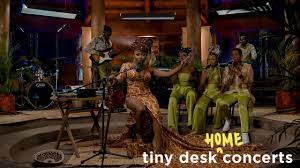
SOUNDTRACK: LUEDJI LUNA-Tiny Desk Meets AFROPUNK: #203/196 (May 2, 2021).

Tiny Desk Meets AFROPUNK was the opening event of AFROPUNK’s “Black Spring” festival. The virtual celebration, hosted by Jorge “Gitoo” Wright, highlighted outstanding talent in Afro-Latin and Afro-Caribbean music across the globe. Our showcase featured four artists who honored their homes and celebrated the art their heritage has inspired.

I don’t really understand why this is called AFROPUNK, as there is nothing even remotely punk about any of the music here.  I thought maybe it was a typo, but this music isn’t even terribly funky.  This music is very smooth jazzy

It is quite good though and Luna’s voice is understated and pretty as she sings in Portuguese.

Luna performs from her coastal hometown of Bahia in the city of Salvador, Brazil, where African culture flows in abundance. She is a powerhouse, entrancing and elegant, soulful and spiritual, as she uses her platform to discuss individual and systemic forms of anti-Blackness.

“Lençois” opens with some gentle piano from Gabriel Gaiardo and washes of cymbals (struck with mallets by Sergio Machado).  Then Luna starts singing in a kind of raspy, seductive whisper.  After a verse, Weslei Rodrigo (and his spectacular beard) lay down a smooth, anchoring bass line.

After the first song, she introduces the band.  After she introduces guitarist Vinicius Sampaio, he plays a solo and sings along with himself in a particularly jazzy way.

Elements of jazz and blues are infused with African rhythms as Luna uses music to express her ongoing struggles for autonomy as a Black woman.

She says,

“I feel that we are living in a crazy moment in a crazy time and music has been a safe place for me — the only safe place for me,” Luedji Luna says in a low, alluring voice as she explains the purpose of her latest album, Bom Mesmo É Estar Debaixo D’Água.

“Erro” opens with a slightly more rocking sound and a guitar solo intro.  I appreciate how different these songs sound from each other while still maintaining her overall vibe.  “Chororô” is a little funky, at least from Rodrigo’s bass.  But jazz is the overall vibe.

I really like the way the song’s chorus plays a five note and pause refrain to give a dramatic opening for the piano and guitar solo.  It’s also fun watching Luna dance.

[READ: May 3, 2021] Parable of the Talents [end]

I wound up reading this book very quickly.  I finished it before the deadlines of the first week’s read.  I was totally sucked in.  I hated parts of it–the woes of 2033 were unbearable–but I couldn’t stop reading it.

And wow, did Butler mess around with my head.

Contradict the first page of the story late in the book, but have it be a totally justifiable reason!  Check.

Not reveal why one of the character has a book published until almost the very end and have it be a real surprise!  Check.

Make me completely reassess the tone of the book and why Butler was writing it?  Check.

This break was a pretty fortuitous one because this week’s reading starts with a lengthy introduction from Asha Vere.  She began making up her own Dreamasks when she was 12.  When she was discovered he was punished. But that didn’t stop her from writing fictions to escape her own life.

When she was 15, an enemy in her school told her that her mother was a heathen and a whore–Asha punched the girl and broke her jaw.  She was spared detention by her stepfather who mostly just liked to molest her.

Once the diaries resume, we see what Olamina’s dealing with.  She is desperately seeking her daughter and is still trying to build up Earthseed.  Allie has actually been settling down with Justin.  She’s making furniture and instructing younger kids how to make it as well. But Olamina can’t stay in Georgetown.  She has decided to head up north.  Inexplicably she is going to go to Portland to find her brother–the brother who disagrees with everything she stands for and who ran away from her.

Allie has arranged a traveling companion for her–against her wishes.  Her name was Belen Ross but she went by Len.  She was born to a rich family; however, she was born from a surrogate and once the family had a natural birth, they gave the cold shoulder.  At 18 ,she was kidnapped and held for ransom.  But her family never paid it.  Eventually her captors just abandoned her.  When she returned home she found that her parents has moved to Alaska.  She had no other option but to go to Alaska.

So here were two people going in search of those who don’t want them. (more…)

Read Full Post »

SOUNDTRACKDUCKWRTH-Tiny Desk (Home) Concert Meets SXSW: #189 (April 5, 2021).

Every year, NPR Music participates in the SXSW music festival, whether it’s curating a stage or simply attending hundreds of shows at the annual event in Austin, Texas. Last year, the festival was canceled due to the pandemic, but it returned this March as an online festival. We programmed a ‘stage’ of Tiny Desk (home) concerts and presented them on the final day of the festival. Now, we present to you Tiny Desk Meets SXSW: four videos filmed in various locations, all of them full of surprises.

DUCKWRTH decided to do something special for Tiny Desk Meets SXSW: brand new music. The dynamic R&B singer proceeded to debut two exclusives: a slow jam titled “make u go,” which he dedicates to the “lovers and freaks,” and the upbeat “Birthday Suit,” which KCRW astutely compared to Estelle’s “American Boy.”

The new material wasn’t the only thing that made this Tiny Desk such a treat. For this funky and flamboyant performance, DUCKWRTH dressed his backing band entirely in white and switched up the lighting for each song so that the hue matched the mood he was laying down.

“Kiss U Right Now” [red lights] opens with a muted guitar line from Justin “Jhawk” Hawkins.  After a  soft “Okay” from DUCKWRTH, a kind of sci-fi warbly keyboard comes in from Devin Smith.  And then with a slide on the bass from Solomon “Solo” Smith the song bounces to a start.  DUCKWRTH has a soft croon that he intermixes with rapping verses.   It’s quite inviting and not given to histrionics.

Before “make u go”  [purple lights] he says “Welcome to my Tiny Desk,” he says. “We are gonna play some new songs for y’all if that’s OK. Y’all ain’t got no choice!”  This is mostly gentle keys and then backing vocalists Olivia Walker and Amber Olivia Kiner start by singing the chorus.

He says “Birthday Suit” [white lights] is morning music.  With this amusing line “Meet me in my birthday suit / This ain’t Gucci, it’s way more cute.”  Amber Olivia Kiner sings the lead lines.  The song ends with this refrain:

we look better naked / better in the nude / bend it over baby while in public / we may end up on the news.

“Super Good” [blue lights] is a slow jam with an interesting drum pattern from Darryl Staves Jr.  I really enjoy the simple but synchronized dance steps at the end of the song.

[READ: April 19, 2021] Parable of the Talents [2035]

When this book started I thought that it was an interesting idea to have Lauren’s child go wholly against her.  I even wondered if it was Butler’s rethinking about Earthseed.   Larkin’s attitude about her mother doesn’t exactly change over these chapters, but it does morph a bit.  So much so that by the time chapter seventeen rolls around, Larkin comes across as a bit more of a petulant, jealous person than a critical thinker.

I wonder what my life would have been life if my mother had found me.  I don’t doubt that she would have stolen me from the Alexanders–or died trying.  But then what?  How long would it have been before she put me aside for Earthseed, her other kid?  I was her weakness.  Earthseed was her strength.  No wonder it was her favorite. (265)

2033 was a terrible time and, frankly, a painful read.  The chapter of 2035 tells us that all of Olamina’s diaries from 2034 are lost.  Which is just as well for me since 2034 was a year of the same torture and hellishness and I’m just as happy to not have to read it.

Larkin writes that she met some people who were at Camp Christian (we don’t know how yet) and spoke to a woman named Cody Smith who told her about the attempted uprising by Day Turner and his people–an uprising that failed and that caused a massive increase in suffering for everyone there.

Larkin tells us that everything that was done at Camp Christian was illegal–despite what Jarret tried to make legal. The one thing that seems to have been made legal was the removal of children from their families at the Mexican border because of vagrancy laws. (more…)

Read Full Post »

SOUNDTRACK: CLIPPING-Tiny Desk (Home) Concert Meets SXSW: #190 (April 5, 2021).

Every year, NPR Music participates in the SXSW music festival, whether it’s curating a stage or simply attending hundreds of shows at the annual event in Austin, Texas. Last year, the festival was canceled due to the pandemic, but it returned this March as an online festival. We programmed a ‘stage’ of Tiny Desk (home) concerts and presented them on the final day of the festival. Now, we present to you Tiny Desk Meets SXSW: four videos filmed in various locations, all of them full of surprises.

clipping. is an intense band.  I had the pleasure of seeing them live opening for the Flaming Lips.  I was hoping to see them again before the pandemic hit.  This Tiny Desk doesn’t in any way replicate a live show because they play a little visual trick on the viewer–and they keep it up for the whole set.

Leave it to clipping. to innovate around the central notion of the Tiny Desk; to take the series’ emphasis on close-up intimacy and transport it to new heights of, well, tininess.

clipping is a dark, violent band

Producers William Hutson and Jonathan Snipes craft a bed of hip-hop, industrial music and noisy experimentalism, then set loose rapper Daveed Diggs, whose violent imagery summons ’90s horrorcore and a thousand bloody movies. The band’s last two album titles — There Existed an Addiction to Blood and Visions of Bodies Being Burned — offer up a sense of the vibe, but Diggs’ gift for rapid-fire wordplay also acts as a leavening agent.

That’s right, Daveed Diggs.

The guy won a Tony Award for playing Thomas Jefferson and the Marquis de Lafayette in Hamilton, and he still knows how to sell every word that leaves his lips.

So it’s especially amusing to see them have a lot of fun with the Tiny Desk (Home) Concert.  The video opens with a few scenes of tables and gear.  But when the show starts, Daveed Diggs picks up a microphone that’s about the size of a toothpick and starts rapping into it.

  And when William Hutson and Jonathan Snipes come in they are playing laptops and other gear that’s barely an inch in length. I have to assume that this stuff doesn’t actually work and yet they are taking their job very seriously–touching and sliding and tapping and looping on these preposterous toys.

“Something Underneath” starts quietly and then Diggs shows off some of is incredibly fast rapping skills.  Then the guy on the right (I’m not sure who is who) comes into the cameras and starts messing with his tiny gear.  After about 2 minutes the guy on the left comes in and starts making all kinds of distorted beats.  It starts getting louder and louder and louder until the noise fades out and its just Diggs’ voice looping “morning” as he moves the camera and he starts the slower track

The only movement in the video is Diggs moving his camera around to different angles for each song.

“Bout That” is fairly quite until a few minutes in when the song launches off.

Diggs shifts his camera and is finally fully on screen before they start the creepy “Check the Lock.”  It’s got clanking and scratching and pulsing noises for the line

something in this room didn’t used to be / he ain’t ever scared tough / but he check the lock every time we walks by the door.

Midway through the guy on the left starts cranking a tiny music box and he plays it through the next two songs.

It segues into “Shooter” [is there a name for this style of rapping–each line has a pause and a punchline–I really like it].

The music box continues into “The Show” which starts to build louder and louder, getting more an more chaotic.  It fades and builds noisier and chaotic once more until it reduces to a simple beat.  And the guy on the right drinks from his can of BEER.

Noisy squealing introduces “Nothing Is Safe.”  Daveed is pretty intense as he raps “death comes for everyone” pause and then full on sound as he resumes.

clipping is not for everyone–certainly not for people who want to see the guy from Hamilton (he was doing clipping before Hamilton, by the way).  But it creates an intense mood.

The blurb says that Chukwudi Hodge plays drums, but I didn’t see or hear any so i assume that’s a mistake.

[READ: April 21, 2021] Better Than Life

I don’t recall when I started watching Red Dwarf–some time in the 90s, I suspect.  I don’t even know of the show was ever very poplar here in the States, so it’s kind of a surprise that these two Red Dwarf novels even had a U.S. release.  But they did. And I bought them sometime when they came out.

So Grant Naylor is the cleverly combined names of Rob Grant and Doug Naylor–back when they were working together (I’m not sure why one of them left).   They penned two Red Dwarf books together, then they each wrote a Red Dwarf book separately.

This second book picks up from where the events of the previous book cliffhangered us.  There is a TV episode called “Better Than Life” and this book is kind of an super- mega-hyper-expanded version of that episode.  Except that the things that happened in the episode don’t even really happen in the book, either.

The basics of the episode are that Better Than Life is a video game that allows your deepest subconscious fantasies to come true.  And since everything is your fantasy, this game is indeed Better Than Life.  It’s easy to leave the game.  All you have to do is want to.  But who would want to leave a game when everything in it is better than what you’d be leaving it for?

As such, your body stars to wither and decay because you don’t eat, you don’t move, you just exist.  It’s a deadly game.

Rimmer’s fantasy at the end of the first book was that he had married a supermodel–a gorgeous babe whom every man wanted.  Except that she wouldn’t let him touch her for insurance reasons.  Rimmer has a problem or thirty with his self image.  But he was still super wealthy and women everywhere adored him. However as this book opens, he has divorced his babe and married a boring woman who also doesn’t want to have sex with him.  As thing move along, he loses his fortune and, ultimately his hologrammatic body.  He becomes just a voice.  Through a serious of hilarious mistakes, he winds up in the body of a woman.

One of the nice aspects of this book is that Grant Naylor have Rimmer see what a douchey sexist man he’s been all this time–believing all women were either his mother or a sex bomb.

The Cat’s scenario is pretty much all libido–Valkyrie warriors serving him and he gets to do pretty much whatever he wants–his clock doesn’t have times, it has activities: nap, sex, eat, nap, sleep, etc.

The one difference is that Kryten is there with him.  Kryten’s deepest fantasy is leaning, and so he keeps finding new things to clean in Cat’s world.

There’s another wonderful bit of anti-religion in this book (there’s always some anti-religion aspect in these stories).  In this one they talk about Silicon Heaven.

The best way to keep the robots subdued was to give them religion. … almost everything with a hint of artificial intelligence was programmed to believe that Silicon Heaven was he electronic afterlife….

If machines served their human masters with diligence and dedication, they would attain everlasting life in mechanical paradise when their components finally ran down.

At last they had solace. They were every bit as exploited as they’d always been, but now they believed there was some kind of justice at the end of it.

Lister’s fantasy is the same as it was before.  He’s living in the city from It’s a Wonderful Life and he’s married to Kristine Kochanski and he has two boys.  As the book opens there’s  a wonderfully touching moment with his family and his kids.

But it is abruptly demolished when a woman driving a tractor trailer crashes the truck in to Bedford Falls.  Literally all of Bedford Falls–every building is demolished or caught on fire.  There’s virtually nothing left.  And when the woman gets out of the truck dressed as  a prostitute and claims to know Lister, well, Kristine takes their boys and leaves him.  He has nothing.

It should come as no surprise that the woman is actually Rimmer.

What about Holly, the ship’s computer with an IQ of 6,000?  Can’t he save them?  Well, no.  He can’t get into the game, plus, he’s going a little crazy from being alone for so long.  So crazy in fact that he decides to start talking to Talkie Toaster, a gag gift that Lister bought for $19.99.

The sequence with the toaster is hilarious on the show (it only wants to talk about bready products!) and it translates perfectly to the book as well.  Essentially, Talkie Toaster encourages Holy to increase his IQ (which has been slowly leaking away) at the risk of shortening his life span.  Unfortunately, things go a little awry and Holly’s IQ eclipses 12,000. But his run time is cut to a number if minutes.

So he need to turn everything off if he wants to stay alive. (more…)

Read Full Post »

SOUNDTRACK: VOIVOD-Lost Society (2020).

Voivod have been around for over 30 years.  In that time, they’ve releases only four lives albums.  The first one was from the period when their original and current singer had departed, so that doesn’t really count.  In 2011 they released Warriors of Ice, a live album that featured the reunited original lineup minus deceased guitarist Piggy.  The third was a limited release from the 2011 Roadburn Festival.

Thus, we have this new release to acknowledge the excellence of their 2018 album The Wake.  This show was recorded at Quebec City Summer Fest on July 13, 2019.  I saw them on this tour on April 5, 2019.  The setlist was largely the same, although they played more in their hometown (and I would have loved to see “Astronomy Domine”).

Being in front of a hometown crowd has the band fully energized.  It also allows Snake to speak French to the audience, which is fun.

Most of Voivod’s music is really complicated and difficult (the chords that Piggy and now Chewy came up with are pretty hard to imagine).  And yet they play everything perfectly.  There’s not a lot of room for jamming when the songs are this tight and complex, but it’s clear the band are enjoying themselves anyway.

Since this is touring their new album, the majority of songs (4) are from it with two more songs from their 2016 EP Post Society.  The rest of the set is pretty much a song from each of the albums prior to 1993 (excluding the album with the best name: Rrröööaaarrr).

They interfile the new songs with the older ones, and it feels really seamless.  This shows how much of a student of Piggy new guitarist Chewy turned out to be.

The few times that Snake speaks in English, he says that Angel Rat’s “The Prow” is “time to dance time to party have fun” something one wouldn’t expect to do at a Voivod show, but compared to their other songs, it is pretty dancey.

My favorite Voivod album (aside from The Wake, which is really outstanding) is Nothingface, so I was really excited to hear “Into My Hypercube” and to hear that Rocky’s bass sounded just right.

Their older stuff is a little less complex and proggy so a song like 1987’s “Overreaction” is a bit heavier and straight ahead.

One of the more entertaining moments is during the opening of “The Lost Machine” where Snake stands between Chewy and Rocky and waves his arms to strum the chords first guitar, then bass, then guitar then bass, etc.

It is strange to think that this is only one-half of the classic line up.  In fact, drummer Away is the only person to have never left the band.  I assumed that when Piggy died, there was no point in continuing, but these replacements were really great.

And, Snake makes sure we never forget Piggy.  They end every show with the song that has the same name as the band.  And before they play it, he starts a chant “Piggy! Piggy!”  In this live recording, you can hear the audience screaming along to “voivod,” a nonsensical word that remains strong thirty-five years on.

The setlist for the album is at the bottom of the post.  I sure hope they tour around here again someday.

[READ: April 20, 2021] Infinity Welcomes Careful Drivers

I don’t recall when I started watching Red Dwarf–some time in the 90s, I suspect.  I don’t even know if the show was ever very poplar here in the States, so it’s kind of a surprise that these two Red Dwarf novels even had a U.S. release.  But they did. And I bought them (and read them, I think, although it’s all new to me 30 years later) sometime when they came out.

So Grant Naylor is the cleverly combined names of Rob Grant and Doug Naylor–back when they were working together (I’m not sure why one of them left).   They penned two Red Dwarf books together, then they each wrote a Red Dwarf book separately.

This first one is basically an expanded version of some of the episodes from the first and second season.

Most of the jokes from the episodes are present here–so it’s easy to picture the characters saying the lines.  But there’s also a ton of new stuff.  Much of it fleshes out things that happened in the show, but still other things are brand new.

The book starts with the death of a Red Dwarf crew member.  He is now a hologram and rather than being excited about being alive, he is horrified to think of all the things his wife will get up to now that he is dead but aware of what is happening.  We also meet another man who is about to die–this time by suicide.  He is in debt for a lot of money and decided it was better than being beaten to death by the men he owed money to.

Turns out, this man outranked the first man and since the Red Dwarf mining ship could only support one hologram, this man was brought back at the expense of the first one.  A lot of ground is covered in these first two chapters and we haven’t even met any of the main characters of the show yet.

Dave Lister comes along in Chapter 3.  For those unfamiliar with the show, Dave Lister is the main character and also the last human being alive.  In the show he is three million years into deep space.  But he had been in stasis so he is only 27 when he is brought out and told the news that everyone is dead.

But as the book starts, Lister is miserable on a planet Mimas.  He got really drunk at his birthday party in Liverpool and, by the end of the night, he was on a planet very far from home with no money to get back. (more…)

Read Full Post »

SOUNDTRACK: LIAM BAILEY-Tiny Desk (Home) Concert #184 (March 23, 2021).

I had heard of Liam bailey but I didn’t really know anything about him.  I’m fascinated by his voice because his British accent comes through as he sings (in the way that Billy Bragg’s accent is quite audible).

For this performance, Bailey teeters between belting and crooning, with emotions that ignite the screen from the top of “Fight” to the closing notes of “Paper Tiger.”

“Fight” is a short song that is primarily made of percussive chords and slaps on the guitar.  For most of the songs, he is playing the chords and you can hear them change but there’s no ringing notes, just muted chords.  Until the very last lines when the music resumes and he sings powerfully.

So it’s all about his voice.

Wiping the sweat from his brow between songs, he exclaims, “We don’t normally have these glaring lights in my living room.  This is my front room by the way welcome. We’re not doing no studio productions. We’re keeping it real. Keeping it raw.”

I don’t know what “Vixit” means.  He says he wrote this and the next song in upstate New York.  The music is a little darker. Trying to figure out he lyrics:

I still have my memories I still hear your song. They were always so vindictive, you always got me wrong. I cherish every day now I’m happy to be alone.  I get every thing I want and I still get stoned.  I’m out of love, I’m out of love never seemed to make sense.

If only I had realized the other side was fine.  If only I had realized.

“Paper Tiger” is another powerful song and once again, the guitar is the vehicle for his voice and lyrics.  Which is not to say the song isn’t good, just that the melody is not as important as the words.

Perched atop an amplifier in front the peeling walls of his living room, he presents three selections from his latest album, Ekundayo, accompanied by one acoustic guitar. Ekundayo, which means “sorrows become joy” in Yoruba, fittingly describes the Nottingham, England, native’s music industry journey thus far. After various projects and record deals, he found it impossible to operate under the confines of a major label. He finally found the liberation he yearned for on Leon Michels’s Big Crown Records, which released Ekundayo last November.

This set is not even ten minutes long, but it’s really solid.

[READ: April 12, 2021] Parable of the Talents [2033]

2033 is a brutal year for Acorn and Earthseed.  The end of the section was really hard to read.

As the year opens, our narrator, who we later learn is named Larkin Beryl Ife Olamina Bankole says that her mother should have left Acorn and gone to Halstead like Bankole asked.  It makes it seem as though perhaps Bankole went without her, but he did not.

“Larkin” is a derivative of Lauren and from the Greek Laurel ,  “Beryl” was his mother–emerald is type of beryl.  “Ife” is the Yoruba word for “Love”

Olamina dna Bankole had actually stayed in Halstead for a short time.  A family was moving from Halstead to Siberia (!) for a better life.  The election of Jarret was the last straw for them.  Bankole is amazed:

If [when I was a boy] anyone had said that Americans would be giving up thier homes and their citizenship and going to make new lives in Siberia, the rest of us would have looked around for a straightjacket for him (130).

Olamina and Bankole stayed in the family’s house while Bankole was trying to decide if he should move there.  Well, he knew he should, he was trying to convince his wife.  She doesn’t want to move but says it was a good trip for her.  Living in a modern house with plumbing.  Being so close to the Ocean.  She could see the appeal.

Bankole had told people that they were leaving.  Or, more specifically, Marc was telling people they were leaving and the faithful were understandably freaked out.  But she convinced them, and herself, that she wasn’t leaving.

When I started this year I was taking notes on things that interested me, but after having finished it and reading all the horrors, it seems bizarre to include little observations about things that made me smile.  But I get to throw this one in because I am a cataloger for a library.

Olimani and Channa have been sorting and cataloging books for their library and Olamina hated to be interrupted, but not too much: “Still, cataloging is tedious” (137).

The first bad news comes from Marc.  After he had been rescued by Olimani and taken in by  Acorn, he decided that he wanted to preach his own Christian beliefs to the people.  He was going to do it without asking his suiter, but Olamina found out and told him to preach at their next Gatehring.  She warned him that he would be questioned about what he said and he was cocksure enough to go on with it. (more…)

Read Full Post »

SOUNDTRACKSAMPA THE GREAT-Tiny Desk (Home) Concert #173 (February 23, 2021).

I thought that Sampa was actually Sammus, the indie rapper named after the character in Metroid.  So I was a little bummed to find out I had the wrong Sam… rapper.  But I quickly came over to Sampa’s style.

Sampa Tembo is better known as Sampa The Great, an understated title. In her Tiny Desk (home) concert, the poet, rapper and singer-songwriter delivers evidence that it’s more like Sampa the Greatest.  Initially raised in Botswana, Sampa moved to Australia as a young adult and established herself in Sydney’s hip-hop scene. There, she released two mixtapes, 2015’s The Great Mixtape and 2017’s award-winning Birds and the BEE9, all the while generating buzz. She had been based in Melbourne for the last four years, but the next chapter of her musical journey will find her at home in Zambia.

She plays four tracks and her live band is really solid.  She opens with “Rhymes To The East” which features a nice guitar riff by Samuel Masta.  I like the way the backing singers (l-r: Joy Tusankine Namwila, Mwanje Tembo, Tio Nason) sing the end of the rapped lines.

When Sampa really starts flowing her voice is great–a rough gravelly cadence with a Southern African/Australian accent.  It’s especially cool when she introduces the third verse with a snarl

Rhymes beast mother fucker
Tembo from the east put the beast in a trucker
Timbuktu, as I question all the loyalty
Build a big wall when you stole all of the royalties

The end of the song is really catchy, too.

The next three are from her 2019 album The Return.

“Mwana” opens with a drum solo Kasonde “Tek1” Sunkutu.  The song is mostly sung by the backing singers.  Then Sampa starts her flow.  Musically this song is much more spare with gentle keyboards Lazarus “Lalo” Zulu playing around the drums.

As she introduces the band, they jam, with some funky bass from Mapalo “Mapskeys” Mapalo which leads into an improv  that sounds like an island fun.

“Freedom” is up next.

Sampa Tembo is in Lusaka, Zambia, her landlocked African home country.  [She says] “Freedom is what we feel when we perform. And freedom is what the world is in need of right now. In this pandemic it feels like we all need a sense of freedom.”

“Freedom” features some terrific backing vocals. The end has a rocking jam as the singers all give up whooos and Masta plays a ripping solo.

When the camera is in full frame you can see that Sampa’s dress has a really long train which covers almost the entire floor (no wonder she sits through the whole set).

The set ends with “Final Form,” my favorite song of the set.  It’s got a big, heavy noisy riff with thumping bass and wailing guitars.  Her delivery is raw and raspy and really affecting.

The end is particularly cool as the band rocks out punctuating along and singing “Black power!” “Louder!” “Black power!”

Sampa is pretty great, indeed.

[READ: April 12, 2021] Parable of the Talents [2032]

Parable of the Sower ended on a vaguely optimistic note:  Lauren felt that they were ready to set up Acorn, the home of her Earthseed community.  Bankole thought there was no chance it would work.  But this is Lauren’s story, so we’ll assume that the story is tipped in her favor somewhat.

Plus, there’s a sequel, so things must work out reasonably well, right?

Well, surprise!

Parable of the Talents opens up with the news that Lauren is dead.

She is mostly called Olamina during this book because Bankole “doesn’t like my first name, so he ignores it.  That’s fair.  I didn’t like his first name either. It’s Taylor, by the way and I ignore it” (122).

This book is narrated by Olamina and Bankole’s child–unspecified gender and age in the Prologue, although by the end of this week’s reading we can assume the writer is their daughter [Bankole wants her named Beryl and Olamina wants her named almost anything that isn’t Beryl–“such an old fashioned name” (122).  The narrator later says something about high school, so it must be around 2050.

The child shares Olamina’s diary entries, but her basic attitude is that she hates her mother and thinks well of her father and wishes she knew him.

The book opens with this narrator saying “they’ll make a god of her” and the continues with something surprising about that

I think that would please her, if she could know about it.  In spite of all her protests and denials she’s always needed devoted, obedient follower–disciples–who would listen to her and believe everything she told them.  and she needed large events to manipulate.  All gods seem to need these things.  (7)

I never got the sense that Lauren wanted to be a god.  But maybe Olamina does.

She also tells us that Lauren’s middle name “Oya” is the name of a Nigerian Orisha–goddess f the Yoruba people (goddes of the wind, fire, and death, more bringers of great change (50).

Butler wrote this book five years after the Sower.  As I read Talent, I wondered what the intent of this story was. Had she planned all along to have a follower (child or otherwise) criticize Earthseed?  Had five years of thinking about Earthseed made her question the validity of Lauren’s ideas?  I don’t know anything about Butler, about whether she “agreed” with Lauren’s ideas or not.  I don’t have anything besides textual evidence to know how she felt about religion in general.  So was this book a commentary on her own ideas/ideals from five years earlier?  Or is this just interesting storytelling by having a new protagonist dispute the doctrine of the previous protagonist.  Especially if the bulk of this book is made up of Olamina’s diary entries (just like the first book was).

That’s right, even though the book is set after Olamina has died, the book so far is primarily her own diary entries from 2032, By the end of 2032, she is pregnant with, presumably, the person who is narrating this book and criticizing Olamina’s ideas. (more…)

Read Full Post »

SOUNDTRACKKeiyaA-Tiny Desk (Home) Concert #168 (February 11, 2021).

I had not heard of KeiyaA (and have no idea how to say her name), but i was quite stuck by this performance.

KeiyaA is a new performer, and her debut album

Forever, Ya Girl, appeared last year with kismet timing, unveiling her as a fully formed star. The 2020 release is a meditation on the thin line between solitude and loneliness, one that KeiyaA traces and teeters on while defining her Black womanhood.

The set opens with “Do Yourself a Favor.”  For this track KeiyaA sits behind the keyboard a while 13th Law plays a slow funky bass line plays accompanied by finger snaps and backing vocals from the amazingly named Nelson Bandela.

KeiyaA comes out front for the rest of the tracks.

Cornrows braided back with the precision of an architect. Stiletto nails commanding a sampling machine. Gold-glinted lids to match her light-up Beads Byaree earrings. With every move, KeiyaA shines so bright, it’s impossible to look away. And while your eyes are fixated on her person, the music KeiyaA conjures inside Brooklyn’s Electric Garden is what leaves you completely spellbound.

On “Hvnli,” Nelson Bandela plays keys behind a new slow funky bass line.  Keenyn Omari played guitar on the first song but he plays saxophone on this one.  It starts with soft bursts and then he really starts wailing.  With the sax and the syncopated drums from Buz “Hvnli” sounds like a spare jazz song.  She sings:

Gone for so long I prefer to spend time in my pain, hey / Gone for so long I can barely recall the last my phone rang,” she sings on “Hvnli.”

Her album

is a meditation on the thin line between solitude and loneliness, one that KeiyaA traces and teeters on while defining her Black womanhood. Whether it’s through jazzy woodwinds, heavy synths or prickly staccato, the singer-songwriter and multi-instrumentalist shares waves of anguish, depletion, love and elation in a swirling stream of consciousness.

She says that “Most of the work that has carried me has been the writing of Black women Jayne Cortez and Ntozake Shange [she holds up their books] who both speak unabashedly of the plight and joys and general experiences of the Black femme woman.  And those writings are paramount in my work.”

She opens “Finesse Without a Trace” with a wobbly sample and The 13th Law plays some bass chords and splashy drums.  The sample turns into some quotes while Omari plays some wild distorted flute.

The song ends with an improvised flute solo which KeiyaA accompanies with samples and some oohing.  The song slowly morphs into “Rectifiya” a funky piece with response vocals on the chorus.

She ends the whole set with the sampled quote from Nina Simone.

“Everybody is half-dead. Everybody avoids everybody. All over the place…in most situations, most of the time. I know I’m one of those everybodys. And to me it is terrible. And so all I’m trying to do, all the time, is just to open people up so they can feel themselves and let themselves be open to somebody else. That is all. That’s it.”

Apparently the album sounds very different than this Tiny Desk: (The “album version of these tracks boast much of KeiyaA’s own production, affirmations and layered vocals in chorus”).  Perhaps I’m better off just enjoying this and not looking further.

[READ: April 5, 2021] Parable of the Sower [end]

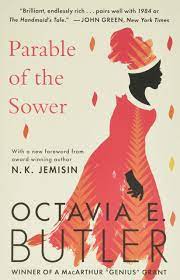
The end of the book provides something of a skeptical feeling of hope for our travelers.   I read in the Foreword that Earthseed was meant to be a trilogy; however, Butler only finished a sequel (and an unrelated novel) before she died.  The Foreword (by N.K. Jemisin also gives a spoiler to Parable of the Talents–uncool!  Even if the books are over twenty years old.

By the way, Jemisin sounds pretty interesting.  Anyone read her?

To me, it is astonishing how many big questions go unanswered in the book.

I had mentioned wondering about the Mars mission and there’s no mention of that again.  We never find out anything about any state east of Central California and we never find out What Happened.  Obviously that information is irrelevant for the characters–they just have to move on–but it’s frustrating not to have even a hint.  [I accept that it wasn’t relevant to Butler, but I’m still curious].  We never hear anything about the community that the corporation bought, either–although there is a kind of follow up with someone from a similar community telling about how badly it turned out for the people living there.

This section starts off with an earthquake.  Earthquakes are bad news in general but in this situation they are much worse because earthquakes tend to cause fires.  And we know who fires attract.  Zahra thinks that they might be able to scavenge for something they can use, but Lauren suspects, rightly, that it would be a dangerous thing to do–druggies and people more violent than they are would be there.  And this proves to be true.

In fact, it proves to be very smart to move on because they wind up putting some distance between themselves and the violent crowds that scavenged the burnt out houses. (more…)

Read Full Post »

SOUNDTRACK: MESHELL NDEGEOCELLO–Tiny Desk (Home) Concert #167 (February 10, 2021).

I bought Meshell Ndegeocello’s Plantation Lullabies back in 1993 on the strength of “If That’s Your Boyfriend,” a funky track that is still pretty great.  I didn’t realize she had been steadily putting out music ever since.

This Tiny Desk (home) concert … includes songs from throughout her career framed by her thoughts on the importance and influence of James Baldwin: “He deserves flowers every day. Most of all because he was willing to discuss things that were painful, hard to look at, hard to see, hard to accept.”

Ndegeocello is a bad-ass bass player with a serious funk edge.  And yet in this Tiny Desk Concert, she strips almost all of that away.

The first song comes from Lullabies, but in this version of “Step Into the Projects” she strips away all the music and turns the song into a spoken word piece (although she does keep the rhythm of the original).

For the next three songs she is accompanied by her longtime guitarist Chris Bruce.

“Price of the Ticket,” is from Ndegeocello’s recent project, Chapter & Verse: The Gospel of James Baldwin, “a 21st century ritual toolkit for justice” inspired by Baldwin’s The Fire Next Time.  In the track, it’s just Bruce’s gentle guitar and Meshell’s quiet voice.

“Forget My Name” from Comet Come To Me (2014) is stripped down from its original reggae arrangement and lays bare the haunting imagery in the lyrics.

She plays some spare bass, but musically it’s all about Bruce–the cool low riff and the pretty high melody.

“Fool of Me,” from her acclaimed album Bitter (1999), ends the set with just vocals and guitar.

Like the other songs, it is spare and beautiful, allowing you to really hear the words.  I love Meshell’s funk, but this is a beautiful set.

[READ: March 29, 2021] Parable of the Sower [2026-2027 (chapter 19)]

I have not read Cormac McCarthy’s The Road, and I don’t intend to.  But I feel like this book acts as a precursor to that one.  And that is something I did not in any way expect.

2026 opens in June, almost seven months after the previous entry.  I’m curious about the distance between entries.  It’s possible that Lauren has dozens and dozens of pages that just said, “today sucked” and we don’t need to see that.  But I am curious about the time jumps.

Is it a way for Butler to move us ahead quickly so that something that needed to take a few years to happen is given the time to do so?  I’m thinking about Mars a bit.  In two years a lot can happen with the space program.  Of course, the President was supposed to cancel the program.  So who knows what’s going on there.  Aside from basic passage of time, did we need to wait six months to see what came next?  I’m not sure.

In June Keith is back–bigger and more confident.  He’s not yet 14, but he’s very successful, bringing home money and gifts (but none for his father).  He has ingratiated himself into a gang by being the only literate one in the group:

They’re all older than me, but not one of them can read or write anything.  They stole all this great stuff and they couldn’t even use it.  Before I got there they even broke some of it because they couldn’t read the instructions. (105)

Lauren and Keith have a heart-to-heart–really their first ever.  He learns a bit about her and while he gains a little more respect he also tells her that she’d never survive out there–she doesn’t know enough.  He also tells her about these new crazies called Paints who paint their skin green or blue or yellow and eat fire and kill rich people.

Keith comes back on her birthday and gives her a present.  A month later he is dead–killed in a horrific and gruesome way.  He was clearly tortured and left to be found.  His death was a message for someone–a rival gang, probably.

But they don’t call the police:

cops liked to solve cases by “discovering” evidence against whomever they decided must be guilty.  Best to give them nothing.  They never helped when people called for help.  They came later and more often than not, made a bad situation worse. (114)

In October, a new component to the story crops up.

Kagimoto, Stamm, Frampton and Company (KSF) has taken over a nearby town called Olivar.  It is small and well to do.  The citizens voted to let their town be taken over–privatized.  They intend to set up energy resources in the community–solar, wind, desalinization.  They mean to own great industries in an area that people have given up on.

Kagimoto, Stamm Frampton: Japanese, German, Canadian.  When I was young, people said it would come to this. Well why shouldn’t other countries buy what’s left of us if we put it up for sale. (121)

This is another aspect of the story that confuses me.  Is it basically that Los Angeles has exploded and the rest of the country is okay?  There’s talk about work up north, but why?  What happened to the country that they/we would let L.A. collapse but nothing else.  Or maybe it’s the entire South West?  Nobody knows anything about the East Coast, apparently.   I’m hoping that they will get explained a bit later on.

Olivar was accepting applications to live there.  They were looking for educated people.  And here we learn that both of Lauren’s parents have PhDs [a commentary on the invisibility of Black scholars?].  Her stepmother thinks it’s a great idea to go to Olivar.  They would be guaranteed safety and security.  But her father is against it, calling it “half antebellum revival and half science fiction” (122).

Anyone KSF hired would have a hard time living on the salary offered. In not very much time, I think the new hires would be in debt to the company.  That’s an old company-town trick–get people into debt, hang on to them and work them harder.  Debt slavery. That might work in Christopher Bonner’s America. Labor laws, state and federal are not what they once were. (121)

Come November, the Garfields have been accepted at Olivar.  The Garfieds include Joanne, Lauren’s one time best friend (who misplaced Lauren’s trust by tattling to her father).  Joanne has been serious with Harry Balter.  But Harry is staying in Rebledo.  Lauren suggests they get married and then Harry can move in with them, but she says that Harry wants to get married and travel north.  He thinks they way Lauren’s father does about Olivar.

But the Garfields are still going: “conservative and sensible and mature and wrong” (128).

In November, Lauren’s father did not come home one night.  They spend days looking for him with no luck.  The search parties uncover all kinds of remains, some of which they think might be her father’s but which turn out not to be.

The search also reveals an aspect of Lauren’s hyperempathy that we didn’t know–sound doesn’t trigger it (she hears a man screaming), only sight does.

Five days alter they have a Sunday survive that turns more or less into a memorial.  Lauren speaks at he service and proves to be powerful preacher.  She speaks of God but presumably she means her own god–the earthseed god.  By mid-December they have a formal funeral–they accept that he would have found his way home by now.

Later, when KSF came for the Garfields, it was in an armored truck

The two movers were a black and a white, and I could see that Cory considered that hopeful.  Maybe Olivar wouldn’t be the white enclave that Dad had expected. (139)

All along Lauren has been romantically involved with Curtis.  People anticipated that she would get married an have a baby with him–something she strongly resisted.  Indeed, her plan all along was to leave Rebledo without him.  But now with Lauren’s father gone (he was the reason she hadn’t left yet–she didn’t want to hurt him), Curtis suggests that they both go.  He’s upset that she wanted to go without him, but she explains that she didn’t want to force him to make that choice.

Two days later, someone burned down the Payne/Parrish house; while that was going on. they robbed three of the other houses including Lauren’s.

I’ve been frightened at the phrases that Butler says that prove eerily prophetic to the last few years:

People are setting fires because they’re frustrated, angry, hopeless. They have no power to improve their lives, but they have the power to make others even more miserable.  And the only way to prove to yourself that you have power is to use it.  (143)

Interestingly, the drug that gave Lauren her hyperempathy–Paracetco–was initially a legitimate drug intended to help victims of Alzheimer’s disease.  Pyro was an accident–a homebrew on the East coast it made it was away across the country.

People on the fire drug get off on watching things burn.  Blaze, fuego, flash, sunfire.  The most popular name is pyro short for pyromania [I’m fascinated that she needed to spell that out as I feel that in 2021 (and much earlier) it was a common abbreviation].

As the year ends, the families try to make due with what they have left.

Then we enter 2027.  Once again it’s six months into the year.  And this is when things change dramatically.   Thieves drove a truck through their wall and set everything on fire.  Nearly everyone in the community was killed.  [I did wonder if it was worthwhile learning anyone’s names, and it was two people I didn’t think twice about who survived].  The description is a violent orgy of death, rape, fire and who knows what else.  It is brutally described.  Lauren escaped.  She had the forethought to run back in and put on clothe and shoes and grab her bug out bag.  No one else in her family had done so. She saw them n bare feet and pajamas and then she didn’t see them any more.  She managed to get outside and to hide until the next day,

She crept back into her community and went to her house which was being looted and stripped. She knew where there were some hiding places and she managed to get clothes for her family as well as money that was hidden in the ground.  She grabbed a gun and got out, looking like all the other miserable looters.

Lauren was sure she was alone.  Then out of the rubble came Harry Balter and Zahra Moss–the youngest wife of Richard Moss the polygamist.  Zahra’s baby was killed (brutally) and an attacker was about to (or had begun to) rape her when Harry saved her (and got beaten for his help).  Neither one had planned for anything like this and they are pretty hopeless.  Lauren decides that three is safer than one and invites them to go North with her.

Zahra’s backstory is interesting.  Richard bought her from her mother who was a drug addict and a prostitute.  Zahra has lived on the streets and she knows what’s what.  She takes them to Hanning Joss, the biggest secure store complex.  I’m fascinated to learn that there are are still megastores and that they have security allowing people to shop safely there–commerce always wins.

Then they do what everybody else does–they head North.  Lauren has decided to pass as a man.  She’s tall and muscular and can do so, so she cuts her hair short.  They encounter much danger and violence but manage to get relatively far north.  Harry is a trusting guy, trying to avoid violence in any way possible.  But Lauren (and Zahra) knows the reality of the situation–kill or be killed; steal or be stolen from.  And with Lauren’s hyperempathy, she can’t afford to let people around her suffer.  She winds up cutting a man’s throat to stop the hurting that he (and she) are feeling.  Harry is appalled at her.  So she finally admits to her hyperempathy assuming they’ll abandon her.  But they do not–three is better than two.

Zahra and Harry become a couple and have unprotected sex (what harm could come from that?)

Then the trio meet another family who seems to be tagging along after them.  Everyone is out for themselves, but Lauren takes pity on this mixed race couple with a baby.  She helps them out at the second Hanning Joss and a few days later, when Lauren saves their baby from a feral dog, they agree that five (or six) is better than three and two (or three).

The new people are Travis Charles Douglas, Gloria Natividad Douglas and six month old Dominic. They are going to Seattle where Travis’ aunt lives.  Travis is quite taken aback when he learns that Lauren is a woman–especially since she saved them, but he’s going to have to get over it.

All of this time, Earthseed has been running around in Lauren’s head, but it hasn’t really shown up.

Then in chapter 18, Lauren starts talking to them about Earthseed.  Travis is a (surprisingly) intelligent man–he knows about entropy.

Travis’s mother was a live in cook for a rich man.  But before that she had written for newspapers and magazines.  She taught Travis to read. The man she worked for had a library and she would sneak out one book at a  time–he didn’t want Travis touching his stuff.

Of course. Slaves did that two hundred years ago.  They sneaked around and educated themselves as best they could sometimes suffering whipping, sale or mutilation for their efforts. (218)

Natividad was a maid and the rich man let them marry:  The son of the cook marrying one of the maids. That was like something out of another era too.

They discuss her poems–Earthseed.  Travis pushes back against her ideas, although never in an aggressive way.

She argues that here is no pore pervasive power than change.  Travis says that nobody is going to worship change.  Lauren says she hopes not

This excerpt from God is Change summarizes this discussion nicely:

“I was looking for God. I didn’t know whether there was a god to find, but I wanted to know. God would have to be a power that could not be defied by anyone or anything.”
“Change.”
“Change, yes.”
“But it’s not a god. It’s not a person or an intelligence or even a thing. It’s just … I don’t know. An idea.”
“It’s a truth. Change is ongoing. Everything changes in some way— size, position, composition, frequency, velocity, thinking, whatever. Every living thing, every bit of matter, all the energy in the universe changes in some way.”
“Sort of like saying God is the second law of thermodynamics?”
“That’s an aspect of God. There are all kinds of changes in the universe.”
“But why personify change by calling it God? Since change is just an idea, why not call it that? Just say change is important.”
“Because after a while, it won’t be important. People forget ideas. They’re more likely to remember God— especially when they’re scared or desperate.”
“Your stuff isn’t very comforting.”
“It is after a while. I’m still growing into it myself. God isn’t good or evil, doesn’t favor you or hate you, and yet God is better partnered than fought.”
“Your God doesn’t care about you at all.”
“All the more reason to care about myself and others. All the more reason to create Earthseed communities and shape God together. ‘God is Trickster, Teacher, Chaos, Clay.’ We decide which aspect we embrace— and how to deal with the others.”
“But nobody’s going to worship change.”
“I hope not.  Earthseed deals with ongoing reality, not with supernatural authority figures. Worship is no good without action. With action, it’s only useful if it steadies you, focuses your efforts, eases your mind.”
“Praying makes people feel better even when there’s no action they can take. I used to think that was all God was good for.”
“That isn’t what God is for, but there are times when that’s what prayer is for. And there are times when that’s what these verses are for. God is Change, and in the end, God prevails. But there’s hope in understanding the nature of God— not punishing or jealous, but infinitely malleable. There’s comfort in realizing that everyone and everything yields to God. There’s power in knowing that God can be focused, diverted, shaped by anyone at all. But there’s no power in having strength and brains, and yet waiting for God to fix things for you. Best to understand that and return the effort: Shape God.”

Lauren thinks he might join her movement.  Zahra is already on board.

She imagines finding and isolated place on the coast and making a deal with the owners–if there were more of them and they were better armed, they could provide security as well as education.

This fantasy, this plan gives the first sign of hope in this bleak world of Lauren’s.  It seems impossible.

Read Full Post »

SOUNDTRACK: MR. BUNGLE-The Raging Wrath of the Easter Bunny Demo (2020/1986).

In 1986, Mr. Bungle released a demo tape called The Raging Wrath of the Easter Bunny.

In 2020, after a reunion tour of sorts, the band rerecorded the album, with some slight personnel changes. Original singer Mike Patton was still there as was masterful guitarist Trey Spruance and bassist Trevor Dunn.  But they had two impressive guests stars (who also performed live with them), Scott Ian (from Anthrax) on rhythm guitar and Dave Lombardo, drummer extraordinaire.

And thus they re-recorded the initial demo.  Fans of Mr. Bungle’s later genre bending work would be a little disappointed because this was pretty much a heavy heavy metal record.  But it is Mr. Bungle so you know there’s gonna be some weird stuff too.

The only song they don’t play from the original is “Evil Satan” which is more or less a goof anyway.

“Grizzly Adams” opens the album with a very pretty guitar instrumental. Spruance really shines with this moody, weird piece.  But even when the full band joins in in the last 30 seconds, it doesn’t prepare you for the heaviness to come.

“Anarchy Up Your Anus” is old school metal–heavy guitars with an Anthrax/Slayer vibe.  There’s even a lengthy scream after the opening drum fills.  This song has an opening narration by Rhea Perlman.  Yes.  Rhea Perlman.  The narration comes from the Chilling, Thrilling Sounds Of The Haunted House Disney album (on the demo they just played the audio from the record).

“Raping Your Mind” is out of sequence from the demo (it was originally song 6).  It continues with the heavy Anthrax-like riffage and some serious drumming.  There’s a cool middle moment where there’s two guitar solos and just bass and drums in the back–there’s some seriously wicked guitar soloing going on.

“Hypocrites /Habla Español o Muere” was originally a longer song, but they decided to shorten it and add this humorous cover of the Stormtroopers of Death song.  The title is mentioned in the first few seconds, then after 30 seconds, the song jumps into a bit of “la Cucaracha” and then segues into “Speak Spanish or Die.”

“Bungle Grind” is really heavy with some classic mosh sections and faster riffage.

“Methematics” is a new song.  It’s a bit more standard heavy metal and not so much early thrash until the double bass drums kick.  There’s lots of parts including a classic punk style in the middle.  This is more akin to the later, adventurous Mr. Bungle, but at 8 minutes it is a little long.

“Eracist” is another new song.  This one is great.  Really catchy with some good old fashion metal riffs and chanted chorus.  There’s a seriously heavy middle section, too.

“Spreading the Thighs of Death” was the third song on the demo.  It’s some good fast thrash with wicked chord changes and massive double bass drum.  There’s some really wild guitar soloing too.

“Loss For Words” is a Corrosion of Conformity cover.  It’s a pretty serious cover version.  Patton’s vocal delivery is even a little different.

“Glutton for Punishment” is another new song that fits into the classic riff an thump thrash.  There’s a whispered vocal part where you can actually hear the words!  And a fascinatingly fiddly guitar solo that left me wondering how he did it.

“Sudden Death” ended the demo and ends this as well.  A heavy chugging riff and super fast thrashing–it’s impressive that they can keep it up for seven plus minutes.  I rather liked the “yes/no” chanting at the end.

This album isn’t for everyone (as most Mr. Bungle albums aren’t).  But it does show off some quality old school metal and some serious skill for a band covering themselves 30 years later.

[READ: March 24, 2021] Zed

I saw this book in Barnes & Noble and fell in love with the cover.  I made sure to look for it at the library and was pretty psyched when it came in.

And I was pleased as soon as I started reading.

Set in the not too distant future, one tech company, Beetle, dominates the world.  I thought that Beetle was pretty inspired name.  It could be Apple (who have a connection to The Beatles, with Apple Records) and it looks a lot like the word Google, although I suppose it is probably closest to being about Amazon–with their online assistant Athena.

Nearly every citizen (the book takes place in London, but Beetle is global) wears a BeetleBand which monitors everything you do–like a Fitbit or Apple Watch on steroids.

It tells you when you are stressed or when you should hydrate or that you shouldn’t have that donut.  Indeed, everything is now really “smart”: fridges, doors, cars.  Everything in your house is monitoring you. And everyone has a Veep, a personal assistant who does everything for you (except for physical things, since it has no body). You pay for all the best stuff in Beetle bucks–the cryptocurrency that replaced actual  money as the dominant currency.  If you didn’t convert your pounds, euros or dollars, when the rate was good, you’re just stuck.

When the book says everyone, it’s really mostly everyone. There are some people who can’t afford such extravagance.  People who don’t work for Beetle get paid in regular money which isn’t very useful.  There are also neo-Luddites who want nothing to do with Beetle.  But they are carefully monitored by Beetle.

Most people work and communicate in a virtual world with avatars that are some version of themselves.  And most importantly, every person has a Lifechain–the algorithm that determines the longevity and happiness you should experience.  This predictions are pretty much never wrong and everyone uses them to judge people–employers, police, etc. Everything you do, every decision you make changes our Lifehchain, which changes you likelihood of doing x y or zed. (more…)

Read Full Post »

SOUNDTRACK: THE MOTHERS OF INVENTION-“Trouble Every Day” (1966).

Frank Zappa and the Mothers of Invention would play all kinds of music over the course of their existence (even more genres added when Frank went solo).  It’s not even entirely clear how you’d describe their first album Freak Out!

This song opens up side three of the double album and is a bluesy song based around a four note (and one bent note) melody and includes harmonica solo.  The song runs almost 6 minutes long and doesn’t change much until after about five and a half the tempo increases dramatically until the song fades.

It was written after the Watts Riots.  It was an accurate description and also sadly prescient.

Right in the middle of the song Frank states:

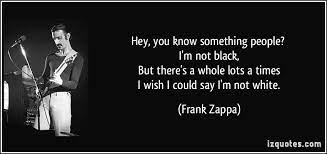
Hey you know something people I’m not black But there’s a whole lots a times I wish I could say I’m not white

That seems like it was a pretty powerful thing to say (and something you’d be unlikely to hear on the radio) back in 1965.

The chorus sticks with us

So I’m watchin’ and I’m waitin’
Hopin’ for the best
Even think I’ll go to prayin’
Every time I hear ’em sayin’
That there’s no way to delay
That trouble comin’ every day
No way to delay
That trouble comin’ every day

He certainly predicted the state of 24 hour news

Well you can cool it, You can heat it…
Cause, baby, I don’t need it…

Take your TV tube and eat it
‘N all that phony stuff on sports
‘N all THOSE unconfirmed reports
You know I watched that rotten box
Until my head began to hurt
From checkin’ out the way
The newsmen say they get the dirt
Before the guys on channel so-and-so
And further they assert
That any show they’ll interrupt
To bring you news if it comes up
They say that if the place blows up
They’ll be the first to tell
Because the boys they got downtown
Are workin’ hard and doin’ swell,
And if anybody gets the news
Before it hits the street,
They say that no one blabs it faster
Their coverage can’t be beat

Things haven’t changed since this song was written

And it’s the same across the nation
Black & white discrimination
They’re yellin’ “You can’t understand me!”
And all the other crap they hand me
In the papers and TV
‘N all that mass stupidity
That seems to grow more every day
Each time you hear some nitwit say
He wants to go and do you in
Because the color of your skin
Just don’t appeal to him
(No matter if it’s black or white)
Because he’s out for blood tonight

Perhaps the theme verse for recent events

Don’t you know that this could start
On any street in any town
In any state if any clown
Decides that now’s the time to fight
For some ideal he thinks is right
And if a million more agree
There ain’t no great society
As it applies to you and me
Our country isn’t free
And the law refuses to see
If all that you can ever be
Is just a lousy janitor
Unless your uncle owns a store

It’s a shame this song still resonates.

[READ: March 22, 2021] Parable of the Sower [2024-2025]

I found Kindred to be an enjoyable (not exactly the right word, I know) novel.  I thought the premise was really cool and I thought the content was impactful and was conveyed really well.  It was a powerful story that did not shy away from brutality.

But it in no way prepared me for Parable of the Sower.

I didn’t know anything about this book at all before starting.  At first I thought it was neat that it was set in 2024 (hey that’s so close!)  And that, coincidentally, myself and my daughters are almost the same ages as the main character and her father (will this be our future?).

But then, holy crap, Butler doesn’t hold back.

The brutality of Kindred was based on reality.  It was horrible and, in retrospect, hard to believe that people could do such things.  The brutality of Sower, however, is all based on the future projection.  The book was written in 1993. Basically, she posits that in 30 years, America has become a rotting hellscape.  And while we haven’t reached quite the levels that she imagines, there are some pretty eerie accuracies.  I have to assume, given the natural of the elected politicians, that some things are going to get very very spookily prescient.

The book opens in 2024 with a quote from Earthseed.  We don’t know what that is yet, but by the end of this week’s read we’ll learn that Earthseed is a sort of manifesto written by the main character, Lauren Oya Olamina–I didn’t realize her name was given after the first quote from Earthseed until looking back on it.  Each chapter has another quote from Earthseed and then the story unfolds as a series of diary entries. (more…)

Read Full Post »

« Newer Posts - Older Posts »