Feeds:
Posts
Comments

Archive for the ‘Religion’ Category

SOUNDTRACK: New Moon Original Motion Picture Soundtrack (2010).

Back in the 90s, it seemed like every week there was a new soundtrack featuring an unreleased song from some great alt rock band.  This meant huge sales for soundtracks, even if for the most part they weren’t solid start to finish.  In fact, mostly you got three great new songs, three pieces of rubbish, one great song by a band you’d never heard before and two or three okay tracks.

The inclusion of a new Death Cab for Cutie song was the big news about this soundtrack.  And overall, the reviews were positive.  And I’m pleased to say there aren’t really any horrible songs here.  (I have no idea how the soundtrack fits in with the movie as I haven’t seen it and probably never will).

But as with that old soundtrack formula: we get a few good songs by reasonably well-known bands: Death Cab for Cutie, Thom Yorke, Bon Iver & St, Vincent, Muse, Grizzly Bear.  And then there’s a whole bunch of good rock songs.  The disc plays as something of a sampler of downcast, mellow alt rock. In fact, the back half of the disc sounds like a pretty decent alt rock radio station from the last decade or so.

Some of the tracks even sound like 90s alt tracks (Hurricane Bells, that song is 16 years old right?  And Sea Wolf, you’re channeling Peter Murphy, I know.)  The final two tracks are okay.  The Editors is kind of a Nick Cave via Joy Division sorta spoken word ballad.  And I admit I’m a little disappointed in the Lykke Li track–they got hyped beyond their ability.  The final track is a piano score, which is fine.

The biggest surprise to me is how much that Death Cab for Cutie songs sounds like a Rush song.  I’ve never considered that the bands sound anything alike before, and yet from the moment the song opens, that could be Geddy Lee singing, and that whole guitar structure is very Rush-like.  Maybe they should do a cover of it.

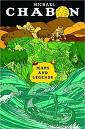
[READ: April 20, 2010] Maps and Legends

This is a collection of 17 non-fiction pieces by Michael Chabon.  The pieces cover everything from book reviews, essays about reading and writing, comic book and comic book artists and golems.

The opening essay is about the modern short story and it sets the tone for the entire book.  Interestingly, this essay talks about the state of entertainment and how “Entertainment has a bad name.  Serious people learn to mistrust and revile it.  The word wears spandex, pasties, a leisure suit studded with blinking lights. (13).  This very topic is at the heart of the David Lipsky/David Foster Wallace book (and in fact Chabon is mentioned in that book as well.)  Ah, serendipity. (more…)

Read Full Post »

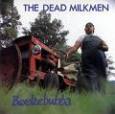
SOUNDTRACK: THE DEAD MILKMEN-Soul Rotation (1992).

And lo, the Milkmen grow up.

This disc is not funny (well maybe, a little funny); mostly it is  “thoughtful” (and sometimes absurd).  But what is most striking about it is how mature (mellow) it is.  For this is the first album by The Dead Milkmen on Hollywood Records (a subsidiary of Disney).  This combination raises far more questions than is worth looking at.  But suffice it to say that even though this disc is the Milkmen, its a very different Milkmen.

The most obvious difference is that the majority (10 out of 13) of the songs are sung by the artist formerly known as Joe Jack Talcum, now known as Butterfly Fairweather (perhaps Hollywood knew that “”Punk Rock Girl” was their big hit?).  Past DM records were mostly sung by Rodney Anonymous (who goes by H.P. Lovecraft on this disc).  And his were the heavier, weirder, funnier, absurdist tracks, for the most part.  So, when the first four songs here are sung by Butterfly, you know something different is afoot.  Oh, there’s horns on the disc as well!

The disc feels like a pretty typical alt-rock band from the 90s.  But it’s missing the sass, it’s missing the vulgarity.  Basically, it’s kind of dull.

That’s not to say there aren’t good songs on here, because there are.  “If I Had a Gun” is a great screamy Butterfly song, and “Wonderfully Colored Plastic War Toys” is full of Lovecraft’s snark. As is “The Conspiracy Song” a lengthy rant of absurdity.

The rest of the songs drift between mellow and alt-rock rockers.  And it works as a product of the alt rock 90s.  It’s just not much of a DM album.

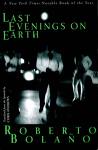
[READ: April 8, 2010] Last Evenings on Earth

I have been reading Bolaño’s short stories for a while now.  And so I have read a couple of the stories in this collection already. The stories in this collection were taken from his two Spanish collections of short stories: Llamadas telefônicas (1997) and Putas aseinas (2001).  And I have looked at about a dozen sources but I can’t find which stories came from which original collection (I like  to know these hings).  I can’t even find a table of contents for the original books.  Anyone want to help out?

I enjoyed these stories more than I expected to.  I have read some of his stories in The New Yorker and elsewhere, and I’ve been okay with them, but this collection blew me away.  Whether it’s being immersed in his writings or just having them all in one place, I was thrilled by this book.

There so many delightful little things that he does in his stories that I find charming or funny or something.  Like that his narrators are usually two or three people removed from the details.  Or if they’re not, they act like its been so long they doesn’t need to get all the details right:  “U insults and challenges him, hits the table (or maybe the wall) with his fist” (“Days of 1978”).

I also get a kick out of all the stories with the protagonist named B.  Which seems a not so subtle way of saying he’s the narrator (even though I ‘m sure these things never happened to him quite like it says (despite all the biographical consistencies with his own life).

The opening story “Sensini” has the narrator working as a night watchman at a campground (much like Enric in The Skating Rink…a bit of biography perhaps?).  A number of his stories are simply biographies of interesting characters (something he went to extremes with in Nazi Litearture in the Americas): “Henri Simon LePrince” a failed writer in Post-WWII France.  “Enrique Martin” a delightfully twisted story about jealousy (aren’t they all, though?) and acting impulsively and foolishly (aren’t they all though?).  This one featured  a riddle that I’m not even sure we’re meant to get:

3860+429777-469993?+51179-588904+966-39146+498207853

which the narrator thinks is a word puzzle. (more…)

Read Full Post »

SOUNDTRACK: THE DEAD MILKMEN-Metaphysical Graffiti (1990).

You know that it would be untrue, you know that I would be a liar if I were to say to you I didn’t set your house on fire.

You don’t have to be a philosopher to appreciate the joke of this album title (actually that may hurt the joke a little). But the “runes” that accompany the disc are quite amusing.

I haven’t listened to this disc in ages, and it turns out that I remembered about half of these songs really well.  And that’s because half of the songs are really good.  And the other half are, well, okay.

It opens with a children’s chorus which morphs into one of their heaviest rocking (although fairly uninspired) songs, “Beige Sunshine.”  The disc comes into focus with track two: “Do the Brown Nose” a funny song that outlines exactly how to do the titular dance (although at nearly 5 minutes, it’s a bit long).

The single (!) “Methodist Coloring Book”: features Joe Jack Talcum singing (clearly his success with “Punk Rock Girl” had an impact on that decision).  But on this track, he sings with a dark and distorted voice (which pales to Rodney’s dark voice) and is less interesting than his whiny normal singing voice. It’s a good song (and amusing) although as a single it’s less than successful.

I’ve always enjoyed the premise of “I Tripped Over the Ottoman” although I’m not sure it’s a very good song.  While “If You Love Somebody Set them on Fire” is funny and catchy (and astonishingly irritating with the screechier higher register notes in the chorus).

“In Praise of Sha Na Na” makes the valid point that they played at Woodstock and aren’t dead.

Joe Jack’s other songs are the very slow ballad “Dollar Signs in Her Eyes” and the rollicking (and more distorted singing) of “I Hate You, I Love You.”  But the ending tracks “Now Everybody’s Me” and “Little Man in My Head” (which is musically quite a good reggae track) just don’t have a lot of oomph.

However, the final track, “Anderson Walkmen, Buttholes and Howl!” (which parodies a short-lived but much talked about prog rock band) is delightfully twisted.

The problem with the disc overall is the four or five “improv pieces”  They all feature the same bassline, and by the end of the disc you start to cringe when you hear it (especially since the last one is 6 minutes long).  Each one is a mildly funny rant (along the lines of “Stuart” from Beelzebubba, but less focused and less interesting).  Some of them are certainly funny (Earl’s maggots and the “chills me to this day” refrain is pretty good), but they feel like comedy skits that you only want to hear once.

Erlenmeyer Flask!

[READ: April 3, 2010] By Night in Chile

In continuing with my Bolaño obsession, I moved onto yet another of his short books (144 pages).  Interestingly, By Night in Chile is written in a complete different style than the other two titles I’ve recently read (Bolaño is nothing if not diverse).

This is a stream of consciousness reminiscence told by Father Sebastián Urrutia Lacroix.  The entire book is one paragraph (actually that’s not true, the final line of the book is its own paragraph).

As the book opens, Father Urrutia is dying.  But worse than that, he has been disparaged by a wizened youth.  And his entire memory/rant is a response to the accusations of this (unseen by us) wizened youth.

And Father Urrutia uses this opportunity to describe the highlights of his life.  When he was very young he decided to join the priesthood against his family’s objections. There’s a running joke about people calling him “father,” I especially enjoyed the scene where his mother calls him father. (more…)

Read Full Post »

SOUNDTRACK: THE DEAD MILKMEN-Beelzebubba (1988).

Why the hell do you think they call it a burrow owl anyway?

Beelzebubba is pretty close to the pinnacle of The Dead Milkmen’s career.  Of the 17 songs, there’s only one or two that fall flat.  But there are so many that rise to greatness.  The wholly un-PC James Brown-mocking song “RC’s Mom” which is pretty much all about beating your wife is in hugely questionable taste, but the funk is quite funky.

The brilliant “Stuart” is the culmination of all of the white trash mocking/spoken word nonsense songs.  And then there’s the outstanding single “Punk Rock Girl.”  It is simultaneously catchy as all hell and yet whiny and kind of off-key.  It’s really magnificent and was suitably lauded.

The strange thing to me is that the actual released “single” was for “Smokin’ Banana Peels” (an EP with that title was released with an absurd number of dance remixes).

“Sri Lanka Sex Hotel” is an angry rant that references The Killer Inside Me and talks about having sex with everything.  It’s pretty bizarre, but is musically fantastic.

True, the back half of the disc suffers somewhat (“Howard Beware” and “Ringo Buys a Rifle” are just okay), but the disc ends with the sublimely vulgar “Life is Shit” a gospel-tinged song that matches Monty Python’s “Always Look on the Bright Side of Life” for faux uplift.

Future DM discs would feature some good songs, but the band pretty much peaked with this one.  I’m so bored I’m drinking bleach.

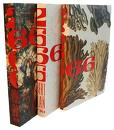
[READ: Week of April 5, 2010]  2666 [pg 637-701]

What a difference a week makes.  The style and writing of Part 5 is markedly different from Part 4.  It is far more laid back and focuses primarily on one individual, Hans Reiter (who we know from Part One is Archimboldi).

The Part opens with information about his parents: his father had one leg (he lost the other in WW1) and his mother was blind in one eye.

Hans’ father, after losing his leg, was in the hospital, expounding on the greatness of smoking.  (He even gives a smoke to a man wrapped head to toe in bandages–and smoke pours out from all the cracks).  When he left the hospital, he walked home–for three weeks.  And when he arrived back home he sought the one-eyed girl in the village and asked for her hand in marriage.

Hans Reiter was born in 1920. He proved to be unreasonably tall: (At 3 he was taller than all the 5 year olds etc).  And he was most interested in the seabed.  There is much information from his childhood of his love of the sea (when his mother bathed him, he would slip under the water until rescued).  At six he stole a book, Animals and Plants of the European Coastal Region, which he more or less memorized and was the only book he read.  And then he began diving, investigating the shoreline.

His father evidently hates everyone and thinks all nations are full of swine (except the Prussians).

Hans also enjoyed walking and he would often walk to the surrounding towns: The Village of Red Men (where they sold peat), The Village of Blue Women , The Town of the Fat (animals and butcher shops); or in the other direction, he went to Egg Village or Pig Village.  Or even further along was the Town of Chattering Girls (who went to parties and dances).

He almost drowned twice.  The first time he was initially mistaken for seaweed as he was floating in the water.  (After he had discovered laminaria digitata).  He also began to draw seaweed in his book.  (The seaweed connection is pretty thorough as he was described as looking like seaweed when he was born).  The tourist who saved him was named Vogel.  He believed in the general goodness of humanity, but he felt that he was a bad person for initially mistaking Hans for seaweed.  Vogel also talked endlessly about the virtues of masturbation (citing Kant as an example). (more…)

Read Full Post »

SOUNDTRACK: MONSTER MAGNET-God Says No (2001).

It’s not often I have a disc with the same name as a book.  But lo, here they are.  I’ve no idea if the album inspired Hannaham at all (or if he even knows of it) although the title track song does rather work well with the book, with lines like:

You won’t get caught if you don’t get queer/And you’ll be ready for a new frontier  You try and live And God says no.

I had loved Monster Magnet’s Powertrip quite a lot.  So, I was more than willing to get this follow up.  I’m a little disappointed in the disc overall, but I’m not entirely sure why.  It’s not quite a sharp as Powertrip, but it’s also not quite a trippy as their earlier stoner rock releases.

Having said that, there’s some great tracks here.  It opens very prominently with “Melt” and the phenomenal heavy rocker “Heads Explode” which features delightfully obscure lyrics like “I am a pillar of salt.  You’ll never be worse than me.”  And then comes, “Medicine 2001” another fast, chunky rocker.

There’s also some other way-out (for Monster Magnet) tracks, like the bluesy slide guitar sleaze of “Gravity Well.”

I think it’s the tracks at the end that kind of drag the disc a little bit “Queen of You” is an interesting slow track, but at nearly 7 minutes and coupled with the 7 minute “Cry,” it’s a bit too much all at once.  The final track, “Take It” is a weird, weird (for Monster Magnet) keyboard and drum machine track. It’s very mellow (and sounds like early Depeche Mode), and works as a weird experiment.  The actual final track is a bonus track, “Silver Future” which rocks once again.

I’m pleased that Monster Magnet experiments so much, but it feels like a full disc of MM songs with an extra EP of experiments tacked on.  I’m not sure what they could have done differently, but for some reason the disc falls a little short.

[READ: March 18, 2010] God Says No

This is a very simple tale of an overweight black man struggling with life in the 1990s.  The twist on the story is that he is not struggling because of his race or his size.  He is struggling because he is a good Christian man who is, without question, homosexual.

The book is written in first person and as such it reads like a memoir (although the main character has a different name than the author).  You can’t help but wonder how much of this book is true (although really it doesn’t make any difference), especially when one of  the characters dies.  It feels like tribute to an actual person.

The book opens with Gary Gray living in a dorm at a Christian college.  He is completely obsessed with his roommate, a hunky white guy who walks around in his boxers.  The roommate is clearly not interested in him, in fact he goes so far as to say he is repulsed by Gary (for being fat and black, in addition to anything else he may find flaw with). (more…)

Read Full Post »

SOUNDTRACK: BLUE ÖYSTER CULT-compilations and live releases (1978-2010).

For a band that had basically two hits (“Don’t Fear the Reaper” and “Burnin’ for You”) and maybe a half a dozen other songs that people might have heard of, BOC has an astonishing number of “greatest hits” collections.

Starting in 1987 we got Career of Evil: The Metal Years (1987), Don’t Fear the Reaper (1989), On Flame with Rock n’ Roll (1990), Cult Classic (which is actually the band re-recording their old tracks (!)) (1994), and the two cd collection Workshop of the Telescopes (1995).  There’s even Singles Collection, (2005) which is a collection of their European singles & Bsides.

This doesn’t include any of the “budget price” collections: E.T.I. Revisited, Tattoo Vampire, Super Hits, Then and Now, The Essential, Are You Ready To Rock?, Shooting Shark, Best of, and the 2010 release: Playlist: The Very Best of).

The lesson is that you evidently won’t lose money making a BOC collection.

I don’t know that any of these collections are any better than the others.

The 2 CD one is for completists, but for the most part you’re going to get the same basic tracks on all of them.

And, although none of them have “Monsters” for the average person looking for some BOC, any disc is a good one.

Regardless of the number of hits they had, BOC was tremendous live.  And, as a result, there have also been a ton of live records released.  Initially the band (like Rush) released a live album after every three studio albums. On Your Feet or On Your Knees (1975) Some Enchanted Evening (1978) and Extraterrestrial Live (1982) were the “real releases.”

Then, in 1994 we got Live 1976 as both CD and DVD (which spares us nothing, including Eric Bloom’s lengthy harangue about the unfairness of…the speed limit).  It’s the most raw and unpolished on live sets.  2002 saw the release of A Long Day’s Night, a recording of a 2002 concert (also on DVD) which had Eric Bloom, Buck Dharma an Allan Lanier reunited.

They also have a number of might-be real live releases (fans debate the legitimacy of many of these).  Picking a concert disc is tough if only because it depends on the era you like.  ETLive is regarded as the best “real” live disc, although the reissued double disc set of Some Enchanted Evening is hard to pass up.  Likewise, the 2002 recording is a good overview of their career, and includes some of their more recent work.

If you consider live albums best of’s (which many people do) I think it’s far to say that BOC has more best of’s than original discs.  Fascinating.  Many BOC fans believe that if they buy all the best of discs, it will convince Columbia to finally reissue the rest of the original discs (and there are a number of worthy contenders!) in deluxe packages.  I don’t know if it will work, but I applaud the effort.

[READ: October 2009-February 2010] State By State

This is a big book. And, since it’s a collection essays, it’s not really the kind of big book that you read straight through.  It’s a perfect dip in book.  And that’s why it took me so long to get through.

I would love to spend a huge amount of time devoting a post to each essay in the book.  But, well, there’s 51 (including D.C.) and quite a few of them I read so long ago I couldn’t say anything meaningful about.  But I will summarize or at least give a sentence about each essay, because they’re all so different.

I’ll also say that I read the Introduction and Preface last (which may have been a mistake, but whatever).  The Preface reveals that what I took to be a flaw in the book was actually intentional.  But let me back up and set up the book better.

The catalyst for the book is the WPA American Guide Series and sort of Steinbeck’s Travels with Charley.  The WPA Guides were written in the 1930s as part of the Works Progress Administration.  48 guide books were written, one for each state.  Some famous writers wrote the books, but they were ultimately edited (and many say watered down) by a committee.  I haven’t read any of them, but am quite interested in them (and am looking to get the New Jersey one).  Each guide was multiple hundreds of pages (the New Jersey one is over 800).

State By State is written in the spirit of that series, except the whole book is 500 pages (which is about 10 pages per state, give or take).  And, once again, famous writers were asked to contribute (no committee edited this book, though).  I’ve included the entire list of authors at the end of the post, for quick access.

So I started the book with New Jersey, of course.  I didn’t realize who Anthony Bourdain was until I looked him up in the contributor’s list (I’m sure he is thrilled to hear that).  And his contribution was simultaneously exciting and disappointing,.  Exciting because he and I had quite similar upbringings: he grew up in North Jersey (although in the wealitheir county next to mine) and had similar (although, again, more wealthy) experiences. The disappointing thing for me was that Bourdain fled the state  for New York City (and, as I now know, untold wealth and fame (except by me))  I felt that his fleeing the state, while something many people aspire to, is not really representative of the residents of the state as a whole.

And that dissatisfaction is what I thought of as the flaw of the book (until I read the Preface).  In the Preface, Matt Weiland explains that they asked all different authors to write about states.  They asked some natives, they asked some moved-ins, they asked some temporary residents and they asked a couple of people to go to a state for the first time.  In reality, this decision makes for a very diverse and highly entertaining reading.  In my idealized world, I feel like it’s disingenuous to have people who just stop in to give their impression of an area.  But hey, that’s not the kind of book they wanted to compile, and I did enjoy what they gave us, so idealism be damned.

For most of the book, whenever I read an essay by someone who wasn’t a native or a resident of a state, I assumed that there weren’t any famous writers from that state.  I’ve no idea if that played into anything or not.  From what I gather, they had a list of authors, and a list of states (I was delighted to read that three people wanted to write about New Jersey-if the other two writers ever decided to put 1,000 words  to paper, I’d love to read them (hey editors, how about State by State Bonus Features online, including any extra essays that people may have wanted to write).

From New Jersey, I proceeded alphabetically.  And, I have to say that I’m a little glad I did.  I say this because the first few states in the book come across as rather negative and kind of unpleasant.  Alabama (written by George Packer) comes across as downtrodden, like a place you’d really have to love to live there.  Even Alaska, which ended up being a very cool story, felt like a veil of oppression resided over the state (or at  least the part of the state that Paul Greenberg wrote bout.)  But what I liked about this essay and the book in general was that the authors often focused on unexpected or little known aspects of each state.  So the Alaska essay focused on Native fisherman and the salmon industry.  Obviously it doesn’t do justice to the rest of that enormous state,  but that’s not what the book is about.

The book is meant to be a personal account of the author’s experiences in the state. (more…)

Read Full Post »
SOUNDTRACK: MARTHA WAINWRIGHT-I Know You’re Married But I’ve Got Feelings Too (2008).

I’ve been a fan of Loudon for years.  I also rather enjoy Rufus.  So why not check out Rufus’ sister Martha and see how she stacks up in the family canon.  Actually, it’s not fair to compare because she is an entity all to herself.  And indeed, I feel that she sounds nothing like her family (maybe a weeeeee bit like Rufus, but not really).

In fact, I find that Martha’s voice rests comfortably between Mary Margaret O’Hara, Jane Siberry and, somewhat surprisingly, Patti Smith.

Lyrically, the title of the album pretty well tells you where she’s coming from: smart-assed and a little pissed off.  But the real question is what kind of songs does she actually write?  Well, the second song on this disc “You Cheated Me” is so strong and so catchy I was convinced it was a cover.

The rest of the disc is an exciting collection of styles: baroque arrangements, pop folk, and even straight ahead rock.  There are times when the songs are not so much difficult as cantankerous: with her vocals reaching extraordinary heights.  But it’s not just Martha showing off her range, the vocals work very well with the lyrics.

She also adds two covers on the disc: Pink Floyd’s “See Emily Play” which she takes some of the weirdness out of but which adds a bit of her own eccentricities to it.  (It’s a great cover).  The other cover is the Euryhthmics’ “Love is a Stranger” which doesn’t sound like a cover until the chorus kicks in.

I feel like the disc is a little long (somehow it feels like it should end after “See Emily Play”) but that’s not really that big of a complaint.  Even though Martha sounds like others, she is still quite a unique presence, and this is a worthy CD for anyone who likes quirky singer songwriters.

[READ: Week of March 1, 2010] 2666 [pg 353-404]

I was bracing myself for a horrific section here.  The Part About the Crimes is 280 pages of women being killed in graphic detail. Well, that turned out to be not exactly true.  At least so far.

Nevertheless, the Part is largely filled with crime scene details about the many many women who died in the Santa Teresa region between 1993 and the beginning of 1994.

For my sanity I’m not going to detail all of the young women who were killed in this Part.  I know someone on bolanobolano is detailing all of the deaths in the book, so I’ll assume that that is dealt with there. (more…)

Read Full Post »

SOUNDTRACK: BLUE ÖYSTER CULT–Blue Öyster Cult (1972).

Craig Ferguson mentions that the only concert he saw as a teen in America was Blue Öyster Cult.  My guess is that it would have been around the Agents of Fortune or Spectres tour (ie, around “(Don’t Fear) The Reaper”) so that must have been a killer show.

In honor of his book, I’m going to look at the lesser known early work of BOC.  Their first disc is a fascinating amalgamation of hard rock, blues, boogie and psychedelia.  All of that is coupled with the utterly perplexing lyrics that they came up with. In addition to the huh? factor of titles like “She’s a Beautiful as a Foot” and “Before the Kiss, a Redcap” we also get fascinating title like “Transamaniacon MC” (later on John Shirley would write a book called Transmaniacon as a tribute to this song).

The album isn’t heavy by today’s standards, but at the time, this was some pretty heavy stuff.  The rocking chorus of “Transmaniacon,” the blistering speed of “Stairway to the Stars,” and yes, the undeniably heavy riff of “Cities on Flame with Rock and Roll” let you know that this is no simple rock album.

And yet, they work so well with the fundamentals: Steppenwolf is clearly an inspiration.  This is classic rock that doesn’t quite fit the classic rock mode (which, frankly, makes it far more interesting).  There’s a lot to like here, and there’s more to come.

[READ: February 26, 2010] American on Purpose

I keep saying I don’t read memoirs but then I keep reading them. Yes, I’m a liar.

Well, in this case, I felt it was justified because a) Craig Ferguson is hilarious and I assumed his book would be too and b) he has already written a novel that I really liked (as well as 3 screenplays which I have not seen). So I figured it would be a well-written, funny book.  And, since it turned out I had two days off because of the “snow” I finished the book in a couple of days.

Right, so Craig Ferguson is the host of The Late Late Show, a show that Sarah and I fell in love with last year and then kind of forgot about it. And then we caught it again recently and have been enjoying some TiVo’d bits every now and then. Ferguson has a wonderfully warped sense of humor and his show veers into the bizarre more often than not.   But he is always enjoyable, and his celebrity interviews are worth watching for how funny and un-promotional they are.
But what about this book? This book basically details his life growing up in Scotland, moving to the States and becoming a “huge star.”

But the crux of the book is about his descent into alcoholism, how it destroyed his first marriage and several other long term relationships, as well as potentially his career. (more…)

Read Full Post »

SOUNDTRACK: Make the Load Lighter: Indie Rock for Haiti (2010).

I mentioned this disc a few days ago because it’s a benefit disc for the people of Haiti.  I had encouraged people to order it ($10 to a good cause, eh?) but hadn’t fully listened to it yet.

Well, after playing the disc nonstop for the weekend, it’s time to chime in and say that this is a fantastic disc of indie rock, which spans the indie rock gamut from harder punk songs to beautiful heart-felt passionate tracks.  Each and every track is catchy, and most of them have a cool twist or hook to push it beyond being “just” an indie song

The first three songs are really fast and really heavy.  Footstone opens the disc.  I don’t know a lot by them, but this sounds to me like their heaviest song ever.  It comes across like a really hard edged punk song, but you know there’s a groove too.

Boss Jim Gettys (one of many wonderfully named bands) play a 2 minute punk metal blast that is notable for the cool guitar solo that breaks up the onslaught.  The third heavy song is by Dromedary stalwarts cuppa joe (!?).  “Taniqua” is a fast song with a rocking guitar intro.  It thuds along for 2 and a half minutes and then ends with a wonderfully upbeat chord that leads nicely in to the fourth song.  Moviola’s “Calling on the Line” is a poppy jangly college rock sounding song from the 90s.  It pretty well epitomizes the Dromedary sound.  The band has a bunch of records out which you can see here.

I wasn’t that impressed with Three Blind Wolves at first.  It seemed a little lacking.  But after about three listens I got it, and it’s now one of my favorite songs on the disc.  The singer’s voice is varied and wonderful, warbling over a fairly spare musical intro (the occasional high notes are totally cool).  But the chorus just rocks out wonderfully.  Three Blind Wolves is one of four Scottish bands from what I rather assumed would be a Jersey based compilation.

Paula Corino’s song is okay.  It’s my least favorite track on the disc, but only because it never really grabs me, and, while it’s a totally fine song, it gets a little lost amidst the rest of the tracks.  It’s followed by Wallendas’ “Adrianne” a delightful poppy song like a modern day Byrds.

The next song, The Neutron Drivers’ “All Around the Sun” doesn’t have an original second in it.  And yet it is easily the catchiest song on the whole disc. When you first hear the opening guitars you pretty much know exactly what the whole song (even the obvious guitar solo) will sound like.  It’s like the uber-rocksong.  And yet for all of its sounding familiar, it doesn’t sounds like any specific song. Amazing how they pulled that off.

The Dark Brothers’ “Knee Deep in Sin” is a weird and unsettling song in that it sounds like the singer from Social Distortion with a slide guitar.  It’s got a majorly country feel, until about three minutes in when you get a guitar solo straight outta Teenage Fanclub’s “The Concept” and suddenly this country song is a slow burning rocker.  Very cool.

The next two songs justify the price of the disc.  There Will Be Fireworks’ (Scottish band #2) “Foreign Thoughts” is a fantastic, amazing song.  It builds and builds with tension upon tension as the singer (with a wonderfully aggressive accent) spits the words over more and more instrumentation.  It’s followed by the utterly amazing Gena Rowlands Band’s “Fuckups Of the World Unite.”  This is like the great long lost American Music Club song.  It’s vulgar and yet completely un-profane.  It’s catchy, heartfelt and it blows me away each time I hear it, both lyrically and musically.  The simple guitar paired with the opening couplet is amazing in an of itself but it’s even better when it closes the song.

The Mommyheads come next with a remixed version of “Spiders” from Flying Suit.  I enjoyed the song on that disc, but it takes on a new life in this remixed version.  It feels fuller and even slighty creepier.

On like my third or fourth listen, Scottish band #3, Farewell Singapore’s “Blue” grabbed me and said “HEY THIS SONG IS FUCKING GREAT YA BASTARD.”  And man, is it ever.  I’ve been walking around all weekend singing “Scotland’s as dark as it’s going to be” over and over.  And I’ve no idea what it means.  The sudden breaks in the song sound like there’s something wrong with the track given the propulsive nature of everything else.  And the intense guitar solo that follows the glockenspiel bit is fantastic.  Oh and the male/female vocals sound great together.

Jennifer Convertible (a wonderful band name which gently rips a regional chain store, which seems to have changed its name to the far less inspired Jennifer Sofas and Sofabeds) has a very cool song that opens like a latter R.E.M. track but brings in some wonderfully atmospheric guitar noise to add a real sense of foreboding to the song.  The buzzing guitar solo is a nice touch, too.

lions.chase.tigers (4th and final Scottish band, with a downloadable EP on their website) sound a bit like an early Bob Mould track.  Which is pretty good in itself, but what I love about the song is that it’s a cool jangly indie rock song with a great martial drum sound.  And it bops along, in a minor key until we get a delicate guitar riff and then a rocking chorus.  But the really interesting part is yet to come: the gentle guitars come back but they’re accompanied by a voice screaming its lungs out (and yet mixed way down, so it’s no louder than the guitar).  And the song proceeds as if that isn’t a weird thing to add in.  Man, it takes guts to write a song like that, and it pays off.

The disc ends with Stuyvesant’s song, “Salieri.  It’s another slow builder, but it’s quite catchy and when the harmonies kick in in the last minute, it become quite the great song.  And it ends the disc on a good note.

So, in sum, order the disc.  It’s for a good cause, but even if you’re not into that sort of thing, you get some really great music for your money.  There’s literally not a bad track on the disc, and the bulk of them are outstanding.

Even the liner notes are interesting (and provide a look at why and how this disc came about).  My only complaint is that you get almost no information on the bands!  Now, I realize that in the world of online downloads, you’re lucky enough to get album art (and the photos are sad and beautiful) but I’d love to know more about these bands, where they’re from, who they are, and if any of them are have websites or other discs or whatnot.  But then, I actually read liner notes on discs!

Download the tracks, and the art, here.  Do it!  Now!

[READ: Week of February 15, 2010] 2666 [pg 231-290]

This week’s reading is the first half of the third Part: The Part About Fate.  And I have to say thus far it is easily my favorite part of the book.  I enjoyed it right from the start upon learning that the titular Fate is not an abstract Fate but a person named Fate.  A nice twist right up front.

This section also deals quite directly with matters of race.  Fate is black, and during his travels he is acutely aware of his color.  Plus, many scenes pop up in which race is definitely a factor.

Fate’s real name is Quincy Williams.  He is a 30 year-old reporter for Black Dawn, a magazine out of Harlem.  Quincy is known as Oscar Fate; everyone calls him Fate. (more…)

Read Full Post »

SOUNDTRACK: NO FORCEFIELD-God is an Excuse (2001).

I was looking up what Larry LaLonde, guitarist for Primus, had been up to while Primus seems to be on hiatus.  I hadn’t heard a word from him, so I was surprised to see that he had released two albums with a band called No Forcefield.

I looked for the discs, and found both of them used for $1.00 each.  So I ordered them without really knowing what they were about, except that they were described as “experimental.”

This is the second disc by the band which consists of Brain and Ler from Primus as well as assorted other fellows (Bob Cock) and guests.  And experimental is an okay word to describe the record.  But a better one is disappointing.

With the lineage that these guys bring to the band, it’s surprising how mundane the disc is. It opens with a phone message about Bin Laden and God which morphs into the hilarious Denis Leary bit about CDs and the silver dog bone thing.  It then becomes a fairly straightforward electronic track.  And this electronic stuff is kind of the purpose of the group, I think.  There are at least 3 long, simple instrumentals that are little more than a few notes repeated over a drum beat.

The other tracks are complete nonsense: a faux TV show with “products” for sale which is a teensey bit funny, but not really.  There’s also Billy Roz, whoever that may be, crooning “You Are My Sunshine” as well as some polkas over a drum machine (he sings like an old doddering man).  And finally a short drum solo.

It’s not even clear to me why Ler is in the band as it seems to be mostly drums and a simple keyboard chord.  The only interesting track on the disc is “How to Purify Street Heroin” which is an awesome scratchy workout which I assume is by DJ Disk from the Invisbl Skratch Piklz.  And that’s pretty much it.

I was really disappointed my first go around, as I was expecting something, anything, more than this.  On subsequent listens, I can appreciate the disc as background/comedy although really neither one is a reason to hunt this down.

[READ: January 21, 2010] Too Much Hopeless Savages

This third collection of the Hopeless Savages saga sees many new revelations.  Turns out that Nikki Savage’s mom has come under the influence of a preacher who is intent on praying at the Hopeless-Savage house trying to get them to react in some way.  (I’m a little unclear exactly what his goal is here).

At the same time, Arsenal and her boyfriend and Twitch and his boyfriend (the  boyfriends are brothers) are off to the boyfriends’ homeland of Hong Kong.  Arsenal is there for a martial arts competition and Twitch heads along so that the H-S siblings can meet their boyfriends’ great grandmother.

Hijinx naturally ensue.  In this case, Arsenal is slipped a very valuable package and she soon has numerous groups of men after her (it’s unclear if any of them are up to any good).  The rest of the family decamps for Hong Kong to escape from all the praying (and they bring grandma along to de-brainwash her).

What is surprising about the story is the emotional depth that comes out of an incident from Arsenal’s past.  (more…)

Read Full Post »

« Newer Posts - Older Posts »