Feeds:
Posts
Comments

Archive for the ‘Religion’ Category

SOUNDTRACK: PJ HARVEY-Uh Huh Her (2004).

After the sort of mellow, almost commercial release of Stories from the Sea, PJ Harvey throws the fans a left turn once again with Uh Huh Her.  It’s a heavy, raw album although not raw like Dry was.  It seems  simpler, somehow.  And I think it’s with this disc that you realize that every PJ Harvey record is going to be different.  It was apparent that she had a trajectory on those first few discs, but this one changes everything, and she proves that you’ll never know what’s going to come from her.

“The Life and Death of Mr Badmouth” has a very simple blues riff with kind of chanting (and occasional creepy backing vocals) by PJ.  While “Shame” adds more texture (melodica?) and some more washes of sound.  “Who the Fuck?” is a wonderfully vulgar and raw track with brutal guitars and overly loud vocals.  “Pocket Knife” is a buzzy but quiet track which feels like a demo (the guitar even seems out of tune), while “The Letter” has a great fuzzy guitar sound and a cool melody.

“The Slow Drug” is one of several slower pieces.  As with many of her quieter stuff this does nothing for me, although it’s a nice change on the disc.  “No Child of Mine” is a brief acoustic number.  It feels more like an excerpt or a transitional song than any actual song (being only a minute long).  It leads to the rocking “Cat on a Wall.”  “You Came Through”  mixes things up very nicely with a heavy percussion.  The effects in the song are really captivating.

“It’s You” is a slow piano-based song, while “The End” is a brief instrumental (more melodica).  And “The Desperate Kingdom of Love” is a dark ballad.  The oddest track is “Seagulls” which is a minute of actual seagulls squawking…an unusual addition for any disc.  The album ends with “The Darker Days of Me & Him.” It’s a quiet acoustic song which shows just how many different style she’s willing to experiment with even on one disc.  Even though to me this is a raw rocking disc, there are still a number of acoustic tracks as well.

This album feels like some kind of psychic purge.

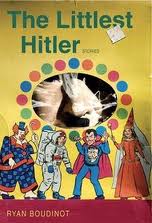
[READ: March 31, 2011] The Littlest Hitler

I picked up this collection of stories because I enjoyed Boudinot’s story in the BlackBook collection very much.  I didn’t realize that that story was in fact part one of a two-part story (although part two bore no relation to part one, as you’ll see).  The story in BlackBook was funny and dark, but it didn’t prepare me for just how dark these stories would get.  And for the most part, it seemed like the darkness came at the very end; a surprise, a shock.   I admit i grew a little weary of the device by the end of the collection, although not all of the stories employed it, so there was some diversity. (more…)

Read Full Post »

SOUNDTRACK: BEST COAST-Live at the 9:30 Club, Washington DC (2010).

Best Coast made Carrie Brownstein’s best album of the year accolades, but when I listened to the track she selected for the post, I wasn’t all that impressed.

But I have to say that live, Best Coast blew me away.  Bethany Cosentino, the lead singer and guitarist has an amazing stage presence.  She is charming and funny and very silly (and I guess she loves cats).  The band sounded tight and impressive and even though the songs are kind of dopey bubblegum pop, they are drenched in enough noise and rock to make them really wonderful

They seem like they should have come around during the 90s, when all those rocking female bands were all over the map.  And so this is like a wonderful blast from the past.  Best Coast is sort of like The Muffs (except they write love songs) and other bands that play really catchy pop but bury it under a layer of fuzz and rock.  This is a great set available on NPR, and will definitely get me to check out their album a little more.

[READ: March 28, 2011] “Seven Love Letters”

Six of the seven letters here were later collected in the book Four Letter Word which I reviewed in September 2009.  When I reviewed the book, I didn’t give very much in the way of detail, I just summarized the letters.  I’m going to copy what I wrote then (since my thoughts didn’t change all that much), and I’m going to include a few more lines about some of the pieces (original stuff is in italics).  I’m also including titles which (for some reason) were not given in the book.

I’m also not sure why Sheila Heti’s story did not appear in the book.  (It’s only 4 paragraphs and is, indeed, a letter so why not include it?)  If you enjoyed the book, think of this story as a Bonus Feature. (more…)

Read Full Post »

[WATCHED: March 19, 2011] Until the Light Takes Us

Soon after finishing Lords of Chaos, I heard a radio interview on the Sound of Young America with the directors of this movie (which is about the same black metal scene in Norway).  I finally got around to watching the film, and I’m really glad I did.

It covers much of the same terrain as Lords of Chaos (although the book covers much more stuff), but what’s cooler about the movie is actually seeing these guys talk to you.  And seeing how “normal these guys are.”  The two “stars” of the movie are Fenriz from Darkthrone and the main man in the scene, Varg Vikerens.

In the radio interview, the directors talked about the way they structured the film. And, I’ll reveal a bit of that.  So if you don’t know this particular fact, I’ll give the next line as a spoiler alert:

SPOILER ALERT: (Highlight the blank space to read it) Varg is in jail for murder and for the burning of several churches and was sentenced to 21 years in prison.

They don’t reveal this information until very late in the film.  So when we first meet Varg, he is a clean cut, handsome man in his late 30s.  He is in jail (although not explicitly stated, it is clear he is in jail).  And he is talking about the Norwegian black metal scene.  Vikerens formed the band Burzum in 1991.  He later joined the band Mayhem.

Mayhem is at the center of the black metal controversy.  The singer of Mayhem, Dead, killed himself with a shotgun.  The guitarist Euronymous found him and took pictures of him (one of which was used as a bootleg album cover–ewww) before calling the police (and it is believed he took some “souvenirs” from the scene).

Vikerens talks about growing up in idyllic Norway, which is peaceful and beautiful–but he undermines all of that by talking about the fairly typical suburban ennui that kids face.  Of course, in Norway it surfaced in violence and death.   Later, he talks about Christianity and how when it came into Norway there was no respect for the Norwegian culture.  Christians built churches on top of ceremonial grounds.  And it seems that he and his mates became very interested in Norwegian folklore and avenging the wrongs done to it. (more…)

Read Full Post »

SOUNDTRACK: RHEOSTATICS-Night of the Shooting Stars (2001).

This was the first CD by The Rheostatics that I bought as it was released.  I had gotten into them in 1999 or so, and I remember being very excited that this disc was coming out.  I ordered mine from Maple Music (and it was even autographed!) and I recall the evening it came in the mail and I sat in my kitchen rocking out to it.  Night is probably their most accessible disc. There’s a bunch of tracks from Tim Vesely, (who writes the sweet melodies) and although Martin Tielli’s wonderful weirdness is present, it’s more weirdness within conventional songs rather than unconventional song structures.

The disc also features a lot of heavy guitar work.  The disc opens with a heavy guitar riff which morphs into an upbeat poppy number.  Of course, how many pop numbers are titled “These Days Are Good for the Canadian Conservative Youth Party Alliance,”  (Tielli, of course).  There’s a catchy repeated bridge “these days are good for us now” even if the chorus (chorus?) features the bizarre line: “I chipped my eyetooth on the back of a urinal.”

It’s followed by two of the catchiest, poppiest, most wonderful songs the Rheos have done “Mumbletypeg” a delightful ditty sung by Dave Bidini with (again) a wonderful chorus.  And, “P.I.N.”, (Tielli) too catchy by half, and featuring the wonderfully weird lyrics, (in a great descending melody): “You’ve got the key to my heart; you’ve got the P.I.N. to my guts”

“Superdifficult” is sung by Tim Vesely, and sounds a lot like the kind of songs he would later writer for The Violet Archers (he has the most delicate pop sensibility in the band).  Tim also sings “We Went West.”  It kind of slows the pace of the record down, but it is a beautiful song (done with different guitars in each headphone).

“The Fire” is a charming ditty sung by Tielli.  It continues the mellowness of “We Went West” and runs with it until Bidini takes over vocals and adds some heavy guitars.  They end the song with some beautiful harmonies and some screaming guitars.

The next two songs, Vesely’s “In It Now” and Bidinis’ “Here to There to You” are slight songs which are more charming than catchy.  They’re followed by the last three tracks which end the disc with a bang.

“The Reward” has a cool slinky riff and great vocals for Tielli. It’s also sprinkled with some heavy guitar pyrotechnics late in the song.  “Remain Calm” is a calming song from Vesely.  It seems perfectly located between the craziness of “The Reward and the wonderful rocking nonsense of “Satan is the Whistler.”

I always think that “Satan is the Whistler” is a much longer song (it’s six minutes) because there are two official parts to it.  The first 3 minutes are slow and moody, then half way through it bursts into a tremendously heavy riff (complete with whistles!).  It’s a great ending to the disc.

There are also two previously recorded tracks here in new form: “Song of the Garden” is from The Story of Harmelodia, done in a slightly more rocking version here.  And “Junction Foil Ball” (Tielli) was on their odd Nightlines Sessions release.  It opens with some odd effects and guitars and evolves into an incredibly, incredibly catchy riff.  The version here is not vastly different, but it’s a bit cleaner.

I’ve really loved this disc.  And even if the middle is a bit slow, it still rocks.

[READ: March 11, 2011] “Barnyard Desires”

This was a surprisingly odd and twisted story.  And for The Walrus, it was quite long, as well.

It opens with Leona hearing noises in her ceiling.  She suspects that the noises are from rats.  She has called the landlord out several times, but he hasn’t seen any rats.  In fact, he has stopped coming out because he thinks she’s crazy.  She imagines what the rats are up to up there: procreating mostly.  Eventually, she notices a kind of brown stain on the ceiling, which she is convinced is the rats mating and urinating.  The stain grows larger and larger, and it is right above her bed.  She also believes it is taking vaguely human shape.

Meanwhile, we learn about her upstairs neighbor.   The first time they met was in their building’s elevator.  He proudly (and very closely) admittedly that he was recently born again.  She made a quiet comment, turned away and hadn’t really spoken to him since. (more…)

Read Full Post »

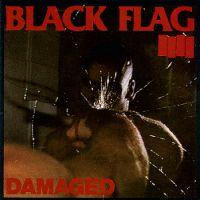
SOUNDTRACK: BLACK FLAG-Damaged (1981).

I’ve liked Black Flag since I bought Loose Nut on vinyl way back when (1985, the year punk broke for me).  And those four bars were iconic to me even before I had heard a note (although I just learned they are supposed to represent a flag waving).

And this is where their legend really took off.  So a few things I never knew about this album until I looked them up recently.  1) That’s Rollins on the cover punching the mirror.  2) He didn’t really punch the mirror (it was smashed prior and the blood is fake).  3) I knew that Black Flag existed for a while before Rollins’ arrival and that they’d had a series of singers before him.  But I didn’t realize what a their first EP (Nervous Breakdown–Keith Morris on vocals) came out in 1978, their second EP (Jealous Again–Ron Reyes on vocals–credited as Chavo Pederast (he left the band in the middle of a live show, so they changed his name to that rather offensive one)) came out in 1980.  Their third EP (Six Pack –Dez Cadena on vocals) came out in 1981.  Rollins joined a few months after that and Damaged–their first full length–came out in December 1981.

“Rise Above” is a wonderfully angry song.  The gang vocals of pure empowerment work so well with the chords.  It’s still effective thirty years later.  “Spray Paint” goes in the other direction: rather than an uplifting, catchy chorus, it’s a deliberately angular chorus that’s hard to sing along to (even for Rollins).

“Six Pack” represents the more “popular” side of the band.  And it is a wonderfully funny single.  I just can’t decide if it’s serious or ironic (see also “TV Party”).  These two dopey songs are great to sing along to and are simply awesome.  (Fridays!)

The rest of the album turns away from the lighthearted tracks.  “What I See” is a really dark moment on this album.  And the negativity is unusual especially given Rollins’ later penchant for lyrics about fighting back.  True, Rollins didn’t write these lyrics.

“Thirsty and Miserable” is a blast of noise with some of Ginn’s first real guitar solos (which Guitar World says is as one of the worst guitar solos in history…and I say really? that’s the solo they pick?  Ginn has done some pretty outlandishly bad solos over the years…of course the whole list is questionable at best).  “Police Story” is a simple but effective description of the punks vs cops scene at the time.

“Gimme Gimme Gimme” seems childish, but that’s clearly the point.  “Depression” is a super fast track.  (Trouser Press considered Black Flag America’s first hardcore band).  “Room 13” is an odd musical track, with pretty much no bass.  It’s just some roaring guitars and drums and Rollins’s screams.  This track stands out because Chuck Dukowski’s bass propels most of the songs here.

“No More” sounds “typically” hardcore: very fast with the chanted chorus of “No More No More No More No More.”  “Padded Cell” is also fast (and is pretty hard to understand) except for the “Manic” chant, but the following track “Life of Pain” features what would become a signature Greg Ginn sound…angular guitars playing a riff that seems slightly off somehow.  Compelling in a way that’s hard to explain.

It’s funny that a band that plays as fast as they did also released some pretty long songs. “Damaged II” is almost 3 and a half minutes long.  It has several different parts (and a pretty catchy chorus).  And the final song “Damaged I” is a kind of crazed rant from Rollins;  It’s one of his scariest vocal performances; he sounds really deranged.  Especially when it sounds like he just cant think of anything else to say so he just screams maniacally.  But his vocals are mixed behind the music as if he’s trying really hard to get heard.  There’s very little else on record like it.

It’s a wonderful end to an intense disc, and the beginning of a brief but powerful career.

[READ: March 25, 2011] The Life of Polycrates

I’ve been reading Connell for a few years now.  In fact, the first time I posted about his work came with a blistering dismissal of his story “The Life of Captain Gareth Caernarvon” in McSweeney’s 19.  That story is included here, and upon rereading it, I learned two things:

  • One: context is everything.
  • Two: I was totally and completely wrong in that original review, and I take it back.

But before I explain further, some background about this book.  This is a collection of eleven stories, eight of which have appeared elsewhere.  Unfortunately there’s no dates of publication included so I don’t know how old any of these stories are.

The other thing I’m fascinated about is Connell himself.  I’m not the kind of reader who wants to know a ton of details about the author, but I like a little bit of bio (or a photo) when I read someone.  The only bio that is consistently presented about Connell is that he was born in Santa Fe, New Mexico.  I’m fascinated by this because so many of his stories are set in Europe.  So I have concocted a master biography about Connell’s life and how he has lived and toured extensively in Europe, studied theology (and found it wanting) and investigated all of the world’s darker corners.

It’s this latter aspect that really altered my perception of Connell’s writing.  I’ve liked the last few things that he’s written, but I fear that I was not looking at him through the proper lens.  And this relates back to bullet point one above.

Connell writes in a world not unlike H.P. Lovecraft–a world that is unconventional, dark and more than a little twisted.  And yet, unlike Lovecraft, there is very little of the fantastical in his stories.  Rather, his characters reside in our own world (with a little chymical help from time to time), but they are all real.  They’re just not characters most of us choose to associate with.  So, reading that first story in McSweeney’s, where it was so different from all those others, I found it really distasteful.  In retrospect, I’m not going to say that it is meant to be distasteful, although some of his stories are, but it was certainly not a pleasant story by any means.

The other fascinating thing to note about this book is that all of the stories are written in short, Roman Numeraled segments.  So the title story has 35 segments.  But even some of the shorter ones has twelve or thirteen segments (sometimes a segment is just a few lines long).    I actually enjoy this style (especially when the segments introduce something totally new into the story–which many of these do). (more…)

Read Full Post »
SOUNDTRACK: MOGWAI-Ten Rapid (1997).

The release of this disc hot on the heels of Young Team rather confused me, especially when trying to keep track of which discs were “real” and which ones were compilations.  This one is a compilation.  It’s subtitled: (Collected Recordings 1996–1997).  And the fact that it has ten songs on it tells you just how much they released in those two years.  (It appears that they released 4 or 5 singles, although all the songs don’t seem to appear on Ten Rapid, and there seems to be a song or two unaccounted for.  Wikipedia also suggests that some of the songs were re-recorded for Ten Rapid.  Gosh, what’s a completist to do?).  And given all that they released back then, it’s also a surprise at how short this collection is  (just over 30 minutes).

The amazing thing is how much the disc sounds like a complete recording and not a collection of singles.  It is mostly Mogwai’s slower, quieter pieces, and the overall tone is one of “mood” rather than “songs.”  And, for those of us who thin of Mogwai as a really loud band, the prominent use of glockenspiel comes as something of a surprise (as does the quiet singing on two of the tracks).

The opener “Summer” is not the same as “Summer [Priority Version]” on Young Team.  This one is a beautiful track with glockenspiel while the YT version is much heavier and darker. “Helicon 2” (also known as “New Paths to Helicon, Pt. 2”), is a wonderful track with an interesting riff and texture.  On a recent live disc, it was expanded greatly. “Angels vs Aliens” and “Tuner” are the two tracks with vocals.  They’re both rather quiet and kind of soothing.

“I am Not Batman” is mostly washes rather than a riff based song.  “Ithica 27ϕ9” is one of their best early songs. It’s also the one track here that really experiments with sound dynamics.   It opens with a beautiful melody that swirls around for a bit.  Then the loud guitars come screaming out until it returns to that melody (and all in under 3 minutes).

The final track “End” is an entirely backwards recordings.  Wikipedia says that it is “Helicon 2” backwards, and I’ll take their word for it.

Ten Rapid is a really solid collection of songs showing just how good Mogwai was from the start.

[READ: March 8, 2011] Donald

This book is a speculative piece of fiction that answers the question: what would happen if Donald Rumsfeld was sent to Guantanamo Prison.  Note also that the cover is a parody of the cover of Rumsfeld’s own memoir (released around the same time).

The main character is clearly Rumsfeld, although he is never mentioned by his full name, always “Donald.”  But his description and his biography make it obvious that it is him.  There is a Note at the end of the book which states that the information about Donald is as accurate as possible.

First we see Donald in a library, presumably working on his memoirs.  He is accosted by a young kid who asks him questions.  Donald is annoyed by the kid and more or less blows him off.  Donald then has a fancy dinner with his wife and “Ed and Peggy” (two people who I can’t place historically).

That evening, masked people break into Donald’s home and haul him off to a prison (he is bound and his head is covered so he doesn’t know where).  The rest of the book sees him taken from one prison to the next, tortured in various ways (nothing too graphic, most of the torture consists of thinks like disrupting sleep, keeping the temperature really hot or really cold, and asking him lots and lots of questions, sometimes for 20 hours at a time.  There is no physical torture (again, it’s not graphic). (more…)

Read Full Post »

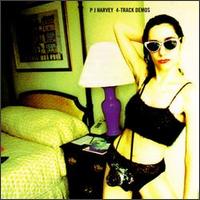
SOUNDTRACK: PJ HARVEY-4-Track Demos (1993).

After the intensity of the Steve Albini produced Rid of Me, Harvey releases this collection of demos.  The amazing thing is that these versions actually seem more intense than the Albini version. Or if not more intense, then certainly more raw.

The songs definitely have an unfinished feel about them, and yet they only vary from the final version in polish (and Albini’s stamp).

“Rid of Me” is just as quiet/loud, and has those high-pitched (and scary) backing vocals.  Speaking of scary vocals, her lead screams in “Legs” are far scarier here than on Rid of Me–like really creepy.  (Which sort of undermines that idea that this was released because Rid of Me was too intense for fans).   “Snake” actually features even creepier vocals–Harvey must have had a field day making these sounds!

I admit that I like the finished version of “50 Ft Queenie” better,”but there’s something about this version of “Yuri-G” that I like better.

The disc also has some tracks unreleased elsewhere.  “Reeling” is an organ-propelled song of female strength with the nice lyric: “Robert DeNiro sit on my face.”  “Hardly Wait” is a slow grinder that is fairly quiet for this time period.  “M-Bike” is a cool angry rocker about a guy and his motorcycle which is one of my favorite tracks on the disc.

It’s a great companion to Rid of Me.

[READ: end of February to early March]  original articles that comprise A Supposedly Fun Thing I’ll Never Do Again

As I mentioned last week, I decided to compare the articles in A Supposedly Fun Thing I’ll Never Do Again with the original publications to see what the differences were.  It quickly became obvious that there were a lot of additions to most of the articles, and it seems rather pointless (well, actually it seems exhausting and really outrageously time-consuming) to mention them all.  But what I did want to note was the things that are in the articles that have been removed from the book.   There’s not a lot but there are a few juicy tidbits (especially in the early articles) that are fun to note for anyone who read only the book and not the original articles.

My process for this was rather unthorough: I read the article and then right afterward I read the book.  If I noticed any changes, I made a note on the article version.  Many of them were surprisingly easy to note as DFW’s writing style (especially his idiosyncratic phrases) really stand out.  This is especially true in the Harper’s articles.  The academic ones were less notable, I believe, and I’m sure I missed a bunch.

I’m not sure in any way how these pieces were dealt with initially by the magazine or DFW.  I assume that DFW handed in the larger article (like we see in the book) and the magazine made suggested edits and DFW edited accordingly.  Then the book copies are probably the originals, bt which have also been updated in some way.

In most cases, it’s not really worth reading the original article, but I’m including links (thanks Howling Fantods), for the curious.

As for length, it’s hard to know exactly what the conversion from magazine article to book is.  The “Tornado Alley” tennis article is 8 pages (more like 4 pages when you take out the ads) and the book is 17.  Perhaps more accurately it seems like one Harper’s column = just under one book page.  I’ll try to figure out what the conversion is if I can.

One last note, whenever I say “article” I mean the original magazine version.  And obviously “book” means ASFTINDA. (more…)

Read Full Post »

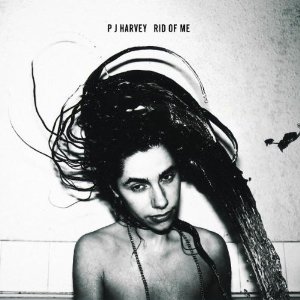
SOUNDTRACK: PJ HARVEY-Rid of Me (1993).

For Rid of Me, PJ Harvey jumped to the big leagues (relatively) by enlisting maniac Steve Albini as a producer.  And he takes the rawness of Dry one step further into a sound that is both raw and sharp.  He really highlights the differences between the highs and lows, the louds and quiets.  And man, when this came out I loved it.

Like NIN’s “March of the Pigs,” the opening of “Rid Of Me” is so quiet that you have to crank up the song really loud.  And then it simply blasts out of the speakers after two quiet verses.

“Legs” turns Harvey’s moan into a voice of distress, really accentuating the hurt in her voice.  And Harvey hasn’t lightened up her attitudes since Dry, especially in the song “Dry” which has the wonderfully disparaging chorus: “You leave me dry.”

“Rub Til It Bleeds” is a simple song that opens with a few guitars and drums but in true Albini fashion it turns into a noisy rocker.  “Man Size Quartet” is a creepy string version of the later song “Man Size” (I’ll bet the two together would sound great).  And the wonderful “Me Jane” is a great mix of rocking guitars and crazy guitar skronk.   Albini really highlights the high-pitched (male) backing vocals, which add an element of creepiness that is very cool.

For me the highlight is “50 Foot Queenie”.  It just absolutely rocks the house from start to finish.  The song is amazing, from the powerful…well…everything including the amazing guitar solo.  “Snake” is a fast rocker (all of 90 seconds long) and “Ecstasy” is a song that feels wrung out, stretched to capacity, like they’ve got nothing left.

It’s not an easy record by any means, but it is very rewarding.  This is a CD that really calls for reamastering.  Because it is too quiet by half, and could really use–not a change in production–just an aural boost.

[READ: end of February and beginning of March] A Supposedly Fun Thing I’ll Never Do Again

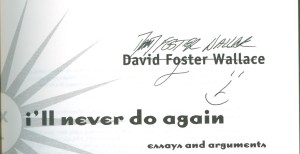
This is a collection of 7 essays that DFW wrote from 1990-1996.  Three were published in Harper’s, two in academic journals, one in Esquire and the last in Premiere.  I devoured this book when it came out (I had adored “Shipping Out” when it was published in Harper’s) and even saw DFW read in Boston (where he signed my copy!).

click to see larger

[Does anyone who was at the reading in Harvard Square…in the Brattle Theater I THINK…remember what excerpts he read?]

The epigram about these articles states: “The following essays have appeared previously (in somewhat different [and sometimes way shorter] forms:)”  It was the “way shorter” that intrigued me enough to check out the originals and compare them to the book versions.  Next week, I’ll be writing a post that compares the two versions, especially focusing on things that are in the articles but NOT in the book (WHA??).

But today I’m just taking about the book itself. (more…)

Read Full Post »

SOUNDTRACK : PHISH-Live Bait: Vol 2 (2010).

Phish has been releasing live concert downloads  for years now.  And now that they’ve started touring again, they have a whole bunch of new ones.  I’m not going to be downloading new shows, (I have a  bunch of old ones that I really never listen to).  But what I like is that they are giving away a few tracks from these shows.  And what I love is that they’re calling the freebies, Live Bait.

This set is a few tracks from shows recorded in August of 2010.  There’s nine tracks  ranging from 90 seconds (“NO2” ) to 17 minutes (“Twenty Years Later”).

Although this show is from 2010, this bait contains only two songs from their last album, Joy. The older songs are fan favorites (“Wilson, “Possum”) and weird interludes (“Kung”).  The band sounds fresh and really into what they’re doing and the old songs sound rejuvenated and fun.

Nevertheless, since most of the other live releases are older, it’s so nice to have the two new songs.  You can’t be choosy on a free sample, but I’d have loved to hear them do “Time Turns Elastic.”  If you’re new to Phish, this is a good place to get a free sample of their live shows.  Three volumes of bait have been released so far.

[READ: February 16, 2011] Ladies and Gentlemen, The Bible!

I discovered this book when I read the short story “Samson and Delilah in The Walrus.  I liked, but didn’t love, the short story, but I was intrigued enough to want to see how the other Bible stories would stack up.  And since we had the book on the shelf, I decided to check it out.

So this book is a retelling of several stories from the Old Testament.  What Goldstein does is create a backstory for these biblical characters who are really just sketches.  The stories are funny, serious, weird and often enjoyable.

The introduction is a very funny kvetch about at being a Jew and having dinner in the Grey Derby; waiting online for hours with so many other Jewish families, eating kosher food with your own family, fighting over the check, pointing fingers, calling each other names and, ultimately, leaving by 5:30 PM.  It made me laugh out loud in the best Woody Allen tradition.

With no real introduction, he moves right into his new versions of Bible stories.

The biblical stories that Goldstein updates include:

  • Adam and Eve
  • Cain and Abel
  • Noah and the Ark
  • The Tower of Babel
  • Jacob and Esau
  • The Golden Calf
  • Samson and Delilah
  • King David
  • part 1: Goliath
  • part 2: Bathsheba
  • part 3: Absalom
  • Jonah and the Big Fish
  • My Troubles (A Work in Progress, by Joseph of N–) (more…)

Read Full Post »


SOUNDTRACK
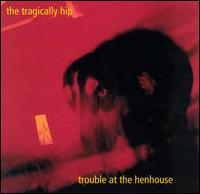
: THE TRAGICALLY HIP-Trouble at the Henhouse (1996).

After the major high of Day for Night, The Hip followed it up with Trouble in the Henhouse.

It opens with “Giftshop” which sounds like it could have come straight from Day for Night.  “Springtime in Vienna” is a marvel.  The opening is quiet with Downie’s almost whispered voice telling a compelling story until it blasts out with a wonderful chorus.  “Ahead by a Century” opens with a catchy acoustic intro.  Again, the harmony vocals add wonders to the verses.

But overall the album feels like the Hip exhausted their angst and anger on Day for Night and have chosen to go with a more mellow sound here.  It almost seems like Day for Lite.  Songs like the final track, “Put It Off” dabble with intensity, but have more atmospherics than powerful guitar and verses.  It’s like the come down after a big party.

The most peculiar song on the disc is “Butts Wigglin” which was used on the Kids in the Hall Brain Candy soundtrack.  It doesn’t really fit on this disc, but it’s such a great song that I understand them not leaving it off.  It’s very silly and musically groovy with  almost no guitars and all keyboards.  It’s a goof, but nice to see the lighter side of the band.

I find Trouble to be really enjoyable in itself, but it kind of pales in comparison to the previous two.  Nevertheless, these three albums are a wonderful trio of discs released by a great Canadian band.

They celebrated this era of the band with a live album the following year.

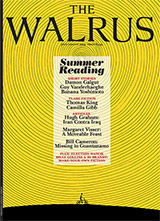
[READ: January 26, 2011] “An African Sermon”

Of all the stories in this Summer Reading Issue of The Walrus, this one was the most powerful.  (It wasn’t my favorite because it was rather distrubing) but it had a strong impact on me.

The bulk of the stoiry is set on a train in Africa.  Two white men introduce themselves to each other; the older one confides that he hopes no Blacks come into thier car.  Of course a Black does come into thier car and the younger man, who is a preacher, tries to embarass the racist man but immediately shaking the black man’s hand.

The black man is hostile to the young man’s advances, more or less shutting him out entirely.  Indeed, when the young man follows him to the dining car to talk (he is genuinely sympathetic to people, but he’s also very curious about the man and wants to pry a bit) the black man (whose name is Leonard Sagatwa) listens briefly and then, claiming a headche, returns to the cabin  room and goes to sleep.

During the night, the train stops because of a malfunction and it will be some time before it is fixed.  The priest goes out to the landing to find something to occupy himself when Leonard comes down.  He says to the priest that he wants to tell his story.  He wants to tell it once, to a complete stranger so that he can unburden himself and then be done with it.  The priest is tickled to hear the story.

But the story is one of Rwandan genocide:  Hutu vs Tutsi, brothers who turn  against each other; Leonard’s brother turning on him and his family.  Killing family members slowly, cruelly, calling them cockroaches.  It is harrowing and the priest is taken aback by the brutality.

But at the end of the story, the priest is resilient and insists that Leonard can forgive his brother.  Never, says Leonard.

The priest is able to use this story for his very first sermon in Africa.  He pretties up the story somewhat and makes it moral, and it works.  The new congregation accepts him and he feels welcomed to Africa.

When, several months later, the priest sees Leonard again, everything has been turned upside down.  And I’ll just leave it at that.

It is a great story.  Wonderfully powerful.

Read Full Post »

« Newer Posts - Older Posts »