Feeds:
Posts
Comments

Archive for the ‘Political Humor’ Category

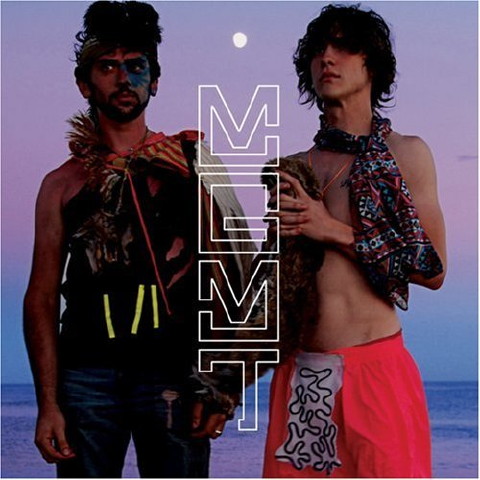
SOUNDTRACK: MGMT-Oracular Spectacular (2008).

I bought this album a few years after it was hailed as the best album by everyone.  I never quite realized that they did all the songs I knew from it, but I was pleased that I bought it.  Then I promptly lost the disc.  I found it about seven months later in another case (doh!).  And I have given it a number of listens since then.

I’m confused as to why this album was so popular.  I’m not saying it’s bad, I’m just not sure why it was so hailed.  It’s a strange kind of record. There are a number of dancey hits (which aren’t really that dancey or anything), but there’s also a bunch of trippy psychedelic stuff as well.

The opener, “Time to Pretend” has a wonderfully catchy keyboard line that expands into a wonderfully simple, but catchy verse/chorus.  “Weekend Wars” reminds me of some of the weirder alternative hits of the early 90s.  The sound is kind of trebly and slightly off, but the middle of the song is full of beautiful swells of keyboards, giving it a strangely hippie vibe.

“The Youth” is a slower track which has a gentle sound and a nice chorus.  It’s pretty far from the danciness of the opener.  “Electric Feel” brings in some disco and funk.   The keyboards are very 70s trebly with a big bottom bass.

The standout track is “Kids.”  It marries the weird keyboard sound of the opener with a wonderfully catchy riff.  It also has a simple chord structure and big drums.  It’s the kind of song that sticks in your head from the first time you hear it.

The second half of the disc is where things change and the more psychedelic aspect so the band come in.  The album was produced by Dave Fridmann (Mercury Rev, Flaming Lips) and while that style is evident in the front of the album, it’s hidden under the more brash punk sounds.  n the last few songs the punky elements are absent and the psychedelia shines through.  “4th Dimensional Transition” is a wash of interesting sounds.  “Pieces of What” is a simple acoustic guitar with vocals that sound like they come from outer space.  “Of Moons, Birds & Monsters” never really coalesces, although the parts are interesting.  “The Handshake” is another folkie kind of song with overtones of David Bowie (who is never really absent anywhere on the disc) especially at the end of the song.  “Future Reflections” ends the disc with a synthy ballad.

The disc is quite different from the first five to the last five songs.  And I find that when I’m enjoying the hits, I’m less excited by the trippy parts (which meander as opposed to the immediacy of the hits).  But I think I could find myself enjoying the vibe of the second half of the disc more if the first half didn’t prep me for that stark pop punk sound.  I guess it has something for everyone.

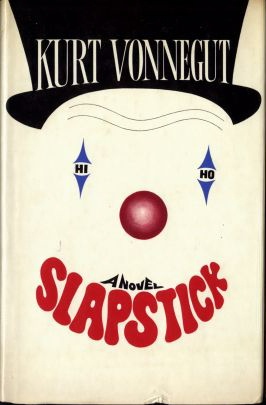
[READ: June 28, 2011] Slapstick

I tend to read books that are long, or at least that feel long.  So Vonnegut is like a guilty little pleasure.  I read this in three lunch hours. And it felt like something of an accomplishment.

I can honestly say I didn’t enjoy this one as much as his previous books.  It was a lot darker and felt a bit more mean-spirited than his others.  True, Vonnegut is nothing if not mean-spirited, but there was something different about this one.  Was it that the protagonists were two meters tall with six fingers and toes and for the first several years of their lives spoke in nothing but baby talk?  Was it that they were so reviled by their parents that they were sent away to the parents’ second home and allowed no visitors?  Or was it that Manhattan was now called “The Island of Death?”  Or maybe it was just the repeated use of “Hi Ho” at the end of virtually every paragraph.

Or maybe it’s that the story doesn’t really feel complete.  There isn’t a lot of story here, but as with lots of Vonnegut, there are a lot of little details that join the story together.  The novel is constructed as chapters, but within the chapters are very short almost paragraph long sections separated by dots.  These little paragraphs sort of work as small scenes, with most having a kind of punch line at the end (this is not too dissimilar from Breakfast of Champions, but the sections are even smaller here).

The two aforementioned protagonists are as described.  But although they speak in nothing but nonsense syllables, they are in fact quite intelligent.  Indeed, when they put their minds together (literally) they reach epochal levels of genius.  And when they put their heads together they write several massively intelligent treatises and the most popular child-rearing manual in history, So You Went and Had a Baby.  Well, actually, Wilbur wrote it for Eliza is illiterate (she just has most of the brainstorms).  Technically, the real protagonist of the story is Wilbur, for these are his memoirs. (more…)

Read Full Post »

SOUNDTRACK: PEARL JAM-East Rutherford, NJ 6.3.06 (2006).

This concert was a free download with the purchase of Backspacer. I chose this because this is the show that I should have gone to.  [How many concerts have I seen at the Meadowlands–or whatever it is called now?].  Not to mention, this is the last concert date of the first leg of the tour, and the last concerts are usually a little longer, a little wilder, a little more fun.

And there’s a number of reasons why this is true during this show.

The first is the technical flaw.  Midway through their fifth song, “Animal” there is some kind of power failure (the flaw with audio from concerts is that you have no idea what’s really going on).  The song shuts down, there’s some crowd chanting and then the power comes back on.  This gives Eddie Vedder a chance to make a Springsteen joke (did he leave for tour without paying the electric bill) and the band resumes, even more intense than before.

There are a number of Springsteen moments during the show.  They thank him for introducing them to the Community Food Bank of New Jersey–where proceeds from this night’s show go).  Later, Eddie’s explains that his failure to figure out the chords to Springsteen’s “Atlantic City” led to his creating the song “Gone”.  And Eddie’s “Pre-Opener” (sadly not on the download, but you can hear it here) is a cover of Springsteen’s “No Surrender.”

Springsteen aside, this is a great show.  The download is three discs long (the first disc is 25 minutes or so and comprises the audio from up to the power failure).  But even with the confusion, the band sounds wonderful.  They run through all kinds of songs from throughout their career, “Even Flow,” “Alive,” “Why Go,” “Black,” “Porch,” and “Garden” from Ten.  “Animal,” “Rats” and “Leash” from Vs. “Last Exit,” “Whipping” and “Corduroy” from Vitalogy, “Habit” and “Lukin” from No Code, “In Hiding” from Yield. “Love Boat Captain” and “I am Mine” from Riot Act, and about half of the songs from Pearl Jam.  There’s also a whole bunch of songs from Lost Dogs: “Hard to Imagine,” “Yellow Ledbetter,” “Last Kiss” and “Don’t Gimme No Lip” and even “State of Love and Trust” and “Crazy Mary.”

The show is a pretty rocking show overall.  In fact, as you can see above they don’t even play their more crowd pleasing ballads (“Betterman,” “Daughter”).  And the set in no way suffers from it.

This show also has a special guest and a special announcement.  Vedder explains that June 3 is West Memphis 3 Recognition Day.  Wikipedia says The WM3 are three teenagers who were tried and convicted of the murders of three little boys in West Memphis, Arkansas in 1993 by a prosecution team that put forth the idea that the only purported motive in the case was that the slayings were part of a Satanic ritual. In July 2007, new forensic evidence was presented in the case, including evidence that none of the DNA collected at the crime scene matched the defendants, but did match Terry Hobbs, the stepfather of one of the victims, along with DNA from a friend of Hobbs’ whom he had been with on the day of the murders.

The WM3.org site shows that many musicians are behind them, offering support and free music.   A new trial date has been tentatively set for October 2011.  If they are found not guilty they would have spent eighteen years in jail for nothing.  Damien Echols (who was sentenced to death) co wrote “Army Reserve” with Vedder, and Echols’ wife says a few words on stage.

Another great moment comes in “Crazy Mary” when Boom Gaspar and Mike McCready have a kind of dueling organ vs guitar solo.   It goes on for several minutes and Gaspar’s Hammond sounds great.  Later in the show, Vedder toasts the crowd for being great.  It may also be the only toast to incorporate the phrase “fucking assholes” (as in if people don’t think you were amazing, they’re fucking assholes).

One of the great things about Pearl Jam shows is that they pack a lot of music into them.  I was especially mindful that when they came out for their second encore, they played nine more songs for about 30 minutes.  Not a bad encore at all.

This is a great set if you’re looking for live Pearl Jam.

[READ: May 24, 2011] Breakfast of Champions

I read this whole book during my trip to BEA.  I read it while on the bus (two and a half hours total) and then while waiting on line for various author signings.  I don’t know that I’ve ever read a book in such a short period before.  It’s not a long book by any means and it is full of illustrations (more on that later).  It was an ideal book to choose for a day of book reading.

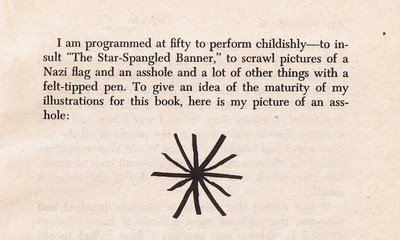
So the novel is actually set up as a story within a story.  The Preface explains that the story is written by Philboyd Stuge (Vonnegut has a lot of fun with names).  It explains that “Breakfast of Champions” is a trademark of General Mills and he is neither  associated with GM nor disparaging them by using the phrase so much (it doesn’t occur frequently until much later in the book).  Stuge explains some of the background information about ideas in the book (that people are actually robots and how Armistice Day was a better name for the holiday than Veterans’ Day).  He also explains that he is writing this book as a 50th birthday present to himself (Vonnegut was born in 1922).  And for his 50th birthday, he is going to act childishly and draw illustrations in the book.  So I found this picture from the novel

That may give you an idea of what to expect inside (although most of the illustrations are “better” than that one).

What is especially helpful about the story is that it tells you what will happen as it goes along.  So the novel starts:

This is a tale of a meeting of two lonesome, skinny, fairly old white men on a planet which was dying fast.

One of them was a science fiction writer named Kilgore Trout.  He was a nobody at the time, and he supposed his life was over.  He was mistaken.  As a consequence of the meeting, he became one of the most beloved and respected human beings in history.

The man he met was an automobile dealer, a Pontiac dealer named Dwayne Hoover.  Dwayne Hoover was on the brink of going insane.

And that is literally the story.  So why is the book 297 pages long then?  Vonnegut is really out to talk about contemporary society:  America mostly, but not exclusively.  And does he ever. (more…)

Read Full Post »

SOUNDTRACK: LIZ PHAIR-Exile in Guyville Live October 6, 2008 (2008).

Like all indie rock hipsters I loved Exile in Guyville when it came out.  And like all indie rock hipsters, I hated that Liz Phair later made an album that is had the top cover below.  I didn’t even care anymore when she made the album with the second cover below.

The irony of course is that Liz made Guyville because she was sick of the hipster boys who were living in Chicago at the time.  And now it was the same hipster boys (only older) who were dismissing her for selling out.  (At least, that’s what I get from the interview that’s attached to the end of the concert and this separate interview from around the same time).

But regardless of my hipster cred (and subsequent loss of same) I really didn’t like Liz’s new pop style (but good for her for still being hot, right?).  In fact, I hadn’t even really listened to her since 2000 anyhow so when she came out with her pop albums I just kind of shrugged.

So, what’s up with this return to Guyville?  Well, the interviews mention her needing some closure on the rough time in her life when she made the record.  And also feeling that since could actually play her guitar now, it was worth giving fans (and herself) the experience of actually enjoying playing the album live.  So, good vibes and happy feelings all around (and sex and sex and more sex).

The concert is the entire Guyville album, played start to finish, with occasional banter in between.  And she is quite faithful to the original (she even has a special guest sing the “Every time I see your face, I get all wet between my legs” line on “Flower.”  The main flaw with the concert is that the bassist hits a number of flat notes and also on at least two songs is either out of tune or just mixed too loud or something.

The other flaw is directly related to Liz saying how much better she is at performing.  Because as the set opens, her voice sounds really off on the first couple of songs.  In the interview, she says that she still feels uncomfortable on stage until about the fourth song. And maybe that’s what’s happening on 6′ 1″ or, quite possibly, she can’t hit those notes anymore (her voice is considerably higher on her newer songs and 6′ 1″ is a low register, almost flat singing style and she just doesn’t seem comfortable doing it).  Indeed, by the fourth or fifth song, she seems more comfortable and seems to be having more fun and the set moves pretty smoothly from there.

She has a good rapport with the audience.  Humility was never her strong suit, and it shows, which makes me her a little less likable, but she still has good banter.

When the album is over she comes back for a brief encore.  She plays two songs solo (which are okay).  And then the band comes back for two of her other hits: “Supernova” and “Polyester Bride” which both sound fantastic.

Listening to Exile in Guyville again was great, the songs hold up really well.  I’ll have to pull her old CDs out and listen to the originals again (the concert is mixed a little low, but–good on NPR–all of the bad words are left in!).  The NPR page also said that Guyville had gone out of print until it was reissued recently.  Is it really possible that Matador let it go out of print?

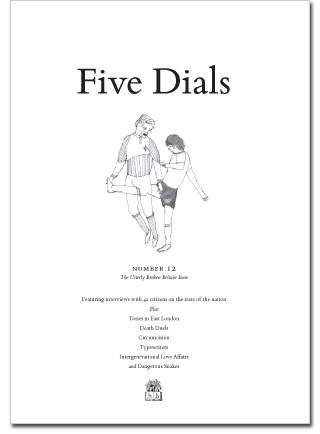
[READ: April 22, 2011] Five Dials Number 4

The conceit behind this issue is “Eleven writers tell us Exactly What Happened …Days Before It Happened.”  And the authors tell us in past tense what happened on the fateful night of the election between Obama nad McCain.  (even though they are written some time before it has happened).

This issue is short again (all of 14 pages), but with such a tidy topic, the fourteen pages are packed with information.  There are eleven authors who write about the election.  Most are just a couple of paragraphs, so I’m not going to try to summarize them.  I’m going to say their predictions for what happened and (in one case) the uncanny accuracy.

CRAIG TAYLOR-A Letter from the Editor “On Elections and Chomsky”
He lays out what the point of this speculation fiction is: “We’ve become tired of the uncertainty and of the waiting.  It’s time someone told us exactly how this election ends.”   And also, Chomsky is almost 80, and he’s still vibrant. (more…)

Read Full Post »

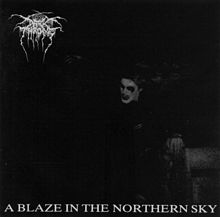
SOUNDTRACK: DARKTHRONE-“Kathaarian Life Code,” (1992), “Sacrificing to the God of Doubt” (2004), “Canadian Metal” (2007).

After watching Until the Light Takes Us, I wanted to check out some of Darkthrone’s music.  According to their Wikipedia page, over the years the band who pioneered black metal has morphed away from the sound.  They’ve added elements of punk and speed metal to their bludgeoning sound.  In the movie Fenriz says that he listens to all kinds of music and is very open-minded.

Kathaarian Life Code” is a ten minute dirge of black metal.  It opens the band’s second album (considered to be a black metal classic) with chanting and guttural spoken words.  Then it blasts forth with the jackhammer style of drums that is now standard in black metal.

It slows down from time to time, allowing for the really heavy parts to blast through the chaos of the fast parts.  It’s pretty intense and not for the faint of heart.  You can hear occasional guitars screaming through the din, but the production is intentionally murky, dark and noisy.  As they say in the movie, the bands intentionally recorded on the shittiest equipment they could find.

Sacrificing to the God of Doubt” is a later song, taken from what is considered their final album in the black metal style.  The band was turning away from the traditional black metal sound, and there are elements of punk (guitar riffs that are audible, and a sound that is less bass heavy) present.  And the production, while still mired by noise is relatively cleaner.

Canadian Metal” is from their third most recent album, after the shift from black metal was more or less official.  It sounds more like an early death metal song.  There’s low tuned notes, audible vocals (growled, but you can actually hear words) and a kind of headbanging aspect to it.  The album is called F.O.A.D. which was a song by Venom (and others, obviously), and this track reminds me of Venom somewhat.  I wouldn’t say that the band has sold out because there’s no way anyone is playing this on the radio, but it’s interesting to see how a band has managed to change things up and add new elements to its sound even though they were the forerunner and grandfather of a scene.

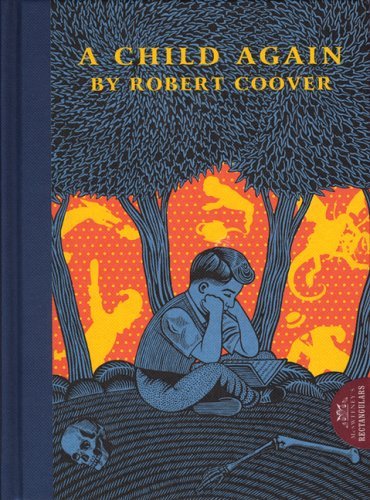
[READ: February and March 2011] A Child Again

This is a collection of short stories from Robert Coover.  There is a kind of theme throughout (most of) the stories about returning to childhood.  But the overall sense is one of despair, sadness, pointlessness and sex.  Lots and lots of sex.  And the sex is usually as vulgar and nasty as the tone of the book suggests it would be.  It’s a little off-putting, actually.

I was planning to say that I didn’t like this collection at all because I really didn’t enjoy the first half-dozen or so stories.  I continued because Coover has a great reputation that I didn’t want to give up after a few misfires.

The real disappointment came because the stories seem so promising: many of them are a kind of retelling of classic fairy tales that looks at “what happened afterward.”  However, and this was true for almost all of them, Coover tries to do two contradictory things with the stories.  He is playing with fairy tales but he is also writing stories that are completely unlike fairy tales.  By that I mean, Coover’s stories are long and very detailed, they bring far too much information to the story.  And a fairy tale is almost by definition short.  I mean, “Puff the Magic Dragon” is a song that’s about five paragraphs long.  But Coover’s “Sir John Paper Returns to Honah-Lee” is 26 pages long.  So instead of playing with the original, it feels like an original story that uses someone else’s characters.  It’s unsettling and unsatisfying.

It’s also not very funny.   And I’m not sure fit’s supposed to be.  But with a title like “Sir John Paper Returns to Honah-Lee” you expect the funny.  And there are funny moments.  I mean the whole premise is that little Jackie Paper has grown up into Sir John Paper.  He’s now an old Knight and he is sent to slay the dragon (Puff) who is plaguing the city.  Even though that is a tragic story, it is also inherently humorous.  And there are laughs when they reunite.  But it gets so bogged down in details, that the essence of the story seems to get lost.  Perhaps I’m just disappointed because it (they) turned out so unlike I wanted them to be. (more…)

Read Full Post »

SOUNDTRACK: DC3-“Theme from an Imaginary Western” (1985).

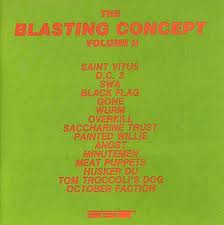
This song comes from the SST compilation The Blasting Concept Volume II, which came out in 1985.  I bought it on vinyl and was psyched when it came out on CD.   This version of an old Mountain song was one of my favorite songs on the disc (I don’t even know the Mountain version very well).

DC3 was the brainchild of Dez Cadena, former singer for Black Flag.  They put out a couple of albums and then disappeared.  And yet all these years later this song has stayed with me.  For a singer from Black Flag, this song is remarkably poppy (and features a lengthy keyboard solo!).  The real treasure of this song for me comes at the first chorus.  When the band sings “Oh the sun was in their eyes…” the vocals begin in a disparate, perhaps minor key harmony, and then merge into a perfect harmony.   It gets me every time.

DC3’s records have never been released on CD, and the vinyl is out of print. There’s a live CD out, but I’ve never heard it.   So, as far as I can tell, this is the only studio song available in the world.  Maybe the albums are terrible, but DC3 will always be great because of this one track.

Oh, and someone posted it on YouTube

Thanks!

[READ: March 22, 2011] Consider David Foster Wallace [essays 13-16]

This is the final batch of essays from this collection about David Foster Wallace.  The first is about Oblivion and the last three are about his non-fiction.  Perhaps it’s because I have been reading his non-fiction a lot lately (or maybe I enjoy reading essays about nonfiction more than fiction) but I found these to be the most enjoyable essays in the book.

As I’ve stated with each post, because I don’t have a lot to say about the pieces (I’m not an academic anymore), I’m only going to mention things that I found puzzling/confusing.  But be assured that if I don’t mention the vast majority of the article it’s because I found it interesting/compelling/believable.  I don’t feel comfortable paraphrasing the articles’ argument, so I won’t really summarize. (more…)

Read Full Post »

SOUNDTRACK: JIAN-The First 6 Songs (2001).
Being American and apolitical in my youth, I had no idea who Pierre Trudeau was until about 2001.  And my first real introduction was through this album by Jian Ghomeshi.  Jian was one of the four guys in Moxy Früvous (and man has his career skyrocketed since then…watch his great interview show Q online–in particular, check out the crazily uncomfortable interview with Billy Bob Thornton or the wonderful hour long interview with Rush).

Moxy Früvous had just broken up and Jian, who was one of my faves in the band, put out the optimistically title The first 6 songs (no other songs have arrived yet).

Jian is a mostly folk rock album which features Jian’s gentle voice.  And gentleness is one of Jian’s trademarks, it would seem.  But more than gentleness, his songs are about accountability and justice.  And yet lyrically, he’s not naive or obvious.  “Quebec City” is about the Summit of the Americas in Quebec City in 2001 (“the whole world is watching”).

I’ve always felt connected to the last track, “Lousy Boy”:

“And a man Is a man If he’s got a gun in his hand
Well I never wanted to destroy I always made a lousy boy….  And I know guys who are just like me
They like hockey and poetry
I think in retrospect that we have won
I’m a full-grown man and I don’t own a gun.”

Früvous has similarly thoughtful lyrics but in addition to the lyrics, the music is always interesting.   So the unexpected chord changes in the bridge to “Astronaut” turn the song from a simple folk song into a moving rocker.  And “Baby Don’t Lie” is a 5 minute track that builds on a folk base and is a catchy sing along.

of course, this all leads to the song “Father (For Pierre Trudeau)” the song that first taught me a little bit about the Prime Minister.  The song covers a few moments of his media-saturated leadership.  But mostly it’s a reflection about Trudeau on the day of his death.  The personal touch of course is that Ghomeshi’s father wanted to meet him (as did Jian) but now they w0uld never get to.  It’s a very touching song, and I have a hard time imagining someone writing a similar song about a President.

It was this song that got me to investigate the life and leadership of Trudeau.  (I even wrote an email to Jian, to which he quickly responded…I only wish I still had that email account active).

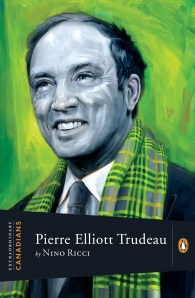
[READ: January 12, 2011] Pierre Elliot Trudeau

This is one of the more exciting biographies that I’ve read.  Which is pretty great.  Although one of the reasons it is so exciting is because he presumes that the reader knows a lot about Trudeau already.  And to be fair, I assume most Canadians would know the global picture (and most of the details) about him already.  So, basically, you get a summary picture of Trudeau, but instead of a quick outline that glosses over details, we get a lot of details, but no gloss.

What I’m getting at is that there are a number of places where Ricci talks about events and movements as if we know them.  So this makes for incredible fluency even if the novice is left puzzling exactly what all the fuss was about.  In fairness, contextually it’s easy to figure out, it’s just a bit surprising.

Another fascinating thing: Ricci skips over Trudeau’s childhood pretty much completely.  The book opens with Ricci’s memory of seeing Trudeau in 1967 when he (Ricci) was a young boy and seeing the way his teachers an adults seemed mesmerized by him.

Nostalgia aside, Ricci quickly explains what a polarizing figure Trudeau has been.  Warmly loved by many and yet (according to Macleans) ranked 5th of all Canadian Prime Ministers (despite being re-elected several times).  Actually, the way that Ricci words it it sounds like he came much lower than that (he says “third tier” which seems much mower than 5th).  And, judging by comments on YouTube videos, utterly hated by others.

The next chapter continues in 1968 at the beginning of Trudeaumania. Treudeaumania sounds a lot like Obamamania–a young, relatively inexperienced politician makes some noise and is thrust into prominence.  (Of course, in 1968, Trudeau only ran for office for a month and a half before being elected–ah the bliss of a short campaign season).

A video of Trudeaumania shows people swooning over him.

The biography does cover some of Trudeau’s earlier years (taken largely from Young Trudeau by Max and Monique Nemni).  He was a somewhat rebellious youth and his teen behavior was full of the usual (and not so usual) rebellions.  But the thing with Trudeau is that it is never clear whether he seriously held certain beliefs or if he was just trying to get a reaction out of people.

He established a society called les X whose purpose was to create an independent Quebec (organized under fascist principles).  les X faded from Trudeau’s life and existence with very little fanfare, and evidently radical groups like that sprang up all the time in Quebec at that time.  Really, it seems to point to his growing bored at his school and with the provincialism of Quebec.

When he left Quebec for Harvard and later for Europe, his mind was expanded and his beliefs opened up accordingly.  He had written many anti-Semitic things in his Montreal youth but once he actually met some Jews, he quickly changed his tune. Indeed, Harvard seems to have really shaped his later outlook in life.  And his exposure to vastly different attitudes during his studying Paris and then later in London exposed him to so much more in the world.

When he returned home to Quebec he found everything small and narrow (which is exactly how it (and he) was when he left it).  And he quickly finds himself embroiled in politics with the Asbestos Strike of 1949.  He took a position (and offered free legal assistance to anyone striking) which raised his profile and quickly made him persona non grata in his province.

This led him to leave for Ottawa, where he was less known and (since his credentials were great) where he could easily get a low position in politics and establish his career.  The main thing he learned, though, was that Ottawa was not the enemy (as is generally held to be true in Quebec).

Trudeau eventually returned to Quebec for Cité libre.  This is one of the things that Ricci glosses over…I’m still not exactly sure what Cité libre is (okay, an influential political journal), but I’m well aware of Trudeau’s involvement in it.  And how it helped him to state his principles and beliefs.

There’s a lengthy passage where Ricci explains how Trudeau’s federalism came to blossom so powerfully for him.  And this argument is one of the reasons why I am in the camp of Trudeau, because even though his piece is meant to be just about Quebec, I find it holds true for the U.S. as well (substitute out Quebec for any special interest).

The sort of independent Quebec he had dreamed of as a young man, he saw now, would only have given greater rein to the ruling elites to exploit nationalism for their own end, as Duplessis has done. In a Quebec obsessed with the survival of French-Canadian culture it was too easy for leaders to manipulate the electorate by promoting vague ideological goals rather than more practical ones, such as those providing infrastructure and employment (103).

Trudeaumania quickly swept him into office, but he was most reviled by his home province which felt betrayed by his turning his back on separatism.  He was the target of an attack by the FLQ, which captured and killed Trudeau’s friend and cabinet minister Pierre Laport. This was known as the October Crisis.  Trudeau’s reaction was swift and hard, he called for martial law (and the Mounties certainly abused their rights). But when questioned about whether he should or could step so hard on a province his answer was “Just watch me”

Now, it turns out that that quote comes at the end of a lengthy interview and makes for a glib soundbite when in fact Trudeau was anything but glib.

The next big moment of excitement for Trudeaumania was when he married Margaret Sinclair.  For a brief time, they were the it couple.  He was 51, she was just 22, and she was beautiful.  Trudeau seemed to be a confirmed bachelor or at least a consummate playboy, so to have him settled down was quite a story.  But how hard must it have been to be a young woman suddenly thrust into the political spotlight.

Naturally, cracks would surface in their marriage.  In fact, in 1977, Maggie decided to party with The Rolling Stones rather than attend her sixth wedding anniversary party (read the wonderful article in People about it–I love the tsk tsk tone!).

But the penultimate chapter is, mostly, about Trudeau’s disappointments.  He had taken office in a hail of excitement but really had not a lot to show for it.  He was even set for retirement, until he was drawn back in.  And in this final term, he was finally able to achieve his legacy.  And this legacy seems to be summarized by two words: federalism and patriation.  (With the downside being summed up in the word “notwithstanding”).  Now, this is obviously something that Canadians know all about, and it seems foolish to summarize what this meant for readers who lived it.  But for me, who knows precious little about the mechanics of Canadian politics, I was a little lost in the details.

I got the Federalism thing, but the constitution is a bit confusing.  And the whole notwithstanding clause really kind of lost me.  Nevertheless, the chapter that covered this was rather exciting because Ricci writes as if there is one man whose mission is to see him fail.  And this nemesis is Rene Lévesque.  It’s a classic mano a mano battle between two Quebeckers and it’s really rather exciting (especially if you didn’t know the results).

The final chapter talks of Trudeau’s legacy.  And in this chapter Ricci seems to side with Trudeau.  He cites specific examples of being the best man at a same-sex wedding ceremony, something that would not be possible without Trudeau (even though Trudeau never envisioned it).  Indeed, there’s a comment that:

during the 1968 leaders’ debate, Réal Caouette, leader of the Ralliement créditistes, joked that Trudeau’s Criminal Code amendments might lead to a situation where “a man, a mature man, could in the future marry another mature man” Caouette had his joke while Trudeau, awaiting his response time, smiled civilly and held his tongue.

Because I’m not part of the culture, I don’t know to read Ricci’s take on the man.  He is not afraid to show off all of Trudeau’s faults.  In fact, in many instances he rather highlights them.  For instance, the debt under Trudeau expanded exponentially.  When Trudeau took office in 1968 Canada had a debt of $18 billion; when he left office in 1984, that debt stood at $200 billion, an increase of 83% in real terms.  And yet at the end of a nasty passage he will present some evidence which ameliorates Trudeau either in whole or (more typically) in part.

I guess in that sense it is an excellent primer on Trudeau’s political life.  But it’s also personal enough that you can see how one man impacted people.  Not citizens, but people.  And when he describes the people lined up for Trudeau’s funeral it ties right back to Jian’s song.  It really shows the impact that one person can have on the lives of so many.

And, here’s a shameless plug to the folks at Penguin Canada–I will absolutely post about all of the books in this series if you want to send me the rest of them.  I don’t know how much attention these titles will get outside of Canada, but I am quite interested in a number of the subjects, and will happily read all of the books if you want to send them to me.  Just contact me here!

For ease of searching I include: Fruvous, creditistes, Real Caouette, Rene Levesque, Cite libre

Read Full Post »
SOUNDTRACK: SHARON VAN ETTEN-Tiny Desk Concert #91 (November 14, 2010).

I was introduced to Sharon Van Etten via NPR’s All Songs Considered, so it’s no surprise that they would have her on a Tiny Desk Concert as well.  I loved her song, “Save Yourself” more than I could imagine.  There was something about the way the intensity built and built that really blew me away.  The rest of her album is really enjoyable, but it has less intensity. It’s almost like an acoustic album.

So it’s funny that I find her Tiny Desk show mildly disappointing because it is also an acoustic set. In fact, it is just her and her guitar (and her singing partner who sings wonderful harmonies).

Okay, I shouldn’t really say disappointed because the set is quote good.  Her guitar laying is fine and her voice, he unique and slightly unsettling voice is in fine form here.  There’s just something about the stripped down nature that takes away that extra sparkle that I really love about the disc.  I imagine that if I hadn’t heard the whole CD first, I would have been blown away by this live recording.

The four songs (“Peace Signs,” “Save Yourself,” “One Day,” “For You”) are all from Epic, and they’re all really good.  It’s a nice accompaniment to the album, but I think the album is a bit better.

[READ: December 13, 2010] I Live Real Close to Where You Used to Live

Back in early 2009, McSweeney’s published Thanks and Have Fun Running the Country: Kids’ Letters to President Obama as a friendly kick off to the President’s new term. We’re now at the end of the second year of that term and the “Have Fun” part seems to be rather unlikely.  But just in time for the rise of Boehner, McSweeney’s has published this companion piece, letters to the rest of the Obama family.  And it is just as sweet, clever and at times odd as the first.

The kids from 826 National in several cities were asked to write letters to the first family.  It’s interesting to see how the different regions ask different questions, but perhaps more interesting is how some things seem to resonate no matter where the kids are from.  Two kids ask about Pokémon Black and White (this must be the hot new game).  Several kids ask how many rooms there are in the White House.  Naturally, several ask about her garden (what she has in it or what kind of fruits and veggies she likes).

But the most fun is the advice the kids give.  My favorite is the girl who says that her aunt thinks Mrs Obama should have one more child (but only if she wants to).

Sadder are the children who are clearly having a rough time.  One child talks about her parents’ separation, and another’s entire letter is: “Can you help my family? We’re about to lose our house. Make the world a better place. What is your favorite food?”  It must be tough to be a prominent person who clearly wants to help yet who is for the most part, impotent to do anything.

And for me that has to be the hardest part about writing to the first lady.  She has no clear “role.”  She’s a public figure and she advocates for good, but she can’t really “do” anything.  And that has to be hard to grasp.  Although judging by what the kids say, maybe they have no problem with it. (more…)

Read Full Post »

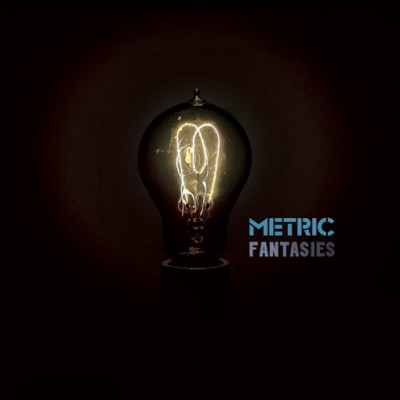
SOUNDTRACK: METRIC-“Gold Guns Girls” (2009).

I mentioned to Sarah that WRFF plays this song all the time and that I really liked it but I had no idea what the band or even the song title was because they never say it.  And, I couldn’t really figure out any of the words (I’m usually working with loud tools) to investigate online.

Well, we were in the car the other day and, of course, they played it again.  Happily, the Prius has a “message” button on the radio that tells you the names of the band and the song title (if the radio station provides it).  Huzzah, here’s the song (hilariously, they played it on the way home from our Halloween party too, proving my point that they really over-play this song).  But I still think its great.

I’ve been interested in Metric for a while (there are members of Broken Social Scene in the band) but for some reason I never listened to them.

This track opens with a fast guitar riff which is undercut by this cool bass riff.  Over the top staccato vocals (that come in unexpectedly) and a nice harmony type vocal (like later period Lush) make this opening really captivating.

The repeated chorus “Is it ever gonna be enough” (with I think whispered “enough”s in the background) remind me so much of the mid 90s alt rock that I love so much.  I have no idea if the rest of the disc is like this, but I have finally bitten the bullet and decided to order the whole thing.  I hope I’m not disappointed.

[READ: 2005 & October 25, 2010] “Bird-Dogging the Bush Vote”

A while ago I read a whole bunch of pieces by Wells Tower.  I intended to read all of the pieces I could find by him and I discovered he had written a few pieces for Harper’s as well as the articles for Outside.  I’m fairly certain I read this story back in 2005 when it came out, as it sounds kind of familiar, but maybe I, like Tower himself, was too bummed with the results to actually read about it in detail.

In this piece, Tower decides to go “undercover” and volunteers at some Bush/Cheney offices in Florida (a pivotal state that year and one in which malfeasance was predicted on a large scale).  Tower is unabashed about his distaste for Bush (to us, not to the Floridians).  He admits that he did feel a bit of hope in the President right after the events of September 11, 2001, but by September 12, he was already disgusted with him again.

And so he spends a few weeks in Florida actually asking people to vote for Bush in hopes of finding something out of the ordinary.  Which, aside from some real mean spiritedness (which I’m sure was the same in the Kerry camp), there was nothing scandalous to report.   Although I will say that the example he gives (telling a Democrat that voting was on the day after the actual election, which I’d seen in a number of other places too, really pisses me off despite its fairly innocuousness and no doubt ineffectiveness–as a librarian I hate telling lies to people). (more…)

Read Full Post »

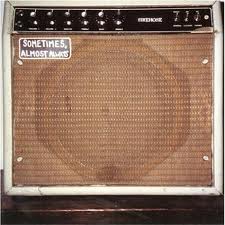
SOUNDTRACK: fIREHOSE-“Sometimes” (1988).

This single for the fantastic fIREHOSE song “Sometimes” is an okay EP worth tracking down if you’re a fIREHOSE fan or even if you’re not too familiar with them.

“Sometimes” is a great mix of loud guitars in the verse and soft guitar picking in the chorus.  It’s wonderfully catchy and has a sort of southwestern vibe to it.  It’s one of my favorite songs on the SST label.

“For the Singer of REM” is a song that’s also on if’n.  I never quite knew why it was called that.  There’s a lengthy story online (about twenty questions down) about how the song came about (in a nutshell, REM asked fIREHOSE to play with them and Stipe asked Watt if he wanted to record a song or two together.  And so, Watt wrote this.  Nothing ever came  of the collaboration though). And the song is uncannily like an REM song.  The verses and the cool staccato bass bridge are right on target.  Although there’s a very un-.RE.M. part that separates the chorus from the bridge with heavy drums and very discordant guitars).  It’s pretty neat.

The final song features what Watt calls “spielin'”  This track is mostly nonsensical ranting.  But there’s so many different musical sections that it’s hard to keep track.  There’s a bunch of guitar jangling and then odd little bass and guitar bits.  And there’s some funk and all manner of things.  It’s not exactly a throwaway track because it really lets them air out their stuff.  But it’s definitely a weird little piece of music.

[READ: October 27, 2010] “The Listener”

Although at this point I’m no longer “testing” to see whether I liked Jonathan Franzen’s work (I’m very much a fan of his writing style and his ability to wrangle interesting stories out of thin air), this piece certainly qualifies as a test.

This article is a profile of (then) House Speaker Dennis Hastert. Now I personally don’t give a, well, anything, about Hastert.  I have no interest in the man at all (especially since he is no longer even Speaker of the House) but I had probably less when he WAS Speaker, so can Franzen not only get me to care about him, but to actually want to read a fourteen page article about him?

The answer is yes. (more…)

Read Full Post »

SOUNDTRACK: SONSEED-“Jesus is a Friend of Mine” (1983).

My friend Nick sent me a link to this song.  And he said that it would  have been the theme song to his radio show back in college.  (We went to a Jesuit school, so it could be taken seriously as well).  Of course, knowing him, he absolutely would have played it as his intro music.

Anyhow, I listened to it and enjoyed the video in the spirit of gentle mockery that it was sent.  But I found myself listening to it quit a lot and I have concluded that I now enjoy it irony-free.  And how can that be?

Well, first off, Christian rock generally sucks.  In addition to many other reasons, it’s often played with a style that is inappropriate to the message.   And Gawd, forget the bombast of arena Christian rock bands (who shall remain nameless).

What I like about this song is that a) the musicians are really good. It’s a live song (I assume–they wouldn’t lip synch on  Christian TV show would they?) and they are tight.  Also, the music (ska!) is upbeat, just like the message.  Finally, while lyrically not very clever (most of the lyrics are pretty laughable), they are sincere and not aiming too high.

And, I hate to say, it’s catchy as hell (although I suppose you have to like ska to like it).

Evidently, I’m not the only one to be transfixed by this strange group (and, it seems I’m at least two years late to the party, as there is already a great deal of chatter (and even controversy) about this video).  So, let me be the umpteenth person to post it on his blog.

[READ: September 2, 2010] McSweeney’s 35

This new issue shocked me because I noticed that it was printed in Canada, not Iceland. I’m not sure when this switch occurred, but I feel somewhat saddened for the Icelandic press!

The cover is a (softcover) foldout (with two flaps).  The front shows two people crossing a street, but even more shocking than the Canada thing is the cover itself…something I didn’t notice until I left it out in the car.  The black of the cover (see above) is actually heat sensitive.  When it gets warm, it reveals a secret underworld to the picture.  Very very cool!  I was really confused when I picked up the book and it was no longer black but green with fishes swimming around, and I couldn’t imagine why I ever thought it was black.  Pretty sneaky, sis.

This issue features a newly revised letter column (although “letter” is a subjective term here).  There are four longer stories, and the rest of the book has two sections.  The first is comprised of an awesome photo series of lunch bags (which I will attempt to emulate for my kids when they begin school).  The second is “a Portfolio of Stories from Norway.”  The Norwegian Stories are great, and really show the strength of literature coming from the country. (more…)

Read Full Post »

« Newer Posts - Older Posts »