Feeds:
Posts
Comments

Archive for the ‘Parenting’ Category

SOUNDTRACK: CAPTAIN GROOVY & HIS BUBBLEGUM ARMY-“Captain Groovy And His Bubblegum Army” (1969).

Was there ever a band made for its time more than Captain Groovy And His Bubblegum Army?  In addition to the hippie component, there’s even “bubblegum” in the title.  [The “golden age” of Bubblegum Music was 1966-1970].

I’ve never heard of them or this song before.  It made it to #128 on the charts.  So who were they?

This band was a studio project constructed by bubblegum music kings Jerry Kasenetz and Jeff Katz, who were also the masterminds behind the Ohio Express, the 1910 Fruitgum Company and the Music Explosion.

They released one 45 (‘Captain Groovy And His Bubble Gum Army’ b/w ‘Dark Part Of My Mind, Part 1’) on the Super K label in 1969. Joey Levine, lead singer of the Ohio Express, provides vocals on the record, which was originally intended to be the soundtrack to a cartoon series titled ‘Captain Groovy And His Bubble Gum Army’, but it never got off the ground.

Perhaps it never got off the ground because they couldn’t decide if it was “bubblegum” or “bubble gum.”

Despite the name, his song seems to defy the concept of bubblegum music.  There’s not a lot of music in the song.  There’s a melody but it’s mostly provided by the bass and vocals.  The drums are also too loud for bubblegum.  Indeed, this song feels much more psychedelic, which makes sense given the time.  I guess the name is misleading in several ways.

The bridge of the song features a slowly increasing riff that leads a lot of tension and the guitar solo at the end is quite anarchic.

I can’t imagine what the show would have been like.

[READ: May 18, 2020] Bubblegum Week 2

Over at the Infinite Zombies site, there was talk of doing a Quarantine book read.  After debating a few books, we decided to write about a new book, not a book that everyone (or some people) had read already.  This new book would be Bubblegum by Adam Levin.  Many of us had read Levin’s massive The Instructions which was not especially challenging, although it was a complex meta-fictional story of books within books.  It was kind of disturbing, but also rather funny and very entertaining.

So I’ll be posting weekly ideas on this schedule

Date Through Page
May 11 81
May 18 176
May 25 282
June 1 377
June 8 476
June 15 583
June 22 660
June 29 767

Facts are Subjective Anyway

I wasn’t planning on focusing on names again this week, but there are a few things that came up that put names back on my radar.  The first of which was the fact that he mentions Adam Levin, author of the novel The Instructions, as a person who smoked as much as he does.  But speaking of this, there is a lot of fiction within fiction revealed here.  So these were two interesting ideas.

In fact though, this was a tough section to write about because a lot happened.  With more action, there seemed to be less to ponder because so much moved things forward.  Not a lot happened in the first week, but comparatively, this was action galore.

Chapter 1, Section 4 “All-Encompassing and Tyrannical”

As this part opens, Belt muses about Lotta’s conspicuous generosity.  As with many other things in this story so far, Belt is super analytical.  He decides that her generosity had to mean something.  But what.

  • What she too spidged to realize she’d given so much money?
  • Was it a communication of some kind?  But what?
  • Was she hinting that she loved him?
  • If she did, it was not mutual but he didn’t want to offend her.  So how should he proceed with the loan?  Anything he did might offend her, which he didn’t want to do.

He “knew a stalemate of hypotheticals when [he] saw one.”

The question of if he should spend the money is mooted when his father returns early.

His father tells a lengthy story about why he left the fishing trip.  He’d gotten a fight with his friends who claimed that Belt was a puker.  Belt did once puke  on a fishing trip.  Clyde’s friend Rick’s son Jim pretty much butchered a fish trying to take the hook out and belt threw up.  Rick said they call Belt “the Duke of Puke.” So Clyde got into a fight with his best friend.  He also realized he’d forgotten to leave Belt money so he came home early.

Clyde is a prickly dude to be sure.  Here’s a couple of example of Clyde’s behavior to his son.

He asked if it was I who’d left the water on the kitchen table, and, if so then why had I left the water on the kitchen table, but before I could answer either question, he’d already begun to sarcastically offer a number of reasons why someone who has just celebrated his thirty-eighth birthday might feel entitled to leave water on a table instead of feeling obligated to spill it in a sink and wash its container or, at the very least, rinse its container. He didn’t say container, but he didn’t only say tumbler.  He named a large assortment of containers–glass, cup, mug, tankard, stein, grail, chalice, etc.–as if he felt that uttering a exhaustive list of names of containers from which one might drink was necessary to bringing his point across with clarity.
When at least he finished speaking, I told him I wasn’t yet finished with the water.
“So finish it,” he said.

We also learn that Clyde had not only purchased one of the “Jonboat Say” T-shirts, he mounted it in a glass frame (and assumed that it bugged Belt.  It did, but doesn’t any longer.

Chapter 1, Section 5 “On the Chin” also has a lot of “action.”

Belt talks to a few inans and it’s interesting to learn that the inans have opinions about each other.

The slide is a whiner and mocks Belt for having to talk to the inans out loud rather than in his head.  The slide encourages him to try to talk in his head, but it’s so muffled the slide rips him apart.

He leaves the slide and when his feet hit the ground, the SafeSurf spoke up.  The SafeSurf is empathetic. and here we get some more incorrect names.  The SafeSurf initially calls him Blight Magnificat.  ||I knew Magnificat sounded off||.  SafeSurf also reveals how much he dislikes the slide because the slide has been calling him |not pebbles| because it replaced pebbles, I guess. But even that’s insulting because SafeSurf didn’t replace pebbles it replaced woodchips which replaced the pebbles.

Then comes the frankly astonishing information that there is a girl, unnamed of course, who can also speak to inans.  Belt has known about this girl for some twenty years and had been looking for her.  But how do you find someone who is talking to inanimate objects?  Especially if she is talking to them in her head.  The inans can’t tell people apart aside from gender, so they’re no help.

Then we hear that ten years ago she had killed herself with pills in the bathtub (news travels slowly among inans but it does travel).  But now the SafeSurf tells him there is a new girl who an talk to inans and it has encountered her.

Then comes some real drama and real action.

Five fourteen year old boys all wearing identical baseball hats embroidered with “yachts” approach.  Their names are on the brims: LYLE, BRYCE, CHAZ, CHAZ JR.  There was a fifth who was further back and called Triple-J (or Trip).  Belt had let Blank out and the boys spotted it immediately The boys think Blank is adorable and want to buy it.  The fifth boy is ignoring them as he is doing something by the slide.

Belt gets tense about the boys closing in on him and he lashes out at them.  Triple-J comes over and subdues him but jumping on his kidneys.  But in a remarkably restrained manner.  He even makes sure that Belt is okay.  But belt has figured out who this boy is.  When Triple-J said “Dicksneeze,” Belt knew that it was Jonboat’s son.

After the beating Belt passed out.  When he wakes up he find a cure taped to the slide–Triple-J had taped him there with Band-Aids.

Belt brought the cure home and wanted to save it.  He doesn’t want to dact on the cure because he wants to remain innocent of that experience.  He assumes that the cure has bonded with Triple-J, so he knows he will need the Independence

He thinks of Chad-Kyle because of his Bic lighter. The sound it makes is claimed to be a flick but it is duosyllabic and it sounds a lot like CHAD-kyle.

Chapter 1, Section 6 is called “Toe”

The cure that belt brought home died over night (Belt tried to save it but wound up killing it instead).  The cure had been in the process of laying a reproductive pearl.

Belt is actually burying the dead cure in the backyard when his father sees him.

It begins with a possibly touching moment between Belt and Clyde.  Clyde got a cure from the cuddlefarmer at the brothel the night before with the intent of then both dacting on it together–a bonding experience.  But it was so cute that Clyde couldn’t get it to his mouth fast enough.

When Clyde sees him burying a cure, he assumes they both self-dacted which makes them even.

But then there’s more of Clyde’s prickliness.

Speaking of forgot, I hope you’re better at remembering which hook you took that spade from than you are at remembering to lock the shed door.
I had locked the shed door.  “It’s locked,” I said.
“Sure,” said my father, “I can see it’s locked now, but it wasn’t while you did whatever you were doing with my spade over there for however long you did it.”
“No one would’ve broken in while I was standing in sight of it.”
I didn’t say they would.  I’m talking about habits. The more often you fail to lock the shed when you leave it, the more likely you are to forget to lock the shed.”
“Maybe,” I said.
Trust me,” he said.
“I trust you,” I said.
“Don’t get all autistic, I’m fucking with you Billy.  Lighten up.  Take it easy.

As Belt leaves the scene, Clyde says he’ll just dig up whatever Belt has buried (which Belt said was a 25 year-old cure).

Belt goes to the bank to return Lotta’s money and to talk to Chad-Kyle about Independence.

He has an awesome conversation with Gus about handkerchiefs and how the demise of the handkerchief is essentially responsible for the death of romance and the rise of child beating (its pretty spectacular).

Gus is an interesting character and Belt likes him.  He even says “I really like your name.  It’s an old-timey name.  A tough kind of name, but not like a bully.  Just straight up tough.

When Belt reveals that his father is Clyde Franklin Magnet, Gus knows him–he was Clyde’s supervisor (before he retired or, you know, was fired).

Later Gus says to Belt, “And so your name’s uh–its’ Cuff, right?”

Belt says he’ll give him an autographed copy of No Please Don’t.  And soon enough Belt’s book will come into prominence in the story.

But first he goes to talk to Chad-Kyle who is trying to get his Independence cure (and two others) to do a (violent) trick which he thinks will get him on the marketing plan for Independence.

Chad-Kyle goes on a long, hilariously inaccurate, diversion about the inventor of dynamite.  “I can’t remember his name” [Aflred Nobel].  Nobel created it to blow up mountains but then someone realized it could be used as a weapon in WWI against the Nazis.  That’s when he had his Topeka moment.  When Belt says he doesn’t think that’s right, Chad-Kyle says, “facts are subjective anyway.”

Finally Lotta Hogg drags Belt away (No worries, Beltareeno) and says she wants to take Belt to lunch.  She says she hates the idea of killing cures–and this makes him think twice about her.  He calls CK a “wang scab” but she says he’s not that bad.  She is playing Berlin’s “Take My Breath Away,” the first music mentioned in the book, I believe.

They go to Arcades Brothel.  They recently started serving pizza (which Belt decides isn’t very good).  Lotta orders them a flight of slices (ha).  It turns out Lotta’s mother is the cutefarmer who sold Clyde the cure last night.

Belt goes into the bathroom trying to decides if he could actually like or even love someone like Lotta.  When he returns he sees that she has a cures toe in her cleavage.  (His mind comes up with some repulsive alternatives before realizing what it actually is).

She tries to get him to eat one, “PWEESE? Aw we want is Cwoseness.”  But Belt will have none of it.

Chapter 1, Section 7 “What the Gold Should Have Done”

The final section of the chapter features Triple-J at the Magnet house.  It also features a lot of detail about No Please Don’t.

Belt says there are three vaguely autobiographical moments in the novel.  Although he won’t spoil the novel by revealing anything more than that Gil Benjamin MacCabby is mourning the loss of his beloved Bam Naka action figure and the chipmunk episode resonates for him in a way it really didn’t for Belt.  (I’m not detailing the chipmunk episode).

When Belt gets home, Triple-J greets him with a quote from the book, “What should gold have done.”

Triple-J says he loves No Please Don’t.  It’s the first book he ever loved and he has read it many times.

Jonboat’s former driver is now driving around Triple-J.  His name is Burroughs.  Belt tells Burroughs to call him “Belt,” but his father says “Call him Billy.”

Clyde and Burroughs get into a tough guy conflict that leads to nothing.  Eventually, Triple-J (Burroughs calls him Trip) invites Belt and his father to “the compound.”

Before they leave, Burroughs takes Belt aside and says that Jonboat was convinced that Belt modeled Bam Naka after him.  He was quite upset about it but has since gotten over it.  Belt assures him that Jonboat is tangentially involved in the narrator if at all.

Triple-J asks if Belt will watch his movie  A Fistful of Fists, and read his two papers “On Private Viewing,” and “Living Isn’t Functioning.”

But despite how much Belt would like to engage with Trip’s media, he decided to reread Chapter 9 (the end of part 1–this is also the end of part 1) of No Please Don’t, the first time he’s read it since he wrote it.

Gil MacCabe is 9 years old.  He was given a ring by his father and he suspects it is not real gold.  Like any good watcher of cartoons, he decides to test the realness of the gold by biting it, as any good cartoon prospector would do.  of course he [like me] doesn’t know what the biting is supposed to prove.

He winds up ruining the ring, but doesn’t know what it even means.

Of all the nugget-biters in the Westerns Gil’s seen…not one of them ever even once explains just what the nugget did or didn’t do between his teeth to assuage his suspicions of its being fools’ gold or confirm his hopes of its being real gold.

This leads to Gil remembering back when he was 3 or 4 years old.  Gil thought about how on shows glass would break.  So when his mother served him water in a glass instead of a sippy cup he wanted to know what kind of glass this was.  His mother doesn’t understand and says it’s just glass.  Glass is glass.

But Gil doesn’t believe his mom wasn’t horrible enough to give him dangerous glass.  So he bit the rim.

It hurt. He bled.  It was all her fault.

Triple-J related to this accusing line that it was all her fault, although Belt didn’t mean it the way Trip took it.

Gil was wrong that it was his mother’s fault.  He was just too young to know it.  But Trip must have made a psychological connection because of his own mother’s alcoholism and subsequent death in a car collision.  Darla Pellmore-Jason, née Field, may not have been an alcoholic when they were married, but she became one after Jon Jon left her for Fondajane Henry.  Presumably Trip felt that Belt also didn’t think very highly of mothers.

On the plus side, Belt takes Triple-J’s misunderstanding as a good sign.  When he was younger, Belt misunderstood J.D. Salinger (Catcher in the Rye and Franny and Zooey) and Kafka (“A Hunger Artist” this time) when he first read them.  Now he sees Trip’s misreading of his book as making him comparable to Salinger and Kafka.

He ends the section by referencing the section above “All Encompassing and Tyrannical” and the time he refused his father’s invitation to go see the Mustangs game and get ice cream.  he promises to mention other times when No Please Don’t was autobiographical in the next few sections.

~~~~

Language is so clearly very important to Levin.  You can see it in misunderstandings–as in No Please Don’t or in getting people’s names wrong.

But also in Levin’s use of exotic words.

He emphasizes the word taction (which the dictionary says is obsolete) as the unexpected word for the act of touching.  Belt says, “It seemed important to recall the word.”

And also in this phrasing after Belt gets beaten up: “I was, somewhat literarily, yards from where I’d lain when my father first taught me all he knew about suffering. [emphasis mine].

The use of literarily hearkens back not only to the meta-novel within a novel but also to Belt’s referencing The Instructions earlier in the section.

~~~~

Aside from Salinger and Kafka and The Instructions, there’s no other stories mentioned, I don’t think.


Read Full Post »

SOUNDTRACK: ICE NINE KILLS-“Jason’s Mom” (2020).

I heard about this song from Metal Sucks who hilariously showed the three ways this song is perfectly timely:

  1. Paid tribute to one of the song’s writers, Adam Schlesinger, who died of COVID-19 last month.
  2. Paid tribute to the original Friday the 13th film, which turned 40 years old this weekend.
  3. Paid tribute to all of the world’s moms in time for Mother’s Day.

Ice Nine Kills’ songs are usually pretty heavy, so this acoustic number is quite a change (The video even shows the drummer using a hand drum rather than a kit).

It’s also an opportunity to hear how well they can sing (and harmonize).

But really, the fun of this song is in the lyrics

Jason, do you remember Camp wasn’t so great?
The counsellors had lots of sex while you drowned in the lake
But one woman stood by you when your life was taken
Yeah, she slaughtered them all and even killed Kevin Bacon
I’m making sure that she’s appreciated
She did it all for you and was decapitated

And of course, the twist on the chorus:

Jason, can’t you see the love behind her killing spree?
Whether her Head’s off or not
I’m in love with Jason’s Mom

Sometimes violence can bring people together with humor.

[READ: May 10, 2020] “I Incriminate Myself So No One Else Can”

This is a weird little story.

The sum total of the action is that a six year old girl is on the top of a slide in a playground. She is crying, getting more and more frightened.

Her mother is standing nearby desperately wanting the girl to get over her fear–to demonstrate internal fortitude.  She is getting angry as the girl screams louder and louder and other parents move in to see what’s wrong.

The story is, of course, the background of the mother. (more…)

Read Full Post »

SOUNDTRACK: FOGERTY’S FACTORY – JOHN FOGERTY + FAMILY-Tiny Desk (Home) Concert #14 (April 24, 2020).

I’ve never given much thought to John Fogerty.  I like some CCR songs; dislike others.  He’s a legend for sure, but I never thought about him.  I certainly never thought about whether he had children (much less grown children).

Watching this Tiny Desk where Fogerty and his three grown kids are playing along to some utterly classic songs is pretty weird.  Imagine if your dad wrote “Centerfield”?  It’s not my favorite song.  I don’t even especially like it, but I’ve heard it a million times.

And there you on video playing guitar and bass with your dad who wrote the song.  Is that surreal and wild or is it just what dad does?

When John Fogerty breaks out his baseball bat guitar and swings into that famous guitar lick from “Centerfield” to open his Tiny Desk (home) concert, I can almost taste the Cracker Jacks. Welcome to Fogerty’s Factory, the tricked-out basement where the Fogerty Family (John, his sons Tyler (mustache) and Shane (no mustache), and his daughter Kelsy) make music in these quarantined times.

Fogerty jokes about his own tiny desk.

His desk is the road case his band Creedence Clearwater Revival used when they played Woodstock, and John shows off a guitar he played at the festival as well.

After “Centerfield” he plays

three of his CCR classics from 50 years ago (still singing in the same key), surrounded by family and sending out words of encouragement to all of us.

I have a hard time believing he wrote “Down on the Corner” if only because it seems like a song that’s been around forever (which it has).

It’s amusing hoe much he acts like a grandpa (which he just might be), when talking to us and to his daughter (who has wise words to say about missing her graduation).

I don’t really know “Long As I Can See the Light.”  Maybe I do, it sounds vaguely familiar, but all CCR songs sound vaguely the same (his voice is unmistakable–and he still sounds pretty good).  he plays organ on this song, which is a slight change of sound.

“Proud Mary” is another song that I just can’t believe he wrote. Can you imagine being the guy who wrote that song?  Again, not a song I especially like, but everyone has sung it.  Everyone knows it.  It seems like it was a blues standard or something.  But this guy wrote it.

That’s pretty wild.

[READ: April 26, 2020] “Bedtime Story”

Ezra Washington’s wife walked in on him telling a story to their younger child.  It was about the time he was rollerblading and Julia Roberts crashed into him.

At first she doesn’t realize that he is talking about Julia Roberts, she thinks he is talking about her (“That laugh you’d know anywhere”).  But none of the details sound familiar.  It’s when the child says, “She’s the one that plays the mom…with the big teeth and the long brown hair?” that she realizes it’s the Julia Roberts story.

The dad confirms and the child reiterates, “Julia Roberts went right between your legs?”

“Yes, but don’t repeat that.”

She was the biggest movie star in the world.  Back then. (more…)

Read Full Post »

SOUNDTRACK: BLACK THOUGHT-Tiny Desk (Home) Concert #7 (April 9, 2020).

?uestlove is (in my mind at least) the heart (or at least the face) of The Roots.  So it’s easy to forget that Black Thought is the man behind the voice.

This video is fascinating because Black Thought is sitting in a comfy chair, legs crossed, casually sitting as he raps the hell out of these songs.

While our culture adjusts to the New Normal, artists are revealing the threads of our common humanity as they find new ways to bring their work to virtual communities. In this installment of Tiny Desk (home) concerts, hip-hop wordsmith Tariq Trotter, aka Black Thought of The Roots crew, took the occasion to premiere three new songs.

On “Thought Vs. Everybody,” Thought calls for unity in response to the conditions of an encroaching dystopia.

It’s really fascinating that he can sound so powerful while chilling in his chair like that.  I also love that it starts with a sample saying “introducing the most powerful black man in the world.”

Thought talks about the Streams of Thought project that he’s been working on.  It started as a Steams of Thought mixtape/EP series he started in 2013.  “Thought Vs. Everybody” and “Nature of the Beast”  will appear on Streams of Thought Vol. 3.

Although the second song, “Yellow,” easily one of my favorite rap songs in years, is not on this EP.

“Yellow,” is song from his upcoming off-Broadway musical Black No More, an adaption of the 1931 Afrofuturist novel by George S. Schuyler, set during the Harlem Renaissance.

He is writing, producing and starring in the Broadway musical.  He says the plot is hard to summarize, but essentially, the main character a black man has decided he’s over the black experience.  There’s a machine that can turn black people white in an attempt to change the racial landscape of America.  Now this man wants everything yellow: yellow money, yellow women, yellow taxis.

Thought says that as a proud black man it challenged him to write from this perspective and to connect with feeling’s he’s never felt.

It is a fantastic song with a great 1920’s jazz score and although the lyrics are tough, he delivers them wonderfully (although I don’t really care for the chorus just repeating the word “yellow”).

He closes with “Nature of the Beast,” a collaboration with Portugal. The Man, who pop up on screen from a remote location.

This song has a really catchy singalong chorus.  I wonder how much of the music was from Portugal.

[READ: April 18, 2020] “The Media”

This was a real challenge to read and honestly I’m not sure what happened in it even after reading it three times.

It begins with Ben walking at dusk recording “this prose poem on his phone.”

He calls someone to ask about their trip–asks the person to call him back.  He’ll be around “until late nineteenth century, when carved wood gives way to polished steel.” (more…)

Read Full Post »

SOUNDTRACKKING PRINCESS-Tiny Desk (Home) Concert #6 (April 8, 2020).

I’ve heard a lot of buzz around King Princess–that she’s fun and puts on a wild show.

This home Tiny Desk is not wild in any way.

“Welcome to the quarantine shed!” King Princess exclaims. She’s in jogging pants and sitting on a fluffy white chair, with two guitars, an amp and a tiny keyboard at her side. “I’m in Hawaii and brought as much gear in the carry-on of my plane ride as possible.”

She calls herself KP, which I rather like.  These songs are really quiet. She plays “the three songs from her late 2019 album, Cheap Queen, in ways I never would have imagined.”

“Isabel’s Moment” is played on a quiet keyboard.  She says it’s an homage to people experiencing quarantine thirstiness–texting their exes and ex friends and everyone.  It’s my least favorite of the three because I don’t like the keyboard sound she chose.  But her voice is excellent.

“Prophet” is played on one of her guitars (with lots of echo and slightly out of tune she admits).  The chorus turns surprisingly bright. She says it’s about the entertainment business and it is now more relevant than ever.  We’re all out of jobs right now.

She says this is back to making music in my room, trying to find that creative spark we had as children, when I could sit in my room and make things for hours.

“Homegirl” is also on that guitar and sounds really pretty, too.  I really like her singing voice quite a lot. It holds up well in this quiet setting–so if Bob says that it’s very different from what he’s used to, I’m very curious about what her live show is like.

But I really don’t like her speaking voice, I must admit.

[READ: February 2020] Burning Bridges to Light the Way

Evidently I asked S. for a book by David Thorne a few years ago.  I don’t know what book it was, I don’t recognize any of his titles and I didn’t even recognize his name when I saw this book.  She didn’t get me the book then, but she did get me one this past Christmas.

Turns out that David Thorne is an Australian smart ass.

As the foreword from Peter Goers puts it, this book is full of “barely coherent rants about friends, family, and colleagues.”  He continues,

David isn’t a dreadful human being all the time.  He has to sleep and I know he cares a lot about squirrels.  There are parts of this book that even hint at a certain degree of empathy for other human beings.  Some human beings, not all of them, maybe three.

I’m not sure who Peter Goers is, but his introduction is very funny.  Don’t skip it:

I once asked David if he’s autistic and he replied, “It’s pronounced artistic and no, not really, I can draw a cat though.”  I assume he was joking but it’s hard to tell with David.

In the first essay, David says that every year when he releases a new book friends and associates say that they are going to sue him if he says anything derogatory about them in his book.  But he’s not worried. Nobody he knows has enough money to hire a lawyer. (more…)

Read Full Post »

SOUNDTRACK: TARRIONA ‘TANK’ BALL-Tiny Desk (Home) Concert #3 (March 26, 2020).

Tiny Desk loves Tank and the Bangas, who won the 2017 Tiny Desk Contest.  Of the five winners so far, they have certainly had the most success that I’m aware of.

I really enjoy their attitude, although their music is surprisingly repetitive for the amount of creativity in the band.

This Home Concert might be entirely improvised (there’s not “setlist” provided).  Tank seems to be riffing around a refrain of “don’t go out to the cookout.”  She is playing a rather cool electronic melody on “a version of Korg’s music software called iKaossilator.”

The rest of the music comes from percussive instruments that include a suitcase, [that she received when she was nominated for a Grammy.  She didn’t win but she got a suitcase, which is just as good], a jar of cocoa butter and a cassette box.

The middle of the song has a lengthy rap/poem/freestyle.

Mostly she is trying to convince everyone to stay home, bitch.  She even modifies the State Farm theme: like a good neighbor, stay over there.

It’s OK to be alone by yourself, eat by yourself, chill by yourself, read by yourself.

It is clear that she is having a really good time–laughing, clapping along.  She also says “I’m obviously practicing social distancing cause my group is not here.”

[READ: April 13, 2020] “The Other One”

I really liked the way this story was constructed.

When Heloise was 12, in 1986, her father was killed in a car crash.

Her father was supposed to be in Germany at a conference. But the crash happened in Paris.  In the car with him were his mistress (who also died) and her friend (who survived).

Heloise had false memories about this event.  She was sure she went with her mother to view the body (that never happened). (more…)

Read Full Post »

SOUNDTRACK: JESCA HOOP-Tiny Desk Concert #965 (April 3, 2020).

I really liked the Tiny Desk Concert that features Sam Beam and Jesca Hoop.  So much so that I bought the CD and it made me want to see both of them live.

Jesca Hoop last appeared at the Tiny Desk as a duet with Sam Beam (Iron & Wine) in the spring of 2016. They sang songs from their collaborative record Love Letters For Fire.

This time it is just Jesca and I have realized that I liked her more as an accompanist rather than a lead singer.  Actually, that’s not exactly right.  Her voice is lovely.  I just find the songs a little meandering.

This time around, Jesca Hoop came to the Tiny Desk with just her guitars, her lovely voice, and brilliant poetic songs. She has a magical way with words, and she opened her set with “Pegasi,” a beautiful song about the wild ride that is love, from her 2017 album Memories Are Now.

“Pegasi” is nice to watch her play the fairly complex guitar melodies–she uses all of the neck.  The utterly amazing thing about “Pegasi” though comes at the end of the song when she sings an amazing note (high and long) that represents a dying star.

She wanted to sing it today so it could live on Tiny Desk.

The two songs that follow are from her latest album, Stonechild, the album that captured my heart in 2019, and the reason I reached out to invite her to perform at my desk.

“All Time Low” is a song, she says, for the “existential underdog.”  She switches guitars (to an electric) and once again, most of the melody takes place on the high notes of the guitar.  Her melodies are fascinating.  And the lyrics are interesting too:

“Michael on the outside, always looking in
A dog in the fight but his dog never wins
If he works that much harder, his ship might come in
He gives it the old heave-ho.”

After the song, she says, I’m going to tune my guitar, but I’m not going to talk so it doesn’t take as long. If you were at my show, I’d be talking the whole time and it would take a long time.

And for her final tune, she plays “Shoulder Charge.” It’s a song that features a word that Jesca stumbled upon online: “sonder,” which you won’t find in the dictionary. She tells the NPR crowd “sonder” is the realization “that every person that you come across is living a life as rich and complex as your own.” And that realization takes you out of the center of things, something that is at the heart of “Shoulder Charge” and quite a potent moment in this deeply reflective and personal Tiny Desk concert.

This word, sonder, came to my attention back in 2016 when Kishi Bashi first discovered it and named his album Sonderlust for it.

The song is like the others, slow and quite with a pretty melody that doesn’t really go anywhere.

I found that after three listens, I started to enjoy the songs more, so maybe she just writes songs that you need to hear a few times to really appreciate.

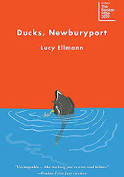
[READ: March 2020] Ducks, Newburyport

I heard about this book because the folks on the David Foster Wallace newsgroup were discussing it.  I knew nothing about it but when I read someone describe the book like this:

1 Woman’s internal monologue.  8 Sentences. 1040 pages

I was instantly intrigued.

Then my friend Daryl said that he was really enjoying it, so I knew I had to check it out.

That one line  is technically (almost) accurate but not really accurate.

The story (well, 95% of it) is told through one woman’s stream of consciousness interior monologue.  She is a mother living in Ohio.  She has four children and she is overwhelmed by them.  Actually she is overwhelmed by a lot and she can’t stop thinking about these things.

She used to teach at a small college but felt that the job was terrible and that she was not cut out for it.  So now she bakes at home and sells her goods locally.  She specializes in tarte tatin.  This is why she spends so much time with her thoughts–she works alone at home.  Her husband travels for work.  Whether she is actually making money for the family is a valid but moot question.

So for most of the book not much happens, exactly.  We just see her mind as she thinks of all the things going on around her.  I assume she’s reading the internet (news items come and go in a flash).  She is quite funny in her assessment of the world (how much she hates trump).  While I was reading this and more and more stupid things happened in the real world, I couldn’t help but imagine her reaction to them).  She’s not a total liberal (she didn’t trust Hillary), but she is no conservative either (having lived in Massachusetts and New York).  In fact, she feels she does not fit in locally at all. (more…)

Read Full Post »

SOUNDTRACK: REX ORANGE COUNTY-Tiny Desk Concert #961 (March 18, 2020).

I read about Rex Orange County (the low-key British pop star born Alex O’Connor) in some random article which basically said if you’re over twenty you’ve never heard of him, but if you’re under twenty, you think he’s the greatest thing ever. (My 14 year old son had not heard of him).

I didn’t read anything about his music, but I assumed he was a hip hop performer or the like.

So imagine my surprise when he turned out to be an English dude who sings like Stevie Wonder and (in the Tiny Desk at least) has music that sounds like it comes straight from the 70s.

“Loving Is Easy” features Michael Underwood on flute and Johnny Woodham on flugehorn sounding for all the world like a mid 70s AM hit.  Is he really popular with the young kids?

There was a palpable connection between the 21-year-old singer and [the crowd of millennial and Gen Z staffers that gathered early for Rex’s soundcheck]  that I don’t see often at this stage in a musician’s career. My guess is that they see themselves in him: introverted and shy, with the audacity to write and sing about his innermost thoughts.

I really feel like this blurb is overselling his openness.  I mean, most singer-songwriters bare their souls, so I’m not sure what makes him any different.  But the blurb really pushes his honesty

We’re in an age where young people are uninhibited and unafraid to address emotions, simple or complex. In that sense, his latest LP, Pony, is timely. He spoke with NPR and shared that he was incredibly unhealthy mentally throughout the making of the album. But there’s an arch to Pony and by the time we get to the final song, “It’s Not The Same Anymore,” he seems at peace with his new reality.

But what’s so intense about these lyrics?

Loving is easy
You had me fucked up
It used to be so hard to see
Yeah, loving is easy
When everything’s perfect
Please don’t change a single little thing for me

I mean, not much, so let’s not get carried away about how revolutionary he is.

I was instantly surprised by how white his band seems.  The band is dressed all in white and they are a remarkably pale bunch.  Drummer Jim Reed has the bright red cheeks of the overheated.  And Michael, Johnny and lead guitarist Joe Arksey are all blond and very pale.

Between songs, he seems like he has never been in front of an audience before with the awkward way he introduces these songs.

Up next is “Pluto Projector” in which Rex switches to guitar and  Underwood switches to piano.  There’s a moment in the middle when bassist Darryl Dodoo plays a slap note.  It’s really the only notable bass in the show.  Woodham plays a muted trumpet solo which is followed by a guitar solo from Joe Arksey that I was sure was bass, but it’s just a weirdly muffled guitar sound.

For “Always” Rex moves back to piano and he sounds even more like Stevie Wonder.  This song features sax and a non-muted trumpet.  There’s some great horn melodies in this song and I like the way he plays some piano parts in the middle.

There’s this awkward introduction.  Okay I only have one more now, and then I’m gonna go…  Let’s play the song that’s called “Sunflower” now.

“Sunflower” is “older,” meaning it dates all the way back to 2017.  He’s back on guitar with a nice echo.  The beginning of the song is guitar and flugelhorn.  Then in the middle, the song picks up the tempo and becomes the catchiest thing all show.  I’m not that keen on the rhyming/talking middle part–it seems oddly forced, but that’s okay.  There’s a jamming section at the end with a flugehorn solo followed by a sax solo

Rex did not blow me away, but I was pleasantly surprised by his sound and that kids actually like it..

[READ: February 21, 2019] The Dam Keeper Book 3

Kondo and Tsutsumi have both worked at Pixar, which may explain why this graphic novel looks unlike anything I have ever seen before.   I have (after reading their bios) learned that this was also a short film.  I’m only a little disappointed to learn that because it means the pictures are (I assume) stills from the film.  It still looks cool and remarkable, but it makes it a bit less eye-popping that this unusual style wasn’t made for a book.

For part three, the final part, our heroes, Pig, Fox and Hippo are trying to get back home to save Sunrise Valley.

This third part is a lot of travel, very little dialogue and, honestly some fairly confusing action.

Pig has been given a plant by the moles and he hopes to use it to find the smoke monster.  Fox and Hippo say the heck with that and choose to head home.

Fox and Hippo are on Van’s ship.  They are brought inside to meet Van’s children.  The room is full of dozens of children of all different species.  As hippo puts it:

Erm.. these are your kids?  But they don’t look like you or Van how is this possible?

Van;s wife says that all of the children were abandoned for being different so Van took them in. (more…)

Read Full Post »

SOUNDTRACK: BABY ROSE-Tiny Desk Concert #944 (February 10, 2020).

I had not heard of Baby Rose, which I suppose makes sense since she put out her debut album last year.

The blurb makes it sound like she has been through a lot more than her 25 years might suggest.

But when the voice behind those words is as seasoned and vintage as Baby Rose’s, everything it utters reverberates like the gospel truth. The D.C. native — who came of age in Fayetteville, N.C. before coming into her own as an artist in Atlanta — returned to her birthplace.

She even speaks like a much older person:

“I would not be able to write with such emotion about these things without my fair share of regrets.”

It sounds like a sincere statement until you realize it’s a bit, an introduction to the song strangely spelled “Ragrets.”

But that is my favorite song here.  It’s got a great opening guitar riff from John Scherer that is duplicated on the bass (with some great high notes) by Craig Shephard.  Backing vocalist Erika JaNaé is there with her throughout–matching her with lovely backing ooohs.

Baby Rose has a voice that sounds a bit like Antony from Antony & the Johnsons–wavery and operatic.  Especially as the Concert opens with “Sold Out” which features strings from Jasminfire on viola, Yuli on violin and Noah Johnson on cello.

It’s also evident in the third song “Over.”  In the middle of the song she sings low and it sounds very Antony, although I suppose another comparison would be “the bluesy melisma of Nina Simone and the deep register of Sarah Vaughan–two of her idols.”  This song is, surprisingly, less than two minutes long.  It has a simple piano melody from Timothy Maxey.  In addition to Erika JaNaé, Jasminfire and Yuli sing backing vocals.  I like the bass slide at the end, which seems like it’s a transition to another part of the song, not the end.

The next song is “Mortal” which opens with a loud drum hit from Tauseef Anam and quiet shimmering guitars.  There’s a lot of backing singing on this song and they all sing very nicely.

As this song is ending she introduces the band and says

“This is what real love sounds like.  This is what it feels like.”

The blurb says

From any other new artist, a Tiny Desk declaration like that might sound a tad bit presumptuous if not altogether premature.

I actually thought pretentious was the word.

She asks if she can do one more (because of course an artist I’ve never heard of gets an 18 minute set).  And in introducing “All To Myself,” she says she is

Dedicating the song to herself — and “to anyone here that’s ever wanted to call or text somebody that you know you should not call or text” —  congratulating those of us who’ve refrained from squandering our emotions on the undeserved.

Her voice is really impressive on this song and I like that the blurb acknowledges that she’s not using autotune

In an era when the over-reliance on Autotune has nearly everybody in radio R&B land sounding like automatons, her unadulterated voice is almost otherworldly. It’s confounding how a vocal tone so weathered and wise emerges from her so effortlessly.

I was a bit cynical about her at first, but Baby Rose really brings the goods.

[READ: July 10, 2019] Who is Rich?

Rich Fischer is a cartoonist.  As the book opens, Rich is beginning his annual week-long teaching assignment at a New England beachside Arts Conference.  Rich was once sort of famous for his first (and only) published book and that’s why he was initially invited to instruct.  In the intervening six years, he has not really produced anything except drawings for magazines, but the head of the council still likes him, so Rich has that annual work to look forward to.

Although he doesn’t really look forward to it.  People come from all over to study all kinds of arts with esteemed faculty.  It’s a place where writers, artists and historians show off that they are really drunkards and perverts and are willing to do anything to dance naked on a beach in a drum circle.  At this point, he knows what he is and how he fits along with the rest of the teaching staff:

unknown nobodies and one-hit has-beens, midlist somebodies and legitimate stars.

His was a four day intensive workshop that cost $1500.  He details his students–a former high school art teacher (who tried to take over the class), a med student who didn’t want to start med school, a trans kid, a Vietnam War veteran, a grandmother and a teenager skulking in the back.

But he was also sick of it.  The same faces year after year.  Nadia Klein  “was widely mocked an imitated.”  Larry Burris skipped his meds one year and wore a jester’s cap to class and lit his own notes on fire.  And yet when he was asked to name another cartoonist he could vouch for to teach a second comics workshop, he didn’t answer the director, “because of the way my career had gone, I worried that I’d be hiring my replacement.”

He talks about his precocious success–at first it seems like a mistake, but you get used to it quickly. You assume it will always be there.  Until it isn’t.

(more…)

Read Full Post »

SOUNDTRACK: BALÚN-Tiny Desk Concert #927 (December 20, 2019).

When I first listened to this Tiny Desk, I was delighted by the gentle way it started–pretty acoustic melodies on slightly unfamiliar instruments.  Although I usually enjoy noise and chaos, I really hoped that this whole set would stay like this.  And (for the most part) it did.

The set opens with sampled birdsong as “Vaivén” begins with a beautiful melody from Noraliz Ruiz on the Puerto Rican cuatro.  She’s joined by Enrique Bayoán Ríos-Escribano on the charango.  It’s a beautiful short piece that segues into “La Nueva Ciudad” and that’s when things changed a bit with the addition of electronics.

Their mix of traditional instruments with electronics creates not just a sonic treat but also a visual feast, as our eyes dart from one instrument to the other, drawn in by a Puerto Rican cuatro and a makeshift drum set.

Indeed

It’s impossible to not be drawn in by the visual specter of Balún. The band has refined their electronic roots with their turn toward self-discovery on beautifully crafted studio albums, and this set behind the Tiny Desk shows how expertly they deliver the same meticulous, artful music live.

“La Nueva Ciudad” opens with electronic-sounding percussion as Ríos-Escribano and drummer Shayna Dunkelman both scratch percussion instruments.  Then Ríos-Escribano plays a hand drum and José A. Olivares plays a little synth device as the melody unfolds.

Then we finally hear singer Angélica Negrón (with the purple hair).  She has a soft, high voice as gentle as the instruments around it.  Her voice is warm and inviting even if you don’t speak Spanish (it might make you want to learn).

For verse two Darian Thomas kicks in the violin with the charango adding its chords.  It’s a wonderful song, complex and fun.

Balún is from Puerto Rico and they dedicated the third song “El Espanto” to their island home.  Negrón says “El Espanto” is about cleaning up the bad energy and starting from scratch.    It opens with a fascinating percussive intro

I didn’t expect to be greeted by a mysterious, eighth member who made an appearance at the start of “El Espanto” in the form of programmed solenoids that struck the bottoms of pots and pans to create a rhythmic intro to one of their brilliantly crafted songs, mixing the folkloric with the modern.

The song starts with a weird synth sound (like an electronic folk instrument) which, along with the violin, pokes out the melody.  Electronic percussion fleshes out the staccato notes.  Midway through the song it gets huge with guitars, synths, who knows what else.  It brings a great alt rock sound and a hugely catchy melody (and Negrón’s voice is perfect for it).  Then the cuatro takes over the melody again.  The middle of the song has a ripping guitar solo from Raúl Reymund with Darian Thomas playing some wild violin.

I love that everyone sings along gently until the end of the song, when it’s a total freak out with loud electronic drums, noisy guitar, wild violin and all kinds of shaken percussion.  It’s the chaos I wanted after all!

Balún is part of a vanguard of bands that is expanding the musical landscape of Puerto Rico and it is a treat to watch them up close as they create an actual bridge between the ancient and the modern, set against a rich tapestry of vocals that extoll the virtues and challenges facing their beloved island these days.

“Punto De Encuentro” ends the set. It’s a new song.   Noraliz Ruiz picks up the bass (the first time a bass is used).  It opens with all kinds of electronics starting the song which turns onto a quiet, pretty ballad.  Thomas plucks the melody on the violin along with the synths.  Then the churango comes back with the bowed violin and all the while the complex percussion keeps the song moving along.

I had never heard of this band before this set and they totally won me over.  I’m looking forward to checking out their albums.

[READ: March 2, 2020] “Night Swim”

This story is set in Ireland.  I only find this surprising because in the story the narrator goes more or less skinny dipping which was something I didn’t think you could do in Ireland (do the lakes ever get warm enough at night?)–at least I’ve never heard of anyone doing that before.

But although that is the title and a crux of the story, it is not the entire story.

The story opens with the narrator, Michelle, driving her son Ben to a friend’s house.  Ben doesn’t talk much in general, but he seemed to open up in the car (I found that to be true about my own kids).

Michelle had not been to this friend’s house and was following the GPS map.  She was familiar with the area but not the route itself.

While she was driving, Ben began asking her “would you rather” questions: Would you rather drink a cup of lava or be drowned in a lava lake.  She doesn’t enjoy the game, but he is quite insistent.

When she answers she would rather neither of those things, he just repeats the question.

When he asks if she would rather drown in a lake or be strangled in the dark, she flashes back to the titular night swim. (more…)

Read Full Post »

« Newer Posts - Older Posts »