Feeds:
Posts
Comments

Archive for the ‘NPR/PRI/PBS’ Category

SOUNDTRACK: COSMO JARVIS-“My Day” (2011).
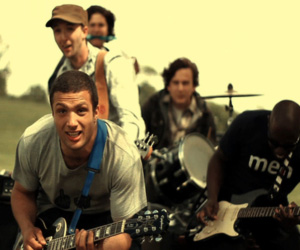
I learned about Cosmo Jarvis through NPR.  The DJs called it a love it AND hate it song.  But I find that I mostly love it.  The video is a blast to watch, but even without the video, the song is quite catchy and fun.  It’s a half punk song and half folkie/trad song.

So who the hell is Cosmo Jarvis?  Well, he was born in NJ, but is really from England.  He’s a filmmaker and musician and he’s had a hit with the song “Gay Pirates” that Stephen Fry raved about on his Twitter feed!  “Gay Pirates” is a fun shanty, but “My Day” is a full-on punk blast.

The song laments the state of things today and talks about how things were back in “my day” (which is of course funny since he’s 21).  The verses are a kind of folkie/storytelling style (but with electric guitars) and the end of each verse has a guitar riff that sounds traditional to me.  But when the chorus jumps in, it’s heavy, rocking, screaming punk.

Okay so the song is nearly 8 minutes long, which is probably overkill.  There’s a fairly lengthy instrumental bridge about 5 minutes in which features guitar and tin whistle solos.  And then the final 2 minutes are just fast metal screams of “My Day” with some wild soloing.  Yes, it’s too much (I’ll bet the single mix is awesome), but it’s still an enjoyable song.  Even without the video.

But you should watch the video, if only because it’s what the guys from Jackass would do if they were in a band and lived in the English countryside.

[READ: July 15, 2011] The Corrections

My company recently asked us if we had read any books over the summer.  I was able to pony up this review for our company newsletter.  I’ll be fleshing it out, but it’s pretty apt.

I’d put off reading this for a number of years, and I wish I had read it sooner.  It’s a very detailed look at one family: Elderly parents, thirty-something kids, and a few grandkids.  The depth of character development is amazing (and includes even depth of characters that the main characters interact with).  It’s a long book but it is very rewarding—comic scenes, moving scenes and one or two shocking moments.  It’s also the first time I’ve read a book where I thought, “even though I like this character, I think it would be better for everyone if he died.”  It’s an unnerving thing to think, but Franzen really makes you think about how family members impact one another.

It took me forever to start reading this book, obviously.  I wasn’t really interested in Franzen when all of the Oprah commotion came out, so I blew off this book entirely.  I’ve recently grown more interested in him.  But rather than reading his novels, I had decided to read all of Franzen’s New Yorker pieces.  (And even though I wanted to read Freedom when it came out, I felt that I should read this one first).  I wasn’t hesitant about reading it, I think I just wanted time to devote to it.  Much like I needed time to devote to writing up this post.  It’s been well over two months since I finished the book.

The Corrections is a wonderful, engaging story about three generations of the Lambert family (and many of the people they interact with).  The matriarch and patriarch of the family, Enid and Alfred, live in the midwestern town of St. Jude.  They have three children: Gary, a banker in Philadelphia who is (more or less unhappily) married with three children; Chip, a former school teacher and current playwright who sponges off of his younger sister while he tries to live the high life in New York City; Denise, a very successful chef who also lives in Philadelphia.  She has no children.  Gary’s children play a small but significant part in the story, keeping the three generations aspect working very well.

I found the first chapter a little slow and somewhat off-putting.  I read an excerpt from the novel in the New Yorker, which was a piece about Chip.  So I was surprised that the book opened with an older couple.  The chapter deals with Alfred and Enid.  Alfred’s dementia is hitting their household quite hard but Enid just feels that Alfred isn’t trying very hard.  Because Enid has very little in her life, she wants nothing more than to have her whole family together “one last time” for Christmas.  Enid and Alfred are long-married and this chapter picks up in the middle of a typical day.  So it takes a few pages to get up to speed.  Of course, once I did, I felt that the whole family was completely real and believable. (more…)

Read Full Post »

SOUNDTRACK: MEGAFAUN-“Find Your Mark” (2008).

After listening to the new Megafaun track, I checked the NPR archives.  They have this one song from their debut available for a listen as well.

It’s hard to believe that this is the same band.  Or perhaps I should say that a band can change a lot in three years.  This song begins as a three-part near-a capella barbershop/bar trio.  It reminds me in many ways of a Fleet Foxes track, except they seems more rowdy.  The song merges into a delicate guitar picking section with all of the voices “ba ba ba” ing.  Then, that guitar melody expands to an electric guitar and full band sound.

The introduction to the track (from the NPR DJ says that the album may not be everyone’s cup of tea.  But I like this track so much (even though it is so very different from their 2011 release), that I need to listen to more from this band.  Spotify, here I come. [Actually the album has some pretty crazy noises on it!].

[READ: August 20, 2011] “The Losing End”

This is a strange story about a man named Lamb.  The reason it is strange is because the middle of the story–the exciting part, the part I most enjoyed–is not really the point of the story, at least if the ending is to be believed.

As the story opens, Lamb has just been to his father’s wake.  He is feeling adrift so he goes to a parking lot to sit and think.  In addition to his father, Lamb is also thinking about his wife and his girlfriend.  I’m a little unclear exactly what is happening with his wife (Cathy) but he definitely trying to get time away from her to spend it with Linnie. While he is sitting there lost in thought, a young girl in an ill-fitting tube top approaches him. (more…)

Read Full Post »

SOUNDTRACK: MEGAFAUN-“Get Right” (2011).

I’ve never heard of Megafaun before, but this song is just wonderful.  It’s an 8 minute blast of psychedelia that covers and sometimes obscures a beautiful poppy song.  I hear overtones of Dinosaur Jr (but more for J. Mascis’ seemingly lazy style than for his crazy guitar riffing) and a bit of the Lemonheads in the folky pop feel.  Throw in a dose of My Bloody Valentine for the waves of sound and you get a perfectly lovely track.

The opening is a fairly simple, straightforward melody.  And his voice is so familiar-sounding.  There’s some cool squeaky/feedbacky guitars layered over the top of a hazy distorted sound.  By about four minutes, the song turns into an instrumental, with a guitar solo that comes in an out of the hazy chords.

This is a great song, and although the NPR write-up says this is the longest track, I imagine the rest must be equally as exciting.  Preview it on NPR.

[READ: September 1, 2011] “Asleep in the Lord”

This is a story about Mitchell, a formerly unhelpful person who never changed a diaper or helped a sick friend.  He has decided to change that, so he goes to Calcutta with the intention of joining Mother Teresa’s mission (and just how many stories involve Mother Teresa these days?—she even makes an appearance in the piece!).  He’s reluctant to do anything majorly gross, but he’s happy to hand out medicines (for what good they do).

After a few days, Mitchell is still somewhat surprised by his decision to go to Calcutta at all.  Then he meets Mike and Herb.  Herb is following the Bhagwan, but Mike is less grounded in who he is following here in India .  He came here because the economy tanked back home and he wanted somewhere to hide out for a few years.   As we learn more about Mitchell, we see that his intentions are understandably confused.  For really, like Mike, he also came to India to wait out the recession.   However, unlike Mike, he honestly did come to seek some kind of spiritual guidance.  Mike seems to be here for the easy sex–he has a picture of a young woman from Thailand who wanted “to marry him.”   (more…)

Read Full Post »

SOUNDTRACK:THEM CROOKED VULTURES-Live on Austin City Limits, Feb 13, 2010 (2010).

This set from Them Crooked Vultures is outstanding. I really like the album, but in a live setting these three (technically 4) guys are on fire.  They extend the songs a bit but are always tight as a drum.  Josh Homme is a great front man, even if he’s not that animated.  He shares guitar duties with Alain Johannes who is not on the album, but who gets some great sounds out of his guitar.

Dave Grohl is in his drum-pounding glory back there.  Man, he hits the drums hard.  And he seems to be really enjoying himself .

 And the biggest surprise (sort of, but not really) is John Paul Jones.  He fits in perfectly with the two younguns, and he really shows them how it’s done.  His bass work is phenomenal: fast, furious and accurate to a fault.  He also plays keyboards, an LED pulsing 12-(at least) string bass and a fascinating purple electric slide guitar contraption on “Nobody Loves Me and Neither Do I”.   Matt Rosoff from cnet explains this guitar here:

It looked like some sort of slide guitar with an electronic screen. I’d never seen anything like it before, so I did a little digging and found out from a March interview in Bass Player that it’s a custom-made axe created by Hugh Manson, who has been Jones’ tech for some time and who owns a renowned guitar shop in England. It’s essentially laid out like a lap slide guitar, modified so Jones can sling it over his shoulder and carry it around on stage, and with two extra bass strings at the bottom.

So what about that rectangular screen? According to a forum post on the EMG pickups site, it’s a MIDI controller that Jones can use to trigger stage lights. I imagine it could also be used to trigger various effects, similar to the modified Korg Kaoss controller that Manson built into a guitar for Muse’s Matt Bellamy.

If you’re already a fan of the band, you really need to check out this live show; they are amazing.  And if you’re not a fan, you will be after this show.  This is how I first heard  them and I was blown away.

You can watch the show online on PBS.

[READ: July 27, 2011] Five Dials Number 20

I didn’t expect to get caught up to Five Dials issues so quickly (has it really been 20 weeks already?).  This is the most recently releases issue!  They aren’t getting published as often as I expected.  Which is fine.  But the funny thing with this issue is that there were several printing errors in the initial run of this issue.  I don’t know if this has happened before, but it seemed so noticeable to me, that I had to wonder how it slipped by everyone.  The most obvious was that the front page had many ƒƒƒƒ characters (these were also evident in the Word Cloud later on).  There’s a word missing from the fiction “the thin cold stillness you got [  ] this part of the country” and there’s a crazy typo in the Fiction story later on. The errors have now been fixed.  But, the letter to the editor (and this has not been fixed) promises us a picture which isn’t there. “Here’s a photo of Doni at the reading – he did a brilliant job.”  I’ll assume they were partying too hard at the Port Eliot Festival to make sure  the issue was launch-ready

CRAIG TAYLOR-A Letter from the Editor: On Cable Street and General Interests
There were some serious race riots on Cable Street back in 1936.  Indeed,the head of the British Union of Fascists, Mosley, and his aggressive supporters were turned back by a noisy crowd (Irish women throwing fishy potatoes at them).  The rest of the magazine he says is general Interest, an anachronistic term from the 20th century before all magazines had to specialize in something.  I mentioned in my introduction that there was a photo error here.  Doni Gewirtzman performed a reading at the launch of Five Dials 19.  They couldn’t out the picture there, so they added it here.  Perhaps in Issue 21? (more…)

Read Full Post »

SOUNDTRACK: METRIC-Live at the 9:30 Club, June 18, 2009 (2009).

I love the new Metric album and this tour supported that disc, so, it’s a win-win for me!  Metric sound great live, and the notes on the NPR page where I downloaded this give a fascinating history of the band.  Evidently they burnt out in 2005 while touring for Live It Out.  So they made solo records and kind of went their separate ways.  Then:

in March 2008, Haines was on stage, in the middle of a live solo performance, when she had an epiphany: She was tired of being sad. While playing one of the standout cuts from her gloomy but beautiful album Knives Don’t Have Your Back, Haines stopped, turned to the audience and said, “I don’t want to play these songs anymore.” Instead, she spent the rest of the show performing her favorite Metric tunes.

The band reunited and made Fantasies, the poptastic album that I love so much.

This show plays pretty much all of the album (except “Collect Call” and “Blindness”) and they rock the house!  The only odd part for me is the opening track, “Satellite Mind.”  The band chose to have the first half of the song performed with just the keyboards, so it has no bottom end at all.  It sounds kind of tinny and weird.  Then when the guitars and bass kick in (for the rest of the show, thankfully), the band sounds whole again.

The other weird thing is Emily Haines’ banter.  I like chatty lead singers (–The Swell Season’s banter is great, Wayne Coyne’s banter is emotional but enjoyable), but there’s something about Haines’ musing that are just kind of…lame.  She’s very earnest, but her thoughts are kind of, well, vapid.  So, I just skip past all the chatter and enjoy the music.

It’s a really great, rocking set and the crowd is very into it.

[READ: August 25, 2011] Atlas of Remote Islands

If you need an unusual but doubtlessly cool book, my brother-in-law Ben is your man.  For my birthday and Christmases he often gets me books that I have never heard of but that are weird and interesting.

This book is no exception.  As the subtitle states, this is a book about fifty remote islands that virtually no one lives on.  True, some are inhabited, but many are not.  And a goodly amount of them are little more than icebergs (I wonder how they will survive global warming).  There’s even one that the accompanying story implies was created from bird droppings. (more…)

Read Full Post »

SOUNDTRACK: THE SWELL SEASON-Live at the Newport Folk Festival, August 1, 2010 (2010).

This is the second show by the Swell Season that I downloaded from NPR (even though it is not chronologically second).  The Newport Folk Festival proves to be an excellent venue for Glen Hansard and The Frames.  For yes, in this show, The Frames play with them.  A (very brief) history: Glen Hansard was the red-haired dude from The Commitments (yes, seriously).  After that movie, he started The Frames and they were HUGE (in Ireland and Czechoslovakia).  They even released a record with a few songs that appear in the film Once.  Then Glen met Marketa and formed The Swell Season, which was really just the two of them.  And they recorded a couple of those Frames songs for their debut album.  And then they made Once, and they rerecorded some of those songs for the Soundtrack.  So you can get quite a few versions of a couple of these songs.  The Swell Season was originally just the two of them.  But as of late they’ve been playing with the Frames as well.  So it’s like a full circle, sort of.

The big opens space of Newport, combined with a rowdy but appreciative crowd prove a perfect venue for them.  Glen is in wonderful storytelling mode, regaling the crowd with funny introductions to songs (that was Elijah!) and dealing with an overzealous fan (who I believe calls Glen a red-headed bastard–out of love: Hansard replies “I liked you for about two comments…I’ve been wanting to play here forever, you’re kind of wrecking my day….  I’m kidding”).

But it’s the music that is so good.  I’ve thought that he sounds not unlike Van Morrison, and this version of “Low Rising” that opens the set brings out the Van.  Its’ really outstanding.  The really makes some of the songs rock out, too, like when he burst into a chorus of “Love Reign O’er Me” during the otherwise mellow “Back Broke.”  Also, the full band version of “When Your Mind’s Made Up” is tremendous–when the band is rocking out and then stops on a dime for that final “So” I am blown away every time.  And yet, despite the presence of the band, some of their solo songs are the most striking.  Marketa’s, “If You Want Me” holds the crowd rapt.  And Glen’s emotionally gut wrenching “Leave” is stunning–and a little hair-raising.

Interestingly, when you download the show (by subscribing to NPR podcasts), you only get 43 minutes, rather than the entire 62 minutes of the show.  I assume they didn’t have the rights to give us the covers that the band played.  They open the set with Tim Buckley’s “Buzzin’ Fly,” and he plays Willie Nelson’s “Blue Eyes Crying in the Rain” while they tune some strings and they rock out Van Morrison’s “Astral Weeks” (this furthers my assertion that there’s a Van Morrison connection here, although I didn’t know this was played live until I streamed the concert.

The Swell Season seems like an awesome band to see live.

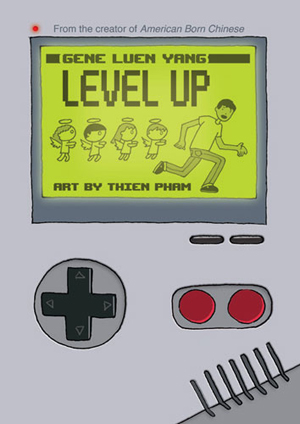
[READ: August 21, 2011] Level Up.

Gene Luen Yang is also a wonderful storyteller.  His book American Born Chinese is fantastic.  This is another slice of life story, although I suspect it can’t be true about himself (well, I mean there are angels that do his laundry so obviously it isn’t true).  But I don’t know a thing about him personally so maybe he is a video game champion and a gastroenterologist as well as a novel writer.

Anyhow, the story is a fairly simple one: When Dennis is six years old, he sees a Pac Man video game console and he is instantly hooked.  The problem is that his parents want him to be a successful student–specifically, they want him to become a doctor–so there’s no fooling around with video games.  He gets good grades in school.  But when his father dies, he finally feels free to get a video game console and he finds himself playing more video games than studying.  And by the time he gets to university he actually flunks out.

His mother doesn’t learn about this disgrace because before he can do anything more drastic, the aforementioned angels threaten the dean of admissions until she lets him back into school.  They angels (who came to life from a card his father had given him) then monitor him carefully, doing all of his chores for him while ensuring that he studies his brains out.  Which he does.

And he gets into med school! (more…)

Read Full Post »

[WATCHED: August 22, 2011] “The Calamity Song”

I woke yesterday to the news that one of my favorite bands had made a music video which was a tribute to one of my favorite books, Infinite Jest. Colin Meloy was a reader during the Infinite Summer project (one of the more high profile readers, although he didn’t really contribute beyond the first week).  When I saw him at BEA, I asked him if he finished the book and he said that indeed he had. Weill according to this story from The New York Times, Colin liked the book so much that he wanted to use one of the great scenes from the book as the basis of a music video.  And since The Calamity Song has the line “In the Year of the Chewable Ambien Tab” which is an allusion to Infinite Jest‘s Subsidized Time, well why not use that as the song.

The video was directed by Michael Schur (a huge Infinite Jest fan) who is a major figure behind Parks and Recreation. The video is a bare-bones retelling of the Eschaton sequence from the novel. For those who have not gotten to that scene yet, Eschaton is a game of global annihilation played on a tennis court. There are strategic places you are supposed to hit from across the court (so it’s a physical game, not just an academic one) with your 5 megaton tennis balls.   The scene is challenging to read because there’s so much going on, but the video does a very good job of giving you the essence.

Sure, diehards will have lots to quibble about (it’s raining, not snowing; Ann Kittenplan (the girl who gets hit with the ball) is totally hot–not so much in the book; and the scene doesn’t end with someone’s head crashing through a computer monitor).  Most of the quibbles are addressed in the Times article but some are easily answered anyhow–it was filmed in two days, it’s a flat screen monitor (you can’t put your head through that), and why not have a hot Ann Kittenplan, it’s a music video, right?   (more…)

Read Full Post »

SOUNDTRACK: THE SWELL SEASON-Tiny Desk Concert #24 (August 10, 2009).

I was going through the NPR recordings that I’ve downloaded and discovered that I had four from The Swell Season.  This Tiny Desk concert is the shortest of the four recordings (although it’s one of the longest Tint Desk concerts–most are about 10-15 minutes, this one is over 33 and has an encore!).  Glen Hansard is charismatic and funny as he says he feels foolish playing just a few songs and would they mind if he played one or two more.

I usually prefer the louder Swell Season songs, but the quieter songs work well in this situation (especially when the NPR staff helps out with backing vocals).  He plays the same songs that you’ll hear a lot on these NPR recordings (“In These Arms,” “Low Rising,” ‘Feeling the Pull” and the highlight of the show: “When Your Mind’s Made Up.”

I’ve liked this song from the first time I heard it in Once.  Every live version I’ve heard is great.  And this one is no exception.  He brings so much emotion to the end of this song as it gets louder and louder and his voice (man he can hold a note) gets louder and more strained.  It’s truly a great musical moment.

And, of course, Markéta Irglová is there as well.  She only sings one song, but her gorgeous harmonies are all over the session (no piano, though).

This is the most subdued of the four concerts, but it’s a good one.  (The NPR halls must have been ringing with his voice during this one!)

[READ: August 21, 2011] JPod

JPod holds a special distinction on this blog.  It is the first book that I have read twice during my time of writing this blog.  It’s also the only book that now follows this pattern:  I read the book, I watched the TV show based on the book, I reread the book.  So now I have the actors from the show in my head as I re-read what happened to them (hi Alan Thicke!).

I’ve been on this Coupland kick (which will now come to a halt for a bit, but will pick up again in the not too distant future) and since I just read Microserfs, I wanted to read this book right on its heels as it is seen as kind of a sequel (but not really at all) possibly because it, like Microserfs has Lego people on the cover.

So let’s get things out of the way first.  This book is not related to Microserfs in any way (except that there’s a (different) character named Ethan, it’s set in a techie world of computer programmers and there are huge swaths of pages that are, if not wasted, then certainly not very practical in terms of reading–more on that).  But there are no overlapping characters, it’s not set in the same country and there’s lots more violence.

The book starts off with a series of pages that tell you the book is not going to be terribly conventional. There’s a series of super large-font words (like in Microserfs) of random ideas.  They’re followed by a break-free four-page rant (in a  different font from the rest of the book) about modern life and technology.  It’s hard to read, but it really conveys a sense of the world we’re entering.

When the book proper starts, Douglas Coupland is mentioned in the first few pages (in a very disparaging way).

“Oh God. I feel like a refugee from a Douglas Coupland novel.”
That asshole?”
“Who does he think he is?”

Then the story kicks into gear. (more…)

Read Full Post »

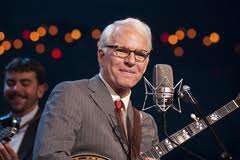
SOUNDTRACK: STEVE MARTIN & THE STEEP CANYON RANGERS-“Athiests Don’t Have No Songs” (2010).

We watched this Steve Martin performance on Austin City Limits last night.  Who knew that Steve Martin (yes, that Steve Martin) won a Grammy in the bluegrass category!  I’m not a huge fan of bluegrass–basically I like it enough for a few songs, but a half an hour is a bit much.

Nevertheless, Steve Martin is an amazing banjo player.  Anyone who has his comedy albums from the 70s knows that.  He used to play banjo between jokes (“Oh…death and grief and sorry and murder).  Now he tells jokes between banjo songs (the joke about the Grammy is very funny).

This song does not feature his amazing banjo playing but it is very funny indeed.

I just love the crazy notes that Martin hits near the end, which sounds so out of tune and yet fit very well together.

[READ: July 27, 2011] Five Dials 18b

The bulk of this short special issue is the five poems by Michael Robbins, a poet with whom I am unfamiliar.  The only other items included here are Craig Taylor’s Letter and Laurence Scott’s Currentish Events about Galliano and Gaddafi.  Since Five Dials issues are of varying sizes to begin with, it was unclear why this issue was a “b” and not the next issue, but Taylor sets us all straight.

CRAIG TAYLOR-A Letter from the Editor: On Spring and Robbins
They got into the publishing gig to be able to comment on things as they occur.  So this special issue is designed to usher in Spring and to introduce the world to the new poet whose title “Aliens v Predator” so impressed them that they asked him for five more. (more…)

Read Full Post »

SOUNDTRACK: RA RA RIOT-Live at the Black Cat, Washington DC,  October 12, 2008 (2008).

I really like Ra Ra Riot’s album The Rhumb Line, and this concert is basically a showcase for that album.  There’ s an interview at the end of the show (all downloadable from NPR), in which the  band says that critics raved about their live show as much as their album.

I don’t really hear that the show is more energetic than the album (maybe visually they are wild), but it did sound fantastic.  It’s amazing to hear a rock band that is dominated by strings–the cello and violin are often louder than the guitar (but not in a competing/drown you out kind of way,  more of a strings do the melodies and the guitar adds bulk to the sound).

I always enjoy hearing a band that is grateful to their audience for showing up (this is most evident in young bands, who seem so much more genuine about their love of the audience) and Ra Ra Riot are certainly that .  They seem genuinely surprised at the turn out, and they play a great set accordingly.

There are two songs that aren’t on the album here “A Manner to Act” and the encore “Everest.”  They both feel like they came off the album, which bodes well for their second album, Orchard, which just came out in May.  Ra Ra Riot also do a great cover of the obscure Kate Bush song “Suspended in Gaffa.”  At the end of the show they tack on a cover of “Hounds of Love.”  Lead singer Wesley Miles has a wonderfully strong voice and he can reach some pretty high notes–not soprano or anything like that, just strong enough to be able to pull off a Kate Bush cover.

This is a great show.  And when you read about the tragedy they suffered just as they were starting to take off, their obsession with death may not be so surprising.  I’m looking forward to Orchard.

[READ: 1995 and August 18, 2011] Microserfs

After reading Life After God and thinking about Microserfs, I looked up Coupland’s bibliography and saw that indeed Microserfs came next.  And I was really excited to read it.  I have recently watched the JPod TV show and I knew that JPod was a kind of follow-up to Microserfs, so I wanted to see how much of it rang true.  And I’ve got to say that I really rather enjoyed this book.

While I was reading this, I started taking notes about what was happening in the book.  Not the plot, which is fairly straightforward, but about the zeitgeisty elements in the book.  And, since I’m a big fan of David Foster Wallace, I was also noting how many zeitgeisty things this book had in common with Infinite Jest.  I’m thinking of tying it all together in a separate post, maybe next week.  But I’ll mention a few things here.

My son also loved the cover of this book because it has a Lego dude on it and he has been really getting into Lego lately.

So Microserfs is the story of a bunch of underpaid, overworked coders who work for Microsoft.  The book is written as the journal of Daniel Underwood (Coupland still hadn’t really branched out of the first person narrative style, but the journal does allow for some interesting insights).  The story begins in Fall 1993.  I felt compelled to look up some ancient history to see what was happening in the computer world circa 1993 just for context.  In 1991, Apple released System 7.   In 1993, Windows introduced Windows NT, Intel released the first Pentium chip, Myst was released and Wired magazine launched.  In 1994, Al Gore coined the term Information Superhighway.  Yahoo is created.  The Netscape browser is introduced.  So we’re still in computer infancy here.  It’s pretty far-seeing of DC to write about this.

Daniel works at Microsoft with several friends.  Daniel is a bug tester, Michael (who has an office, not a cube) is a coder, Todd (a bodybuilder) is a bug tester.  There’s also Susan (smart and independent), Abe (secret millionaire) and Bug Barbecue (an old man–he’s like 35).  The five of them live in a house on “campus.”  There’s also Karla (a type A bossyboots who doesn’t like seeing time wasted) who works with them but lives up the street.

As the story opens, Michael has just received a flame email from Bill Gates himself and has locked himself in his office.  This leads to a very funny scene and ongoing joke in which the office mates feed slide two-dimensional food under his door and he vows to eat only things that are flat. (more…)

Read Full Post »

« Newer Posts - Older Posts »