Feeds:
Posts
Comments

Archive for the ‘NPR/PRI/PBS’ Category

SOUNDTRACK: BILLY BRAGG-Live at the Newport Folk Festival (2009).

Billy Bragg is one of the great holdouts of aggressive political liberalism in music.  For every “American Idiot” that young bands play, Billy can whip out “There is Power in a Union” or the more prescient, “No Power without Accountability.”  Lyrics:

IMF, WTO,
I hear these words just every place I go
Who are these people? Who elected them?
And how do I replace them with some of my friends?

He’s an old school American folkie, despite the fact that he is so outrageously British that his singing accent is stronger than most British folks’ speaking voices.

But he’s not all politics (well, yes he is, but sometimes he disguises it).  Like on his minor hit “Sexuality.”  With some of the first gay positive lyrics I can remember hearing on the radio: “I’ve had relations with girls from many nations/I’ve made passes at women of all classes/And just because you’re gay I won’t turn you away/If you stick around I’m sure that we can find some common ground.”

Billy’s set is pretty great.  He plays the electric guitar for most of it (with an amusing moment where he switches to the acoustic guitar and references Dylan), and really, he needs no accompaniment.  He plays several of his own songs as well as a number of Woody Guthrie songs (both ones that Guthrie recorded and ones that Bragg and friends recorded for the Mermaid Avenue project).

Bragg also talks.  A lot.  His stage banter is as funny as it is impassioned.  And he urges people not to give in to cynicism about their newly elected President (the task is too great for him to please everyone).   Sometimes he comes across as really inspirational and other times as simply idealistic.

The only part of the show that I don’t really like is the “cover” of “One Love.”  I don’t particularly like the song to begin with and this version is 6 minutes long.  True, he modifies the lyric, but the basics are  the same.  Aside from that it’s a pretty rousing set (even if the DJs interrupt him about 40 minutes in, apparently thinking he was going to be end).

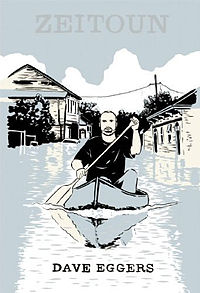
[READ: August 1, 2011] Zeitoun

I loved A Heartbreaking Work of Staggering Genius.  And I liked You Shall Know Our Velocity quite a bit too (and I just found out that YSKOV was rereleased as Sacrament with an extra 45 page section from Hand’s point of view–and that apparently there is only one copy available anywhere in the world and it costs $250!).

Anyhow, It was through Eggers that I found McSweeney’s (and its vast empire).  And yet during that time, I sort of gave up on reading Eggers’ published works.  When Zeitoun came out, I wasn’t all that interested to read it.  Mostly because I knew the book was about Hurricane Katrina, and I didn’t think I could handle a book about such a tragedy.

But recently, several people in book clubs had mentioned how good (and quick) of a read it was.  So I decided to give it a read.  And I’m really glad I did.

The book is about Abdulrahman Zeitoun, a Syrian born American.  He was living in New Orleans and was the owner of a very successful remodelling business (as well as the landlord of several properties around New Orleans).  Zeitoun is a hard-working, exceptionally conscientious man (the flashback to him running to work, carrying his broken bicycle on his back is as inspirational as it is amusing).  He rarely takes a vacation (much to his family’s chagrin) and oftentimes his wife has taken their kids on a vacation without him.  (One time they dragged into the car with his bags already in it without telling him they were going away for a weeklong vacation). (more…)

Read Full Post »

SOUNDTRACK: TORI AMOS-Live from the Artist’s Den (2010).

I think my relationship with Tori Amos has come to an end.  I haven’t enjoyed her more recent albums all that much lately, but I was excited to see that this live and intimate set was on PBS.  After all, it was just her with a piano and what turned out to be a really cheesy organ.

I was pretty thrilled by the setlist, which goes all the way back to her debut album (with “Girl” and “China”).  I was even more excited to hear “Bells for Her” one of my favorite songs by her and even “Concertina” one of her more mellow tracks that worked well for this show which was primarily mellow songs.

There were a lot of newer songs which I don’t know that well, and a few newer songs which I know okay.   I don’t love her newer stuff, but I was even disappointed with the presentation of her older songs.  She has definitely taken on a new technique where she reeeeeaaaaaalllllllllyyyyy streeeeeeeeeeeetches the songs out. And, as I’ve complained on other recent posts, she mis-pronounces or mis-enunciates words that she used to say perfectly fine.  I find it maddening.

It took me two days to watch this 50 minute show because I kept falling asleep.  Gadzooks.

Now I totally respect an artist’s desire to change her songs.  Indeed, there are some live versions of her songs that I have enjoyed more than the originals.  But there’s something about the way these are drawn out that it feels like the life has been sucked from them.  The melody of “Ruby Through the Looking Glass” loses its impact when it is slowed down so much.

I’m also really disappointed with the synth that she chose.  Synthesizers can make any sound in the world, so why did they program this keyboard to play utterly anemic strings?  The conclusion of “Girl” which is so dramatic on record actually sounds worse with the thin washes than it would if it were played on just piano.

And as for the way she sings words now…  “Bells for Her” to give just one example, has her mangling the word “you” so that when she sings “not even you” we get something like “not even yaow” which I don’t understand.  I mean, listen to the awesome live version on To Venus and Back–she didn’t used to do that.  So wha happa?

I used to think that I liked her solo better.  I always enjoyed the little quiet time section of the concerts when she would play a song or two by herself.  But I feel like now, when she’s by herself, she loses any sense of editing.  The band seemed to keep her on pace.  And it’s a shame to see her drift so much.

Because Tori was an important part of my music youth, I’ll give her one more chance–she has a new album due out reasonably soon, but I’m not holding out much hope for it.   I think we may just be on very different planes of existence anymore.

[READ: July 19, 2011] Five Dials Number 17

The brevity of the Christmas issue is followed up by the somewhat longer Five Dials Number 17.  (This issue also has 7 pages of photos at the end of the issue).  I admit I didn’t know where Jaipur was (it’s sort of north west-ish in India, not terribly far from New Delhi).

This is also the first issue of 2011 (I’m nearly caught up!).  So the issue opens with New Year’s Resolutions.  The letter is also from editors, plural, for a change.

CRAIG TAYLOR & SIMON PROSSER-Letter from the Editors
The letter opens with some enjoyably self-deprecating comments about resolutions (and how they made theirs now, instead of at the end of the year).  But what I enjoyed most was the collective list of resolutions that the entire staff made.  They are listed as one person, which makes for wonderfully contradictory resolutions.  I was particularly pleased by: “stop making that face when my brother makes a suggestion.” (more…)

Read Full Post »

SOUNDTRACKSUPERCHUNK-Superchunk (1990).

Some time ago, I reviewed all of the Superchunk EPs.  After progresing to their most current music, returning to their first album is a bit of a shock.  Superchunk’s first full length album is incredibly raw, with lots of screaming (two vocalists at once, even) and a very grungy attitude.  It has a DIY aestethic, in keeping with the undeground scene at the time.

The first four songs fly past in a pretty quick blur of adrenaline (the longest is just over 3 minutes).  The fifth song, the aptly named “Slow” slows things down and strecthes things out with a five minute track of slow distorted chords and a long solo.

Of course, the pinnacle comes with the next song “Slack Motherfucker” one of the best grunge anthems of all time. 

The last four tracks speed things up again with the bratty attitude that Superchunk is so good at (see especially “Down the Hall”).  But it’s not all just blistering speed.  The band has some dynamics down and there are a couple of tempo changes as well.

The album is a lot of fun to listen to, especially if you’re lookig for grunge before it became Grunge.  Although there’s very little indication that they would become the indie superstars that they eventually became you can clearly hear proto-Superchunk chunks–Mac’s voice is as it ever was and the noise is present but not overpowering.  There are even hints of melody (although nothing as catchy as later albums).  And yet for all that it sounds like a criticism, the album is really quite solid.

[READ: June 15, 2011] The Hollow Planet

Yes, THAT Scott Thompson, from The Kids in the Hall.  I found out about this comic book from my good friend Jessee Thorne at The Grid.

The backstory is that Scott Thompson had been working on this story for years and years.  He imagined it as a movie (starring him, of course).  When that didn’t pan out, he decided to sell it is a comic book.  And while he was recovering from cancer, he worked on it extensively with Kyle Morton–character likenesses and whatnot.  And now we have a cartoon rendering of Scott Thompson!

This story focuses on Scott’s character Danny Husk…

The book opens with Danny and his wife and kids at a carnival.  After a few moments, Danny’s son gets lost on the merry-go-round.  In the next scene we see just how much his wife is estranged from him (she may even be cheating on him), and how little his daughter thinks of him.  Soon after, Danny goes to work, inserts a disc into his laptop and more or less brings down his company.

So far nothing out of the oridnary for this type of  story–henpecked husband on a quest for revenge that he doesn’t know he wants yet.

Then Danny visits with his old friend Steve.  They talk, they bond over Danny’s concern about his wife.  And Danny feels better.  Until he gets home.  After a scene which I won’t spoil, the story suddenly takes off with a high speed car chase (no kidding) and with Danny entering the titular hollowness of the planet. (more…)

Read Full Post »

SOUNDTRACK: WAVVES-Live at Sasquatch, May 28, 2011 (2011).

I learned about Wavves from NPR–in fact I listened to their other NPR concert before even getting their album.  So this marks my second concert from them.  What makes me laugh about Wavves is that the songs are really short and Nathan Williams is a total chatterbox. When I burn these concerts onto CD, I use Audacity and I make tracks for songs and band chatter.  Which means that this Wavves show, which is just under 40 minutes has 20 tracks.  (Whereas S. Carey, at about the same length, has only 11).

This show has 14 songs.  Four of the songs are from their second album, called Wavves (which is also their second album called Wavves).  The rest come from King of the Beach (except “Wavves” from their first album and a couple of newer tracks).

The band blasts through these songs (I’m not even sure who is in the band, since the Wavves albums are a solo endeavor), and they all sound very good.  The album has kind of a tinny sound (on purpose, I suspect), whereas live the songs sound a bit fuller.

Lead Wavves guy Nathan Williams wasn’t that friendly in the previous show; he seems to be having a bit more fun here.  But really it doesn’t seem like you don’t go to a Wavves show to hear him talk, you go for what is undoubtedly the pogofest that is Wavves’ punk.  It’s a good set.

[READ: July 2, 2011] “Friendly Fire

Pam runs a small but successful cleaning business–but her workers are pretty unreliable.  So her friend Shelley, the real protagonist of the story, helps out once in a while.  Shelley enjoys the work once in a while (she has a real job after all)–she can use the extra cash.

This job was cleaning a warehouse–not the warehouse section itself, but the bathrooms, kitchens and offices.  They arrive early, but the workers come in while they are working and Shelley enjoys teasing/flirting with the men when they come in to use the bathroom and find her bent over, ass waving in their face. (more…)

Read Full Post »

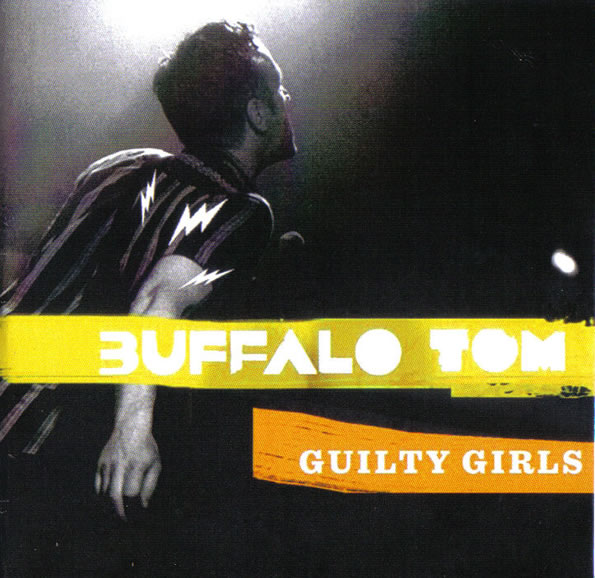
SOUNDTRACK: BUFFALO TOM: “Guilty Girls” (2011).

Holy cow, Buffalo Tom!  I more or less forgot about these guys (who I really liked back in the 90s).  Some of their songs from that period are fantastic.  They never had any major success, but they had a series of great releases.  Evidently they reformed a few years ago and released a reunion album.  And now, in 2011, they have a brand new record.  Wow.

I haven’t listened to them in a few years, (although their albums covers are still very fresh in my head).  But I listened to a few older songs for comparison’s sake.  To me the biggest difference between Tom in 1999 and Tom in 2011 is that the singer now sounds even more like Elvis Costello.  Bill Janovitz has always had a strong baritone voice, but with a few extra years thrown on, it has maturity that it lacked back then (not that it needed it, but the songs are more mature lyrically now, and the voice fits it well). 

This song is a kind of punky (poppy punk, but still punky) rocking anthem.  It’s under three minutes and it aims for mega catchiness.

[READ: July 18, 2011] “The Orderly

Having read the brief story by Arthur Bradford in Five Dials, I realized that I knew the name and decided to see what else I had read by him. It wasnt much, but I enjoyed what I’d read.  I decided to look him up and discovered that he really only wrote one book, a short story collection called Dogwalker, before switching media to TV (and a show called How’s Your News?).

On his website, he has links to a number of published stories (fiction and non-); since the Esquire pieces have been collected in his book, there’s really only three unique fiction stories available here.  So i decided to read them all.

Now Nerve.com was a site for “literate smut.”  I remember when it came out and it was somewhat revolutionary in the sex world because it tried to raise the bar of quality and to include some decent writers.  I didn’t actually know that nerve.com was still active (it is, and there’s some really good stuff there).  As such, I feel like perhaps the stories at nerve aren’t entirely top-notch.  Not Penthouse forum, mind you, but not Hemingway either. (more…)

Read Full Post »

SOUNDTRACK: BOB MOULD-Sasquatch Festival, May 28, 2011 (2011).

I loved Hüsker Dü.  I loved Sugar (a tad less).  I loved Mould’s Workbook.  And then I kind of loss interest in the guy.  He recently wrote an autobiography, which I would consider reading, but musically, I assumed he was done.

So I wasn’t even that interested in listening to his set (shame on me).  This turns out to be a really cool set in which it’s just Bob and his electric guitar.  He plays a varied set of songs from throughout his career.  He plays some of his hits (“See a Little Light,” “Hoover Dam”) but mostly he plays interesting non-hits (“Chartered Trips” (!!), “I Apologize”).  (Is it possible that Grant Hart wrote all of Hüsker’s big hits?)

The most amazing thing about the set is Bob himself.  He sounds so cool and chilled out (even though I think he was like the very first opening act of the concert–which is a pretty shitty time slot).  He seems to be really happy playing (hearing him respond to a request with “I forgot how to play that one” is pretty darn funny.)  Of course, a little later when he says “What’s that?  I’m trying?” he almost sounds like Al Bundy.

But then, look at him, he’s an old man now.  And sure, he’s been playing music forever, so gosh, he’s got to be super old, right?  What?  He was born in 1960?  He’s nine years older than me?  Oh good grief.  So, wait the first Hüsker Dü album came out when he was 22?  He really crammed a lot of music into just a few years.  Not bad, Bob.

And yes, I’m fully invested in relistening to all the great music you’ve made now.  Thanks, Sasquatch.

[READ: July 13, 2011] “Incident in the Orient”

This very short story features a dead dog. I’m getting that out of the way since I know some people won’t read any further once they know that.

I rather liked the brevity of this story, how Theroux is able to cram a lot of information and a lot tension into just a couple of pages.  The story is also a strange little onion of a tale, with the narrator working for a man (Moses) who is a sort of mercenary construction boss.  The narrator gives a lot of insight into Moses, although he also admits that he doesn’t really know the man very well (how could anyone know him).

He has done work in various war-torn countries and has effectively built a crew out of a small group of devoted men, mingled with local help.  The most fascinating thing is that Moses is a short man with a lisp and yet he commands the respect of everyone who works for him.  He takes no shit, but he pays well and uses local materials (including tearing down materials from destroyed buildings if necessary).   (more…)

Read Full Post »

SOUNDTRACK: THE HEAD AND THE HEART-Sasquatch Music Festival, May 28, 2011 (2011).

This is the fourth live recording from The Head and the Heart that NPR offers.  Not bad for a band with only one album out.  This set finds the band even more confident and relaxed (despite their genuine excitement at playing the festival).  The band sounds fantastic and I’ve really grown to appreciate the female harmonies on most of the songs now (I’ve not always liked them on every song).

This set has two as yet unrecorded songs in it (one of them was listed as untitled).  There’s some banter between the band and the fans (the band is nothing if not jovial) including a great story about how someone in the band went to Sasquatch the year before and swore he wouldn’t remove his backstage pass wrist band until The Head and The Heart band played Sasquatch.  I like to imagine there was ceremonial wrist band cutting ceremony on stage, but that is lost in the audio version.  Of course the story would be better if it was two or three years later, but it’s still a pretty good one. [See the Five Dials review below for a similar story!]

I found the sound quality of the show to be less than perfect.  The sounds are a bit muddied.  I don’t blame the band.  The Sasquatch venue may be beautiful (so many performers comment on it, I’d love to see the view) but I suspect that maybe the audio was less than stellar.

Nonetheless, The Head and the Heart continue to amaze in a live setting.

[READ: July 3, 3011] Five Dials Number 14

If Five Dials 13, The Festival Issue, was a double live CD, jam-packed with photos and stories and all kinds of wonderment, Five Dials Number 14 is an EP.  Even though it contains only one item, it’s more than a single, because the item is long and a lot is packed into it.  And that ends my metaphor.

One of the fun things about Five Dials is that it can be whatever length it wants to be. Many magazines offer double issues, but they never offer tiny issues afterwards.  And sometimes it’s nice to have a short issue that you can enjoy leisurely, without having to sift through filler.

So this issue consists of exactly two items: Craig Taylor’s introduction and the nobel prize acceptance speech by Orhan Pamuk. (more…)

Read Full Post »

SOUNDTRACK: BLACK MOUNTAIN-Live at Sasquatch, May 30, 2011 (2011).

The previous Black Mountain live show I downloaded from NPR was a real disappointment.  For me the major problem was Amanda Webber’s voice–she applied a really harsh vibrato to the end of every single line.  It was so pronounced it sounded almost like a stutter.  I found it very distracting.

She doesn’t do that here, which automatically makes this set 100 times better (she has a minor vibrato on a few places, which is totally fine).  This Sasquatch concert covers songs from all three of their albums, which really showcases the diversity they explore within their trippy, space-rock, metal sound.  It works like a (brief) greatest hits for the band.

And the band sounds comfortable and fresh in this live setting (the guitars are fantastic and the keyboards add a wonderful spacey feel to the mix).  The two tracks of “Wucan” and “Tyrants” is particularly amazing; it’s interesting that they play four songs from their middle album and only three from their most recent.

Regardless, this release has won back my faith in Black Mountain live.

[READ: July 13, 2011] “The Gourmet Club”

I’d never heard of Tanizaki before and I haven’t really read that much Japanese fiction.  This translation by Paul McCarthy was really fantastic, and I never felt like I was reading a translation.

When I started this story (the first fiction from Lucky Peach), I was concerned that it was going to be the same kind of story as Neil Gaiman’s “Sunbird” (I realize “Sunbird” was published much later than “The Gourmet Club” originally written in 1919), but I’m glad it didn’t.

Essentially, this story focuses on five Japanese men who live to eat.  They are Epicurean to the highest degree, eating only the best at least once a day and often to bursting.  They go through all of the restaurants in Japan, traveling across the island to find new foods.  But they soon reach the end of their new food options. (more…)

Read Full Post »

SOUNDTRACK: THE DECEMBERISTS-Tiny Desk Concert #135 (June 20, 2011).

NPR has loved the Decemberists for years, so it’s no surprise that they made it to Bob Boilen’s office for a Tiny Desk concert.  And yet they are probably one of the biggest bands to appear at the Tiny Desk, so I was quite excited to hear this show.  They play 3 songs, all from The King is Dead: “Down by the Water” (naturally), “Rox in the Box” and “The June Hymn.”

Colin is in good chatty form (after almost getting hit in the face by a violin bow) and makes a very funny comment about thinking that everyone would be working while they played.  He also—I think a first in Tiny Desk history—screws up a song (“The June Hymn”) and has to restart the whole thing—it’s a very minor flub, only noticeable if you listen a few times, but he noticed and clearly felt bad (and didn’t curse either).

The songs sound great even if they’re not radically different from the recorded version (the harmonica solos are the big “improv” moments).  And this set confirms what a solid bunch of songs The King is Dead is.

[READ: July 7, 2011] Wildwood

I had this book signed by Colin and Carson at BEA.  I was so psyched to see that they were signing there, that I got up super early, took the bus into Manhattan and got to the convention center before it opened (I thought they were signing at 7:30, but it was actually 8:30). Of course, I didn’t see the fine print that said I needed a ticket to meet the author and illustrator.  In fact, I didn’t even realize that people were holding tickets until I was next on line. I asked the nice BEA worker if I could still go.   She said they wouldn’t sign a book, but that I could say hello.

I told Colin and Carson that I loved their stuff and I gushed over them like a little fanboy (even mentioned having a Tarkus album) and they gave me a copy of the book anyway (signed by them both).  How cool!

So this book is an older children’s book (I would say on a level of The Mysterious Benedict Society–which the book reminded me of because Carson did the illustrations for that series as well, although the books are nothing alike in content).

I have always loved Colin’s lyrics (yeah, he signed my book, we’re on a first name basis now). They are fantastical and fantastic, and he has a great vocabulary, pulling out obscure words for rhymes.  There’s a generally accepted tenet in writing that poetry is more powerful than prose because poems are typically honed with perfect word choices, whereas prose tends to be a bit lazier because there’s so many more words to play with (ideally, prose should also be finely honed, but it’s much more noticable in poetry).  And so given this, I guess it’s no surprise that Wildwood is not as impactful as Colin’s songs.  There are couplets from Decemberists songs that run through my head all the time, but there weren’t any great phrases in the book that really stuck with me.  Of course, at 540 pages you wouldn’t expect too many phrases to jump out at you (images and scenes and chracters yes, but phrases, no).

All of this is a long way of saying that I really enjoyed the story, but I wasn’t blown away by the language of the book.

The story follows Prue McKeel, a young girl who is pretty ordinary.  She lives in Portland (the Wildwood of the title is in Oregon, not New Jersey, which isn’t surprising since they’re from Oregon, but a Jersey kid can hope), goes to school and has a pretty happy home life.  Her mom and dad are nice (I love that her parents are suffused with all the trappings of hippie Oregon–it’s like Portlandia in print!) and her baby brother, Mac, is pretty okay too.  The image that will stick with me is of Prue taking her brother for a bike ride: she transports him through the most peculiar (and reckless and dangerous) way I can imagine–she attaches a Radio Flyer wagon to her bike and plops him in the wagon.  I just have to ask–how did he not fall out??

The story immediately announces itself as fantastical when a murder of crows swoops down out of the sky and grabs Mac from the ground and flies away with him.  Now, Prue was supposed to be watching Mac, so although it’s not her fault a bunch of birds grabbed Mac and flew away with him, it is her fault, you know?  So Prue hops on her bike and follows the birds through the city (a very exciting scene of reckless bike riding).  She skids to a halt when she sees them fly into The Impassable Wilderness. (more…)

Read Full Post »

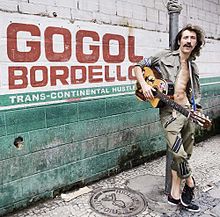
SOUNDTRACK: GOGOL BORDELLO-Trans-Continental Hustle (2010).

When I first heard Gogol Bordello, they were touring for this album (thanks NPR).  Consequently, I knew this album pretty well when I bought it.  At first I felt that it didn’t have the vibrancy of the live show (how could it?).  But after putting it aside for a few weeks, when I re-listened, I found the album (produced by Rick Rubin) to be everything I expect from Gogol Bordello: loud, frenetic fun, a bit of mayhem, and some great tunes that sound like traditional gypsy songs, but which I assume are not.

While I was listening to the album, I kept thinking of The Pogues.  They don’t really sound anything alike but they have that same feel of punk mixed with traditional music.  For The Pogues, it’s Irish trad, and for GB it’s a gypsy sound–I’m not sure if it is attributable to any specific locale.  But they have a common ground in a kind of Spanish-based trad style.  From the Pogues, you get a song like “Fiesta” which is overtly Spanish.  From GB, you get songs like “My Companjera” or “Uma Menina Uma Cigana.”  Singer/ringleader Eugene Hutz has been living in Brazil, and he has really embraced the culture (and the accent).  He also sings in a kind of drunken tenor (his accent is probably more understandable than MacGowan’s drunken warble, but not always).

I’m led to understand that previous albums were a bit more high-throttle from start to finish.  This disc has a couple of ballads.  At first they seem to not work as well, but in truth they help to pace the album somewhat.

It’s obvious this band will not suit everyone’s tastes, but if you’re looking for some high energy punk with some ethnic flare, GB is your band (and if you like skinny guys with no shirts and big mustaches, GB is definitely your band.  It is entirely conceivable that Hutz does not know how to work a button).

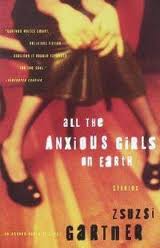
[READ: June 20, 2011] All the Anxious Girls on Earth

I’ve really enjoyed Zsuzsi’s stories in recent issues of The Walrus.  So much so that I wanted to get a copy of her new book.  It wasn’t available anywhere in the States yet, so I went back and got her first collection of short stories.

This collection felt to me like a younger, less sophisticated version of Zsuzsi’s later works that I liked so much.  This is not to say that I didn’t like them.  I just wasn’t as blown as w.

“How to Survive in the Bush”
I had to read the opening to this story twice for some reason.  The second read made much more sense and I was able to follow what was going on (I think there were a few terms that I didn’t know–a 1941 Tiger Moth, East Kootenays–that were given context after a few pages.  It transpires that this is a story o a woman who has given up her life to move to the boonies with/for her husband.  The whole story is written in second person which while typically inviting, I found alienating.  It made the story harder to read for me, but once I got into the groove of it I found it very rewarding. (more…)

Read Full Post »

« Newer Posts - Older Posts »