Feeds:
Posts
Comments

Archive for the ‘NPR/PRI/PBS’ Category

SOUNDTRACK: LONDON PHILHARMONIC ORCHESTRA-Angry Birds Theme (2011).

My son, Clark, loves Angry Birds.  I’ve played it a few times and found it enjoyable, but he is obsessed.  He is absolutely the target market for this song.  And who knows maybe it will get him to like classical music.

I wasn’t sure if I’d recognize the tune, but it is already ingrained in my head.

This version is wonderful.  It sounds like it might be from a Tim Burton movie. 

The full CD is a collection of video game themes.  We don’t have a console, so I don’t know any of the other songs on the disc. But I do rather like this one.  I can’t wait to see his face when he hears it.

Check it out on NPR!

[READ: December 15, 2011] “What We Talk About When We Talk About Anne Frank”

This story went from being a (rather) funny piece about Hasidic Jews to being a (rather) emotional story about marriage, religion and self-preservation.

As the story opens, Mark and Lauren are visiting the narrator and Deb.  Deb and Lauren grew up together.  But after school Lauren met Mark and they moved to Israel where they became Hasidic (and took the new names Shoshana and Yerucham).  As the story opens, the narrator (a non-observant Jew) is trying to hold his tongue while these religious folks are well, kind of judging  them.  It’s wonderfully summed up by this comment:

“Jewish to you?” I say.  “The hat, the beard, the blocky shoes.  A lot of pressures, I’d venture, to look jewish to you.  Like, say, maybe Ozzy Osbourne or the guys from Kiss, like them telling Paul Simon, ‘You do not look like a musician to me.'”  [Is there a joke in there since the guys from Kiss are indeed Jewish, or no?]

The narrator and Deb has a son, Trevor, who is sixteen.  The scene where he comes into the room to discover the Hasidic couple is hilariously subtle (very well written).  Then we learn that Shoshana and Yerucham (which Deb calls them) have ten children–all girls.  Yikes.  But the narrator continues to refer to them (at least in his story) as Mark and Lauren.  And the more questions he asks the more we find out that although they keep Holy the traditions, they are a bit lax about some of the rules (maybe?)  I actually don’t know the rules so I don’t know if what they’re doing is “wrong” or not.  And, amusingly there’s a bit in the story in which Yerucham complains about non-Jews giving them shit for what they do–“Can you eat in there?” kind of questions.

So, when the narrator asks if they can drink, Yerucham says he can make the whiskey kosher.  And that starts them on their way. (more…)

Read Full Post »

I used to not like Christmas songs very much.  Mostly because they;re unavoidable at the holidays but also because if you subject yourself to radio and mall versions, you get a really really bad selection of tunes.  The lowest common denominator of low denominators.

Sarah is a huge fan of Christmas music (even intentionally putting on Magic ninety-eight point threeeeeeeeee) during the holiday season (which may indeed be 50/50 when it comes to music and commercials and which tends to play quite a bit off my least-favorite song list, but they at least mix it up).  And, buying some of our own Christmas music (including alternate versions and new songs) has really helped get the monotony out of our mix.

This is a list that I created in 2008 and I see that it hasn’t really changed much at all.  There are some albums that we have recently acquired which I haven’t digested enough to see if they rank here or not.  But perhaps by the end of the holiday I’ll have a new post about new favorites.

Sarah’s comments are in red.  And, interestingly, she has created her own favorites list on her site.  Let’s see if anything has changed for her.

So, here’s my favorite Christmas songs circa 2008. (more…)

Read Full Post »

SOUNDTRACKPEARL JAM-Austin City Limits (2009).

Pearl Jam records (and sells) most of their shows and they occasionally videotape them as well.  But they don’t do TV all that much (excepting the recent Late Late Show episodes).  There seemed to be something special, or at least different, about Pearl Jam on Austin City Limits.  Think of it almost like Unplugged Updated.

It opens slow with Eddie on an acoustic guitar and strings behind him.  In fact, the whole set seems less heavy than many of their sets.  But that’s not to say that the band doesn’t rock out, because they do.

The first six songs of the set come from Backspacer.   And then they bust out “Army Reserve” (which makes sense given who is in the audience, see below).  Then there’s a wonderfully raucous version of “Do the Evolution” (one of my favorite PJ songs).

After that riotous track, they bring the strings out for one more song.  It’s a rather funny little joke because it’s just the strings and Eddie on acoustic guitar playing “Lukin,” the 80-second song that is so fast you can barely hear the words.

For an extra treat, touring mate Ben Harper comes out to play slide guitar on “Red Mosquito” (which is always a treat).  And the set ends with an amazing version of “Porch” with a super long guitar solo in which Mike McCready really shows off his chops.  There’s even a moment where Mike and Stone are riffing off each other, classic rock style.
The set ends the Eddie talking about playing for the wounded veterans in the audience and how it was quite moving for him given all they have done for us.  Over the closing credits you see the band mingling with the veterans (including a guy who has lost a leg).  It’s all surprisingly touching for a rock show.

[READ: November 20, 2011] “Perchance to Dream”

A while back I read all of the Jonathan Franzen articles that were published in The New Yorker.  I thought I had read everything he’d published until I realized I had forgotten to read this piece (possibly his most famous) that was published in Harper’s.  It fits in well with this weekend’s theme because it was mentioned in Evan Hughes’ article that I talked about yesterday and because David Foster Wallace is mentioned in it.

As with most of Franzen’s non-fiction, it’s not easy to write about critically unless I want to argue with him, which I don’t necessarily want to do.  So instead, I’ll try to summarize.  Of course, this is a long and somewhat difficult article, so let’s see what we can do with it.

The first surreal thing is when you see the byline: “Jonathan Franzen is the author of two novels, The Twenty-Seventh City and Strong Motion, and is writing a third.”  It’s hard to imagine he got a huge article in Harper’s before he wrote The Corrections.

The second surreal thing comes in the text: It opens with “The country was preparing for war ecstatically, whipped on by William Safire (for whom Saddam Hussein was ‘this generation’s Hitler’) and George Bush, whose approval stood at 89 percent.”  And it is only a few paragraphs later when he mentions Patriot missiles that it clicked that this was written in 1996 and not 2001 and that he was talking about the 1991 Iraq invasion.  He mentions this as a prelude, saying that he was trying to sequester himself in order to start writing again.

Then he talks about Paula Fox’s novel Desperate Characters as a benchmark in terms of insight and personal conflict, even if it is so crazily outdated (that someone would throw an inkwell!).   He talks about this book quite a bit. I’m, not sure I found it compelling enough to want to read, but it’s always interesting to hear a fan write about a book I’ve never heard of.  He will return to this book throughout the essay. (more…)

Read Full Post »

SOUNDTRACK: BOOKWORM-Jeffrey Eugenidies: The Marriage Plot (December 1, 2011) (2011).

Since “Just Kids” mentions  Eugenides’ book, and since Eugenides happened to appear on Bookworm at around the same time as I read this article, it seemed like a good pairing.

Obviously, from the title of the episode you can tell that this is all about Eugenides’ new book, The Marriage Plot.  Michael Silverblatt raves about this book like no other book I have heard (granted I haven’t listened to all that many episodes of Bookworm, but still).  In fact while listening to this episode, I put The Marriage Plot on hold at the library.  I always planned to read it but figured I’d just get around to it some day.  Now I feel more of a sense of urgency.

They talk at length about the state of marriage in the 21st century.  Not as in its decline but in how it differs so much from classic literature in which women had to get married by 21 or risk spinsterhood.  Eugenides set out to write a book about people getting married without having the trappings of classical literature.

It sounds wonderful.

The reason I mention this interview at all is because in the article below, Hughes talks about contemporaries of DFW using DFW as the basis for a character in their books.  So, in Franzen’s Freedom, there is character who is very much like DFW (I haven’t read Freedom yet so I can’t say). 

And in The Marriage Plot, there is a character who resembles DFW.  When I read the excerpt of this story in The New Yorker, I had to admit he did seem an awful lot like DFW–a tobacco chewing, bandanna wearing philosopher.  Eugenides had been mum about it for a while, but now, under the gentle nudging of Michael Silverblatt, he comes clean. 

He admits that there are some characteristics of DFW in the character.  However, he says that he didn’t know DFW all that well and the character has been kicking around since he went to college (long before he knew DFW).  Tobacco chewing was rampant at Brown in the 80s apparently.  But it’s a nice revelation and it ties in very well with the article.

You can listen to the show at KCRW.

[READ: December 7, 2011] “Just Kids

I have always grouped together certain authors in my head.  When there were a bunch of Jonathans publishing, I kind of lumped them together.  I think of Mark Leyner and Bret Easton Ellis in the same breath.  It’s fairly common, I suppose.  But I never really thought of David Foster Wallace in terms of a group of authors.  He seems so solitary that it’s funny to even think of him as having friends.   But according to Hughes, many of today’s established authors prove to have been a part of a kind of nebulous writer’s circle.  A kind of 1990’s update of Dorothy Parker’s vicious circle.  But more insecure.

The article bookends with Jeffrey Eugenides.  In 1983 he and Rick Moody drove to San Francisco with the intent of being writers.  Five years later with no written works, Eugenides moved to Brooklyn, alone.  In that same summer, Jonathan Franzen was in Queens, also feeling alone (even though he was married–unhappily) and desperate for friends and peers.  And then Franzen got a fan letter from David Foster Wallace (that’s after he had written Broom of the System, but before Girl with Curious Hair) praising The Twenty-Seventh City

Franzen and DFW became friends.  To this friendship was added William T. Vollman, and David Means, also Mary Karr (whom DFW dated) and Mark Costello (who co-wrote Signifying Rappers with DFW).  Later they would connect with Eugenides, Rick Moody and Donald Antrim.  (more…)

Read Full Post »

SOUNDTRACK: THE COLIN McENROE SHOW-The Life & Legacy Of David Foster Wallace (December 5, 2011) (2011).

This NPR show features an interesting discussion about David Foster Wallace:  his fan base, his cronies and his archive.   The guests were Donald Brown (New Haven Review), Evan Hughes, Ryan Walsh (who created the David Foster Wallace Audio Project) and Maria Bustillos.  Evan Hughes recently wrote a piece in New York that I’ll look at tomorrow and Maria Bustillos wrote the main piece for today’s post.  The other two guys I admit I don’t know.

This show looks at some interesting aspects of DFW’s life in the wake of his suicide and the release of The Pale King.  Although really the impetus seems to be Hughes’ article (which was published in Oct).  McEnroe asks him about the state of literature today and how both Jonathan Franzen and Jeffrey Eugenides have created characters that “resemble” DFW in some way.

They talk about the cult of DFW and play some audio clips.  Brown is an older reader and so does not embrace DFW as much as others.  He is of the same age as DFW and so loves the people DFW loved more than DFW himself.  I get the feeling that he is a curmudgeon.

But they can all agree that fans of DFW feel that he was their buddy.  Super-intelligent but very human, almost speaking like they would (if they were that smart).  They conclude that the Kenyon commencement speech is something of the pinnacle of his project of earnest warmth in humanity.

At the half way point, Maria Bustillos comes in to talk about going to the archive (which you can read about below).  She explains her own interest in self-help books and how DFW was a person who needed help.

The end of the episode has them talking about DFW’s voice.  They wonder why DFW has an “audio project” but other writers do not.  They talk about DFW’s voice and his presence during interviews and how he is very warm, even when he’s being cold (it’s an odd clip they choose). I’ve mentioned the Audio Project before.  It’s wonderful.

For anyone interested in reading books that are in a similar vein to Infinite Jest, Bustillos recommends Under the Volcano (Malcolm Lowry) and wholeheartedly recommends The Last Western (Thomas Klise).

A fascinating thing about this show was finding out that McEnroe was the author of a pretty funny piece in McSweeney’s many many years ago called “I Am Michiko Kakutani.”  He offers an anecdote about originally mentioning DFW in the story but that the McSweeney’s guys asked him to change it to someone else.

But I have to say that the show seems a bit too much about Colin McEnroe (the McSweeney’s anecdote was just one of many involving McEnroe).  He talks a lot about himself and about how he’s “afraid” that the Awl will make fun of him or that Franzen (who was with McEnroe in a green room backstage at some show) will put him in his next book (because he was discussing Neti Pots).  But I’m just not sure that Colin McEnroe rates enough to warrant the concern. 

It’s an enjoyable show, although unlike other interviews by people like Charlie Rose or Michael Silverblatt, McEnroe’s questions and comments aren’t very well informed.  If you know a lot about Wallace, this show is a bit frustrating because it takes a tone that Wallace is basically a “postmodern ironist” or that he sees everything as “a big dark joke.” And even when the guests are showing that that is not the case, he seems to try to keep reverting back to this trope.

Oh well, it led to some interesting articles at least.  Like the one below.

[READ: December 7, 2011] “Inside David Foster Wallace’s Private Self-Help Library”

For no reason in particular, I’m devoting this weekend to articles that are specifically or tangentially about David Foster Wallace (it’s been awhile, and I have yet to finish my Consider the Lobster project, so, why not). 

I actually read this because of the above radio show.  I know Maria Bustillos because we’re both in a newsgroup.  “Newsgroup” is so 90s, I wonder what they’re called these days).  Anyhow, Maria has always proven to be smart, funny and very articulate.  And the only reason I didn’t read this article when it came out was because I wasn’t sure I wanted to dive into this topic. 

After listening to the above radio show, however, I felt that this would be a very interesting article. And so it was.  It’s available at The Awl.

As it opens, Bustillos lets us know that she visited the DFW Archives Ransom Center at the University of Texas at Austin and pored over all of the materials they have there (undergrad papers, drafts of fiction and non-fiction, syllabi, tests and quizzes, and juvenilia among other things). 

Wallace was a major note-taker.  And he loved to take notes in a book as he was reading.  Just look at some of these books

But what surprised Maria (and me) is that among Wallace’s collection of wonderful fiction was a collection fo self-help books which were equally annotated and marked up. 

Much of the set up of the article concerns why DFW had self-help books at all.  The answer is, of course, because he was a depressed person (obviously) and because he had been in rehab for a pretty long time.  None of this background information is new, but Maria offers insights into DFW and his life that I had never heard before (Maria and DFW had corresponded, although I don’t know if they were “friends” or not).  (more…)

Read Full Post »

SOUNDTRACK: VAMPIRE WEEKEND: AUSTIN CITY LIMITS FESTIVAL 2010 (on Palladia TV 2011).

Like The Flaming Lips, Vampire Weekend only got two songs in this airing (this makes sense as they only had two albums out at the time).  The two songs were “Cape Cod Kwassa Kwassa” and “Oxford Comma” (Palladia faded out the “fuck” in “Oxford Comma” which always seems so subtle I don’t think I’ve ever heard it censored before). 

The band sounds great (something I’d wondered about as they seem like such a studio band–not that they use tricks or anything, but their music is so tight and sharp, it’s nice to know they can play it live, too).   Although their live show is not all that exciting visually and they seem kind of dwarfed on the giant stage. 

The real change comes from the vocals.  Not big changes, but the singer seems to having a little fun on “Cape Cod” but hitting some really high notes which are almost out of tune. 

It’s interesting that they chose to air two songs from their first album and none from their new album.  Regardless, theirs was a good set and I’d love to see more.

[READ: November 6, 2011] “Visions Shared”

A while back I read a few old articles that I got from JSTOR, the online archiving resource.  This month, I received some links to three new old articles that are available on JSTOR.  So, since it’s the holiday weekend, I thought it would be fun to mention them now.

I have been fascinated by synesthesia ever since I first heard of it a few years ago.  So when I saw that this article was not only about synesthesia, but was written from the point of view of an artist with it, I was really excited.  Sadly, while Steen may be a good artist (it is actually really hard to tell from the pictures in my print out–why are they black and white?) she is not a very compelling writer.

The most fascinating thing that I got out of this article was that by 2001, people were still not entirely sure of synesthesia and its effects on artists.  And that this is meant to be one of the first accounts from a synesthetic artist.  As such, she goes over a lot of basic groundwork and tries her best to explain exactly what is happening when she experiences these sensations.

The details are of course fascinating–she sees colors when she has certain experiences and acupuncture in particular seems to be a major source for her art.  In this respect I find her form of synesthesia less than satisfying because I am more interested in those who conflate words and sounds with colors, but beggars can’t be choosers.  Nevertheless, these acupuncture sessions have resulted in a number of art pieces.  In fact, she says she was painting these synesthetic colors long before she even knew she had synesthesia (her first painting, called “Orange Calipers” was actually synesthesia-inspired even though she didn’t “know” that at the time). (more…)

Read Full Post »

SOUNDTRACK: THE FLAMING LIPS: AUSTIN CITY LIMITS FESTIVAL 2010 (on Palladia TV 2011).

It must be tough to take a festival like Austin City Limits and truncate it into 2 hours.  It must also be tough to be a pretty much headling band like The Flaming Lips and to be playing in the middle of the day when your cool stage stuff is probably less impressive (but good for them for going all out!).

Some fun things to see during their set: the camera mounted on Wayne Coyne’s microphone (huge close-ups of his face); the guns that shoot streamers, Cliph the drummer makes the sample sound effects that you need to make during the songs, tons of back up dancers (who I believe are fans that won a contest or something), the amazing multi-instrumental skills of Steven Drozd.

This broadcast only showed two Lips songs (criminally underrepresented, but I understand).  They played “I Can be a Frog” which is a wonderful audience participation song even if it’s nowhere near their best song. 

And “She Don’t Use Jelly” which I understand as it was their hit and the crowd (and even the band) always seem into it, but that song is like twenty years old and they didn’t play any other bands’ old singles.   I won’t complain to hear that song, but there are just so many good ones to choose from that it seems silly to play that one.

[READ: November 6, 2011] “The Mermaid of Legend and Art”

A while back I read a few old articles that I got from JSTOR, the online archiving resource.  This month, I received some links to three new old articles that are available on JSTOR.  So, since it’s the holiday weekend, I thought it would be fun to mention them now.

I wrote the review of this article before I realized that I had only read part 3 of 3.  There were some clues (like the start mentioning “the first few lines of my opening chapter”), but since the link I was given went here, I assumed that the other chapters were not available (until I saw the tiny footnote that said this was continued from pg 172).

So, I’m including my original post at the bottom for history’s sake, but I’m going to write the revised review here.

I don’t quite understand why this article was broken up into three sections.  This is especially egregious because of the figures included in the articles.  They do not really correspond to the sections where they are written about.  So, for instance he mentions Figure 13 on the last page of the article when we are already up to Figure 36 (and Figure 13 is fifty-some pages away).  For most of the other figures, he always seems to be a few pages behind, as if they needed to put the pictures throughout the article rather than where they are mentioned–it was bad enough having it in three sections (in my print puts) but imagine having to flip back thirty some pages to see what the hell he’s talking about!  Of course, this was 1880, they had more free time.

So, anyhow, the beginning of this article talks about the history of the mermaid in folk tales and the Bible.  Evidently Brahma visited Menu (Aka Noah) in the guise of a fish–which is how he was able to build the ark.  There is also a lengthy discussion about the importance of fish in the Old Testament.  In addition to the whole IXTHUS thing, fish were a very useful form of currency.  So it is nor surprise that they used representations of fish and sea creatures in ancient Rome and Greece. (more…)

Read Full Post »

SOUNDTRACK: AUSTIN CITY LIMITS FESTIVAL 2010 (on Palladia TV 2011).

Recently Palladia broadcast some highlights from the Austin City Limits Festival in 2010.  The bands they showed were Phish, The Flaming Lips, Vampire Weekend, Muse, LCD Soundsystem, Sonic Youth, Spoon and Slightly Stoopid.

There were so many good bands at this festival (why is Richard Thompson in such small print?) that I won’t really complain about the inclusion of Slightly Stoopid and LCD Soundsystem on this best of (but they could have included Band of Horses, Yeasayer, Broken Bells, Gogol Bordello (the list goes on!).  (I’d never heard of Slightly Stoopid and although I like LCD Soundsystem, live they were less than stellar).  Although I am glad they didn’t include the Eagles, thank you very much.

I’m trying to get actual set lists of these airings (they mentioned the song titles during the show but I didn’t write them down).

This was a 2-hour broadcast and it was really good.  If they re-air the episode, it’s worth watching.  The quality of the broadcast is excellent (even if the HD format does take up way too much space on a TiVo).

[READ: November 6, 2011] “Beer Cans: A Guide for the Archaeologist”

A while back I read a few old articles that I got from JSTOR, the online archiving resource.  This month, I received some links to three new old articles that are available on JSTOR.  So, since it’s the holiday weekend, I thought it would be fun to mention them now.

And to start of the holidays, I present you with this–a loving history of the beer can (for archaeologists).

This is a fairly fascinating look at the development of the beer can from 1935 to the present.  The selling point of the article is that archeologists could use beer cans to date the timeframe of an excavation.  I agree with this; however, since they only date back to 1935, I’m not entirely convinced of its long-term usefulness.

The problem with the article is that page two shows a chronological timeline.  This in itself is not a problem (although it is odd that it goes from present to 1935 instead of chronologically forward); the problem is that the article itself more or less sates exactly the same thing as the timeline.  For although this article is 20 pages long, there are tons of photos and very little in the way of text beyond what was in that (very thorough) time line.

Nevertheless, you can see the morphing of beer cans from ones that you had to pop open with a can opener to ones that finally had self opening cans.  See the switch from tin to aluminum, and even learn why the tops of cans are a little narrower than the sides (called a neck-in chime, it evidently saves a lot of money). (more…)

Read Full Post »

SOUNDTRACK: COLIN STETSON-Live at All Tomorrow’s Parties, October 4, 2011 (2011).

In addition to playing SXSW, Colin Stetson also played All Tomorrow’s Parties, and NPR was there.  Unlike with SXSW, this set appears to be full length (about 50 minutes–which is a pretty amazing amount of time for him to blow that horn).  Like SXSW (and the album) Stetston starts with “Awake on Foreign Shores” and “Judges.”  What I love about this recording is that after Stetson finishes “Judges” a guy in the audience shouts (in a voice of total amazement) “That shit was off the hook!”  And he is right.  It’s not even worth me going into how amazing Steston is once again (check previous posts for  that), but man, just look at the size of that horn he’s playing (seriously, click on the link to see it bigger).

Stetson plays a few more songs from New History Warfare, Vol. 2: Judges like “The Righteous Wrath of an Honorable Man” (which is outstanding) and “A Dream of Water” (which works without Laurie Anderson, although he does say he’s sorry she’s not there).  He also introduces two news songs “Hunted 1” and “Hunted 2” which show new levels and new styles that Stetson employs.

This is a remarkable set, and Steston is clearly in his element (and the crowd is rapt).  The only problem I have is the recording level.  It must be very difficult to maintain recording levels for Stetson’s brand of noise–his louds are really loud–but you can’t hear him talk at all.  And most of the time, the introductions to his songs are worth hearing.  I’m sure if they tried to get the speaking level a little louder the music would have sacrificed though, so I think they made the right choice–I only wish there was a transcript available.

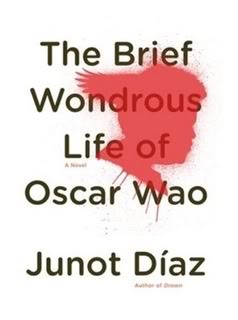
[READ: October 31, 2011] The Brief Wondrous Life of Oscar Wao

Apparently it’s pronounced, “Wow”, by the way.

Because of my new job, I don’t have a  full hour of lunch-time reading like I used to.  And so this book took considerably longer than I intended.  However, once I set aside some time to read it, I flew through the book.

I’m going to get this part out of the way because I was thinking about it throughout the book and I want to mention it without having it bog down the post.  This story reminded me a lot of Roberto Bolaño.  On the surface, sure this is because they are both writers from “Central America” (Diaz is originally from the Dominican Republic but moved to the US, while Bolaño is originally from Chile but moved to Mexico and then Spain).   But I’m not really talking about their origins so much as the style of storytelling.

Without going into a lot of Bolaño here, I’ll just say that Bolaño tends to write very detailed character studies–stories that follow one person throughout his whole life on something of a fruitless quest.  And the details of that person’s life include information about family members and distant relatives.  Further, Bolaño has written about the brutalities of both Chile and Mexico and how a person can survive in such a place.  Similarly, Díaz follows the life of Oscar and his extended family and he talks about the brutalities of the Dominican Republic.

This is in no way to suggest that there is any connection between the two writers. I mean, The Savage Detectives came out in the States in 2007 (same years as Oscar Wao) and while he certainly could have read it in Spanish, I have no evidence that he did (and as I recently found out, the first draft of the Oscar story was written in 2000).  Again, the parallels are only from my reading and have nothing to do with Díaz himself.

Okay, now that that’s out of my system…

This is the story of Oscar de Leon.  But more than that, this is the story of a fukú–a curse that befalls the de Leon family and follows them through several generations.  Oscar is the youngest member of the family and the person whom the narrator knows best.  So we see this fukú as it impacts Oscar.  And although the book is ostensibly about Oscar, it is about much more.

Oscar was born in Paterson, NJ (the town next to where I grew up!) and went to Don Bosco Tech High School (where many of my friends went).  Oscar is Dominican (his mother is from the DR, but he and his sister were born in NJ), but unlike every other Dominican male, Oscar is totally uncool, into geeky sci-fi and D&D and is clearly destined to be a virgin because he is fat with terrible hair and no social skills.

And, (no spoiler), as the title states, his life will be short. (more…)

Read Full Post »

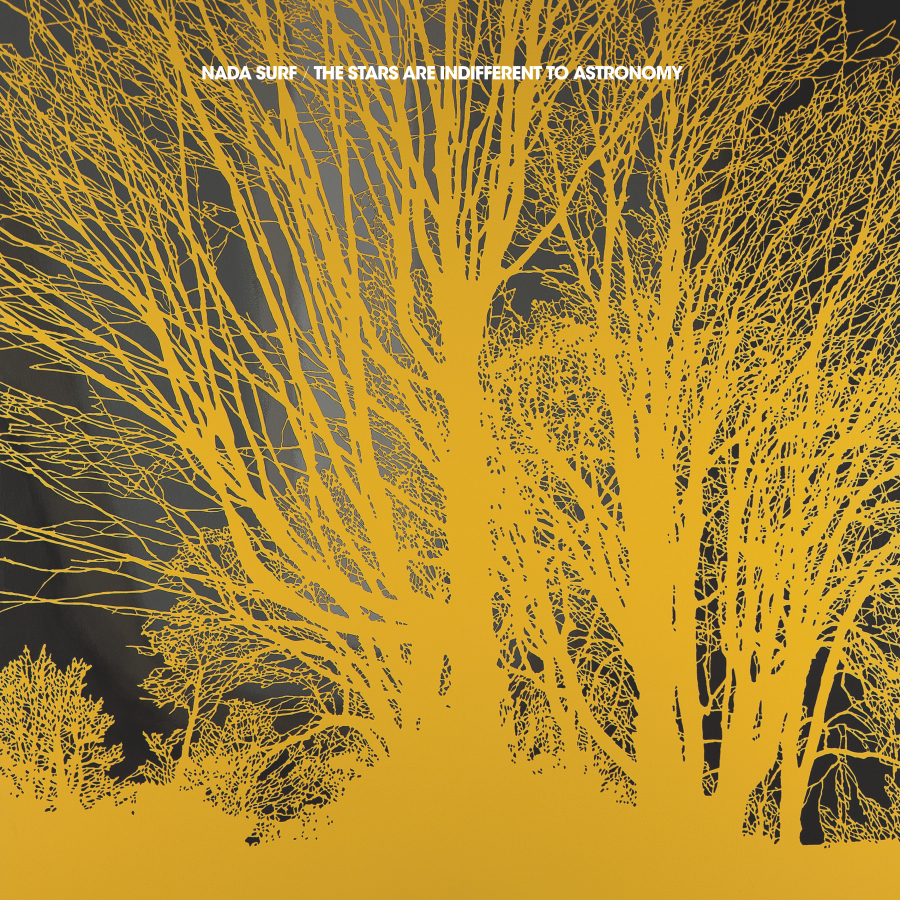
SOUNDTRACK: NADA SURF-“When I Was Young” (2011).

This is a new song from Nada Surf’s new album (due out in January 2012).  Nada Surf aren’t changing much from their tried and true sense of pop hooks, but this is a slower, statelier song (with strings!).  It features a challenging-to-sing-along-with chorus (“I wonder what was that world I was dreaming of”).

It’s a bit longer and slower than my preferred Surf songs, although I can see it working well in the middle of an album.  About two minutes in, the guitars kick in and the song really comes to life.  It’s catchy and fun and has me excited for their new disc.

[READ: October 23, 2011] “Memory Laps”

This article came around the same time that our tickets for Sedaris’ upcoming performance at Raritan Valley Community College arrived in our mailbox (nicely timed, that).

It did make me wonder if I shouldn’t be reading anymore of these pieces, since I don’t want to spoil the humor of Sedaris live (although I think Sedaris is funniest when delivering his pieces–his monotone is just wonderful–even if I have heard them before).  And plus, the show is not until April, so chances are I’ll have forgotten about it by then.

This essay is all about young David when he was on the swim team (this guy has done so much in his life–who knew he was a swimmer too?).  The crux of the essay is that David’s father never praised him for his swimming; instead, he heaped tons of praise on David’s teammate Greg Sakas (I wonder if names have been changed in these essays). 

True, Sakas was pretty great, and he won every meet, but even when, on that one freakish instance when David beat Greg, David’s father was unimpressed, saying that Greg must have been ill or something. (more…)

Read Full Post »

« Newer Posts - Older Posts »