Feeds:
Posts
Comments

Archive for the ‘Native Americans’ Category

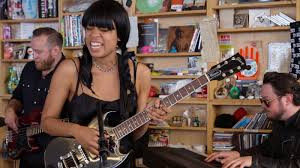
SOUNDTRACK: RAUL MIDÓN-Tiny Desk Concert #718 (March 15, 2018).

I had never heard of Raul Midón before this Tiny Desk.  So I’ll use the blurb for an explanation of who he is.

Raul Midón lives in a world of sound — blind since birth, Midón’s interpretation of his surroundings is borderless. He sings with the passion of the best classic soul singers, and his instrumental chops stand along side the most accomplished jazz musicians.

Normally backed by a band that straddles styles just as well as he does, for his turn behind Bob Boilen’s desk Midón stripped it down to just voice and guitar, the musical equivalent of tightrope walking without a net.

You could choose any of the songs he performed, listen on repeat and continuously discover layers of musicality — the nuance of a bent note in his vocals, a burst of perfectly placed guitar notes.

Midón played five songs.

For “Gotta Gotta Give” he primarily uses a kind of slapping guitar style for his chords–he slaps all of the strings with his palm making a kind of gentle but loud sound.  But he also does some great picking on the descending chords.  I love the little harmonics he throws in a the end of the verses.  For this song he plays a trumpet solo with his mouth which is pretty cool.  Later he does a solo duet with his mouth-trumpet and the guitar.  His voice is powerful and soulful.  It’s a great song.

He says that he wondered how to address the fact that he was blind. He wanted people to talk about the issue but no one every would, so he called his new album Badass and Blind and people talk about it now.

“Sound Shadow” has a more abrasive picking style–almost like a slap bass but on all of the strings.  It’s a very different sound form the first song.  The solo is a mixture between very fast picked notes and some really fast pick-less strumming.  Vocally he really mixes things up as well, with some nice falsetto at the end.

“If Only” was inspired by Tin Pan Alley stylings which you can hear in the chords.  “Bad Ass and Blind” has a bluesy sound with some more cool harmonics and some dramatic minor chords.  I like the way the chorus is very different from the staggered melody of the verses.  The second verse is all rapped while he plays that guitar.  And his delivery is solid.  It’s got an even better sounding trumpet solo.

For “Mi Amigo Cubano” he switches to a nylon stringed guitar.  He says he wrote this song with Bill Withers, who wanted a song written sin Spanish–basically Raul translated what Bill wanted He asked how do you say “Hows your wife?” “Como esta tu esposa?”  “Well put that in there!”  This song has Spanish soul.

I really enjoyed this set a lot.

[READ: March 20, 2018] “The State”

I didn’t really enjoy this story.  It felt kind of slow and meandering and the ending was really bland.

But I have learned though, that if I don’t like a New Yorker ending because it doesn’t feel like an ending, it is probably an excerpt–which this was.  Knowing that now changes my opinion of the whole thing.  And reading a bit about the novel it sounds multifaceted and really quite interesting.  Now I feel badly for judging it harshly at first.

It begins “before you were born, you were a head and tail in a milky pool.”  Your history goes back further and further, but then returns to your birth when your heartbeat was arrhythmic.

Your dad said “maybe he as a drummer.”  And in the womb, you did begin to kick to any beat offered.  Your dad is 100 per cent Indian–a recovering alcoholic medicine man from Oklahoma.  Your mom is white but there is too much and not enough whiteness to know what to do with it.  You were raised Christian although you enjoyed your father’s powwows more–but your mother became more and more opposed to them as she got older. (more…)

Read Full Post »

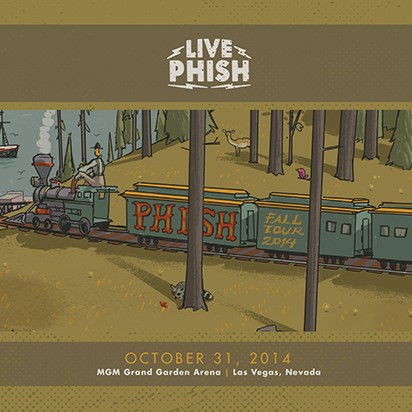
SOUNDTRACKPHISH-“The Unsafe Bridge” (MGM Grand Garden Arena, Friday 10, 31, 2014).

In honor of Halloween, these Ghost Box stories will be attached to a recent Phish Halloween show [with quoted material from various reviews]. 

Known for dawning musical costumes to celebrate [Halloween], Phish broke with tradition last year to offer a set of original music.  The Phish Bill read that Phish’s musical costume would be a 1964 Disney album of sound effects – Chilling, Thrilling Sounds Of The Haunted House.  But it wasn’t a cover set. Phish played original music set amongst an incredibly psychedelic, theatrical graveyard stage accentuated by zombie dancers and a ghoulish MC.  At the start of the set, the stage was cleared before a graveyard came to the foreground.  Smoke filled the air, zombie dancers appeared, and music filled the venue. A haunted house was brought to the front of the stage, which eventually exploded, and all four-band members appeared, dressed in white like zombies. 

“The Unsafe Bridge” was Phish’s version of a Spaghetti Western soundtrack with elements of Genesis and The Beatles worked in. While the band played these songs, lasers and other effects not usually seen at a Phish show were added to the insane spectacle.

This song definitely a spaghetti western vibe from Mike and some appropriate piano from Page.  Trey plays some simple guitar melodies.  And then a pretty solo.

This piece is nicely catchy but also really short at only 3 minutes.  I could have listened to this one for longer.

[READ: October 16, 2017] “The Late Shift

Just in time for Halloween, from the people who brought me The Short Story Advent Calendar comes The Ghost Box.

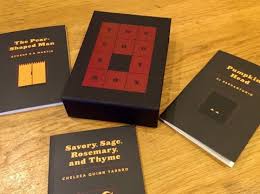
This is a nifty little box (with a magnetic opening) that contains 11 stories for Halloween.  It is lovingly described thusly:

A collection of chilly, spooky, hair-raising-y stories to get you in that Hallowe’en spirit, edited and introduced by comedian and horror aficionado Patton Oswalt.

There is no explicit “order” to these books; however, on the inside cover, one “window” of the 11 boxes is “folded.”  I am taking that as a suggested order.

This story started in an amusing way–kids returning from a 2 AM screening of The Texas Chainsaw Massacre stop at a convenience store to but some alcohol.  It’s Macklin and his friend Whitey (who is Native American–real name is White Feather).  At the store, the clerk is acting really weird, just repeating “Please, thank you, sorry” and seeming to be really out of it.

They recognize him as Juano, a guy they know from another store, but he seems to have really hit the skids as they say. (more…)

Read Full Post »

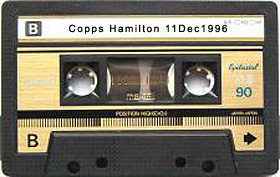
SOUNDTRACK: RHEOSTATICS-Copps Coliseum, Hamilton, ON (December 11 1996).

This is the final show on Rheostatics Live in which the band is opening for The Tragically Hip.

For this show, the intro music is also from The Wizard of Oz, but this time it’s Judy singing “Somewhere Over the Rainbow.”  It’s just one verse before fading out and then guitars fading in for Martin to play “A Mid Winter Night’s Dream.”

Turns out that this setlist is similar to the one from Buffalo with a lot of new songs.  Although there are a few older/more popular songs in places.

The new songs include “Fat” which sounds great of course.  I gather they are maybe sharing a microphone because at the end Dave says “See you in the next song, Martin.”  “Okay, Dave.”  This leads into a perfect version of “All the Same Eyes.”

Martin says “We are the Rheostatics.”  Dave says “We are the Rheostatics, not to be confused with The Howell Brothers (?).  They couldn’t make it but we got their jackets.  It’s nice of you to come out early.  We’re playing selections from our new record. Get it before it’s reduced to clear.”  (You can hear someone laugh on tape).

This is a segue into the single “Bad Time to Be Poor.”  It’s followed by another Tim song, “Claire” with the acoustic guitar opening in place.  There’s another lengthy guitar solo, although it’s not quiet as exciting as some of the other ones.  But Martin was saving up for a spirited version of “California Dreamline.”

They end their set with a rough rocking “Feed Yourself.”  During the spoken part, they slow things down to just a bass and washes of guitar.  It’s a pretty intense ending and a good preparation for The Tragically Hip.

[READ: June 25, 2017] The Story of Canada in 150 Objects

In celebration of Canada’s 150th year, Canadian Geographic and The Walrus created this special issue–a fun way to describe many elements of Canadian culture through “objects.”

The objects are grouped in vague categories.  Some have just a few words written about them while others get a few pages.  Some are humorous, some are more serious.  Most are happy or amusing, some not so much.  And all of it together paints a diverse and complex portrait of the country–as well as teaching this person from South of the border a number of things I did not know.

It’s with comic pride and humility that the first object is politeness (which is not an object at all, of course).  The amusing thing about this article about “politeness” is that while the author of it is very pleased to be so polite, he also can’t wait for his fellow Canucks to forget to be polite so he can rub it in with a extra smarmy “You’re Welcome.” (more…)

Read Full Post »

thrilignSOUNDTRACK: ADIA VICTORIA-Tiny Desk Concert #545 (June 30, 2016).

adiaAdia Victoria has a rough, raw voice that goes well with her simple, exposed guitar sound.  The blurb says her music “carries the singular perspective of a Southern black woman with a Seventh Day Adventist upbringing, who never felt like she’d fit in.”

She sings three song, mostly in a great, raspy voice.  For “Stuck in the South” she actually seems to be gritting her teeth as she sings: “I don’t know nothing ’bout Southern belles / but I can tell you something ’bout Southern hell.”  When the first verse ends, and her band kicks in, it adds such interesting textures.  A distorted bass and a lead guitar playing quietly distorted sounds.  This song is really captivating.

“And Then You Die” with its swirling sounds and keyboards has a very distinctly Nick Cave feel–gothic in the Southern sense of the word.  Indeed, the first verse is spoken in a delivery that would make Nick proud. This is no to say she cribbed from Cave but it would work very well as a companion song  I really like the way it builds, but the ending is so abrupt–I could have used some more verses.

After the second song the band heads away and Bob says “They’re all leaving you.”  She looks at them and growls, “Get off the stage!” to much laughter.

She sings the final song “Heathen” with just her on acoustic guitar.  It is a simple two chord song.  It’s less interesting than the others, but again, it’s the lyrics that stand out: “I guess that makes me a heathen, something lower than dirt / I hear them calling me heathen, ooh like they think it hurts.”

I’m curious to hear just what Adia would do with these songs when she’s not in this Tiny format.  I imagine she can be really powerful.

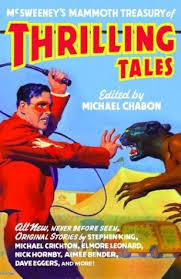
[READ: November 23, 2016] McSweeney’s Mammoth Treasury of Thrilling Tales

For some reason or another I have put off reading this McSweeney’s volume for many years.  This is technically McSweeney’s #10, although it was also released in this printing from a  major publisher. Sadly for me, my McSweeney’s subscription had expired sometime around here so I’ve never actually seen the “official” Volume 10 which I understand has the exact same content but a slightly different cover.

One of the reasons I’ve put off reading this was the small print and pulpy paper–I don’t like pulpy paper.  And it was pretty long, too.

But I think the big reason is that I don’t really like genre fiction.  But I think that’s the point of this issue.  To give people who read non-genre fiction some exposure to genre stuff.

Interestingly I think I’ve learned that I do enjoy some genre fiction after all.  And yet, a lot of the stories here really weren’t very genre-y.  Or very thrilling.  They seemed to have trappings of genre ideas–mystery, horror–but all the while remaining internal stories rather than action-packed.

Which is not to say I didn’t enjoy anything here. I enjoyed a bunch of the stories quite a bit, especially if I didn’t think of them as genre stories.  Although there were a couple of less than exiting stories here, too. (more…)

Read Full Post »

dawnSOUNDTRACK: BANKS-Tiny Desk Concert #401 (October 30, 2014).

banksI’d never heard of Banks before this Tiny Desk Concert.  The blurb says that “Banks’ terrific full-length debut, Goddess, is constructed out of layer upon layer of electronics, beats, samples and other means of submerging the singer’s voice in swirling accoutrements…. On record, she’s placed at the center of lavish productions, each suitable for throbbing remixes and banks of swirling lights.”

In this version, it is just a keyboard and a drum box, so her voice is exposed.  But I actually found her voice was a little annoying.  Especially during the verses, where she uses too much vibrato.

On the first song, “Beggin For Thread,” I enjoyed the choruses where she sang loudly and with less affectation.  Although it was during “Alibi” that I particularly didn’t like her voice–too much yea yea yea with a ton of vibrato.

For “Brain,” the accompaniment is acoustic guitar rather than piano.  It has a very different feel although I liked it even less.  I’m curious to see what their record sounds like with her voice buried, but I’m not going to find out.

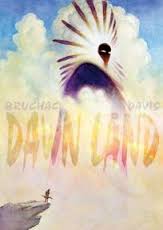
[READ: June 1, 2016] Dawn Land

Dawn Land was a novel that Joseph Bruchac wrote in 1993.  The novel (as explained in the afterword) details the oral traditions of his people as filtered through a fictional story that he was inspired to write over a burst of about six weeks.

I may have enjoyed this graphic novel more if I’d known the original story first (I also didn’t know that Bruchac was Abenaki Indian, so I wasn’t sure what to think about the story in the first place–appropriation is such a hot topic these days.  Of course having said that, I’d never heard of the Abenaki Indians before either (they lived in what is now New England).

I found the story a little confusing.  But before getting into the story, I loved the artwork.  In black and white, Will Davis conveyed so many amazing scenes and scenery–perfect depictions of people and animals and yes, giants. (more…)

Read Full Post »

SlewisOUNDTRACK: BEN FOLDS-Tiny Desk Concert #508 (February 16, 2016).

benfolds I’ve liked Ben Folds for many many years.  He’s funny, he’s amazing live and he plays a mighty good song or two.  He’s the kind of artist you say, Has he really not done a Tiny Desk Concert before? (He did an episode of Live from Daryl’s House after all).  But he’s finally here to bang the hell out of their piano and curse up a storm.

He plays several songs from his new album So There, which is  a collaboration with the sextet yMusic.  I haven’t actually listened to the record much because I gave it to Sarah and haven’t grabbed it from her pile yet.  Since there’s no strings for this Tiny Desk, these songs sound just like normal Ben Folds songs–clever lyrics, fun piano and unexpected twists.

The first song is “Phone in a Pool,” one of his rollicking stompers.  It’s catchy and fun to sing a long to and after one listen, you’re right there with him in New Orleans throwing a phone in a pool.  Midway through the song, he forgets the words and just starts laughing: “In a world where you get applause for fucking up.”  And then he makes up a verse about forgetting the words.

“Not a Fan” is a slower song with a beautiful piano melody and biting, funny lyrics (get your T-shirt signed, fangirl).

“Capable of Anything” is a fast, romping song.  He says on the record the vocals are very quiet, so he’ll see what he can do.  After a run through a verse he stops and realizes that he has knocked the piano out of tune.   And when he bangs on the keys at the end, its easy to see how.  There’s some really fast piano work (and you can hear him stomping along).

he says he’ll play some old songs.  He asks for a song and someone shouts “Emeline,” which he immediately starts playing.  And then about a verse in, he gives some story behind the song.  He says that when he was a kid 8 or 9, he wrote earnest songs, but when he was a teenager he wrote “cool”s songs like “Having Two Dicks is Cool.”

And then he started using songwriter vernacular, words you only use in pop songs, “why’d you make me cry, girl?”  Why do people do that? When he was 18 or 19 he started to write songs that were more natural, like Emeline, the first song he was proud of–using the word “stupid” or a money analogy–and which he still loves playing.

He’s willing to do more songs and asks for requests saying which ones he can or can’t do.  And then Bob points out that he’s going to miss his plane if he does more than one song.  So he chooses for everyone and plays an amazing version of “One Angry Dwarf And 200 Solemn Faces.”  he says it can probably be done and will put the rest of the piano out of tune.  And he’s not kidding.  He really pounds the heck out of that thing–how does his own piano manage?

The song is bouncy and fun and he even jokes with the lyrics near the end.

It’s an amazing, invigorating set and has me really excited to see him this summer.

[READ: February 28, 2016] Lewis and Clark

In 2014, Bertozzi made the excellent Shackleton graphic novel.  But three years earlier he had created another historical graphic novel, this one about Lewis and Clark.

Like Shackleton, it aims to be truthful but not comprehensive.  Bertozzi himself explains that it is not meant to be a replacement for the scholarly recounting of the journey.  Rather, he hopes to show the “experience” of the journey.

The book doesn’t really include any historical context, so in a brief summary:

Shortly after the Louisiana Purchase in 1803, President Jefferson commissioned a group of U.S. Army volunteers under the command of Captain Meriwether Lewis and his close friend, Second Lieutenant William Clark to explore the territory.  Their journey lasted from May 1804 to September 1806. The primary objective was to explore and map the newly acquired territory, find a practical route across the Western half of the continent, and establish an American presence in this territory before Britain and other European powers tried to claim it.The campaign’s secondary objectives were scientific and economic: to study the area’s plants, animal life, and geography, and establish trade with local Native American tribes.

(more…)

Read Full Post »

SOUNDTRACK: mohawk CHELSEA WOLFE-Tiny Desk Concert #507(February 12, 2016).

chelseaI know Chelsea Wolfe from my fiends Liz and Eleanor who are fans of her. I have her album Pain is Beauty, which is atmospheric and gothic and reminds me of Siouxsie and the Banshees.

For this Tiny Desk, she strips away all of the band and noise and plays just her electric guitar (with some major fuzz) and sings (with some looping as necessary). I’m especially intrigued that one of her strings seems to be ever so slightly out of tune, which brings a really interesting tone to her echoed guitar playing.

Her voice is really pretty.  On the record I’d been trying to think who she reminded me of.  I hears Some Siouxsie Sioux, but in this set it’s someone else and I just can’t quite place it.

“Maw” really showcases her voice as she sings a lot of lines that soar, ever so briefly, and her voice sounds really powerful.  There’s a whole goth kind of tone going on with her low guitar and her echoed voice.  I especially like the end of the song where she wordlessly sings as her guitar echoes to a close.

She doesn’t talk between songs.  And immediately she begins “Crazy Love.”  This song has a beautiful melody and great singing but with a  very dark overarching feel.  I saw that her music was described as “doom folk” which certainly makes sense.

I like “Iron Moon” best.  The slow riff in the beginning and the way her voice seems to want to crack but never does, it’s really powerful.  And the way she always sounds great while she hits those big notes.  It’s a great set and a rather unique sound for her.

It’s also nice to hear her talk at the end, just to know that she actually spoke to the people there.

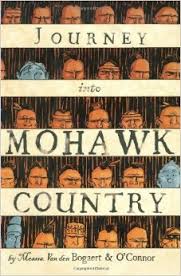
[READ: February 27, 2016] Journey into Mohawk Country

Harmen Meyndertsz van den Bogaert was only twenty-three in 1634 when he ventured into Mohawk territory in search of the answers to a pressing question: where were all the beaver skins that the Indians should have been shipping down the river?  And he wrote a journal of his experience of traveling into the future-New York State in the dead of winter accompanied by the delegates from the Mohawk tribe.

George O’Connor has taken van den Bogaert‘s diary and used it word for word (after being translated by Charles T. Gehring and William A. Starna in 1988) to create a visual representation of this journey.  I know O’Connor mostly because he is the editor of First Second’s Fables and Fairy Tales collections.  I gather he is also an illustrator, although this is my first exposure to him. (more…)

Read Full Post »

1282008SOUNDTRACK: MARIACHI FLOR DE TOLOACHE-Tiny Desk Concert #499 (January 8, 2016).

florI enjoyed Mariachi El Bronx not too long ago.  I guess I didn’t expect much more from Mariachi Flor De Toloache.  But wow, they blew me away.

I compared them to Mariachi El Bronx because they also wear the traditional Mariachi outfit and they use the somewhat comically over sized guitarron (played by Lisa Maree Dowling).

But about a minute through the first song, “Let Down” when the three women sing harmony (a wonderful three-part harmony)–it’s already amazing.  And it just gets better.

“Let Down” is a slow song sung (in English and Spanish) by Shae Fiol who also plays vihuela (which has a great sound for a tiny four-stringed guitar).  The trumpet solo (by Anna Garcia) is great and interesting and the pizzicato violin notes really add character.  But when the song suddenly picks up tempo half way through it gets really fun.  And then Shae sings the first of several beautiful and amazingly long notes.

The second song is a cumbia called “Dicen.”  This one is sung by the violinist Mireya Ramos who says “dont be shy, shake you shoulders “.  There’s group harmony and then she gets the audience to sing the chorus “Ay Ay Ay.”  The song merges into a verse of “Blue Skies” which makes the song even more fun.  Shae sings this part and once again shows off her vocal skills with some more amazingly powerful high notes.  And then Mireya really shows off her fiddling skills with a great solo and some dexterous bow work.  And then she shows off her own amazing vocal notes–holding an incredibly long note through several octaves with great control.

After those first two songs (16 minutes worth), they do yet another one.  This one straight from Mexico (the roots of mariachi) called “Guadalajara.”  It opens with great harmony vocals and a cool vihuela strumming until the trumpet announces a good old mariachi song.  Shae once again amazes with her high shrieks and calls.  And by this time the entire audience (even those of us listening at home) are totally into it.

How do they hold these notes for so long?  (Some are around fifteen seconds). It is truly a wonder to behold.

This was only a fraction of the band and apparently when they are all together live they are really something to see.

[READ: January 9, 2015] “The Reptile Garden”

With a name like “The Reptile Garden,” this story did not do anything that I thought it was going to. In fact, when I finished I had to rethink the story to remember why it was even called that.  That’s pretty cool (since it works).

The story is set in the fall of 1972.  The narrator is a half Native American woman who is going to study at the University of North Dakota.  She is very smart but she knows she doesn’t fit in.  She chose to study French because she dreamed of going to Paris some day.

She says the white girls listen to Joni Mitchel and grow their hair long, while other girls–Dakota, Chippewa or mixed blood like her were less obvious on campus.  Aside from a few who swaggered and had American Indian Movement boyfriends.  (more…)

Read Full Post »

momentSOUNDTRACK: NICK BUZZ-Circo (1996).

nickbuzzNick Buzz is a side project of Rheostatics singer/lead guitarist Martin Tielli.  This album was reissued in 2002, when I bought it  But it came out in 1996, right around the time of the concerts I’ve been posting about.  Martin says that this album is pure pop, and that he is genuinely surprised that people don’t see this.  Of course, when your album has screeching monkeys, cars honking and circus music, pop is not the first thing that comes to mind.  There are certainly pretty songs on here, but it is an album that resists easy entrance.  There are short manic pieces, slow, languorous, almost lounge music pieces, and an improved cover of Joni Mitchell’s “River.” And then there’s the instrumentation: piano, violin, guitar, voice (no drums, although there is percussion on some tracks) and other weird sound effects.

“Step Inside” opens the disc.  It seems like a normal, mellow song (with slightly falsettoed vocals).  But 34 seconds in the circus music starts—a deviant and unsettling circus that pushes its way into the song briefly then vacating and allowing the pretty melody to return.  It’s like a mild form of Mr Bungle (with more actual circus).  It’s unsettling at first but then strangely catchy after a few listens.  There is fanfare as the song ends, interrupted by the sound of a tape speeding up (or going backwards) until song two bursts in.

“That’s What You et for having Fun” is less than three minutes and while weird, it is certainly accessible and funny.  The guitar sounds like he is slapping the strings rather than strumming them.  The refrain of “there’s a monkey in my underwear” gives a sense of the absurdity (especially when the President of Canada (sic) says he has one too).  “Just Because” mellows things out a lot—simple guitar with a kind of lullaby feel (it’s a bout wishing on stars).  It’s so slow after the craziness of the first two songs.  After  3 minutes of a lounge type song, it ends with a distant radio sound of an even more loungey song which melds into the live version of “River.”

The mellow “River” is followed by a raucous bass clarinet solo and wild guitar solo that is interrupted by the long (nearly 6 minutes) “Sane, So Sane.”  This is the most conventional song on the record—a simple piano melody with repeated lyrics (conventional aside from the weird distant music in the background of course).  Although it does gone on a bit long.  “A Hymn to the Situation” is an eerie two-minute wobbly song.

“Fornica Tango” is indeed a tango presumably sung in Italian. This song features a crying baby, an interesting sounding “Italian” chorus and the screeching monkey at the end.  “Love Streams” is a pretty, slow ballad.  “Aliens Break a Heart” is another pretty song.  Although this is the song that ends with traffic sounds.  “The Italian Singer/Just Because I’m Nick the Buzz” has a kind of Kurt Weill atmosphere to it with spoken words and falsettos.

It took me several listens before I could really find purchase with these songs.  I find that I really enjoy most of them now–some of those slow ones are a little too meandering for my liking.  But it seems like a fun outlet for Tielli’s songcraft.

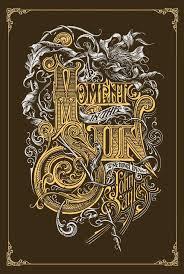
[READ: October & November 2013] A Moment in the Sun

I read this book last year…finished it just before Thanksgiving, in fact (I was proud of my pacing).  But it was so huge that I didn’t want to write about it until I had a good amount of time.  And now here it is four months later and I probably have forgotten more details than I should have and the post will be nowhere near as in depth as I was saving time for in the first place.  Bah.

When people see this book, they say, “That’s a big book.”  And it is a big book.  It’s 955 pages (and they are thick pages, so the book itself is nearly three inches thick–see the bottom of this post for an “actual size” photo); it’s got three “books” and dozens of characters whose stories we read about in full.  It is about the United States, racism, The Gold Rush, the assassination of a President, the Spanish American War, a World’s Fair and even the exploration of moving pictures.  This is a fairly comprehensive look at the Unites States from the 1890s to the early 1900s.  And, man was it good.

John Sayles is known more for his movies than his books (18 films directed, nearly as many different ones written and only 4 novels), but the cinematic quality that is clearly in his blood comes through in this book as well. (more…)

Read Full Post »

CV1_TNY_06_10_13Schossow.inddSOUNDTRACK: GAUNTLET HAIR-“Bad Apples” (2013).

stillsThis was the third song that NPR played in their summer preview show and I was a little concerned about the state of summer music because I didn’t love any of the first three songs.

Gauntlet Hair (what a crazy name) plays a kind of early-sounding Depeche Mode music with rather sedate and uninspired vocals.  I liked the second half more than the first half, probably because there was more instrumental music.

Indeed, as the song ends and the Depeche Mode-vibe comes to the fore, I rather got into it.  Especially the pianos at the end.

Shame about the vocals.

[READ: June 18, 2013] “Happy Trails”

I haven’t read a lot by Sherman Alexie, but I have enjoyed what I’ve read.

This story was quite short and was all about the disappearance and presumed death of his Uncle Hector.

One day Hector said he was going to hitchhike to Spokane.   He walked out the door and was never head from again.  The narrator says that Hector was his favorite relative (although he later says that he really wasn’t that great of a guy).

As the story picks up, it is four decades later and the narrator has decided to have a funeral for him.  His mother says that she doesn’t think he’s actually dead but the narrator says that it has been forty years, he could have come back or written a letter.  Or called. (more…)

Read Full Post »

« Newer Posts - Older Posts »