Feeds:
Posts
Comments

Archive for the ‘Weezer’ Category

[ATTENDED: December 3, 2016] The Menzingers

2016-12-03-20-13-55I hadn’t heard of the Menzingers before this show.  I looked them up and saw that they were a punk band on Epitaph Records, which meant I knew what to expect–poppy punk, kind of like Rancid (without the ska-although I understand that they were formed out of a Scranton based ska-punk band).  And that’s a fairly accurate blanket statement of what they’re like–catchy songs with a kind of growly singer and lots of harmonies.

Their previous album was highly regarded and they have a new one coming out.  I was excited to see them.  I was also pretty excited to be at a show at the Sands again–my last show there was when I got a drumstick.  But imagine my surprise when there was a huge snarl of traffic getting into the venue.  I’ve seen a few shows there and have never seen traffic getting into the venue.  And then an enormous line to present tickets inside.  So I wound missing–well, maybe it was only part of the first song.

And that delay was because the show was packed.  Packed I say!  (I guess every college student in Bethlehem was there?).

I’m usually early enough that I can pick my place, but, wow, I was further back than I’ve been for almost any show I’ve seen lately.  And there was a pretty pushy crowd too.

So that kind of sucked.

But the band was good and a lot of fun.  (more…)

Read Full Post »

[ATTENDED: October 26, 20162016-10-26-19-47-23] The Monkees

Like most people of my age I used to watch The Monkees on TV.  I was never a huge fan, but I liked the show a bunch and used to sing the theme (and pretend to be The Monkees when at the beach).  But I never really gave them much thought as a musical act (especially when I got older and learned that *gasp* they didn’t even play on the songs!).

Then I learned that there are some people who really really like The Monkees.  My college roommate was a huge fan, and a fellow I’ve met through another friend is an even bigger one–Craig, good luck on that book, man!  I also found out that Sarah and her fried Joanna used to watch the show all the time and were mega Monkees fans (without the album buying).

So when the band announced their 50th (FIFTIETH!) Anniversary tour, I thought it would be fun to go and thought Sarah would really enjoy it.  Sarah saw them on a previous anniversary tour (25, maybe?), where Peter, Micky and Davy were presence (Mike doesn’t typically do this sort of thing).  Of course, with Davy passed on, we wondered just how much of a Monkees show this would be.

Well, I never realized that Mickey sang most of the songs.  It makes sense now that I think of it, he is the voice of the Monkees after all, but I’d assumed it was a bit more democratic.  So as long as Mickey’s there it is still a Monkees gig.  Having Peter there lends it some credibility (Mike did perform a couple of shows when the tour went through California). (more…)

Read Full Post »

greatestSOUNDTRACK: PINK FLOYD-“The Hard Way” and “Wine Glasses” (1974).

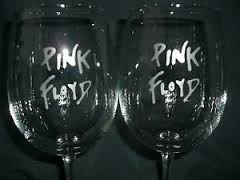
glassThis book informed me about these two unreleased Pink Floyd songs (there’s a Wikipedia site that lists some fifty more !).  While the were unreleased in 1974 (from the abandoned Household Objects album), they were eventually released in 2011 on expanded versions of albums.

“The Hard Way” features some “percussion” that sounds like someone taking steps.  There’s a bass riff which I gather is from rubber bands (but very well tuned).  There’s clocks ticking and chiming and tape being unspooled.  It’s a neat idea and while it is absurd to think you could make a whole album with this kind of stuff (in 1974), it’s a surprisingly good sounding track.

“Wine Glasses” was apparently made with wine glasses.  It is all of 2 minutes long.  It was designed to be a full song but was eventually used in the introduction to “Shine on You Crazy Diamond.”  I never really considered that there were wine glasses making the sounds (and clearly there are synths added on top), but yeah, so that ‘s kinda neat.

[READ: November 25, 2014] The Greatest Albums You’ll Never Hear

I found this book at work and knew I had to read it.  I was actually surprised at how long it took me to read (there’s a lot of entries).

The title and subtitle pretty much say everything you need to know about this book (and if you need to read it or not).  This book collects a series of writers who give a brief history of some of the more famous (and some not so famous) albums that were never released.  It explains (as best they can) why the albums weren’t released and even gives a percentage chance of likelihood of the album ever seeing the light of day (interestingly, most seem to be a 3/10–they may have been able to use a 5 point scale).

I knew some of the records they talked about (The Beach Boys’ Smile, Neil Young’s Chrome Dreams), but was ignorant of quite a lot of them. And while big fans of the artists may know all of the details about their favorite lost album already (these are sketches, not exhaustive research), there will certainly be some new information.  For instance, I’m a huge Pink Floyd fan but had no idea about the two shelved works mentioned here.

I liked the way the book was done chronologically and grouped by decade.  It was also interesting to see how the “reasons” for the non-release morphed over the decades from “the record label didn’t like it” to “it was leaked online.”

The one major gripe I have with the book is that it is chock full of “imagined” album covers.  This in itself is okay, but it is not made explicitly clear that they are all imagined (credits are given at the bottom of each image, but it took me a few entries to realize these were just people’s ideas of what the covers could look like).  And most of them are gawdawful.  Just really lame and dull (as if they had 20 minutes to come up with an idea).  They mar an otherwise cool collection,especially since some of the unreleased records actually do have proposed covers (even if they were never released).  I see that there is in fact a paragraph about the covers in the front pages of the book, but it is almost hidden away.

In addition to the albums I’ve listed below, I learned some fascinating things.  That Bruce Springsteen has hundreds of songs that he wrote but never released for various reasons.  That Pink Floyd did try to make an album out of household objects (with no instruments).  That the Sex Pistols’ Never Mind the Bollocks was almost simultaneously released illicitly as Spunk.  And that Danger Mouse’s The Grey Album was recently remastered.

The end of the book includes two small sections: other favorites that were never released.  Not sure why they earned only a small column instead of a full entry, but that’s okay.  The second was albums that we eventually did see, like My Bloody Valentine’s MBV and Guns N’ Roses’ Chinese Democracy.

So if you ever wondered what happened to that long lost album, this may be the book for you.

A sampling of the unreleased records include:

  • The Beach Boys-Smile
  • Buffalo Springfield-Stampede
  • The Kinks-Four Respected Gentlemen
  • The Beatles-Get Back
  • Jeff Beck-The Motown Album
  • Jimi Hendrix-Black Gold
  • The Who-Lifehouse
  • Wicked Lester
  • Rolling Stones-American Tour ’72
  • CSN&Y-Human Highway
  • Pink Floyd-Household Objects (1974), Spare Brick 1982
  • Dusty Springfield-Longing
  • David Bowie-The Gouster (1975), Toy (2001)
  • Sex Pistols-Spunk
  • Neil Young -Homegrown (1975), Chrome Dreams (1976)
  • Frank Zappa-Läther
  • Beastie Boys-Country Mike’s Greatest Hits
  • Weezer-Songs from the Black Hole
  • Jeff Buckley-My Sweeetheart the Drunk
  • Van Halen-IV
  • Foo Fighters-The Million Dollar Demos
  • Green Day-Cigarettes and Valentines (the author doesn’t believe it was actually stolen)
  • Tapeworm (Trent Reznor and Maynard James Keenan among others)
  • Deftones-Eros
  • U2-Songs of Ascent
  • Beck-The Song Reader


Read Full Post »

arcSOUNDTRACK: HARI KONDABOLU-Waiting for 2042 (2014).

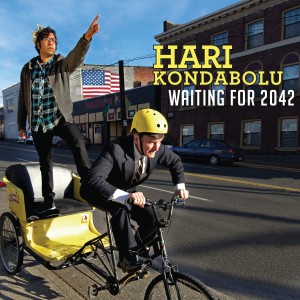
hariI knew Hari Kondabolu from the much missed Totally Biased with W. Kamau Bell (in fact the liner notes even have Hari thanking Kamau for employment—although at the time of this release, that employment was terminated).

As Hari jokes at one point during this show (recorded in Oakland, CA in 2013), he is “obsessed with race.” And how could he not be. To be alive in 2014, you should be obsessed with it, especially if you are paying attention. And his jokes about race are not only salient, they are different. Like the first one on the disc, “My White Chocolate Joke.” The set up is simple, chocolate is dark and creamy and delicious, why would anyone need to make a white version of it? This leads to a punchline that if you like white chocolate you are racist. But as with most of Kondabolu’s jokes, the punchline is just a set up for a much deeper joke—this one having to do with White Jesus. It’s very funny and really well done. “A Feminist Dick Joke” is self referential and funny, especially when he criticizes his own joke for not going far enough. “Moving to Canada,” pokes fun at Americans who say they are leaving for political reasons and then pokes fun at Canada for not being the panacea these people say it is anyway.

I loved “Environmentally Friendly Pollution Machines” which is about how eco-tourism is encouraging us to see things before the tourism industry destroys them.  “Toby” is such a wonderfully extended joke in which people like me who don’t get the initial joke are gently upbraided until the joke is fully revealed to us and even though we just had a joke explained to us, it was still funny. And the call back at the end of the disc is genius.

“Weezer Broke My Heart” is a very unpolitical joke about the band Weezer and that their fan base demographic has not changed in a decade–and how that’s really creepy.

There’s a lot of race jokes in the next few pieces. The title track about how in 2042, whites will be the “minority” is simply hilarious (whites are only the minority if you consider that the races are “whites” and “everyone else”).  And then the hilarious joke about how “Asians are Well-Behaved” (the Chinese restaurant bits are awesome) and the wonderful dichotomy of Mexican stereotypes (stealing our jobs but also being lazy). There’s also the very funny joke about how minorities never get to time travel for real (referencing the Martin Lawrence movie Black Knight and Back to the Future just to show how current and hip he is) because there would be some real changes.

There are also a number of jokes about homosexuality, and how heterosexuals are totally flamboyant even though they don’t realize it (showing off your spawn is pretty flamboyant, frankly). And the extended riff in “Matthew McConaughey on Tolerance” is just terrific.

Jokes dealing with all of these topics are bound to be inflammatory, but Hari is also not afraid of the deadly curse words, (he actually makes me uncomfortable in one joke with how many times he says the word fuck, although is very funny).

All in all this is a very funny standup show from a comedian who is very funny and will, with any luck, find a wider audience. (Of all races).

[READ: June 20, 2014] Arcimboldo

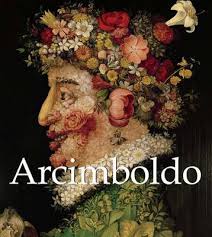
Giuseppe Arcimboldo was a phenomenal painter who is best known for his paintings of people’s portraits which are made out of fruit.  But he was also a master of detail in realistic sketches, drawings and painting as well.  This tiny book (270 pages) with a paragraph of text on every other page, is a wonderful introduction to the man beyond the fruit.

Perhaps the most amazing thing about his work is that it was done in the 16th century.  I think many of us tend to lump him in with the surrealists or the modern period.  But he worked in this style long before.  For context, his father was friends with a student of Leonardo da Vinci.

Arcimboldo was born in 1527 to nobility.   Interestingly, there are variations on the spelling of his name: Acimboldi, Arisnbolde, Arcsimbaldo, Arzimbaldo and Arczimboldo.  Giuseppe even signed his first name in different ways as well: Giuseppe, Josephus, Joseph or Josepho.  The book doesn’t indicate if this was some kind of intentional obfuscation.

The first dozen or so pages contain amazing illustrations by Arcimboldo–primarily studies of nature, both flora and fauna. They have a distinctively 15th/16th century style, and they are amazingly detailed.  A little later, Arcimboldo began doing studies in deformed creatures–birds with three legs , goats with weird hooves.  Whether this was just because he wanted to explore nature in great detail or because he liked weird things, the book doesn’t say. (more…)

Read Full Post »

cpatain 10 SOUNDTRACK: “WEIRD AL” YANKOVIC-Bad Hair Day (1996).

bad hair dayBad Hair Day is an uninspired album title, especially given how great of an album it is.  As I posted last week, “Amish Paradise” is great, (I forget to mention the funny Gilligan’s Island verse in the middle.  “Everything You Know is Wrong” is just a magnificent They Might be Giants parody.  Now, TMBG and Weird Al are pretty kindred spirits (they both use accordions and sing silly songs).  In that respect, this song isn’t that different from a typical Al song, but there are so many great musical nods to TMBG that the song is just awesome.  And it’s very funny too.

“Cavity Search” is a parody of U2’s “Hold Me Touch Me Kiss Me Kill Me” and it works very well, both as a great soundalike (Al’s vocal tricks get better with each album) and the way he plays with the original (the drill solo is great) are really clever.  “Calling in Sick” is a kind of Nirvana parody, although I don’t hear it as well as other band parodies.  It’s certainly a grunge song and, as such it works.  But it was “The Alternative Polka” that proved to be my favorite of his medleys so far.  “Loser,” “Sex Type Thing” “All I Wanna Do” “Closer” (hearing him do Nine Inch Nails is hilarious–especially this song!), “Bang Bang Blame” (so much R.E.M. lately), “You Oughta Know,” “Bullet with Butterfly Wings” (Weezer’s song was supposed to be included here but they asked it to be removed and he did at the last minute–see the video below).  “I’ll Stick Around,” “Black Hole Sun” and “Basket Case”–a great mix of songs that I loved at the time and still do, this song is like reliving the mid 90s.

“Since You’ve Been Gone” is a fun a capella band version of a funny break up song.  He gets better and better at this kind of lyric (“a red hot cactus up my nose” is particularly wonderful).  “Gump” is a very funny parody of “Lump” by Presidents of the United States of America.  Evidently they liked his parody so much they used some of his lyrics in the final verse when they played it live.

“Sick of You” has a fun bass line (reminiscent of Elvis Costello) and a great chorus.  And “Syndicated, Inc.” is a very funny parody of that overplayed Soul Asylum song “Misery.”  It’s a very funny song about syndicated TV shows.  “I Remember Larry” is a pretty funny original about a prankster, although it’s the weakest song on the album.  “Phony Calls” is a parody of TLC’s “Waterfalls” and it’s pretty funny (especially hearing Al do TLC vocals).  The parody works pretty well, and it’s certainly helped by the sample of Bart and Moe on the Simpsons.  “The Night Santa Went Crazy” is a pretty funny twisted take on Santa.

This album is definitely one of his best.  Just about every song is a winner.  And it’s his best-selling album too.

[READ: February 22, 2013] Captain Underpants and the Revolting Revenge of the Radioactive Robo-Boxers

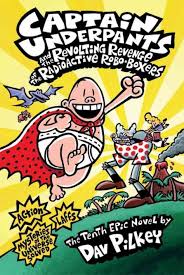
Clark was pretty excited when this book came out.  He had just finished up book #7 or 8 when the book was published.  And so it didn’t take too long for him to get caught up with the series.  I was also pretty lucky to have just finished book nine so this “last” book (although not really) was very well timed.

When we left off in Book Nine, Tippy Tinkletrousers had inadvertently destroyed the earth and the giant zombie George and Harold were stomping through the town.  And, shockingly, they had just crushed Tippy in his robo-pants.   But as this book opens, Pilkey gives us the truth about zombies.  They are really slow.  So slow that Tippy was able to get out of the way of the giant foot (and do lots of other things) and put a giant ketchup packet under the foot so it got squished instead of him.

The rest of the book is simply chock full of time travel, overlapping people and all kinds of paradoxes.  I have to wonder if Clark got it, but he just read it again and he did seem to have decent understanding of what happened. (more…)

Read Full Post »

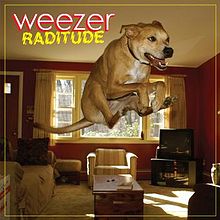
SOUNDTRACK: WEEZER-Raditude (2009).

I didn’t buy this Weezer album when it came out because I had heard really bad things about it (like the “guests”), but when I saw it cheap I decided to check it out.  This has to be the most polarizing Weezer album of them all.  I listened to it twice yesterday.  The first time I thought I had been too harsh on it.  The second time I thought it was godawful.  It’s amazing what a couple of hours can do.

It opens with a wonderful bit of poppy wordplay ala Cheap Trick: “(If You’re Wondering If I Want You To) I Want You To.”  It’s catchy as anything and is a wonderful start to the album, even if it is probably their poppiest song ever.  From there though, the album really degenerates.  And mostly it’s because it’s so dumb.  I mean the album title should tell you what you’re in for, but who would have expected the moronic sub-pop-metal of “The Girl Got Hot” or even the reprehensible lyrics of “I’m Your Daddy” “You are my baby tonight And I’m your daddy.”  It’s just creepy.  Or gah, a song about the mall?  “In the Mall.”  It’s not even worth mocking.  And really, try to picture Rivers Cuomo in a mall.  Any mall.

But nothing could prepare anyone for “Can’t Stop Partying.”  Unlike Andrew WK’s ouvre, which is so sincere about partying that you can’t take it seriously, this song really seems to be about the guys partying.  It’s laughable.  The anemic rap but Li’l Wayne certainly doesn’t help.

Even the collaboration with Indian musicians on “Love is the Answer” (yes, seriously) doesn’t really work.  It feels like they wrote the song and then said, “Hey let’s throw some sitar on it.”  It’s not enough to be exciting but too much to ignore.

This is not to say that these songs aren’t catchy.  I mean, geez, I still have “Can’t Stop Partying” in my head while I’m listening to something else.   Rivers knows how to write a pop trifle.  And the more he writes songs like this, it makes me thing that Pinkerton was the fluke.  Which is fine. The music world needs poppy songs, right?

[READ: early August 2011] various nonfictions

I thought about doing individual posts for all of Arthur Bradford’s non-fiction that’s available on his website (that’s right,  yet another author that I have read short uncollected pieces by without having read any of his bigger works–I’m looking at you Wells Tower).  Bradford has links to all of his nonfiction ( I assume) on his website.  There are 12 links in total.  One is to his blog (which I’m not reviewing).  The rest are for articles covering a pretty broad array of topics from a pretty broad variety of sources.  (more…)

Read Full Post »

SOUNDTRACK: WEEZER-Death to False Metal (2010).

This is a fascinating release.  I assumed it was a quick cash in of unreleased tracks.  And yet it doesn’t sound like a bunch of tracks from different eras thrown together.  A little digging reveals that it is sort of a collection of unreleased tracks.  The ten songs here were written over the band’s career but were either never finished or were finished but never released.  According to various places online, Rivers edited and manipulated the songs (and maybe re-recorded some?) to make them all sound current (and like they’re from the same time).  Thus he considers this to be the follow-up to Hurley.

The album is full of poppy songs (“Turning Up the Radio” has FIFTEEN people listed as composer on Allmusic–the true sign of a pop juggernaut).  There’s a couple of slightly heavier songs, “Blowin My Stack” has a big shouty chorus and “Autopilot” has a very electronic kind of sound.  But perhaps the most notable track is the cover of “Unbreak My Heart.”  That song came out in 1996, so one assumes that this version must be at least ten years old, because why would someone make a cover of an old pop hit from fourteen years ago?  It’s quite good, though, as Weezer covers tend to be.

If you like Weezer, this isn’t a throw away.  The songs are just as good as their other recent records (which means they’re not as good as their early ones, but are still poppy).  If you don’t like Weezer this will do nothing to change your mind.

Although I am amused by the album cover design that they chose for this title (which is a tribute to the band Manowar, obviously), I think a better cover would have been Weezer in loincloths.  Can you imagine Rivers Cuomo brandishing a giant sword?

[READ: May 21, 2011] “Medea”

Ludmilla Petrushevskaya had a story in The New Yorker recently.  The fact that she has one here as well can only mean she has a book coming out (although a quick look at Amazon does not indicate that she does).

The opening line says, “This is an awful story…”  And it’s true (not in the sense of being bad, but in the badness that it contains).  Petrushevskaya tends to write very dark stories (dark fairy tales is how they’re mostly categorized), and while this is not a fairy tale, it is certainly dark (and as with most of her stories, it’s quite short).

It’s a fairly simple story: the narrator hops in a cab and complains about how her seventy-three year old grandmother called for a cab to pick her up at a certain time but it never came–and never even called to say it wasn’t coming.  This meant she missed her plane, and the people waiting for her missed her and basically the whole day (and a lot of money) was lost because of a cab.

The cabbie didn’t have anything to do with that, but he tells her that it could be worse, and proceeds to launch into a story trying to outdo her story.  They jockey for position in terms of terrible stories (a woman whose baby dies on vacation–and that’s only the beginning of her problems) until finally he talks about himself. (more…)

Read Full Post »

SOUNDTRACK: WEEZER-Hurley (2010).

In my head, no band garners as much debate as Weezer.  According to this article, a man offered them $10 million to break up.  Even I go back and forth about whether they are great pop song writers or incredible sell outs.  I mean, look at one of the items on their thanks list for Hurley: “Dodge–makers of the timeless Challenger.”  Is this ironic or not and if not, does it matter?  I’m also torn by Rivers Cuomo’s Harvard degree, which I would think means he would write intellectually rigorous songs–and yet he never does.

But what of it?  Let’s talk about the music.  It has dawned on me that the closest band to compare them to is Cheap Trick.  They write poppy songs with often heavy guitars that are completely sing along-y but are in no way alternative to anything.  And yet everyone loves Cheap Trick, so why not love Weezer, too?

Hurley is no different.  Each song is 3 minutes of pure pop (for crying out loud Desmond Child is on one track–put one in the sell out column).  But they also have some odd fans on this disc: the crew from Jackass sings backing vocals on “Memories” and Michael Cera plays mandolin and sings backing vocals on “Hang On” (although you can’t hear any of them really).  “Hang On,” by the way is their most Cheap Trick-y song to date.

“Unspoken” features a flute and acoustic guitars until about two minutes into a three-minute song.  Then it bursts out of acousticland and into heavy rocking guitars.  The one song I don’t get is “Where My Sex?” which I suppose is the controversial song on the disc.  He’s clearly talking about socks but he keeps saying sex.  I really have no idea why.  It’s not funny, even remotely.  It’s just an odd decision.  And I would say I rather dislike the song, but the chorus is great, as is the totally unexpected third section (which is like  pop song unto itself) that comes in 2 and a half minutes out of nowhere.

“Smart Girls” has to be ironic, but who knows anymore.  To me the most interesting song is “Brave New World.”  It eschews the standard big-chords-for-choruses format they’ve been using with a much heavier guitar and single guitar notes in the verses.  (Although the chorus is, once again super catchy).

My version of Hurley has bonus tracks which are separated by an interesting 10 seconds of string music.  The bonus tracks include a cover of a song from Yo Gabba Gabba ( I really must watch that show some time).  There’s also a great cover of Coldplay’s “Viva La Vida” (in many ways Weezer is like a harder rocking version of Coldplay in terms of success and obvious sellout possibilities).  Although this live version shows that Rivers’ voice is no match for Chris Martin’s.

“I want to Be Someone” is an earnest acoustic solo track while “Represent” (Rocked Out Mix) is one of the heaviest things they’ve done.  I assumed the original was on Raditude, but it’s not.  Evidently it’s the unofficial song of the U.S. World Cup soccer team.  Huh, who knew?

So yes, it seems that they’re pretty much sell outs.  And yet for thirty minutes (all of their discs are so nicely short) it’s easy to stop worrying about “indie or not” and just sing along.

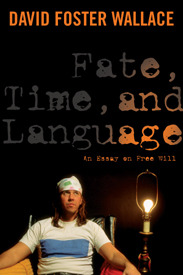
[READ: November 7, 2010] Fate, Time and Language: An Essay on Free Will

First I wanted to thank Columbia University Press for sending me an Uncorrected Proof of this book. I was pretty excited to read it, but to get it a few weeks early was even cooler (and, no, this won’t have any impact on my review).

Second, I wanted to state exactly what this book IS (because I wasn’t entirely sure myself).  The book is a reprinting of David Foster Wallace’s philosophy graduate undergrad thesis.  However, rather than just publishing the thesis (and giving us a short book or a long book with one sentence per page), Columbia University Press has packed the book with a great many essays that help to contextualize the thesis.  The Preface by Steven H. Cahn & Maureen Eckert explains this quite neatly.

So, my (briefer) version of the background: DFW’s thesis is about Richard Taylor’s article “Fatalism” (1962).  CUP has also included Taylor’s initial article (so we can see what DFW is talking about).  And even more than that, when Taylor’s article was initially published, it caused a bit of controversy and a lot of responses.  So, to get a sense of everything that DFW was working with (and against), this book also includes the intellectual dialogue: articles that range from four to ten pages (and also include a dense of Taylor by Steven H. Cahn himself (published in 1964).

Part II of the book includes an introduction by Maureen Eckhart and DFW’s essay.

Part III is a brief look at DFW as a student written by a former professor, Jay Garfield.

Before I get to the meat of the book itself, I wanted to say that I didn’t know anything about this essay.  And I’d thought about this thesis as possibly an interesting piece of philosophy from an author whose work I greatly admired.    Well the introduction to this book states in pretty certain terms that my thinking about this thesis is a massive understatement.  For, in fact, DFW’s thesis undermined Taylor’s argument in ways that no other argument had been able to do before.  His thesis more or less repudiated Taylor’s original essay.  The thesis also won the Amherst University Gail Kennedy Memorial Prize in Philosophy (and a wonderful piece of trivia: DFW’s father James won the same prize in 1959).  So, yes, this isn’t just a graduate undergrad thesis, this is real philosophy.

On to the book: (more…)

Read Full Post »

SOUNDTRACK: PAVEMENT-Crooked Rain, Crooked Rain (1993).

Now this album, Pavement’s second (after the Watery, Domestic EP, which I’ve never heard) is my idea of perfect Pavement.  Some might complain that this album is too commercial (although it hardly is) but to me is shows a consolidation of the talents into actual songs.

It opens with “Silence Kit” which sounds like a twisted take on a Buddy Holly song–disconcerting and familiar at the same time.  The second track “Elevate Me Later” ups the ante a bit with a noisy raucous chorus.

“Stop Breathin'” is a dark song, a sort of minor ballad that sounds even more disconsolate with the slightly out of tune guitar work.   But the lengthy instrumental at the end is (although simple) quite pretty.

And then there is the sublime nonsense of “Cut Your Hair.”  This was the first Pavement song I’d ever heard all those years ago.  And from the silly “oo oos” at the beginning to the crazy screaming guitar solo and crunchy “NO BIG HAIR” line I fell in love immediately. It was a wonderful left field hit (not unlike “She Don’t Use Jelly”) that brought a great band some attention.

It’s followed by “Newark Wilder,” a slow track that fits wonderfully after “Hair.”  One might even call it a ballad.  But it is definitely not standard fare, when the bass (or baritone guitar) plays a riff instead of a bridge.

The album picks up the rocking vibe again with, “Unfair” which I noticed is like a rough precursor to Weezer’s “Beverly Hills.”  It’s a fairly conventional song but it’s made unconventional by Malkmus’ delivery and guitar style (and would probably be a hit if it was released today).

I recently mentioned “Gold Soundz”.  (And it’s amazing how much the live version sounds just like the studio–as if everything was intentional).  It’s followed by the goofy Dave Brubeck parody/tribute “5-4=Unity.”  And of course, “Range Life” is just an awesome slacker anthem.  It’s got everything.

The last three songs offer a lot of diversity.  “Heaven is a Truck” is a piano based, drunken-sounding ballad.  “Hit the Plane Down” is a rambling wonderful shambles that devolves into a complete chaos, and “Fillmore Jive” is a 6 minute “epic.”  It opens slowly, and then builds into a fairly conventional sounding (drunken, sloppy, end of the concert) rock song.

I feel that Pavement peaked with this disc.  It’s really fantastic.

[READ: September 23, 2010] “Lost in the Mail”

As I am wont to do, I have gotten a little obsessed with an author. Recently it was Wells Tower (there’s still a few Harper’s pieces by him I haven’t read yet). And right now its Jonathan Franzen (even though I haven’t read any of his novels yet).  After reading the previous New Yorker piece, I wanted to see what else he had written for them.  Seeing his entire list at the New Yorker site is daunting and it makes it seem like he was constantly writing quite long pieces for them.  And yet, parsing it out, it comes out to about one article a year.  And yet some of these article, whoo boy, are 12 or 13 pages…quite lengthy for the New Yorker.

And so, I’m going to read these pieces over the next few weeks–I thought about reading each year’s piece during a different week, but that seems too regimented.  And since the majority of these pieces are non fiction (there are about 5 short stories in the mix) I’m going to be reading them with an eye towards these questions: Can a good writer make a story that I don’t care interesting?  Would I enjoy this same piece if it were written by someone else?  As a reporter (at large) does Franzen bring some kind of personality to the way the piece is constructed that someone else may not have?

This questions are unanswerable of course, because no one else wrote the piece in a different way.  But, when scanning the titles, some of the subjects interest me but others do not.  And those will be the real test.

This piece, about the Chicago Post Office is something that I didn’t care about specifically.  However, I have a certain love of the Postal System, and so I found this story heartbreaking and something of an illusion-shatterer. (more…)

Read Full Post »

walrus juneSOUNDTRACK: MOXY FRÜVOUS-Thornhill (1999).
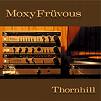
thornhillThe final “proper” Moxy Früvous disc is something of a return to the days of Wood (see, the cover art isn’t silly at all, and it’s a photo not a drawing). It’s not as dire and claustrophobic as Wood but it also doesn’t really have too many silly moments.

Unlike Wood,this disc feels very full, very robust.  My initial response was minor disappointment that it didn’t have many silly moments (except, perhaps “Splatter Splatter”).  And yet, after many listens I’ve concluded that it’s is one of their richest, most complex discs, and it’s very rewarding.

The opening song “Half as Much” is very full and sounds not unlike Canada’s own Sloan.  In fact, the whole disc sounds a bit more like Sloan than any other previous comparisons.  “You Can’t Be too Careful” has great full harmonies (and actually sounds a bit like Weezer (!)).  “I Will Hold On” is another great acoustic power song where they harmonize wonderfully.

“Earthquakes” is a silly rollicking song, (at least as rollicking as this disc can do).  “When She Talks” is almost too delicate for its own good, but the melody is really strong.

Then you get to the crazy song “Splatter Splatter.”  This song rocks. And it’s quite funny, with the noir guitar lines and the horror movie conceit. I want to hear it again and again and again.

“Independence Day” spins out a wonderful chorus after a somewhat uninspiring start.  And the ending track “My Poor Generation” is a great, winning song.  It’s a bit somber, but again, the full chorus redeems it.

Their albums tend to suffer from late-album mellowness.  And even if their songs are strong, the song placement tends to make you ignore those latter tracks.  But the albums are still really good.

Moxy Früvous are often described as a silly band, but their overall output belies that designation.  Rather, they were just a great band.

[READ: June 25, 2009] “Water Everywhere, 1982”

This story was a tough one for me.  It references a real event in Canadian history that I never heard of: the sinking of the Ocean Ranger, in 1982 (this Wikipedia article will fill you in on the history of the ship).

Helens’ husband was aboard the Ocean Ranger.  The story deals with her (in)ability to cope with the news. Not much “happens” in the story but it pays very great attention to grief and how a whole community is affected by tragedy.

The story is available here.

For easier searching I’m also adding this spelling: Moxy Fruvous.

Read Full Post »

« Newer Posts - Older Posts »