Feeds:
Posts
Comments

Archive for the ‘Weezer’ Category

SOUNDTRACK: WEEZER-Hurley (2010).

In my head, no band garners as much debate as Weezer.  According to this article, a man offered them $10 million to break up.  Even I go back and forth about whether they are great pop song writers or incredible sell outs.  I mean, look at one of the items on their thanks list for Hurley: “Dodge–makers of the timeless Challenger.”  Is this ironic or not and if not, does it matter?  I’m also torn by Rivers Cuomo’s Harvard degree, which I would think means he would write intellectually rigorous songs–and yet he never does.

But what of it?  Let’s talk about the music.  It has dawned on me that the closest band to compare them to is Cheap Trick.  They write poppy songs with often heavy guitars that are completely sing along-y but are in no way alternative to anything.  And yet everyone loves Cheap Trick, so why not love Weezer, too?

Hurley is no different.  Each song is 3 minutes of pure pop (for crying out loud Desmond Child is on one track–put one in the sell out column).  But they also have some odd fans on this disc: the crew from Jackass sings backing vocals on “Memories” and Michael Cera plays mandolin and sings backing vocals on “Hang On” (although you can’t hear any of them really).  “Hang On,” by the way is their most Cheap Trick-y song to date.

“Unspoken” features a flute and acoustic guitars until about two minutes into a three-minute song.  Then it bursts out of acousticland and into heavy rocking guitars.  The one song I don’t get is “Where My Sex?” which I suppose is the controversial song on the disc.  He’s clearly talking about socks but he keeps saying sex.  I really have no idea why.  It’s not funny, even remotely.  It’s just an odd decision.  And I would say I rather dislike the song, but the chorus is great, as is the totally unexpected third section (which is like  pop song unto itself) that comes in 2 and a half minutes out of nowhere.

“Smart Girls” has to be ironic, but who knows anymore.  To me the most interesting song is “Brave New World.”  It eschews the standard big-chords-for-choruses format they’ve been using with a much heavier guitar and single guitar notes in the verses.  (Although the chorus is, once again super catchy).

My version of Hurley has bonus tracks which are separated by an interesting 10 seconds of string music.  The bonus tracks include a cover of a song from Yo Gabba Gabba ( I really must watch that show some time).  There’s also a great cover of Coldplay’s “Viva La Vida” (in many ways Weezer is like a harder rocking version of Coldplay in terms of success and obvious sellout possibilities).  Although this live version shows that Rivers’ voice is no match for Chris Martin’s.

“I want to Be Someone” is an earnest acoustic solo track while “Represent” (Rocked Out Mix) is one of the heaviest things they’ve done.  I assumed the original was on Raditude, but it’s not.  Evidently it’s the unofficial song of the U.S. World Cup soccer team.  Huh, who knew?

So yes, it seems that they’re pretty much sell outs.  And yet for thirty minutes (all of their discs are so nicely short) it’s easy to stop worrying about “indie or not” and just sing along.

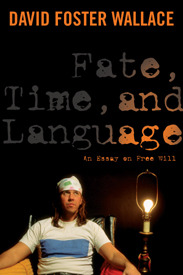
[READ: November 7, 2010] Fate, Time and Language: An Essay on Free Will

First I wanted to thank Columbia University Press for sending me an Uncorrected Proof of this book. I was pretty excited to read it, but to get it a few weeks early was even cooler (and, no, this won’t have any impact on my review).

Second, I wanted to state exactly what this book IS (because I wasn’t entirely sure myself).  The book is a reprinting of David Foster Wallace’s philosophy graduate undergrad thesis.  However, rather than just publishing the thesis (and giving us a short book or a long book with one sentence per page), Columbia University Press has packed the book with a great many essays that help to contextualize the thesis.  The Preface by Steven H. Cahn & Maureen Eckert explains this quite neatly.

So, my (briefer) version of the background: DFW’s thesis is about Richard Taylor’s article “Fatalism” (1962).  CUP has also included Taylor’s initial article (so we can see what DFW is talking about).  And even more than that, when Taylor’s article was initially published, it caused a bit of controversy and a lot of responses.  So, to get a sense of everything that DFW was working with (and against), this book also includes the intellectual dialogue: articles that range from four to ten pages (and also include a dense of Taylor by Steven H. Cahn himself (published in 1964).

Part II of the book includes an introduction by Maureen Eckhart and DFW’s essay.

Part III is a brief look at DFW as a student written by a former professor, Jay Garfield.

Before I get to the meat of the book itself, I wanted to say that I didn’t know anything about this essay.  And I’d thought about this thesis as possibly an interesting piece of philosophy from an author whose work I greatly admired.    Well the introduction to this book states in pretty certain terms that my thinking about this thesis is a massive understatement.  For, in fact, DFW’s thesis undermined Taylor’s argument in ways that no other argument had been able to do before.  His thesis more or less repudiated Taylor’s original essay.  The thesis also won the Amherst University Gail Kennedy Memorial Prize in Philosophy (and a wonderful piece of trivia: DFW’s father James won the same prize in 1959).  So, yes, this isn’t just a graduate undergrad thesis, this is real philosophy.

On to the book: (more…)

Read Full Post »

SOUNDTRACK: PAVEMENT-Crooked Rain, Crooked Rain (1993).

Now this album, Pavement’s second (after the Watery, Domestic EP, which I’ve never heard) is my idea of perfect Pavement.  Some might complain that this album is too commercial (although it hardly is) but to me is shows a consolidation of the talents into actual songs.

It opens with “Silence Kit” which sounds like a twisted take on a Buddy Holly song–disconcerting and familiar at the same time.  The second track “Elevate Me Later” ups the ante a bit with a noisy raucous chorus.

“Stop Breathin'” is a dark song, a sort of minor ballad that sounds even more disconsolate with the slightly out of tune guitar work.   But the lengthy instrumental at the end is (although simple) quite pretty.

And then there is the sublime nonsense of “Cut Your Hair.”  This was the first Pavement song I’d ever heard all those years ago.  And from the silly “oo oos” at the beginning to the crazy screaming guitar solo and crunchy “NO BIG HAIR” line I fell in love immediately. It was a wonderful left field hit (not unlike “She Don’t Use Jelly”) that brought a great band some attention.

It’s followed by “Newark Wilder,” a slow track that fits wonderfully after “Hair.”  One might even call it a ballad.  But it is definitely not standard fare, when the bass (or baritone guitar) plays a riff instead of a bridge.

The album picks up the rocking vibe again with, “Unfair” which I noticed is like a rough precursor to Weezer’s “Beverly Hills.”  It’s a fairly conventional song but it’s made unconventional by Malkmus’ delivery and guitar style (and would probably be a hit if it was released today).

I recently mentioned “Gold Soundz”.  (And it’s amazing how much the live version sounds just like the studio–as if everything was intentional).  It’s followed by the goofy Dave Brubeck parody/tribute “5-4=Unity.”  And of course, “Range Life” is just an awesome slacker anthem.  It’s got everything.

The last three songs offer a lot of diversity.  “Heaven is a Truck” is a piano based, drunken-sounding ballad.  “Hit the Plane Down” is a rambling wonderful shambles that devolves into a complete chaos, and “Fillmore Jive” is a 6 minute “epic.”  It opens slowly, and then builds into a fairly conventional sounding (drunken, sloppy, end of the concert) rock song.

I feel that Pavement peaked with this disc.  It’s really fantastic.

[READ: September 23, 2010] “Lost in the Mail”

As I am wont to do, I have gotten a little obsessed with an author. Recently it was Wells Tower (there’s still a few Harper’s pieces by him I haven’t read yet). And right now its Jonathan Franzen (even though I haven’t read any of his novels yet).  After reading the previous New Yorker piece, I wanted to see what else he had written for them.  Seeing his entire list at the New Yorker site is daunting and it makes it seem like he was constantly writing quite long pieces for them.  And yet, parsing it out, it comes out to about one article a year.  And yet some of these article, whoo boy, are 12 or 13 pages…quite lengthy for the New Yorker.

And so, I’m going to read these pieces over the next few weeks–I thought about reading each year’s piece during a different week, but that seems too regimented.  And since the majority of these pieces are non fiction (there are about 5 short stories in the mix) I’m going to be reading them with an eye towards these questions: Can a good writer make a story that I don’t care interesting?  Would I enjoy this same piece if it were written by someone else?  As a reporter (at large) does Franzen bring some kind of personality to the way the piece is constructed that someone else may not have?

This questions are unanswerable of course, because no one else wrote the piece in a different way.  But, when scanning the titles, some of the subjects interest me but others do not.  And those will be the real test.

This piece, about the Chicago Post Office is something that I didn’t care about specifically.  However, I have a certain love of the Postal System, and so I found this story heartbreaking and something of an illusion-shatterer. (more…)

Read Full Post »

walrus juneSOUNDTRACK: MOXY FRÜVOUS-Thornhill (1999).
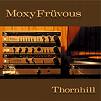
thornhillThe final “proper” Moxy Früvous disc is something of a return to the days of Wood (see, the cover art isn’t silly at all, and it’s a photo not a drawing). It’s not as dire and claustrophobic as Wood but it also doesn’t really have too many silly moments.

Unlike Wood,this disc feels very full, very robust.  My initial response was minor disappointment that it didn’t have many silly moments (except, perhaps “Splatter Splatter”).  And yet, after many listens I’ve concluded that it’s is one of their richest, most complex discs, and it’s very rewarding.

The opening song “Half as Much” is very full and sounds not unlike Canada’s own Sloan.  In fact, the whole disc sounds a bit more like Sloan than any other previous comparisons.  “You Can’t Be too Careful” has great full harmonies (and actually sounds a bit like Weezer (!)).  “I Will Hold On” is another great acoustic power song where they harmonize wonderfully.

“Earthquakes” is a silly rollicking song, (at least as rollicking as this disc can do).  “When She Talks” is almost too delicate for its own good, but the melody is really strong.

Then you get to the crazy song “Splatter Splatter.”  This song rocks. And it’s quite funny, with the noir guitar lines and the horror movie conceit. I want to hear it again and again and again.

“Independence Day” spins out a wonderful chorus after a somewhat uninspiring start.  And the ending track “My Poor Generation” is a great, winning song.  It’s a bit somber, but again, the full chorus redeems it.

Their albums tend to suffer from late-album mellowness.  And even if their songs are strong, the song placement tends to make you ignore those latter tracks.  But the albums are still really good.

Moxy Früvous are often described as a silly band, but their overall output belies that designation.  Rather, they were just a great band.

[READ: June 25, 2009] “Water Everywhere, 1982”

This story was a tough one for me.  It references a real event in Canadian history that I never heard of: the sinking of the Ocean Ranger, in 1982 (this Wikipedia article will fill you in on the history of the ship).

Helens’ husband was aboard the Ocean Ranger.  The story deals with her (in)ability to cope with the news. Not much “happens” in the story but it pays very great attention to grief and how a whole community is affected by tragedy.

The story is available here.

For easier searching I’m also adding this spelling: Moxy Fruvous.

Read Full Post »

SOUNDTRACK: WEEZER-Weezer (Red Album) (2008).

So hooked was I by the video for “Buddy Holly” that there was little chance of me ever disliking Weezer.  When Pinkerton came out, it quickly became one of my favorite records.  “Pink Triangle” is such a great song about unrequited love for a lesbian.  And of course, “El Scorcho” is a wonderfully off-kilter single.  Since then, Weezer have put out a bunch of albums, some with titles and some without.  This is their 3rd record called Weezer, but it’s the Red Album because its cover is red (duh).

I know that many people can’t stand Weezer (or at least couldn’t back the last time I bothered to check what the pop culture world was thinking…although I think they may be cool now).  They have an uncanny sense of pop melody even when their songs are weird or funny or even seemingly out of tune.  I think that’s why I like them so much, because their songs sometimes start out of tune and the ultimately wind up being super catchy.  I also like them because Rivers Cuomo went back to Harvard to get his degree in English (one wonders of course, why he chooses to write such pedestrian rhymes, but that’s another story altogether), and because he’s a geek in general.

No doubt you’ve heard at least one Weezer song, and you’d be living under a rock if you haven’t heard their new, ubiquitous single “Pork and Beans.”  And “Pork and Beans” is as good a place to start as any.  It’s got fairly heavy guitars, it’s catchy as all get out, it’s rather anti-authority, and parts of it don’t make any sense…that’s Weezer for you.

This record is pretty strong overall.  The first 5 songs are pretty standard Weezer.  There’s a really heavy start song, a sentimental song “Heart Songs” which name checks some of Rivers’ favorite songs growing up, and what has become my favorite song on the record: “The Greatest Man that Ever Lived.”  This is a long song (for Weezer) at nearly six minutes.  What’s cool about it is that every verse is done in a different style of music: there’s a metal verse, a choral verse, a spoken word verse etc.  And the chorus is simple and wonderful.  It could go on for twenty minutes and would still be great.

“Everybody Get Dangerous” is a weird song to me.  It doesn’t quite sound right. It’s still catchy, but I think maybe saying the word dangerous makes a chorus sound weird.  (How’s that for subjective?).  Or, which is more likely, the verses are the catchy part and the chorus is the off-kilter section.

The second half of the record strikes a few firsts, in that the other members of the band sing lead vocals on a few tracks.  Even though the songs are good (and when I heard “Automatic” on the radio the other day on WRXP, it sounded great by itself) there’s something off about them being on a Weezer record.  I think maybe I associate Rivers’ voice with their style so much that any other voice just makes things seems askew.  That said, the songs are good, they’re just not “Weezer.”

I have to get back to the lyrics though.  Rivers is more about harmony and melody, I know, but sometimes those lyrics are so simple as to be almost a joke in themselves.  Maybe that’s the point.  (And as an English major myself, I secretly believe it is the point).  After a few listens I stop cringing about the lyrics and I just start enjoying them.

The last song gives me some problems because it runs nearly seven minutes long.  Obviously not a problem in itself, but the last two or two and a half minutes are just the song fading out, which…come on.

[DIGRESSION] I think I’m probably the only person who gets bothered by songs that fade out too long or songs that I think should be a minute shorter than they are.  And I realized it’s because I have a limited time where I can listen to music carefully.  And so when I do, I don’t want it wasted with silence or fade outs or final choruses that repeat sixteen times. On the other hand, if I just have music on in the background (which is how most people listen to music) you will hardly notice those extra 45 seconds.  But when you’re in the car, and you know you’ll be at work in exactly 3 minutes, you don’t want 2 minutes of fade!

[READ: August 14, 2008] One Day in the Life of Ivan Denisovich

My first real awareness of Solzhenitsyn actually comes from the Moxy Fruvous song “Johnny Saucep’n”:

Well he was just some Johnny Saucep’n when he walked into that kitchen.
And the chef picked up the order and put down his Solzhenitsyn (more…)

Read Full Post »

« Newer Posts