Feeds:
Posts
Comments

Archive for the ‘Pink Floyd’ Category

SOUNDTRACK: PINK FLOYD-the final cut: a requiem for the post war dream (1983).

My college experience seems very unlike many people’s (especially the stories I hear from you young kids today).  And I’m just talking musically.  I went to college in the late 80 and early 90s.  And my freshman year, the most popular albums on campus  were Steve Miller’s Greatest Hits, Squeeze’s 45s and Under and Pink Floyd’s The Wall.  My friend John also loved this album.  And I think we listened to it hundreds of times, blasting out of dorm room windows.

It’s kind of strange that college freshmen would embrace an album about (more or less) Roger Waters’ father dying in WWII, especially since none of our fathers had died at all, much less in WWII.  But angst finds its home I suppose.

This album is not a sequel to The Wall, but it has echoes (see what I did there) from that album.  There were touches of WWII in The Wall.  And sonically a lot of this album sounds similar.  The big difference is that Roger Waters wrote pretty much the whole thing, long time keyboardist Richard Wright left the band and David Gilmour, sings on only one song.  So, it’s practically a solo project (and it fees a lot like Waters’ solo album The Pros and Cons of Hitch Hiking).

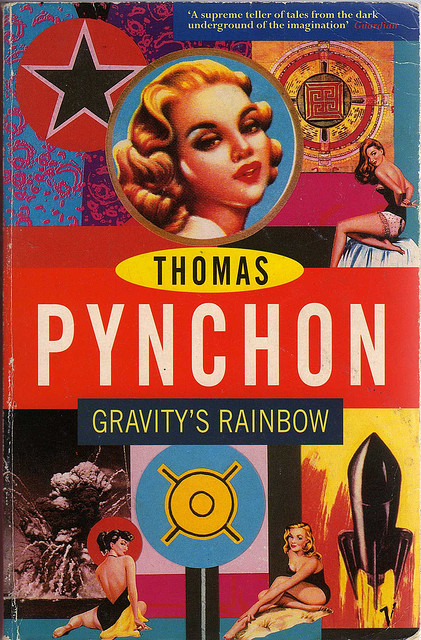
This album seems to have alienated fans of Floyd. But I happen to like it quite a lot.  And, I it a lot while reading Gravity’s Rainbow.

“The Post War Dream” opens with military sounding horns and funereal organs, as befits an album about the war.  It also has an intriguing assortment of sound effects (I wonder where he gets most of this stuff).  It sounds very Pink Floyd–Roger Waters’ voice is pretty unmistakable).  But “Your Possible Pasts” sounds even more Pink Floyd.  Evidently this album has a number of songs that were cast offs from The Wall.  If that’s true, this is probably one of them, as it sounds like it could easily fit on that album–especially when the keyboards kick in during the second chorus (even if Richard Wright wasn’t on the album).  And the guitar solo is so David Gilmour–that’s what you call a signature sound.

“One of the Few” has something I love from Floyd–whispered vocals (“teach”) and creepy laughing; it works as a nice transition to the louder “The Hero’s Return.”  This track is very complex–all kinds of tonal shifts, echoed vocals and bitter lyrics.  It explodes into “The Gunner’s Dream,” a gentle piano ballad about a soldier being shot down.   It’s a surprisingly tender song (although not really given the topic of the album) and lyrically it is really impressive.  I don’t really care for the saxophone solo–it’s not my thing, but I think it actually works well for the song.  And, again the end sounds like it came from The Wall (Waters is amazing at angsty screams).

“Paranoid Eyes” is a delicate song that works, for me, as lead in to the wonderful “Get Your Filthy Hands Off My Desert” a short, string-filled somewhat goofy song that is very bitter under its seeming jocularity.  It’s followed by “The Fletcher Memorial Home,” a really dark track about old age with a lot of current political commentary thrown in (although the “group of anonymous Latin American meat-packing glitterati” always confused (and amused) me.  So even though it is “about” WWII, there’s plenty of anger at current political climate, right Maggie?.  Boom boom, bang bang, lie down, you’re dead–take it away David…

“Southampton Dock” is another gentle song, more of a story with musical accompaniment.  It segues into “The Final Cut” a fitting piano end to a sad album about death and loss, that also happens to reprise song elements from The Wall.

But that’s actually not the last song.  We get the incongruous “Not Now John.”  It really doesn’t fit with the album at all (I happen to love it, even if it doesn’t).  It’s way over the top, including the how-in-the-hell-did-they-think-this-would-be-a-single? opening lyrics: “fuck all that we gotta get on with this. (fuck all that).”  And yet, single it was, reaching #7 in the US.  Man it rocks.  Oi, where’s the fucking bar, John?

The album ends properly with “two suns in the sunset” a mostly acoustic track that returns the mood to more sombre feelings (except for the rocking section where you drive into an oncoming truck).  Never has futility felt so upbeat.  For an album as personal as this is, it really draws the listener in.  Of course, if you don’t want to be drawn in, it’s easy to resist, as many have.

The reissue (which I don’t have), includes the cool song from The Wall movie, “When the Tigers Broke Free.”  Which I imagine would work quite well contextually.

[READ: Week of April 30] Gravity’s Rainbow 4.7-end

And the book ends with a bang and a lot of leftover questions.  My first reaction is that I can’t get over Pynchon spent so much time in the last 60 pages talking about things that had nothing to do with the “plot” per se.  I never really felt like the story was all that hard to follow until the end, when Pynchon let loose the dogs of war on his writing.  There are several pages of stream of consciousness reverie where I was completely at a loss.  Of course, this has been true for much of the book–Pynchon would talk about something and then cycle back into it, filling in the gaps that he left open.  The whole book seemed to have this kind of coiled effect (perhaps a slinky). He would set up a scene as if you had been there all along.  And while you were puzzling over just who the hell he was talking about, he would flashback to whatever you needed to fill in the missing pieces.  And he is still doing that as the story comes to a close.

And although it starts out with a familiar figure, he quickly takes something and has a massive hallucination.  Is this even true? (more…)

Read Full Post »

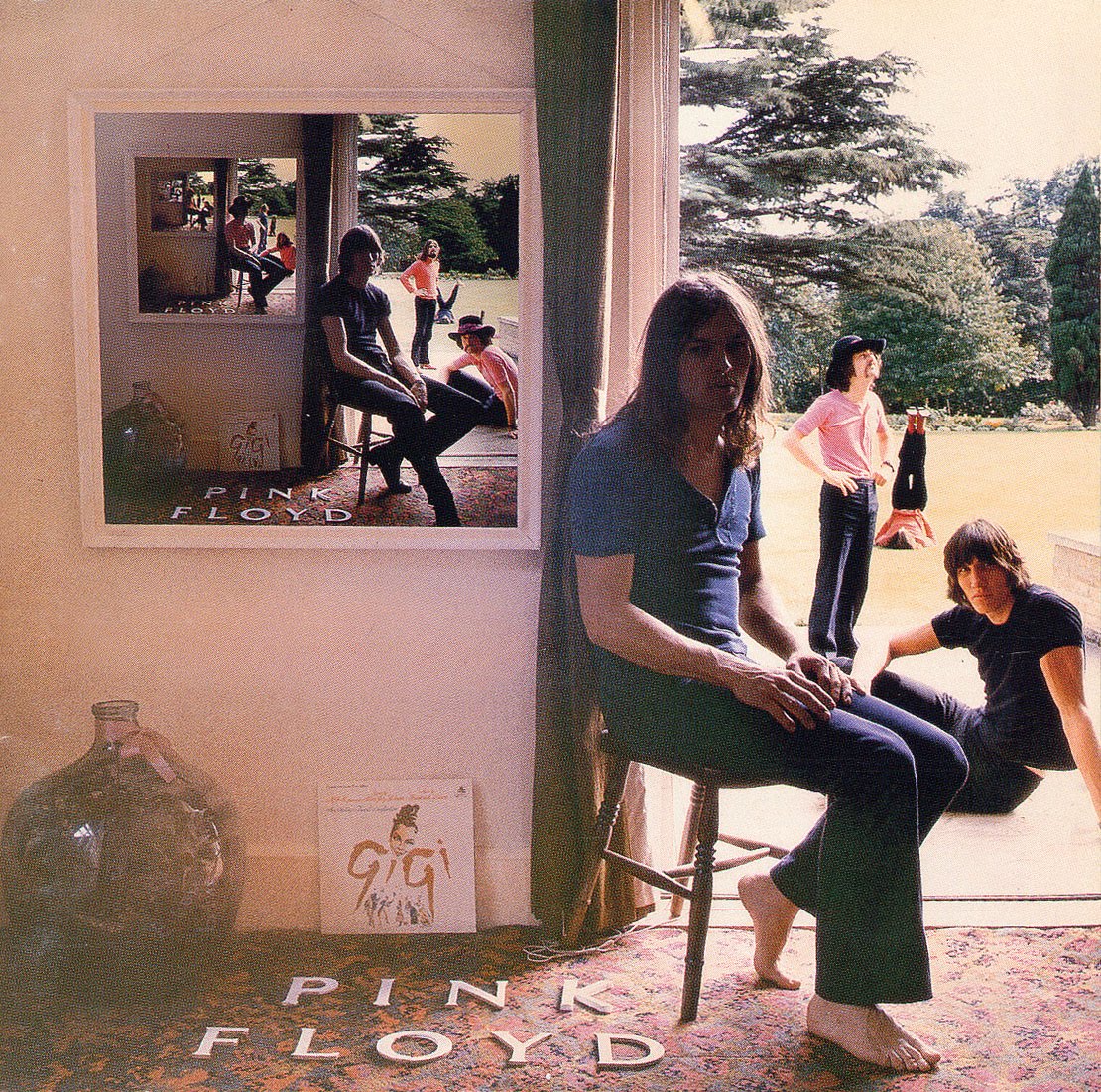
SOUNDTRACK: PINK FLOYD-“Several Species of Small Furry Animals Gathered Together in a Cave and Grooving with a Pict” (1969).

I‘ve mentioned this song a few times here so I figured I’d talk about it itself.  This bizarre song comes from PinkFloyd’s bizarre album Ummagumma.  Back in high school we ranked albums by a very specific content rating and this one received the highest: SDI-seriously drug induced.

Disc One is a live album but disc two contains compositions by each of the band members.  They each received about thirteen minutes of time to do what they wanted.  And they really seemed to go to town.

Roger Waters created this track, and it is very, very weird.  I’ve always loved it, probably because it is so audacious.  Wikipedia gives us this:

The track consists of several minutes of noises resembling rodents and birds simulated by Waters’ voice and other techniques, such as tapping the microphone played at different speeds, followed by Waters providing a few stanzas of spoken word in an exaggerated Scottish burr.

The Picts were the indigenous people of what is now Scotland who merged with the Scots.

You can hear it in all its glory (and then marvel that the guy who made it later when on to make some of the most famous music ever released) in this video.

I also love that someone liked this bizarre thing enough to put it on a Pink Floyd compilation (Works) as well.

And the wind cried Mary.

[READ: January 25, 2012] “Terminator: Attack of the Drone”

I found a link to this story somewhere, I can’t recall where, now.  It was mentioned with excited breath that Moshin Hamid, who I don’t know, had written this exclusive short story for The Guardian.  Hamid has been shortlisted for the Man Booker prize and has written two novels: The Reluctant Fundamentalist (2007) and Moth Smoke (2000).

This story was not quite what I expected from the brief biography I’d read.  Because of the ominous title, I assumed it might have something to do with Iraq (I realize that this came out before the recent downing of the U.S. drone in Iraq, but it still seemed plausible).  Rather, what we get is a bit of sci-fi about smart machine that are on a murderous rampage.

The story is not really as sci-fi as all that, except that what I wrote is true. But it’s more about two boys as they try to deal with this new world of death, machines and heroism.

It begins with the note that “the machines are huntin’ tonight.”  (There’s an interesting dialect in the story, especially from someone who lives in Lahore, New York and London.  We get lines like “Sky’s light enough so’s we’d maybe see the machine but all’s quiet and it ain’t about,” which I register as Southern American.  And yet the characters are named Omar and Yousuf.  I can’t decide if that’s an attempt to show a future world of total integration or just a total disconnect.)

There aren’t many humans left–his Pa is dead, his ma got her leg blown off by a landmine.   But at least his sisters are still alive–that’s more than most people have.

The machines come thundering through, crushing everything in their sight.  They also fly–you can’t see them, but you can hear them.  No one has ever killed a machine. (more…)

Read Full Post »

SOUNDTRACK: LES MOMIES DE PALERME-Brûlez de Coeur [CST070] (2011).

This is the second disc from Constellation’s MUSIQUE FRAGILE 01.  Les Momies de Palerme, comprised of Marie Davidson and Xarah Dion, create ethereal music that would not be out of place on NPR’s Echoes (wonder if John Diliberto knows about the album).

There is a female vocalist who has qualities of Cocteau Twins’ Elizabeth Fraser (big surprise there) as well as early Lush.  But while the music is often swirling and intriguing, it is also sometimes odd.  There are moments in “Solis” which remind me of Pink Floyd’s “Several Species of Small Furry Animals Gathered Together in a Cave and Grooving with a Pict.” (That’s the second time I’ve mentioned this song in just over a month).

“Incarnation” has a vaguely middle eastern feel and works more in a Dead Can Dance kind of vein and “Le Cerf Invisible” has some really cool sound effects that spring up throughout the song.

The title track has a spoken word section that reminds me of the spoken word part in Sinéad O’Connor’s “Never Get Old” from The Lion and the Cobra (probably because it’s spoken by a woman and is in a foreign language, although on Sinéad’s album it’s Gaelic (spoken by Enya(!) and on this one it’s French).  I rather like it.

Most of the songs are longer than five-minutes, but there are two short ones: “Médée” is just under three and “Outre-Temps” is just under two, but they retain the same style of music, although “Médée” introduces acoustic guitars.

“Je T’aime” ends the disc with a bit more acoustic instrumentation.  The album kind of becomes more grounded as it goes along.  But it’s always ethereal.  It’s a neat experience.

Their website has a great front page, too.

[READ: January 23, 2012] Five Dials Number 22

Most Five Dials issues are chockablock with different ideas: contemporary issues, flashbacks to the past, fiction, poetry, ethics, music.  A wonderful melding of interesting ideas.  But Number 22 is entirely different.  Simon Prosser and Tracy Chevalier co-edited this issue and as they say in the editor’s note, they asked a group of contributors “to write grown-up fables about nineteen trees native to the UK.”

This issue is also promoting trees by highlighting the work at http://www.woodlandtrust.org.uk, an organization with three aims:

1 Work with others to plant more native trees…

2 Protect native woods, trees and their wildlife for the future…

3 Inspire everyone to enjoy and value woods and trees…

Simple but noble goals.  You can even buy a copy of this book in print from them at their store.

Even though I love nature and like being in the woods, I don’t know a lot about different kinds of trees.  I’m always stumped when it comes to tree identification.  So this issue was kind of enlightening for me.  Each fable has a picture of a leaf (presumably from that tree) which were painted by Leanne Shapton.  The fables also create backstory for what tree-lovers know about their favorite trees, and so this was also helpful just to learn what people know about trees.

But at the same time, it makes me uniquely unequipped to really talk about these fables.  So I’m just going to list the authors and their trees and say a word or two about their style. (more…)

Read Full Post »

SOUNDTRACK: LAND OF KUSH’S EGYPTIAN LIGHT ORCHESTRA-Monogamy [CST066] (2011).

The Land of Kush makes music that I would describe as challenging to Western ears.  Sam Shalibi has always played middle eastern music (he’s a master of the oud) and he has usually incorporates it with varying degrees of poppiness into a western style.  The LoKELO is one of the most overt blendings of the two styles.

Land of Kush pretty much throws all rules into the wind.  My first listen to this record I thought it was just too all over the place to be any good.  But after really digging in to it…man, is it solidly cool.

The first track “The 1st and the Last” has a robotic voice reciting a modified lyric of “Helter Skelter” which seems to be called Helter Smegma (“When I get to ass I go back to top….you may be a dancer but you ain’t no porno.”)  The more you listen to the voice, the more you realize the lyrics are just really vulgar and obscene.  This creepy computer voice is layered over the top of a middle eastern keening female voice.  (I’m sure there’s a name for this kind of singing, but I don’t know what it is).  There’s beautiful middle eastern music in the background, but the combination is very unsettling.  Then there’s 2 minutes of simple oud instrumental.

The song morphs into the 17 minute “Scars.”  “Scars” opens with a hypnotizing middle eastern melody and sultry vocals from Elizabeth Anka Vajagic.  After about 7 minutes, the computerized voice comes back.  At the 11 minute mark, the music stops and Vajagic comes back with some solo vocals–she has a very beautiful voice.  The song ends with a somber string section (which I assume is not a violin).

Track 3, “Boo” is listed as an improvisation of clarinet and contrebasse based on “Scars.”  I don’t really see the connection and although I like imrov, I actually prefer the written out pieces on the disc.

Track 4 is the 9 minute “Tunnel Vision.”  It opens slowly with Katie Moore’s delicate voice singing over acoustic music and bird sounds.  At about 7 minutes, a wild saxophone solo kicks in.  It’s low and bassy and very different from the rest of the song, as is the tempo, provided by some wild drums.

“Fisherman” brings back the computer voice (“How I love to fuck a dyke…” this is the easiest to understand and probably the dirtiest.  It really seems like lyrics from another song, but I can’t find it online–although  listening closely there is some spin on “Magic Bus” going on (“stick in the test tube to impregnate you–too much magic bus…I’m so nervous because all the while–too much magic bus–you don’t know you’re going to pop out a child”)).  After about 3:15, the song proper starts.  This is my favorite song of the bunch.  Ariel Engle’s vocals are transcendent.  I’m still not even sure what she’s singing about but her voice is amazing.  There’s an intermission of computer voice which rewrites the lyrics to “Total Eclipse of the Heart”–think x-Rated Weird Al than anything else.  And then at the 9 and a half-minute mark, Engle returns with an amazing vocal line over a great baritone sax riff.  And when Engle starts wailing, it is amazing. I could listen to that section for ten minutes easily–shame it’s only two.  But there’s another beautiful middle eastern string solo at the end of this song too.  Must be the oud.

“Monogamy” opens with a slow and steady drumbeat while Molly Sweeney sings a fascinating alphabet (B is for Beelzebub…F is for the fucking that you did, outside).  There’s a cool chorus to this recitation, it’s another real highlight of the disc.  The middle section sounds a bit like Pink Floyd’s “Several Species of Small Furry Animals Gathered Together in a Cave and Grooving with a Pict”

The final track is “Like the Thread of a Spider.”  It is a slow acoustic song with vocals by the people of the Syrian Arab Republic. It’s a beautiful somber ending to an exciting disc.

This is not for everyone; it’s not even for most people.  But if you’re looking for something adventurous, try this out.  It’s challenging and rewarding.

[READ: December 14, 2011] “Stone Mattress”

I haven’t read a Margaret Atwood piece in a while and this one was totally worth the wait.

It’s a very simple story and it opens with a wonderful grabber: “At the outset Verna had not intended to kill anyone.  What she had in mind was a vacation, pure and simple.”

Verna decided to go on a trip to the Arctic.  We learn through the course of the story that Verna chose the Arctic because although she is older, she’s still quite fit–not bathing suit in the Caribbean fit, but certainly arctic wear fit.  And since she’s just lost her 4th husband, she’s sort of on the prowl again.

As the story progresses we learn a bit about Verna’s history.  She’s been married four times, and in each case her husband has died–never under suspicious circumstances, although, maybe, Verna’s medical knowledge could have assisted in saving (or dispatching) them.  But that’s all the past.  She’s a wealthy older woman now.  (more…)

Read Full Post »

SOUNDTRACK: THE DEARS-Degeneration Street (2011).

I’ve loved The Dears for a long time now.  And yet with every new album I feel like I have to prepare myself for what’s to come.  And with every release I’m a little disappointed when I first play it.  Maybe for the next release I’ll realize what my problem is–The Dears do not stand up to cursory, casual listening.  They demand attention.  If you put them on as background music, you miss everything.  So when I finally gave Degeneration Street some attention, I realized how great it is.

The Dears write emotional songs that are fairly straightforward.  But the magic of their music comes in the layers of ideas and sounds that they put on each track.  And of course, there’s Murray Lightburn’s voice.  He sounds like Damon Albarn if Damon Albarn could sustain a note for a long time–could emote with his voice.  Now I happen to like Damon Albarn quite a lot, but Lightburn can really just out-sing him.  It’s wonderful.

“Omega Dog” opens with an electronic drumbeat, eerie keyboards and skittery guitars.  When the vocals come in–falsettoed and earnest, you don’t anticipate the full harmonies in the forthcoming chorus that lead to an almost R&B sound.  Not bad for the first 80 seconds of a song.  That the song is actually 5 minutes long and by minute 3, it sounds like an entirely different song is even more testament to the versatility of The Dears (check out the harpsichord solo that more or less ends the song).

“5 Chords” is a chugging anthem, a song with potential to be a hit (but which of course never will).  I find myself constantly singing the infectious chorus of “Blood”: “Since I was a baby I have always been this way; I could see you coming from a million miles away.”  Or the excellent chorus of “Thrones” “Plucking our eyes out, turning to stone, give up on heaven, give up the throne.”

“Lamentation” mixes things up with a slower pace and backing vocals that come straight out of Pink Floyd (any era really, but probably more of their later albums).  It adds an amazing amount of depth.  “Galactic Tides” has more Floydian stuff–the guitar solo (and the instrumental break) are really out of mid 70s Floyd–more backing vocals again).

Follow all of this intensity with the super poppy “Yesteryear”. It’s got an upbeat swing to it: happy bouncy chords and an inscrutable chorus: “What’s the word I’m looking for; It starts with ‘M’ and ends with ‘Y'”  It’s followed by the more sinister “Stick w/Me Kid,” in which Lightburn shows off his bass range.  There’s an awesome guitar riff in “Tiny Man,” simple and mournful that sticks with you long after it’s over.

The last couple of songs don’t really live up to the excitement of the first ten or so.  But the final song brings back the drama, with a swelling chorus and soaring vocals.  The Dears have managed to do it again, an emotional album that comes really close to being a concept album yet with none of the pretensions that that implies. 

[READ: July 13, 2011] Five Dials Number 16

Five Dials Number 16 is a brief Christmas Present from Five Dials.  The issue even seems longer than it is because the last ten pages are photos from the Five Dials launch party in Montreal.  The photo essay, titled In Montreal, includes local scenery and (unnamed) people photographed by ANNIKA WADDELL and SIMON PROSSER.

That leaves only 7 pages of text: The Editor’s Note, a look at London, a Christmas Poem and a short story from Anton Chekov.  And there’s another cool illustration from JULIE DOUCET

CRAIG TAYLOR-Letter from the Editor
Taylor thanks Montreal for their warm welcome (despite the crash course in what Wind Chill actually means).  He also hopes we enjoy the Christmas offerings contained within: the traditional Christmas poem and the Chekov story. (more…)

Read Full Post »

SOUNDTRACK: MY MORNING JACKET-It Still Moves (2003).

I discovered My Morning Jacket through their awesome live album Okonokos.  Most of that album comprised songs from their previous disc, Z.  But there were a number of tracks from this record as well.  So I was thrilled to put this in for the first time and recognize a number of these epic tracks (4 songs are over 6 minutes).

It Still Moves is a soaring, gorgeous record of folk rock plus.  Some of their tracks are rooted in Americana, but they have wonderful touches of psychedelia and soaring sounds (choruses, guitars, voices).  It’s a great combination that never settles into one style of sound, and as much as it stays out of the reach of commercialism, it embraces catchiness.

And for an album that seems like it might resist the average listener, there’ some amazing stuff here.  The opening three songs are absolute stunners–catchy and interesting.  “Magheeta” is a slowish opener; “Dancefloors'” has a great riff and ends with a cool boogie of horns and pianos; and “Golden” is a shuffle song with terrific harmonies.

“Masterplan” is the first really slow song, but it has a dramatic buildup that is wonderful.  It’s followed by the first of the soaring guitar songs on the disc.  “One Big Holiday” opens with a cool tight guitar riff which turns into a soaring guitar riff of joy.  The second one is “Run Thru” which is one of my favorite songs of the past few years.  It opens with a slow soaring guitar riff that is totally catchy.  By midway it turns into a dancey discoey song for a few measures and then returns with the great riff.  It’s excellent.

“I Will Sing You Songs” is a 9 minute slow boiler of a track.  It’s very slow, almost lazily paced, but it’s never dull (credit Jim James’  amazing voice for keeping the whole proceeding interesting).  “Rollin’ Back” opens a bit like “Waiting for the Worms” from Pink Floyd the Wall (soaring oooh ooohs), but quickly settles into a slow roots song.

The end of the disc is a bit slow and meandering (the last song especially is practically a sleepytime ballad) but it works for the overall feel of the disc.  The whole enterprise is a bit long–it’s hard to listen all at one setting.  But nevertheless, it’s a great record with some amazing songs ion it.

[READ: May 9, 2011] “He Knew”

I rather enjoyed the last story by Antrim that I read, but I didn’t care for this one at all.  And that was pretty much because I didn’t care about the characters at all.

The story is about an out of work actor, Stephen (who is on antidepressants) and his very tall wife Alice (who is on Valium).  They’re sort of pathetic and it’s not even entirely clear if the like each other (or is that the anxiety speaking?).  She accuses him of wanting to sleep with every woman he talks to, and he looks longingly at most other women he sees. (more…)

Read Full Post »

SOUNDTRACK: THE FLAMING LIPS & STARDEATH AND WHITE DWARFS featuring HENRY ROLLINS and PEACHES doing The Dark Side of the Moon (2010).

You’ve got to have balls to cover the most popular album of all time.  Everyone knows Dark Side of the Moon, according to Billboard charts everyone probably owns a copy of Dark Side of the Moon.  So, you’re taking on a pretty big task here.  But the Flaming Lips aren’t called The Fearless Freaks for nothing.
What delights me about this album is that it is utterly unfaithful to the original.  There’s nothing worse than a cover song that just apes the original version.  With that in mind, the Lips have put their bizarro stamp on the classic album, oftentimes rendering the songs almost unrecognizable–but more on that in a moment.

The two guest stars on the disc are Henry Rollins and Peaches.  Rollins recites all the spoken word bits from the original.  He actually makes a lot of those weird ramblings clear for me for the firs time.  The originals were spoken by a (presumably) high Englishman.  Rollins’ delivery is much more abrasive (but then so is the music).  It works pretty well, especially since Rollins’ laugh is maniacal, although if he sounded a bit more drunken I think it would work even better.  Peaches sings a few of the female vocal bits.  I’ve never been much of a fan of hers but, man, she does an awesome job in covering “The Great Gig in the Sky,” the track from the disc that features a wondrous diva singing and screaming her heart out.  Peaches really lets loose and showcases the power of her voice.

The Lips play on 7 songs and StarDeath play on 6.  They work together on 2 tracks.

StarDeath is fronted by Wayne Coyne’s nephew, Dennis.  I’d only heard one track from them before, and I liked it.  Dennis’ voice is a higher register, like Wayne, but he’s also a bit more subtle. Musically they are less noisy as well, and it’s a good counterpoint to the static of the Lips’ tracks.

So the opener, “Breathe” (Lips) is distinct right away, because the main focus of this version is a loud throbbing bassline. “On the Run” (Stardeath) is completely indistinguishable from the original.  You would never suspect it was a cover.  It’s a bass-propelled, very cool song, but there’s almost no similarity.

“Money” (Lips) stays fairly faithful to the original, except that the vocals are totally auto-tuned.  It makes the song sound really alien, as if coming, yes, from the other side of the moon.

“Time” (Stardeath) on the other hand, is a very delicate, acoustic track, (sounding somewhat like Mercury Rev, actually).  It is something of a counter to the rocking version on the original.

“Us and Them” (Lips) is probably the closest sounding to the original.  It has simple washes of sound and Wayne’s delicate voice.  But, once again, the louder sections of this song are left out.  “Any Colour You Like” (Stardeath) is a much closer instrumental to the original than “On the Run” was.  And “Brain Damage” (Stardeath) is really quite spot on (and may be even creepier than the original).

The ender, “Eclipse” is like a distorted indie rock version of the original.  It works pretty well.

There’s surprisingly little in the way of sound effects (which are all over the original).  I’d have thought they’d populate the disc with all kinds of fun things, but no, they actually play it pretty straight.

My one real complaint about the disc (and actually about Embryonic as well).  The Lips have always pushed the envelope of music.  But lately, they seem to be redlining  a lot of their sounds, making them distort and crackle.  Now, I love distortion when it’s used well, but this “too loud” distortion actually hurts my ears, even if the volume is low.  I find the sound to be unpleasant, and not in a good way.  And I think it’s a shame because the Lips write such great music, that I hate to have it obscured by clouds of noise.

So, yeah, this will never replace the original for anyone.  But it’s a fun experiment and actually sounds a bit like a rough demo for the final release.  In fact, in many ways it sounds like it’s coming from outer space and may be conceptually more accurate for the title.

I saw The Lips and Star Death on Jimmy Fallon.  They played “Breathe” and all eight (or more) guys were on stage.  It was a big wonderful mess.  And they sounded really good together.

[READ: May 11, 2010] ; or The Whale

In 2007, a book was published called Moby Dick in Half the Time.  And, as the title implies, it took Herman Melville’s Moby Dick; or The Whale and truncated it.  The editors basically kept in all of the “plot” and excised most of the “wandering” parts of the story.

So, in 2009, Damion Searls decided to print all of the excised material as a book itself.  This exercise was published in The Review of Contemporary Fiction, Summer 2009 | Vol. XXIX.  So, this “book” is Moby Dick without the “plot” or as the introduction puts it, “all Moby, no Dick.”

This book includes “every chapter, sentence, word, and punctuation mark that Anonymous removed to produce [Moby Dick in Half the Time]” (10).

And so what we get is a very surreal story indeed.  It comes across as a fascinating look into the mind of the (in this version) not named until Chapter 11 or so narrator (since we’ve obviously lost “Call me Ishmael”).  It also comes across in many sections as bizarre poetry.

; or the Whale’s opening line is:

“methodically.” (31). (more…)

Read Full Post »

SOUNDTRACK: MARTHA WAINWRIGHT-I Know You’re Married But I’ve Got Feelings Too (2008).

I’ve been a fan of Loudon for years.  I also rather enjoy Rufus.  So why not check out Rufus’ sister Martha and see how she stacks up in the family canon.  Actually, it’s not fair to compare because she is an entity all to herself.  And indeed, I feel that she sounds nothing like her family (maybe a weeeeee bit like Rufus, but not really).
In fact, I find that Martha’s voice rests comfortably between Mary Margaret O’Hara, Jane Siberry and, somewhat surprisingly, Patti Smith.

Lyrically, the title of the album pretty well tells you where she’s coming from: smart-assed and a little pissed off.  But the real question is what kind of songs does she actually write?  Well, the second song on this disc “You Cheated Me” is so strong and so catchy I was convinced it was a cover.

The rest of the disc is an exciting collection of styles: baroque arrangements, pop folk, and even straight ahead rock.  There are times when the songs are not so much difficult as cantankerous: with her vocals reaching extraordinary heights.  But it’s not just Martha showing off her range, the vocals work very well with the lyrics.

She also adds two covers on the disc: Pink Floyd’s “See Emily Play” which she takes some of the weirdness out of but which adds a bit of her own eccentricities to it.  (It’s a great cover).  The other cover is the Euryhthmics’ “Love is a Stranger” which doesn’t sound like a cover until the chorus kicks in.

I feel like the disc is a little long (somehow it feels like it should end after “See Emily Play”) but that’s not really that big of a complaint.  Even though Martha sounds like others, she is still quite a unique presence, and this is a worthy CD for anyone who likes quirky singer songwriters.

[READ: Week of March 1, 2010] 2666 [pg 353-404]

I was bracing myself for a horrific section here.  The Part About the Crimes is 280 pages of women being killed in graphic detail. Well, that turned out to be not exactly true.  At least so far.

Nevertheless, the Part is largely filled with crime scene details about the many many women who died in the Santa Teresa region between 1993 and the beginning of 1994.

For my sanity I’m not going to detail all of the young women who were killed in this Part.  I know someone on bolanobolano is detailing all of the deaths in the book, so I’ll assume that that is dealt with there. (more…)

Read Full Post »

geminSOUNDTRACK: KATE BUSH-Hounds of Love (1985).

I have a very specific memory of the first time I heard the song  “Hounds of Love.”  I was in high school and the Wilderness Adventure Club was heading towards whatever destination we were going to (funny I can’t remember the destination, but I recall the car trip there).  The head of the club (who was a teacher, but not one I had) was driving a bunch of us in his station wagon and this song came on.  My friend Brad and I howled with laughter at the “barking” that Kate does. “Roo Roo Roo Roo.”

It only occurred to me recently that the driver probably enjoyed the music or else he wouldn’t have had it on, so that wasn’t very nice of us.  It also occurs to me that he must have had the disc (actually the tape, as there were no discs then) because I don’t imagine the song was ever on the radio.  (Although I also think there may have been a DJ talking about the songs, so my memory is shaky).  I just remember laughing and laughing and quite likely Roo Rooing for much of the trip.

So, it’s funny now how much I love this disc (my high school self was a metal head, my college self expanded his musical mind rather a lot).

Kate’s previous two records were a wonderful precursor to this monumental disc.  The big hits come at the top: “Hounds of Love” is indeed an amazing song, as is “Running Up That Hill.”  But they’re familiar enough that I don’t have to say anything.  “The Big Sky” is a rollicking romp of fun.  And “Cloudbusting” is just simply amazing.  (Look for the video with Donald Sutherland!).  It’s five minutes of intense storytelling.

But for me, the second side of the album (starting with track 6 on the disc) is the real selling point.  It’s something of a story called The Ninth Wave.  And what I love about it (in addition to the awesome music) are the amazing effects and sounds and voices that are all over the tracks.

It begins simply with a delicate piece, “And Dream of Sheep,” a beautiful piano ballad.  It’s followed by the mesmerizing “Under Ice.”  The opening string sounds evoke someone skating on an ice (which is what the song is about).  As the tension grows (is someone under the ice?) voices far back in the distance compete with Kate singing “Its me!”

The next track, “Waking the Witch” begins with some awesome headphone voice work.  Voices from various family members implore her to wake up.  Left, right, middle, back.  Then, a voices asks “Can you not see that light over there?”  With a far off voice whispering “over here.”  When the song finally bursts forth, her voice is manipulated in a creepy disjointed way.  Followed by different musical sections with cathedral bells.  All through the track a male authority figure condemns the girl for being a witch.  And as the song ends (with a sample of the helicopter from Pink Floyd’s The Wall she is found guilty.  It’s quite intense.

The intensity slackens somewhat with the mellow “Watching Me Without You.”  But it builds again with the manic intensity of “The Jig of Life” a traditional jig with uilleann pipes in the background and Kate’s vocals over the top.  The song breaks into a very traditional sounding step dance seisiun until Kate starts whispering “I put this moment here” (more of that cool headphone stuff) and the song takes of again.

“Hello Earth” starts as a simple ballad reminiscent of “And Dream of Sheep” but it grows in intensity only to break for a choir passage.  It then returns to the intensity of Kate’s voice which fades and ends with Kate’s whispered:  “Tiefer, tiefer.  Irgendwo in der Tiefe.  Gibt es ein licht.” (Roughly: Deeper Deeper, Somewhere in the depths there is a light.)

The disc ends with “The Morning Fog” a respite from the intensity of the music and the contents.  It’s a light ballad (with amazing fretless bass work) that seems like it could have been used in a John Hughes film.  Especially for the “I tell my mother/father/loved ones/brother how much I love them” lyrics.

The Ninth Wave is one of my favorite suites to listen to.  It not only demands attention, it usually gets it.

Hounds of Love is, simply put, fantastic.

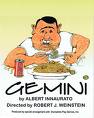
[READ: November 15, 2009] Gemini & The Transfiguration of Benno Blimpie

When I was a kid, watching cartoons on Channel 11, WPIX, there was a frequent, (in my memory it was incessant) commercial for a Broadway play.  And the only things I remember about the commercial were two snippets:  In the first, a young boy is gorging himself on food and his mother yells “TAKE HUMAN BITES!”  The second shows a woman who says “I’m  not hungry, I’ll just pick” who then grabs a handful of spaghetti from someone else’s plate.

This commercial was such a part of our culture, that my friends used to shout “TAKE HUMAN BITES” at each other all the time.  And yet, after all these years, I couldn’t remember what the play was.  So, out of curiosity, I did some searching to see if I could find this mysterious play (and, more importantly find the commercial).

So, thank you, internet, for helping me discover the play is Albert Innaurato’s Gemini.  No commercials have been forthcoming, sadly.

Well, I thought it would be fun to read this play and see if it was as funny as the commercial seemed.  Who could have guessed that the play would have turned out like this? (more…)

Read Full Post »

nySOUNDTRACK: Living with Music: A  Playlist by Joshua Ferris (New York Times September 19 2007).

ferrisWhile searching for Joshua Ferris (see below) I came across this playlist from The New York Times.  While I don’t agree with everything on the list, indeed, I haven’t heard of about half of the songs, I was delighted by several of his selections: Neutral Milk Hotel, Pearl Jam, and of course, Godspeed! You Black Emperor.  I also really enjoy the unusual Pink Floyd selection, too (Meddle being a favorite album of mine).

What I enjoy most about the list is that he tacks on a book that you might read that somehow ties to the song (I don’t know what the specifics are as I have yet to read any other “Living with Music” Playlists).  But it reminds me of an inverse of this very blog.

The article is available here.

[READ: August 3, 2009] “The Valetudinarian”

I knew the name Joshua Ferris sounded familiar, but couldn’t remember exactly why. Then I remembered that he wrote Then We Came to the End which I liked quite a bit. So I looked him up and found out that in addition to that novel, he’s only had a few short stories published in total. And now I’ve read two out of the seven. In terms of ratio of books read, that practically makes him my favorite author!

I should have looked up the definition of the title of this one: valetudinarian
which basically means invalid. (more…)

Read Full Post »

« Newer Posts - Older Posts »