Feeds:
Posts
Comments

Archive for the ‘Phish’ Category

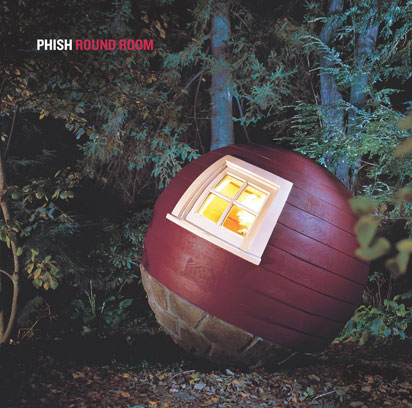
wallsSOUNDTRACK: PHISH-Round Room (2002).

round After Farmhouse, Phish went on a hiatus.  No one knew it would be quite so brief, but there was really a feeling that they were done.

And then they quietly released Round Room in 2002.  And it bursts forth with an 11 minute song.

“Pebbles and Marbles” has an interesting riff—complex and pretty.  And when I listened to it again recently I didn’t really quite recognize it.  But that’s because it’s nearly 12 minutes long and the really catchy part comes later in the song.  At around 5 minutes, the catchy chorus of “pebbles and marbles and things on my mind” announces itself.  And it is a good one.

“Anything but Me” is a pretty, mature song that is slow and piano heavy.  “Round Room” is a boppy little ditty (clearly a song written by Mike).  It is sweet and a little weird.  “Mexican Cousin” sounds a lot like a cover (maybe an old song by The Band) except for the solo which is very Trey.  It’s a funny, silly ode to Tequila.  “Friday” is a slow six minute song with two sections.  The verses are spaced out a bit, delicate riffs that are mostly piano once again.  The middle section is sung by Mike (which makes it more mellow somehow).

“Seven Below” is an 8 minute song.  It has another great riff (and the intro music is cool and bouncey).  When the vocals come in, it’s got gentle harmonies as they croon the sweet song).  Most of the 8 minutes are taking up with a guitar solo.  “Mock Song” is another of Mike’s songs.  This one seems to be a random selection of items sung to a nice melody.  Then when the chorus comes it’s quite nice, how this is a “just a mock song.”  The first verse is sung by Mike, then Trey does a kind of fugue vocal with different words in verse two.

“46 Days” opens with funky cowbells and turns into what seems like a classic rocking folk song—few words but a great classic rock melody (complete with 70s era keyboards).  “All of These Dreams” is a mellow piano piece, another mature song.  “Walls of the Cave” has an interesting piano melody that opens the song. The song is nearly ten minutes long and the middle part has a nice flowing feel to it.  There’s also a few sections that are separated be drum breaks—something that doesn’t often happen in Phish songs.  When the third part opens (to almost exclusively percussion, their vocals all work in a very nice harmony.  It’s a long song but with so many parts it always stays interesting.  “Thunderhead” is another piano-based song with some guitar riffs thrown on top. But it is largely a slow, mellow piece.

“Waves” is an 11 minute song with long instrumental passages.  It also begins with a kind of Santana feel to it, but it is a largely meandering song, with a simple melody that they stretch out for much of the song.  So this album proves to be an interesting mix of long jams and mellow ballady type songs.  It seems like Phish had a big mix of things to let loose.

[READ: November 1, 2013] If Walls Could Talk

This book reminds me of the work of Mary Roach—exploring a topic in great detail and including lots of amusing insights.  The two big differences here are that Worsley is British and that she goes back very far in British history to give us this fascinating information about the development of certain rooms of the house.

Worsley begins with the bedroom.  She looks at the furniture—the history of the bed from lumps with straw to fantastically ornate full poster beds that were made for kings who might never actually use them.

Then she moves on to more personal matters—sex (including deviant sex and venereal disease); breast feeding (for centuries mothers felt they were not equipped to take care of and nurse their own children, hence wet-nurses) and knickers (royalty had an entourage designed specifically to assist with underthings).  Indeed, privacy was an unknown thing in olden times.  Even royalty was expected to receive people in all of the rooms in the house.  Initially the bed chamber was for their most intimate friends, not just for sleeping.

The section on old medicine was also fascinating, they believed that it was vaporous miasma that did you more harm than say, excrement-filled water.

The section on Sleep discusses what was also in a recent article by Gideon Lewis-Kraus—that there were two sleep times at night.  With no electricity there was no artificial light to keep people up late so they would go to sleep early, wake up in the middle of the night (the best time for conception of children) and then sleep again. (more…)

Read Full Post »

slippageSOUNDTRACK: PHISH-Farmhouse (2000).

farmhouseThis album has a very acoustic feel to it and I really enjoy this disc.  It is one of their most “mature” records and I feel a lot of fans don’t enjoy it as much, but I think the songs are really pretty.

“Farmhouse” is another one of my favorite Phish songs.  I love the harmonies and the melody is beautiful.  The end of the song with the two singers doing different lines of vocals is just beautiful.  “Twist” is a live favorite although here it opens with percussion only before Trey starts singing.  But then the song proper starts and it is just a riot of fun. Woo!

“Bug” is a mellow contemplative song about God.  It a little long and I must admit, a little dull.  “Back on the Train” is usually much faster live—it sounds like a slow train here.  “Heavy Things” returns the album to excellence, it’s a wonderful uptempo song that is fun to sing along to.  “Gotta Jibboo” is a silly dancey song with horns.  It’s a long jam about 5 minutes most of which is instrumental.  “Dirt” is a piano ballad.

“Piper” is a wonderful round with a melody that circles around the song, I really enjoy this song live and it’s fun to hear how fast they do it here.  I love the way the “words and words I say” gets cycled through.  “Sleep” is a 2 minute gentle ballad.  And “The Inlaw Josie Wales” is a pretty acoustic guitar/piano instrumental.  “Sand” is a funkier number that brings up the tempo.  Of all the songs on the album, I don’t know this one all that well, but it is very Phish like.  “First Tube” ends the disc with a staccato guitar riff that sounds very much like Santana to me.  It’s got a great beat and is very cool.

Perhaps I’m showing my age but I so is Phish, and I think this is a really solid album.

[READ: November 4, 2013] The Slippage

I knew Ben Gereenman from Superbad, a McSweeney’s book.  I liked it a little—but it was more trickery than story telling.  I had gotten it in my head that The Slippage was a good novel (I’m not sure why), and when I saw it at work on Friday, I grabbed it in hopes of reading it before I got back to work on Monday.  And I am pleased to say that I polished off this 288 book in a weekend (and suffered for my lack of sleep).  But I didn’t only finish it because of a self-imposed challenge, I really got into the story.

For this book Greenman’s style is simple and straightforward (a far cry from his earlier, more deliberately challenging work) and the story itself is also rather simple.  But it is engaging, funny and emotionally exhausting.  So the simple story is one of suburban discontent.  The blurb that stayed with me was “If Emma Bovary had lived in the ‘burbs, she would have left a novel like this in her wake.”

The main characters in the story are William Day, his wife Louisa and her brother Tom.  Indeed, the book is really about William and how he handles suburban discontent.  We meet all of the Day’s friends.  In addition to these people there is Emma, the woman who William has an affair with. (more…)

Read Full Post »

april 2002SOUNDTRACK: PHISH-The Siket Disc (1999).

siketThis is an (almost) entirely instrumental disc.  It’s exactly the kind of thing that people think of when they imagine Phish—long jams with no structure.  But unlike some of their more frenetic jams, this is a kind of enjoyable chilling out disc.  The compositions are actually select excerpts from the long-form improvisations of the “Ghost Sessions.”

There are 9 songs and most of them are short.  Except for “Whats the Use” which is an 11 minute track with a very cool guitar riff (that reminds me again of Frank Zappa) and some cool accompanying keyboard sounds.

“Me Left Toe” is about 5 minutes and has a nice build up within  it.  And “The Name is Slick” is a bit more staccato and less smooth than the other songs and it holds up for 4 minutes.

Most of the other songs are short jams (with 4 tracks being about 2 minutes or less).  Although there are a couple of weird, nonsensey tracks like “Fish Bass” which is just a weird series of noises.  Or “Quadrophonic Toppling” which has some spoken words (just the title repeated) as does “Title Track” which has the repeated word “Siket”and laughing.  “Insects” is a little unsettling as well.

“The Happy Whip and Dung Song” is 5 minutes long and, despite some weird effect on the keyboards, feels like a full song.  “Albert” is a short, pretty, gentle ballad.  It’s a nice ending to this disc.  While this is by no means an essential Phish disc, it is an interesting insight into their recording process and is as I said, a good chill out album.

[READ: October 28, 2013] “Eternal Winter”

I had never heard of the Aral Sea before reading this article and I am surprised that I haven’t and I’m shocked by what has happened there.  Near the city of Karalpakistan (no connection to Pakistan), near Uzbekistan and Kazakhstan, lies the Aral Sea. It was once the fourth largest body of water on Earth, larger than lake Michigan.  It is now shrunk by approximately 74%.

It was through the Soviet Union’s thirst for development and “progress” that canals were built which diverted water away from the Sea.  This effectively slowly dried out the lake (which the Soviet Union knew would happen).  The Soviet Union also dumped insecticides and toxic waste into it, rendering what is left of the sea bed largely poisonous. Anything that is not poisonous is heavily salinated making it worse than useless.  And to make it worse (if that is possible), the windstorms that frequently occur simply pick up the toxic dirt and dust and blow it all around the land.  Without the water, the temperature soars in the region–often reaching 120 degrees.

One of the reasons for the diversion of the water was cotton.  Cotton is a thirsty crop and it was discovered that Uzbekistan was well suited to the climate for the crop.  They just needed more water.  And so in the 1950s, the Amu Darya river was diverted away from the Aral Sea and into the Uzbekistan deserts.  And cotton flourished there.  Then in 1960, the Aral Sea began to shrink. (more…)

Read Full Post »

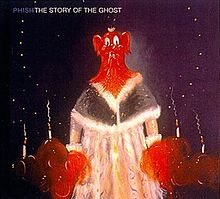
cooksSOUNDTRACK: PHISH-The Story of the Ghost (1998).

storyghostThe Story of the Ghost is one of the first Phish albums that I was aware of when it came out.  I remember buying it and liking it, especially the first few songs.  This is not surprising as the first few songs are much more electric and funky.  By the end of the album there’s a lot of mid tempo songs that feel like they’re somewhat incomplete—good ideas but the songs feel…unfinished?

“Ghost” has a funky guitar and drum section, it’s a song I’ve liked from the day I bought the disc.  But the real hit was “Birds of a Feather,” which has an amazingly catchy chorus.  This version (as opposed to the live one) is weird in that Trey is kind of whispering the vocals, but the guitar is ferocious.

“Meat” is a weird skittery song that sounds cavernous here.  The weird processed vocals are certainly something that keeps this song like more of an oddity.  “Guyute” sounds an awful lot like early Phish—like it has come from Gamehendge, it’s a nice return to old form.  It’s a great song with a really lengthy instrumental section.  This features one of Trey’s great extended pretty solos.

“Fikus” is a strange little song (2 minutes), with lots of percussion and a quiet bass line.  “Shafty” has got  some cool wah wah guitars, and is also only 2 minutes long, but it shows that there is a bunch of funk on the disc.  “Limb by Limb” is a fun if simple song that seems sparse until the chorus kicks in.  “Frankie Says” is a kind of circular song that is interesting but doesn’t really go anywhere.  “Water in the Sky” is a short piece but it is full of ideas—percussion, slide guitar, and nice harmonies.  “Roggae” is a fun little song with some fugue like vocals.

“Wading in the Velvet Sea’ is a very pretty song with very nice harmonies.  “The Moma Dance” is a funky wah wah guitared track which really comes to life live, although I like the way they reprise “Ghost” at the end.  The final track is called “End of Session,” it’s a very mellow little number (also less than 2 minutes) with organ and gentle guitars.  There’s a small verse of harmonies as the albums drifts off.

This album is one of the band’s less popular recordings, but i think it’s quite good.

[READ: October 30, 2013] Lives of Notorious Cooks

Brendan Connell is back with a book which demonstrates that whatever subject he writes about, he delves in deeply and with great relish.

Connell’s new book is, as the title says, a series of brief lives of fictional cooks.  There are 51 biographies in this book.  From Connell’s previous works and from the title, I expected that these cooks might be somewhat less than savory characters.  But Connell makes these chefs genuinely impressive—making delicious meals from both the finest ingredients or the lowest of items.

As with previous stories by Connell, the depth of his knowledge is impressive—he includes not only recipes but complete menus of feasts.  And as usual, his word choices are wonderful—exuberant when necessary, obscure if useful and always spot on.

Although I am normally inclined to make a comment about each “story “ in a  collection, this one really resists that.  There are not enough distinguishing characteristics between cooks for me to write enough about each one (without rewriting the book).  This is not in any way to say that each is not unique, but that they are all cooks, each specializing in a different food or style.  But rather than from saying “Agis cooks fish” it’s better to take this book as a whole rather than in pieces. (more…)

Read Full Post »

curesSOUNDTRACK: PHISH-Billy Breathes (1996).

billyBilly Breathes is a much more mellow, acoustic feeling album from Phish.

Although the opener “Free” is a great song, with wonderful riffs.  It’s another of my favorites live, although the production sounds a little flat here, but the harmonies are great.  “Character Zero” again has a real ZZ Top feel (something many don’t really associate with Phish I’m sure).  But once the song proper kicks in, it rocks in a very Phish way.  “Waste” is a delicate song about insecurities that turns into a nice love song.  “Taste” is a rollicking piano-heavy song that gets played live pretty often and it sounds good here.

“Cars Trucks Buses” is a 2 minute instrumental that has a lot of organ in it, it’s very groovy.  “Talk” is an acoustic guitar/folky song.  You don’t hear it much live.  “Theme from the Bottom” gets us back into often-played territory, with its weird opening riff.  I really enjoy the way the bridge goes into a brief minor key, despite the overall happy vibe.  I like the harmonies towards the end, although the actual end of the song is a bit dull (the live endings are a bit more fun).

From here the album mellows out a lot.  “Train Song” is a pretty acoustic number with nice harmonies.  “Bliss” is an acoustic guitar solo.  “Billy Breathes” has more delicate harmonies and an acoustic feel.  “Sept Away” is another delicate short (90 second) song, with some more great harmonies. “Steep” is a slow, simple song (also 90 seconds) that has a pretty melody but serves more as an introduction to “Prince Caspian.”   “Prince Caspian” is a great epic-seeming song (even though it’s only 5 minutes long).  The build up is long , with the pretty chords repeating and growing fuller.  It’s a great live song and a great ending to this disc.

Although this disc has some great songs on it, it’s definitely not my favorite overall.

[READ: October 4, 2013] The Miracle Cures of Dr. Aira

This was another weird and fun book by César Aira (one of about six books he wrote that year). This one was translated by Kathleen Silver.  Ever since reading that Aira doesn’t edit his books—that he simply begins writing and lets the story keep coming out–I’ve grown suspicious of the beginnings of his stories. And so I am with this one. In the beginning there’s a whole thing about Dr Aira sleepwalking through a town.  He wakes up in various places, unsure where he is, but he’s never lost because he knows the streets so well.  This goes on for a few pages and then the plot kicks in.

Dr Aira is picked up by an ambulance—a man is dying right there in the ambulance and only Dr. Aira can save him.  Won’t Dr Aira help him? The Dr. refuses point blank.  He is convinced that this whole thing is a set up—why else would the ambulance (which he had heard for many blocks going up and down the street) be driving around with a sick man looking just for him instead of going to the hospital?  He will not help this man.  Disgusted, the ambulance driver pulls over and the Dr gets out.

So what is all this about? (more…)

Read Full Post »

ornerSOUNDTRACK: PHISH-Hoist (1994).

hoistI always think of Hoist as a kind of goofy album because of the way they are dressed on it (and the crazy cover).  But it is absolutely not.  Indeed, opener “Julius” sounds like a ZZ Top song.  In fact, every time they’ve played it live I assumed it was a cover.  It is less restrained in the live setting, because this version has more acoustic guitar.  There’s even backing vocalists and horns.  “Down with Disease” has that great watery bass, but the song (which sounds good) here is a little stiffer than the live version.  It also has something of an R&B feel (with backing vocals) even if the guitar is certainly not R&B at all.  It bleeds right into “If I Could” a pretty harmony-voiced mellow song.  The big surprise comes from the Alison Krauss vocals–she gets a solitary line or two and then harmonies.  The song is very pretty but the strings are overkill.

“Riker’s Mailbox” is indeed a reference to the Star Trek character, although the 30 second burst of noise is pretty hard to explain. Nevertheless, the trombone is played Mr Riker himself, Jonathan Frakes.  It jumps into the rocking “Axilla, Pt. 2” which is usually a little faster live (I like the sloppier crazier live version better). There’s some vulgar dialogue in the middle of the song.

“Lifeboy” is a mellow acoustic song that builds from just guitar.  Lyrically it’s interesting: “God never listens to what I say…and you don’t get a refund if you overpray.”  It folds into “Sample in a Jar,” which is just as good here as any live set.  “Wolfman’s Brother” ahs horns thrown on top and some interesting sound effects.  Although overall l don’t like this version nearly as much—I don’t care for the horns or the backing vocals plus in the live version they emphasize the bruh of brother more which is cooler.  (Although I do enjoy the weird “Shirley Temple” line at the end).  “Scent of  Mule” opens so strangely with crazy guitars and a thundering drum.  The singing is very silly (with silly voices) and has a very twangy style (complete with banjo and yeehah).

“Dog Faced Boy” is a sweet (but weird) acoustic guitar number.  “Demand” is a ten minute song which I don’t really know at all.  It has a strange, staccato style riff.  At 2 minutes in, a car starts and after a commercial on the radio the driver pops in “Split Open and Melt” (a nod to “Detroit Rock City,” perhaps?).  This goes on until 9:30 at which time there’s a car crash and choir of angels (sick!).

I don’t car for the horns and R&B flavoring of this album, but the song selection is really quite good.

[READ: September 24, 2013] Last Car Over the Sagamore Bridge

I read about this book in Tom Bissell’s reviews recently.  He really made it sound like an interesting book.  So when I saw that we had just received a copy, I grabbed it and brought it home for the weekend.

There are 52 short stories in the short book (which is less than 200 pages).  Some of the stories are very short (1 page) with a few coming in at 5 or 6.  The 1 page stories are like flash fiction but they seem to be more of snapshots than actual full stories and they seem like they might be diary entries or something. The fact that a number of them are italicized with dates at the end make them seem like a selection from the same person rather than individual stories.

The stories are set all over the world, although they tend to focus on Chicago and Boston.  They are pretty universally dark with themes of death and loss permeating the collection.  And yet despite their overall negative feeling, the stories aren’t really depressing, exactly.  Bissell described the narrators as like someone telling a story about someone telling a story.  And that is true and that distance seems to take some of the edge off the stories.

But what’s impressive is the consistently strong and powerful writing.  The way that Orner is able to convey so much with such few words.  Some stories are just a scene, others are a whole lifetime.  But either way they are all really gripping.

I wasn’t going to write about each story, but it would have nagged at me if I didn’t, so here’s a few words about 52 stories. (more…)

Read Full Post »

sep2000SOUNDTRACK: PHISH-Rift (1993).

riftRift has a kind of story to it (albeit it’s not a real concept album) and you can tell by the full cover (see the bottom) that the story is complex–thank you gatefold sleeves).  The album starts with “Rift” a fast guitar spiral that opens with a harmony vocals on the opening lyric and then a call and response between I believe, Page and Trey as they each take a line of the verse—it’s a cool and surprising opening.

“Fast Enough for You” is a slow country-tinged song (with slide guitar).  This is the first song of their early records that I really don’t know that well.  So it must not get played very much.  It’s a pretty song.  “Lengthwise” is a cute little a capella song (with snoring and clock ticking) which I think about whenever I am alone in a bed: “When you’re there I sleep lengthwise and when you’re gone I sleep diagonal in my bed.”

“Maze” is one of my favorite Phish songs and it sounds great here.  I love the bomp bomp at the end of the verses and the fugue vocals at the end of the song.  This version is fantastic.  “Sparkle” also features fugue and barbershop type vocals (with Mike’s deep voice added in) in a funny silly roping song.  It’s another highlight.  “Horn” has a great opening guitar line (that reminds me of Pearl Jam for some reason).  I’ve always enjoyed this one.  It sounds great here (because you can actually hear what the harmony voices are saying (something you usually can’t in the live setting).  “The Wedge” is a mid tempo song that sounds different from their live versions.

“My Friend My Friend” is a pretty dark song (“My friend, my friend he;s got a knife”) but the opening is a beautiful instrumental with lovely guitar sequences until at 2:30 when the piano takes over and the song becomes slightly menacing.  “Weigh” is a weird song that I rather like.  It’s very piano heavy and very boppy despite the crazy lyrics:  “I’d like to cut your head off to weight it, whaddya say?  5 pounds, 6 pounds, 7 pounds.”  “All Things Reconsidered” a nice NPR joke.  This is a 2 and a half minute instrumental of guitar and keyboards that sort of plays with the NPR “All Things Considered” music.

“Mound” starts with some wonderful out of time signature riffing—4/4 drums and bass and then super fast guitars that don’t quite match until the drums and bass then catch up.  It’s hard to believe that that unusual opening leads to the big catchy bouncy chorus: “And it’s time, time, time for the last rewind.”  “It’s Ice” is a little slower here than live but I kind of like it in this slightly slower version (you can really hear the riffs).  This is another song with fugue-like vocals (they do all of their vocal tricks very well).  “The Horse’ begins as a beautiful Spanish style guitar piece and morphs into a simple acoustic song (it’s al of 90 seconds) which bleeds into “Silent in the Morning,” another highlight from their live shows and a standout here.

Rift might just be my favorite Phish album.

[READ: October 23, 2013] “Escanaba’s Magic Hour”

Once I found out that Tom Bissell had written a number of articles in Harper’s I decided to read them all, especially since some of them already appeared in his book Magic Hours.  This was his first piece for Harper’s and it is the one I remembered most from the book.  So I enjoyed reading it again.

I’m also glad I read the Harper’s version because although I don’t think it varies from the book version at all (and I’m not willing to check), it had pictures from the movie and from Escanaba, which brought a bit more reality to the article.

So, what’s this about a movie?

Well, this article is about Jeff Daniels making a movie in Escanaba, Michigan called Escanaba in da Moonlight (which I haven’t seen, but as I said after reading this the first time, I now feel invested enough in it to want to watch it–reviews are mixed).  And it sounds kind of interesting.  I also really enjoyed the comment that Daniels’ appeal “has something to do with the fact that many men, if asked to cast their lives without undue conceit, might settle on Jeff Daniels to play themselves.” (more…)

Read Full Post »

harper juneSOUNDTRACK: PHISH-A Picture of Nectar (1992).

nectarA Picture of Nectar plays with expectations of Phish somewhat (as many as could be formed after two albums).  This album has sixteen songs, with half of them at 3 minutes or less.  These include the pretty jazz instrumental “Eliza,”  “Poor Heart” which is a slide guitar filled short country-ish romp, “Manteca” thirty seconds of nonsense.  “Magila” is a jazz instrumental which has solos by both piano and guitar.  “The Landlady” is another instrumental, but one that is a rocking guitar workout. “Faht” is a pretty, simple guitar piece with birds playing in the background

After somewhat anemic recordings, A Picture of Nectar feels a lot more full.  “Llama” bursts out of the gate sounding very complete with all of the instruments at the same power and breadth.  “Cavern” has a pretty ridiculous drum sound—very big and echoey and the pace is a little slower than is typical live, but it sounds very good. “Stash” clocks in at 7 minutes and it sounds very similar to the albums (although there are a still a bunch of silly voices like the one who says “Please don’t do that.”  “Guelah Papyrus” (no idea what that name is about) sounds fine here—very much like the live versions, full and fun.

“Glide” features the “glad glad glad” chorus in multipart harmony that makes this song seem like a barbershop number and sounds wonderful.  The longest song on the album is perennial favorite “Tweezer.”  The song is very much like the live versions except that the middle section has a crazy noisy breakdown which is a little disconcerting.  The solo then moves into a typical jam for Phish which really shows what they would do with this song live.  “The Mango Song” is a fun piano based jaunty number that highlights the band’s harmonies.  It sounds really good too.  “Chalk Dust Torture” sounds different because the voice is very different.  It sounds like Trey through a processor of some sort, or possibly somebody else singing.

The album ends with “Tweezer Reprise” because the song is so good it needs a proper ending.  This is another successful album from Phish.

[READ: September 20, 2013] “East Texas Lumber”

I wasn’t sure I would like this story about an unsuccessful guy in East Texas.  But I really did.

The narrator is Brian, a guy who has not been very successful since he got out of school.  He’s trying to save up to be a locksmith, but in the meantime he’s working at East Texas lumber.  And he’s thankful to divine providence for sending a tornado which helped him get the job.

A tornado ripped through their town and because of all of the rebuilding, the lumber store needed extra help, and that’s where Brian came in.  Even though on his first day he crushed some drywall and put a nail in his foot, they kept him on.  He was paired with Jimmy, a goof who had been working there for a long time.  Jimmy liked to smoke pot and go to parties, but he was the only one willing to partner up with potential liability Brian.

On this day their boss has given them a cushy job.  Deliver two loads of shingles to two different locations.  This was easy work—a lot of driving and no lumber to stack.  And it should get them back around 4, which is just enough time to goof off for the last hour, and get to The Hangout by 5 PM. (more…)

Read Full Post »

harper septSOUNDTRACK: PHISH-Lawn Boy (1990).

220px-Lawn_Boy_coverFor what I consider a guitar dominated band (Trey Anastasio is certainly the frontman), the early Phish albums have a lot of piano dominated tracks.  It’s not the guitar is absent but the piano is mixed quite loudly which gives these songs a slightly different emphasis than when they are played live.

Also was with many songs on Junta, “Reba” feels slower than the live versions.  It also has some funny backing vocals (a common occurrence with these early songs).  “My Sweet One” is a lot more honky tonk than the live versions, which often feel almost barbershoppy.  In “Split Open and Melt,” the vocals are done in a very funny mumbly way (with weird background vocals).  There’s also horns (crazy horns) and female vocals –giving it  vaguely R&B feel.

“The Oh Kee Pa Ceremony” (for origins of the phrase, check out this) is a live favorite that’s a fun and funky guitar solo (with a retro feel) and in this version there is much laughing and carrying on in the background).  “Bathtub Gin” opens with the crazy seemingly out of tune piano that they do live (although not as much).  There’s more funny voices on the chorus and crazy sound effects throughout.  Earlier Phish were a lot sillier than later Phish.

“Run Like an Antelope” also has crazy sound effects and it’s funny how I forget that the song is almost entirely introductory guitar solo wailing.  It’s not until 8 minutes that we get to the “rye rye rocco” section and the actual “run run run” part.   In this studio version, the “set your gear ship for the heart of your soul” section is spoken so quietly.  And the song is not quite ten minutes long.  “Lawn Boy” sounds clean and jazzy in ways that it doesn’t live.  And “Bouncing Round the Room” sounds a lot like the live version.  It’s a little slower, with a few more details thrown in.

Overall, Lawn Boy is a great early Phish album, with every song being a success.

[READ: October 3, 2013] “Life as a Terrorist”

William Vollmann was a suspect in the Unabomber case.  All because a “concerned citizen” alerted the FBI about his fiction.

This sounds utterly crazy, but it is true.

Vollmann has written about all kinds of things, both fiction and non-fiction.  For his non-fiction, he has traveled extensively, to Afghanistan and other places where terrorists reside.  So when he was detained upon reentering the United States from Yemen, he didn’t think too much of it.  But when he was detained a second time, years later–for seven hours and treated like a criminal–well, that got him mad.  And he used the Freedom of Information Act to see what the FBI had on him.

This is a sobering look at how the justice system in its zealotry to protect us can actually do far more harm than good, at least to innocent individuals. Vollmann uses this as the basis of his essay which looks at the omnipresent Unamericans: those who would attack without provocation and intimidate the weak. (more…)

Read Full Post »

harper septSOUNDTRACK: PHISH-Junta (1989).

juntaI’ve been listening to a lot of live Phish as of late and thought it would be interesting to see if there was truth to the adage that Phish is great live but not so great in the studio.  So here is their first official album.  It was released as a double album, and when it was reissued on CD some bonus material was added.  Incidentally, I just found out that the album if pronounced “juhnta” and not “hoonta” because of the engineer they worked with.

The album starts with “Fee” which is a fun song (the lyrics are wonderfully weird) and they don’t play it all that much so it’s a treat to listen to.  I enjoy the way the verses sound compressed and distant but the choruses are nice and full.  There’s also some funny and interesting sound effects (some of which accentuate the action) throughout the song. This sound effects and noises processing has been with Phish from the beginning and they kept it up through many of their earlier, less mature albums. “You Enjoy Myself” is a live favorite so it’s fun to hear it in this version.  As with a lot of their earlier records, this song sounds a little stiff, especially if you’ve heard the wild live versions. It’s not bad at all, indeed, it has a perfectionist quality to it—the time changes are perfect, the solos are flawless.  Indeed, it’s quite an achievement (and in this more polished version it sounds more like Yes than their live versions ever did).  Interestingly when we finally get to the lyrical section (about 5 minutes in) it’s quite a bit slower than they play live.

“Esther” sounds much more theatrical here.  The music is gorgeous and there are lots of effects and backing vocals which bring a bit more menace to the song than the live version possesses. This also had a very prog rock sensibility to it.  “Golgi Apparatus” has a lot more in the way of backing vocals than the live version.  And “Foam” has some changes: the bass is especially loud and funky and yet the pace is so much slower than I’m used to.  The odd thing is the kind of stiff way that the lead vocals enunciate everything.  And the deep voice (Mike?) is quite amusing at the end of the song.  “Dinner and a Movie” is a fun and silly song and this version is especially enjoyable because of the backing voices and chatter and laughter which illustrate the dinner (and presumably the movie).

“Divided Sky” has a beautiful melody and it’s nice to hear it played so pretty and simply here.  But again the remarkable thing is how much slower the song is here.  “David Bowie” also sounds great (there’s all kinds of weird sounds effects in the background of the (very long) soloing section—I have no idea why or what they might be).  The solo sounds like it was maybe done in one take as there’s a couple spots where it’s not “right,” (whether flubs or intentional is hard to say) but it still sounds terrific.  In fact a number of tracks have some little flubs which makes it seem like they either didn’t mind or tried for a more live feel.

“Fluffhead” sounds solid and like the live versions.  What I never realized until I actually paid attention is that the bulk of the music (the extended jam session) is called “Fluff’s Travels.”  “Flulfhead is only 3 and a half minutes, while “Fluff’s Travels” is over 11 minutes (it opens with the beginning of the guitar solo–the catchy riff that starts the lengthy jam).  “Contact” is a delightfully silly song about tires and cars that I’ve always enjoyed and find myself singing often because the melody is so simple.

What’s funny is that the end of “Contact” kind of bleeds into “Union Federal” which is listed as a live song (and clocks in at over 25 minutes long).  This “Union Federal” is an improvisational jam (or an Oh Kee Pah Ceremony—where the guys would get together with instruments (and other things) and jam for a time.  This song is weird with many layers—and is rather typical of one of Phish’s weirder jazz –flavored improv sections (meaning that there is a lot of dissonance and noise).  It’s quite jarring especially after all of the melodies and prettiness of the album proper.  And I can see a lot of people not being happy about its inclusion.  “Sanity” on the other hand is a fun song.  In the intro, they keep claiming the song is by Jimmy Buffett. They are clearly very silly in this setting, especially at the end of the song.  The final track is a live version of “Icculus” the song which is pretty much all buildup.  In the intro they quote U2 “This is red rocks, this is the edge.”  But the “joke” of this version is that Trey keeps postponing the name of the person who wrote the name of the Helping Friendly Book–stalling in any way he can.  As the song gets louder and louder and more absurd, the guys are even more frenetic.  It takes over 3 and a half minutes to get to the proper lyrics of the song.   And then the song itself is about 15 seconds.  Absurd nonsense.  But very amusing.

So this is quite a solid debut album, and the amount of songs that they still play live shows how fond everyone is of it.

[READ: October 2, 2013]  “Wrong Answer”

I didn’t hate Algebra.  I rather like solving puzzles so I enjoyed solving for x.  Algebra II I recall being more daunting and less fun with lots of formulae to memorize.  And, unlike everything promised, I have never used any of it in my adult life (geometry and angles, sure, but not logarithms).  According to this article the new United States CORE curriculum (which I know my son is dealing with already in 3rd grade) says that high school graduates must have Algebra II.

The reasons for this intensification in the studying of math are many (starting around the time of Ronald Reagan) but the current push comes from Arne Duncane, the U.S. secretary of education.  He believes that “algebra is a key, maybe the key to success in college.  Students who have completed Algebra II in high school are twice as likely to earn degree as those who didn’t.”  Whether or not that is true, those of us who earned a degree in nonmathematical  subjects certainly were not aided by this class.  But Nicholson Baker explains that the reason this might be true is that for most colleges, Algebra II is a prerequisite.  Ergo: if you don’t take Algebra II you can’t get into college because colleges require Algebra II.  That, for those who may not have taken logic–a far more useful course than Algebra II in daily life–is called a tautological fallacy.  [Indeed, I maintain that all high school students should have to take a course in logic because they would then be able to see through all of the builshit that politicians spill and claim to be logic.  Like the current (as I type this) government shutdown in which Republicans are claiming they didn’t want to shut down the government when they in fact signed papers saying they were going to shut down the government).]

The real problem with Duncan’s postulate that everyone should take Algebra II (“airplane mechanics do complex measurements and work with proportions and ratios…X-ray technicians calculate time exposures to capture the cleanest possible image.  Most factory workers need to understand Algebra II or even some trigonometry to operate complex manufacturing electronic equipment”) is that even if that were true (I don’t have any idea of it is or not), most people do not do those kinds of jobs.  And even if they did know higher math, they would still be salesmen, graphic artists, librarians, preschool teachers, custodians and many many other jobs that in no way require math. (more…)

Read Full Post »

« Newer Posts - Older Posts »