Feeds:
Posts
Comments

Archive for the ‘Frank Zappa’ Category

SOUNDTRACK: FRANK ZAPPA AND THE MOTHERS OF INVENTION-Over-nite Sensation (1973).

When I saw Marvy’s Mothers, it was hard not to pass up the connection to Zappa and his band.  But oh, what album to pick?  (He released like 40). I chose the one released in the same year as Gravity’s Rainbow.

It also happens to be full of all kinds of sex (imagine that).

It opens with “Camarillo Brillo” the kind of simple, catchy song that Zappa seems to whip out very easily.  I assumed that the title was some kind of sexual slang (not a bad assumption), but Wikipedia suggests it has something to do with an insane asylum (Camarillo) and the crazy hair they often had, which makes sense given the crazy lyrics.  It starts kind of trippy with inscrutable lyrics.  And then the bridge, “she was breeding a dwarf” is pretty insane.  It also features a very funny sequence that was oft-quoted in MST3K–“Is that a real poncho or a Sears poncho.”

“I Am the Slime” is a funky (a great Zappa riff) diatribe against TV (because it makes you buy crap you don’t need and makes you listen to the government).  “Dirty Love” is a perverse song with lots of guitar solos.  There’s some kind of bestiality in this song (which also ties in with parts of this section).

“Fifty-Fifty” features the vocals of Ricky Lancelotti (in a screaming style that would later be used a lot by Terry Bozzio).  It’s about an ugly guy who is crazy enough to sing to us.  The songs seem to be more about solos though, as there’s a keyboard solo an electric violin solo (from Jean-Luc Ponty) and some crazy guitar solos.

I don’t know what “Zomby Woof” is about, but it has some wicked guitar soloing and horns playing Zappa’s staccato riffs up and down the scale.

“Dinah-Moe Humm” is a song perfectly suited to this book–it’s a song in which a woman bets the narrator that he can’t make her have an orgasm.  The melody is twinkly and silly.  It’s shockingly explicit. But it’s even funnier to know that the backing vocals are supplied by The Ikettes (Ike and Tina were recording in the next room).  They got paid almost nothing and when Ike heard the song he called it “shit” and asked that their name be removed from the credits.

It also plays around with hippy slang.  “Kiss my aura Dora/It’s real angora/Would you all like some more-a/right here on the floor-a/and how about you fauna/You wanna?”

He also starts talking about Zircon encrusted tweezers, which come back in “Montana.”  “Montana” is about moving to Montana to raise dental floss (really).  It features some wonderful fast pizzicato notes that are more or less Zappa’s signature.  The middle section is  hugely difficult and very impressive for the backing vocalists (Tina apparently was really impressed that one of her girls could do it).

Zappa packs a lot of music into 35 minutes, and this album seems to be a turning point in his desire to cram sex and craziness into his commercial music.  Just about every song on this disc was played a lot live and this album has become something of a classic.

[READ: Week of March 19] Gravity’s Rainbow [3.1-3.5]

This week’s read has been the most challenging for me so far.  I enjoyed Section 2 very much.  The Slothrop scenes were funny and wild and even advanced the plot.  I never expected that Section 3 would introduce a ton of new characters, more or less ignore the old charterers and stay with these new characters so that by not paying close attention to them in the beginning I was just confused by the end.

I do admit that while skimming again for this post, I was able to focus on the new characters more and found it far less confusing.  It’s just that on a first read, suddenly there’s this whole new sequence of people and their histories to deal with!  Wow.

It was especially surprising because Section 3 begins with Slothrop (so it’s not like in 2666 where a new section means a new cast).  But he meets new characters and then we flash all the way back through each person’s life.  And yes, it was quite interesting once I actually paid attention, and the connections were pretty awesome.  But it was still pretty surprising on the first read through.

Section 3 is called In the Zone.  And the Zone is mentioned quite a lot, although I never figured out where it is meant to be exactly. (more…)

Read Full Post »

SOUNDTRACK: FRANK ZAPPA-Does Humor Belong in Music? (1995).

Frank Zappa made money and found fame by writing dirty, funny songs.  Yet he was really a great guitarist and a serious composer.  But hey, when you need the money to make your studio, you write songs about “Penguins in Bondage.”  When I was in high school my friend Al introduced me to Shiek Yerbouti, and I was hooked.  I’d never heard songs that were so intentionally funny.

So, this live collection is kind of an odd assortment, given the title.  I mean the first song is an instrumental (ie. not funny at all except for the title “Zoot Allures”).  “Tinseltown Rebellion” however is pretty darn funny.  The mockery that goes on (and the call-outs range from The Scorpions to Culture Club and The Tonight Show) is nasty and offensive, but never really wrong.  And this is when you find out how good a Zappa stage show was.  The band was tight, they could play all kinds of crazy things and, as in this song, they were always in sync even when improvising.

This disc is a collection of songs from a 1984 tour.  I rather like this incarnation of the Zappa band (Ike Willis is pretty amazing at any time).  And they play tracks from across Zappa’s output.  Although there’s times when the disc sounds really abrasive (some of the solos–like on “Bondage”–are really piercing and not very smooth, and the drums can be very electronic sounding).

Of course, that’s the kind of music that Zappa wrote (“What’s new in Baltimore” is very electronic sounding–beautiful but mechanical–which is why it’s so amazing to hear it live–even if it doesn’t sound human, exactly).

And just so you know it’s not only Zappa showing off (although he kind of is since he hired all the musicians) in “Let’s Move to Cleveland,” everyone gets a solo…keybaords, drums…everyone.  And the final track “Whipping Post” sees his son Dweezil taking the lead guitar solo (which feels really human and rocks the dickens off the place).

For many of Zappa’s later “live” records, he compiled songs from all over the place (a very common practice for live records).  On some of the collections he even mixed a tour from the 70s with one from the 80s.   Now the thing that I just recently realized (even though it’s spelled out in the liner notes) is that these songs are cribbed together from different songs (!) (on “Cleveland” the piano solo is from St. Petersburg, the drum solo is from Vancouver, and the guitar solo is from Amherst College…weird, eh?  And what about the backing music, where does that come from while the solos are spliced in?)).  So, they’re not really live, except they kind of are.  And, heck that’s kind of funny too.  If you care about things like that it kind of ruins the “authenticity” of the recording.   But if you don’t, they sound pretty darn good anyway.

So this is not his funniest stuff, but it’s still an interesting live collection.

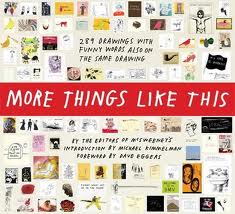
[READ: November 12, 2010] More Things Like This

I don’t know where I learned about this book, but I recently found it used for about $4 and I was pretty psyched to both find it and to pay a pittance for it.

As the subtitle indicates, this book is a collection of drawings that have words on them and are funny (but which are not “cartoons” (although some kind of are)).  The impetus for the book was a show at apexart of exactly this sort of thing.  The book expands on the show and includes many artists who were not in the show (including several very famous artists).

The Foreword by Dave Eggers offer the rationale behind the show & the book: Image + Text (usually referring to the image) + Humor = Good enough for us.  And it also asks pertinent questions: Why is it that so many of these artists can’t spell?  And why is it that when they screw up a word, instead of starting over, they just cross the word out and write it again?  Why is it important to some of the artists that the drawings appear casual, even sloppy?

And more. (more…)

Read Full Post »

SOUNDTRACKPUGWASH-Giddy (2009).

I found this CD through a connection to The Divine Comedy (Neil Hannon plays on a few of their tracks).  Pugwash (what a crazy name–it comes from a series of children’s books (and a TV show) called Captain Pugwash) is an Irish band with four CDs (and this collection).  And man, it’s hard to find their stuff over here (although their website has a wonderful collection of videos and such).

Giddy is a collection of songs from all of their albums.  Their first album is represented by two songs here “The Finer Things in Life” and “Two Wrongs.”  These two songs sound, with no disrespect intended, like great Oasis ballads.  Say what you will about Oasis’ originality, they wrote some great songs, and these two sound like the best Oasis songs you’ve never heard.

Their other three albums sound far less like Oasis and far more like XTC.  In fact, the XTC comparisons are well-founded as Andy Partridge eventually co-wrote a song with them and eventually signed them to Partridge’s Ape House records (which is how this collection was released in the U.S.).

The XTC comparison is unavoidable on a few tracks.  The opening of “Song for You” (the “when we die” part) sounds like an uncanny XTC outtake, but when the chorus kicks in it sounds nothing like them and moves into more of the gorgeous orchestral pop that overflows on this disc.  And the Partridge co-written “My Genius” is also a wonderful near-XTC outtake, clever, witty, and perfect.

And the song “It’s Nice to Be Nice” is just a wonderful cheery pop ditty.  It sounds retro and charming; if the simple lyrics (and gorgeous harmonies) don’t bring a smile to your face you must be made of stone.

Although the album is primarily orchestral pop, there’s a wonderful array of styles on here.  “Anyone Who Asks” has chipper keyboard bits in the verses, but the chorus is a wonderful mix of dark minor chords.  And then, the absolutely bizarrely wonderful “Monorail” sounds like a fantastic Beck song (with lyrics that are as decidedly unusual as anything Beck himself might write).   It even opens and closes with wonderful circa 1920s banjo.

Despite the obvious nod to XTC, Pugwash does something that XTC doesn’t.  XTC is a very mannered band.  They always seemed very rigid and formal (and were wonderful because of it).  Pugwash uses XTC as a springboard, but Thomas Walsh seems like a guy who likes to let loose with unchecked silliness, so he can move past the strictures of XTC (and sound like Beck!)

And the packaging is just wonderful. The carnivalesque appearance of the cardboard case is enhanced by not just a cardboard sleeve but also by a second cardboard half-sleeve that you slide on top.  Depending on which way you slide it on, it creates a different set of pictures.  It’s a little thing but it’s a nice nod to the fun of non-digital products.

This is certainly one of my favorite albums this year (even if it came out last year).

[READ: September 21, 2010] One False Note

I enjoyed the first book of the series so much, I couldn’t wait to get to Book Two.  In particular, I was interested to see if Gordon Korman’s writing style would differ much from Rick Riordan’s.  As I said last time, I hadn’t read Riordan before, (although I have read a few by Korman) and while I wasn’t expecting them to write in the same manner, I wondered if they would try to keep the style the same (or if it would be really obvious that they were different writers).

I have to say that I didn’t notice the difference between the two.  Korman’s seems a bit faster paced (but he had no exposition to deal with), and it’s possible that he made things seems a bit more scary/dangerous than Riordan, but not much.

The question I have with the series is three-part: Is the basic plot given to each new writer–like the writer is told what the 39 Clues are–or, possibility two, are they told very specifically, the clue is this and it is here and the writer has to figure out how to get the kids there, or possibility number three, they are free to do whatever they want.

Either way, this is an exciting series, and I’m looking forward to Book Three.

So in Book Two, Amy and Dan continue their adventure.  This time, they go to Saltzburg and Venice.  The Saltzburg trip leads them to the Mozart house.  There’s a wonderful sorta subplot about Mozart’s sister, Nannerl (real name Maria Anna), who was also a great pianist and harpsichordist, oftentimes getting top billing when they played together.  I’s never heard of her, and didn’t know of her talent, and that’s the point of the subplot–how Nannerl had to put her musical skills to the side because she was a woman.   This works nicely with the pairing of Dan and Amy and how they are both good at different things and are both very useful on the quest. (more…)

Read Full Post »

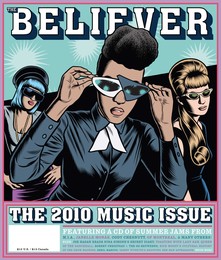
SOUNDTRACK: The Believer July/August 2010 Music Issue Compilation CD: “We Bumped Our Heads Against the Clouds” (2010).

Of all the Believer music compilations, this is by far my least favorite.  It would be oversimplifying things to say that the music is not for me, but in many respects it is not.  Chuck Lightning, the curator of the project states that this compilation is more or less a look into the state of the union for black artists.  And that invariably means a lot of R&B and songs that might be heard on Glee (I like the show, but I never know any of the music).

Deep Cotton’s “Self!” reminds me of novelty dance hit from the late 80s.  Of Montreal, who I thought sounded totally different from this, offer “Hydra Fancies” which is as catchy a disco anthem as any disco anthem can be.  Roman GianArthur’s “Depraved Valet” is an amazingly falsettoed Prince knock off.  Cody Chestnutt’s “”Come Back Like Spring” is a simple almost acapella ode to spring.  Saul Williams’ oddly titled “B.S. in a Tampon” is a spoken word with acoustic guitar that reminds me of Gil Scot-Heron.  Janelle Monáe’s “Cold War” is the first really catchy song (the la las remind me of Carole King), although  I could do without the overstated “Calinda” part and the extended fade.

The first song I really liked was BLK JCKs “Iietys” which sounded enough like TV on the Radio to be really interesting.  Spree Wilson’s “Chaos” also sounds like TV on the Radio (the more R&B side of the band, although the guitar solo is a dead ringer for “Hotel California.”  Scar’s “Rewind” is the song that should be on Glee.  I want to hate it but it is so damned catchy, I can’t.  Again, those Oh Oh Ohs are too perfect (and the auto0tune of course is unassailable).

Rob Roy’s “Velvet Rope Blues” is my favorite song on the disc by a large distance. It’s a weird rap that reminds me of The Streets, with an awesome sung chorus ala OutKast.  Hollyweed’s “Have You Ever Made Love to a Weirdo” is a trippy, juvenile space rap that is really silly.  Sarah hates it but I kind of like it, as it’s in the spirit of Frank Zappa, (although I hate the sax solo).  Fear & Fancy’ s “Off the Grid” sounds also not unlike OutKast.  And George 2.0′ s “Turn Off the TV” is a anti-TV rap rant (with the somewhat ironic conclusion that you yourself might end up ON the TV).

M.I.A. is probably the biggest name on the disc. “Born Free” is a weird little track of highly distorted vocals over a punk guitar buzzsaw sound.  But her vocals are mixed so loud in the mix that they sound unrelated.  It sounds not unlike a Go! Team track.  This track makes me wonder how she became such a sensation.

Hot Heavy & Bad’s “One” returns to that disco sound in the vocals with some contemporary bass sounds.  It wears out its welcome pretty quickly.  Tendaberry’s “Cold Boy” sounds like a less horn-y Fishbone.  Mother Novella offers one of the few all guitar songs, “Closer 9 1/2” and it’s an okay mid tempo rocker.

The final song is pretty awesome in theory: Nina Simone covering Alice Cooper.  That’s right, Nina Simone covering Alice Cooper.  Sadly I don’t know the Alice Cooper song, so it’s a bit lost on me.

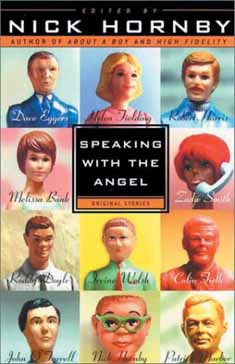
[READ: September 16, 2010] Speaking with the Angel

I bought this volume when it came out (and apparently donated $1 to TreeHouse at the same time).  It’s a collection edited by Nick Hornby (and the cover is designed similarly to the way High Fidelity and even About a Boy were at the time (“the Hornby look,” I suppose).

I didn’t buy it for Hornby alone, although he does have a story in it, but because it looked like a really promising collection of stories from authors I liked.  And for some reason I didn’t read it until now.  It includes 12 stories, and as the introduction notes, $1 was donated to TreeHouse.org.uk (in the US $1 goes to TreeHouse and another $1 goes to New York Child Learning Institute).  I don’t know if the money still goes there, but you can donate with a form at the back of the book.  (more…)

Read Full Post »

more-infoSOUNDTRACK: Dungen-4 (2008).

4Vill du tala svensk?

Even if you don’t speak or understand Swedish, Dungen plays music that is pretty universally understood.  The album feels more or less like an all instrumental affair.  There are some songs with words, but they are all sung in Swedish. So, no, I have no idea what he’s singing about, and in that respect it feels all instrumental.

Like the previous discs, 4 feels like a blast from the psychedelic days.  It is trippy, at times loud and raucous, (with some amazing guitar workouts) and even has flutes on a few tracks.

The big difference between this disc and the previous releases is that there’s a lot more piano.  This has an overall calming effect on the music.  And in some ways, I think I don’t like this disc as much as previous ones.

The piano really comes to the fore on track 2 “Målerås Finest” which to me sounds like a a tribute to one Zappa’s instrumentals (it reminds me of “Peaches en Regalia,” although I don’t mean to suggest it’s a rip off at all). “Samtidigt 1 an 2” are the major instrumentals of the disc.  They also remind me of Zappa in that they feels like a snippet from some crazy guitar jam session.  (Zappa releases a lot of  “songs” like this on his …Guitar… albums. On this disc, we’re privy to about 3 minutes of wild guitar solo but since they fade in and then fade out at the end we have no idea how long the jam went on.  The final track “Bandhagen” also feels Zappaeque, but maybe it’s just the staccato notes that Zappa also uses to such good effect.

“Fredag” has a feeling like some of the more otherworldly Flaming Lips songs.  And “Mina Damer Och Fasaner” has a choppy heavy metal sound that really stands out from the disc.

Really there isn’t a bad song on the disc, but for some reason it doesn’t move me quite as much as the others.  I don’t want to bring a negative vibe to the review.  I’m sure if this was the first Dungen CD I had, I’d think it was amazing, I just got spoiled by them.

[READ: February 14, 2009] More Information Than You Require

John Hodgman is a man you will no doubt recognize from the Mac Vs PC ads (he’s the PC). He’s also a contributor and guest on The Daily Show. When this book was released he promoted it on The Daily Show, and on the Sound of Young America. It sounded really funny. And I was delighted that Sarah got it for me for Christmas. (more…)

Read Full Post »

opusSOUNDTRACK: FRANK ZAPPA-Baby Snakes [the movie & soundtrack] (1979).
babyThis is sort of a review of the soundtrack album to Baby Snakes, but really it’s a review of the film, which I just watched over the last 4 days.  Baby Snakes (A Movie About People Who Do Stuff That is Not Normal) was not as depraved as the subtitle (and the history of Zappa) would lead you to believe.  In fact, primarily it is a concert film.  There are a bunch of other things in the film as well, but easily 3/4 is a live Halloween concert in New York City.
More on that in a moment.

In today’s market, the other parts of the film would simply be packaged as bonus features on a DVD.  The claymation and subsequent interview with the artist Bruce Bickford would be a (somewhat) interesting short film, and a lot of the behind the scenes footage would also go well as a bonus attachment to the concert.

But I won’t get ahead of myself.  The claymation sequences are, frankly, amazing to watch.  There’s a clip on YouTube of Frank on the Mike Douglas Show (which is a trippy/weird thing to watch in and of itself) in which he shows an example of the claymation from the film and from elsewhere. Unlike the amazing work of Aardman on Wallace and Gromit, Bickford’s work is not polished.  However, each new image slowly morphs into the next in a series of mindblowing sequences…there are scenes of sex and violence and driving and mountains and flowers, and naughty bits and vomiting and you name it.  It is the most stream-of-consciousness looking visuals I may have ever seen.

During the sequences, Frank interviews Bickford.  The interview is pretty long, and it sounds like Bickford may be completely stoned. I tuned out a lot of what he was saying.

The backstage footage is the kind of sillydebauchery that you imagine happens back stage: there’s a blow up sex doll, there’s most of the band members telling little stories about what’s going on and there’s Adrian Belew dressing in drag.  But again, the editing is not great, and the footage is just sort of randomly inserted…the worst part is when Adrian Belew is actually talking OVER the Frank and the Devil negotiation during “Titties and Beer.”  Boo!

So, both of these segments could have worked very nicely as their own short films, rather than being inserted into this longer piece.  In fact, the haphazardness of the proceedings seems even worse when you realize that they are no longer inserted into the film after about the two hour mark: the last stretch of the concert is interruption free.  The problem is that the whole film is nearly three hours long, and since he intersperses these interviews/animations in between live footage, watching five or ten minutes of animation feels disjointed (overall, the editing leaves something to be desired)

The live footage, however, is pretty amazing.  Watching Terry Bozzio beat the crap out of the drums while singing/narrating is pretty fantastic.  And Andrian Belew is amazing to watch at any time. It’s also fun to see the percussionist going nuts on what must be a hundred different instruments (including the ever-present Zappa Xylophone.)

But clearly the highlight is watching Zappa.  Zappa conducts a whirlwind percussion jam, giving the musicians the key (A is a triangle of two hands, C is his hand shaped like a C) before getting them to strike their chords.  It is a fun improv moment, and shows that even back in the 70s, he was interested in composing music, not just writing rock songs.

Incidentally, the soundtrack, of Baby Snakes contains many of the live songs from the film,(but not the improv)  including the excellent “Punky’s Whips” and “Black Page #2.”  The soundtrack is short (especially compared to the movie) but is really great.

Watching Zappa solo on the guitar is also pretty amazing.  I’ve listened to all of his guitar solo releases.  And he simply knows the guitar backwards and forwards.  So, this concert is a good way to just sit back and watch him play.  But it’s also a good way to watch him interact with the fans.  Frank is right there with the fans, shaking hands, slapping high fives (and doing this while he is playing an extended solo as well).  His charisma is undeniable.

And his charisma is in great evidence during the audience participation section where some of the thronging masses are invited onstage to enact a scene out of Frank’s imagination (a young volunteer is “whipped” by a young woman whose face is painted white with flowers on it, and her friend Donna U Wanna).  The woman in the white makeup is all over Frank when she’s down in the crowd, too.  While Frank is singing, she starts kissing him and even taking his hair out of a ponytail holder–and he never flubs a word!  What a professional.

By the end of the film you kind of forget about the editing, but in the first 2/3, mostly you come away thinking that the editing is just not very good.  Much of the claymation is repeated (some is repeated three times).  While I understand that Frank reedited the film down to 90 minutes in a failed attempt to find a distributor, and I know everyone is happy to get this unedited version of the film, nevertheless I think the whole film should be broken up into smaller films for maximum enjoyment.

[READ: January 2008 ] Opus

I was a huge huge huge fan of Bloom County back in the day. It was one of my favorite comics, and I can recall doodling Opuses and Bill the Cats during downtime in class.  I sort of liked Outland, but then, I didn’t get a paper, so I never really saw those.  And, lo and behold, I didn’t even KNOW about the Opus strip.  I also just read that he just finished the Opus strip in November.  The final panel is supremely touching and is available here (what appeared in the Sunday paper) and then here (the link that’s in the cartoon).

I found this book remaindered, and figured I’d have to give it a try.  And it filled me with nostalgia! (more…)

Read Full Post »

SOUNDTRACK: MARS VOLTA-The Bedlam in Goliath (2008).

I’ve liked Mars Volta more in theory than in actuality for their first few albums. I enjoyed them, but they didn’t make me want to listen all the time. I had heard good things about this new one, so I gave it a shot and WOW. The Bedlam in Goliath is off the charts in its craziness and its masterfulness.

Bedlam has most of the same components of a Mars Volta disc: chaos, noise, fantastic instrumentation, bizarre lyrics, jazz-like elements and metal, sweet metal. But for some reason, Bedlam seems to cohere into a masterful project. I haven’t listened to the first two discs in a while (but I’m sure going to check them out again), and I never got the third one, so I can’t really compare them. This one just seems to have something special to it.

The overall sound makes me think of someone tuning in a radio. Some parts are (deliberately) fuzzy, some are crystal clear. As the sound of one segment fades out a new, entirely different section blares in. Anyone who channel surfs can appreciate the sound of this.

All of the literature about this record talks about their use of a Ouija board during their tour and while recording. They bought it in Jerusalem and they say it had a horrible impact on the recording process. (Check out this NPR story…yeah, that’s right, I said NPR.) And, in many respects, rather than a radio, you could think of the album as the voices and sounds from the Ouija board coming through. Some are crystal clear and other are mechanized and ghostly. Spooky, eh?

But what of the music? It is fast, fast, fast. Cedric Bixler-Zavala’s voice is a powerhouse of high-pitched, operatic notes. And the music keeps pace. And yet, despite the speed the album isn’t thrash metal or speed metal necessarily. It doesn’t all have that heaviness, it just has a lot of speed. It lets up once in a while, but for the most part in every song something is going fast: drums, bass, voice, something.

One of the perplexing things about the record is how each song seems to have multiple parts that are unrelated to each other…some songs even have longer breaks within the track than between them. For instance, tracks one and two, the nearly 6 minute “Abernikula” and the over 8 minute “Metatron” blend seamlessly into one long track. However, midway through “Metatron” the song stops for a good second or two and then begins with a brand new, wonderfully catchy riff, which runs through the rest of the song. Truly masterful, and yet impossible to know what track you’re on, half the time.

The album is about an hour long, and it’s such a roller coaster of rocking guitars and high speed chases.  And yet it doesn’t wear out it’s welcome, because the catchy bits are so incredibly catchy. I was amused to see that there is a “single” on the record called “Wax Simulacra.”  It’s the shortest song, possibly that MV has ever done at under 3 minutes, which makes it an ideal single.  Except that the last twenty or thirty seconds are taken up with a mind blowing saxophone solo that could be lifted from Ornette Coleman or John Zorn (and this is a single?).  In fact, the horns come into play a lot on the record.  There’s one or two motifs that sound like they could be taken from a Zappa piece (the Zappa song “Sofa” kept popping into my head during this record. And you can’t ask more from a record than to make you enjoy it while it makes you think of other great music too.

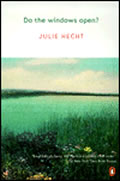
[READ: July 20, 2008] Do the Windows Open?

I read an interview with Julie Hecht in The Believer (some of which is available here). And boy did she come across as an unlikable person. (more…)

Read Full Post »

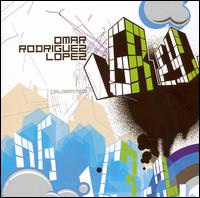
SOUNDTRACK: OMAR RODRIGUEZ-LOPEZ-Calibration (is Pushing Luck and Key Too Far) (2008).

Typically a solo album means indulgence. But how can you be more indulgent than Mars Volta? They have fifteen minute songs with twenty-seven sections and operatic vocals and lyrics that are bizarre at best (they’re fantastic, don’t get me wrong, they’re just…out there!). So, if you’re the guitarist in a freak flag waving band, how do you let your freak flag fly on your own?

This solo album actually does prove to be more out there than Mars Volta. Primarily because whereas Volta stays more or less within the realm of their prog metal, this record sets no limits. There’s ambient noodling, there’s chaotic noise, and there’s beautiful extended pieces.

Omar (I’m not on a first name basis, his name is just long) plays a bunch of instruments on the record (he gets help from a bunch of folks throughout as well), but primarily he plays guitar. And I can’t help but think that Omar doesn’t understand how to play the guitar–he knows how to play, and frankly, he’s pretty amazing at it, but I’m not sure he understands it. His melodies are bizarre, he sense of what should come next is totally askew, it’s as if he learned how to play guitar by listening to vinyl records that were a little warped. It’s pretty fantastic.

In one song he sounds like Jimi Hendrix–not so much like a Jimi Hendrix song, but that he achieves the same sonic freakout sound that Jimi achieved in his live recordings–squalling feedback and amazing density. There’s another track where he channels Carlos Santana. (This track features John Frusciante of the Red Hot Chili Peppers on vocals. It is singularly bizarre because it cuts out right in the middle of a line–freaks me out every time!) The next song “Sidewalk Fins” ends with some of the noisiest, loudest, most crushing sounds. It sounds like an amplifier getting smashed by a giant microphone–feedback and thuds–repeated about 4 times before it’s over.

And yet the first few songs are amazingly restrained for Omar. They are short, ambient and, if not a little weird, then certainly quite pretty. But as the album moves along and the songs get longer, his freak flag comes out (see “Lick the Tilting Poppies”). And yet, the disc ends with a beautiful 11 minute instrumental song. it’s beautifully arranged, with intertwining guitar melodies. If there was any doubt about Omar’s skills, this track will knock down all questions. It’s also pretty clear that Omar respects Zappa, if not for his guitar skills, then certainly for his compositions.

This definitely isn’t for everyone–there’s a lot of weirdness afoot–but if you’re looking for something interesting or different, and you’re not afraid of something out there, this is a good disc to check out. Oh, and you don’t need to like or have even heard of Mars Volta to appreciate this record.

[READ: June 27: 2008] The Turtle Moves!

When I saw this book on Amazon, it never occurred to me that it was an “unauthorized” account. It seems that whenever someone or something gets popular someone else tries to make a buck off of it with an “unauthorized” publication. I never know how accurate they are, if they have dirt that the subject doesn’t want out or if “unauthorized” is just written there to sell copy. (more…)

Read Full Post »

fa.jpgSOUNDTRACK: RICHARD THOMPSON-Industry (with Danny Thompson) (1997), Mock Tudor (1999), 1000 Years of Popular Music (2003).

My wife heard the new RT song on the radio (hooray for WXPN, Philadelphia…oh and go listen online, it’s great stuff!) and asked if he had a new song out. She likes RT but isn’t a huge fan; she was amazed at how she knew immediately that it was him, but that it didn’t sound like an older song that she knew already. I think that’s a great feature of RTs style. He is clearly himself, and yet he’s not afraid to experiment.

(more…)

Read Full Post »

« Newer Posts