Feeds:
Posts
Comments

Archive for the ‘Morality’ Category

SOUNDTRACK: BUKE AND GASS-Tiny Desk Concert #95 (December 6, 2010).

Buke and Gass’ album Riposte made the NPR’s 50 Favorites of 2010.  I listened to a track and liked it but I wasn’t blown away by it.  Nevertheless, I wanted to check out this Tiny Desk concert because I was sure it would be interesting.  And so it is.  And it makes me like them infinitely more–enough to check out their whole album.

The initial attraction to Buke and Gass is their homemade instruments (and if you watch the video, you can kind of see how they work, except I want to know more details (there must be foot pedals of all kinds to make these exquisite sounds)).  Arone Dyer sings and plays a modified baritone ukulele (who even knew such a thing existed) and makes incredibly squalling, cool effects come from it.  Aron Sanchez plays a modified guitar/bass hybrid (there’s bass and guitar strings-the bass are filtered through one amp, while the guitar goes through another).  And someone is playing a tambourine and a bass drum (I think it’s Sanchez with his (unseen) feet).

The songs are weird but incredibly catchy.  Dyer’s voice is wonderful, and perhaps the most amazing thing is that she seems to be playing guitar harmonies to complement her voice and it makes it sound like there are two singers.  It’s also amazing how much noise they make with these two instruments.

The whole set is wonderful and if they can do this on live, I can’t wait to see what the can do with studio magic. Now, just what the hell does their name mean?

[READ: April 15, 2011] “Why I’m a Pacifist”

I enjoyed Nicholson Baker’s earlier works quit a bit, but I have missed a lot of his more recent releases.  Nevertheless, Baker is unafraid of controversy and I enjoy reading what he has to say.

In this article he defends his belief in pacifism. What’ surprising to me is that in his biographical introduction he talks  about his earlier life as a red-blooded Young Republican.  I never would have figured that Baker has such a past, but he evidently did. When he grew out of that phase, he opened himself up to the possibilities of pacifism (which his wife thoroughly supported). (more…)

Read Full Post »

SOUNDTRACK: WU MAN-Tiny Desk Concert #124 (April 27, 2011).

Wu Man is considered the master of the pipa. If that sentence was complete gibberish, the pipa is a 4 stringed lute-like instrument and Wu Man is a Chinese virtuosi of the instrument.  This Tiny Desk Concert shows Wu Man playing three songs, solo.

The songs are, if not traditional Chinese songs, then at least traditional in style.  Needless to say they are not for everyone (and really, they’re not even my cup of tea–I’m not downloading it, just watching it), but watching her fingers move on this instrument and really paying attention to the kind of things she’s doing with four strings, it’s quite an impressive feat.

She doesn’t sing, and the songs do not follow western musical structure at all.  But it’s an interesting look into Chinese musical culture.

Even if you only watch the first song, it’s worth the time.

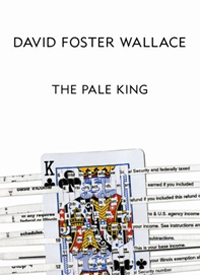
[READ: April 29, 2011] The Pale King

[Note: this review is pretty much free from spoilers–some details are given but I don;t think they ruin anything–but it is full of speculation and imaginings of what could have been]

I finished The Pale King today.  It took about a month, but that was because I only read it at lunch hour.  And I was surprised to find that, unlike with other books, I didn’t always feel up to pushing my lunch hour a few extra minutes to get some extra pages in.  Not because I didn’t like the book, but I think it was just really dense and often quite intense.

I’ll also state that I hadn’t been making any kind of notations when I started.  Then, a bit of the way through, when I realized there were a lot of characters, I started jotting down some names and characteristics.  But then I stopped again, because it was interfering with my absorption of the story as a story (such as it is).  So, this review is based on an initial read (yes, I’ll be reading it again in the not too distant future, that’s for sure), without any real note taking.

Is note taking necessary?  Well, yes, at least to keep the characters straight.  There are many many characters and most of them do not interact (or at least not explicitly) so it’s not always easy to know who is who or which person’s weird characteristics are showing up in any given chapter.  Plus, there are dozens of chapters in which unnamed people are described.  It’s hard to know how deliberate that was or how much of it is just the fact that book was unfinished.

The other thing is the ending, of course.  DFW fiction is notorious for its “lack” of endings.  Broom of the System ends mid-sentence, Infinite Jest ends in the middle of a scene, so who can imagine what The Pale King would have ended.  As such, we have only to go by editor Michael Pietsch’s placement of chapters.

So, in many respects, this book is very much Pietsch’s project.  Sure, DFW wrote all the words, but it was Pietsch’s job to piece them together.  Who is to say that DFW would have wanted §50 to end the book?  Pietsch also includes about ten pages of notes at the end of the book all showing ideas that DFW had asked himself about the nature of the finished product.  Some of these questions are minor, but others are quite significant, and would effect not only connections in the novel, but also the overall shape of the book.  It also implies that there could have been as much as another 500 pages coming.

The book feels like a kind of culmination of all of the things that he has been putting into his work for the past few collections.  There are character sketches based on interviews (Brief Interviews), there are lengthy sections of bureaucratic minutiae, lovingly rendered (“Mr Squishy”), there are scenes of conformist office work (“The Soul is Not a Smithy”) and there is redemption in the everyday (“This is Water”).  The mind reels at what this could have been had it been finished.

So this book is obviously, radically unfinished (and yet it’s still over 500 pages long).  So, why bother reading it?

(Here’s where the review really starts).

Because what is here is amazing. (more…)

Read Full Post »

SOUNDTRACK: MOGWAI-Ten Rapid (1997).

The release of this disc hot on the heels of Young Team rather confused me, especially when trying to keep track of which discs were “real” and which ones were compilations.  This one is a compilation.  It’s subtitled: (Collected Recordings 1996–1997).  And the fact that it has ten songs on it tells you just how much they released in those two years.  (It appears that they released 4 or 5 singles, although all the songs don’t seem to appear on Ten Rapid, and there seems to be a song or two unaccounted for.  Wikipedia also suggests that some of the songs were re-recorded for Ten Rapid.  Gosh, what’s a completist to do?).  And given all that they released back then, it’s also a surprise at how short this collection is  (just over 30 minutes).

The amazing thing is how much the disc sounds like a complete recording and not a collection of singles.  It is mostly Mogwai’s slower, quieter pieces, and the overall tone is one of “mood” rather than “songs.”  And, for those of us who thin of Mogwai as a really loud band, the prominent use of glockenspiel comes as something of a surprise (as does the quiet singing on two of the tracks).

The opener “Summer” is not the same as “Summer [Priority Version]” on Young Team.  This one is a beautiful track with glockenspiel while the YT version is much heavier and darker. “Helicon 2” (also known as “New Paths to Helicon, Pt. 2”), is a wonderful track with an interesting riff and texture.  On a recent live disc, it was expanded greatly. “Angels vs Aliens” and “Tuner” are the two tracks with vocals.  They’re both rather quiet and kind of soothing.

“I am Not Batman” is mostly washes rather than a riff based song.  “Ithica 27ϕ9” is one of their best early songs. It’s also the one track here that really experiments with sound dynamics.   It opens with a beautiful melody that swirls around for a bit.  Then the loud guitars come screaming out until it returns to that melody (and all in under 3 minutes).

The final track “End” is an entirely backwards recordings.  Wikipedia says that it is “Helicon 2” backwards, and I’ll take their word for it.

Ten Rapid is a really solid collection of songs showing just how good Mogwai was from the start.

[READ: March 8, 2011] Donald

This book is a speculative piece of fiction that answers the question: what would happen if Donald Rumsfeld was sent to Guantanamo Prison.  Note also that the cover is a parody of the cover of Rumsfeld’s own memoir (released around the same time).

The main character is clearly Rumsfeld, although he is never mentioned by his full name, always “Donald.”  But his description and his biography make it obvious that it is him.  There is a Note at the end of the book which states that the information about Donald is as accurate as possible.

First we see Donald in a library, presumably working on his memoirs.  He is accosted by a young kid who asks him questions.  Donald is annoyed by the kid and more or less blows him off.  Donald then has a fancy dinner with his wife and “Ed and Peggy” (two people who I can’t place historically).

That evening, masked people break into Donald’s home and haul him off to a prison (he is bound and his head is covered so he doesn’t know where).  The rest of the book sees him taken from one prison to the next, tortured in various ways (nothing too graphic, most of the torture consists of thinks like disrupting sleep, keeping the temperature really hot or really cold, and asking him lots and lots of questions, sometimes for 20 hours at a time.  There is no physical torture (again, it’s not graphic). (more…)

Read Full Post »


SOUNDTRACK
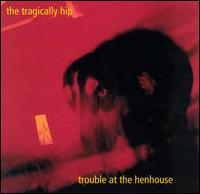
: THE TRAGICALLY HIP-Trouble at the Henhouse (1996).

After the major high of Day for Night, The Hip followed it up with Trouble in the Henhouse.

It opens with “Giftshop” which sounds like it could have come straight from Day for Night.  “Springtime in Vienna” is a marvel.  The opening is quiet with Downie’s almost whispered voice telling a compelling story until it blasts out with a wonderful chorus.  “Ahead by a Century” opens with a catchy acoustic intro.  Again, the harmony vocals add wonders to the verses.

But overall the album feels like the Hip exhausted their angst and anger on Day for Night and have chosen to go with a more mellow sound here.  It almost seems like Day for Lite.  Songs like the final track, “Put It Off” dabble with intensity, but have more atmospherics than powerful guitar and verses.  It’s like the come down after a big party.

The most peculiar song on the disc is “Butts Wigglin” which was used on the Kids in the Hall Brain Candy soundtrack.  It doesn’t really fit on this disc, but it’s such a great song that I understand them not leaving it off.  It’s very silly and musically groovy with  almost no guitars and all keyboards.  It’s a goof, but nice to see the lighter side of the band.

I find Trouble to be really enjoyable in itself, but it kind of pales in comparison to the previous two.  Nevertheless, these three albums are a wonderful trio of discs released by a great Canadian band.

They celebrated this era of the band with a live album the following year.

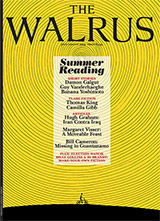
[READ: January 26, 2011] “An African Sermon”

Of all the stories in this Summer Reading Issue of The Walrus, this one was the most powerful.  (It wasn’t my favorite because it was rather distrubing) but it had a strong impact on me.

The bulk of the stoiry is set on a train in Africa.  Two white men introduce themselves to each other; the older one confides that he hopes no Blacks come into thier car.  Of course a Black does come into thier car and the younger man, who is a preacher, tries to embarass the racist man but immediately shaking the black man’s hand.

The black man is hostile to the young man’s advances, more or less shutting him out entirely.  Indeed, when the young man follows him to the dining car to talk (he is genuinely sympathetic to people, but he’s also very curious about the man and wants to pry a bit) the black man (whose name is Leonard Sagatwa) listens briefly and then, claiming a headche, returns to the cabin  room and goes to sleep.

During the night, the train stops because of a malfunction and it will be some time before it is fixed.  The priest goes out to the landing to find something to occupy himself when Leonard comes down.  He says to the priest that he wants to tell his story.  He wants to tell it once, to a complete stranger so that he can unburden himself and then be done with it.  The priest is tickled to hear the story.

But the story is one of Rwandan genocide:  Hutu vs Tutsi, brothers who turn  against each other; Leonard’s brother turning on him and his family.  Killing family members slowly, cruelly, calling them cockroaches.  It is harrowing and the priest is taken aback by the brutality.

But at the end of the story, the priest is resilient and insists that Leonard can forgive his brother.  Never, says Leonard.

The priest is able to use this story for his very first sermon in Africa.  He pretties up the story somewhat and makes it moral, and it works.  The new congregation accepts him and he feels welcomed to Africa.

When, several months later, the priest sees Leonard again, everything has been turned upside down.  And I’ll just leave it at that.

It is a great story.  Wonderfully powerful.

Read Full Post »

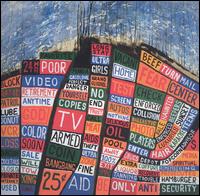
SOUNDTRACK: RADIOHEAD-Hail to the Thief (2003).

After the claustrophobia of Amnesiac, Hail to the Thief was a nice compromise between their earlier guitar rock and the ambience and the technology of Kid A.  “2 + 2 =5” is one of their most satisfying songs, opening with a nice guitar lick and Thom Yorke’s keening vocals, it abruptly jumps into a full-fledged rocker.  “Sit Down Stand Up” has similar properties–it opens quietly with a distant guitar riff.  The song builds and builds into a manic intensity.  By the end, when the pace is much faster and the lyrics are repeating “the raindrops” over and over, it’s a glorious mess.

“Sail to the Moon” is a keening piano-based ballad.  Not one of their best, but with very nice melodies.  “Backdrifts” flashes back to the experimental side of Kid A, with lots of percussive noises tapping into the electronic groove.

The band surprises everyone with a very acoustic sounding song, “Go to Sleep.”  It’s a really wonderful track, especially placed amidst the electronica of the other tracks.  The bridge brings Yorke’s vocals into the stratosphere (and the guitars get noisier and noisier).  “Where I End and You Begin” is a noisy staccato piece of fun with effects and more effects trying to hide Yorke’s voice.

“We Suck Young Blood” is a spare, almost completely stripped song composed of pianos and handclaps.  It is eerie and not a little disturbing.  While “The Gloaming” is practically all electronics.  It’s one of those transitional songs, not terribly exciting in itself, but not throwaway either.  And it leads into the gorgeous quintessential Radiohead of “There There” which could be an OK Computer outtake.

“I Will” is mournful dirge with just guitar and multitracked voice that lasts only 2 minutes and leads into the experimental “A Punchup at a Wedding.”  “Punchup” opens with that rarest of Radiohead sounds: a solo bass.   But it is quickly swallowed by more electronica.

“Myxamytosis”  is a nother great rollicking track with a great slinky keyboard riff that propels the song through the murky depths.  “Scatterbrain” features a cool guitar motif that shows that they can still play pretty music and which leads to the album closer, “A Wolf at the Door.”  “Wolf” ends the disc wonderfully with a cool guitar song and awesome almost-spoken lyrics.  It is kind of sinister and kind of sad at the same time.

This is a disc that rewards repeated listens (and headphones). If OK Computer was difficult, Thief is much more so, but for very different reasons.  But it pays wonderful dividends.

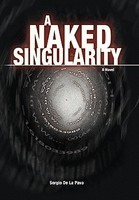
[READ: January 6, 2011] A Naked Singularity

I received a copy of this book about a year ago in March.  It is self-published and seems to have been sent to many folks who blogged during Infinite Summer (because it’s a big book, you see).  I was interested in reading it, but I had a lot of other things that I was reading first, so I put it aside until last month.  And I am really bummed that I waited this long.

A Naked Singularity is a wondrous, beautiful mess of a book that I was so absorbed in, I couldn’t put it down.  The writing style is great: funny, clever, funny, philosophical, funny, legal, funny and at times rather violent.

I’m torn when writing this how much of the “story” to give away.  I didn’t know anything about the book (the blurb on the back is just a quote from the book–there’s no summary or anything).  So I’m going to rob you a little of the “what the hell is going on in this story” aspect that I had, but I’m not going to give anything major away.

The story opens in a the middle of a conversation between a prisoner and a lawyer.  It’s a bit confusing until the story pulls back and we get the whole deal.  The story is about Casi.  He is a wunderkind lawyer who has never lost a trial (in 14 attempts).  He plays the system, but he’s also dedicated to getting his clients off (even though he–and everyone else on staff–knows they are guilty) mostly because he is undefeated.

The entire first Part of the book (320 pages) introduces us to Casi, to his workload, to his clients, to his coworkers and to his family.  His clients are mostly drug dealers. His coworkers are mostly jaded and are no longer excited by their jobs.  His family is wonderful, a group of Colombian immigrants who love each other and fight with each other loudly.  (The early scene at his family’s house is hilarious scene in which unattributed dialogue overlaps–it’s wonderful).

And yet for all of that, the first part never quite gives us a plot.  This might be a problem for some books, but the whole set up is so compelling that you just go with it, from one amusing (or hilarious) segment to the next.

In addition to introducing us to his cast of drug addicts and low level criminals, Casi also indicts the New York Justice system (in hilarious detail).  There are quite a few chapter spent talking about “bodies” (criminals) and how many of them sit in jail for 72 hours until they see a lawyer.

Of course, when he gets home, all is not normal there either.  His apartment is free (because his downstairs neighbor’s father owns the building and Casi squats there).  The neighbors are a curious bunch of college students.  One of them is a total TV junkie.  And, there’s a bizarre, wonderful subplot about him trying to bring Ralph Kramden from The Honeymooners to life in his room by watching the shows nonstop for weeks.  Yes.

Textually, the story also plays with lots of styles.  In addition to the dramatic scene with his family, we also see many court transcripts.  The second one with Mr McSlappahan is quite funny not least of which because the judge cannot get the poor man’s name right and the official transcript changes his name throughout the case.  There are also letters to and from one of the clients.   There’s a chapter-long epic poem (which was probably the hardest thing in the book for me to digest).  There’s even a recipe for empanadas (which sounds delicious).

In addition to some wonderful wordplay and punning there is also childish gross-out humor.  A scene with frozen burritos (pp. 150-158) had me laughing out loud for several pages.  But there’s also a lot of commentaries on society.  For instance Television is always capitalized and treated as a proper noun.  The mayor of New York is named Toad.  There are street vigilantes with cameras everywhere and, most amusingly, there’s an in-the-making TV show: Clerical Confessions.

By the time Part Two comes around a plot starts forming.  I was concerned that all of part two would follow this nascent plot, but it doesn’t. The book continues in a similar vein with the plot-instigator [coworker and lawyer, Dane, one of the most consistently amusing characters I’ve read in a long time] continually popping up on Casi’s periphery to try to get him to help him with…the perfect crime.

And that’s when boxing comes into play.  Casi is a fan of boxing, specifically a fan of Wilfred Benítez (who I didn’t know was a real boxer, but whenI looked him up I found this part of the story even more compelling).  And so, interspersed throughout the rest of the book is Benítez’ biography and fight history. It’s a rather lengthy character study of the man himself and boxing in general.  Now, I’m not a fan of boxing, I’ve never watched a fight, but I was totally engrossed by the storytelling.

Because he is setting up a whole story about muiddleweight champiosn, the novel follows many boxers who I had heard of and knew from pop culture (I checked and even Sarah knew who most of these boxers were, so they really must get into the pop culture world): Sugar Ray Leonard, Marvelous Marvin Hagler, Thomas Hearns (I didn’t know him, but De La Pava’s description of the 3 round Hearns-Hagler fight is so exciting that I’m going to watch them on You Tube) and Roberto Durán (she didn’t know him).  And so the story of these middleweight fighters trying to knock each other over for the title becomes something of a metaphor for the Casi’s life pre- and post- crime.  In fact, when they go to execute the perfect crime, the first half of that chapter is taken up with a story about Benítez…that’s quite unexpected.

While the crime is beign set up, Toom, one of Casi’s coworkers asks him to help with a case in Alabama.  A severely mentally retarded man is to be executed and Toom has taken on the case to rescue the man.  This plot adds a surprising amount of pathos to the story, especially when Casi flies to Alabama and meets the man.  But even that sequence is lightened by a wonderfully absurd hotel scene.  I totally want to stay at this hotel.

Part Three of the story is where the whole thing devolves into a crazy quilt of insanity.  The crime has happened, and it is messing with everything. There is a city-wide blackout, Casi has no heat, no cars are allowed on the streets so he can’t even escape to his mother’s house.  There’s also a strange guy in is building who looks and sounds suspiciously like Ralph Kramden.  And, Casi is accused of contempt (and is about to be ousted by his law office’s morals group, the childish but amusingly named Committee to Oust Casi Kwickly). Both trials are as absurd as a Marx brothers movie (Karl of Groucho?).

The lead up to the end is very satisfying will all kinds of loose ends tied together (things that I thought he’s never address were in fact cleared up!).  But with a story this all over the place, it’s hard to imagine how you would finally end it.  The ending goes in a direction that is supported by the title (and is a little overwhelming).  It’s a little unsatisfying, but aside from a tidy happy ending (which you knew you weren’t getting) I don’t know how else you could have ended the book.

Ending aside, this is a fantastic novel.  There is just so much going on in it (I didn’t even mention the discussion of Hume vs Descartes “I guessed there was nothing wrong with Hume provided it was acknowledged that Descartes was The Man” (510)) or the whole subplot about the two kids who kidnap a baby), and it is very well constructed and tied together.

Somebody please publish this book officially!  Yes it’s long, yes it’s multifaceted, yes it demands a lot of the reader,but the payoffs are wonderful and, frankly, this is the kind of unexpected story that could be embraced by, well, not the general public, but a niche market who enjoys clever books (and yes, probably fans of David Foster Wallace (and his progenitors)).

Give De La Pava a contract, huh!  You can read an excerpt here.

Read Full Post »

[SOUNDTRACK: RADIOHEAD-Live, August 28, 2008 (NPR download) (2008).

This was the first concert that I realized was free to download from NPR.  (Which started me on a downloading frenzy!)  I was really psyched to see it because Radiohead has been one of my favorite bands for years but I’ve never seen them (and only really know their live stuff from the Live EP.  This concert is essential listening for any fan of later Radiohead (they play all of In Rainbows).

I was thinking about Radiohead’s history.  They had a sort of left-field grunge hit with “Creep” and seemed like they would be destined to play their one hit in every show until they retired.  Then The Bends was released and it had a whole bunch of hits, solidifying that they were not just a one hit wonder band.  Then OK Computer blew everyone out of the water and Radiohead were easily the best band of the 90s.

Even though “Creep” was a huge smash, it would seem weird to hear them play it now.  Their discs since Kid A have turned Radiohead into a hugely different band.  So during this set when someone shouts out “Anyone Can Play Guitar” it’s almost as unexpected as hearing someone shout “Smells Like Teen Spirit.”  (They didn’t play it…although they did play “The Bends”, which sounded kind of, but not totally, out of place).

The rest of the set includes 4 songs from Kid A, 3 songs from Hail to the Thief and 4 songs from OK Computer (and one from Thom Yorke’s solo album).  Nothing from Amnesiac.

The band sounds great, they have such a wonderful sense of mixing techno drums and squiggles with rocking guitars.  And the songs from Kid A forward are really great.  “The National Anthem” from Thief substitutes the crazy horns from the disc with wonderful samples from commercials, which works wonders.

The songs from OK Computer sound good but rather different, as if the band has a different set of instruments or technology.  “Lucky” sounds great as do the simpler tracks of “Karma Police and “No Surprises.”  The only song that I was vaguely disappointed in was “Paranoid Android” (one of my favorite tracks ever).  It sounds good, just different.  And that song is so complicated with so many bits and pieces that hearing it in a stripped down to an almost acoustic version is unsettling.

What I did like about “Paranoid” and many other tracks was the backing vocals.  In my studio experience the only voice we hear is Yorke’s, but live, someone is doing some great backing vocals, remaining faithful to Yorke’s original sound but just different enough to be really interesting.

We obviously miss a lot by not seeing the visuals of the show, but the audio is great.  The quality of the recording is fantastic and any Radiohead fans would be foolish not to download it.

[READ: December 23, 2010] “Hammer and Sickle”

I feel like DeLillo is a such an influential author, I can’t believe that he’s a) still alive and b) publishing stories in the New Yorker.  This story starts in such a mundane setting that I was worried it was going to be a run of the mill tale of  life in a minimum security prison.  We see the narrator dressed in an orange jump suit on the side of the road with a group of other prisoners.  He is thoughtful as the traffic whizzes past.

But the scene quickly switches back to the prison and this is where DeLillo becomes “DeLillo.”  In the central prison room, the prisoners begin watching a show every day.  The show consists of two teenaged girls reading the financial news.  Except that their news is more like free-form poetry.

“The fear is Dubai. The talk is Dubai.  Dubai has the debt. Is it 58 billion dollars or 80 billion dollars?”
“Bankers are pacing marble floors.”
“Or is it 120 billion dollars.”
“Sheiks are gazing into hazy skies.”
“Even the numbers are panicking.”

“The world’s only seven-star hotel.”
“The world’s richest horse race.”
“The world’s tallest building.”
“All this in Dubai.”

“But where is the oil?”
“The oil is in Abu Dhabi.  Say the name.”
“Abu Dhabi “

And the prisoners (most of them guilty of financial fraud of some kind) love it.  Even the Elder Prisoner (sentenced to over 700 years…his fraud caused some MAJOR international problems), the man who controls the remote, has deemed it appointment TV.  (more…)

Read Full Post »

SOUNDTRACK: SUPERCHUNK-Mower (1993).

It was a robin’s egg and it was blue. Such is the oft-repeated line in the title track. It’s another great single from Superchunk:  poppy and cool and fun to bounce around to.

The second song, “On the Mouth” is a much faster, more punk track, apparently about frustrated love.

The final track is a live version of the song “Fishing.”  It’s one of the few live Superchunk tracks that I’ve heard (and it lasts over 5 minutes!).  It’s full of feedback squalls and lots of noise.  When the drums eventually kick in, it’s a fast-paced thundering experience.  The squealing guitar (and feedbacking outro) leads me to suspect that their lives shows were even more energetic than their albums.

[READ: October 4, 2010] “The Warm Fuzzies”

I have The Children’s Hospital from Adrian which I’ve been meaning to read for ages, but so many other things get in the way.  I have read a few of his short stories in McSweeney’s and the New Yorker. Adrian’s story was the final one of the 20 Under 40 stories in this year’s New Yorker list.

I felt this story was a little clunky at first.  I had a hard time keeping the story straight. And yet, once it settled down I found it really engaging and rather fascinating.

The story is about the Carter Family.  Not that Carter family, but another singing Carter Family. One day both mother and father Carter woke up and decided to stop being just the Carters; they decided to devote their life to Jesus in song.  And so, as it opens, we see The Carter Family practicing another one of their four chord songs.

In this particular practice, a new kid is playing the tambourine.   This new kid is, like all of the other new kids, a foster child and black.  This new foster child is named Paul, although he tells them all his name is Peabo.

The confusing thing in the beginning was just getting the hang of who all the family members were.  But once they were settled in, it was very easy to keep straight, and more importantly, to get hooked into the story.  We get a brief look at the family before music enter their lives, and we see how the children treat each other.  Each new foster child brings something new to the sound. And Paul/Peabo brings a bit of unexpected flair to their rather tepid music.  But the only one who seems to notice is Molly.  And really, this is Molly’s story. (more…)

Read Full Post »

SOUNDTRACK: RUSH-“The Trees” (1978).

I suppose many people know this kind-of popular song from Rush.  But lyrically it seemed relevant to Insurgent Summer.

There is unrest in the forest,
There is trouble with the trees,
For the maples want more sunlight
And the oaks ignore their please.

The trouble with the maples,
(And they’re quite convinced they’re right)
They say the oaks are just too lofty
And they grab up all the light.
But the oaks can’t help their feelings
If they like the way they’re made.
And they wonder why the maples
Can’t be happy in their shade.

There is trouble in the forest,
And the creatures all have fled,
As the maples scream “Oppression!”
And the oaks just shake their heads

So the maples formed a union
And demanded equal rights.
“The oaks are just too greedy;
We will make them give us light.”
Now there’s no more oak oppression,
For they passed a noble law,
And the trees are all kept equal
By hatchet, axe, and saw.

I’ve liked this song for some twenty-five years and my interpretation of it changes every once in a while.  I’m not sure if the book influences my thoughts on the song, but it seemed relevant.

Oh, and it totally rocks, too.

[READ: Week of July 30, 2010] Letters of Insurgents [Eighth Letters]

Yarostan replies to Sophia’s letter by saying that her victory is complete, that he has been looking through opaque lenses all these years.

But the main focus of this letter is the dance at the factory that Yara and Mirna have coordinated.  They decorated the whole room (moving machinery aside) to have the experience of the life that Sabina lived.  It even included signs that said “everything is allowed” and “nothing is banned.”

The dance is basically a retelling of Mirna’s story, complete with Mother with Broom, Devil, and all the other characters that we’ve heard about in their bizarre “love games”  Although the dancing part with the spinning and circling and all the music sounds like it might have been fun, I feel like the audience must have been very confused and a little bummed that there wasn’t more dancing for all.

After the dance Jasna reveals that she asked Titus to marry her.  Twice.  And Jasna reveals that Titus has said some awful things about Luisa and Vera (and, yes, Mirna) over the years.  Yara still hates him. (more…)

Read Full Post »

SOUNDTRACK: THE FLAMING LIPS & STARDEATH AND WHITE DWARFS featuring HENRY ROLLINS and PEACHES doing The Dark Side of the Moon (2010).

You’ve got to have balls to cover the most popular album of all time.  Everyone knows Dark Side of the Moon, according to Billboard charts everyone probably owns a copy of Dark Side of the Moon.  So, you’re taking on a pretty big task here.  But the Flaming Lips aren’t called The Fearless Freaks for nothing.

What delights me about this album is that it is utterly unfaithful to the original.  There’s nothing worse than a cover song that just apes the original version.  With that in mind, the Lips have put their bizarro stamp on the classic album, oftentimes rendering the songs almost unrecognizable–but more on that in a moment.

The two guest stars on the disc are Henry Rollins and Peaches.  Rollins recites all the spoken word bits from the original.  He actually makes a lot of those weird ramblings clear for me for the firs time.  The originals were spoken by a (presumably) high Englishman.  Rollins’ delivery is much more abrasive (but then so is the music).  It works pretty well, especially since Rollins’ laugh is maniacal, although if he sounded a bit more drunken I think it would work even better.  Peaches sings a few of the female vocal bits.  I’ve never been much of a fan of hers but, man, she does an awesome job in covering “The Great Gig in the Sky,” the track from the disc that features a wondrous diva singing and screaming her heart out.  Peaches really lets loose and showcases the power of her voice.

The Lips play on 7 songs and StarDeath play on 6.  They work together on 2 tracks.

StarDeath is fronted by Wayne Coyne’s nephew, Dennis.  I’d only heard one track from them before, and I liked it.  Dennis’ voice is a higher register, like Wayne, but he’s also a bit more subtle. Musically they are less noisy as well, and it’s a good counterpoint to the static of the Lips’ tracks.

So the opener, “Breathe” (Lips) is distinct right away, because the main focus of this version is a loud throbbing bassline. “On the Run” (Stardeath) is completely indistinguishable from the original.  You would never suspect it was a cover.  It’s a bass-propelled, very cool song, but there’s almost no similarity.

“Money” (Lips) stays fairly faithful to the original, except that the vocals are totally auto-tuned.  It makes the song sound really alien, as if coming, yes, from the other side of the moon.

“Time” (Stardeath) on the other hand, is a very delicate, acoustic track, (sounding somewhat like Mercury Rev, actually).  It is something of a counter to the rocking version on the original.

“Us and Them” (Lips) is probably the closest sounding to the original.  It has simple washes of sound and Wayne’s delicate voice.  But, once again, the louder sections of this song are left out.  “Any Colour You Like” (Stardeath) is a much closer instrumental to the original than “On the Run” was.  And “Brain Damage” (Stardeath) is really quite spot on (and may be even creepier than the original).

The ender, “Eclipse” is like a distorted indie rock version of the original.  It works pretty well.

There’s surprisingly little in the way of sound effects (which are all over the original).  I’d have thought they’d populate the disc with all kinds of fun things, but no, they actually play it pretty straight.

My one real complaint about the disc (and actually about Embryonic as well).  The Lips have always pushed the envelope of music.  But lately, they seem to be redlining  a lot of their sounds, making them distort and crackle.  Now, I love distortion when it’s used well, but this “too loud” distortion actually hurts my ears, even if the volume is low.  I find the sound to be unpleasant, and not in a good way.  And I think it’s a shame because the Lips write such great music, that I hate to have it obscured by clouds of noise.

So, yeah, this will never replace the original for anyone.  But it’s a fun experiment and actually sounds a bit like a rough demo for the final release.  In fact, in many ways it sounds like it’s coming from outer space and may be conceptually more accurate for the title.

I saw The Lips and Star Death on Jimmy Fallon.  They played “Breathe” and all eight (or more) guys were on stage.  It was a big wonderful mess.  And they sounded really good together.

[READ: May 11, 2010] ; or The Whale

In 2007, a book was published called Moby Dick in Half the Time.  And, as the title implies, it took Herman Melville’s Moby Dick; or The Whale and truncated it.  The editors basically kept in all of the “plot” and excised most of the “wandering” parts of the story.

So, in 2009, Damion Searls decided to print all of the excised material as a book itself.  This exercise was published in The Review of Contemporary Fiction, Summer 2009 | Vol. XXIX.  So, this “book” is Moby Dick without the “plot” or as the introduction puts it, “all Moby, no Dick.”

This book includes “every chapter, sentence, word, and punctuation mark that Anonymous removed to produce [Moby Dick in Half the Time]” (10).

And so what we get is a very surreal story indeed.  It comes across as a fascinating look into the mind of the (in this version) not named until Chapter 11 or so narrator (since we’ve obviously lost “Call me Ishmael”).  It also comes across in many sections as bizarre poetry.

; or the Whale’s opening line is:

“methodically.” (31). (more…)

Read Full Post »

SOUNDTRACK: SARAH HARMER-I’m a Mountain (2005).

I first heard Sarah Harmer in 2000, with her “Basement Apartment” single (which always made me think of my friend Ailish who, at the time, lived in a basement apartment in Brookline, Mass.)

My wife Sarah has this CD playing in the car and I’d forgotten how much I liked it.  Unlike the You Were Here, I’m a Mountain is much more country music sounding. I’m not much of a fan of country music as a rule, but there is something about country music from Canada that just sounds better to me.  It tends to have more of a crossover sound, and is lyrically more interesting to me.  Maybe it has something to do withe Calgary Stampede.

While two or three tracks on here could easily fit on a country station, the album still got nominated for a Juno for Best Adult Alternative album.

To me, the album really kicks into high gear with the title track, which is funny and catchy (the line about Wal Mart is a good one).  The cover of Dolly Parton’s “Will He Be Waiting for Me?” is beautiful.  And the French song “Salamandre” sounds gorgeous even if I have no idea what she’s on about.”  The disc closes with my favorite song: “Luther’s Got the Blues” a wonderfully funny country song written by Luther Wright.  And in Sarah’s hands, it turns into a yodeling masterpiece.

You might hear Sarah’s voice backing up all kinds of bands.  And her voice really is fantastic.  So, should you tend to shy from country music as I do, this may be an entry way for you.

[READ: January 15, 2010] Hopeless Savages

I read this comic years ago, and loved it quite a lot.  I found it right around when I found Blue Monday. I recently tacked down the third trade paperback, so I figured I’d read all three again.

The premise here is that Dirk Hopeless and Nikki Savage, two old school punk rockers fall in love and settle down.  They have four kids: Rat Bastard, Arsenal Fierce, Twitch Strummer & Skank Zero Hopeless-Savage.  Each kid is a traditional punk: bad assed, fierce and take no shit.  But they are also pacifist by trade (Ronald Reagan took on the world with force, so force is for fascists, too right!).  Self defense is okay, mind you.

In this first story (there’s three trade volumes published so far), there’s not too much punks-in-proper-society comedy, because it’s all action.  The kids’ mum and da have been kidnapped, and its up to the four of them to find them.  Well, actually it’s up to the three of them to find Rat and then find their parents. For you see, Rat Bastard has sold out and gone commercial. (more…)

Read Full Post »

« Newer Posts - Older Posts »