Feeds:
Posts
Comments

Archive for the ‘Military’ Category

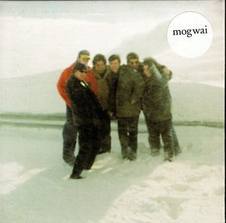
SOUNDTRACKMOGWAI-No Education = No Future (Fuck the Curfew) (1998).

This is a 3 song EP. The opener “Xmas Stripes” is one of my favorite early Mogwai songs.  The opening melody is really great, with a cool interesting bass and a nice guitar over the top.  At about 3:30 the song grows from a silent track to a menacing, growing beast until the drums start and the song and the main riff begins.  By 5 minutes it’s all out rock noise.  By 6 minutes the song is scaled back for the violin solo.  The remaining 7 (!) minutes are a denouement for the song.  Even though I love the track, I mostly love the first 8 or 9 minutes.  The ending tends to drag a bit.

But for all of their noise, Mogwai’s early releases were really quieter instrumentals, meditative songs that were really quite pretty.  “Rollerball” is a beautiful, sad three-minute track.

The last song “Small Children in the Background” continues in this quieter vein.  At nearly 7 minutes, it allows for a noisy middle section.  This noisy section is indeed mostly noise.  And yet the pretty melody of the rest of the track is just as loud throughout the mix, making for a very cool and very brief explosion mid-song.

Not all EPs are essential, but this one is pretty fantastic.  And I have Lar to thank for getting it for me.

[READ: March 10, 2011] Changing My Mind

It’s funny to me when that when I get into an author, I seem to wind up not reading the books that people most talk about until much later.  Take Zadie Smith.  Her debut, White Teeth, is something of a touchstone for many readers.  I missed it when it came out, but I loved On Beauty and figured I’d go back and read it.  That was almost a year ago.  And in that time I have read lots of little things by her and now this collection of essays.

Regardless, this collection of essays is a wonderful look in to the nonfiction world of a writer whom I admire.  And it was quite a treat.  Zadie is an intellectual, and that comes across in all of these paces.  Whether it’s the subjects she’s writing about, the footnotes she uses or just the acknowledgment that she likes art films and not blockbusters, we know where she’s speaking from.  And, of course, I’m right there with her.  The funny thing about this book then is how few of the subjects I know.

The book is broken down into five sections: Reading, Being, Seeing, Feeling and Remembering.  The Reading section is basically book reviews.  The Being section is about her experiences.  The Seeing section is about films.  The Feeling section is about her father and the Remembering section is about David Foster Wallace. (more…)

Read Full Post »

SOUNDTRACK: MOGWAI-Ten Rapid (1997).

The release of this disc hot on the heels of Young Team rather confused me, especially when trying to keep track of which discs were “real” and which ones were compilations.  This one is a compilation.  It’s subtitled: (Collected Recordings 1996–1997).  And the fact that it has ten songs on it tells you just how much they released in those two years.  (It appears that they released 4 or 5 singles, although all the songs don’t seem to appear on Ten Rapid, and there seems to be a song or two unaccounted for.  Wikipedia also suggests that some of the songs were re-recorded for Ten Rapid.  Gosh, what’s a completist to do?).  And given all that they released back then, it’s also a surprise at how short this collection is  (just over 30 minutes).

The amazing thing is how much the disc sounds like a complete recording and not a collection of singles.  It is mostly Mogwai’s slower, quieter pieces, and the overall tone is one of “mood” rather than “songs.”  And, for those of us who thin of Mogwai as a really loud band, the prominent use of glockenspiel comes as something of a surprise (as does the quiet singing on two of the tracks).

The opener “Summer” is not the same as “Summer [Priority Version]” on Young Team.  This one is a beautiful track with glockenspiel while the YT version is much heavier and darker. “Helicon 2” (also known as “New Paths to Helicon, Pt. 2”), is a wonderful track with an interesting riff and texture.  On a recent live disc, it was expanded greatly. “Angels vs Aliens” and “Tuner” are the two tracks with vocals.  They’re both rather quiet and kind of soothing.

“I am Not Batman” is mostly washes rather than a riff based song.  “Ithica 27ϕ9” is one of their best early songs. It’s also the one track here that really experiments with sound dynamics.   It opens with a beautiful melody that swirls around for a bit.  Then the loud guitars come screaming out until it returns to that melody (and all in under 3 minutes).

The final track “End” is an entirely backwards recordings.  Wikipedia says that it is “Helicon 2” backwards, and I’ll take their word for it.

Ten Rapid is a really solid collection of songs showing just how good Mogwai was from the start.

[READ: March 8, 2011] Donald

This book is a speculative piece of fiction that answers the question: what would happen if Donald Rumsfeld was sent to Guantanamo Prison.  Note also that the cover is a parody of the cover of Rumsfeld’s own memoir (released around the same time).

The main character is clearly Rumsfeld, although he is never mentioned by his full name, always “Donald.”  But his description and his biography make it obvious that it is him.  There is a Note at the end of the book which states that the information about Donald is as accurate as possible.

First we see Donald in a library, presumably working on his memoirs.  He is accosted by a young kid who asks him questions.  Donald is annoyed by the kid and more or less blows him off.  Donald then has a fancy dinner with his wife and “Ed and Peggy” (two people who I can’t place historically).

That evening, masked people break into Donald’s home and haul him off to a prison (he is bound and his head is covered so he doesn’t know where).  The rest of the book sees him taken from one prison to the next, tortured in various ways (nothing too graphic, most of the torture consists of thinks like disrupting sleep, keeping the temperature really hot or really cold, and asking him lots and lots of questions, sometimes for 20 hours at a time.  There is no physical torture (again, it’s not graphic). (more…)

Read Full Post »

SOUNDTRACK: MOGWAI-Young Team (1997).

When Mogwai released Young Team there was quite a bit of buzz around them.  I remember when I bought the album, that I had no idea where they were from.

With the Asian-looking characters on the cover and a picture of Fuji Bank (and no band members names listed) I assumed they were Japanese.  Of course, a closer listen reveals a lot of Scottish voices quietly chatting away during some of the songs (which doesn’t necessarily mean they are Scottish…but indeed, they are).

Young Team is a great debut and Mogwai shows a lot of versatility.  It opens with a spoken word bit about Mogwai (If the stars had a sound it would sound like this).  It’s a slow instrumental, actually quite pretty, with picked guitar and continual bass and even harmonics.   It gets loud by the end, yet even that is restrained.  But just when you think that Mogwai is going to be another post rock instrumental chill out band, they hit you with “Like Herod.”

“Like Herod” is one of the more amazing songs in instrumental rock.  It plays with loud and soft dynamics like nobody’s business.  Opening with a slow rumbling bass, the guitars pick out intricate melodies.  Then at 3 minutes, all hell breaks loose in the form of big guitar chords and screaming guitar notes.  Things slow to a crawl about 6 minutes into the song. But we’re only half way done.  And those quiet notes are once again blown away by those same chords and screaming notes.

You could pretty much end the disc right there and call it a success.  But “Katrien” shows off another side of the band: a spoken word side.  Behind some gorgeous melodies there’s something of a rant.  It’s followed by “Radar Maker,” a 90 second piano-based instrumental.  It’s quite delicate and it leads right into “Tracy” a beautiful 7 minute song with a pretty melody and lovely washes of sound.

The middle of the album has two shot songs: “Summer [Priority Version]” is a condensed version of that quiet/loud dynamic that Mogwai does so well.  And “With Portfolio” plays havoc with a pretty piano song by throwing in washes of noise and sound effects which completely take over by the end.

The unfortunately titled “R U Still In 2 It” belies its bad name with some beautiful quiet guitar work played behind a vocal turn by Aidan Moffat.  There’s even a sung chorus!

“A Cheery Wave from Stranded Youngsters” is a two-minute sort of intro to the final track on the disc, the amazing “Mogwai Fear Satan.”  A 16 minute instrumental that is quite beautiful as it opens: distorted chords that don’t overpower the melody.  They bolster it as it builds and builds until it reaches a moment of silence which is filled by…a flute (!).  The song continues to build with a gorgeous repeating motif.  Then it slows down again to let the flute really sync with the song until it reaches its beautiful end.

It’s a great debut, deserving all of the praise that was heaped on it.

[READ: March 3, 2011] To Ruhleben and Back

This is a true account of one man’s escape from Ruhleben prison in Germany during WWI.  I admit that I had never heard of Ruhleben before (and frankly I’m really surprised I never have, as roughly 4,000 British citizens were interned there from 1914-1918).

This story was published in 1916 as one man’s account of his escape from the prison.  And then it quietly went out of print. McSweeneys’ Collins Library has now (well, in 2002), seen fit to get it reissued once again.

The introduction explains the historical veracity of the book, and also promises a rather ripping yarn.  And indeed, Pyke does not disappoint.

Well, maybe a little in the beginning.  The early parts of the book are a little slow.  It explains who he was and how he wound up in Germany during the war.  The short version is that he was a journalist who was frustrated that he wasn’t hearing proper news from the war, so he volunteered to go to Germany (even though at this point all English men and women were being incarcerated).  He moved there and since he spoke fluent German, he was able to blend in.  Until he was caught. (more…)

Read Full Post »

SOUNDTRACK: LOS CAMPESINOS!-Tiny Desk Concert #67 (July 5, 2010).

This Tiny Desk show really accentuates what fun can be had with the Tiny Desk format. Los Campesinos! are an eight piece band, but only four of them could come (or could fit, anyhow) in the tiny office.  And so we get a hugely stripped down set from the wonderful Welsh band.

One of the real benefits of these Tiny Desk shows is that it really highlights the songs themselves.  I enjoy Los Campesinos!, but sometimes I feel like their songs are so busy it’s not always easy to know exactly what’s going on.  This set shows how cool and interesting these three songs are underneath all the wild sounds and effects.

It’s also fascinating to watch these four folks perform in this room with nothing to hide behind.  The singer doesn’t even have a microphone, he’s just standing there with his arms behind his back singing to a small room.  And how odd it must be to sing to a dozen or strangers the a capella ending of “Straight in at 101.”

The three tracks all come from Romance is Boring and include the wonderfully titled: “A Heat Rash In The Shape Of The Show Me State; Or, Letters From Me To Charlotte”, “Straight In At 101” and “The Sea Is A Good Place To Think Of The Future.”

As you might be able to guess from the titles, the band is wordy and articulate.  What you might not be able to guess is just how sexually explicit their lyrics are.  Not dirty (well, a little dirty) just unabashedly frank (and its made even more so in this quiet setting).

You can watch (and download here).

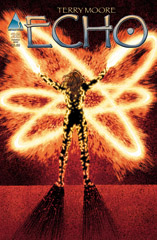
[READ: December 15, 2010] Echo #25 & #26

These next two books in the series are really fantastic.  Issue #25 brings the confrontation with Cain to a head.  It almost comes too quickly–there has been so much lead-up to it that when they finally meet the confrontation is (necessarily) brief and explosive.  They finally meet at the top of a mountain (where yet another really gruesome act is done to someone–although really it pales to what happened to the guy who was practically a skeleton).  The intensity of the confrontation, and the excitement of the denouement made me think that the series was just about to end.

But them comes Issue #26 in which the final panel changes the entire game!  (more…)

Read Full Post »

SOUNDTRACK: PATTI SMITH: “You Light Up My Life” (Live on Kids Are People Too) (1979).

While browsing YouTube, I found a bunch of fun videos from the kids’ programs Wonderama and Kids Are People Too.  And that’s where I found this video of Patti Smith, of all people, singing this dainty pop confection.

Her introduction to the kids is weirdly wonderful (she says she wanted to be a missionary).  And the kids ask some pretty good questions (I would think she was too scary to be on this show back then, but no one says anything remotely risqué).  And she seems to genuinely want to inspire the kids.  It’s really quite cool.

I listened to the original just now for the first time since the 70s, I’m sure.   Although the first verse doesn’t sound drastically different from Patti’s version, once the chorus kicks in, Patti transforms this song into an angst-filled song of loss.  And man, can Patti sing.

Check it out here.

[READ: November 7, 2010] “Boys Town”

When I first saw this author’s name I thought it was Jean Shepherd author of In God We Trust…All Others Pay Cash (otherwise known as A Christmas Story).  And  I thought that maybe it was going to be a quaint look at growing up.

It isn’t. (more…)

Read Full Post »

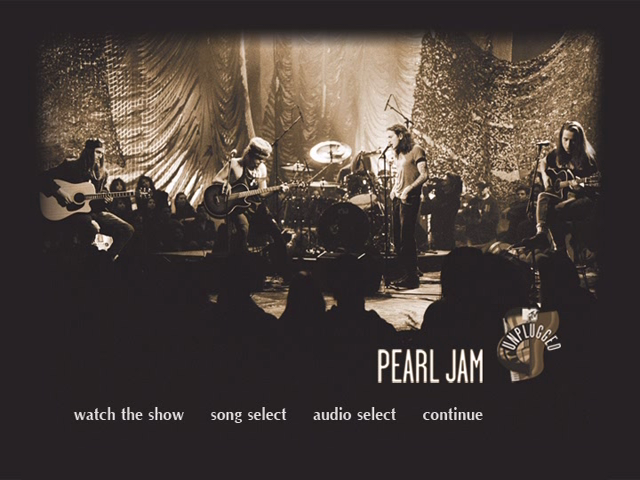
SOUNDTRACKPEARL JAM-Unplugged (1992).

The video of this nearly twenty year old concert came with the remastered version of Ten.  I hadn’t had a chance to watch it until now.  While watching I was pretty certain that I had seen the show either when it aired or sometime right after.  Some of the scenes, maybe from “Alive” looked familiar.  And when “Porch” was ending I had this vague memory of Eddie climbing on the stool and writing something on his arm (he writes “Pro-Choice”).

This is a seven song set of tracks from Ten (Dave Abbruzzese is drumming with them).  And, as advertised, it is unplugged.  Except that it really isn’t.

This set was recorded in 1992 (Unplugged started in 1989).  In my estimation, “Unplugged” shows were a chance to really strip down, play all acoustic and get really mellow (the Nirvana one (1993) is quite a good example) .  But here, we get Mike McCready and Stone Gossard (and all of their hair, holy cow!) playing acoustic guitars.  But Jeff Ament (and his crazy hat) is playing an electric bass (which is funny since in recent years he has been playing a standup bass).  Dave Abbruzzese is banging the crap out of his full set.  I mean, really the only thing that makes this unplugged at all is that the guitars are acoustic, but McCready still plays his rocking solos full tilt.

Nevertheless, the set sounds great.  Eddie barely talks (something about a love song to his surf board and a mumbled line about “State of Love and Trust”), and it’s pretty much all business.

“Oceans” works well in the Unplugged setting…Ament’s watery bass is the real star.  But difficulty sets in with “State of Love and Trust.”  It is just too fast, too loud, and too rocking to really be considered “Unplugged.”  So from then on, we’ll throw the Unplugged label out the window and just rock.  Of course, when the solos kicks in and you hear this really distant acoustic guitar instead of McCready’s ripping electric, you think, well, maybe I’d rather have it plugged.

“Alive” opens kind of in an unplugged state, but again, but the end, it seems like McCready is fighting against the other “plugged” guys.

Title criticisms aside, the set is great.  The band sounds in fantastic form and by the end (when Eddie is falling off and climbing onto his stool) even Ament is getting silly and jumping on the drum set.  It’s a good view (and a good listen too).

[READ: November 10, 2010] “Under the God Gun”

I honestly didn’t think I would like this article and I wasn’t looking forward to it.  I didn’t quite understand the subtitle (Battling a fake insurgency in an imitation Iraq) and in general I don’t enjoy articles about military training and the Iraq war, etc.

And when it started, I was confused by what was happening until I got to the third paragraph where he mentions a prosthetic arm being applied to an amputee.  Then I re-read the beginning and I was pretty well hooked.

The article looks at the fake governance of Talatha and its small villages like Mosalah.  All of this exists within the borders of Louisiana at the army training based called Fort Polk.  It shows how these fake villages were created from the ground up to look just like an Iraqi city.  They even pay citizen extras to be Iraqi citizens (they get paid about $220 a day and are required to speak no English).

In these fake towns they run military training exercises that are designed to replicate the actual conditions in Iraq (hence the prosthetics, fake blood, explosions and lack of English).  It’s a fascinating look at something that I had no idea existed. (more…)

Read Full Post »

SOUNDTRACK: WEEZER-Hurley (2010).

In my head, no band garners as much debate as Weezer.  According to this article, a man offered them $10 million to break up.  Even I go back and forth about whether they are great pop song writers or incredible sell outs.  I mean, look at one of the items on their thanks list for Hurley: “Dodge–makers of the timeless Challenger.”  Is this ironic or not and if not, does it matter?  I’m also torn by Rivers Cuomo’s Harvard degree, which I would think means he would write intellectually rigorous songs–and yet he never does.

But what of it?  Let’s talk about the music.  It has dawned on me that the closest band to compare them to is Cheap Trick.  They write poppy songs with often heavy guitars that are completely sing along-y but are in no way alternative to anything.  And yet everyone loves Cheap Trick, so why not love Weezer, too?

Hurley is no different.  Each song is 3 minutes of pure pop (for crying out loud Desmond Child is on one track–put one in the sell out column).  But they also have some odd fans on this disc: the crew from Jackass sings backing vocals on “Memories” and Michael Cera plays mandolin and sings backing vocals on “Hang On” (although you can’t hear any of them really).  “Hang On,” by the way is their most Cheap Trick-y song to date.

“Unspoken” features a flute and acoustic guitars until about two minutes into a three-minute song.  Then it bursts out of acousticland and into heavy rocking guitars.  The one song I don’t get is “Where My Sex?” which I suppose is the controversial song on the disc.  He’s clearly talking about socks but he keeps saying sex.  I really have no idea why.  It’s not funny, even remotely.  It’s just an odd decision.  And I would say I rather dislike the song, but the chorus is great, as is the totally unexpected third section (which is like  pop song unto itself) that comes in 2 and a half minutes out of nowhere.

“Smart Girls” has to be ironic, but who knows anymore.  To me the most interesting song is “Brave New World.”  It eschews the standard big-chords-for-choruses format they’ve been using with a much heavier guitar and single guitar notes in the verses.  (Although the chorus is, once again super catchy).

My version of Hurley has bonus tracks which are separated by an interesting 10 seconds of string music.  The bonus tracks include a cover of a song from Yo Gabba Gabba ( I really must watch that show some time).  There’s also a great cover of Coldplay’s “Viva La Vida” (in many ways Weezer is like a harder rocking version of Coldplay in terms of success and obvious sellout possibilities).  Although this live version shows that Rivers’ voice is no match for Chris Martin’s.

“I want to Be Someone” is an earnest acoustic solo track while “Represent” (Rocked Out Mix) is one of the heaviest things they’ve done.  I assumed the original was on Raditude, but it’s not.  Evidently it’s the unofficial song of the U.S. World Cup soccer team.  Huh, who knew?

So yes, it seems that they’re pretty much sell outs.  And yet for thirty minutes (all of their discs are so nicely short) it’s easy to stop worrying about “indie or not” and just sing along.

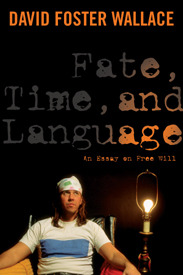
[READ: November 7, 2010] Fate, Time and Language: An Essay on Free Will

First I wanted to thank Columbia University Press for sending me an Uncorrected Proof of this book. I was pretty excited to read it, but to get it a few weeks early was even cooler (and, no, this won’t have any impact on my review).

Second, I wanted to state exactly what this book IS (because I wasn’t entirely sure myself).  The book is a reprinting of David Foster Wallace’s philosophy graduate undergrad thesis.  However, rather than just publishing the thesis (and giving us a short book or a long book with one sentence per page), Columbia University Press has packed the book with a great many essays that help to contextualize the thesis.  The Preface by Steven H. Cahn & Maureen Eckert explains this quite neatly.

So, my (briefer) version of the background: DFW’s thesis is about Richard Taylor’s article “Fatalism” (1962).  CUP has also included Taylor’s initial article (so we can see what DFW is talking about).  And even more than that, when Taylor’s article was initially published, it caused a bit of controversy and a lot of responses.  So, to get a sense of everything that DFW was working with (and against), this book also includes the intellectual dialogue: articles that range from four to ten pages (and also include a dense of Taylor by Steven H. Cahn himself (published in 1964).

Part II of the book includes an introduction by Maureen Eckhart and DFW’s essay.

Part III is a brief look at DFW as a student written by a former professor, Jay Garfield.

Before I get to the meat of the book itself, I wanted to say that I didn’t know anything about this essay.  And I’d thought about this thesis as possibly an interesting piece of philosophy from an author whose work I greatly admired.    Well the introduction to this book states in pretty certain terms that my thinking about this thesis is a massive understatement.  For, in fact, DFW’s thesis undermined Taylor’s argument in ways that no other argument had been able to do before.  His thesis more or less repudiated Taylor’s original essay.  The thesis also won the Amherst University Gail Kennedy Memorial Prize in Philosophy (and a wonderful piece of trivia: DFW’s father James won the same prize in 1959).  So, yes, this isn’t just a graduate undergrad thesis, this is real philosophy.

On to the book: (more…)

Read Full Post »

SOUNDTRACK: SUPERCHUNK-1,000 Pounds (2000).

This EP has four tracks: an acoustic version of the title song and, for the first time that I’m aware of, a cover track.

“1,000 pounds” is another great Superchunk single.  It’s boppy and catchy and there’s more and more instrumentation thrown into the mix–acoustic guitars, more strings, a crazy sounding guitar solo with effects I don’t recognize.  It’s also another song where the title is sort of thrown into the chorus without making it sound like the focus of the chorus–another fun Superchunk trick.

The acoustic version subverts the original somewhat with a strange swing vibe.  And speaking of vibes, there are actual vibes in the song.  It almost sounds like a different song entirely.

The second song, “White Noise” is a no longer novel twist to a Superchunk song (they’ve been throwing in so many twist to their sound that it’s impossible to pin them down to anything).  There’s a cool guitar and bass line that sound, somehow, unlike anything else they’ve done.  The soloing is also pervasive, running throughout the verses.  It’s a very cool song.

The big surprise comes in their cover of David Bowie’s “Scary Monsters.”  Their version is noisy and feedback-filled with crazy guitar solos throughout some of the choruses.  It’s full of reckless abandon and is one of their craziest track in some time.  And really it sounds almost nothing like the original.

It’s a great EP and worth tracking down.

[READ: October 10, 2010] “The Volunteers”

Chang-rae Lee is the next writer in the New Yorker’s 1999 20 Under 40 collection.

This story is set during World War II.  However, unlike most WWII stories that I have read, this one is told from the point of view of Japanese soldiers (specifically, it is narrated by a Korean-born, Japanese-raised medic).

The narrator, Lieutenant Kurohata, is friendly with an inferior soldier, Corporal Endo.  He and Endo are from the same town so they have a friendship which, when they are alone, supersedes their ranking differences (although Kurohata is a little uncomfortable about that).  Endo, like many soldiers, is somewhat obsessed with a series of photos of naked women.  He is constantly trading for new ones and then showing them (surreptitiously) to Kurohata.  Kurohata is not terribly impressed with the behavior–he seems more mature in general–although he also implies that he is not very sexual–and he finds the whole proceedings somewhat beneath him. (more…)

Read Full Post »

SOUNDTRACK: THE DUCKWORTH-LEWIS METHOD-The Duckworth Lewis Method (2009).

This is a CD released by the combined forces of Neil Hannon of The Divine Comedy and Thomas Walsh of Pugwash.  And if that weren’t enough of a sales pitch, the title of the band is a method of calculating cricket scores!  And even more…in concordance with that, this CD is largely about cricket.  Huzzah!  Buncha sellouts.

I don’t know a thing about cricket, but I know about great orchestral pop, and this disc has it in spades.  Some of the more obvious cricket songs are even understandable to non cricketers (the themes of “Jiggery Pokery” are familiar to anyone who has failed in a sport–and musically it sounds like a silent film soundtrack).

“The Age of Revolution” begins with an olde-fashioned soundtrack as well (jazz swing, including tap dancing) but quickly jumps into a dancey discoey verse (the two soundtracks blend surprisingly well in the chorus).  And the revolution?  Well, it has something to do with cricket.  Next, “Gentlemen and Players” is a wonderfully Divine Comedy-esque track complete with harpsichords.

“The Sweet Spot” is another discoey dancey track with some funky bass work (and innuendo whispered vocals).  And “Rain Stops Play” is a fun musical interlude.

“Mason on the Boundary” is the first track that seems distinctly Pugwash-y.  Hannon and Walsh have similar singing styles, and I find it hard to know who is who sometimes.  But this track is clearly Walsh’s and it’s very nice indeed.  Similarly, “Flatten the Hay” has that distinct Pugwash XTC/Beach Boys vibe and it’s quite good.

“The Nighwatchman” is also a very DC type song (it even sounds a bit like “The Frog Princess” but pulls away before being a repeat of that great single by introducing some very 70s sounding strings).  The rest of the disc follows in this same wonderfully orchestrated pop feel.  This a great record that, as far as obscure bands that get no statewide attention go, is top notch.

Oh, an it’s even more fun with headphones!

[READ: October 9, 2010] Skippy Dies

Wow, there’s a lot going on in this book.  It’s exhausting just trying to think of all the topics covered: boarding school life, failed romance (two big ones), life as a teacher, the appeal of pop singer Bethani, the Catholic priest sex scandal, drugs of all kinds, sneaking into a girls’ school, World War I, institutional cover ups, M-theory–which is pretty much the entire universe, and donuts.

But let’s start at the beginning.  Yes.  Skippy dies.  In the first couple of pages.  And what’s fascinating about this is that we don’t care.  I mean, in the scene where he dies, he’s not even the major character.  But then Skippy turns out to be more or less the glue of the book once the story proper begins.

Skippy resides at Seabrook school in Dublin (the best, most prestigious Christian academy in the country–sorry Gonzaga).   His roommate is Ruprecht (perhaps the strangest major character name I’ve read in a long time).  Ruprecht is a large boy who is incredibly smart (he will single-handedly raise the school’s average on the year’s final exams).  He is a computer geek who is obsessed with aliens and SETI.  And he hopes to be able to communicate with the other world by using techniques suggested in M-Theory.  The book does an admirable job explaining M-theory and string theory.  I’m not going to take up space here, but there’s a fine description at Wikipedia (or, if you don’t like Wikipedia, here’s an academic explanation that is written for the lay person).

Anyhow, Skippy and Ruprecht are two of a few dozen boys who reside full time at the school.  (Most of the other kids are day students).  And they have a cadre of half a dozen friends that they hang out with who make jokes at each other’s expense.  It’s a very realistically written entourage.  Mario is Italian and claims to have had sex with many many women (thanks to his lucky condom which he has had for three years).  Dennis is the ballbreaker.  He’s the abusive one (but by most standards, he’s not a bad guy).  And a few other hangers on.

This story of dorm life is a good one.  The boys are funny, their stories believable, even if they are all eccentric in their own way.  And then, one day, Skippy sees a girl playing frisbee at the girls’ school across the way (Ruprecht has a telescope which he uses for the stars, while eveyrone else uses it for the girls’ school).  And Skippy winds up becoming rather obsessed with the unknown “frisbee girl.”

This girls’ school plays a part in the story in another way too.  Carl and Barry are the Seabrook’s thugs.  When Barry hits upon the idea of selling ADD meds to the locals (as diet pills), it’s the girls’ school that he mostly preys on.  For yes, this story is also about drugs. (more…)

Read Full Post »

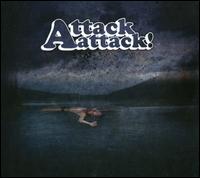
SOUNDTRACK: ATTACK ATTACK!-“Stick Stickly” (2010).

I discovered this video (again, considerably later than the controversy for it) because my friend Rich said he didn’t know there was a genre called “crabcore.”  A search for crabcore suggests that it is a goof “genre” named specifically for this band and the goofy way they dance around.

This song starts with very heavy riffing and some growls and screaming and then jumps quickly into an auto-tuned very catchy chorus (they sound like a more polished and poppy version of Alexisonfire).

Then comes the verses which are screamed very loudly and heavily followed by a bridge (?) that is even more cookie monster-vocals like (with a strange cartoon effect thrown at the end of each line of the chorus).  It’s almost like commercial death metal, and I kind of liked it.  They’re pushing boundaries

Then there’s more chugga chugga heavy riffing and the song is reaching the end and then WHAT? the songs shifts gears into a keyboard fueled discoey dance song.  First it’s hi energy and then it slows into a mellow auto-tuned bit that proceeds to the end.

What the hell?  I’m all for a band pushing the boundaries of genres, but holy cow.  And just to add one more gimmick, they’re a Christian band as well (although you’d never know from the lyrics, whatever the hell he’s singing about).  This is no “Jesus is My Friend,” let me tell you.

So yea, I don’t really know what to make of it. The video makes me laugh with their all black outfits and synchronized everything–and that may be why they have replaced it with a new video which is much more boring.  I assume they’re just anther trendy band that will disappear soon enough (there’s a lot of snarky fun at their expense at this definition of “crabcore“).

I don’t have a clue what the title is supposed to mean, nor half of their other titles on the album: “Fumbles O’Brian” “Renob, Nevada.”  I listened to some samples of the other songs and they seem far more dancey/discoey than death metal, so I’m not really sure what’s up with the rest of the record.

But whatever.  In the meantime, enjoy the silly video

[READ: July–September 10, 2010] K Blows Top

I heard about this book through a great interview on NPR in June of 2009.  It sounded like a really funny book and I was seriously considering reading it.  Of course, then I forgot about it.

About 8 months later, the library received a huge donation of books, and this was right on top, just begging me to read it.  So, I saved it for myself and decided it was about time to crack it open.  Several months after that I finally opened it and was totally hooked.

I didn’t know much about Khrushchev before reading this.  I knew vaguely about “the shoe” incident, but that was it.  In fact, the whole beginning of the cold war era was a bit of a mystery to me.  Since I lived through Reagan, I never felt compelled to find out what had caused the 80s.

But I’m super glad that I read this.  The book follows Khrushchev’s visits to the United States when he was premiere of  the Soviet Union. Carlson combed through tons of newspaper reports about his visit here (ostensibly to visit with Eisenhower, but more just to enjoy himself in the American heartland), and pulls together a fascinating story from a number of sources.

But more than just an interesting look at history, this book is very funny. (more…)

Read Full Post »

« Newer Posts - Older Posts »