Feeds:
Posts
Comments

Archive for the ‘Memoirs’ Category

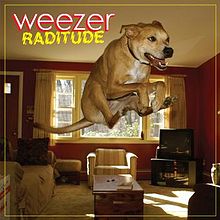
SOUNDTRACK: WEEZER-Raditude (2009).

I didn’t buy this Weezer album when it came out because I had heard really bad things about it (like the “guests”), but when I saw it cheap I decided to check it out.  This has to be the most polarizing Weezer album of them all.  I listened to it twice yesterday.  The first time I thought I had been too harsh on it.  The second time I thought it was godawful.  It’s amazing what a couple of hours can do.

It opens with a wonderful bit of poppy wordplay ala Cheap Trick: “(If You’re Wondering If I Want You To) I Want You To.”  It’s catchy as anything and is a wonderful start to the album, even if it is probably their poppiest song ever.  From there though, the album really degenerates.  And mostly it’s because it’s so dumb.  I mean the album title should tell you what you’re in for, but who would have expected the moronic sub-pop-metal of “The Girl Got Hot” or even the reprehensible lyrics of “I’m Your Daddy” “You are my baby tonight And I’m your daddy.”  It’s just creepy.  Or gah, a song about the mall?  “In the Mall.”  It’s not even worth mocking.  And really, try to picture Rivers Cuomo in a mall.  Any mall.

But nothing could prepare anyone for “Can’t Stop Partying.”  Unlike Andrew WK’s ouvre, which is so sincere about partying that you can’t take it seriously, this song really seems to be about the guys partying.  It’s laughable.  The anemic rap but Li’l Wayne certainly doesn’t help.

Even the collaboration with Indian musicians on “Love is the Answer” (yes, seriously) doesn’t really work.  It feels like they wrote the song and then said, “Hey let’s throw some sitar on it.”  It’s not enough to be exciting but too much to ignore.

This is not to say that these songs aren’t catchy.  I mean, geez, I still have “Can’t Stop Partying” in my head while I’m listening to something else.   Rivers knows how to write a pop trifle.  And the more he writes songs like this, it makes me thing that Pinkerton was the fluke.  Which is fine. The music world needs poppy songs, right?

[READ: early August 2011] various nonfictions

I thought about doing individual posts for all of Arthur Bradford’s non-fiction that’s available on his website (that’s right,  yet another author that I have read short uncollected pieces by without having read any of his bigger works–I’m looking at you Wells Tower).  Bradford has links to all of his nonfiction ( I assume) on his website.  There are 12 links in total.  One is to his blog (which I’m not reviewing).  The rest are for articles covering a pretty broad array of topics from a pretty broad variety of sources.  (more…)

Read Full Post »

SOUNDTRACK: SLOAN-“Cars” (2011).

When Sloan went to the A.V. Club to record their cover, they were disappointed by the selection.  Of course, that’s the game, so suck it up Sloan.  But they decided to do Gary Numan’s “Cars.”

Now, I feel compelled  to say that Gary Numan’s “Cars” may be my least favorite song of all time (it’s very close to Billy Idol’s “Eyes without a Face”).  I understand that “Cars” was “groundbreaking” or whatever.  But gah, it is boring and monotonous and just awful (and I say that while admitting that I like Phillip Glass, so i know from monotonous).  While I will admit that the riff is pretty great, everything about the song, from the performance to its endlessness (it’s like 8 minutes long, right?) drives me nuts.

And that may be why I love this cover so much.  It keeps the riff but it adds music to it.  All of that horrible “one guy with a cheap keyboard” sound is taken away.  It’s replaced by a great full-sounding band bringing live joy to the song.  I love that the whiny keyboard is replaced by a guitar and that the drummer rocks the hell out of the ending.  I mean really rocks the hell out of it.  Well done, Sloan.  You’ve been a favorite for years, and you’ve now redeemed my most hated song.  I think Billy Idol just peaked on my list.

You can watch it here.

[READ: July 20, 2011] “The Money”

Junot Díaz’ story in the New Yorker’s Fiction Issue is also a Starting Out piece.  This story is about how his mother always sent money home to her family.  No matter how little money they had, she would always scrimp and save and stash away until she had a few hundred dollars to send every six moths or so.

From Diaz’ other work, we assume that he was not a model citizen as a youth, but even he knew not to tamper with his mother’s money.  (Stealing from her purse was one thing, but the wrath of stealing from the “to be sent money” was unfathomable).

Then one week when they go on vacation they return to see that their house has been robbed!  Some of Junot’s things were taken as well as the money.  The Money!   (more…)

Read Full Post »

SOUNDTRACK: MY MORNING JACKETZ (2005).

I’ve enjoyed My Morning Jacket since I bought their live album Okonokos.  I’ve enjoyed all of their releases since, but I never listened to Z, the album that forms the basis of much of Okonokos. Finally, I saw it cheap and picked it up.

And I was really surprised.  The reason I hadn’t gotten it was because I figured I had all of the songs already in live format, so who needed the studio?  Well, it turns out that the studio versions are quite different from the live ones.  In fact, on my first listen, I didn’t really like the studio versions all that much.  After a few listens of course, I like them just fine, but they are indeed quite different.

There are three songs here that didn’t make the live record: “Into the Woods,” “Anytime” and “Knot Comes Loose.”  But the other seven songs appear (often in slightly longer form) on the live disc.  And the live disc is fuller, louder and more energetic than the studio.  That’s what a live album is supposed to sound like.

Z, on the other hand, sounds a bit more polished, more almost dancey–reflecting the kinds of sounds they would incorporate down the road (like on Circuital).  But Z isn’t quite as full-sounding.  Despite that, the songs are top-notch.  And Jim James’ voice is truly a thing to behold (check out that crazy high note at the end of “What a Wonderful Man”).

I hate to sound like I’m down on this disc, because indeed, I am not.  It’s a really fascinating mix of psychedelia and Prince-inspired keyboard rock (I’m not going as far as funk, but it’s certainly Prince-y.  There’s some folk tracks, there’s the amazing “Wordless Chorus” which has a kind of 70;s soft rock feel, which is followed by the Prince-titled “It Beats 4 U” which sounds nothing like Prince, but has a great subtle guitar intro.  “Gideon” doesn’t match any of the over the top epics of earlier records, but it sure feels close.  And “Off the Record” is a practically ska.  The album even has a near 8 minute closing track, the awesome “Dondante.”

All in all, Z is pretty great.  But I still like the live versions better.  That’s what happens when you listen to things out of order, I guess.  But when do live albums count for anything?

 [READ: July 11, 2011] 3 book reviews

According to Five Dials, Zadie Smith is an official member of Harper’s staff now (funny I found out about it from Five Dials, but they really do have tentacles in all aspects of my life).  Congratultions, Zadie.

I can’t imagine having to review two or three books a month (I know I review a lot here, but most of them are short stories).  Zadie plows through a lot of books for this column, but what is wonderful is that the diversity of what she reads is really pronounced.  Just witness this months’ books.

MELA HARTWIG-Am I a Redundant Human Being?
Zadie takes a great angle on this novel.  She (with the help of an online reviewer) compares the protagonist of this novel (written in the 1930s) with Carrie Bradshaw from Sex in the City.  Why?  Because both protagonists seem to live their lives in the male gaze.  And yet they both also continue on their merry way regardless of what the men say or do.  True, Hartwig’s novella has much more angst, but really, there is a similar attitude present.

I especially like Zadie’s argument that women writers have never really had they way to express the bragging rights that men have employed time immemorial “We can’t, as the saying goes, pull it out and slap it on the table.”  And as such, women have had to achieve their victories through more roundabout means.  I rather liked this analysis.  And, I think it makes for more interesting reading most of the time. (more…)

Read Full Post »

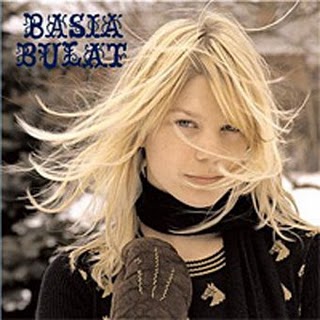
SOUNDTRACK: BASIA BULAT-“In the Night” (2008).

I recently came across Basia Bulat via NPR.  She played a Tiny Desk concert and I discovered that she had several other entries in the NPR canon.

Basia is Canadian (of Polish descent); she has a beautiful strong mid-range/throaty voice and a great sense of melody.  She also has a bit of a gimmick: she plays all kinds of instruments (guitar, piano, sax, etc) including some really weird and unexpected instruments: Zither, pianoette (!) and autoharp–a couple of years before PJ Harvey brought it back to the mainstream.

pianoette

“In the Night” is a wonderfully chipper poppy song.  And that autoharp gives it just a tinge of “huh?’ that makes it more than just a simple pop song.  The beat is fast and energetic, the harmonies are wonderful and the melody is top-notch.

I really like this song a lot, and the other snippets of songs that I’ve heard from her are equally wonderful.   I’ve even noticed that lately she’s been singing a song in Polish!

[READ: July 12, 2011] “Gastronomania”

I’m not going to go crazy reviewing all of the book reviews in Harper’s (that way lies madness), but occasionally an author I like writes a bit that I want to mention.  So Will Self, who I like but have not read a lot of, wrote this essay/book review about food.  He reviews three books, but what I especially liked about it was his introduction, which uses Luis Buñuel’s Le fantôme de la liberté [The Phantom of Liberty] as its starting point.  In the film (which I have not seen), the house’s dining room is actually a well…watch this clip:

It’s a wonderfully bizarre introduction to an essay about food.

It was unclear to me what made Will Self suitable to review three books about cooking.  And then (news to me) he revealed that he used to be a food critic (columns are collected in his book Junk Mail) and that Anton Ego in Ratatouille (yes that Ratatouille) bears “an uncanny, if not legally actionable” resemblance to him.

This essay was so much fun.  Self is as viciously negative about these books as he apparently was about food back in the day.  But he’s not dismissive of them as cookbooks per se, he’s more about trashing the current worship of food (and many other things too of course). (more…)

Read Full Post »

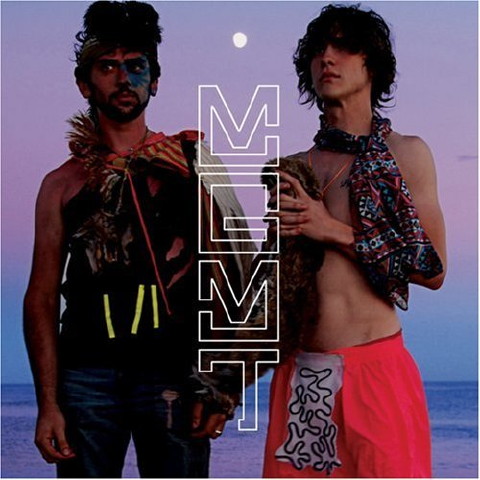
SOUNDTRACK: MGMT-Oracular Spectacular (2008).

I bought this album a few years after it was hailed as the best album by everyone.  I never quite realized that they did all the songs I knew from it, but I was pleased that I bought it.  Then I promptly lost the disc.  I found it about seven months later in another case (doh!).  And I have given it a number of listens since then.

I’m confused as to why this album was so popular.  I’m not saying it’s bad, I’m just not sure why it was so hailed.  It’s a strange kind of record. There are a number of dancey hits (which aren’t really that dancey or anything), but there’s also a bunch of trippy psychedelic stuff as well.

The opener, “Time to Pretend” has a wonderfully catchy keyboard line that expands into a wonderfully simple, but catchy verse/chorus.  “Weekend Wars” reminds me of some of the weirder alternative hits of the early 90s.  The sound is kind of trebly and slightly off, but the middle of the song is full of beautiful swells of keyboards, giving it a strangely hippie vibe.

“The Youth” is a slower track which has a gentle sound and a nice chorus.  It’s pretty far from the danciness of the opener.  “Electric Feel” brings in some disco and funk.   The keyboards are very 70s trebly with a big bottom bass.

The standout track is “Kids.”  It marries the weird keyboard sound of the opener with a wonderfully catchy riff.  It also has a simple chord structure and big drums.  It’s the kind of song that sticks in your head from the first time you hear it.

The second half of the disc is where things change and the more psychedelic aspect so the band come in.  The album was produced by Dave Fridmann (Mercury Rev, Flaming Lips) and while that style is evident in the front of the album, it’s hidden under the more brash punk sounds.  n the last few songs the punky elements are absent and the psychedelia shines through.  “4th Dimensional Transition” is a wash of interesting sounds.  “Pieces of What” is a simple acoustic guitar with vocals that sound like they come from outer space.  “Of Moons, Birds & Monsters” never really coalesces, although the parts are interesting.  “The Handshake” is another folkie kind of song with overtones of David Bowie (who is never really absent anywhere on the disc) especially at the end of the song.  “Future Reflections” ends the disc with a synthy ballad.

The disc is quite different from the first five to the last five songs.  And I find that when I’m enjoying the hits, I’m less excited by the trippy parts (which meander as opposed to the immediacy of the hits).  But I think I could find myself enjoying the vibe of the second half of the disc more if the first half didn’t prep me for that stark pop punk sound.  I guess it has something for everyone.

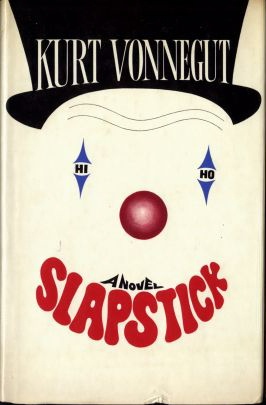
[READ: June 28, 2011] Slapstick

I tend to read books that are long, or at least that feel long.  So Vonnegut is like a guilty little pleasure.  I read this in three lunch hours. And it felt like something of an accomplishment.

I can honestly say I didn’t enjoy this one as much as his previous books.  It was a lot darker and felt a bit more mean-spirited than his others.  True, Vonnegut is nothing if not mean-spirited, but there was something different about this one.  Was it that the protagonists were two meters tall with six fingers and toes and for the first several years of their lives spoke in nothing but baby talk?  Was it that they were so reviled by their parents that they were sent away to the parents’ second home and allowed no visitors?  Or was it that Manhattan was now called “The Island of Death?”  Or maybe it was just the repeated use of “Hi Ho” at the end of virtually every paragraph.

Or maybe it’s that the story doesn’t really feel complete.  There isn’t a lot of story here, but as with lots of Vonnegut, there are a lot of little details that join the story together.  The novel is constructed as chapters, but within the chapters are very short almost paragraph long sections separated by dots.  These little paragraphs sort of work as small scenes, with most having a kind of punch line at the end (this is not too dissimilar from Breakfast of Champions, but the sections are even smaller here).

The two aforementioned protagonists are as described.  But although they speak in nothing but nonsense syllables, they are in fact quite intelligent.  Indeed, when they put their minds together (literally) they reach epochal levels of genius.  And when they put their heads together they write several massively intelligent treatises and the most popular child-rearing manual in history, So You Went and Had a Baby.  Well, actually, Wilbur wrote it for Eliza is illiterate (she just has most of the brainstorms).  Technically, the real protagonist of the story is Wilbur, for these are his memoirs. (more…)

Read Full Post »

SOUNDTRACK: BEN FOLDS/NICK HORNBY-Lonely Avenue (2010).

As the cover of this album notes: “Ben Folds adds music and melody to Nick Hornby’s words.”  And that is true. The only surprising thing about this combination is that Folds is quite a good lyricist himself, so it’s surprising that he would sacrifice his words.  But regardless, the fit is a good one.

Sometimes it seems like Hornby is challenging Folds to come up with melodies for some of his more difficult lyrics which Folds lives up to).  But they have such similar sensibilities that (aside from occasional references to British things) the words could have come from Folds himself (although, Hornby’s a better writer, so Folds wouldn’t have written exactly the same things).

The big surprise is the diversity of musical styles on the disc.  Folds of course does play lots of different types of music on his previous discs, but I guess since the cohesion is Hornby’s words so Folds can really let loose.

The opener, “A Working Day” is a keyboard pop confection, a surprisingly 80s sounding synth song with some wry lyrics about being a writer/performer (“some guy on the net thinks I suck and he should know, he’s got his own blog”).  “Picture Window” is a beautiful downer, a string-filled song that seems like a companion to Folds’ “Brick” (“You know what hope is, hope is a bastard”).  It’s just as sad but the melody is gorgeous.

“Levi Johnson’s Blues” is a strangely topical song (in fact, it took me a minute to remember who he was when I first listened to the song.  Anyhow, it’s a silly song about what happened to the father of Sarah Palin’s grandchild.  And yet, despite the novelty of it, it’s actually a somewhat sympathetic portrait of the guy (sure he’s a redneck, but he’s just a normal guy thrust into a ridiculous spotlight–the liner notes say the chorus came from Levis (redacted) Facebook page).

“Doc Pomus” feels like a classic piano song.  While “Young Dogs: is a fast romper (with great vocals) and more keyboards.  “Practical Amanda” is a slow ballad (and Hornby says it’s not autobiographical at all).  While “Claire’s Ninth” is a story about a young girl of divorced parents who hates having two birthdays.  (With sweeping choruses!) Hornby states that this was his first accepted short story (modified for the song, of course) but the magazine that accepted it stopped publishing before his appeared.  D’oh!

“Password” is a wonderful song which only makes sense when you know the name of it (which I didn’t at first, as I usually don’t look at titles right away).  Throughout the song Ben spells words which leads to a cool conclusion–it’s wonderfully clever writing and it’s done in a fascinating R&B-lite style.

“From Above” is a jaunty rocker about people who never meet, although their paths cross quite often.  “Saskia Hamilton” is the “single” from the record.  It’s another great 80’s keyboard fueled romp.  Since I have a friend named Saskia (hi, Saskia) I’m fond of this song–her name is fun to say.  They have a bunch of fun in the recording too.

The final track, “Belinda” is designed like a classic 70s piano ballad (there’s a lengthy email printed in the notes that explains the construction of the song–reading that makes the song even more impressive).

It’s a great Ben Folds album.  It’s not as tidy as some of his other ones–but all of that experimentation leads to some new avenues of melody. It’s a risk that paid off.

[READ: May 10, 2011] Five Dials Number 7

This issue of Five Dials was primarily about Memoir.  Typically, I don’t like memoirs, but I’m finding (and this coincides with what one of the memoirs below states), that I just don’t like celebrity memoirs.  Or perhaps I just like three page accounts of an incident in someone’s life (which these are).

Each of the writers below is given an introduction in which they summarize WHY they write memoirs.  It’s interesting to see that many of them do, in fact, take other people’s feeling into consideration (not as seriously as Mark Twain who waited 100 years for the publication of his), but they try to do something or other to spare people’s feelings.  I was intrigued also that several of the writers also talk about finding themselves through writing.  One or two of them make the exercise of writing memoir sound obnoxiously solipsistic (which of course it is), but it’s nice to read ones that are interesting and not too self-centered.

CRAIG TAYLOR-A Letter from the Editor: “On Audio Detective Work and Memoir”
This letter explains the extent of the audio detective work that went into the interview (presented later) between Raymond Chandler and Ian Fleming.  Since I love playing with audio software, this was of especial interest to me.  And it made me really look forward to the interview. (more…)

Read Full Post »

SOUNDTRACK: SEONA DANCING-“Bitter Heart” (1983).

I can’t believe it took me all these years to learn that Ricky Gervais was in a synth pop band in the 80s.  The band was called Seona Dancing and they released two singles (four songs in all). This is the first song I heard from them and I really like it.  (I may be biased, but I also went in expecting to mock, I mean look at him!).

In one of the Extras episodes, David Bowie makes a guest appearance.  And you can tell that he’s been influenced by Bowie since the beginning. This song could be a David Bowie B Side (and who knew that the man with that girlie laugh has such a deep baritone singing voice.)  I kept expecting the song to turn cheesy but it never did.  In fact, the riff from verse into chorus is really cool.  The “block” sounds in the middle remind me of Tears for Fears, and really so many other synth bands from the 80s.

There’s two videos on YouTube. The 2 minute one (below) is an actual video. The other clip is 6 minutes long and is some kind of extended version.

I’m fascinated!  Much of everything that you need to know about Seona Dancing is here.

[READ: March 27, 2011] two book rviews

This is the second month in a row that Zadie Smith has done some book reviews for Harper’s.  I’m not sure if this is going to be a long-standing assignment or if she was just especially excited to talk about these books.  But regardless, I’m willing to mention them here.

Even though I was intrigued by last month’s books, I haven’t sought any of them out (The Pale King is coming/out as I write this).  But now here are two more books that I would be interested in looking at (although I probably wouldn’t actually read either one in full). (more…)

Read Full Post »

SOUNDTRACK: THURSTON MOORE-in studio at KEXP, March 11, 2008 (2008).

This interview was headlined ‘Thurston Moore: Not a “Real Guitar Player”?’ which is pretty funny.  The Sonic Youth guys have been defying conventional guitar playing for years.  And then in 2008 Thurston put out a solo album called Trees Outside the Academy, a beautiful delicate album of acoustic guitar songs.

The interview covers this very subject and concludes that maybe back when they started he wasn’t a guitar player, but now, 25 years later, he certainly is.  Moore is charming and funny and relates a very amusing story about being on the cover of Guitar Player and then embarrassing himself in front of one of his idols.

But this download is all about the songs.  Thurston (and violinist Samara Lubelski–who plays great accompaniment, but doesn’t really get any on air time to speak) play four songs from Trees: “Sliver>Blue,” “The Shape is in a Trance,” “Frozen Gtr” and “Fri/End.”  He sounds great in this setting, especially under close scrutiny.  I’d always assumed that there was a lot of improv in the SY guitar world, so to hear him play these (admittedly not difficult) songs flawlessly is pretty cool.  I actually wondered if he’d be hesitant (he admits the acoustic guitar is a fairly new thing for him), but not at all (although he says he screwed up on a chorus, but I never heard it.

It’s a great set and its fun to hear Thurston so casual.

[READ: April 14, 2011] “Farther Away”

The subtitle of this essay is “‘Robinson Crusoe,’ David Foster Wallace, and the island of solitude.”  As with Franzen’s other recent essays, this one is also about birding.

Franzen explains that he is hot off the work of a book tour (for Freedom) and is looking for some solitude.  He decides to travel by himself to the island of Alejandro Selkirk, a volcanic mass off the coast of Chile.  The island is named after Alexander Selkirk, the Scottish explorer who is considered the basis for Robinson Crusoe.  As such, Franzen decides to travel to the remote island, decompress and read Robinson Crusoe while he’s at it.  The locals call the island Masafuera.

I haven’t read Robinson Crusoe as an adult, so I don’t know the ins and outs of the story.  Franzen has a personal resonance with the story because it was the only novel that meant anything to his father (which must say something about Franzen’s father, no?).  The upshot of what it meant to Franzen’s father was that his father took him and his brother camping a lot as a way to get away from everything.

However, for Franzen, on his first experience of being away from home for a few days (at 16 with a camping group), he had terrible homesickness.  He was only able to deal with the homesickness by writing letters.

When he arrives on Masafuera, Franzen’s writing really takes off.  He has some wonderful prose about this treacherous space.  Although he comes off as something of a yutz for relying on a Google map to learn about the terrain and for bringing an old GPS which has more or less run out of battery. (more…)

Read Full Post »

SOUNDTRACK: BLACK MOUNTAIN-Live at the Rock n Roll Hotel, Washington DC, February 19, 2008 (From NPR) (2008).

I’ve really enjoyed the two Black Mountain CDs that I have (I’ve yet to hear their debut). Their blend of psychedelia and Black Sabbath is always interesting, especially when singer Amber Webber adds her great harmonies (and leads) to the proceedings.

So it’s astonishing that Webber herself is the sole reason that I can’t listen to this show.

The band sounds great.  The musicians are right on, and the energy is good. But I can’t imagine what possessed Webber to sing the way she does.  At the end of every sung line, she ends with a vibrato that is not so much vibrato as it is staccato.  I thought it was an odd affectation to increase the psychedelicness of the first song, but she does it on every track, even when she sings lead!

Holy cow, is it ever annoyin-in-in-in-in-ing.

There are tracks when she doesn’t participate, and those are fine.  There’s also a song that is mostly instrumental and that sounds great.  But as soon as she starts singing, the whole thing goes downhill.  She doesn’t sing like that on the records, so what ever made her think that was a wise choice for a live show?   To add a really obscure reference, she sounds not unlike Diamanda Galás during her Plague Mask recordings–but that was an operatic style befitting her over the top recording.  It simply doesn’t work here.

Even Bob Boilen, normally an ecstatic reviewer of the shows he hosts seems put out by them.  He says that the band never set up a rapport with the audience.  That’s not exactly true as they do thank everyone for coming out on a Tuesday night.  But there didn’t seem to be a lot of warmth shared between everyone.

Stick to the studio albums!

[READ: March 19, 2011] Half a Life

This book is a memoir by novelist Darin Strauss.  And it opens with the fairly shocking revelation: when he was 18, he killed a girl.  She was a fellow classmate in the grade below his.

He and some friends were driving to a of social event (they were all sober).  She was riding her bike with some friends on the same road.  He saw her, but he was in the left lane, so he wasn’t too concerned and then suddenly she swerved over two lanes and into his windshield.  She died soon after.

He was completely absolved of all blame: police, eyewitnesses, even her family (oh my god, her family), everyone agreed that it was not his fault at all, there was nothing he could have done.  And yet, as he puts it, because of where he was, a girl is now dead.

The rest of the book details how, at 18, one can learn to cope (or not) with the unthinkable.   He has to finish school and prom with all of the kids in his small Long Island town who know that he killed a classmate.  He also can’t stop thinking about her and wonders how he can go on with his life when she won’t be able to do the same.

It’s an emotionally riveting story and I was utterly empathetic.  Not that I’ve had any kind of experience like that, but (especially) now that I have children, I can’t imagine how I would react to such news.  And since Strauss is a sensitive individual I can imagine at how that would eat away at you forever.

By the second half of the book, something newly unthinkable has happened; her family is suing him for $1 million.  Which he obviously doesn’t have.  This trial–and remember he has been exonerated by everyone–lasts on and off for 5 years, all during his college.  And, of course, this isn’t something you tell people–he doesn’t want anyone at college to think of him as a killer–so there’s pretty much no one he can talk to.

The events of the story happened in the 80s.  Strauss has gone on to be a succesful novelist (although I hadn’t heard of him before this book). He also has a family of his own.  Writing this book was his way of trying to cope with this incident that really defined his life.

It’s hard to say much more about the book.  It is really powerful and a simply horrifying thing to consider.  Strauss is a very good writer who never plays for sympathy (he even sides with her family in the beginning). The book is also a remarkably fast read.  Many of his chapters are one or two paragraphs, and you can finish it in a couple of hours.  But that’s also because the story is so gripping.

For ease of searching I include: Diamanda Galas

Read Full Post »

SOUNDTRACK: LUDICRA-“A Larger Silence” (2010).

Ludicra’s The Tenant came in at #9 on Viking’s Top Ten.  Ludicra was the first band they played in the (downloadable) show and I knew that this was going to be a different Top Ten list as soon as it started.  Ludicra plays pounding black metal but they have a real difference: both of their singers are women.  True, they use the same growling screaming vocals (and I first thought it was a guy with a higher pitched voice) until the two-minute mark hits and both women harmonize beautifully.  Suddenly the song jumps several notches ahead of its peers.

It’s quite disconcerting to hear thudding double-bass drums and pounding snares behind two women who are harmonizing (a little creepily) over extended notes.  At the end of the track (about 5 minutes in) the song shifts gears into an acoustic guitar and drum thumping near-folk song.  It doesn’t last long, but the respite prepares you for the wailing end which features a really catchy guitar solo.

This is band I’d like to watch a live video of to see how they do their singing and harmonizing (oh, here ya go–wow, the singer looks inSANE!).  Man, I’d be afraid to see them live.

[READ: January 5, 2011] “Radical Will”

I’ve enjoyed Unferth’s fiction quite a bit.  And fortunately, this memoir uses her distinct writing style to huge advantage.  At age 18 (in 1987), Unferth ran away from college and traveled to Central America with her boyfriend to be in a revolutionary movement.

In this excerpt, Unferth and “George” travel to San Salvador.  Unlike other stories where the young, innocent Americans are stopped at gunpoint and left to endure excruciating torments, for the most part these two seem to be ignored.  By almost everyone. (more…)

Read Full Post »

« Newer Posts - Older Posts »