Feeds:
Posts
Comments

Archive for the ‘Marriage Trouble’ Category

SOUNDTRACK: SEMISONIC-Feeling Strangely Fine (1998).
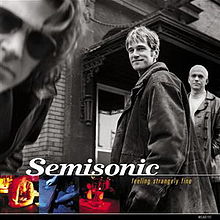
In my mind, Feeling Strangely Fine is the pinnacle of Semisonic’s pop greatness.  I mean, it’s got “Closing Time” on it.  And while I am now pretty tired of the song (can it really be 13 years old?), when it came out it was pretty awesome.  And so I tend to think of The Great Divide as being in the shadow of this record.  But in retrospect, I think I have to favor Divide over Fine.  This album has a bit too much polish, a bit too much smoothness for my liking.  And while there are some great songs on it, I’m not entirely sure it matches up to The Great Divide.

“Singing in My Sleep” is a supremely catchy song–a simple riff, mellow verses and an urgent chorus.  It should have been huge too.   And “Never You Mind” has that Semisonic quality in spades–simple accents that make a song catchy (a little guitar riff) and really catchy choruses.  Plus lyrically, it’s rather clever.  “Secret Smile” is one of their few ballads that I really like.  I guess they have just mastered pop hooks for this record.

But to me the rest of the record pales a bit compared  to The Great Divide.  “DND” is a similar slow song although it’s a bit slinkier.  And there’s some very mild funk on “Completely Pleased” which is a welcome return to the rockier songs but which doesn’t quite reach the heights that they have hit before.

“California” is a fun track.  It could use a bit of oomph but it shows off some fun noises at the end.  And the last two tracks just kind of fade the disc out.

Nothing on the album is really bad.  And indeed, in the right frame of mind these songs are all really enjoyable, but i think after comparing them to some of the earlier tracks and even the earlier tracks on this record overall this one comes up a bit short.

[READ: November 6, 2011] “Exorcism”

This is a Eugene O’Neill play that was believed to be lost forever.  He staged the play in 1920 but after a brief run, he destroyed every copy, possibly to assuage his dying father.  But this copy was recently found amongst a friend’s papers.

So that’s pretty exciting that a new Eugene O’Neill one-act play is now available.  I believe the whole thing is printed here–it’s so hard to tell with the New Yorker.  But they also say that Yale University Press will be publishing the play in the spring.  If the whole thing fits onto 7 New Yorker pages, how are  they going to publish it as a book?  Well, that’s Yale’s problem.

I don’t know that I have read many, if any, O’Neill plays.  I’ve never really taken any drama classes, although I know about O’Neill’s mastery of drama.

So this is probably as good a place to start as any.

This is the classic “nothing happens” kind of story which proves to be a powerfully emotional story (especially as it resonates so closely to his own life). (more…)


Read Full Post »

SOUNDTRACK: MOGWAI-Batcat (2008).

“Batcat” is one of my favorite Mogwai songs.  The melody is intense and the drumming is wonderful.  I picked up this single for the B sides (which will undoubtedly be collected somewhere one of these days anyhow, but that’s okay. 

It was very hard to pass up a song called “Stupid Prick Gets Chased by the Police and Loses His Slut Girlfriend”  Given that the song has “Chased” in the title, this is a surprisingly slow tune.  It builds slowly over a series of keyboard waves.  There’s also a slow guitar melody that keeps the piece grounded.  It’s one of their more subtle songs, which again, is rather surprising given the title.

“Devil Rides” is quite jarring in that it features vocals by Roky Erickson.  I don’t really know anything about Roky.  I picture him as a large, unkempt man with crazy hair and a beard.  His voice is otherworldly and seems to be maybe just a wee bit off from what the music is playing.  It’s a strange track and works very well with Mogwai’s history of slightly off-kilter vocalists. 

[READ: November 3, 2011] The Discomfort Zone

After reading The Corrections, I planned to read one of Franzen’s earlier novels.  But they were all quite long (even his debut!) and I wasn’t ready to get so immersed yet.  Then I found The Discomfort Zone in the biography section of the library.  It was less than 200 pages and seemed like just the thing.  It turns out, however, that I had read most of it already.  Three of the pieces were published in slightly different form in the New Yorker: “The Retreat,” (here as “Then Joy Breaks Through”) “The Comfort Zone,” (here as “Two Ponies”) “Caught” (Here as “Centrally Located”) and one “My Bird Problem” (here as “My Bird Problem”) which appears to be unchanged. 

That leaves two essays that were new to me: “House for Sale” and “The Foreign Language.”

The collection works as something of a biography, although really it’s not–it’s a collection of essays about his life, but I don’t think I would go so far as to say biography.   The book also doesn’t follow a chronological order. (more…)

Read Full Post »

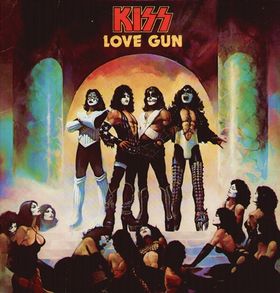
SOUNDTRACK: KISS-Love Gun (1977).

This was the first Kiss album I’d ever heard.  I’ll never forget my cousin bringing it to Long Beach Island in the summer of 1977.  I loved “Christine Sixteen” (of course, I was 8 and had no idea what it was about, I just loved singing it).  And the album has always held a magical mystique for me.

And even now I think the opening guitars of “I Stole you Love” are fantastic–fast and furious.  And the processing (or is that harmonizing) on Paul’s vocals make this song so urgent it’s really amazing.  I also got a kick out of the “guitar!” comment before the solo–certainly not the first band to do it, but surely the first I’d ever heard (they may be the first to say “Listen” at the end of a solo, though).  “Christine Sixteen” is a preposterously poppy song (listen to the bouncy, happy piano!), how could an 8-year-old not love it.  It is, of course, utterly creepy when Gene sings it now, (actually, my calculations show that he was 27 when he wrote the song–still pretty fricking creepy–and in some places, illegal).

The choppiness of “Got Love for Sale” makes the song different from many other Kiss songs, which were all about flow.  The guitars are choppy, the drums are choppy: t’s pretty cool. It’s all hard and heavy (except for the doo wopping “got love for sale” backing vocals).  Ace Frehley finally gets a lead vocal turn on the awesome “Shock Me.”  This has always been one of my favorite Kiss songs although listening to it now it sounds a little weak on this album (really uninspired backing vocals, eh?) but the solo is ripping–and the live versions are much more intense.

My first version of Love Gun had a skip at the beginning of “Tomorrow and Tonight” which made me not like the song very much.  Now I just think of it as a piece of filler–it sounds like it could come from Paul’s solo album (what’s up with the backing singers?).  I assume that they were trying to dip into the anthemic power pop well one too many times with this one.    But all is forgiven with the next song, “Love Gun.”  Yep, sex metaphors abound in Kiss, but this one is pretty awesome.  Beyond that, the sound of the guitars is great: the powerful power chords and the amazingly full chorus are also great.   And the staccato drums (and blistering solo) obviously make the song genius.

The rest of “Side two” is pretty interesting.  “Hooligan” is an odd little number.  It’s Peter’s song and it swings–Peter was always more into older rock than anything else, and this song, if it was stripped of its rougher edges (and cool solo) would fit pretty well on any of Peter’s (not very rocking) solo albums.  Although “dropped out of school when I was 22” is a pretty great line.  “Almost Human” is a weird song with some crazy guitars.  The solo is absolutely insane–I’d love to have seen the recording of it–just noises upon noises, very cool.  And the music itself has an odd eastern feel.  There’s great vocals and effects and all kinds of interesting things going on.  It’s an overlooked gem from this disc. 

Then there’s “Plaster Caster” the song about the woman who makes plaster casts from rock singer’s penises.  I still laugh at the euphemism of “if you want to see my love, just ask her”.   I’ve always loved this song even though listening to it now, it sounds kind of anemic (of course, the guitars were sampled in Tone Loc’s “Funky Cold Medina” so that’s got to mean something, right?) 

The album ends with a cover of “Then She Kissed Me.”  Even though Kiss likes that kind of music, I never did, so this song has always been my least favorite song of all of the first six Kiss albums.  But hey, the album runs 32 minutes in total–without those three minutes, you’re under half an hour.  That’s why I assume it was included.  The solo is nice though.

The album is pretty heavy overall and has some great guitar solos from Ace.  They’re not as anthemic and pretty as on Destroyer but they really show off his guitar skills.  And even though I tend to like Destroyer, Love Gun might be #1 for me on any given day.

[READ: October 4, 2011] “The House on Sand Creek”

This short story was on the surface very funny even though underneath there was exceptional sadness.  The events that set the story in motion are pretty unlikely–a couple rents out a property sight unseen (as if–especially since he is a realtor) and it turns out to hold so much karmic malfeasance that it quickly makes the wife, Monika, flee the god forsaken countryside and fly back to Bosnia. 

The narrator falls into a rhythm with his neighbor Bob (this part of the story reminded me of parts of Wells Towers’ stories–two men, out in the middle of nowhere, bonding despite obvious differences).  But the story quickly moves back out of Tower territory when the narrator gets a call from Monika (about two years after she left).

Her new marriage in Bosnia didn’t work out and she’s moving back in with him and bringing her new son as well.  (Again, it seems unlikely that this could just happen–that she would just call and say she was moving back in with him after two years, but whatever, it moves the plot).  And so, the narrator and his ex-wife move back in together with Monika’s son, Karel.  Karel is the son of an African man and Monika hopes he will grow into a Mandingo (this seems unlikely since the boy’s father is actually a short neurosurgeon from Yoruba–a West African village). (more…)

Read Full Post »

SOUNDTRACK: HELLBENDER-Hellbender (1993).

Hellbender is a band that Wells Tower was in before he became a professional writer.  He played guitar and sang backing vocals (and wrote some lyrics, but not on this album).  The drummer, Harrison Hayes is now the drummer for Les Savy Fav and the bassist and singer Al Burian is most notable for his zine Burn Collector (for a time he was the most famous former Hellbender, although I’d never heard of him).  They were always pretty small time, although their third album did receive some attention.

This first album is pretty rough–quickly made and cheaply mastered and yet there are good dynamics, cool breaks and a whole lot of punk.  Al Burian’s voice is in shouty punk mode (lyrics are not all decipherable) and although his voice works it’s a bit samey throughout the disc.  The drums don’t always sound great, but there are often cool drum breaks.  And the guitars are quite assured.  Despite the punk attitude, it’s not all flat out speed.

There are some dynamic breaks, like in the second track “Housebroken,” which has some cool moments when the drums highlight an unexpected tempo changed.  “Clocked Out” was the single they released prior to the CD and it has some real production values (and a very funny intro from a local DJ).  The guitar highlights the trebly end in a kind of ska riff which is quite different from the rest; there’s also some discernable bass lines and a cool bass/guitar solo (punk, yes, but branching out a bit).  It’s a great track.

“Two Twenty Two” made it onto a couple of local compilations.  It has a slightly less heavy feel, with some interesting guitar lines.  “Aisle Ten” has verses that end with some really heavy (reminding me of Metallica) riffs that really punctuate the vocals.  “Peeling” has some cool backing vocal chanting (as well as what sounds like an answering machine message) that sets it apart from the other songs.  “Clarence” has a really long instrumental opening (1 minute out of a 2 and a half-minute song) that shows of more of Burian’s bass lines.

“Couch” was the B-side to “Two Twenty Two” and it has better production values as well–and lots more dynamic parts.  The final song, Retread” is a sorta political song, “Do you remember when we were young–revolution seemed like fun.  I thought I could get things done by yelling at the top of my lungs.”  Not mind-blowing lyrically but a good sentiment nonetheless.

The band is very tight–their breaks and starts and stops are right on–many of their songs end suddenly and the band pulls it off very well.  When I first listened to the album, I thought it was kind of pedestrian, but after really listening, I realized this is a very well-formed debut. It’s an interesting addition to any punk fan’s collection and an interesting footnote for any fan of Wells Tower.  You can find a copy of the disc at Metro/Sea.

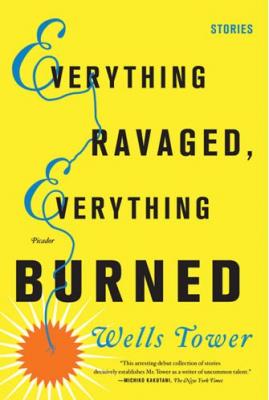
[READ: September 30, 2011] Everything Ravaged, Everything Burned

After talking about Wells Tower for a while and reading all of his uncollected stories and nonfiction, I finally got around to reading his short story collection.  And I think I have an interesting perspective on the book because at least two of the stories were totally reworked from their original release.  Not simply updating a thing or two, but totally revamped.  In my experience, aside from the David Foster Wallace essays that were truncated in their original form, this is the only book I know where the stories inside were totally rewritten for the compilation.

There are nine stories in the collection.  And I have to say as an overview to this book, I can’t get over how much I enjoyed them.  I mean, I knew I liked Tower from what I had read before, but I didn’t expect to enjoy this book quite so much because Tower writes a very manly kind of story.  He usually writes about tough guys and men who have a hard time interacting with their fathers and other situations that are out of my ken.  But Tower upends many conventions in his stories and his prose is tight and succinct and his stories are very quick to read and really enjoyable. (more…)

Read Full Post »

SOUNDTRACK: TOM WAITS-Small Change (1976).

Half-naked woman on the cover and all (Wikipedia say that this might be Elvira, before she was “Elvira”), this is what people thing of when they think Tom Waits: That gravelly voice is in full form here, with poetic rants and bluesy, drunken musings.

The opening track, “Tom Traubert’s Blues (Four sheets to the wind in Copenhagen)” (I love that many of these titles have parenthetical additions) features the repeated chorus from “waltzing Matilda” which is kind of cheating, but which certainly makes this song potent and memorable.  “Step Right Up” is a skit and scat sales pitch for a miracle product.  It’s a wonderful piece of snark aimed at hucksters (this actually makes sense given that nearly 40 years later he still hates advertising (according to this interview on NPR)).

“Jitterbug Boy” is a mournful piano ballad.  It makes me think of William Kennedy’s Ironweed (of course, Waits was in the film of Ironweed, so maybe that’s got something to do with it).  “I Wish I was in New Orleans (In the Ninth Ward)” has a very Louis Armstrong feel to it (I never noticed how close this early style is to Armstrong until I started playing “What a Wonderful World” for my kids (no Tom for them yet). And of course, the Ninth Ward was really devastated by Hurricane Katrina, so maybe they should have used this as their anthem.

“The Piano’s Been Drinking” is forever etched in my mind from Mystery Science Theater 3000–Tom Servo does a wonderful Tom Waits impersonation.  Incidentally, Waits himself had been drinking, quite heavily at the time.  The track “Pasties and G String” is a scat-fueled description of the lady on the cover, more or less.  It’s accompanied by simply drums and a cymbal and is not too dissimilar from “Step Right Up.”  “Bad Liver and a Broken Heart” begins and ends with the melody of “As Time Goes By” and ends with a confession to drinking too much.

A song like “The One That Got Away” is Waits rambling around with his poetry in his gravelly, slurry followed by a sultry saxophone.  It sets a mood faster than anything I know.  Of course, if you don’t want that mood, you won’t want this album.

Of his first four albums, this one is my favorite (just ahead of Closing Time).  I’m not a huge fan of his early work, and I don’t listen to it all that often, but it’s a perfect treat when the mood strikes.  Waits also was beginning to get into something of a rut.  Despite his varied styles per album, all of the albums were beginning to blend a little.   There are still some great songs coming, but it would take until Swordfishtrombones before he went really far afield from this comfort zone.

[READ: September 21 2011] “Dog Run Moon”

This is one of those stories that seems so pointless that you can’t stop reading.  The good thing is that it was so well-written and engaging that its pointlessness is part of its charm.

As the story opens, Sid is running stark naked through a desert landscape–his feet are bleeding, he is covered in the red dust from the ground and there is a white Spaniel running alongside him.

Essentially, the entire story is that Sid has stolen this dog from Montana Bob and his friend Charlie Chaplin.  They caught him and he ran away with the dog through the desert.  As I say, it’s kind of pointless because he’s running naked and barefoot and they are chasing him on ATVs–he’s obviously not going to escape.  But what makes the story worth reading is the way the plot is irrelevant (except that it tells you a lot about Sid), because it’s really the impetus for his actions that comprises the story. (more…)

Read Full Post »

SOUNDTRACK: TOM WAITS–The Heart of Saturday Night (1974).

What would be more shocking–hearing this and then going to Bone Machine, or listening to Bone Machine and then hearing this. Holy cow. Tom’s voice is so NOT Tom Waits on this record. It kept me thinking of The Eagles or something. The tone, the pacing, I kept expecting him to bust out “Desperado.”  He also has some crazy beat-inspired poetry (what the kids today call spoken-word pieces)  Indeed, these spoken pieces would stay with him in one form or another for his whole career.  But seriously, how much a man can change in thirty years!

Like Closing Time, this album has several different styles.  Primarily, it has a sloppy, bar sound, the sound that Closing Time‘s cover conveyed.  And that sound is all over “New Coat of Paint.”   But there’s also piano ballads.  And those ballads, combined with Waits’ non-gravelly voice, give “San Diego Serenade” and “Shiver Me Timbers” that Eagles’ ballady sound.  And then “Semi Suite” brings back that muted trumpet. 

“Diamonds on My Windshield” is a beat poem set to a walking bass.  It’s clichéd, except that no one actually does it as well as Waits.  And although I don’t really like the blues in general, I enjoyed “Fumblin’ with Blues” quite a bit.  There’s something about Waits’ sloppy (but not) style  that makes the song interesting.  Even though this is considered a classic, this album is just not really my style and it’s one I listen to quite infrequently.

[READ: September 21, 2011] “An Anonymous Island”

This story is translated from Korean by Heinz Insu Fenkl.  

I felt like the heart of this story was completely unoriginal in content; and yet I can’t tell if it is a common story, if it is a kind of folklorish story, if it’s sort of a story from ancient writings or if it’s just something that happens.

The beginning of the story shows a woman listening to her husband.  He is watching the television,bemoaning the fact that anyone can be anonymous these days (this struck me as a funny sentiment given how much everyone in America bemoans the lack of privacy or the fact that everyone is on the internet).  You can get off at one bus stop past your own and no one knows you.  Back when he was a kid everyone knew everyone else, a village was a family.  And as the woman listens, she flashes back.

The flashback is to when she was a teacher in a small village.  A village where everyone is related.  Everyone treats each other with respect and deference.  Except for one man, Ggaecheol.  Ggaecheol is a bum–he has no job, he has no home.  The village tolerates him because he is an idiot and he is impotent.  But whenever he wants a meal, he simply walks into someone’s house and sits down and says, feed me.  Which they do.  Typically he sleeps outside, but when it’s cold, he walks into someone’s house and sits at the foot of their bed.  He says he wants to keep the woman warm, so the men, amused by his impotence, allow this.

There’s an old Monty Python skit in which the town idiot, despite being mocked by all, does great with women.  The punch line, showing the idiot with a couple of hot girls in bed with him: “I may be an idiot, but I’m no fool.”  And so it is with this story.  The bum is sleeping with everyone in town.  (more…)

Read Full Post »

SOUNDTRACK: COSMO JARVIS-“My Day” (2011).

I learned about Cosmo Jarvis through NPR.  The DJs called it a love it AND hate it song.  But I find that I mostly love it.  The video is a blast to watch, but even without the video, the song is quite catchy and fun.  It’s a half punk song and half folkie/trad song.

So who the hell is Cosmo Jarvis?  Well, he was born in NJ, but is really from England.  He’s a filmmaker and musician and he’s had a hit with the song “Gay Pirates” that Stephen Fry raved about on his Twitter feed!  “Gay Pirates” is a fun shanty, but “My Day” is a full-on punk blast.

The song laments the state of things today and talks about how things were back in “my day” (which is of course funny since he’s 21).  The verses are a kind of folkie/storytelling style (but with electric guitars) and the end of each verse has a guitar riff that sounds traditional to me.  But when the chorus jumps in, it’s heavy, rocking, screaming punk.

Okay so the song is nearly 8 minutes long, which is probably overkill.  There’s a fairly lengthy instrumental bridge about 5 minutes in which features guitar and tin whistle solos.  And then the final 2 minutes are just fast metal screams of “My Day” with some wild soloing.  Yes, it’s too much (I’ll bet the single mix is awesome), but it’s still an enjoyable song.  Even without the video.

But you should watch the video, if only because it’s what the guys from Jackass would do if they were in a band and lived in the English countryside.

[READ: July 15, 2011] The Corrections

My company recently asked us if we had read any books over the summer.  I was able to pony up this review for our company newsletter.  I’ll be fleshing it out, but it’s pretty apt.

I’d put off reading this for a number of years, and I wish I had read it sooner.  It’s a very detailed look at one family: Elderly parents, thirty-something kids, and a few grandkids.  The depth of character development is amazing (and includes even depth of characters that the main characters interact with).  It’s a long book but it is very rewarding—comic scenes, moving scenes and one or two shocking moments.  It’s also the first time I’ve read a book where I thought, “even though I like this character, I think it would be better for everyone if he died.”  It’s an unnerving thing to think, but Franzen really makes you think about how family members impact one another.

It took me forever to start reading this book, obviously.  I wasn’t really interested in Franzen when all of the Oprah commotion came out, so I blew off this book entirely.  I’ve recently grown more interested in him.  But rather than reading his novels, I had decided to read all of Franzen’s New Yorker pieces.  (And even though I wanted to read Freedom when it came out, I felt that I should read this one first).  I wasn’t hesitant about reading it, I think I just wanted time to devote to it.  Much like I needed time to devote to writing up this post.  It’s been well over two months since I finished the book.

The Corrections is a wonderful, engaging story about three generations of the Lambert family (and many of the people they interact with).  The matriarch and patriarch of the family, Enid and Alfred, live in the midwestern town of St. Jude.  They have three children: Gary, a banker in Philadelphia who is (more or less unhappily) married with three children; Chip, a former school teacher and current playwright who sponges off of his younger sister while he tries to live the high life in New York City; Denise, a very successful chef who also lives in Philadelphia.  She has no children.  Gary’s children play a small but significant part in the story, keeping the three generations aspect working very well.

I found the first chapter a little slow and somewhat off-putting.  I read an excerpt from the novel in the New Yorker, which was a piece about Chip.  So I was surprised that the book opened with an older couple.  The chapter deals with Alfred and Enid.  Alfred’s dementia is hitting their household quite hard but Enid just feels that Alfred isn’t trying very hard.  Because Enid has very little in her life, she wants nothing more than to have her whole family together “one last time” for Christmas.  Enid and Alfred are long-married and this chapter picks up in the middle of a typical day.  So it takes a few pages to get up to speed.  Of course, once I did, I felt that the whole family was completely real and believable. (more…)

Read Full Post »

SOUNDTRACK: JONATHAN FRANZEN-Commencement Speech (audio) (2011).

You can hear the entire speech from the Kenyon College site.

[READ: May 28, 2011] Commencement Speech

On May 21, Jonathan Franzen gave a commencement speech to the students of Kenyon College.  When I think about my commencement speech (from Judy Woodruff of CNN), all I can remember is that I had never heard of her (and when I typed her name just now I got it almost entirely incorrect–the only thing right was the “wood” part).  I don’t recall a single thing that she said.  [It’s also fascinating that I can’t find any record of this speech anywhere online–what a different world it was twenty years ago].  I rather expect that most people feel this way about commencement speakers.  I have to wonder, if Jonathan Franzen had spoken at my college, would I have cared?  Is there even a chance that I would have read any of his novels (had they been published of course) when I was in college?  Would I be treating this any differently than my whatever speech in 1991?

But I like Jonathan Franzen and I wanted to read what he had to say. 

His speech is about love.  Love is kind of an odd topic for a commencement speech, isn’t it?   I mean, aren’t they supposed to talk about the Future and Jobs or something?  Or maybe even sunscreen?  But really, what is more useful for a 21-year-old to think about than Love.  Franzen hits the nail right on the head about Love, how it is a dangerous, risky proposition to put yourself out there, to take off your veneer and reveal all of your flaws–and hope someone will love you.  Not new or novel, but still true.

The way that Franzen gets into this subject is through technology.  It seems weird and artificial at first, but it’s a wonderful way to get into a young audience’s state of mind.  They were probably all looking at their iPhones while he was extolling the virtues of his new Blackberry (the old person’s phone, right?).  And when he segues into Facebook (who even knows if he has an account–but he seems to be well-versed with it, so maybe he does) you can imagine students raising their head in familiarity (maybe even updating their status) and wondering (as he puts it) if this 51-year-old guy is going to dis Facebook. (more…)

Read Full Post »

SOUNDTRACK: MEGAFAUN-“Find Your Mark” (2008).

After listening to the new Megafaun track, I checked the NPR archives.  They have this one song from their debut available for a listen as well.

It’s hard to believe that this is the same band.  Or perhaps I should say that a band can change a lot in three years.  This song begins as a three-part near-a capella barbershop/bar trio.  It reminds me in many ways of a Fleet Foxes track, except they seems more rowdy.  The song merges into a delicate guitar picking section with all of the voices “ba ba ba” ing.  Then, that guitar melody expands to an electric guitar and full band sound.

The introduction to the track (from the NPR DJ says that the album may not be everyone’s cup of tea.  But I like this track so much (even though it is so very different from their 2011 release), that I need to listen to more from this band.  Spotify, here I come. [Actually the album has some pretty crazy noises on it!].

[READ: August 20, 2011] “The Losing End”

This is a strange story about a man named Lamb.  The reason it is strange is because the middle of the story–the exciting part, the part I most enjoyed–is not really the point of the story, at least if the ending is to be believed.

As the story opens, Lamb has just been to his father’s wake.  He is feeling adrift so he goes to a parking lot to sit and think.  In addition to his father, Lamb is also thinking about his wife and his girlfriend.  I’m a little unclear exactly what is happening with his wife (Cathy) but he definitely trying to get time away from her to spend it with Linnie. While he is sitting there lost in thought, a young girl in an ill-fitting tube top approaches him. (more…)

Read Full Post »

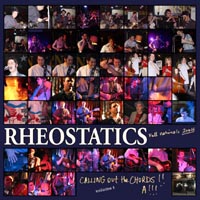
SOUNDTRACK: RHEOSTATICS-Calling Out the Chords Vol 1 (2005).

In addition to the Rheostatics’ main catalog, the cool label Zunior has released a couple of “official” bootlegs.  Calling Out the Chords Vol. 1 (no Vol. 2 has been released as of yet) is a collection of 2004 live recordings from The Legendary Horseshoe Tavern.  The Rheos do multiple nights at the Tavern, and this is a selection of songs from those shows.

It’s an interesting mix of essential live recordings and weird tracks that die-hards will appreciate but that newbies may scratch their heads at.  Some essential recordings are the wonderful version of “California Dreamline” that segues into a blistering version of “Horses.”  The version of “Mumbletypeg” with The Fall National Horns adding brass is also pretty great.

But there’s a number of songs here that are peculiar.  Great for fans, but perhaps hard to explain otherwise: an instrumental version of the 1996 song “Four Little Songs.”  I’m not sure why they went instrumental, as the lyrics are pretty essential, but there ya go.

There’s a crazy song “We’re All Living in a Chemical World” sung by special guest Ford Pier.  The intro says that this was one of Tim Vesely’s first songs, and it’s written in their early synth pop style (Pier is an insane vocalist too).  It’s quite a surprise.  And speaking of guests, there’s a lot of music from special guest Kevin Hearn (who has been with Barenaked Ladies since 1996–Hearn is a touring machine, apparently).  Anyhow, he contributes two songs to this disc “Who is that Man and Why is He Laughing?” and “Kevin’s Waltz” and he helps out on “I am Drummstein” and “Weiners and Beans.”   “I am Drummstein” and “Weiners and Beans” are unusual tracks as they come from their children’s album and their tribute to the Group of 7.

The final track is “Legal Age Life at Variety Store,” one of their staple live songs.  But this one has a twist contest in the middle.  Audience members are invited onstage to twist.  It is quite long (and without the actual visuals, it’s a bit hard to listen to more than once or twice) but it’s a fun way to hear the band interact with the audience and it shows what a fun live show they put on.

This is a great recording and a bargain for $5.55.

[READ: August 31, 2011] “Home”

I read this story twice.  The first  time, I didn’t really like it, I found it to be  kind of jumbled and confused.  I don’t know if that’s a typical reaction to this story or if I was feeling lazy, because the second time through I followed it okay and I enjoyed it quite a bit.

It’s a social commentary from Saunders, although exactly what the comment is is a bit unclear to me (even after the second reading).  The main character is a veteran who has just returned from one of the wars we’re fighting, “…the one that’s still going on.”  When he gets back home, his mother has shacked up with an unemployable guy, his sister won’t let him see her new baby and his wife has taken their son and has shacked up with some asshole he knew in high school.

And every time someone finds out he just got back from the war (like the sheriff who is evicting his mom), they all say, amusingly, as if by rote: Thank you for your service. (more…)

Read Full Post »

« Newer Posts - Older Posts »