Feeds:
Posts
Comments

Archive for the ‘Marriage Trouble’ Category

SOUNDTRACK: NEIL YOUNG-Trans (1982).

By most standards this Neil Young album is a disaster.  It’s so bad that despite updating his entire catalog and releasing all kinds of bootleg concerts, he has never issued this disc on CD in the States.  So, just what’s so awful about this disc?

Well, mostly it’s awful as a Neil Young disc.  Meaning, if you like Neil Young (either flavor: country/folk or hard rock/grunge) this disc is a big fat HUH??  Neil Young has gone all synthy?  And not just synth but computerized synthy–sometimes his voice is utterly like a computer.  It’s a travesty, it’s a shame, it’s an incredible surprise.  Unless you listen to it without thinking of it as a Neil Young record.

But after all that introduction, the biggest surprise is the first song.  You’ve been prepped for this weird album full of computer nonsense and you get the fairly standard (if a little dull) rockabilly type music of “A Little Thing Called Love.”  It’s a pretty standard Neil Young song for the time.  Hmm, maybe the album isn’t that weird.

Well, then comes “Computer Age” and the keyboards kick in.  Interestingly, to me anyhow, this is the year that Rush released Signals.  Signals was the album where Rush fans said Woah, what’s with the keyboards guys.  Similarly, “Computer Age” makes you say, geez, was there a sale on keyboards in Canada?  The keyboards are kind of thin and wheedly, but the real surprise comes in the processed vocals (Rush never went that far).  The vocals are basically the 1980s equivalent of auto-tune (no idea how they did this back then).  Because the song is all about the computer age it kind of makes sense that he would use this weird robotic voice.  Sometimes it’s the only voice, although he also uses the computer voice as a high-pitched harmony over his normal singing voice.

“We R in Control” sounds like it might be a heavy rocker (anemic production notwithstanding) until we get more computer vocals.  Again, conceptually it works (its all about the dominance of CCTV), but it is pretty weird as a Neil Young song.

And then comes yet another shock, “Transformer Man.”  Yes, THAT “Transformer Man,” except not.  This original version of the song is sung entirely in a processed super high pitched computer voice that is almost hard to understand).  The only “normal’ part of the song is the occasional chorus and the “do do do dos.”  It sounds like a weird cover.  Sarah, who loves Neil Young, practically ran out of the room when she heard this version.

“Computer Cowboy (aka Syscrusher)” continues in that same vein.  Musically it’s a bit more experimental (and the computer vocals are in a much lower register).  Although I think it’s probably the least interesting of these songs.

Just to confuse the listener further, “Hold On to Your Love” is a conventional poppy song–no computer anything (aside from occasional keyboard notes).  Then comes the 8 minute “Sample and Hold” the most computerized song of the bunch and one of the weirder, cooler songs on the disc.  It really feels like a complete song–all vocodered out with multiple layers of vocals, not thin and lacking substance like some of the tracks.  It opens with personal stats (hair: blonde, eyes: blue) and proceeds through a litany of repeated “new design, new design” motifs.

This is followed by a remake of “Mr Soul” previously only on Decade.  This is a new vocodered-harmonies version of the song.

The biggest failure of the disc to me is “Like an Inca” it’s nine minutes of virtually the same guitar riff.  The chorus is pretty wonderful, but it’s a very minor part of the song itself.  It is fairly traditional Neil song, I just wish it were much shorter.

So, this travesty of a disc is actually pretty interesting and, for me, pretty enjoyable.  Most of these synthy songs sound kind of weak but I think that has more to do with the production of the time. I’d love to hear newly recorded versions of these songs (with or without the vocoder) to see what he could do with a great production team behind him.

Trans is not a Neil Young disc in any conventional sense, but as an experiment, as a document of early 80s synth music, it not only holds up, it actually pushes a lot of envelopes.   I’m not saying he was trying to out Kraftwerk Kraftwerk or anything like that, but for a folk/rock singer to take chances like this was pretty admirable.  Shame everybody hated it.

[READ: July 5, 2011] Five Dials 19

Five Dials 19 is the Parenting Issue.  But rather than offering parenting advice, the writers simply talk about what it’s like to be a parent, or to have a parent.  It was one of the most enjoyable Five Dials issues I have read so far.

CRAIG TAYLOR & DIEDRE DOLAN-On Foreign Bureuas and Parenting Issues
I enjoyed Taylor’s introduction, in which he explains that he is not very useful for a parenting issue   That most of the duties will be taken on by Diedre Dolan in NYC.  They are currently in her house working while her daughter plays in the next room.  His ending comment was hilarious:

Also, as is traditional at most newsweeklies, someone just put a plastic tiara on my head and then ran away laughing at me.

I resist Parenting magazines, from Parents to Parenting to Fretful Mother, they all offer some sound advice but only after they offer heaps and heaps of guilt and impossible standards.  So I was delighted to see that Five Dials would take an approach to parenting that I fully approve of.  Dolan writes:

Nobody knows what works. Most people just make some choices and defend them for the next 18 to 50 years – claiming nurture (good manners) or nature (crippling shyness) when it suits them best.

And indeed, the magazine made me feel a lot better about my skills (or lack) as a parent. (more…)

Read Full Post »

SOUNDTRACK: RA RA RIOT-Live at the Black Cat, Washington DC,  October 12, 2008 (2008).

I really like Ra Ra Riot’s album The Rhumb Line, and this concert is basically a showcase for that album.  There’ s an interview at the end of the show (all downloadable from NPR), in which the  band says that critics raved about their live show as much as their album.

I don’t really hear that the show is more energetic than the album (maybe visually they are wild), but it did sound fantastic.  It’s amazing to hear a rock band that is dominated by strings–the cello and violin are often louder than the guitar (but not in a competing/drown you out kind of way,  more of a strings do the melodies and the guitar adds bulk to the sound).

I always enjoy hearing a band that is grateful to their audience for showing up (this is most evident in young bands, who seem so much more genuine about their love of the audience) and Ra Ra Riot are certainly that .  They seem genuinely surprised at the turn out, and they play a great set accordingly.

There are two songs that aren’t on the album here “A Manner to Act” and the encore “Everest.”  They both feel like they came off the album, which bodes well for their second album, Orchard, which just came out in May.  Ra Ra Riot also do a great cover of the obscure Kate Bush song “Suspended in Gaffa.”  At the end of the show they tack on a cover of “Hounds of Love.”  Lead singer Wesley Miles has a wonderfully strong voice and he can reach some pretty high notes–not soprano or anything like that, just strong enough to be able to pull off a Kate Bush cover.

This is a great show.  And when you read about the tragedy they suffered just as they were starting to take off, their obsession with death may not be so surprising.  I’m looking forward to Orchard.

[READ: 1995 and August 18, 2011] Microserfs

After reading Life After God and thinking about Microserfs, I looked up Coupland’s bibliography and saw that indeed Microserfs came next.  And I was really excited to read it.  I have recently watched the JPod TV show and I knew that JPod was a kind of follow-up to Microserfs, so I wanted to see how much of it rang true.  And I’ve got to say that I really rather enjoyed this book.

While I was reading this, I started taking notes about what was happening in the book.  Not the plot, which is fairly straightforward, but about the zeitgeisty elements in the book.  And, since I’m a big fan of David Foster Wallace, I was also noting how many zeitgeisty things this book had in common with Infinite Jest.  I’m thinking of tying it all together in a separate post, maybe next week.  But I’ll mention a few things here.

My son also loved the cover of this book because it has a Lego dude on it and he has been really getting into Lego lately.

So Microserfs is the story of a bunch of underpaid, overworked coders who work for Microsoft.  The book is written as the journal of Daniel Underwood (Coupland still hadn’t really branched out of the first person narrative style, but the journal does allow for some interesting insights).  The story begins in Fall 1993.  I felt compelled to look up some ancient history to see what was happening in the computer world circa 1993 just for context.  In 1991, Apple released System 7.   In 1993, Windows introduced Windows NT, Intel released the first Pentium chip, Myst was released and Wired magazine launched.  In 1994, Al Gore coined the term Information Superhighway.  Yahoo is created.  The Netscape browser is introduced.  So we’re still in computer infancy here.  It’s pretty far-seeing of DC to write about this.

Daniel works at Microsoft with several friends.  Daniel is a bug tester, Michael (who has an office, not a cube) is a coder, Todd (a bodybuilder) is a bug tester.  There’s also Susan (smart and independent), Abe (secret millionaire) and Bug Barbecue (an old man–he’s like 35).  The five of them live in a house on “campus.”  There’s also Karla (a type A bossyboots who doesn’t like seeing time wasted) who works with them but lives up the street.

As the story opens, Michael has just received a flame email from Bill Gates himself and has locked himself in his office.  This leads to a very funny scene and ongoing joke in which the office mates feed slide two-dimensional food under his door and he vows to eat only things that are flat. (more…)

Read Full Post »

SOUNDTRACKSUPERCHUNK-Superchunk (1990).

Some time ago, I reviewed all of the Superchunk EPs.  After progresing to their most current music, returning to their first album is a bit of a shock.  Superchunk’s first full length album is incredibly raw, with lots of screaming (two vocalists at once, even) and a very grungy attitude.  It has a DIY aestethic, in keeping with the undeground scene at the time.

The first four songs fly past in a pretty quick blur of adrenaline (the longest is just over 3 minutes).  The fifth song, the aptly named “Slow” slows things down and strecthes things out with a five minute track of slow distorted chords and a long solo.

Of course, the pinnacle comes with the next song “Slack Motherfucker” one of the best grunge anthems of all time. 

The last four tracks speed things up again with the bratty attitude that Superchunk is so good at (see especially “Down the Hall”).  But it’s not all just blistering speed.  The band has some dynamics down and there are a couple of tempo changes as well.

The album is a lot of fun to listen to, especially if you’re lookig for grunge before it became Grunge.  Although there’s very little indication that they would become the indie superstars that they eventually became you can clearly hear proto-Superchunk chunks–Mac’s voice is as it ever was and the noise is present but not overpowering.  There are even hints of melody (although nothing as catchy as later albums).  And yet for all that it sounds like a criticism, the album is really quite solid.

[READ: June 15, 2011] The Hollow Planet

Yes, THAT Scott Thompson, from The Kids in the Hall.  I found out about this comic book from my good friend Jessee Thorne at The Grid.

The backstory is that Scott Thompson had been working on this story for years and years.  He imagined it as a movie (starring him, of course).  When that didn’t pan out, he decided to sell it is a comic book.  And while he was recovering from cancer, he worked on it extensively with Kyle Morton–character likenesses and whatnot.  And now we have a cartoon rendering of Scott Thompson!

This story focuses on Scott’s character Danny Husk…

The book opens with Danny and his wife and kids at a carnival.  After a few moments, Danny’s son gets lost on the merry-go-round.  In the next scene we see just how much his wife is estranged from him (she may even be cheating on him), and how little his daughter thinks of him.  Soon after, Danny goes to work, inserts a disc into his laptop and more or less brings down his company.

So far nothing out of the oridnary for this type of  story–henpecked husband on a quest for revenge that he doesn’t know he wants yet.

Then Danny visits with his old friend Steve.  They talk, they bond over Danny’s concern about his wife.  And Danny feels better.  Until he gets home.  After a scene which I won’t spoil, the story suddenly takes off with a high speed car chase (no kidding) and with Danny entering the titular hollowness of the planet. (more…)

Read Full Post »

SOUNDTRACK: WAVVES-King of the Beach (2010).

I feel like I shouldn’t like Wavves.  There’s os much to dislike about them (or him,  I should say, since it’s almost entirely the product of one guy). He’s bratty, fans seem to dislike him (do a search for Wavves live), and in the first live show that I downloaded, he seemed a bit disdainful of the audience.

And yet, I really like this album. It’s fast and punky and reminds me of some of the best summer punk music from my high school days (Surf Punks anyone?).

So Williams plays all the instruments (with a few exceptions), and the sound is consistent through: a trebly guitar (the perfect sound for surf music, although he doesn’t play surf music at all).  Fast punky drums and William’s voice which is not so much whiny as bratty–the lyrics play out this bratty idea too:

bet you laugh right behind my back/I won’t ever die/I’ll go surfing in my mind/I’m not supposed to be a kid/but I’m an idiot/I’d say I’m sorry/but it wouldn’t mean shit

or

My, my own friends/Hate my guts/So what? Who gives a fuck?

(from “Green Eyes,” which sounds like a ballad but soon rocks out).

Of course, it’s not all just punky tracks, “When Will You Come” has the drums of a 50’s doo wop song (no one would mistake it for a doo-wop song, though) including his falsetto’d voice.  And “Baseball Cards” has a similar inspiration–although again, sounding nothing really like that style of music.  Even “Mickey Mouse” opens with what sounds like the music from “Da Doo Ron Ron” (indeed it is a sample from the song, but manipulated slightly).

“Convertible Balloon” sounds like a quirky Japanese pop confection.  And, “Post Acid” which is a punky bratty song has a wonderful part where the song stops and they make crazy grunting sounds which I like very much.

It’s not smooth summer music by any means, but it is fun and energizing.  Perfect punk beach soundtrack.

[READ: July 11, 2011] “Married Love”

This story had me fooled from the outset.

Recently we listened to Judy Blume’s Fudge-a-mania.  In that story Fudge, who is 5, says that he is going to marry Sheila Tubman, his big brother’s arch nemesis.  Everyone laughs, and we ultimately learn why he wants to marry her (I won’t spoil it).  In this Tessa Hadley story, Lottie, a nineteen year old girl (who looks about thirteen) announces that she is going to get married.  As in Fudge-a-mania, the family is bemused by the idea and laughs about it, until Lottie reveals that she is quite serious.

Things get even “funnier” when the family learns who she is planning to marry: Edgar Lennox, a former teacher who is forty-five years older than her and who is currently married.  Ha Ha Ha, says her family until, Oh, she is serious.

The story surprises even further when they go through with the wedding (about half way through the story). (more…)

Read Full Post »

SOUNDTRACKS. CAREY-Live at Sasquatch Music Festival, May 29, 2011 (2011).

I learned about S. Carey through NPR.  S. Carey is the drummer for Bon Iver and he set out on his own playing these cool, atmospheric songs.  What I like best about them is that they feature the vibes.

The whole set has a cool, chilled out sound.  The vocals are slow and dream-like (I’m sure there are lyrics, but I don’t know them) and at times he sounds not unlike Dallas Green from City and Colour.

When Sean (he is the S.) Carey banters with the crowd, he’s very friendly and relaxed.  I especially like the anecdote about going to the Twin Peaks Cafe and hearing Audrey’s music from the show (which the band then plays).  The Twin Peaks sounds melds perfectly with their own sound, which should give you an idea of what the band sounds like.

The songs are about 4 or five minutes except for “Mothers” which tops out at over 8 minutes and actually gets pretty raucous by the end.  For this band it’s a wild song ending.  It’s a good set.  And the surprise cover of Björk’s “Unravel,” which melds perfectly with “All We Grow” is a nice treat.

I don’t know if I’d want to see them live (I like my shows a bit more uptempo) but it’s a great relaxing set.  Of course, having said that, the final track, “Leave” is the most conventional-sounding with a really catchy chorus and a somewhat faster pace.  It’s my favorite song of theirs.

[READ: July 13, 2011] “Homage to Hemingway”

Like the students in this story, I was initially put off by the title of this book because I have grown to dislike Hemingway (probably unfairly, more of a decades-long, knee-jerk reaction to him). But I’m glad I read it because of a couple of things.  One: it was a good story.  Two: it is actually an homage to one of Hemingway’s stories (called “Homage to Switzerland”) so it’s doubly meta-.

In “Homage to Switzerland,” there are three brief stories.  In each one an American man waits for a train in a Swiss station.  Each man follows the same basic trajectory in the story, meeting a waitress but having no real resolution.  Perhaps the men, even though they had different names, were maybe the same person.

Barnes’ story also has three parts, although it is pretty clear that the man is the same in each part, despite their different section titles.  In 1. The Novelist in the Countryside he helps students with their fiction (I rather like reading stories about fiction writing classes, as odd as that sounds). (more…)

Read Full Post »

SOUNDTRACK: POTTY UMBRELLA-4 Tracks on MySpace (2007).

The internet is a fascinating thing.  While looking up Basia Bulat, I stumbled upon a Polish music website.  That site featured a review of an album by Noël, Pleszyńskiego, Maćkowiaka.  It turns out that Artur Maćkowiak was also in a band called Potty Umbrella.  And Potty Umbrella have a MySpace page with 4 songs on it from their 2007 album Forte Furioso.  

Potty Umbrella is a (mostly) instrumental band that plays pretty great alternative/psychedelic/ jazzy rock.  I suppose they’re a jam band, although the Polish language SavageSaints blog (technically called … którędy pójdą dzicy święci) describes them as “New wave of Polish post-jazz.”

The songs are wonderful.  “Gone” opens with the waving guitar and delicate riffs of an Explosions in the Sky song.  But it soon shifts with the propulsive bass of a jazz song.  It’s a wonderful medley of the two styles.  And when the keyboards come over the top, it adds yet another layer of musical stew to this mix.

“Jet Lag” continues the manic fun with a 6 minute  (actually most  of the songs are 6 minute) blast of energy.  Crashing drums open a sinister spy-movie theme (with wicked-sounding guitar lines).  By the middle of the song, wah wah guitars and super fast keyboards have converted this into a cool jam.

The track “Dr. Pizdur” is wonderfully wild, with some great keyboard sounds over the top of the funky guitar/bass lineup.  And the live track “Nymph’s Song” (sung in rather forced English) rocks really hard.

Potty Umbrella will never have a big following in the States (although there are YouTube videos of them playing in Canada), but the underground fanclub can start right here.

[READ: June 24, 2011] “Gravel”

Readers here know that I love Alice Munro.  I think that she is one of the best short stories writers around.   Of course, if you know what other kinds of writers I like you might be surprised by this declaration–because I love florid prose.  But Alice Munro is the antithesis of that.  She writes succinct stories, with very little in the way of flourishes.  Sometimes they have action, but usual there’s very little and, like in this story, the action is not the point of the story.  And yet for all of that, the stories are quite powerful.

This is the story of a young girl (written from the point of view of the girl when she is an adult).  When her parents separated she, her mother and her older sister Caro moved to a trailer park (with their dog Blitzee).  The reason her parents separated is because her mother became pregnant.  And she told everyone that the baby was Neal’s.  Neal was an actor in the town’s summer theater troupe (he drifted from job to job but always had enough to get by).

Caro was a headstrong girl, but since this is her sister’s story we see Caro’s actions from her sister’s perspective.  On two occasions, Caro sneakily brought Blitzee to their old house (where their father still lived)–pretending that he had run back to the house.  The parents were amazed and perplexed at first, but caught on when it happened again so soon. (more…)

Read Full Post »

SOUNDTRACKNOËL, PLESZYŃSKI, MAĆKOWIAK-“Salty Air” (2011).

While looking for videos of Basia Bulat, I stumbled upon a Polish music site.  The site featured a review of this album and a free stream of this song.

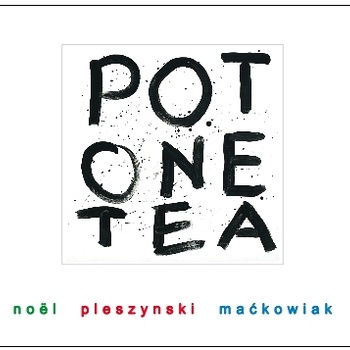
The album is a collaboration of artists Ann Noël, Grzegorza Pleszyńskiego and Artura Maćkowiaka (Ann Noël, Grzegorz Pleszynski and Artur Maćkowiak).  Their website explains the collaboration (in translated English obviously):

It is for the first time that Fluxus artist Ann Noël and a visual artist Grzegorz Pleszynski engage in a music venture. For Maćkowiak, a musician from Potty Umbrella and Something Like Elvis, this project has become an unprecedented way to go beyond rock band routines known for years.

Potty Umbrella?  Love it.

Anyhow, this is experimental improv music of the most fascinating kind. Especially since, “Ann and Grzegorz have never played music or any instrument.”  The site allows you to listen to all of the tracks.  “In Emmet’s Bag” is a spoken word piece in the spirit of Laurie Anderson (the spoken part is in English).  And “Hey Man!” is a pretty conventional guitar with spoken word piece.

But it’s this track, “Salty Air” that I keep coming back to.  It opens with some guitar waves. Then a simple repeated riff entrs the mix.  And after a minute or so, distorted, echoed vocals speak underneath the music.  I think it’s in English but that’s irrelevant because the repeating and echoing makes it almost incomprehensible.

It doesn’t evoke a mood so much as a kind of helplessness.  But it’s a beautiful helplessness.  Especially when the second voice comes in, sounding almost inhuman as it moans over the top of everything else.  It’s quite a track.

 You can hear this song (and others, and download the CD for $.50) at their site.

[READ: July 10, 2011] “The Swan”

“The Swan” was a wonderfully dark and confusing story.  I loved everything about it.  It opens with the very simple scene of David coming home from work and knowing something was wrong.  His wife Suzie is acting very strange, and where the hell is the car?  Suzie tells him that she was hit by a car and that her car was totalled.  Why didn’t she call him at work?  She didn’t think it was that big of a deal.

He doesn’t know what to think so he turns his anger towards his seventeen year old son (from his first marriage).  Jamie is upstairs in his room, smoking pot and more or less ignoring everything around him (a trait he has perfected).  When David finally breaks through to Jamie, he learns the truth–Suzie was hit by a swan.

The story unfolds a little more: Suzie imagined that the swan was David’s first wife, coming to give her a message.  David is more freaked out by this than Suzie seems to be.  He can’t understand why suddenly all these years later, she is so upset about his first wife (who died, before David met Suzie, by the way).  Suzie wants to know why David never talked about her (she didn’t want to know back then).  And then finally she winds up spending most of her time with a sketchy woman across town. (more…)

Read Full Post »

SOUNDTRACKTINDERSTICKS-Claire Denis Film Scores 1996-2009: White Material [CST077] (2009).

White Material is the most recent soundtrack that the Tindersticks created for Claire Denis.  It was recorded between their “reunion” album The Hungry Saw and their latest album Falling Down a Mountain.

This is a very moody soundtrack.  The guitars set a brisk but desperate-sounding pace.  There are feedback squalls that echo for even more tension.  The feedback could be any number of things as well: squeaky machines, industrial noise, or simply disconcerting sounds.

There is a repeated motif throughout the score that morphs and blends with the tone.  The overall feel of the soundtrack is unified but it never sounds like you’re listening to the same few notes repeated (which is actually what it is, the songs use a very limited palette).

For such a limited palette of music, they really manage to give a diverse picture of the movie.  The way “Andre’s Death” builds, using those same few notes and feedback is truly amazing.  The tension that has been building throughout the score really comes to a head in those 2 minutes.  Contrarily, the flute that plays over those same notes in “Children’s Theme 2” is a haunting exploration of the theme.

This soundtrack isn’t as industrial/weird as L’intrus, but it is probably more intense and spooky.  It’s amazing how evocative these guys are.

[READ: June 22, 2011] Merit Badges

Sarah brought this book home, but she didn’t read it.  It sounded pretty good (I mean it won the 2009 AWP Award for the Novel), so I decided to give it a go.

The book seemed strange to me in the way it was set up: it seemed to have a very specific structure but it didn’t always follow it exactly. So, there are four main protagonists who write chapters of the book.  But they don’t each get a turn, in fact one, Barbara doesn’t really have much to say until much later when her story becomes very compelling.  It also advanced over the years with no real explanation of pacing or even of when a new narrator has jumped ahead several years.

I assumed this was going to be a story of four people looking back on their high school years.  But indeed, it’s about four people looking back on their whole lives, as they grow together, drift apart, come back into each others lives and then disappear again.  In that way, it was also a bit hard to get my bearings.  It was also hard for me to keep all of the characters straight.  Because even though there are four narrators there are many many more kids introduced in the beginning of the story.

Each chapter opens by stating who the narrator is.  The first few narrators are Chimes Sanborn (Prologue), Quint (Woodwork), Slow Slocum (Cooking), Chimes (Drafting), Barb Carimona (Music), Quint (Mammals), Quint (Crime Prevention) etc.  So it’s not consistent.

But also, as you can see, all of the chapter titles are named after Merit badges (which I liked quite a bit).  The subtitle describes what you have to do to achieve the badge (and the chapter does indeed kind of work within that stricture).

So far so good, but we’re also introduced to ancillary characters who appear quite often: Dickie Burpee, Pooch Labrador, Smash Sarnia, and a psychopath named Tulep.  With all of the nicknames and rotating narrators, I admit to losing track of who was who, which I fear lessened the impact of some of the events.

Of course, that’s all structural.  And while I felt like I probably missed out on moments of impact, the overall storyline was not hard to follow.  And, indeed, complaints aside, the story was pretty intriguing.  It is set in the (fictional) small suburb of Minnisapa, Minnesota.  It feels very true to me (having lived in a small town, myself) as do the choices (bad and good) that the kids make. (more…)

Read Full Post »

SOUNDTRACK: TINDERSTICKS-35 Rhums (2008).

This is a charming and very French sounding soundtrack. A delightful melody runs throughout the disc (which totals just over 25 minutes).

When Sarah first heard it, she said, “What’s this French music you’re listening to?”  And indeed, it is very French-sounding. There are very simple instruments: melodica, acoustic guitars, piano.  And that melodica is a prominent sound–giving it a sense of intrigue as well as a sense of solitude (the melodica can sound so yearning).  But it’s not all melodica and intrigue; for instance, there’s some delicate xylophone on “Night Time Apartments.”

There are also several snippets from the movie online.  Here’s one clip (with Tindersticks score underneath):

Of the new soundtracks releases this one is my favorite.  And it’s one that I could see listening to for fun.

[READ: June 16, 2011] “The Rules of Engagement”

This is the final story in The Walrus‘ Summer Reading issue.  As I mentioned, the intro states: “We asked five celebrated writers to devise five guidelines for composing a short story or poem. They all traded lists–and played by the rules.”  Alexi Zenther was given rules by Sarah Selecky (which I posted below).

I really enjoyed this story, despite the immoral behavior.  Susan and her friends from high school (it’s ten years after high school now) are enjoying a foreign vacation for a week.  The first thing we see is a man seducing Susan.  They call him “Fork” because after a few hours of flirting, he asked, “And now we fork?”  Amusingly, for someone who made a living seducing women, he was bad in bed.

The other women also meet and bed these professional gigilos.  After sex, one of them simply walked over to the woman’s wallet and took money when he was ready to leave.  She notes that he took “probably less than I would have given him if he had asked.”

The women are in various stages of relationships, one woman is divorced, another is serially monogamous and a third is married (that’s the immoral part).

There’s a wonderful diversion in the story that flashes back to Susan’s grandfather Bert.  Bert had a U-pick apple stand and the girls worked there for many summers.  There’s an especially tender moment in which Susan and Bert are wandering the island and they see a wild horse.  And the scene fills Susan (and the reader) with a sense of wonder at her grandfather. (more…)

Read Full Post »

SOUNDTRACK: THE KOPECKY FAMILY BAND-Tiny Desk Concert #131 (June 6, 2011).

I’d never heard of The Kopecky Family Band, but the write-up about them was pretty interesting, so I decided to give the Tiny Desk concert a listen.  The band (all 7 of them) play a great collective of music: two guitars (acoustic & electic) bass, cello, violin, drums and keyboard.  They play a sort of traditional folk with a very full sound.

Indeed, they remind me an awful lot of The Head and the Heart (the singer’s voice in particular), although they are from different edges of the continent and have been playing music about as long as each other (indeed, The Kopecky Family Band released an EP in 2008 whereas Head and the Heart formed in 2009).

And the Kopecky website offers lots of free music (which is very cool).

“Howlin’ at the Moon” is a full acoustic sounding track.  “Birds” has a simply gorgeous whistle/xylophone melody that is as beautiful as it is catchy.  “Disaster” is a tender ballad with wonderful harmonies.  And “Red Devil” is a somewhat more rocking song, which really helps to demonstrate the bands’ diversity.

And the band is charming.  Keyboardist/singer Kelsey admits to having left a trinket of some kind of the office bookshelves (which are littered with things).  It’s a wonderful set, and because of it, I downloaded the band’s first EP from their site.

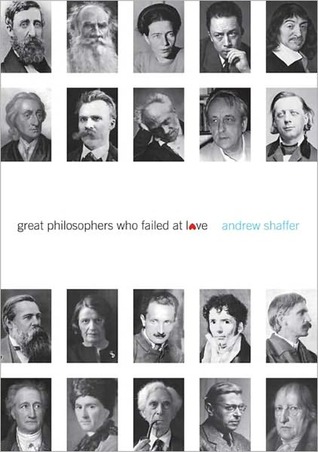
[READ: June 5, 2011] Great Philosophers Who Failed at Love

Shaffer was signing books at BEA this year.  My coworker told me that he was very funny and that he signed her book in an amusing way.  He happened to be signing at the table next to the line I was on. Sadly, he finished before I was able to get to him.  But I was pretty close to the beginning of the line, so I asked if I could grab a copy of his book, which I did (although no autograph for me).

This is a silly book of nonfiction.  It looks at thirty-seven philosopher or thinkers and their utter failure at love.  Each man (and occasional woman) has had some distinguishing characteristic that made them pretty lousy in the emotional range.

The title of the book is funny and is meant to be kind of surprising: these smart folks were terrible at love.  Of course, spending a minute or two thinking about who these people were and what they did, it’s not surprising that they were lousy at love.  These were intellectuals, people who spend most of their time in their own mind.  Of course they couldn’t have a serious relationship.

Nevertheless, these stories are all more or less amusing (Louis Althusser accidentally strangled his wife to death(!) which isn’t amusing per se, but the story of it is, kind of).  Shaffer does a great job at keeping each entry brief but really retaining the salient points of the thinker’s philosophy and a cogent example of his or her lousiness at love.  He also throws in some amusingly snarky comments of his own as he goes along.

I was delighted that the book order was done alphabetically rather than chronologically.  A chronological list would have been a little too samey in terms of each person’s context.  The alphabetical list allows for jumping around from say Plato to Ayn Rand which keeps the stories interesting and fresh.

At the end of each person’s piece, there’s an “In His Own Words” which offers a quote that details his or her written philosophy regarding love.

Dare I say that this is an ideal bathroom book?   It certainly is. And it makes you feel a little better about yourself (if you haven’t for instance, adopted your mistress as your daughter (Sartre)).

Read Full Post »

« Newer Posts - Older Posts »