Feeds:
Posts
Comments

Archive for the ‘Marriage (Happy)’ Category

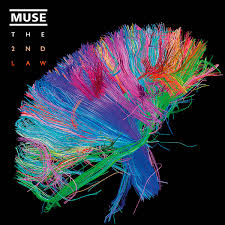
mister orangeSOUNDTRACK: MUSE-The 2nd Law (2012).

2ndlawMuse are over the top.  No question about it.  And that’s why I like them so much.

So when the new album opens with crunchy guitars that give way to keyboards that sounds not unlike a Bond movie, it’s not really surprising.  The first verse is fairly mellow, building until Matt Bellamy hits some crazy high notes and the heavy bass guitar kicks in.  But unlike some previous albums, this one is not all heavy heavy guitar rock.  There’s some electronic elements as well.  Especially on the single “Madness” (which was debated about on the alt rock station I listen to, wondering if it was too dance-oriented).  The song uses a dub format for repeating the Muhmuhmuhmuhmuh madness, but the verses are so catchy it’s hard to resist.  It also has a major Queen feel (a common complaint about them, although it’s not like Queen are still making music).  For Muse, this song is kind of understated until the big verse at the end when Bellamy can really soar.  “Panic Station  has a big thumping bass and drum along with some screams that sound out of an 80s metal band but there are horns that give it a dancey feel–always a contradictory outfit, Muse.

“Prelude” sounds indeed like a prelude to what proves to be “Survival” it is big and anthemic (as Muse tends to be).  It is uplifting and, as one may recall, it was the official song of the 2012 London Olympic Games (which is fitting it’s all about winning).

“Follow Me” slows things down a bit in the beginning, but it of course comes back with lots of bombast (this is Muse after all) but there’s also elements of electronica (is that  dubstep sound?) and backing vocals that remind me a lot of U2.  “Animals” has a kind of slinky bass line that wends its way through the song’s guitar solos.  By the end of the song it has grown much heavier with shouting crowds and a furious double bass drums.

“Explorers” is a ballad that grows and retracts.  “Big Freeze” has another big chorus. It’s followed by “Save Me,” a gentle ballad with harmonies.  Then “Liquid Freeze” picks up the pace a bit.  This is all leading to “The 2nd Law: Unsustainable” which is my favorite weirdo song in ages.  It is so crazy over the top and audacious that I love it.  It opens with crazy strings and a fast talking jittery computer voice.  And when she reaches the word “unsustainable,” the song goes absolutely bonkers, with crazy sound effects–I would assume most people hate this track, but I think it is very cool.  The final track “The 2nd Law: Isolated System” is a kind of denouement for the whole album–a piano ballad of 5 minutes that has a bit of a dance feel to it.

I can’t get over how much I enjoy this record.  It’s definitely not as heavy as past muse records, but it has some great experimentation and Bellamy absolutely knows a great melody.

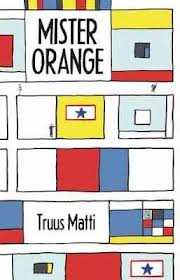
[READ: March 8, 2013] Mister Orange

I was walking past the New shelves in the library and this book caught my eye (who says placement isn’t important?).  Something about the title and the cover design was really appealing.  I looked at the blurb–it’s about an American kid during WWII.  I wasn’t really sure I wanted to read that, but then there was a line about an artist and comic books.  I immediately thought about The Adventures of Kavalier and Clay which is also about comics in the 1940s (although this book is NOTHING like that one at all), and I decided to grab it.  Besides it was only 150 pages.

Well, I never would have guessed that the book is a historical fiction novel about Piet Mondrian, one of my favorite artists of all time.

So the story is about a boy, Linus, and his family living in New York City in 1943.  His oldest brother, Albie has volunteered for the war.  His mother is disappointed in him as she believes that all war is wrong and that nothing good every comes from war.  She is so disappointed, in fact, that she does not hang the blue star that all families with soldiers are given to hang in their windows.  Linus wonders if she is not proud of her son for fighting for what he believes in, but his mother says “Flags are for celebrating, and there is nothing to celebrate about war.”  She doesn’t even let him go to the parade for the departing soldiers.

When Albie leaves, the rest of the family is stuck waiting for word from him.  But life goes on at home and with Albie gone, that means that everyone moves up in responsibility (and shoes get handed down).  Simon (now the oldest at home and a sullen teenager) takes on Albie’s work at the newspaper, Linus picks up Simon’s grocery delivery route (their family owns a grocer’s shop) as well as Simon’s shoes, which are way too big, and Max takes over looking after the youngest children: Sis and Willy.  For the most part we follow Linus as he learns the new route and learns a bit more about the city. (more…)

Read Full Post »

[LISTENED TO: March 2013] Chitty-Chitty-Bang-Bang

chittyI knew of this movie (although I haven’t seen it in decades) but I didn’t know it was based on a book.  And I had no idea the book was by Ian Fleming!  The creator of James Bond!  Chitty-Chitty-Bang-Bang is his only children’s novel and it was released posthumous;y (he died a few months before it came out).  I’ve never read any James Bond and I don’t love the films all that much so I can’t really compare this to his more famous works.  But it seemed like it was written by a guy who knew from spies and scary villains (I actually guessed that he had written this before the Bond books and it was a kind of lead in).

So the story starts off simply enough.  We meet the Pott family: Caractacus, the father, a former Navy commander and now an inventory of slightly wacky things–known in town as Crack Pott (ha); Mimsie, the mom, sweet and good natured and up for adventure, and the eight year old twins: Jeremy and Jemima.  Most of Crack Pott’s inventions aren’t very good but he eventually makes up a candy that is also a whistle and sells them to Lord Skrumshus and his candy company for a tidy sum (and Fleming goes into the details of the money saying how it’s a small sum up front but since Lord Skrumshus sells billions of candies it’s  good deal–Fleming is full of grown up ideas like that in the book and is clearly trying to impart some wisdom to his audience).

Since they live near the motorway, they decide to buy a car.  But they don’t want one of those black beetles that you see everywhere.  He wrote this book in 1961 so I’m not entirely sure about what kind of car he was talking about there.  The family decides to buy a one of a kind old car from an old man in a garage.  The man raves about the car and wishes he could keep her, but he has to sell it for scrap.  Pott offers him a few quid (everyone loves the car and its license plate read GEN 11 (like Genii)) to have the car delivered to his garage.  He spends the next several months fixing her up.  And when she starts, the noises she makes gives her the name Chitty Chitty Bang Bang.  Their first test drive is a marvel and they get her up to 100 miles per hour!

WHAT??  100MPH?  In Rural England??  Wow.  And who knew they used miles and not kilometers (it’s pointed out much later in the book that they use kilometers on the continent) in the 60s?  (It became mandatory there in 1978).  The car is  marvel!  She even has all kinds of buttons that Pott hadn’t figured out what they do yet.  And on their next venture they decide to go to the seaside on a warm day.  But so do 20,000 other cars, so there is a massive traffic jam.  Chitty Chitty shows what she can do and takes over the controls–she grows wings and a propeller (which all come naturally from the car parts) and she flies over the traffic!

When they fly to the beach it is crowded so Chitty flies the to an island in the middle of the English Channel.  And they have a lovely picnic together and take a nap.  Until the tide starts to come in.  Chitty escapes and they take off.  But they head away from London and towards France!

And here’s where the story turns into a wild Bondian adventure rather than a cute family story about a magical car.
(more…)

Read Full Post »

02013SOUNDTRACK: THE CAPSTAN SHAFTS-Revelation Skirts (2010).

capstanI’d never heard of the Capstan Shafts when Sarah bought this disc for me for Christmas a few years ago.  (It was in the NPR recommended discs for 2010).  Turns out the band has been around for nearly 20 years but have been making home recordings with little publicity for much of that time.  They (he, really, as it has always been one guy) finally decided to release a proper album with a second guy in the band.  I wouldn’t have known any of that if I hadn’t looked it up just now–because even with the accolades, this is still a low selling record.  I also wouldn’t have known that for some fans this album is the commercial sellout for this band who usually makes weird personal songs.  And yet I like this album a lot–and it is plenty weird.  Or perhaps a little weird-sounding–like the buzzing noisy guitars (which I guess are from the “new guy”).

The songs are pretty straightforward folkie indie rocky.  They are bouncy and poppy, and the buzzy guitar solos adds a nice contrast to that bounciness   There’s an air of Guided by Voices (“Let Your Head Get Wrong”, with the singer’s slightly faux British accent (he sounds like about half a dozen different singers throughout the disc).   There’s definitely a feel of 90s rock here–maybe Sebadoh (“Little Burst of Sunshine”) or even Dino Jr (“Versus the Sad Cold Eventually”).  The album has 14 songs in 30 minutes–and it feels like a full record–there’s not a lot of shilly-shallying with solos or extended verses, and yet the song are not fast punk tracks either–the pace is leisurely.

I really enjoyed this record and I like popping it in from tome to time for a good album that will never be overexposed.

[READ: February 5, 2013] “The Bloodline of the Alkanas”

I found this story to be quite challenging.  The prose was awkward and not very fluid.  I found it slow going until the end, but even that seemed a mite slower than necessary.

This story has three informal parts.  The first shows the narrator’s parents–her father is Cyrus Alkana, a poet who believes in older, more formal rules of poetry.  He is passionate, but far more passionate about his dislike for more modern writers, especially Alexander Alcott to whom he writes nasty letters.  Or actually his wife writes them–she does everything for him believing unquestioningly in his genius.  She works a full time job then comes home and takes care of the house and also types his correspondence.

The parents have no respect for the narrator because she did not receive The Bestowal–what they call the poetic gift.  The narrator doesn’t care about any of that–she explicitly states that she doesn’t know half of the poets that her father admires.  Consequently, her parents show her no respect.

Cyrus can’t seem to get published anywhere.  His wife unfailingly sends out his poems but they receive nothing.  Finally, she decides to bundle up his work and to include a cover letter expressing how wonderful the work inside is.  We later learn that the name she put on the letter was Alexander Alcott.  Obviously, this would show an instant sign of respect and it would be a rather shocking development in the land of poetry.  Especially when the publisher agrees to publish the book only if Alcott’s accolades are included.

The narrator is understandably freaked out about this–her mother is publicly defrauding another (far more famous) writer–surely there will be hell to pay.  But her mother is not concerned in the least.  She says that Alcott will be happy for the publicity.  After its publication  critics do talk about it–most wondering what happened to Alcott to endorse such a poet, but there is never any formal repercussion.  And no word from Alcott at all. (more…)

Read Full Post »

dtmaxSOUNDTRACK: TOM WAITS & KEITH RICHARDS-“Shenandoah” (2013).

roguesgallery-f8be47f3887d51de57ea842a129f0a722e53ef74-s1This tune comes from the album Son Of Rogues Gallery.  The album is, of all things, a sequel to the album Rogues Gallery.  The full title is Son Of Rogues Gallery: Pirate Ballads, Sea Songs & Chanteys.  The first album was a kind of novelty–I can’t even say novelty hit as I don;t know if it was.  But it must have had some success because here’s a second one (and there’s no Pirates of the Caribbean movie to tie it to).

The album has 36 songs (!) by a delightful collection of artists, including: Shane MacGowan, Nick Cave, Macy Gray, Broken Social Scene, Richard Thompson, Michael Gira and Mary Margaret O’Hara (among many others).  I enjoyed the first one, but I think the line up on this one is even better.

“Shenandoah” is not a song that I particulalry like.  Because it is traditional, I have a few people doing versions of it, but I don’t gravitate twoards it–it’s a little slow and meandering (like the river I guess) for me. And this version is not much different.  What it does have going for it is Waits’ crazed warbling along with even crazier backing viclas from Keith Richards (there;s no guitar on the track).

[READ: January 7, 2012] Every Love Story is a Ghost Story

I had mixed feelings about reading this biography.  I’m a huge fan of David Foster Wallace, but I often find it simply disappointing to read about people you like.  And yet, DFW was such an interesting mind, that it seemed worthwhile to find out more about him. Plus, I’ve read everything by the guy, and a lot of things about him…realistically it’s not like I wasn’t going to read this.  I think I was afraid of being seriously bummed out.  So Sarah got me this for Christmas and I really really enjoyed reading it.

Now I didn’t know a ton about DFW going into this book–I knew basics and I had read a ton of interviews, but he never talked a lot about himself, it was predominantly about his work.  So if I say that Max is correct and did his research, I say it from the point of someone full of ignorance and because it seems comprehensive.  I’m not claiming that he was right just that he was convincing.  And Max is very convincing.  And he really did his research.

It’s also convenient that DFW wrote a lot of letters–Max has a ton of letters to quote from.  And DFW wrote to all kinds of people–friends, fellow authors  girlfriends, colleagues….  Aside from old friends, his two main correspondents were Don DeLillo, whom he thought of as a kind of mentor, and Jonathan Franzen, whom he considered one of his best friends and rivals.  I guess we can also be thankful that these recipients held on to the letters. (more…)

Read Full Post »

SOUNDTRACK: RA RA RIOT-“Is It Too Much” (2013).

raraI loved the first Ra Ra Riot album The Rhumb Line.  This song expands on some of the ideas from that album, but I fear that it goes in the one direction I would have preferred they not go.  The album had strings, nice harmonies and a great singer all melded into an interesting rock structure.

This song retains all of the elements that were interesting, but it removes it from the rock structure, making it  sound much more lightweight.  It’s pushing too far into easy-listening.  And do I hear autotune on the vocals?  The instrumental middle section is the most interesting part of the song.  But Ra Ra Riot seems to have removed the riot part of their sound.  If this is the direction of the album, I’m afraid I won’t be following.

[READ: January 8, 2013] “Consider the Writer”

I just finished the D.T. Max biography of David Foster Wallace.  I was curious what kind of reception it received.  And lo, here’s a review by Rivka Galchen (something I would have read anyhow since I enjoy her so much).

Galchen opens with two main points–the biography is gripping (and it is, I’ll be saying more about that tomorrow, too).  She writes: “In writing a chronologically narrated, thoroughly researched, objective-as-­imaginable biography, Max has created a page turner.”

The second idea is that you keep thinking “that you just don’t find Wallace all that nice”  (which I also thought).  But then she wonders if it is fair to be worried about that.  We should not judge others after all.  Especially since, as she points out, “We don’t always find ourselves asking whether a writer is nice. I’ve never heard anyone wonder this at length about, say, Haruki Murakami or Jennifer Egan.”  So why is that a concern about Wallace?  Because niceness is what Wallace wrote about, tried to encourage.  And perhaps “One understandably slips from reading something concerned with how to be a good person to expecting the writer to have been more naturally kind himself.”  But that is not necessarily the case–people strive for things that they cannot achieve.   I like her example “the co-founder of A.A., Bill W., is a guru of sobriety precisely because sobriety was so difficult for him.”   And her conclusion: “Wallace’s fiction is, in its attentiveness and labor and genuine love and play, very nice. But what is achieved on the page, if it is achieved, may not hold stable in real life.”

And Galchen talks a bit abut DFW himself (the book is a biography after all).  How he wore the bandana because he sweated so much–how self conscious he was about that and by extension nearly everything he did.  This mitigates his not-niceness somewhat.  It also ties in to his alcoholism  drug use and depression.  And his competitiveness, which is obvious in the biography.  She enjoys the pleasure of Wallace’s correspondences, “especially with his close friend and combatant Jonathan Franzen, but also with just about every white male writer he might ever have viewed as a rival or mentor. Aggressive self-abasement, grandstanding, veiled abuse, genuine thoughtfulness, thin-skinned pandering — it’s all there.”  I rather wished that the authors’ own reactions were included (of course it’s not biographies of them, and they are still alive), just to see if they sparred back with Wallace or if they were put off by yet indulgent of his needs. (more…)

Read Full Post »

3rdSOUNDTRACK: PHINEAS AND FERB-“I Really Don’t Hate Christmas” (2009).

doofenI have grown to love Phineas and Ferb ever so much  in the past year.  Holy cow it makes me laugh so much  that I would totally watch  it even without the kids around.

This song, sung by the evil Dr Doofenshmirtz, explains how he has a backstory that makes him hate every holiday except Christmas–he just has a burning indifference to it.  The song is catchy and funny.

Of course since he is an evil scientist, he finds a reason to hate Christmas and launch his naughtyinator.  When carolers come to his door and repeat over and over that they want figgy pudding, he begins to get quite annoyed.  And we get this hilarious exchange:

CAROLERS: (singing) We won’t go until we get some, we won’t go until we get some….

DR. DOOFENSHMIRTZ: What? Are you threatening me? How dare you! No one barges into my home and demands desserts! What sort of plan is that anyway? “Let’s go to a stranger’s house, sing songs to him, and refuse to leave unless he hands us a food dish no one’s prepared since the 16th century!”

Just in time for the holidays:

[READ: December 20, 2012] Diary of a Wimpy Kid: The Third Wheel

Clark was more excited for this book than I was!  As soon as he saw it, he grabbed it and ran into his room to read it (for which I was both proud and a little annoyed as I wanted to read it).  I’m not sure how much he could have enjoyed it as it is all about going on a date, but he seemed to like it.

It’s not all about a date though.  It begins with Greg reminiscing about his time in the womb (a very odd thing for Clark to read, I’m sure).  rtHis mom listening to Mozart and just how much he could hear while in there.  Then he talks about his life as a wee one, which is very funny–he learned how to take the batteries out of the remote so his mom couldn’t put the educational shows back on (he’s also annoyed that Manny gets to watch whatever he wants now–no educational TV for him).

But Manny doesn’t come out on top all the time–there’s the boy who acts like a vampire at Sunday School and scares Manny to bits.  This may be why Manny only has imaginary friends (well, that and the fact that their mom reads Manny the children’s book she wrote about the boy who used to bite Greg–it  terrifies Manny).  Of course, the imaginary friends get in trouble for all the things Manny does (maybe Manny does come out on top all the time after all).

One of the funnier aspects of the Wimpy Kid series is the locations that they go to.  Like Corny’s, the family restaurant where the key is fun (not food), and the first time they went Greg almost sat on a PB&J sandwich that was never cleared away.  (And wait till you see what the family next to them are doing!). (more…)

Read Full Post »

CV1_TNY_12_03_12Thiebaud.inddSOUNDTRACK:  PETER BJORN AND JOHN-Live at KEXP May 10, 2011 (2011).

pbjkexpPeter Bjorn and John play KEXP every couple of years.  This set is promoting their most recent album Gimme Some.  I haven’t heard much of Gimme Some.  I found the last album to be kind of dark, but this one seems to have upped the poppy quotient a bit.  I was surprised when they opened the set with “Second Chance” which is the theme from 2 Broke Girls (and is the best thing about the show, I hope they get a ton of cash from that!).  If you ‘ve seen the show, you may be surprised that there are lyrics, but there are, and it works as a full length song, too.

“Dig a Little Deeper” has a kind of reggae feel and an amusingly long drum opening because “Peter dropped his guitar”.  It’s a poppy catchy singalong with lots.  “May Seem Macabre” is a funny title for a song that is as poppy and danceable as this one.  “Eyes” continues that upbeat poppy flavor.   This is a very fun set and I’m going to have to check out the album as well.  Peter Bjorn and John have proven to be a consistently great band where every album sounds different. You can listen to this show here.

[READ: December 5, 2012] “Nighthawk”

Tony Earley’s essay in the food issue differs from the others because it is not about a specific food, but about cooking.  Or, lack of cooking.  It’s a pretty funny essay about a boy of a certain age and time who was, if not spoiled exactly, simply waited on–by his mother and his grandmother.

His mother would make on demand fried bologna and onion sandwiches (wow, that sounds gross but I’ll bet it’s pretty good), and his grandmother would have waiting for him anything he desired when they visited.  Even when he went to college, he lived close by so he just went home for meals.

It wasn’t until he moved to Tuscaloosa that he realized he had no idea what to do in the kitchen (the description of the muffin tin and his inability to even conceive of its use is very funny).  And then, like other students, he subsisted on frozen meals and whatever else he could whip together with his meager skills.  His point though, is that eating alone is okay, but it really takes a toll on the taste of food–no matter how much cheap wine you drink with it to appear sophisticated.   (more…)

Read Full Post »

CV1_TNY_12_03_12Thiebaud.inddSOUNDTRACK: BEIRUT-Tiny Desk Concert #159 (September 21, 2011).

beirut tinyI don’t know a lot about Beirut.  NPR seems to like them and all I know about them comes from the shows NPR streamed.  This Tiny Desk concert is only 12 minutes long and the band doesn’t chat very much.  But they play three songs: “East Harlem,” “Santa Fe,” and “Serbian Cocek.”  This last song was meant as kind of a goof, a treat for the people who showed up (Beirut had just come back from Bonnaroo and were exhausted), but they allowed NPR to include it in the stream, which is a fun treat.

Beirut play a kind of jaunty horn-fueled eastern European-flavored music.  “Serbian Cocek” has a very tradition feel–an instrumental fueled by trumpets that’s very hard not to dance to.  They are certainly not to everyone’s cup of tea, but if you like some Europe in your rock, they are worth checking out.  Even if in this set they aren’t hitting the highest notes that they might otherwise hit.

[READ: December 1, 2012] “Literally”

This story runs a gamut of ideas in a very short span–death, race, marriage, public transportation, soft serve ice cream and the misuse of the word literally.

And perhaps there is too much crammed in here.  It’s not that the story suffers but by the time you get to the end of the story, the title seems irrelevant.   It refers to paragraph five in which Richard “liked to make his son smile by using his favorite word incorrectly.”  And then it’s not used again (unless you want  to argue that the end is somehow a literal moment, but I really don’t).

The story switches back and forth between Richard’s daughter Suzanne who works at the Dairy Queen and Richard’s son Danny, a smart alec kid who engages in the time honored tradition of mocking his sister (although she is completely oblivious to his taunts).  The story is also about Bonita, Richard’s housekeeper.

Every since his wife died (recently, in a car crash), Richard has become painfully aware of how much his wife did–even simple acts like communicating with Bonita.  Richard knows very little Spanish, while his wife was fluent.  His wife also helped out with Bonita’s son Isaac, who is “nervioso.”  So Bonita brings Isaac over most days.  Indeed, because of the districting, Richard and his wife agreed that Isaac and Bonita could claim that they lived with them, so Isaac could go to the better school.  Danny and Isaac get along very well, and often get absorbed in a game called “town” (which helps Isaac to relax). (more…)

Read Full Post »

SOUNDTRACK: DESTROYER-Live on KEXP, March 19, 2011 (2011).

I enjoyed Destroyer’s Rubies album quite a bit.  And when Kaputt came out it was heralded as a masterpiece.  But I have to admit it’s a little two smooth jazz for my tastes.  The DJ in this interview describes it as being like George Michael (well, really, Wham), but George Michael knew howto write pop hits which made the smoothness more palatable.  This is kind of like extended jams of smooth jazz, which is…disconcerting.

They play two songs from Kaputt, “Downtown,” and “Song for America.” “Downtown” has a ton of cheesey sounding sax (and instrument I am growing to dislike more and more).  “Song for America” eschews much of the sax and is catchy with its pulsing bass line.  They also play “Certain Things You Ought to Know,” from Your Blues, an album I don’t know very well.  The song is kind of slow, but it tones down the cheese somewhat.  And “Painter in Your Pocket” from Rubies, a song I like very much gets a new treatment here.  It’s much more sparse, and I think I like it a little less.  Maybe Destroyer should just remain one album for me.

You can hear it here.

[READ: November 15, 2012] “Chore List of Champions”

Even though I said I was going to put off Vonnegut for a little while (there was certainly some burn out by the end), this letter appeared in Harper’s (and is in his newly released book Letters).

As the intro explains, this is a contract that Vonnegut signed with his then pregnant wife Jane, in 1947.

I think of marriage contracts these days as being crazily offensive and mercenary, as being things that would embarrass right-thinking people.  And geez, in 1947, what could he possibly have been asking.

Well, Vonnegut proves that he was a cool dude all along.  And all of the points in the contract are things that he pledges that will do, couched in his own hilarious manner.

Some examples: (more…)

Read Full Post »

SOUNDTRACK: ANIMANIACS-Wakko’s 50 State Capitals (1995).

To the tune of “Turkey in the Straw,” Wakko teaches you all of the capitals of the 50 States.   I suspect that if I had the energy, I would try to remember this (as many commenters on YouTube say they’ve done).  While I know most of the capitols, I certainly don’t know them to a  catchy tune.

This song is not as explicitly insane as the countries of the world song, but it’s still pretty awesome.  Thank you, Animaniacs for being this generation’s School House Rock!

[READ: July 2012] Chi’s Sweet Home 9

Volume 9 of Chi’s Sweet Home has just come out and the whole family was excited to read it (Clark grabbed it first!).

I don’t know how long the series is going to run, but if anyone thought it was winding down with Book 8, nothing could be further from the truth.

As the book opens, Chi is wearing her Elizabethan collar to protect her from her injuries (I actually don’t recall what injuries they were).   But she soon gets that off and her family realizes that since she couldn’t go outside with the collar on, maybe they should make her an indoor cat after all–she’ll certainly be safer!

And so begins Chi’s frustration–unable to get outside and nobody helping her out!  And she had promised Cocchi that she would met him at the fountain   For the first time in the series (as far as I can remember) another character gets an entire strip to himself: poor Cocchi, the naughty stray cat feels sad and lonely as he waits for Chi who promised she’d be back to play today.   If you think it’s frustrating to wait for people  imagine being a cat and having no way to communicate! (more…)

Read Full Post »

« Newer Posts - Older Posts »