Feeds:
Posts
Comments

Archive for the ‘Magazines’ Category

CV1_TNY_12_03_12Thiebaud.inddSOUNDTRACK: BEIRUT-Live at KEXP, October 3, 2007 (2007).  
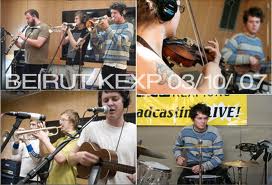
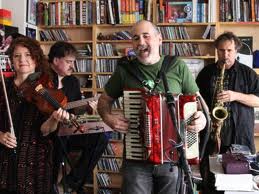
beirutBeirut plays a fuller set here for KEXP than in the Tiny Desk concert.  They open with “Cherbourg” an accordion-based song that lurches along happily before the full band kicks in and begins rocking the song.   “Sunday Smile” feels very cinematic although when the martial beats begin the song takes quite a different sound.  “Cocek” opens with horns and accordion.  This is clearly not a typical rock set up at all, and it quickly turns into an awesomely shambolic dance instrumental.  My favorite track is “Forks and Knives (La Fete),” with it’s wonderful violin melody and falsetto’d lyrics.

NPR has given me a really great appreciation for this band.  They sound wonderful live.  I wonder if it translates well to studio albums?  You can hear this set here.

[READ: December 3, 2012] “Bear”

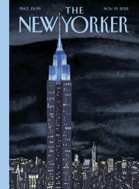
The December 3 issue of the New Yorker is The Food Issue.  Generally I don’t get that excited by this special issue, and this was no real exception.  But I wound up with some extra time so I delved into the four “Gut Course” articles in the magazine.

Gourevitch’s article is indeed about a bear.

He describes the “Summer of his twentieth year” (weird style there) in which he was in the mountains of Wyoming and got a job as an animal skinner.  He had no experience of skinning animals but he “moved through life with a dauntlessness born of cluelessness” (I like that) and he needed a job.

The place where he worked was a game-processing plant.  It was used primarily by tourists who killed for sport, so there was a lot of extra meat in the freezer. He and the other kid working there often liberated some frozen meat understanding that it would just get freezer-burned if they didn’t.  And then there came the bear. (more…)

Read Full Post »

CV1_TNY_12_03_12Thiebaud.inddSOUNDTRACK: BEIRUT-Tiny Desk Concert #159 (September 21, 2011).

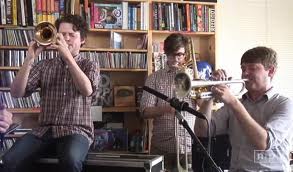
beirut tinyI don’t know a lot about Beirut.  NPR seems to like them and all I know about them comes from the shows NPR streamed.  This Tiny Desk concert is only 12 minutes long and the band doesn’t chat very much.  But they play three songs: “East Harlem,” “Santa Fe,” and “Serbian Cocek.”  This last song was meant as kind of a goof, a treat for the people who showed up (Beirut had just come back from Bonnaroo and were exhausted), but they allowed NPR to include it in the stream, which is a fun treat.

Beirut play a kind of jaunty horn-fueled eastern European-flavored music.  “Serbian Cocek” has a very tradition feel–an instrumental fueled by trumpets that’s very hard not to dance to.  They are certainly not to everyone’s cup of tea, but if you like some Europe in your rock, they are worth checking out.  Even if in this set they aren’t hitting the highest notes that they might otherwise hit.

[READ: December 1, 2012] “Literally”

This story runs a gamut of ideas in a very short span–death, race, marriage, public transportation, soft serve ice cream and the misuse of the word literally.

And perhaps there is too much crammed in here.  It’s not that the story suffers but by the time you get to the end of the story, the title seems irrelevant.   It refers to paragraph five in which Richard “liked to make his son smile by using his favorite word incorrectly.”  And then it’s not used again (unless you want  to argue that the end is somehow a literal moment, but I really don’t).

The story switches back and forth between Richard’s daughter Suzanne who works at the Dairy Queen and Richard’s son Danny, a smart alec kid who engages in the time honored tradition of mocking his sister (although she is completely oblivious to his taunts).  The story is also about Bonita, Richard’s housekeeper.

Every since his wife died (recently, in a car crash), Richard has become painfully aware of how much his wife did–even simple acts like communicating with Bonita.  Richard knows very little Spanish, while his wife was fluent.  His wife also helped out with Bonita’s son Isaac, who is “nervioso.”  So Bonita brings Isaac over most days.  Indeed, because of the districting, Richard and his wife agreed that Isaac and Bonita could claim that they lived with them, so Isaac could go to the better school.  Danny and Isaac get along very well, and often get absorbed in a game called “town” (which helps Isaac to relax). (more…)

Read Full Post »

CV1_TNY_11_26_12Blitt.inddSOUNDTRACK: BAND OF HORSES-Live on KEXP, October 19, 2007 (2007).

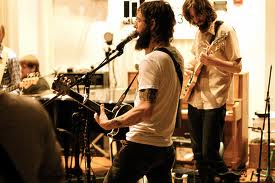
bohgibsonBand of Horses plays in New York at Gibson Showroom for the CMJ Festival and KEXP was there for the broadcast.  The band plays six songs and they sound really great here–I’m always amazed by their harmonies.  They had just recently released Cease to Begin, and so they play “Is There a Ghost” which sounds perfect live (I’m not sure if it has been a hit by then).

I’m confused that in “Marry Song,” they state that he switches to the double neck guitar.  Not that I doubt that he does, but there’s so little guitar in the song, it seems an odd choice.  Regardless it sounds pretty, as does “Ode to LRC”–one of my favorite BoH songs.

The chat with the DJ is great, as she reminds the singer about 6 or 7 years ago when he was pushing his new label and the band Carissa’s Weird and how all of a sudden he was playing with them behind the drumkit and now he’s fronting Band of Horses.  There’s a  comment about the band relocating back to North Carolina (and no longer being a “Seattle” band).  And they joke about the song “Detlef Schrempf” and how they have had a sports guy on both of their albums so far.

The play “Par One” which he says he hopes he doesn’t screw up because he forgot the words the other day.  The final track “Am I A Good Man,” is a cover of a Them Two song.  I’m always mixed about bands dong covers.  It’s fun to hear their take on things but I’d much rather hear an actual BoH song than one by someone I’ve ever heard of.  Having said that, this song is really good, very retro-sounding with a cool 70s style keyboard solo.

It’s odd that the band hasn’t been back on KEXP since 2007.  You can hear this one here.

[READ: December 1, 2012] “Bull”

Mo Yan’s story (translated by Howard Goldblatt) opens with a technical detail about forcing water through the arteries of slaughtered animals.  Lao Lan perfected the method for doing this that required far less water.  It was also suggested that he used a bit of formaldehyde to keep his animals looking fresher than the other butchers’ wares.  The person who suggested the formaldehyde was Luo Tong, the narrator;s father.  [I know that it’s the reader’s responsibility to keep characters straight, but is it really that hard to not have your two main characters have these three names: Lao Lan Luo?].

The narrator’s father was an expert at judging animals–he could look at any beast and guess the weight and overall meat content.  He would put his hands on the beasts just for show.  But he was always right within a kg and at the market, his word was bond.

There’s a brief interlude in which we see the narrator’s homelife.  We learn that Luo Tong is cheating with “Auntie Wild Mule.”  There’s a funny sequence in which the narrator reveals that he knows his mother’s name (a no-no apparently) because Luo Tong told it to Wild Mule.

The story seems like it might just be a story about the village and Luo Tong’s proficiency at his skill (he never accepted any gifts from anyone so as to not seem unjust, everyone agreed he was fair–crazy, but fair).  But then as the day’s trading is ending, Lao Lan walks over to where Luo Tong is sitting and pisses on the ground right in front of him (from the amount and the smell, the narrator surmises he has been holding it a long time).  Luo Tong does nothing.  Literally he just sits there.  The narrator is mortified at his father’s cowardice and it is clear that Luo Tong must have lost some respect here.

When the day finally ends and the merchants give Luo Tong his cut, Lao Lan deliberate drops the money in the puddle of urine.  The narrator calls his father all manner of names and says he can no longer respect him.  Lao Lan states that the narrator should consider being his (Lao Lan’s) son instead.  The narrator is offended by this as well and charges at him (but misses).  And the narrator sulks. (more…)

Read Full Post »

CV1_TNY_11_12_12Tomine.inddSOUNDTRACK: WYE OAK-May 29, 2011, Sasquatch Festival (2011).

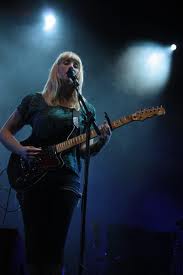
wye oakI don’t know all that much about Wye Oak.  This concert from Sasquatch has a very shoegazery vibe–like a more sultry Cocteau Twins.  This concert has a vibrancy and bounce that I like quite a lot.  The first half of the show comes from their most recent album Civilian.  Singer Jenn Wasner’s voice has a deep resonance that makes it sounds like high notes are not easy for her, but she manages them anyhow.   The songs are mostly a kind of indie rock, with fuzzy guitars.  Although “Dogs Eye” is a lot heavier with an interesting keyboard sound tacked on top.

The older songs aren’t quite as dynamic or interesting, even in this setting.  The whole show flows really well, but the beginning is a bit more exciting.

The strange thing is that her speaking voice sounds so southern when they’re just from Baltimore.

[READ: November 28, 2012] “Member/Guest”

This story is about Beckett, a fourteen-year old girl, and her friends.  They are members at a resort in the Hamptons, a resort they have been coming to since she was little.  I rather liked this description of her friends, “They were like a favorite TV show that had gone all ridiculous, yet you stayed tuned, hoping that the silly plots would get better.”  But rather than getting better, the girls were talking about what was in the shorts of Brad Sawyer and Justin Miller.  Natalie, the sexual oracle, (she showed them a Trojan the other day) predicted that it would look like Barbie’s leg.

The girls are naughty and vulgar (and rather funny).  Clio says they should all get out their Barbies for practice–their moms would be so happy to see them rediscovering their childhood toy!  There’s another funny sequence when Beckett sees her parents.  Her dad calls her toots and her mom mocks him saying “I didn’t know we were suddenly at the Copa.” (more…)

Read Full Post »

SOUNDTRACK: BATTLES-Live Sound Check, Crocodile Cafe, Seattle WA, July 5, 2007 (2007).

Although I’ve known that bands do soundchecks for years, I never really knew what they were–did they play full songs?  A bunch of songs?  Don’t they just go “check, check, check?”  Do they just jam (like I’m lead to believe Phish does).  Are they really checking sounds at these thing?  If so, why does every soundcheck I’ve heard sound so good?  How long do they last?  Do they play for real or just mess around?

Well, this soundcheck is 3 songs and lasts about 20 minutes.  The band seems to have a little trouble getting started.  There’s a couple of re-starts for “Tras” but then they rock out.  And they sound great.  Battles plays complex music (math rock).  I’m always impressed when bands like  this play their stuff so well live.  I don’t know why I’m impressed by that, it’s what they should do, but I still am.  After “Tras,” they play “Tonto” and after a little drum fill, they play “Atlas.”  I have no idea what’s going on vocally with “Atlas” but I love it.

Battles is probably a band best seen live, but audio is good too.  The band played a show at the Crocodile Club but a few KEXP listeners were allowed to come to the soundcheck. I couldn’t find this recording on KEXP (I downloaded from their podcast list) but it’s also available on Hiding Behind the Shed–a music blog that I’m going to have to check out more.

[READ: November 27, 2012] “Christmas Party”

Sometimes, It’s really nice to read a very simple story–a story that doesn’t have a lot of plot, just a lot of internal development.

The unusual thing (to me) about this story is that I assumed the characters were a lot older than they turned out to be.  Perhaps I just read the name Harold as an older man’s name.  Funny how that works out.

So Harold Bilodeau’s wife left him a few years ago.  It was a fairly clean break.  He bought out her half of their property and she moved in with a new man, Bud, on the other side of town.  Everything is amicable.  Everybody in town knows everything anyway, so there’s not much judgment.

Except that the town knew more  than we did until the narrator revealed exactly why Harold’s wife left him.  She was sleeping with Bud for several months.  At the very least, the bartender downtown knew that (she was supposed to call his wife when Harold left the bar).  But the bartender revealed the secret to Harold and that set everything in motion. (more…)

Read Full Post »

SOUNDTRACK: ELFIN SADDLE-Wurld (2010).

Yesterday I mentioned the Wurld DVD.  Today I wanted to talk about the music.

There are three songs that come on the audio extras portion of he DVD: “Wurld Soundtrack (abridged),” “A River of Horses” and “A Tree in Dark Water/A Sinking Celebration.”  The “Wurld Soundtrack” is indeed the music from the film.  The abridged version is about 15 minutes long, while the movie is about 23.  I’m not sure what got cut or why it needed to get cut, but it’s a good reference to the movie–dark, a little creepy with moments of beautiful melody.

“A River of Horses” is dominated by a xylophone melody and a cool piano riff.  It has a loping quality that I really like.  It’s instrumental (and serves as one of the main themes of the DVD).  “A Tree in Dark Water” is a slower dirge-like piece which features Honda’s “Da Da Dee Da” vocals.  It more or less morphs into “A Sinking Celebration” which has a sound not unlike a carnival, but a very slow, almost sad carnival.  Both of these songs work as backing music for other aspects of the DVD–I’m not sure if they were songs first that they decided to use for the DVD or vice versa.

For the full Elfin Saddle experience, though, it’s worth watching the live show that comes on the DVD.  The show is a 7 song set that they performed before the opening of the Wurld exhibit in Montreal.  So yes, this show was performed Live at the Montreal Museum of Contemporary Art.  Nearly all of the songs come from their debut album Ringing for the Begin Again.

The band plays a kind of droney world music. And it has a very homemade feel–cobbled together, but brilliantly.  There’s an accordion, a bowed saw and a bunch of other percussive items–things that look like found metal.  There are two singers, Jordan McKenzie does most of the singing and he sings in a deep voice and sometimes in a higher voice that has a middle eastern feel.  Emi Honda is Japanese and that’s evident in her intonations, whether she is singing backing or lead vocals.  The band is also utterly multi-instrumental. McKenzie sings, plays accordion and xylophone at the same time (must be seen to be believed) while Honda switches from saw to ukulele to drums all in one song.  She also later bows cymbals for a very eerie sound.  Although they make most of the noise themselves, they are accompanied by a cellist and a double bass (which acts as a percussive time keeper).  Once they add a tuba, the song sounds much more klezmerish (although there are elements of klezmer throughout).

In the background of the show, on the projection screen, is the spinning wurld from their art exhibit.  The whole show is mesmerizing.  Songs include: “The Bringer,” “Sakura,” ” Muskeg Parade,” “Wind Songs,” “Garden,” ” The Procession,” ” The Ocean.”

[READ: October 15, 2012] Five Dials #25B

The issue continues the theme of the short story and Frank O’Connor.  It features a hugely long story by Nathan Englander and a couple more unusual short stories as well.  I enjoyed Part 2 of the Cork Issue more than Part I.

CRAIG TAYLOR-A Letter from the Editor: On Englander and Lists
In addition to introducing us to Nathan Englander and wondering if we’ve all read his award-winning book What We Talk About When We Talk About Anne Frank, Taylor talks about lists.  The staff was pooled for their opinions with the intent to make it seem like the staff was an individual with specific tastes in Books, Music, Movies, Food, etc. (more…)

Read Full Post »

SOUNDTRACK: KLEZMATICS-Tiny Desk Concert #161 (September 28, 2011).  

I’ve liked the Klezamtics for a long time, although mostly I prefer their faster, more energetic pieces, to their more mellow songs.  The band plays three songs (with lengthy introductions).  I really liked “Gilad and Ziv’s Sirab” with wailing clarinet and saxophone.  I liked less the slower vocal piece “Holy Ground” (although I suppose of I was a more religious person I might appreciate it more).

But “Zol shoyn kumen di guele” combines the best of both–excited vocals and great rollicking klezmer.  The show is only 13 minutes–they certainly don’t overstay their welcome.  I might have liked one more rollicking jam.  You can watch it (and download it) here.

[READ: November 22, 2012] “All Mine”

This issue of the New Yorker came a week late.  That was due to Hurricane Sandy.  I assumed that it was late because Karen had already written about another story in the magazine and I hadn’t gotten my issue yet (although maybe she reads online, I never bothered to ask).  Anyhow, Sarah went to the post office to see if they had delivered all of our back mail (we got no mail on Mon-Wed) and the man there seemed almost offended that she asked.  Just as I was set to assume that I would have to read it online or at the library, lo, there it was in the mailbox.

None of that has anything to do with the Ian Frazier Shouts and Murmurs piece.  It’s a light-hearted one page trifle.  I’ve said before that I have enjoyed some of Frazier’s pieces in the past (although some of his stuff I think is just not funny).  But there was something especially strange about this one.

It begins as a diatribe from a rich person about the horrors of taxing the rich and how he is going to keep all his money.  And all of the historical problems that have happened when a tax-the-rich plan was invoked.  It starts out quite funny. (more…)

Read Full Post »

SOUNDTRACKFOALS-Live on KEXP, May 30, 2008 (2008).

I really like Foals’ debut album, Antidotes and this short concert is all about that album.  They play four songs from the record and a fifth intro-type song called “XXXXX.”  The band sounds great, playing their complex rhythms perfectly.

“The French Open,” “Heavy Water” “Red Socks Pugie,” and “Electric Bloom” all sound remarkably similar to the record (not exactly, but amazingly close given the technical nature of the record).  The one distinguishing feature of this show is that the backing vocals are a little more prominent.  This actually gives the songs a slightly more ghostly sound.  Of course the angular math-rock of the album is still present in all of these cool songs.  The band is not very talkative, which is fine, since the music is what matters.

It’s interesting that the band says they prefer recording and creating to playing live.  They sound great live but you can definitely hear the joy they had in creating the record. The live session is here 

[READ: November 21, 2012] “Demeter”

Here’s another wonderful story from Maile Meloy.  In continuing with her excellent streak of simple stories about families (especially mothers and daughters), we have “Demeter” (I never know how to say that name).

This story differs from many of her other stories for a reason I can’t quite put my finger on.  It feels lighter somehow, although it’s not exactly a happy story.  Perhaps it’s that it seems so concerned with the weather and the elements, rather than the routines of the characters?  Whatever the case, the story is very much about the characters, specifically Demeter, a middle-aged mother of a thirteen year old daughter.

When Demeter and her husband divorced, she decided that the best custody arrangement would be that each parent received custody of Perry Mason (their nickname for their daughter because of her hard stare as a baby) for six months at a time.  On this particular day, Demeter is dropping off Perry Mason at her father’s for the next half a year. (more…)

Read Full Post »

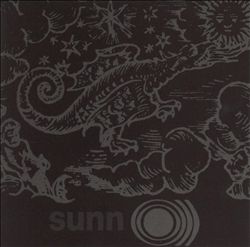
SOUNDTRACK: SUNN O)))-Flight of the Behemoth (2002).

I hadn’t really heard Sunn O))) until this record (which may not be typical as they collaborated with Merzbow on this one).  I knew that Sunn O))) played loud droney “music.”  And so it is here.  On “Mocking Solemnity” (9 minutes) and “Death Becomes You” (13 minutes) (which meld into each other seamlessly), the songs are mostly slow drones on electric guitar.  The chords are heavy and heavily distorted and they ring out for a few bars–not until the chords die naturally, there is a kind of pacing involved, but for a few bars until the chords are played again (often the same chord).  This is for those who thought Metal Machine Music was too complicated.

On paper this sounds unimpressive (or downright awful, depending) but in reality it is a very physical experience (if played loud enough).

The staticy noise of “Death” melds into track 3 “O))) Bow 1” which adds what sounds like radically modified piano playing a kind of melody.  It’s about 6 minutes and it really changes the tone of the record to suddenly add an atonal racket to the almost calming drone of the bass.  But by the middle of the song, the piano becomes what sounds like a chainsaw.  Merzbow mixed that track and  “O))) Bow 2” which is 13 minutes of the same slow pulsating noise.  It’s not exactly soothing.

The final track is “F.W.T.B.T.” a “remake” of “Metallica’s “For Whom the Bell Tolls.”  I can’t hear a thing that sounds like the original, but that’s what makes a cover interesting.  Although admittedly around the four and a half minute mark there’s some faster chords (for this band anyhow) that could be Metallica-like.  There are also drums (and vocals, although I have no idea what they are saying) on this ten-minute workout.

Not for the faint of heart (or fans of melody).

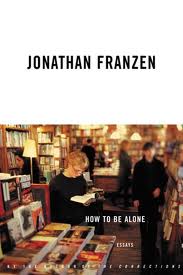
[READ: November 17, 2012] How to Be Alone

I read most of the articles in this book already.  But I read them over two years ago, so I thought it would be safe to wade into the world of Franzen again.  What I find most interesting about the title of this book is just how many of these articles are about being alone, wanting to be alone or feeling like you are alone.  Obviously that is by design but it seems surprising just how apt the title proved to be, especially given the variety of subjects  his father’s brain, being a novelist, the US Postal Service, New York City.

I’m not going to go into major detail about each article this time, although I am providing a link to the earlier review–my feelings didn’t really change about the pieces (except that from time to time I got a bit exhausted at his…whininess?  No, not that exactly…maybe his persecution complex.  But I will give a line summary about each one just to keep everyone up to speed.  The four pieces that I hadn’t read before I will give a few more words about.

One overall feeling is that when Franzen isn’t writing about the state of the novel (which he is very passionate about) his articles are well researched well documented which is kind of surprising given the state of panic he seems to be in the novel articles.  It’s also kind of funny how out of touch these articles seem (some are almost 20 years old and are kind of laughably outdated), but it’s also funny to see how poorly his predictions panned out.  The death of the novel is rather overrated (just see the success of his own Freedom.

So the book contains: (more…)

Read Full Post »

SOUNDTRACK: WOODEN SHJIPS-Live on KEXP, August 7, 2011 (2011).

while ago I reviewed an Earth concert and while I felt like I should have liked them, I didn’t like them as much as I anticipated.  Well, Wooden Shjips (no idea what’s up with that “j”) sounds like I would have liked Earth to sound–a bit faster and yet still ponderous   They play with really distorted guitars and heavy bass, but their songs aren’t terribly fast or anything.   The thing that sets them apart is the keyboard–loud droney keyboards that take a kind of lead role and add a weird sort of retro feel to the heavy proceedings.  Indeed, even the voice is fuzzed out and echoey, making the keyboard one of the few clean sounds in the show.

As befits droney metal bands, all of these songs are long.  The first two “Lazy Bones” and “Black Smoke Rise” are over four minutes while the final two “Home” and “Flight” are over 5 and nearly 7 minutes respectively.

Lazy Bones is dominated by a spacey keyboard riff and vocals that are echoed almost into oblivion, reminding me of a kind of mid 70s Black Sabbath (if Ozzy’s voice was deeper).  The riffs on “Home” and Flight” sounds like we’re in for some real classic rock, but again that droney keyboard (which also sounds retro but in a different way) mixes with the heavy distorted guitar in a new way.  I’m intrigued to hear more from them.

Rock out here.

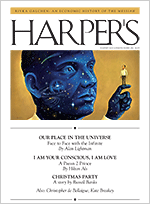
[READ: November 15, 2012] “Batman and Robin Have an Altercation”

I’m always surprised to see a Stephen King story in say Harper’s or the New Yorker.  Not because he’s not good, but because he’s such a famous genre writer (and he certainly doesn’t need the exposure).   I don’t even think of him as a short story writer, really.  I wonder how he gets his stories in these magazines?  Does he get vetted?

Well, this story was really enjoyable and if I hadn’t known it was Stephen King, I never would have guessed.

The first 3/5 of the story are about Dougie Sanderson and his Pop.  Pop is in an old age home, suffering from Alzheimer’s. They have a routine, which is easy enough for Dougie  to do, even if to his father it’s new every time.  Dougie visits every week, they go Applebee’s, and they come home.  This depends, of course, on how good Pop is doing that day–as long as he’s fairly lucid and isn’t cursing out everyone in sight.

What I appreciated about this story was that Pop has moments of incredible lucidity that can be immediately followed by moments of utter confusion   Like when Pop calls him Reggie (Dougie’s brother who died forty-five years ago in a car accident .  But the moments of lucidity are nice for Dougie–although they’re not encouraging exactly, because most days he guiltily admits that he wishes things would end sooner rather than later.

The Batman and Robin of the title refer to a Halloween costume that Dougie ad Pop wore when Dougie was little.  Indeed, Pop remembers it very well, “Halloween, you dummy.  You were eight, so it was 1959.  You were born in ’51.”  Pop even adds a detail that Dougie didn’t remember: that Norma Forester looked at Dougie and said “trick or treat” and then looked at Pop and said “trick or drink” and offered him a bottle of Shiner’s.  Dougie is silent–amazed at the memory.  Then Pop says “she was the best lovin’ I ever had.”  Dougie doesn’t know whether to believe this or not thinking, “They hurt you….  They may not mean to, but they do….  There’s no governor on them, no way of separating the stuff that’s okay to talk about from the stuff that isn’t.” (more…)

Read Full Post »

« Newer Posts - Older Posts »