Feeds:
Posts
Comments

Archive for the ‘New Yorker’ Category

SOUNDTRACK: ORMONDE-“Cherry Blossom” (2012).

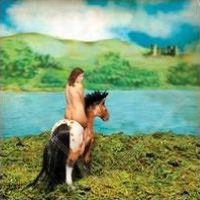
This song was also mentioned in the July 31 All Songs Considered Post.  The album had been singled out because the cover is so awful. It had even made their repository of awful covers.  And then they actually listened  to it.

It opens with some female vocals, but they are quickly replaced by a kind of whispered/sung male vocal.  Behind the vocals are some simple guitar melodies and a straightforward drum.  But there’s something otherworldly about the whole proceedings–not least of which comes when the whole thing shifts to a minor key.  The keyboard solo (which sounds like it’s a $5 Casio) brings more ethereal female vocals (maybe Cocteau Twins-y) and introduces a kind of Middle Eastern mysticism to the whole thing.

The track is so strange and so pretty (the vocals are not unlike Mark Lanegan or a mellower Josh Homme) and the pieces fit together very well.  I’m very interested in hearing more from this album, regardless of the cover.  Bob and Robin admitted that although they can usually judge an album by its cover, they had no idea that the music inside would be this interesting.

[READ: July 30, 2012] “Unprotected”

I love Simon Rich’s comedy.  Simple as that.

But there are some things of his that I like more than others.  I like his really short (like one paragraph) absurdist jokes quite a lot.  I have liked less his longer story-jokes.  So I was a little bummed that this was the latter.

Especially since it seemed kind of obvious at first (and  I really don’t care for this type of “uneducated” narration: “I born in factory.  They put me in wrapper.  They seal me in box.  Three of us in box.”  It seemed like it was going to be obvious.  And I guess it was kind of, except that Rich found a new angle on the life of a condom.

A boy steals the box and puts him in his wallet.  But where that could have gone in a very bad direction, it doesn’t.  Rich is clever and funny and introduces us to all of the other things in the wallet (Blockbuster Card (when was this set?), Learners Permit etc).   And we see that as the condom goes unused, the makeup of the wallet changes–in comes a Metrocard (who is all hilariously knowledgeable) and a creepy lady named Visa.

By the end of the story, the narrator has been taken out twice–both results are funny.  And the end of the story is surprisingly touching.

It’s a more mature outing from Rich, even if it is about a condom.

Read Full Post »

SOUNDTRACK: MOGWAI-Zidane: A 21st Century Portrait-An Original Soundtrack by Mogwai (2006).

It’s no secret that I love Mogwai.  I like them so much that I even track down soundtracks to obscure films that I’ll never watch.  (Of course, since Mogwai play mostly instrumentals, soundtrack work suits them quite well).

The Zidane of the film is Zinedine Zidane, a French footballer whom many consider to be the greatest ever (don’t yell at me for that, I don’t have an opinion of the man).  I had to look up exactly what the film is about and I have to say I’m intrigued: The film is a documentary focused on Zidane during the Spanish Liga Real Madrid vs. Villarreal CF game on April 23, 2005 at the Santiago Bernabéu Stadium and was filmed in real time using 17 synchronized cameras.  I watched a couple minutes on YouTube, and indeed it is a football match.   How on earth did they decide on that game (in which Zidane is ejected for fighting as the match nears its end).

The music is designed primarily for background and pacing, although there are certainly moments of great melody as well.  There are three songs that are more or less played twice (with different variations): “Terrific Speech 2″ and Terrific Speech” “Half Time and “Time and a Half” are similar piano melodies, and the opener and closer “Black Spider” and “Black Spider 2.”  “Black Spider 2” opens with the same melody as 1, but this song is thirty minutes long.  After a few moments of silence, it tuns into 17 minutes of quiet noise.  The remaining five experiment with distant feedback squalls.  Not loud and crazy, but something that creates a lot of tension, which goes with the end of the film.

Despite the titles, “Wake Up and Go Berserk” and “I Do Have Weapons” are a mellow songs.  They’re very pretty tracks.  Indeed, there’s nothing too wild at all here.  Fans of Mogwai’s wilder music will be a little disappointed.   And indeed, the overall feel is almost kind of sleepy, but it really captures another side of Mogwai, and the music is quite good.

[READ: June 20, 2012] “The Cheater’s Guide to Love”

Not bad… Junot Díaz had a story in the New Yorker just a few weeks ago, and now he’s got another one.

The familiar criticism of Díaz is that he writes the same story over and over (well, the other criticism is that he always writes in Spanish and English, but I think that’s a stupid complaint).  So here’s another story about Yunior and how he cheats on women and is basically a shit-heel.

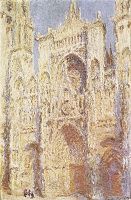
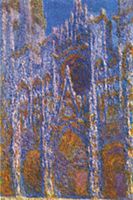
While there is some validity to criticizing an author for retelling the same basic story, it is not unheard of in art.  Monet, for instance painted over 30 paintings of Rouen Cathedral.  And while they are all the same composition, individually they are very different.  Here’s four paintings (not prints a la Andy Warhol):

While I’m not suggesting that Díaz is on par with Monet, I am trying to say that you can work with a similar subject and create very different pieces of art.

So, yes it’s another Yunior story and yes, Yunior has cheated on his girlfriend again.  But this story is constructed differently.  And at this point I’m starting to wonder if maybe there aren’t multiple Yuniors–I’ll even think of them as in alternate realities.  Because Yunior sure has cheated on a lot of women by this time.

It makes him the perfect writer for “The Cheater’s Guide to Love.”

Unlike in the other stories, this one takes place over five years!  In Year 0 you are caught cheating by your girl (the story is set in second person).  She sticks it out with you for a time and then dumps your ass.  I liked how it was revealed just how many women he had cheated in her with over the years that they were together–he really is a shit.

In Year 1, you act like it doesn’t matter, but it does.  And you are crushed.  Your friends try to help out, but how much can they really do?  You think suicidal thoughts and imagine that that will make her forgive you.  It doesn’t.  By year 2, you have met someone.  But you find some bullshit reason (she hasn’t put out yet) and you break it off and go into another spiral.

Year 3 sees you looking after yourself–running and fitness.  In what I think of as a wholly accurate happening, you injure yourself running and are knocked back on your ass for months–momentum and caring are gone.  You look for substitutes but nothing feels as good as running.  So you stop.  And you let yourself go.

What I also liked about this story is that despite this background of the break up, there are other interesting things spiraling around Yunior.   There’s a fascinating look at racism in Boston (perceived or real?); there’s the woman who claims to be the mother of his child, the woman back in the DR who claims to be the mother of his friend Elvis’s son.  Both men act very differently to the news.  Elvis is thrilled to have a son, Yunior is freaked by this woman.  This is probably the first time that I’ve seen Díaz have a woman do behave the way they do in this story.  It’s also interesting to compare Yunior and Elvis by the end of the story.

I also got a kick out of all the women he used to cheat on his girlfriend with star getting married and they all start sending him invitations: “Revenge is living well, without you.”  Year 5 sees a completion of the spiral for all parties.  And a cool resolution to this story.

Much like with the Monet paintings, if  Díaz can keep his Yunior stories interesting (and varied enough), I will keep reading them.

For ease of searching I include: Junot Diaz, Bernabeu

Read Full Post »

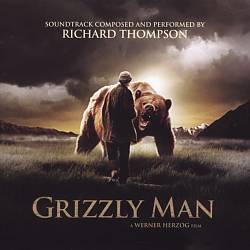
SOUNDTRACK: RICHARD THOMPSON-Grizzly Man Soundtrack (2005).

This is a largely instrumental soundtrack by Richard Thompson.  It features some wonderful guitar work (no surprise there).  There are several slow acoustic numbers (“Tim & the Bears,” “Foxes”–which is in the style of his old traditional folk ballads) there’s also the slow impassioned electric guitar solo (set over a simple beat) of “Main Title.”  “Ghosts in the Maze ” is a dark piece, the exact opposite of “Glencoe” a traditional-sounding song, both of these are under two minutes long.  “Parents” adds a cello, which means a sombre song.  “Twilight Cowboy” is one of the longer pieces, and it really conveys an openness of nature.

“Treadwell No More” is a slow six-minute dirge type song.  “That’s My Story” has spoken dialogue by Treadwell, over a simple unobtrusive guitar.  But as the title of the record says, Music composed and performed by Richard Thompson.  Which means there are other musicians on the soundtrack too.  “Small Racket” is where things start to get noisy and a little uncomfortable.  There’s some squeaks and slashes of sound, but it’s mostly a tense guitar feel.  Then comes the darker, scarier stuff.  “Bear Fight,” is a series of cello noises and swipes.  “Big Racket” is indeed that, with guitar from Henry Kaiser and noises from Jim O’Rourke.  “Corona for Mr Chocolate” is all Jim O’Rourke, it’s also odd noises and moods.  None of these three songs are terribly off-putting but they reflect a very different tone.

The album ends with “Main Title Revisited,” which is what it says and “Coyotes” by Don Edwards which has some coyote yodels.

It’s a good soundtrack, really conveying what the movie is about, and while not essential Richard Thompson, it is still some great guitar work

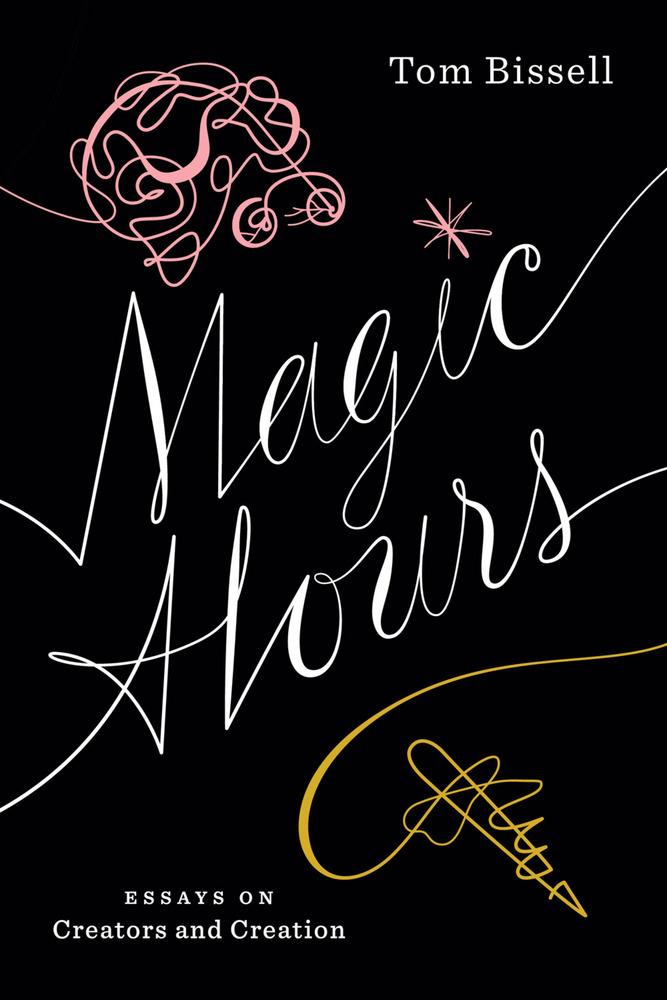
[READ: July 23, 2012] Magic Hours

I thought that I had never heard of Tom Bissell, but I see that I have read three of these articles already (I guess I don’t always pay attention to the author’s name).

This collection of essays comes from the last eleven years (2000-2011).  The articles have appeared in The Believer & The New Yorker (these are the ones I have read) and Boston Review, Harper’s, New York Times Magazine, Virginia Quarterly Review, New York Times Book Review and Outside (which I am starting to think I should really check out more).

Primarily they are articles about writing–he looks at fiction, non-fiction, film or a combination of them.  Bissell is a strong writer and he does not hold back when he sees something he likes or dislikes.  I found his articles (all of which are quite long–about 30 pages each) to be engaging, funny and very persuasive.  I’m really glad I read the book (and was even glad to re-read the articles that I had read before). (more…)

Read Full Post »

SOUNDTRACK: LATETIA SADLER–“There’s a Price to Pay for Freedom (And It Isn’t Security)” (2012).

What a treat to see Latetia Sadler as the song of the day from The Current (Minnesota Public Radio).  Latetia Sadler is the voice of Stereolab.  She has a new album coming out called Silencio and this is the first single.

It’s hard to say whether or not the song “sounds” like Stereolab, because Stereolab sounds different all the time.  But this is definitely not your bubbly Stereolab.

The song opens with some dreamy slow synths which morph into some dreamy guitars.   There’s no vocals for over a minute (which makes it seem like it might be an instrumental.  When Latetia’s voice comes in (backed by a deep male voice (very un-Stereolab) the music pulls back almost entirely and Latetia’s peculiarly inflected words [ree-uh-li-TEE] come to the fore.  It’s hard to believe that such a dreamy song would be about what the title suggests it’s about.  But how about this for a stinging (if oblique) final line: “Happy to identify with a reflection in merchandise.”

I prefer Stereolab’s bubblier music to their more dreamy, languid songs.  This one is nice, and because of her voice, it’s intriguing.  But I’d need a beat more oomph to want to get a whole record.

[READ: July 6, 2012] “An Abduction”

Tessa Hadley is rapidly turning into one of my favorite authors.  I only know her from reading New Yorker stories and I really must expand beyond these glossy pages.

This story was really fantastic.  I loved how the title has one meaning–the obvious meaning, which is even stated in the story–at the beginning, but by the end, the meaning changes to something else.

And what a great opening to a story: “June Allsop was abducted when she was fifteen, and nobody noticed.”  Shocking!  Then Hadley contextualizes this oversight: “This happened a long time ago, in Surrey, in the nineteen-sixties, when parents were more careless.”  Hmm.

So Jane was home from boarding school–her older brother was studying for college, her younger sister was not yet in boarding school and still had friends locally.  So, yes, Jane was bored.  She tried her best to have fun, but was really stumped.  When her father drove down the driveway past her and she accidentally hit his car with the ball from her Jokari set (paddle ball), the only fun she was having was destroyed.  Her father drove off in a huff.

Driving past him on the road was a two-seater convertible with the top down and three long-haired boys driving.  Her dad scowled at them, but paid them no mind.  Which is a shame as they are the abductors of young Jane. (more…)

Read Full Post »

SOUNDTRACK: THOU-“Something in the Way” (2011).

Sometimes you hear a  cover version and you really don’t know what to think.  Maybe you hate it from the very beginning.  And then maybe it does something and you kind of hate it a little more.  And then suddenly it turns the corner and who knows what they’re doing.

This song opens almost ponderously slowly.  I guess it’s not that much different from the original , but it feels so really slow.  And then, when they get to the “something in the way” part, the band kicks in with really heavy squalling feedback and cookie monster vocals shouting “Something in the Way.”  And I kind of didn’t like anything.  But then came the surprise.  the “oooh” part was sung very straight and melodically.  The song reverts back to the original slow vocals section and you realize that the singer sounds an awful lot like Cobain himself. And the second time when the chorus comes in, you expect it and while you may not like the cookie monster vocals, the juxtaposition to the sweet “oohs” is strangely cathartic.

Not for everyone by a long shot, but very interesting nonetheless, especially the way the feedback squalls and wheedles.

Thou has done a number of Nirvana covers evidently.  There’s a cover of “Anuerysm” in this live show (in which they acknowledge that the fans aren’t there to see them).  The music is spot on, but man, those vocals are hard to handle.

[READ: June 29, 2012] “The Golden Vanity”

As yesterday’s story was about “the husband,” today’s story is about “the author” (have short story writers run out of names?).  The author has just written a very successful book in which the main character tries very hard not to be nervous in social situations.  The author himself gets nervous in social situations.  When people know he wrote the book they scrutinize him to see if he gets awkward in social situations…which makes him more awkward…etc.  It’s a pretty funny concept.

The opening section has the author meeting the librarian.  He’s put in an awkward situation because his hands are full when she waves.  So he gets emabrassed and scowls.  Then he thinks she assumes he is scowling at her.  He gets through the encounter with advice from his shrink.

The next scene jumps quickly (I wonder what happened to the librarian) to his medical condition.  The author has to have his wisdome teeth out.  He spends a lot of the story wondering is he should have a local or a twilight anesthetic (which costs $3,000 more and calls for an I.V.). He wonders aloud a lot to his friend Liza, who tolerates his neuroses and enjoys talking about them, even though she says things like “We’re not talking about this again.”

The evening before the surgery (he of course chose the I.V.) he went on a date.  Well, not really a date (he liked to say that), but friends going out together with a single woman there to meet him.  Naturally this made him nervous too.  But he and Hannah hit it off (lots of drinks helped).

There’s a whole section devoted to waiting room art which I appreciated quite a bit.  Who decies what to buy?  It’s not like the doctors would come out and look on it and admire it, right?  This sort of melds with a discussion about the preserved letters of famous writers.  Do libraries buy emails?  Do they buy the letters of young writers as a security upon further greateness?  These ideas are pretty theoretical yet the way it is written keeps it inetersting. (more…)

Read Full Post »

SOUNDTRACK: EAST OF THE WALL-“False Build” (2011).

Viking picked this song back in September of 2011 as his song of the week (or however often he posted then).  I’d never heard of East of the Wall, despite their New Jersey pedigree.  (I know I don’t know every band from New jersey, but usually by the time a band has three records out I’ve at least heard of them).

This song is just over five minutes long and the vocals don’t come in until about three an a half minutes.  By the time the vocals come in, we’ve had three or four different stylistic changes.  And, by  the time the vocals have been with us for a minute it’s possible that there are four vocalists in the band.

It opens with some clean guitars playing an open (but slightly off) chord progression.  Over that comes a slightly distorted guitar and a bass playing mostly the same notes but just enough to be notably different.  Then add some drums so the song is builds very nicely.  The solo gets more and more complicated and when the drums rumble in for a climactic progression…the songs shifts into a kind of loud heavy rock/almost funk.  A new more angular solo plays over the funk riffs and it all works wonderfully.  Then the song becomes a rapid fire snare drum metal song and that’s where the vocals kick in.  I assume this is all one vocalist but who knows.  For the sake of argument I’ll pretend they are all different.

The first vocalist is a screamer–hard to understand but fitting in perfectly with the now heavy riffs.  He doesn’t say much before the second vocalist comes in.  This section of the music is mellow and kind of prog rocky and the vocalist fist perfectly–actually crooning along with the melody.  Until vocalist three comes in with a kind of cookie monster vocal which is interspersed with a different cookie monster vocalist.  By the quarter to 5 moment the first vocalist comes back, and there’s more screaming until the song ends.  It’s chaotic and cool and keeps you on the edge of your seat.  I wonder what they’re singing about.

Wow.  If I’m this exhausted writing about it, imagine how they must feel playing it.  I’m going to have to check out more from them.

[READ: June 28, 2012] “Another Life”

This story is disconcerting in that the first paragraph is a page and a half long.  And it works very well stylistically.  The whole first paragraph concerns a man (the husband) as he returns from a party for father-in-law.  He’d rather not have gone to at all, but since he is also sick and on medication, he takes the opportunity to leave early.  He arrives back at the hotel and sits down to read Rousseau’s Discourse on the Origin of Inequality.  (Holy crap!).  He can’t focus on the book so he decides to go down to the hotel bar (with the book) just to mix things up.

There are a few people in the room, but he sits alone at the bar.  The bartender (whose name is later revealed to be April P) is very nice and chats as she serves him.  She sees his book and asks what he’s reading.  He’s a bit embarrassed, because she’s never heard of Rousseau.  But she says that she reads everything and her favorite is Emily Dickinson.  He is thrown by her choice of authors and by the fact that he can’t think of anything clever to say about Dickinson.  He fumbles a bit.  She remains nice but is clearly unimpressed. (more…)

Read Full Post »

SOUNDTRACK: INVISIBLE GUY BLOG (2012).

Jonas from Invisible Guy contacted me about a project he’s working on.  I’m not quite the right fit for it, but I had to check out his site to see what he was all about.  As his About page explains; “This blog is generally a platform for unknown bands to get promoted and interviewed.”  That’s pretty awesome in itself.  But as I browsed the site, I saw that in his post Invisible Guy recommends: 80s Post-Punk – 1982 (Part II) he includes not only The Birthday Party but also The Virgin Prunes.  Much respect there (especially for someone who wasn’t alive when those records came out!).

But the bulk of his site is full of really obscure bands (lots of bands that I’ve never heard of).  He interviews band members (sometimes in Swedish!) and has quite an impressive list of publications that he’s worked for.

So head on over to Invsible Guy for a wonderful collection of punk and hardcore music as well as some iconic (and really obscure) new wave and post-punk tunes.  He’s also got some great stuff on death metal too.  Not bad for a site that’s only a few months old.  Invisible Guy has a lot of samples and videos as well as a bunch of streaming music from unreleased or just-released albums (like this demo from the Swedish band Regimen called Välkommen hem).

And here’s a video for the Swedish stoner metal band Skraeckoedlan.  The song is “Apple Trees” and no you can’t understsnad the words because they are in Swedish.  I love that.

It’s a great site.

[READ: June 15, 2012] “A Psychotronic Childhood”

The more I read Colson Whitehead, the more I like him, not just as a writer, but as a “person” (the person he presents to us anyhow.  Although I met him briefly at a convention and he was super friendly and very nice).  This essay shows that he and I occupied some of the same headspace when we were kids (we were born in the same year)—watching sci-fi and horror movies on Channel 7 & 11 after school and on the weekends.  Of course, I didn’t really get into horror movies until much later them him (his first time was when his parents took him to  a horror film in the theater at the age of 5).  FIVE!

These early horror movies really shaped his outlook.  He lists about 70 movies in this article, of which I have seen at least half (although more from MST3K than actually sitting through them unaccompanied) and his summaries about them (four or five parenthetical words) are apt and often hilarious:

  • Food of the Gods (giant chickens rain pecking doom on a small island)
  • Alien (an outbreak of tummy trouble among space miners)
  • Demon Seed (rom-com about a horny computer that wants to impregnate Julie Christie)
  • The Devil’s Run (A negligible and mind-numbing film, notable only for the utter ineptitude of its attempt to cash in on the brief occult-movie fad that followed Rosemary’s Baby and The Exorcist.

The Devil’s Run is the first movie he saw, back in 1975, in the theater.  He says that there was something good in it, that it really captured the element of terror when your loved one turns on you.  And he tapped into this for his novel Zone One.

Then he reflects back on 1981, when his family bought a VCR and he and his brother would head to Crazy Eddie (remember Crazy Eddie?) to rent 5 movies for the weekend (I didn’t even know they rented movies!).  The movies were inevitably 4 horror movies and one mainstream film.  And the family would gather by the TV and watch together.  How wholesome!  Except when you read what they were watching (I can’t IMAGINE my family watching these together when I was a kid–even now, Sarah hates horror films).   This is getting into the era of Friday the 13ths and Halloweens as well as classics like Terror Train, Prom Night, Slumber Party Massacre, Silent Night, Evil Night, Mother’s Day and My Bloody Valentine (“not even the holidays, hallmark or otherwise were safe”). (more…)

Read Full Post »

SOUNDTRACK: NOW,NOW-“Thread” (2012).

I really enjoyed Now, Now’s last single “Dead Oaks” quite a lot, and here’s another one.  A beautiful shoegazer song, hints of My Bloody Valentine, hints of early Lush.  The singer has a great voice soaring over the chugging and swirling guitar chords.

The song is smooth and dreamy, but when the guitar solo comes in, it’s kind of jagged and really unexpected–a nice treat to keep a sing from becoming too obvious.

“Now, Now” is kind of a crazy name for a band–i assumed that it would be difficult for search engines to find them.  But no.  Type in now now and there they are.

[READ: June 20, 2012] “Monstro”

I’ve read a bunch of stories by Díaz, and I was a little surprised to see him in a sci-fi issue.  Although his characters are typically nerdy sci-fi fantasy geeks, his stories are pretty much all about reality–scoring women, losing money, fighting cancer, getting women back.  And, that’s what this story is about too.

One thing that I especially liked about the story is that it is such a conventional Díaz story–his main character g0es to the Dominican Republic to be with his ailing mom.  (They live in the States but her medical costs would be much cheaper there).  So he goes to the DR for the summer.  And he meets up with a fellow Brown student who just happens to be a Very Important Person in the DR (he’s related to the 99th most wealthy person on the planet).  And this guy, Alex, hooks him up well–he gives the narrator the royal treatment all over the country.  Alex also introduces him to Mysty, the most beautiful woman he has ever seen.

And so they spend the summer together.  The narrator knows that Mysty is out of his league, but he lusts after her anyhow.  He confirms with Alex several times that the two of them are not an item, and that seems to be true. It’s clear that Mysty likes him–he doesn’t put up with Alex’s shit or with hers, but it’s also clear that they will never be together.

Díaz doesn’t skimp on the story either–we learn all about Alex’s background (and the fact that despite all of his wealth, he’s not coasting–he’s pulling down a 4.0 from Brown).  We also learn all about Mysty–her history, her desires and her disdain for the Dominican Republic.  And, naturally we learn all about the narrators mother–what’s wrong with her, how she’s coping and how she’s tells him that he doesn’t have  to stick around–he’s not doing her any favors.  And so he leaves her to have fun with his friends.  As he says, “What an asshole, right? What a shallow motherfucker.  But I was nineteen–and what is nineteen, if not for shallow?” (more…)

Read Full Post »

SOUNDTRACK: JACK WHITE-“Sixteen Saltines” (2012).

I really liked the first White Stripes album.  After that things were just a little too samey to me.  So I pretty much stopped listening to him.  This new album is all the rage (as is everything he does), and this is a song that NPR picked as one of their favorites of the year so far.

And as with everything Jack White does, it’s immediately fun.  It’s also simple as anything, with a raw and aggressive sound–just like everything else he does.  I usually don’t mind when an artist plays the same stuff over and over, I mean it’s called a signature after all, but for some reason it bugs me with him.  Or maybe I just don’t like him as a “person.”

Anyhow, I can’t deny that this song is fun (the vocals done in a kind of R&B vein (sounding like Michael Jackson a bit?) and the addition of keyboards half way through are a nice touch.  But I can’t say that I’ll remember the song much after it’s over.

[READ: June 16, 2012] “Black Box”

I have been meaning to read Jennifer Egan’s A Visit From the Goon Squad for quite some time.  But in the meantime, I’m happy to have read this short story, which I assume is nothing at all like her novels.

“Black Box” is written in a series of small numbered black boxes.  And each box contains a number of statements in the second person.  It’s a striking and unusual way to concoct a story.  I didn’t really think it would be all that intriguing because the tone is so matter of fact and instructional.  But I was thrilled with how much of a story Egan created out of this style.  And, yes, it is a full story.

So Box number one begins: “People rarely look the way you expect them to, even when you’ve seen pictures.”  Then, “The first thirty seconds in a person’s presence are the most important.”  Then, “If you’re having trouble perceiving and projecting, focus on projecting.”  Then, “Necessary ingredients for a successful projection: giggles; bare legs; shyness.”

So, what is this?  instructions?  advice?  quips to live by?  Well, it turns out that they are instructions to a “beauty.”  And this beauty is working for her country, to take down a bad guy.  She is a spy, although not a professional spy, she’s just a beauty doing her country’s work.  The instructions show (in a very unexpected way) how the story unfolds: “‘Shall we swim together toward those rocks?’ may or may not be a question.”  And so, “you” and your Designated Mate swim to an island where sex in inevitable.  “Begin the Dissociation Technique only when physical violation is imminent.”  For indeed, “you” are married, but your husband approves of this mission, for the good of United States and the world.

As the story unfolds, the reader realizes that this is not just a beautiful woman who has been called into the service of he country, but something a little more. “If you are within earshot of his conversation, record it.”  Well, how will she do that one wonders.  “A microphone has been implanted just beyond the first turn of your right ear canal.”

Cool. (more…)

Read Full Post »

SOUNDTRACK: SURFER BLOOD-Tarot Classics (2012).

I really enjoyed Surfer Blood’s debut album.  This EP is a little stopgap until the next one. Although the sound is unmistakably Surfer Blood–poppy hooks and a very recognizable singing voice, the band sounds a little bit different here.  They haven’t lost any of their catchiness–there may be even more on the opener, “I’m Not Ready” (who doesn’t love when the guitar and vocals match each other?)  “Miranda” has that fun thumping chorus that is always fun to sing along to.

“Voyager Reprise” moves away from the surf-styled songs of their debut into an alt-rock of the 90s sound–when guitars were noisy (until they were quiet for a bit) and guitar solos happened between verses instead of as the third verse.  And “Drinking Problem” has a kind of early Depeche Mode (in vocals, not synths) feel–quite a departure from their debut.

In the way of EPs, the final two songs are remixes.  I’ve never been a fan or remixes and these don’t do much for me, but i do wonder if they will have any impact on their future sound.

[READ: June 14, 2012] “Olds Rocket 88, 1950”

All this time I thought there were only five of these short essays in this sci-fi issue of the New Yorker.  And yet tucked away near the back was the sixth one by William Gibson, a pioneer in science fiction.

Gibson’s recollection is of being a child and having everything seem like science fiction–something that is notably absent these days.  Like the chrome trim on his father’s Oldsmobile Rocket 88, the prevalence of spacemen and space-themed ideas everywhere.  Even the word Tomorrow was capitalized.

Then he recounts a personal incident.  He got in trouble with his parents for arguing with an Air Force man.  The man said space travel would never happen. But Gibson knew it would.  How could it not?  And science fiction shaped this worldview.  Not that he believed the stories would come true, but that his entire mindset was that in the future “things might be different…and different in literally any way you could imagine, however radical.”

What a wonderfully freeing notion.  To me, this sort of future-looking lifestyle accounted for the unprecedented achievements of post 1950 America.  Now that we no longer think of tomorrow with a capital T, we don’t seem as enchanted by the future.  Perhaps it was a naive outlook, but you need a certain degree of naiveté if you hope to do anything radically new.

Gibson ties in the sci-fi books he bought for a dollar to other fantasists: J.G. Ballard, Ursula K. Le Guin, Michael Moorcock, and how these thinkers weren’t all that far off from the likes of Kerouac and William S. Burroughs.  And he believes that without science fiction, he might not have been interested in what these other radical writers had to say.

It’s a short piece, but it really made me wish for more chrome and space-age technology in our lives–when people weren’t afraid to dram big.

Read Full Post »

« Newer Posts - Older Posts »