Feeds:
Posts
Comments

Archive for the ‘New Yorker’ Category

SOUNDTRACK: JAPANDROIDS-“Fire’s Highway” (2012).

I regret dismissing the suggestions of the NPR folks the other day.  As the more I dig into their suggestions, the more I like–seems their selections are better than their descriptions of said selections.  Take this description of the Japandoids’ album: “snarling punk meets the fist-in-the-air anthemics of Born to Run-era Springsteen and his modern-day equivalents in The Gaslight Anthem.”  I’ve never really liked Springsteen (I know, a Jersey boy, too).  I think it’s more about production (and saxophone) than anything else.  So, comparing bands to him is never a sell for me (even if it may be true).  To me, this sounds much more like a low-key Arcade Fire (with literally no pretensions to anything–I mean, there’s only 2 Japandroids).  Granted, Arcade Fire owe a lot to Springsteen too, but they do something different with his sound, which is why I like them.  [I’m not going to be able to argue my way out of this].

Anyhow, this song is a four minutes of punky guitars and a stupidly catchy chorus.  The fact that it’s only two guys makes it all the more remarkable that it sounds like a full band.  And perhaps, the biggest difference for me is the singer’s voice which feels very early 90s alt rock/punk.  Whatever it is, I’m a fan and will certainly be listening to more of this album.

[READ: June 14, 2012] “The Clockwork Condition”

Like most young men of a certain bent, I loved A Clockwork Orange.  I’ve watched it dozens of times and I’ve read the book.  What I especially like about the story is that my feelings about it change as I get older—which, while not the point exactly, is certainly a theme in the story–how age makes things seem different.  The most important thing I learned from this article is that there was an epilogue in the British version of the book that was not available in the American version (or the film).  And it seems to be pretty important.  What a strange thing to leave out.

Incidentally, Burgess wrote the book in 1962 and the film came out in 1973, which is why he was wrote this in 1973.  He says he was asked about Issues that arose from the film.  And he talks a lot about them.

But he also gives a lot of background.  The title of the book comes from the expression “as queer as a clockwork orange” which is Cockney slang for something so weird it subverts nature.  It was a perfect title for an idea he was going to write about—how people suggested using aversion therapy to change juvenile delinquent behavior.

So this article goes on for a pretty long time, raising all kinds of questions.  It’s really articulate and fascinating and really makes me want to re-read the anti-authoritarian novels I read in high school: 1984, It Can’t Happen Here, Brave New World.   He even talks about B.F. Skinner, who proposed that aversion therapy (which is what Alex gets in the book/movie) was wrong and that positive reinforcement was always more effective.  Skinner worked with animals (Burgess jokes about that) and the whole “you get more flies with honey” attitude works better for training animals he says.  The same is true for people.  Besides, aversion therapy removes freewill. (more…)

Read Full Post »

SOUNDTRACK: CARLY RAE JEPSEN-“Call Me Maybe” (acoustic) (2012).

I had never heard of this song until about three days ago.  I’m led to believe that this song is massive, and yet somehow I missed it (which is fine).  I first read about it  as “the song that Justin Bieber made famous.”  So I listened to it and I hated the overproduction of it.  Then one of the folks at NPR picked it as her favorite song of the year (the discussion was split 50/50 between love and hate).  And I had to agree that after another listen, it was really catchy.  But I still hated the overproduction.

One of the people in the discussion said that an acoustic version would be great.  So I found one (there are actually a ton online…this song really must be huge).  And indeed, the acoustic version is pretty nice.  It is insanely catchy (and remarkably sweet).   And her voice is very intriguing–I think her voice really makes the song.  Absent all of that obnoxious production, this is an enjoyable pop song (although, the keyboards are pretty awful still on this version–loose the keys, Carly).

One acoustic version (that’s barely 2 minutes long) is available here.

[READ: June 13, 2012] “My Internet”

I was poisoned against the story because I read just one line of Karen’s review: “Let’s face it – without Jonathan Lethem’s name on this, it’d never get out of a slushpile.”  That was a pretty big hurdle for this story.  And it never cleared it.   I’m going to have to agree with Karen—possibly not as harshly, but with a general….huh?  I have a hard time believing that this found a publisher.

The idea is kind of interesting:  there is a another internet tucked away inside the internet we all know.  There are only 100 people who are on it, and they were all sent special invitations to join.  There are only two rules on this Internet—no money and no animals.  But for some reason (explained by the end), the narrator is unhappy here, and he wants to create his own internet within this other internet (which is within the global internet).

And that’s pretty much it. (more…)

Read Full Post »

SOUNDTRACK: PHISH-“In the Aeroplane Over the Sea” (2010).

My friend Jay sent me this clip of Phish covering Neutral Milk Hotel’s wonderful song.  He was at the show and sent me a link  to the YouTube video.

The original of this song is wonderful–always sounding like it’s going to collapse in on itself but never actually doing so.  It is full of angst and emotion and after the first listen, where you say, “is he really going to sing the whole thing like this?” you are totally hooked.

The Phish version evens a lot of that angst out.  It’s a strange thing to say about Phish, but they make this song far more commercial.  They turn it into a pretty ballad.  And that’s kind of a shame since the original is so iconic.

In Phish’s defense, this is part of one of their sets (they unveiled a new cover on every day of the tour), and it’s not like they are trying to record a definitive version of it or anything.  So they make it into a Phish song–with a long solo and everything.  And the solo sounds like a total Trey solo.  I’m not sure what songs surrounded this one, but it sounds like it fit perfectly into their set.

As the folks at Stereogum say, “If you’ve always felt “Aeroplane” needed more guitar solo, this is your lucky day.”  For me what it did was make me want to listen to the original–and that’s never a bad thing.

[READ: June 5, 2012] “Quests”

This essay opens up with a history lesson.  In the early nineties, Pizza Hut sponsored the Book It! program to promote reading.  For every ten books you read you got a free pizza.  Well, it turns out that they either still do this or they do it in a modified form because my son has been getting these free pizza coupons all year.  Of course, we live in New Jersey, where the pizza is plentiful and delicious (there are at least 4 excellent pizza places within ten minutes of our house).  And you’d be a fool to eat Pizza Hut, even if it is free.  My son is pretty bummed about this, because of course he wants to redeem his prize.  And I suppose one day we’ll let him do it, but it would painful.  I actually don’t even know where a Pizza Hut is by us.

But that’s got nothing to do with Russell’s essay.  She realizes the truism that there is no greater pleasure than reading for pizza.  Because it’s not just reading for escape and fantasy, now you’re a breadwinner. Literally.  Russell’s genre of choice was fantasy (Terry Brooks in particular–I love that she realizes later in life that he took his ideas from Dresden and Hiroshima and how it blew her mind). (more…)

Read Full Post »

SOUNDTRACK: PHISH-The Man Who Stepped Into Yesterday (1987).

This record was created by Trey Anastasio as his senior project at Goddard College.  The thesis included an essay piece and this collection of songs (recorded by Phish) relating this epic tale from the band’s fictional land of Gamehendge.  It was never officially released, but since Phish is so free with the tape trading, it is pretty widely available online (heck, even Wikipedia has a link to the Lossless SHN download of the album).

This release is legendary in the band’s history because they have played all of the songs from this album many times in their live shows (some much more than others, of course).  And while they have more or less played the Gamehendge saga a few times in concert, I’d always wondered what the original story was all about (many songs have since been added to the saga as it grew larger).

So here in all its tape-hissy glory is the original.  My first thought is that I guess it was hard to get good sound recording equipment in 1987 (or else this is a multi-generational copy—the “white cassette” from a year earlier sounds better).  And there seems to be a few flubs in the narration (which could be from copying).  I actually surprised he didn’t use a more authoritarian voice for the narration.

For fans, this is fun to hear because of that narration.  Live, the narration varies all the time, not always explaining what is going on the same way (some live narrations are far better and much more interesting).  But here you get it straight from the source.  The narration is accompanied by rather pretty instrumental music (which varies depending on who he is speaking about).  But for those of us who know all of these songs, the biggest surprise is finding out that “AC/DC Bag,” “The Sloth,” and “Possum” were part of the story (or maybe the biggest surprise is learning from the narration what the hell an AC/DC bag is (a robotic, mechanized hangman, of course).

The story is pretty interesting (Wilson and the Helping Friendly Book and all that), although by the end it loses itself a bit.  And I’m not really sure that “The Sloth” and “Possum” fit into the story at all.   But hey, he was a college senior when he wrote it, one can forgive a little sophomoric nonsense, right?

[READ: June 11, 2012] “The Republic of Empathy”

This is the first fiction I’ve read of the sci-fi issue.  I’m not sure if it’s supposed to be sci-fi, because it’s not really, at least not in terms of genre (I’d say sci-fi fans would object to the designation of sci-fi for this).  But it is futuristic and neat.  I especially enjoyed the humor and the construction of the story—Lipsyte is usually good for both of these.

It begins with William.  Williams is married to Peg.  Peg wants to have a second child as a gift for their first child (who has just grown out of the new baby smell).  William thinks this is crazy, but Peg says it’s a dealbreaker.  The next day William, who works for a flip-flop company, smokes a joint with an ex-cop friend, Gregory on the roof of their building.  On the roof across from them, they see two men fighting. And then one falls of the roof—splat.

Gregory says he’s seen this before but that William will be traumatized.  And he is in his dreams, but he’s even more traumatized when he dreams that his wife is pregnant and they already have two kids.  Oh, and that the neighbors, the Lockhorns, masturbate each other in the living room with the windows open.

Section two is from Danny’s point of view.  Danny is Gregory’s son.  Every few weeks Gregory is dating a new, younger lady.  This one is only a few years older than Danny.  It’s gross (and Danny feels like a bad YA narrator as he relates the story).  This is all before (I assume) Gregory comes out of the closet.  Because William knows that he’s gay in the above scene. (more…)

Read Full Post »

SOUNDTRACK: SQUAREPUSHER-Solo Electric Bass 1 (2009).

Yesterday I said that one Squarepusher CD was enough for me.  I did some digging and found out that he has put out a whole bunch of CDs.  And, to the surprise of me, at least, not all of them are crazy electronic music.   This CD, as the title states, is a collection of electric bass solo songs.  The songs were performed live as part of the Jazz à la Villette 2007 festival and were played on an electric six-string bass with no pedals or effects.

And that is all you get—serious solo bass songs.  The man behind Squarepusher, Tom Jenkinson, is apparently a virtuoso musician (who knew?) and these songs really show off his chops (just listen to the insanity of “Seb-1.05” (catchy title, eh?)).  He can play some impressive Spanish-sounding songs–that would probably sound better on a guitar, but sound more impressive on a bass (“Seb-1.06”).  He’s got some great slap stuff going on (“Seb-1.03”), and he really knows from melody (also “Seb-1.03”).  True, 12 all bass songs can meld into one another, but the crowd really loves it (and like a lot of things, seeing it is probably more impressive than just hearing it).

It’s not exactly “fun” listening (even if you love bass solos).  Only 850 copies of the disc were released, so it’s not like they expected a big audience for this.  But it is pretty neat to hear a) how good he is and b) that his main musical output is noisy electronic noodling.  That gives me even more respect for his electronic output.

[READ: June 5, 2012] “The Spider Women”

Margaret Atwood is another author I wish I had read more of—and I’m getting there.  I often wonder if I should just read an author start to finish and be done with him or her or if that just leads to madness.

Much like Miéville says in the previous essay, children don’t read genres, they just read what they like.  I loved Atwood’s idea that “below a certain age, [children] don’t distinguish between ‘true’ and ‘not true,’ because they see no reason why a white rabbit shouldn’t possess a pocket watch, that whales shouldn’t talk, or that sentient beings shouldn’t live on other planets and travel around in spaceships.”  After all, sometimes reality lives under the bed and has sharp claws. (more…)

Read Full Post »

SOUNDTRACK: SQUAREPUSHER-“Dark Steering” (2012).

Hot on the heels of a review of LMFAO I get to the other side of the spectrum in electronic music—Squarepusher.   There’s no big choruses, heck there’s no words, but this music shares something with LMFAO.  Well, actually it really doesn’t—except maybe keyboards.

Squarepusher play dark angular music. It’s very electronic and alien (and sounds like it may have been used in the background of Skinny Puppy songs back in the day). It’s abrasive and the sounds are otherworldly and yet in this song, there’s a melody to it.  I have but one Squarepusher CD—that’s probably enough for me.  But I am always interested to hear new music by him.  It’s impressive the way he can take a song that starts out so noisy and get it to sound like real music by the end.  It like the science fiction of music.

[READ: June 5, 2012] “Forward Thinking”

I have read only one book by China Miéville—Perdido Street Station.  I found it to be quite challenging for a bunch of reasons and figured I wouldn’t read more by him.  And yet I find that images from that book stay with me to this day (at least ten years on).  So maybe it’s time to give him another shot.  But where to start?

This entry in the New Yorker’s Sci-Fi issue is written as an “E-mail sent back in time to a young science-fiction fan.”  And I loved it.  I enjoyed how it started (with the author knowing that E-mail doesn’t exist at the time the recipient will get this—so who will it show up?)  And I loved the central question: “How did you get into this stuff?”  The sender knows that the kid will get asked this a lot, but the question should be turned around: “How did you get out of it?”  Because all kids love sci-fi concepts.  It’s just that some move away from it as they get older.

Miéville includes a few key moments in (his) sci-fi history: Page 40 of “The Tale of Mr. Jeremy Fisher” by Beatrix Potter.  What?  Indeed, for this is the first time that (you) will be ware of knowing something the protagonist doesn’t—that there’s  fish coming up to get him.

Next is Chapter 13 of Golem100 by Alfred Bester.  I have never heard of this book.  Although Miéville does warn us about it—he read it far too young and there’s some sadistic violence in it, what attracted him (and me, now) is the disrespect for text—part of the story is a musical score, another is a picture.  It sounds cool.  And of course it is long out of print. (more…)

Read Full Post »

SOUNDTRACK: TARKIO-Live on KGBA (from Omnibus) (1998).

Tarkio released an album called Live on KGBA in 1998.  Omnibus collects 4 songs from that release (according to various websites, the other tracks include “Kickaround” “Neapolitan Bridesmaid” “Helena Won’t Get Stoned” “Caroline Avenue” and “Candle”  (from the I Guess… album) “Weight of the World” (from Sea Songs) and “Whipping Boy” (the only song that’s not elsewhere on Omnibus).  This live record was distributed in some fashion way back when and there are copies floating around the internet.  I’m not willing to risk a virus by clicking on these links though, so I’ll stick with the few tracks on Omnibus.

The sound is excellent, and the full collection would no doubt be a welcome addition to anyone’s Tarkio fandom.

“Carrie” has a very Neil Young feel, from the rough acoustic guitars to the aggressive strumming technique.  It doesn’t sound like any Neil Young song in particular but you can imagine Neil looking on and smiling.  Even the solo is kind of Neil-ish (electric guitar over the acoustic main song).  “Am I Not Right?” sounds like a newer Decemberists song—there’s some very cool abrasive chords at the chorus “Knowledge!”  “Mess of Me” is a boppy acoustic number that’s fun to sing along to.  It opens kind of like the Decemberists song “The Infanta” but quickly turns into something else entirely.  “Goodbye Girl” is a cover of the Squeeze song done with a dominant banjo.  Although it lacks the original’s punch, it works well as a folk number.

[READ: June 5, 2012] “The Golden Age”

I feel like I’ve really been missing out by not reading any Le Guin.  The more I read from her now, the more I feel like I should be dropping everything and reading her output.  And I will read at least some of Earthsea eventually.

But in the meantime, I can enjoy pieces like this.  She talks about how science fiction has never really been considered “literature” and how it’s always been relegated to the genre ghetto.  Be that as it may, she’s also disappointed when science fiction writers try to deny their ghetto by saying, “Pay no attention to the spaceships…[this] is Literature.”  She thanks Michael Chabon for smashing down at least some of the ghetto walls.

Which allows her to look back at the past and the early Science Fiction Writers of America conventions.  She remembers the fun talk and open mindedness—except for a notable few who were deeply conservative, a surprise for a group of men who were supposed to be looking forward, not back.  And yes…men.  There were very few women sci-fi writers back in the fifties (in “The Golden Age”).  Indeed one SFWA member wanted to create a members-only necktie! (more…)

Read Full Post »

SOUNDTRACK: TARKIO-three song demo (from Omnibus) 1997.

These three songs are part of a demo released in 1997.  I actually assumed that Omnibus would have collected all of Tarkio’s releases (how many more can there be?), but I learned that “omnibus” means “a book containing reprints of a number of works.”  So there ya go.

Nearly every review of Omnibus complains about the size of the release.  Some complain that the songs are too long (which is something else entirely), but many seem to suggest that 27 songs is too many for this collection.  I don’t quite understand this attitude, because if it were the collected works, there would be no reason to complain.  As such, I suspect I am the only person who wishes there was a little bit more–like why not the other two songs from this demo?

And demo is a rather unfair name for this, because it sounds wonderful.  (I suspect a demo from 1997 could be recorded with much better equipment than a demo from say 1984).  And these three songs are really something.  I suppose also, listening to these songs in this manner–not as a two disc set but as an original demo of three songs, makes them seem like maybe there isn’t too much of a good thing.

“This Rollercoaster Ride” opens with an interesting pseudo Middle Eastern violin.  But it quickly settles down into a very catchy rock/folk song.  It sounds very Decemberists, and it’s extremely catchy.  “Following Camden Down” is a beautiful song (the reminds me of The Replacements’ “Skyway”).  Meloy’s voice sounds subdued and not as immediately notable as he normally does.  It’s a wonderful little song.  “Slow Down” is a bouncy folk number (with dominant violin).  It’s got a rocky alt feel, although it still reads as traditional folk.

True, none of these songs reach the delirious heights of the best Decemberists songs, but they’re a nice step towards the kind of music Meloy and friends would put out next.

[READ: June 5, 2012] “Take Me Home”

This issue of the New Yorker is devoted to Science Fiction (see the cover).   In addition to five stories (which I assume are science-fiction-y) we also get five (more or less) one-page pieces from masters of the genre (genre being a dirty word, we’ll find).  When I first saw the names of these writers, I thought they were each creating a cool one-page story.  So I was a little disappointed to realize that these are “personal histories” with sci-fi.  But I shouldn’t have been disappointed, because even though these are short, they are really impactful–and come on, they’re classic writers.

I’m surprised by the fact that I haven’t read more Ray Bradbury.  I know I’ve read Fahrenheit 451 and I’m sure I’ve read some of his stories, but I haven’t even scratched the surface–he has written so much!  Indeed, I was surprised to hear that he was still alive (in fairness, he is 92).

This piece begins with Bradbury’s recollections of his introduction to sci-fi with Buck Rogers (1928) and John Carter of Mars (not Disney’s creation, but a series of stories by Edgar Rice Burroughs). (more…)

Read Full Post »

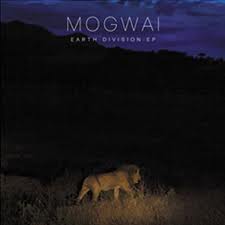
SOUNDTRACK: MOGWAI-Earth Divison EP (2012).

Oh wait, this isn’t the Mogwai EP.  What CD did I put in?

Holy crap, it IS the Mogwai CD.  And it opens with a beautiful piano and violin ballad called “Get to France.”  While it’s true that Mogwai has always been about melody (under the noise), I never expected this.  It sounds like a gorgeous soundtrack to a sad film.  It’s followed by “Hound of Winter” a gentle ballad of acoustic guitars and strings.  I know that Mogwai has a softer side, it’s just surprising to hear it all at once like this!

“Drunk and Crazy” is more like it.  It opens with a wall of guitar noise which…vanishes after about two minutes into a gentle, dark string section (strings are by Luke Sutherland of Bows and Long Fin Kille).  And while the distortion never entirely goes away (it’s evident in the piano), it is certainly pushed to the background until about 90 seconds later when it begins to overtake the track again.  It’s nowhere near as dynamic as their best stuff, but it really showcases what Mogwai can do in just over 5 minutes.

The EP ends with “Does This Always Happen?”  While it reintroduces electric guitars, it’s still a mellow song–a pretty electric guitar riff repeated while piano stabs and chords flesh out the tune and strings make it a fuller song.

None of  these songs will become “classics” (although Does This Always happen?” sounds the most like  a Mogwai song).  But it’s always great to hear them expand what they can do.   And these EPs give them a chance to show off some new styles.

To learn more about these tracks, read Stuart’s explanation of them at The Guardian.

[READ: May 25, 2012] “The Proxy Marriage”

I love Maile Meloy and I was crazy excited when I saw that she had a story in this issue.

Meloy writes stories that seem simple—they avoid a lot of the trappings of contemporary stories, indeed, they often feel like they are set in the past, even if, like in this one, they are very current.  Part of that is setting.  She tends to write about people and family interactions, which don’t require a time frame.  She also tends to set her stories in unlikely places—Montana, for instance, where not too many stories are set.  Of course, this one is set in Montana for a good reason.  It is the only state that allows double proxy marriage.  Which is what?  In a proxy marriage, if your beloved can’t make it, you can have a stand-in for him or her do the speaking and signing.  In a double proxy marriage, neither person is present but they agree to let proxies serve for them.  Why on earth would you do this?  Well, this is common in military cases, where one member is serving overseas and the other doesn’t live in Montana—this allows the non-military person to get all of the military benefits that a spouse is entitled to.  Since Montana allows this, and since this story is set soon after the 9/11/01 attacks, it all jibes.

But this story is really about unrequited love.  And I have to say, now that I’m an adult, that unrequited love sucks.  I mean, true it sucks when you’re in it too, but I hate stories that romanticize the idea that you should hold fast to the belief that this person who doesn’t  think about you that way will somehow come around. It happens a lot in stories (and always swells the heart) but when have you ever heard of it happening in real life?  Most of the time the person isn’t worth it , but realistically, once you have left school (it always happens in school) that person has found someone new and that’s the end of it.

This story’s unrequited lover is William, a shy awkward boy who plays the piano.  The girl he pines for is Bridey Taylor, with golden curls and dreams of being an actress.  William never asked her out.  Bridey was popular and other boys asked her out—and William suffered through every one.   But they were friendly—she sang while he played piano, and he helped her with school work.   Then the 9/11 attacks happened.  And this is where the story gets interesting.  Because although neither of  the main characters are not directly involved in the attacks, when the requests start coming in for proxy marriage, Bridey’s father, who was willing to perform them, asked William and Bridey to be the proxies. (more…)

Read Full Post »

SOUNDTRACK: SISKIYOU-Keep Away the Dead [CST083] (2011).

I really enjoyed Siskiyou’s first album. This album updates the sound and makes it a bit bigger.  And yet somehow the album still sounds fragile.

The album is full of songs that are catchy, but not really easy on the ear.

The first song reminds me of Arcade Fire.  Something about the ringing guitar and crescendos.  But the recording feels more like a demo, much more intimate that Arcade Fire.  “Where Does That Leave Me” is an even more spare number, just vocals and guitar although it slowly builds.  “Twigs and Stones” is the first song that sounds like the bulk of the album—where Colin Huebert’s vocals really come to the fore.  His vocal style is loud and verging on the whiny (again, like Arcade Fire).  This song also has a lot of other instruments that percolate to the top—reminding me of older Mercury Rev.

“Revolution Blues” is the standout track for me, it’s incredibly catchy (and fun to try to sing in his eccentric voice).  The accordion and the minor key intensity is really powerful.  I guess it’s a shame that it was written by Neil Young, then (although the Siskiyou version is much better).  “Dear Old Friend” is a more country sound (which for me is shorthand for slide guitars), but it keeps the same style and feel as the other songs.  “Fiery Death” is the first song where percussion makes itself known very loudly.  It’s a cool introduction of loud thumping.  “Sing Me to Sleep” is a 2 minute lullaby and “Dead Right Now” is a 2 minute coda that ends the album nicely.

The disc is short (about 30 minutes) but a lot of emotion and craft is packed into it.  It’s really enjoyable.

[READ: May 24, 2012] “Sweet Dreams”

I’m always disconcerted when a story is in English but is set in another country.  Well, that’s not exactly right.  When it seems like it’s set in another country because the author is from that other country and he or she is writing about that other country without specifying it (usually because it is translated).  It’s very Amerocentric, but perhaps everyone thinks a story is set in their town unless told otherwise.  So I didn’t realize that this story was originally written in German (it was translated by Michael Hoffman), but it felt like it was taking place in Europe.  I actually guessed France, until later on it was revealed to be Switzerland.

There’s something cool about stories that are written elsewhere, especially if you don’t know the place well, it allows for almost anything to happen.  A couple riding a bus in Europe doesn’t mean the same thing as a couple riding a bus in, say Tallahassee.  But having set up that distinction, this story is about love.  And love is universal.

The story is written from the point of view of Lara, a shy bank worker.  She has been dating Simon for several months and they have recently moved in together.  They should be in the first bloom of love—on their own for the first  time (they never felt comfortable fooling around at their parents’ houses)—but her shyness in particular won’t loosen.  She doesn’t like him to see her naked, and they are very reserved in their love-making.  And from the start Stamm places a dark tone over the story.  The get a place in the town that he likes but it’s pretty run down.  He hadn’t brought much to the apartment, and he seems critical of some of her purchases.  He even comments that “forever is a long time” when she says that the towels she bought will last forever.  And then on the bus, a man, dressed in a long black coat stares at Lara over and over.  It may be innocent, but it’s still disconcerting.

When they get home, she takes a bath (she won’t let him in the bathroom) and asks him to go to the restaurant downstairs to buy a bottle of wine.  She finishes the bath and he’s not back yet, so she reads the paper.  Which is full of more grim news.  When she reads about a dead body found in the lake nearby and since we know she doesn’t feel comfortable about the restaurant downstairs, we know something bad has happened. (more…)

Read Full Post »

« Newer Posts - Older Posts »