Feeds:
Posts
Comments

Archive for the ‘New Yorker’ Category

one moreSOUNDTRACK: OLD NAVY HOLIDAY HITS (2003).
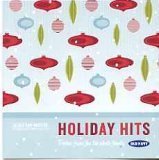
oldIt seems that every year stores release their own Christmas mixes.  I feel like Old Navy was one of the first stores to do so (especially in their weird retro style).  What is surprising is just how much I enjoy this compilation.  It has a great mix of traditional and unusual.  There’s some cool remixes, there’s some unexpected “space-age” tracks and it’s just boppy and light and fun.  Until the end where they go for an unusual (although it somehow makes sense for Old navy) but unenjoyable song to end it with.

PEGGY LEE-“Winter Wonderland” A great, slightly space age version of this song.
ANDY WILLIAMS-“Sleigh Ride” I do love an Andy Williams Christmas song—earnest and clean and lots of fun.
HOLLY COLE-“Christmas Is” I don’t know this song that well.  It’s a fun, different Christmas song, done on a jaunty piano.
ELLA FITZGERALD-“Have Yourself a Merry Little Christmas” I love Ella, and I love the horn blasts as the song opens and closes.
PATTI PAGE-“Boogie Woogie Santa Claus” I don’t love this version, which is surprising as I love this era, but I think I don’t like her voice that much.
CAPITAL STUDIO ORCHESTRA-“Cha Cha All the Way” one of my favorite swinging weird holiday songs.
THE PENGUINS-“Jingle Jangle” has a fun “native” beat to it. It’ sa n odd song and I don’t love the singer’s voice, but the music is fun.
RAMSEY LEWIS-“The Twelve Days of Christmas” a piano instrumental that sounds nothing like the song…fun though and appropriately Christmassey somehow.
DIANA ROSS AND THE SUPREMES-“The Land of Make Believe” I didn’t even realize this was Diana Ross—the production is so low key. And the shuffle beat and strings seems very much unlike the Supremes to me. It fits in well with these songs.
DUKE ELLINGTON-“Jingle Bells (Robbie Hardkiss Remix)” I love this remix a lot, it’s one of my favorite Christmas songs.
JACK JONES-“Mistletoe and Holly” another retro-seeming, very clean-sounding song. It’s kind of mockable but fun at the same time—like the best Christmas stuff.
MARVIN GAYE AND TAMMI TERRELL-“Two Can Have a Party” I really don’t like this song in general and it doesn’t feel holiday enough for this disc.  But it’s a harmless end to an otherwise fun collection of Christmas songs.

[READ: December 1, 2014] One More Thing

I really enjoyed Novak’s short piece “The Man Who Invented the Calendar” in the New Yorker (which is included in here). So I was pretty excited to read this collection of his “stories.”

There’s over 60 stories in this book. Many of them are really short (some are just a few lines).  And typically the shorter the pieces the funnier they tend to be (the super short ones are pretty much a perfect set up for a punchline).  But interestingly, there are several really long pieces (some over 10 pages) and these are more thoughtful and, while kinda funny, not meant to be laugh out loud funny.  It’s an interesting mix.  It’s especially interesting because at the end of the book, he has a piece called “Discussion Questions” in which he asks:

Did you flip through the book and read the shortest stories first?   The author does that, too.

If you do that, you will laugh a lot at the beginning and then have precious few laughs at the end, so don’t do that! (more…)

Read Full Post »

withoutSOUNDTRACK: GOJIRA-L’Enfant Sauvage (2012).

gojiraGojira is a French heavy heavy metal band, and this album was highly recommended back in 2012 (I didn’t realize it wasn’t their debut–they have quite a few records out already).  This album is quite heavy, but it has a lot of diverse elements to keep it interesting.

At the same time, they do rely on a couple of guitar effects which make the album weirdly samey (no idea if they do it on other albums too).  The two biggest offenders in this “repeated” scenario are the seeming over-reliance on the open high e string to add contrast to the heavy chugging chords.  It’s a cool effect once or twice but they do it a lot (especially in the song “The Axe” where it happens way too much and which is then followed by “Liquid Fire” where they do it again).  The other thing they do is this weird scraping sound.  It happens in the first few notes as the disc opens (in “Explosia”).  It’s a really cool sound and quite distinctive.  When you do a weird sound like that a lot in one song, it feels like maybe too much, but then to do it in several other songs, it feels like a crutch.

Which is a shame because the rest of the album is really interesting–the vocals are growly but audible and there’s occasionally really cool backing harmony vocals (“Liquid Fire”) and some really unusual different parts to songs.

So “Explosia” opens really heavy with a crazy riff and pounding drums (and that weird scraping sound).  I love that at 2:30 it switches from bludgeoning to slower (but still heavy) and that as the song fades out with another heavy section there are slow guitar notes that remind me of a Western.  It’s really cool. “L’Enfant Sauvage” uses that open high E string in an interesting riff (by doing more than just letting the string ring out).  (The scraping sound appears here too, but in limited quantity). I like the way the song’s volume just drops for the last thirty seconds or so.

“The Axe” opens with a pummeling drum and guitar sound.  “Liquid Fire” alternates between heavy guitars and that open high E sound.  “The Wild Healer” is a simple, pretty instrumental.  It is 2 minutes long and the main riff is simple one (again all on one string).  There’s an interesting solo that plays along behind the main riff which is quite pretty–but it all ends very abruptly.

“Planned Obsolescence” jumps right in with some pummeling guitars (an a scrape sound).  It slows down a bit, but towards the end the pummeling double bass drums resume until the really slow sweet guitar section that comes in around 3:45.  “Mouth of Kala” has a heavy riff which is a cool change (even if the riff is fairly simple).  But there’s some nice melodies that alternate with the heavy stuff.  I also really like the way the song ends with a very different riff and sound than the beginning.  (And the backing vocals are really cool too).

“The Gift of Guilt” has an interesting open E string riff (which is similar to Iron Maiden’s “The Trooper,” although they do something very different with it.  This song is just littered with odd effects, like a big heavy “bowh” sound and some high-pitched guitar pyrotechnics.  But I love the way it alternates parts (the growly vocals work really well here, too) and then ends so melodically.

“Pain is a Master” opens with a slow guitar riff and whispered voices, it’s a great change of pace for the disc.  Once the slow part ends, the guitars and drums pound furiously and we get some more odd effects–a siren sound (from the guitar) alternating with the ubiquitous scrape.  But the middle parts are really quite different, slower, slightly more menacing.  “Born in Winter” opens and closes with a slow and atmospheric section (delicate vocals even).  In the middle it gets heavier (and has some really fast drumming).

“The Fall” has an Alice in Chains vibe in one section and then a more cookie monster type vocal on another.  The scraping sound returns for a final showing. I really like the way the album just sort of disintegrated into random sounds as it ends.

So overall I really enjoyed this album. It’s probably nitpicky to complain about the overuse of certain sounds, especially since they are cool.  But they have so much creativity on the disc, that to hear the same things a few times just seems redundant.  Nevertheless the album rocks and is a really enjoyable metal album.  I was supposed to see them open for Mastadon earlier in the month but something came up and I had to eat the tickets (who knew you couldn’t even give away Mastadon/Gojira tickets, come on!).

[READ: November 21, 2014] Without Blood

I’ve been enjoying Baricco so much that I decided to grab this book while I was in the library too. I had already read this book a couple of years ago, or actually, I had read the version that appeared in the New Yorker.  The Wikipedia entry says that the New Yorker version is a”revised form” of the novel.  I didn’t know what that meant exactly.  But basically I gather it means that Ann Goldstein (who translated the New Yorker version) has re-translated the story (or that they edited it for the magazine the first time).

The New Yorker version is really long for a New Yorker story (it is practically the whole novel), so it’s understandable why things were a little shorter for the magazine.  But she hasn’t changed very much for the book.  There’s a lot of little modifications–tenses of verbs (in flashback situations), word phrases are altered, additional details seems to have been added and there is at least one small section in this novel that was not in the New Yorker version.

This “new” section is about a woman who is sitting in the cafe with them.  She asks the waiter about the two main characters and we learn a little about her past as well (it’s not relevant to the story and I can see why it was omitted, but it does flesh out the scene).  I am not willing to do a page by page comparison of the two (even though that is something I tend to do). But suffice it to say that the stories are virtually identical, although I found it more satisfying reading the novel version.

Since my original recap is basically how I would summarize it this time as well, I am including it here almost verbatim.  But in the spirit of the updated version of the novel, I am modifying this post from the original in small details–see if you can spot the differences. (more…)

Read Full Post »

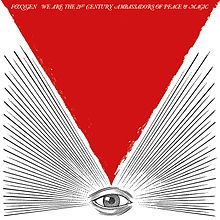
jun9SOUNDTRACK: FOXYGEN-We Are the 21st Century Ambassadors of Peace & Magic (2013).

foxyI had no idea this was Foxygen’s third album (they have a new album out this week as well).  I had only heard of this because of NPR.  And I was delighted with the band’s utterly retro feel and sound–so much retro that it is almost too much.  But they do it with such flair that it works.  Indeed, the whole feeling of this album is one of sampling all of recent music history–with elements thrown in haphazardly (but effectively) and really celebrating a whole 60s/70s vibe with a sprinkling of modern technology.

“In the Darkness” is a 2 minute piano heavy track with horns, big swelling vocals chorals and all kinds of joy.  “No Destruction” though is where the retro sound really shines.  Sounding like a Velvet Underground track with a sweeter singer (who is no less blase).  Except that the chorus rises into a glorious hippie happiness.  It also features funny lines like the deadpan, “There’s no need to be an assshole you’re not in Brooklyn anymore.”

“On Blue Mountain” opens with a kind of Flaming Lips vibe (deep morphing voices counting down), but Sam France has a much higher pitched voice as he sings the slow intro.  Once the song kicks in faster, the real hippy vibe (combined with some Rolling Stones and some girlie backing vocals) kick in.  There’s even a big friendly chorus (that reminds me of “Suspicious Minds”).  After almost 4 minutes, the song shifts gears entirely into a raucous sing along  (with what sounds like a children’s choir).

After the manic intensity of “Mountain,” “San Francisco” emerges as a sweet delicate flute filled hippie song.  This was the first song I heard by them and I loved it immediately–the simple melody, the delicate (funny) female responses, the swelling strings. it was delightful.  “Bowling Trophies” is a weird little less than two-minute instrumental that leads to the glorious “Shuggie.”  “Shuggie” is the least hippie song on the album and screams more of a kind of French disco pop, with some wonderful lyrics.  The chorus is just a rollicking good time and the wah wah synth solo is terrific.  At three and a half minutes the song is just way too short, although it seems that anything that last longer than 4 minutes will shift gears into something else eventually anyway.

“Oh Yeah” brings in a staggered kind of sound, with some interesting breaks and stops.  It also inserts some doo-wop into it.  I love how the end once again shifts gears into a “freak out” with a wild guitar solo and fast drums.  The title song is fuzzy and distorted (the vocals are nearly inaudible).  It’s fast paced but still very retro sounding (Jefferson Airplane?) except for the modern electronic and guitar breaks.  And of course, the last minute is entirely different from the rest of the song, as well.

The album ends with “Oh No 2,” a five-minute track that begins as a slow swelling almost soundtrack song.  Indeed, when the spoken word part (“I was standing on the bed, birds were landing on my head”) emerges later on, it comes close to The Rocky Horror Picture Show (which is not a bad thing), including the piano outro (with slightly out of tune voice).

This whole album could just be an obnoxious rip off of old timey sounds, but instead it’s more like a fun reference point for those who know the music and just a fun good time for those who don’t.  And at something like 35 minutes, it never overstays its welcome.

[READ: September 17, 2014] “The Bad Graft”

This year’s Summer Fiction issue of the New Yorker was subtitled Love Stories.  In addition to all of the shorter pieces that were included in this issue, there were also four fiction contributions.

This was the final story in this issue and, sadly for me, it was the one I liked least.  It has three sections: I. Germination; II. Emergence; III. Establishment.  And while I enjoyed (mostly) section I., I really didn’t enjoy the turn the story took once it entered section II and the “plot” emerged.

The story opens with two young (actually not that young) lovers traveling towards Joshua Tree.  This couple is madly in love and are basically eloping.  Except, of course, that they don’t want to ever get married, so it is a symbolic elopement.  On their first date they had decided to run away together.  They left their homes in Pennsylvania more or less unannounced, took all their money and drove to the desert.

Andy and Angie, for that is what their names are, prepared well with Andy having, among other things a large knife (note to Chekovians).  After a few days they are startled to discover how expensive this road trip is.  But they are undaunted because they are in love.  Of course, they are also exhausted and perhaps a little on edge.

When they arrive at Joshua Tree, it is 106 degrees.  The park ranger informs them that they have arrived in time to see the yucca moths do their magic with the trees.  he calls it, the ‘pulse event.”  The entire range of Joshuas is in bloom and the moths are smitten.  This sounds exciting but it is also sad, as the Joshua Teees may be on the brink of extinction and this massive blossoming is like a distress call.

With all of this set up, it is a total surprise when half way through the section, the story informs is that “This is where the bad graft occurs.” (more…)

Read Full Post »

jun9SOUNDTRACK: NICOTINE-“Yesterday” (2005).

dudeSince this story is about a guy making up words to “Yesterday,” I thought I’d find a cover of it.  Evidently there are several hundred covers to choose from, so I chose this one, from a band I didn’t know.

As you might judge by the cover, this is a punk version of the song.  But what a little research tells me is that Nicotine is a Japanese punk pop band.  And you can hear in Howie’s vocals that although his English is quite good, his accent shows up at certain moments.

The guitar starts out nicely, in a non-punk way.  Then when the vocals kicks in, you will either love it or hate it camp.  Howie’s voice is kind of whiny/bratty sounding, making the song either funny or irritating depending.

After the first verse, the band turns into the kind of fast pop punk that NOFX does–speedy drums, heavy guitars, etc.  Interestingly, his voice doesn’t speed up for the verses which makes the contrast all the more striking.

The album pictured above is indeed a full album of Beatles covers (the band seems to do a lot of covers), most of which are entertaining enough to listen to more than once.

[READ: September 17, 2014] “Yesterday”

As this story opens the narrator says

As far as I know, the only person to put Japanese lyrics to the Beatles song “Yesterday” (and to do so in the distinctive Kansai dialect, no less) was a guy named Kitaru.  He used to belt out his own version when he was taking a bath:

Yesterday
Is two days before tomorrow
The day after two days ago.

While “Yesterday” features prominently in the story, it is really a story of love and romance and friendship.  The narrator met Kitaru at the coffee shop where they worked.  There is a great deal of emphasis placed on Kitaru’s use of the Kansai dialect (which I know little about except to know that it is not the dialect of Tokyo).  The strange thing about Kitaru (well, one of the strange things) is that he was born in Tokyo.  But he adopted the Kansai dialect because he was a fan of the Hanshin Tigers.  He was such a big fan that he learned their dialect to be able to communicate with the fans when he went to the games.  (Learning Kansai is apparently like learning another language).  He was so into it, that he spoke it all the time.

The narrator, on the other hand, grew up speaking Kansai but after living in Tokyo for a month, he became fluent in Tokyo Standard (which also shows how odd it for Kitaru to do this).

This is mostly set up to show how odd Kitaru is.  Kitaru is a super nice guy and is clearly smart (if he learned the dialect), and yet he has failed his college entrance exam twice.  This is a problem because his girlfriend, the very pretty Erika, got into college on her first try, and he says he can’t date her properly unless he is also in college.  He and Erika have known each other for ever and are romantic without actually “doing ” anything.  He admits that he thinks of her almost like a sister and can’t imagine touching her in that way.  They are super close, and he considers her his girlfriend, but that’s it. (more…)

Read Full Post »

jun9SOUNDTRACK: THE PEANUT BUTTER CONSPIRACY-“It’s a Happening Thing” (1967).

pncWho would have guessed that a band from 1967 would come up with a name that seems relevant in 2014 (what with all the peanut allergies).  But they didn’t have that on their minds when they named the band.

I’m not sure that I knew of this band (they are mentioned in this story–although I had heard of the Flamin’ Groovies, also mentioned), although by now they seem like an obvious touchstone.  Because this is a major hippie band.  Indeed, this song seems almost quintessentially hippie.  The title, obviously.  But also the (sixties) fuzzy guitar, the super funky bass, the group vocals (very Jefferson Airplane).  The wild solo with even more fuzz on the guitar.  I especially enjoy the descending vocal line at the end of the chorus.

It’s a fun song, although kind of forgettable (possibly because of the lyrics).  After the chorus, the most repeated line is “Love is the grooviest thing up til now in the world.”  Up til now?

A little research says that the production on their second album is less obviously hippie, but this seems to be their most notable song.

Peace Man.

[READ: September 17, 2014] “Here’s the Story”

This year’s Summer Fiction issue of the New Yorker was subtitled Love Stories.  In addition to all of the shorter pieces that were included in this issue, there were also four fiction contributions.

This story takes a look at an already extant story and finds a story beneath it.  I didn’t realize this until about two paragraphs from the end of the story when it all came clear.  And then in retrospect I realized that there were a lot of hints thrown into the story and either I should have figured that out or, more likely, Gilbert made the hints minor and casual so that, like me, a reader might realize what he or she missed at the end of the story.

I’m not going to give anything away about the story; however, at the end of this post I’m going to put some of the hints that made me tilt my head at the story which proved to pay off in the end).

But without that information, the story was compelling but also frustrating.  Gilbert starts out the story so that you know there will be a sad ending: “It ends with his right hand griping her left…the plane is on final approach.”  The two people, both married meet and think about having an affair.  Both of them are pretty unhappily married with children and living in California.  But the story is told as an impartial report: “we also know that seven weeks earlier the Los Angeles Dodgers played their final game of the season.” (more…)

Read Full Post »

jun9SOUNDTRACK: JOHN GRANT-“GMF” (live on The Late Show with David Letterman) (2014).

grantI was introduced to John Grant with this song.  And since the G stands for Greatest and the MF stands for what you think it does, I was really surprised to hear that he played this live on Letterman (Grant’s network TV debut, no less).

He sounds great live (his voice is rather gentle for such a song title).  He has a full band but the song is primarily acoustic guitar with swells of keys.  The backing vocals on the later verses really flesh out the song.  And it is immensely catchy.  I’ve been singing it to myself for days.

But the best part of course are the lyrics.

In the first chorus of this version he dares to sing the dreaded MF words, which get silenced (sophisticated recording keeps the music playing though).  The rest of the choruses he changes it to “I am the greatest living creature” which I find funny and possibly even better.  I also love the way the percentage of laughing you could be doing decreasing as the song ends.

They edited down the song (the original over 5 minutes), removing a middle section that adds dimension to the song, but is not missed in this version.

Even Letterman enjoyed it, saying those same bleeped words at the end of the song.  It’s a great live performance

[READ: September 17, 2014] “You Can Find Love Now”

This year’s Summer Fiction issue of the New Yorker was subtitled Love Stories.  In addition to all of the shorter pieces that were included in this issue, there were also four fiction contributions.

Interestingly, this one was very short as well (possibly shorter than some of the essays).

This story actually reads like a Shouts & Murmurs piece.  It is a funny conceit dragged to its logical ends.  In this case, the story pokes fun at online dating.

The story opens with a pitch from the dating company saying that after creating a profile, within 24 hours “you’ll be on your way to eternal happiness.”  The first joke comes when the profile creator writes, “Find me at cyclops15.  Cyclops 1-14 were taken.”  Then in his second typed section we learn that, indeed, he is really a cyclops: “I am eight feel tall and I have one giant eye.” (more…)

Read Full Post »

30SOUNDTRACK: PLACEBO-B3EP (2012).

b3Placebo went away for a time and now (well, 2012) they’re back with an EP and an album.  This EP has 5 songs and it returns their sound to days of old (although their sound hasn’t changed all that much, honestly, but their last album seemed less…something).  This returns to noisy days of yore.  “B3” has a sleazy kind of synth, big rocking guitars and drums, and of course Brian Molko’s voice (they wouldn’t be Placebo without his voice).

The second track is a cover of a Minux song “I Know You Want to Stop” and it falls right in with the placebo sound.  I actually thought it was one of their own.

“The Extra” slows down the craziness of the EP, but it sounds very much like a Placebo ballad.  Rather than a love ballad it is a creepy ballad.   The theme is summed up”If I am an extra in the film of my own life, will someone please turn off the camera.”  There’s great guitar sound on “I.K.W.Y.L.” with Molko’s keening voice adding tension.

And the final song, “Time is Money” is one of Molko’s aching slow song.  “Time is Money bastard, so like Jesus, give it all away.”  Somehow he turns that sentiment into a love song.  And I love Molko for that.

For an EP, this is a really solid collection of songs–no throwaway tracks here.  Let’s hope the full length is as good.

 [READ: September 18, 2014] “Stepping Out”

In this piece, I can’t decide if Sedaris is messing with us or not.  This essay is all about his love affair with the Fitbit.

In my head, Sedaris is a pampered homebody who only goes out when he has to.  While I would never say he was unfit, I just can’t picture him exercising, even if that exercise is walking. On the other hand, I know that he is rather obsessive, so I can see him taking to something like this and really running (or walking) with it.

Sedaris’ friend Lesley explained the pedometer to him.  “The goal is to take ten thousand steps per day and, once you do, it vibrates.”  He asks, “Hard?”  She says “No, it’s just a tingle.”  So he bought one.  And he quickly learns that 10,000 steps is a little more than 4 miles for him.

He says he can achieve that easily in a day, especially since he has people coming to his door all the time, “wanting you to accept a package or give them directions or just listen patiently as they talk about birds, which happens from time to time when I’m home in West Sussex….” (more…)

Read Full Post »

jun9SOUNDTRACK: DESTROY TOMORROW 666-“Distortasaur” (2005?).

6666Destroy Tomorrow 666 is a DJ project from Sloan’s Patrick Pentland.  I had never heard of it until reading about him recently (Sloan has a new album out).  It is Pentland’s Alternative / Electro / Punk outlet that he’s been doing since 2005.

Pentland is known for writing gorgeous pop songs with wonderful harmonies.  But he grew up listening to hardcore punk, so his musical tastes are all over the place.  This track (I love the name) is, like the others here, a distorted fuzzy “dance” song that is all instrumental and not poppy at all.

While I’ll stick with Sloan, I imagine this was a lot of fun to whip together.  And yes, I think it’s very good dark dance music.  Although surely if he was going to use 666 he could have turned Pentland into Pentagram.

You can check it out at ReverbNation.

[READ: June 17, 2014] “Stories”

This year’s Summer Fiction issue of the New Yorker was subtitled Love Stories.  In addition to the two graphic stories, we have a series of five personal essays which fall under the heading of “My Old Flame.”  I liked that all five writers have slight variations in how they deal with this topic.

Colm Tóibín is a prolific writer whom I know very little about.

In this essay, Tóibín flashes back to 1978 when he was 23 and living in Barcelona.  He had been there for a few months when he heard about a cheap charter flight back to Ireland.  So he packed up and got out of Barcelona and returned to his home.

He often wonders what would have happened had he stayed in Spain.  He most likely would have stayed with the guy he was seeing, spending days on the beach and nights in the boy’s apartment in the city.  He even thinks he might never have gone home.

After he left, they kept in touch for a time, then inevitably, they lost touch.  (more…)

Read Full Post »

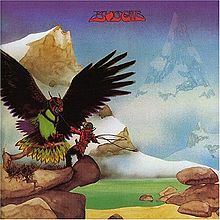
jun9SOUNDTRACK: BUDGIE-“Breadfan” (1973).

budgieI am pretty much wholly ignorant of Budgie. I know this song “Breadfan” because Metallica covered it back on one of their covers EPs. I really Metallica’s version, but since that was pre-internet, I was never able to explore Budgie more.  And then I forgot about them.

Well, just the other night, WXPN played “Breadfan” (as part of a 70s power trio segment) and I was shocked at how high-pitched Burke Shelley’s voice was (the comparisons to Rush are apt).  And I was also surprised at how heavy this song was.  While Black Sabbath had certainly been releasing heavy albums up until this time, this song introduced a much faster element.  And there were only three members in the band!

What’s also interesting is the prog rock leanings in some of their songs, like the middle of this one.  The fact that Roger Dean did this album cover and that they have a 10 minute song on this album seems to lean towards prog rock as well).

Time to dig deep in to the Welsh band’s catalog, I think.

[READ: June 17, 2014] “Beautiful Girl”

This year’s Summer Fiction issue of the New Yorker was subtitled Love Stories.  In addition to the two graphic stories, we have a series of five personal essays which fall under the heading of “My Old Flame.”  I like that all five writers have slight variations in how they deal with this topic.

Wolff surprises (me anyhow) by saying that when he was fifteen, he cut off the last joint of his left ring finger.  This piece of information just sort of lingers there until the end of the story.

Because he then talks about how he never really had a girlfriend.  In sixth grade he and his friend Terry would meet Terry’s cousin Patty and another girl in the movie theater and they would pair up and make out (clearly Terry did not make out with his cousin).   But they pairings were never seen in public and never went on a further date.

But later that winter his family moved to the Cascades, where the elementary school had all of four rooms.  There were ten kids in his class and nine were boys.  The one girl, Nevy, drove them all crazy. She favored one then the other but her real love was horses not boys. (more…)

Read Full Post »

jun9SOUNDTRACK: BIKINI KILL-Revolution Girl Style Now (1991).

rvolBikini Kill was one of the most memorable bands from the Riot Grrrl movement.  And frankly, twenty years on, these song still sound incendiary–no one has picked up the torch that bands like this lit in the 90s.

Bikini Kill were confrontational–Kathleen Hannah took no shit, and sang however she felt–sometimes screaming, sometime howling, sometimes singing right on key.   But the most important thing about Bikini Kill was their lyrics–they addressed women’s issues in ways that few bands dared to before (or even since).  As in the title “Suck My Left One.”  Or the premise of “Carnival,” a song about 16 year old girls giving carnies head to go on rides.

While it’s not always clear what the lyrics are, occasional lines are crystal clear. “Daddy’s l’il girl don’t wanna be his whore no more.”  “As a woman I was taught to always be hungry / Now women are well acquainted with thirst”  Or the addressed-to-all-girlfriends, “Double Dare Ya”

Hey girlfriend
I got a proposition goes something like this:
Dare ya to do what you want
Dare ya to be who you will
Dare ya to cry right outloud

Their music, especially on this early self released tape was raw and edgy, abrasive and confrontational.  And yet at the same time they didn’t completely shy away from melody, as this album’s “Feels Blind” has a simple but catchy melody.

[READ: June 17, 2014] “TV”

This year’s Summer Fiction issue of the New Yorker was subtitled Love Stories.  In addition to the two graphic stories, we have a series of five personal essays which fall under the heading of “My Old Flame.”  I liked that all five writers have slight variations in how they deal with this topic.

Miranda July’s take on My Old Flame is set back when she was living in Portland. While her story isn’t exactly happy (how many stories about old flames ever are?), this particular old flame had a major impact on her life.

July noticed that there were two women who were always walking together and who loved together.  She was intrigued by them and their cool house and eventually made friends with them.  She was especially interested in the person called TV.  “She, if she was a she, was every boy from every childhood book.”  July had tried to date boys like that but they often turned out to be assholes. But TV had those boyish qualities and a girl’s point of view. (more…)

Read Full Post »

« Newer Posts - Older Posts »