Feeds:
Posts
Comments

Archive for the ‘New Yorker’ Category

ny[READ: August 27, 2009] “Perfect Match”

This is my second un-“regular” Infinite Jest-related post this week (it’s getting a little out of hand).

I would normally not read a 6 page article about doubles tennis.  But, since we’re in the midst of a heated tennis battle between Hal and Stice, it seemed like mandatory reading.

First off, Burkhart Bilger (wonderfully near-fictional name notwithstanding) is no David Foster Wallace.  While his writing style is much more streamlined, I feel that his passion for tennis is not quite as strong.

Nevertheless, the article was really fascinating.  It’s not available online, but the abstract is here.  I was particularly struck by the explanation that a good doubles game can only help your singles game.  Singles has become very baseline dominated, while in doubles there is a lot more running to the net, giving for broader skills.

Of course, the more IJ-related stuff concerns a) eating.  Bob Bryan says that if he eats just three meals he will lose 3-5 pounds in a day (!) and b) the synchronicity of twins during doubles. (more…)

Read Full Post »

ny1It took me going to Seattle to learn about The New Yorker magazine.  I was visiting my friend Rob and he was really surprised that I didn’t read the magazine all the time (my reading always seems to surprise people, see The Believer.)

Upon my first read of the magazine, I was surprised to see that the first twenty pages or so are taken up with upcoming shows: films, concerts, sports, everything.  I actually wondered how much content would be left after all that small print.

Since then I have learned that Sasha Frere-Jones writes columns in here quite ofuiten.  For reasons known only to my head, I was convinced that Sasha was a black woman.  Little did I realize that he is not.  And that he was in a band that I have a CD of called Ui.  He is an excellent resource for all things music, whether I like the artist he’s talking about or not.  Some entries are here.  This audio entry about Auto-Tune is simply fantastic.

But of course, there’s a lot of content.  And the first thing you get are letters.  I don’t think I have EVER looked at the letters section. (more…)

Read Full Post »

wild thingsSOUNDTRACK: FANTÔMAS-Suspended Animation (2005).

fantomasIf you know Fantômas, then you know what you’re in for.  If you don’t, well, it’s a surprise!

Fantômas are the brain child of Mike Patton (Mr Bungle-era more than Faith No More with help from Buzz Osborne from The Melvins and Dave Lombardo from Slayer).  Suspended Animation is designed as a soundtrack to April, 2005.  There are thirty tracks, and each one corresponds to a calendar page.  The limited edition (which is apparently still in print as I got one last month) is a calendar with art by Yoshitomo Nara.  Nara’s work combines cuteness and menace, just like the CD.

A piece by Nara

A piece by Nara

Although, really the CD is more menace than cute.

This disc seems to combine Patton’s favorite things: cartoon music (many ‘toons are sampled here), death metal, short sharp blasts of noise and his fascinating vocal deliveries.

This write-up makes the disc sound very intriguing, but before you rush out to check it out, do know what you’re in for: short, noisy blasts of utter chaos.  It is not for the weak of heart or the queasy of stomach (or for the lover of melody).  It’s not even a case of , oh the songs are short, the next one will come along soon.  While there is diversity, it’s diverse within it’s own little world.  Of noise!

Be afraid.  But if you’re still interested after that caveat, then by all means check it out, if only for the calendar!

[READ: August 23, 2009] Where the Wild Things Are/”Max at Sea”

Because of Dave Egger’s story “Max at Sea” (which is basically a retelling of Where the Wild Things Are I felt I needed to re-read the original.  So thank you Dave Eggers for that.

The original is a fun story which seems to be more visually based than word based.  The drawings are sublime and indeed there are several pgaes with no words at all.  And, so, the filmmakers’ question remains: how to you make a film out of a 48-page book, many of which don’t even have words?  Stills from the movie do look pretty awesome.

And thus, Dave Eggers’ story was born.

I’m not actually going to reveiw Where the Wild Things Are, because, well, it’s a classic, and it’s  awesome.  What more can I say about it?  But I did want to reevaluate Egger’s piece having re-read Sendak’s.

It is quite clear that Eggers is in no way trying to re-write the story.  He has fleshed out a lot of details that are absent from the original (which the original in now way needs, but again, if you’re going to make a film, you need some kind of backstory). (more…)

Read Full Post »

nyorkerSOUNDTRACK: SONIC YOUTH-TV Shit (1993).

tvshitThis is a funny little addition to the SY catalog. It is essentially four covers of a song by Youth Brigade called “No Song II” (which is from Dischord records, Possible EP here).

The original song is one second long, with the band shouting “No”

So, covers of it are obviously absurd.  There are 4 tracks in total on the disc, the last two are each over three minutes long (!)

The band is in full noise/freak out ensemble, complete with maniacal screamer/lunatic  Yamatsuka Eye from the Boredoms (and elsewhere).

Obviously it’s a bit of fun, and little more. It’s only for super-die-hard fans or anyone who might like the Boredoms-style of noise rock.

[READ, August 18, 2009] “Max at Sea”

Since I just finished Eggers’ How We Are Hungry, I was delighted to find a new story by him in the New Yorker. The picture next to it looks like a still from the upcoming film of Where the Wild Things Are (Eggers cowrote the screenplay). So, when the story started and Max put on a bear costume, I thought, huh, that seems very familiar.

As the story progressed, well, it seemed really really familiar. Now, I admit I don’t know Where the Wild Things Are by heart, but I sure recognized a lot of it. And then I confirmed with Sarah that indeed, this short story IS the story of Where the Wild Things Are. Eggers has fleshed it out (presumably for the screenplay) and added some details and things, but the whole plot of the story is Maurice Sendak’s.

And I’m not sure how I feel about releasing it as a short story. It is acknowledged in the Eggers bio in the front of the magazine that it does come from Sendak’s work, but somehow it seems wrong to take up a fiction spot in the New Yorker (that most venerable of fiction locations) with a story that is a retelling of someone else’s story. (more…)

Read Full Post »

nySOUNDTRACK: SONIC YOUTH-Dirty (1991).

dirtyI think of Dirty as a pretty commercial album.  I mean, it’s got Butch Vig as a producer for crying out loud.  And, it has three singles released from it.

The lead off track “100%,” and track three “Theresa’s Sound World” are as catchy as anything.

And of course, Lee’s “Wish Fulfillment” is just an amazing track, and is certainly a nod to a more poppy sound.  But it is “Sugar Kane” that strikes me as their most commercial attempt yet. Of course, saying all this, one must remember that Daydream Nation & even Sister had tracks that were short and catchy.  Dirty almost feels like a condensation of that sound.

“Orange Rolls, Angel’s Spit” is one of those songs that mixes catchy sections and utter noise so successfully.  And “Youth Aginst Fascism” has a wonderfully catchy vocal line but it is backed by the squeakiest most unmusical guitars on the record (and has the memorable “I Believe Anita Hill” line).

But despite all that, there’s also two completely un-Sonic Youth songs on the disc: “Nic Fit” is a one minute hardcore punk blast while “Creme Brulee” is a solo guitar (a sort of out-of-tune, cheapo amp effect) strumalong sung by Kim.  Kim also gets “Drunken Butterfly” which is certainly not easy listening, (although the mocking of The Door’s lyrics is pretty funny).  And “Shoot,” which is one of Kim’s menacing spoken-wordish pieces that changes the overall temperament of the disc.

But, yea, there’s no denying that this is a commercial album. It features some of their catchiest and easiest-listening tracks.  And yet, the disc is certainly done on SY’s terms.  For even if they did make it onto the Billboard charts (#83), they certainly never got played on Top 40 radio.

[READ: August 6, 2009] “War Dances”

I wasn’t sure if I was going to read this short story or not.  But then this story is broken down into multiple small sections and the heading on the first was My Kafka Baggage. Now, I like Kafka, but Kafka can also be an “lazy” indicator for “weird stuff ahead”.   Nevertheless, I read the opening and I was intrigued. By the end of that section I was hooked.

And even though I felt the second section wrapped up things really nicely (it wraps up a story about the narrator’s father, but not the whole story itself), I pressed on.

All of this sounds like it’s not a strong vote of confidence for this story, but that’s far from the truth. The story was fantastic. I couldn’t get enough right up until the end, which was very satisfying.

The story concerns a forty year old Native American Indian guy. He has two kids and his wife is away in Rome on vacation. When his kids start clamoring for food, he realizes that he can’t hear them very well.  And sure enough, when he goes to the doctor, his hearing has suddenly dropped to about 30% of his normal ability. (more…)

Read Full Post »

nySOUNDTRACK: SONIC YOUTH-Goo (1990).

gooI’m not sure exactly why this Sonic Youth album was the first one I really got into.  I assume it’s because I was working at the radio station and probably got a bit of hype about their switch to DGC records.

And, say what you will about DGC being a major label, DG had some really great taste at the dawn of that label.

Goo and Dirty are sort of lumped into a kind of sellout phase for SY.  But  Goo is certainly harsher than Daydream Nation, and yet it also seems to flirt with the mainstream (with Chuck D appearing on it, and “Goo” having something resembling a sing-along chorus”).

Yet “Mary-Christ”  has a crazy background vocal section.  Kool Thing, the one with Chuck D, has a catchy enough chorus but the squealing guitars are very harsh.

Lee’s “Mote” is probably the catchiest song on the disc, although really the middle section has these sort of smooth songs like “Mote” and “Disappearer.”  But with “Mildred Pierce,” you get the scariest , most abrasive ending to a song you can imagine (and from what starts as a really pretty instrumental too).  And “Scooter and Jinx” is pretty much just a minute full of noise.

While 1991 may have been the year that punk broke, it’s Goo, complete with its Raymond Pettibon cover that sent punk, kicking and screaming, mostly screaming, into the mainstream.  All ready for Nirvana to smash the door wide open.

I just looked up Raymond Pettibon and learned that he is Greg Ginn’s brother.  Ginn founded Black Flag and of course Pettibon (whose real name is also Ginn) did virtually all the artwork.  I would even daresay that it was Black Flag that propelled Pettibon into underground fame…  he even outlasted the band that gave him his fame.  Wow, thanks Wikipedia.

[READ: July 5, 2009] “A Guide to Summer Sun Protection”

I don’t normally mention the Shouts & Murmurs one-page items from the New Yorker, but since Zev Borow is in pretty much all the McSweeney’s I’ve been reading, I thought I’d bring him up again. (more…)

Read Full Post »

nySOUNDTRACK: Living with Music: A  Playlist by Joshua Ferris (New York Times September 19 2007).

ferrisWhile searching for Joshua Ferris (see below) I came across this playlist from The New York Times.  While I don’t agree with everything on the list, indeed, I haven’t heard of about half of the songs, I was delighted by several of his selections: Neutral Milk Hotel, Pearl Jam, and of course, Godspeed! You Black Emperor.  I also really enjoy the unusual Pink Floyd selection, too (Meddle being a favorite album of mine).

What I enjoy most about the list is that he tacks on a book that you might read that somehow ties to the song (I don’t know what the specifics are as I have yet to read any other “Living with Music” Playlists).  But it reminds me of an inverse of this very blog.

The article is available here.

[READ: August 3, 2009] “The Valetudinarian”

I knew the name Joshua Ferris sounded familiar, but couldn’t remember exactly why. Then I remembered that he wrote Then We Came to the End which I liked quite a bit. So I looked him up and found out that in addition to that novel, he’s only had a few short stories published in total. And now I’ve read two out of the seven. In terms of ratio of books read, that practically makes him my favorite author!

I should have looked up the definition of the title of this one: valetudinarian
which basically means invalid. (more…)

Read Full Post »

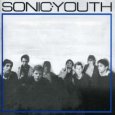
ny629SOUNDTRACKSONIC YOUTH-Sonic Youth (1982).

syA new Sonic Youth disc (The Eternal) just came out which seemed like a perfect reason to go back and sift through their old discs as well.  And like Hüsker Dü, they were also on SST Records for a time.

This disc, their first, is possibly most notable for two things. One, their drummer (and this is the only disc of theirs that he appeared on) eventually became the parking attendant in Ferris Bueller’s Day Off (“What country you think this is?”  “Relax…I’m a professional”) among other films.  And two: it is really not very noisy at all.

This disc falls into the No Wave camp, a style of music that I honestly don’t know very much about.  When I see lists of bands that are in this “genre” I sort of get it, and I even know a bunch of them, but I can’t ever say I sought it out.

I guess in many ways it’s not very Sonic Youth at all.  And yet for what it is, it’s quite good.  The minimalism is there.  (Except for the drums which are all over the place, including cool flourishes of tom toms!)  Kim’s bass rides pretty solidly throughout.  But the biggest difference is the guitars which don’t contribute waves of noise but rather occasional blasts of sound.  If anything it reminds me a lot of early Cure (like around Seventeen Seconds).

The guitars are very chimey, and I’ve read that the band is dissatisfied overall with the sound of the disc.  And yet despite that, it’s an interesting artifact.  Even if it isn’t a great Sonic Youth album, it’s a cool look at the alternative New York scene of the time.  And it’s cool to see the origins of this band.

I have just learned that it was reissued with all kinds of bonus material (I knew about the other back catalogue reissues on DGC but this one didn’t get the reissue back then).  The reissue has live tracks from around that time.  The samples indicate that the band played these songs a lot noisier live, but they don’t seem quite as chaotic as their next couple of releases..

[READ: July 8, 2009] “Ziggurat”

This was a weird little story that became even more surreal as it went along.

The story is set in the Labyrinth.  The Minotaur lives there and is currently lounging on a pool table in the game room. This Minotaur is not half bull, but is just a very large, very ugly creature.  He kills and eats anyone who comes near (whether as a sacrifice or as an attacker).

But now there’s a new girl.  She doesn’t flee.  She doesn’t even tremble, she simply plays a video game called Ziggurat (the object of which is to build a Tower of Babel before God can knock it over).  The Minotaur is dumbfounded by this behavior, so he lets her live.  Eventually, they start talking, and the Minotaur begins to feel emotions he didn’t think he had (guilt, longing). There’s also a very awkward and funny discussion about virgins. (more…)

Read Full Post »

ny7SOUNDTRACK: HÜSKER DÜ-Candy Apple Grey (1986).
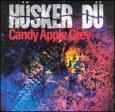
candyThis disc seems to be universally panned as the worst Hüsker Dü disc (meaning it only gets 4 stars instead of 5) and yet I disagree.  Perhaps it’s because it was the second disc of theirs that I had heard and so it has always been more familiar, or maybe it’s because I think the sounds is fuller.

“Don’t Want to Know if You Are Lonely” is like the culmination of Grant Hart’s pop songwriting career.  Some say that the song is too stereotypically Hüsker Dü since all the parts fit together so well (as if that’s a bad thing).  “Sorry Somehow” is another shouting Mould gem that retains its pop sheen even with the noise.  And speaking of noise, the buzzsaw guitars that open the disc sound like nothing so much as the Jesus and Mary Chain.  Warner Bros must have been wondering what they got themselves into that their newly signed band opened their disc with that.

What’s most surprising about this disc though are the two acoustic numbers.  Hüsker Dü had obviously experimented before (see Zen Arcade) but these are the most delicate pieces they had written.  I mean, Bob’s voice is so delicate, it cracks in “Too Far Down” for goodness sake.  And “Hardly Getting Over It” would certainly be musically  familiar to anyone who knows Mould’s solo album Workbook.

It may not be a masterpiece, and I know that most Hüsker Dü fans don’t think that much of it, but it totally rocks my world.

[READ: July 6, 2009] “Childcare”

I had heard great things about Lorrie Moore. I bought her Birds of America and then just never read it. Then one day I was in my car waiting for some interminable thing or another and really wished I had a book with me. I decided to put Birds of America in my car. It’s a collection of short stories, so it seemed perfect. And then I never got in another situation where I was at an interminable wait and didn’t have some other book, too. So basically her book is still unread although now it is nicely beaten up. Sigh.

So this is my first Lorrie Moore story. She reminds me, at first thought, of Alice Munro (although she is not Canadian, nor quite so dark), because they both tend to focus on little events in people’s lives and how they can become defining.  Their stories are also small in scope, (in that not a lot “happens”), but are powerfully written and show a lot more going on underneath the surface.

In this story, Tassie Keltjin, a young woman who is just out of college goes in search of a job. She is looking specifically in the “childcare” area because she doesn’t really know what she wants to do for a real career. (more…)

Read Full Post »

ny622SOUNDTRACK: HÜSKER DÜ-Flip Your Wig (1985).
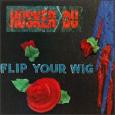
flipHere’s where Hüsker Dü dropped most of the pretense that they didn’t write the catchiest songs ever.  And, if this had been released in the mid 90s it would have been an enormous hit.  Or for that matter, if this had been released on Warner Brothers as it was meant to be instead of SST, Hüsker Dü would probably be a more familiar name (and of course no one would love them as much).

Bob Mould wrote his first real shoulda-been breakthrough hit with “Makes No Sense at All,” simply the catchiest song they’ve released to this point (Grant Hart’s pop masterpieces notwithstanding).  And even though previous songs had been catchy, the recording of this track, and the disc as a whole, is less noisy/chaotic/wall of fuzz and is more subtle.  Not that anyone would mistake it for a Top 40 song or anything like that, because the noise is still there, it just feels like they are controlling it rather than the other way around.  The next song, “Hate Paper Doll” is probably even more poppy, although with a title and lyrics like that it’s not going anywhere near the radio.

“Green Eyes” is a sweet, yes, sweet, song from Grant Hart (showing that he hasn’t lost any songwriting chops).  “Divide and Conquer” is another poppy ditty, with a series of la-la-las in the post-chorus.  The rest of the disc couldn’t possibly continue this streak of amazingness, and yet it doesn’t drop very far.  There’s the by now obligatory silly song (“The Baby Song” with slide whistle as the main instrument), and then two instrumentals that close the disc.

Even though it’s still a punk record (mostly in the lyrics), the band’s love of psychedelic sounds is definitively shining through,  (which explains, no doubt why the Dead Milkmen sing in “The Thing That Only Eats Hippies,” “so Bob and Greg and Grant you best beware.”

You can’t go wrong with Flip Your Wig.

[READ: July 7, 2009] “Idols”

This story almost seemed to be a fable it was so patently moralistic.  And although the details were unexpected, the conclusion seemed rather inevitable.

In this story Julian fixes typewriters in Memphis.  He receives a letter that his family’s estate in rural Tennessee has finally cleared up and he has inherited the old family house (which he has only seen once when driving past it with his mother).  The house is run down and very very old and Julian decides that it is his destiny to renovate this house and return to his roots.  His inheritance! (more…)

Read Full Post »

« Newer Posts - Older Posts »