Feeds:
Posts
Comments

Archive for the ‘Live at Massey Hall’ Category

SOUNDTRACKOWEN PALLETT–Live at Massey Hall (December 1, 2015).
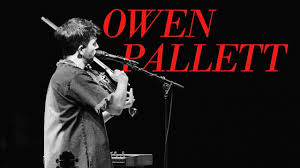
Owen Pallett founded the band Final Fantasy (which was pretty much him anyhow).  Since 2010 he has been recording under his own name.  His music is orchestral and complex, but also distinctly weird.  He loves to explore sounds, but he also knows how to throw in some catchy melodies as well.

He says he has played Massey Hall before but this is the first time as a solo performer. He wants to take advantage of the beautiful-sounding room and comfortable seats.

The songs he plays are a mix of new ones and Final Fantasy songs as well.

On “That’s When the Audience Died” (Final Fantasy), he picks out a complicated pizzicato on the violin and loops it (he mutters, I hope that worked) and then he launches a great melody over the top.  He has a great singing voice as well.  The lyrics are consistently clever and interesting.  The end of the song is amazing with the sounds he ekes out of his violin.

He says he took violin lessons but wasn’t into it because the violin leaves a mark on your neck.  He quit it because it ruined all his “sexual dreams,” and he switched to guitar and piano.  He was always really into composing–he loved Béla Bartók and György Sándor Ligeti–he wanted to make music you’d see in a Stanley Kubrick film.

There’s beautiful looping with the pizzicato as he plays the solos live.

“This Lamb Sells Condos” (Final Fantasy) is really quite funny if you know the story behind it, which I didn’t.  But here it is

This song is a comic interpretation of Brad J. Lamb, a figure in the Canadian real estate business (who used to live in the same building as Owen Pallett’s boyfriend), with allusions to elements of the Dungeons & Dragons role-playing game:

This snarky look at Lamb:

When he was a young man, he conjured up a firemare
Burnt off both his eyebrows and half a head of hair
And then as an apprentice, he took a drowish mistress
Who bestowed upon his youthfulness a sense of champagne chic
His seduction, his seduction to the world of construction
Now his mind will start to wander when he’s not at his computer
And his massive genitals refuse to cooperate
No amount of therapy can hope to save his marriage

Before he did Final Fantasy he played bad country music in bad country bars–because he had a violin.

“Tryst with Mephistopheles” rocks with a band (Matthew Smith and Robbie Gordon) and even some synths.  The drums really propel the song forward.

When he created Final Fantasy he had a guitar, a violin, a bed and some books.  He borrowed a looping pedal and got good with it.  He wanted to be the best violin looper.

“The Riverbed” is with a string quartet and has a fast ripping opening melody–dark and very cool.

He says now that he’s making a record in which he’s not thinking about how to play it live.  He’s just trying to make sounds–not thinking about performance or how to tour it.

So he’s playing new songs in traditional formal.  He conducts the orchestra and sings “On a Path.”  if t his is the “traditional format,” I’m very curious to hear what the non-traditional way is.  It has a fantastic vocal melody and is incredibly catchy.

The final song is “This is the Dream of Win and Regine” (yes of Arcade Fire).  It’s an older Final Fantasy song and has some great references to Montreal:

Montreal might eat its young, but Montreal wont break us.

There’s some great thumping beats throughout until the great dramatic ending.

Pallett had been on my radar, but I’m sold after seeing this show.

[READ: July 3, 2018] “The First World”

This story is bookended in an interesting way.  It starts with the narrator saying that his marriage had come to an end.  An unexpected consequence was that a series of men confided in him about their marriages past or present–not old friends, they stayed quiet, but people he’d had at arm’s length.  A contractor, the dermatologist etc.  People felt free to say wheat they wanted.

And then it was over, the men disappeared for about a decade during which time the narrator remarried.  And then Arty resurfaced.

Arty ran into him on Ninth Avenue and insisted they grab a drink.   He said there was something he’d like the narrator’s opinion on.

Arty had to talk about Gladys, the former nanny of his two girls. Gladys was is nanny for seven years, gave the girls all kinds of love and then left when the kids were old enough not to need her anymore. She got a new job in Chelsea for a younger child.

It was while working for this new family that Gladys lost her husband, Roy.  He had died while in the hospital and they were billing her for one hundred and ten grand.  She didn’t want to fight it because she was waiting for her green card.

Arty’s wife had cut off ties with Gladys (and didn’t want to talk to Arty either).   Not long after the divorce, Gladys rang him up and asked for $500, explaining what had happened to Roy.

She had agreed to a payment plan for the $110,000, but times had been tough.  She asked Arty for $500.

The bulk of the story is Arty’s impassioned telling of Gladys’ story.  How everything seemed to go wrong for her.  She moved back to Trinidad bit was not welcomed with opened arms.  She tried to find work but was unable.  And so regularly, she asked Arty for another loan, a loan that he knew he would never see.

She has even stayed with Arty when he pays for her ticket to visit her grown up son.

The narrator wants to get out of the conversation, but Arty has bought yet another round. The narrator has an amusing aside about how he lost his wallet and paid for his round with cash from his back pocket.

The story is bookended with the narrator returning home. The way the whole piece ends with him imagining his wallet being returned shows how differently two people can live and ponders what their attitudes have to do with it.

Read Full Post »

SOUNDTRACKTHE HIDDEN CAMERAS-Live at Massey Hall (August 4, 2016).

I watched the Peaches concert before this one and so my first exposure to Joe Gibb, who is The Hidden Cameras, was as a guy dressed in bondage singing gruffly to Peaches.  I saw also that he music was described as “gay church folk music.”

Imagine my surprise when Joe Gibb came out on stage in a gold suit with a big old rockabilly guitar.

In the interview he explains that he has been working on this record for about ten years, but he always had other records that came first.  He was thrilled to finally put out this one out because it is “light compared to the dark previous albums.”

This album Home on Native Land was recorded over 10 years with guest appearances by Rufus Wainwright, Feist, Ron Sexsmith, Neil Tennant, Bahamas and Mary Margaret O’Hara including original compositions as well as covers of “Dark End Of The Street” and “Don’t Make Promises” by Tim Hardin and Canadian classic “Log Driver’s Waltz”

It opens with “Counting Stars” which is a catchy shuffling song about not getting into heaven.  There’s a wild piano solo followed by a wild guitar solo.

“Ode to an Ah” is but 2 minutes long and the lyrics are simple “Ah Ah ha Yea, oo ooh ooh yea.”  It’s a fun diversion before the cover of “The Dark End of the Street.”  It’s a nice version of the classic

Then he invites Leslie Feist to come and help sing “Log Driver’s Waltz,” nt a song you expert to hear Feist singing but she sounds great singing it.

He then says he’s “so excited for our next guest…Ron Sexsmith.”  Ron is tuxed up and sings two songs: “Twilight of the Season
and “Don’t Make Promises.”

After playing those new songs he goes back to a much earlier album for “Music is My Boyfriend,” a bouncy organ-fuelled dance rocker.

Then it’s to 2016’s Age for “Carpe Jugular’ A synthy bouncy dance number, which is a lot more what I assumed The Hidden Cameras sounded like.

He had spent some time in Berlin before returning to Toronto.  He says that now Berlin is less about learning but that he’s missing it, “I’ve been here for 7 months.”

The final song “I Believe in the Good of Life” goes all the way back to his brilliantly named album Mississauga Goddam.  It’s bouncy in the way the new songs are, and has some of that rockabilly /Elvis style.

For this show, the band is Asa Berezny, Stew Crookes, Steven Foster, Tania Gill, Sam Gleason, David, Meslin, Regina Thegentlelady, and Dorian Thornton

[READ: February 8, 2018]  “Adriana”

This is a strange little meta-story that works something like an autobiography of Coetzee (unless it’s all fictional and then it’s just a funny story that makes fun of the author, I guess).

It begins with an interviewer asking Senhora Nascimento, a Brazilian woman, how she came to spend so many years in South Africa.

She has a sad story, coming from Angola with her two children–her husband was killed, brutally, in a robbery attempt. (more…)

Read Full Post »

SOUNDTRACKALEJANDRA RIBERA-Live at Massey Hall (February 5, 2016).

I had never heard of Alejandra Ribera before. She has a beautiful deep voice that can really soar.

I love that she sings in English and Spanish (in the same song) and sometimes, because of her delivery it’s hard to tell which language she is singing.

The show begins with her talking about Massey Hall and how the trajectory from the [working in? a] bar to this moment is unexpectedly fast and natural (because when you’re in it, you’re in it) but it has been overwhelming with ‘pinch me’ moments.

She says, “I used to have a poster on my wall with all of these goals… to get played on the CBC and to play at Massey Hall.”

The band is minimal and they create terrific sounds with just (primarily) an acoustic guitar from Jean-Sebastien Williams and upright bass from Cedric Dind-Lavoie)

The first song “La Boca” has the acoustic guitar and upright bass moving briskly with her voice soaring (but low) on top of it–really mesmerizing.  She sings parts in Spanish.

“Goodnight Persephone” has a muted picked guitar and bowed upright bass (it opens in vaguely Velvet Underground “Heroin” way until the bowing becomes bigger and deeper).  Alejandra sings to Persephone in a wonderful wounded, pleading voice.  The ending build with the refrain “keep this light burning bright for me.”

Before starting the next song, “No Mi Sigas” she tells us (not the audience) that when she was a young girl, she had crushes on girls and at the time she knew it wasn’t okay so she started writing poetry that was metaphorical and laden in imagery so no one would know what she was writing about.  And now she’s older and it doesn’t matter who she is writing about but she has still taken this approach and it’s why all of her love songs are in Spanish because she lives in Canada.

It’s only a shame that they cut off part of this beautiful song so much while she is talking.  She plays guitar as well in this sultry love song while Jean-Sebastien plays some wonderful leads.

“I Want” is an award-winning song and her voice really reaches deep to sing it.  She sounds great in this moody piece.  And the lyrics are very cool too: “There’s so much labor just in breathing lately.”

“Carry Me” is a bit more uptempo and she sings with that great style of hers–I’d never guess she was Canadian, even with the line “all the snow in Montreal couldn’t bury this.”

Turns out she is of Argentine and Scottish descent but was born and raised in Toronto, Ontario, and has been professionally based in Montreal, Quebec.

The bridge of this song is quite compelling with the three of them singing just notes the rise through a scale–strangely compelling.  And then Ribera gives a great whistling solo–which people want to applaud for (and should) but no one does.

In the last segment, she says that before playing music publicly she had gone through a nasty depression.  She had seen that Ron Sexsmith was playing at Massey Hall and she wanted to go see him.  But the depression was too powerful and she checked into St Mike’s across the street.  She had checked in for a time and then one night went to the stairs to smoke and saw the Ron was playing at Massey Hall that night.  That was the pivotal moment–she was so close–and she decided to get on the other side of that door.

Once again, it’s a shame she talks over so much of her song “Led Me To You” which starts quietly but builds to a great powerful ending (with her on guitar again).

This series has been excellent in introducing me to new artists, and Ribera is a great one I hope to explore more.

[READ: January 9, 2017] “Fifty-Seven”

If you were paying attention, you’ll notice that I have been posting these old New Yorker stories on the date that they were published (no matter what the year).  There have been some exceptions (like when there was more than one story in an issue), but I thought it would be a fun thing to keep up).  I am making an exception for this because when I read this story and the one after it I felt like they were connected in some way.  So I’m moving this to July  because there’s a ton of stories to go in November.

I feel like this story was trying to make a point.  And I didn’t like it because of that.  Although I will say that it seems like Kushner really did a lot of work (unless she happens to know this much about the penal system).

This is the story of a murderer.  It is third person but from his point of view. (more…)

Read Full Post »

SOUNDTRACKBAHAMAS-Live at Massey Hall (February 5, 2016).

Afie Jurvanen is Bahamas, an indie folk act.  For this set he is joined by Jason Tait, Felicity Williams, Christine Bougie, and Darcy Yates in various roles.

This set opens with “Like a Wind.”  Jurvanen’s voice is rough and scratchy  and quite nice. But its his backing vocalist (not sure which one) that really launches this song into the ether.  She sounds amazing.  There’s a nice touch a of a slide guitar and the rumbling drums are a great addition as well.

It was some time around “Southern drawl” that I realized he sounds a bit like Tom Petty.  It’s a pretty poppy song–perfect for summer.

“Caught me Thinking” is another poppy song with a rocking 1-2-3-4 rhythm for the verses and “I Got You, Babe” has a wonderful pop riff (but is not a cover).

“Alone” is a new song that he says he’s been working on.  It’s just him and the staccato guitar plucking is quite arresting.  I love the lyric

“men and women equal, but we’re not the same.”

It’s a great song–shame it gets interrupted by his interview.

The final two songs are “All the Time” which has a great solo at the end and “Never Again.”

[READ: February 5, 2016] “The Glow Light Blues”

This story started off doing one thing and then quickly went in a direction I did not expect.

As the story opens, Carl Hirsch is going to a party.  He rarely goes to parties, especially work holiday parties.  And when he shows up, the host greets him with alarm.

There’s some weird things mentioned in the opening paragraphs too. He compares going to the party to going to a dog house where you have to sniff ass and compliment the host.  He hopes there’s food: “even if he was only permitted to sniff…because of his feeding regimen.”

What the heck is going on? (more…)

Read Full Post »

SOUNDTRACKTHE WEATHER STATION-Live at Massey Hall (February 5, 2016).

I know of The Weather Station from All Songs Considered.  The Weather Station is Tamara Lindeman and she has been making music under this name for many years.

But as her profile rises, she says that she has been moving from small clubs to bigger venues:

“So many things I’ve learned, like how to perform on a big stage and make sure people pay attention to you and hear your words.”

The larger venues are odd because her songs are “thoughtful and philosophical not full of showmanship” but you don’t really have a choice you’re in that situation–step up and be confident

The set opens with “Tapes” which is very quiet and soft with lovely backing vocal oohs and a pedal steel guitar.

“Floodplain” is a bit more upbeat but there’s some  interesting guitar work and a nice juxtaposition with the bass.

I love the titles of “Almost Carless” and “Shy Women.”  About “Shy Women” she says it’s about a particularity conversation but it could apply to 1,000 conversations.  It’s my favorite song with some great moments of backing vocals and chord changes

On “All of It was Me” she sounds a bit like Aimee Mann. She says “Loyalty” is also about a conversation.

She talks about evolving as a performer, playing electric guitar on “Personal Eclipse.”  She talks about how on a big stage you have to expand to fit the space you are given and so “Know It To See It,” finally rocks out–the drums and bass really adding something to her music.  The show ends with “Way It Is, Way It Could Be.”

She was joined by Ben Whiteley, Ian Kehoe,  Adrian Cook, Ivy Mairi and Misha Bower.

[READ: February 4, 2018] “Sick Soldier at Your Door”

Reading all of these excerpts in Harper’s has really brought to my attention just how much fiction is written about war.  It’s not a genre I like, so I had no idea it was so popular. This is an excerpt from a then forthcoming novel.

Anse Burden is apparently the main character. He says he has found six soldiers from the ’91 desert war with Iraq.

He talks about how he was on Percordan and Dexedrine when he was shot down.  Others believe he shot himself down (is that even possible?  I guess so.) He was found babbling incoherently.  There’s a great description of him being in the surf with his parachute attached looking like a dirty white whale rising up and down. (more…)

Read Full Post »

SOUNDTRACKPEACHES-Live at Massey Hall (August 4, 2016).

Peaches is afraid of no one.  She bears it all, lyrically, visually, sexually (sample lyric: “Can’t talk right now this chick’s dick is in my mouth”).

She stands center stage, all by herself atop a small pyramid.  She programs some beats at the back of the pyramid and then begins singing the lyrics to “Rub.”  She demonstrates quite exaggeratedly where the rubbing out to take place

Tell on my pussy
Whistle blow my clit
Watch it open up
Cause it can’t keep a secret

What’s great about Peaches is that she was 49 at the time of this performance and she held nothing back–doing a very impressive split at the top of “Operate.”

She began the show with an oversized cape and what looks like a catcher’s chest protector with the outline of abs on it.  When she takes those off she reveals a body suit with hands all over it–grabbing her.

Next up is “Vaginoplasty.”  She introduces the song that it “is not about a big dick or big tits it’s about my big fucking vagina.”  Its at this point that her two dancers (Jess Daly and Agent Cleave) come out wearing gigantic vagina body suits.

In addition to being about her vagina though, she also addresses transgender issues

If you’re born as a man
But know you’re a woman
I understand
Gotta get it, get it girl

About this song she later said:

I think “Vaginoplasty” is about an important subject, but I also think it’s hilarious. The song is about a big vag, but then you have to think, Why does that gross me out?

Her voice is terrific on this song as well, she hits some really powerful notes.

“Mean Something” features a duet with “Feist.”  Feist sings the eerily compelling chorus.  It’s a great song without being explicit.

During an interview she talks about going to Berlin where she was appreciated before returning home to make her album.

After an onstage costume change, Peaches wears a fabulous outfit that’s a giant vagina and she walks out into the audience, walking across the backs of the chairs until she stops and says, “These are my parents!” (their reaction is..amusing).

“How You Like My Cut” is more of a rap–incredibly sparse with lyrics that are not terribly eloquent

How you like my cut
How you like my cut what
How you like my cut

But it seems more about the mood than the words.  Words are suitably important for “Fuck the Pain Away” (now that is something you did think you’d be singing at Massey Hall).  Both songs feature her dancers in minimal bondage gear.

The chorus that gets the crowd chanting is

S I S I U D, stay in school cause it’s the best

With repetition, the lines eventually sound like “SIS, stay in school cause it’s the best IUD.” Peaches thus ties the education of women directly to birth control and reproductive autonomy.

For the final two songs, she has one more outfit change (which leaves her topless, but with pasties on).  “Dumb Fuck” has an incredibly catchy chorus of “dumb fuck, you dumb fuck, you dumb fuck” which is certainly cathartic.

The final song is “Close Up” and is a duet with Joel Gibb from The Hidden Cameras.  They have a lot of fun with the song.

[READ: January 9, 2017] “The Bog Girl” 

Some stories are so weird that you have to keep reading.  And when they get even weirder and even more compelling, you sort of marvel at the way it unfolds.

This story was one of those.

Cillian is a fifteen year old boy working in the peatlands in an island off of Ireland on the archipelago known as the Four Horsemen.  He is working illegally, but his boss hired him because his house abutted the peatlands.

The story gives a brief history of peat–how it is created and used for fuel and explains that the lack of oxygen allows things to decompose there–so there are all kinds of dead animals in the peat.  But no one notices because it is now industrially harvested.

Then one day, as he is digging up the peat, Cillian sees a hand.  It proves to be the hand of a girl.  When she is exhumed, her body comes out intact.  She is cute with a sweet smile.  The police determine that she is not a recent murder, that she is probably 2,000 years old.  Well, Cillian is lucky that he lives on a remote island. (more…)

Read Full Post »

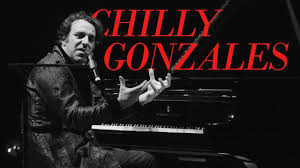
SOUNDTRACK: CHILLY GONZALES & KAISER QUARTETT-Live at Massey Hall (February 5, 2016).

Years earlier, Chilly Gonzales had signed a record deal in Toronto but it didn’t go well “because I wasn’t prepared for what the job of being a true musician was.  I didn’t really have a narrative.  I couldn’t draw people in and guide them.  I thought the music would be enough.”

He went to Europe–Berlin–taking the name Chilly Gonzales and creating this persona.  He wanted reassuring satisfying elements and surprising, uncomfortable elements.  He wanted to  take a page out of the rappers playbook–embodying superficiality and depth ant the same time ridiculousness and seriousness at the same time.

Toronto was like the place where lighting hit the lab and turned him into a supervillain.  The failure of the label is his origin story.

They play primarily instrumental compositions, but ones that are very different and unlike anything else I’ve heard.

“Green’s Leaves” is a staccato piece with great melodies from the Quartett and lovey piano sprinkled throughout.  It’s a short piece with a lot of beauty.

He tells the audience he thinks of the Kaiser Quartett (Adam Zolynski-violin; Jansen Folkers-violin; Ingmar Süberkrüb-viola; Martin Bentz cello) as the world’s most expensive sampler.  He tries to use them in ways that string quartets might not be used.

“Sample This” is a simple request to rappers or producers to feel free to sample this piece of music (and of course call my lawyer beforehand).   He says you don’t have to have a rapper to make rap music–it is an attitude.  He says, “see if you can rap along in your mind.  Imagine what a rapper might say over this.”

This song moves along prettily at a rapid pace.  As it reaches the middle it slows down to a gentle piano with pulsing low notes from the strings and just as it feels like it has hit the end, Joe Elory (I wish it was filmed better) gets up and thuds the drums for one loud beat as the song resumes and picks up the pace.

The fact that he ends the song with quiet piano melody and a rapper pose and says “bitch” is really quite funny.

He says that a sampler can contain the history of all recorded music.  The Quartet plays  a bar of “Eleanor Rigby” which he introduces as “Elizabeth Ridley by the Rolling Stones.” Then they play Joseph Haydn–the song we all know– but says he wants the gansta version–put it into a minor key.  Then they play the opening of Schoenberg’s “The Rites of Spring.”  When Schoenberg played it, it caused a riot.  The dissonance is something.  He jokes that that was the verse now here comes the catchy part (it’s the same).  Is this offensive to you?  Or is this offensive that I’m wasting so much time playing this terrible music “hashtag fuckscheonberg.”

He mashed all the above together to make “Advantage Points.”  The loud and quiet parts balance nicely and its really quite catchy.

“Supervillain” has lots of high notes on the piano before the strings kick in.  And then its a rap (!).  The lyrics are good but the flow is only okay.  It’s funny but not comic.  When it’s over he affirms: “So you like rap music when it is over a waltz beat.”

“Knight moves” is a fast piano piece that builds to some really fun rollicking piano and even adds (minimal) drums by the end.  As it moves along he starts playing very very fast and heavy, including more or less pounding on the low notes for a low rumble.

“Smothered Mate” has a kind of action movie vibe.  There’s also percussion for the whole piece.  Unfortunately, he speaks over it for the end:

In the pre-Drake era there were not a lot of reasons to think that Toronto was on the musical map.  But Charlie Parker and Neil Young  showed this hall had glamour you dint get in a lot Canadian venues.

[READ: June 19, 2018] “Edison Labs, 1891”

This story goes in a direction I never expected and the anachronism of the humor is terrific.

Thomas Edison is working in his lab when his assistant, Jed, confesses that he screwed up again–he used centiliters instead of milliliters.  Which leads to a beaker exploding.

Edison believes that this boy is an idiot–useful only as a subject for medical experimentation.

Except for one other possibility.

He asked Jed to stand there in one spot.

Then he pulled over his new contraption, an apparatus made of metal and glass. (more…)

Read Full Post »

SOUNDTRACKAMELIA CURRAN-Live at Massey Hall (April 29, 2016).

I knew of Amelia Curran but I didn’t know her work before this show.

She says that growing up in Newfoundland it’s all about original music and the oral tradition and story discovering.  She loves to play at the pub back home.

But she continues that when you move into a more professional scene–recording your first album–you also become a Canadian musician, which is an extra thing that happens later.  You look to Neil Young and Joni and Massey Hall.  You come from a musical place like Newfoundland and then coming to Canada and “arriving.”

She plays great folkie songs.  Lyrically her songs are rich, but I find the drums to be quiet compelling on most of the songs.  There;s nothing flashy, but I really like the way the drums are somewhat unconventional or rhythmically interesting, like on “Song on the Radio.”

She is also quite sweet as she says, “Well thanks, oh golly.”

After “Blackbird on Fire” she says “the teenage me on the inside is really freaking out.”

Before “The Reverie,” she says “I’d like to play you a love song and to introduce you to this handsome fellow on the electric guitar Dean Drouillard.”

Before the nest song, “The Modern Man: she says, “Ladies and gentlemen, I don’t know if you know, but this handsome lad on the bass guitar has the best hair in the business.  This is Devon Henderson”

And before “The Mistress” (which is probably her biggest hit), she says “I know it’s hard to believe but there’s even more handsome up here.  This man behind me on the drums is Joshua Van Tassel.”  This song is more jagged and sharp than the others.  It’s a darker, more pointed song and it’s really great.

“Devils” is a slower, moodier song, with snaky electric guitar leads.  Next up is “Time” which is  a beautiful song that’s just her on the acoustic guitar.  It’s quite different from the other songs, much more stark.

For the final song, “Somebody Somewhere,” she says, “Here’s a happy-sounding song I wrote about being depressed.”  This song has more great drums and some cool guitar sounds that change on each verse, including a great buzzy sound during the second verse.

[READ: June 18, 2018] “Omakase”

Even though I love sushi, I had never heard of the titular “omakase” which is a meal consisting of dishes selected by the chef, typically with suggested wine pairings.  And frankly it’s something I’d likely never do (if I was paying for it).

This is the story of a couple who’d met online two years ago.  Three months ago they had moved in together.  They both liked sushi and omakase–they liked the element of surprise.   It also worked for their personalities–she second guessed herself too much and he liked to go with the flow.

They went to a tiny room with a sushi bar and cash register.  The woman (their names are never given) imagined it could fit no more than six people.  How had he even heard of it?  There was a young waitress and old sushi chef who ignored them longer than she imagined they would.

The story leaves the meal from time to time. The first time is for aside about New York City trains.  How she has not gotten used to the subway and the delays.  Tonight’s delay was because of someone jumping in front of the tracks.  In Boston people rarely did that, “probably because the trains came so infrequently, there were quicker ways to die.” (more…)

Read Full Post »

SOUNDTRACKTANYA TAGAQ-Live at Massey Hall (December 1, 2015).

This show begins the third season of Live at Massey Hall.  There are ten episodes in all.  And the first one is with the otherworldly whirlwind of Tanya Tagaq.

Tanya Tagaq is an Inuit singer.  She works with throat singing, but in a new (and somewhat controversial) manner.  She pairs the deep growls and grunts with high-pitched wails.  Her songs become primitive and raw and she seems to become possessed by the music.

This performance is simply amazing–there’s probably been nothing like it.  And what is most remarkable about the performance is that it is all improvised.

But none of this would work if the music were subpar or uninteresting and here’s where she is to be commended for selecting this group of musicians.  Including the 50 voice Element Choir.

Jesse Zubot plays violin like no one else, often as a percussive instrument and with all kinds of effects. Bernard Falaise plays guitars in washes of sound.  he’s also manipulating everything to create otherworldly effects.  And Jean Martin plays drums like no one I have seen.  It’s so much fun to watch.  And the way he punctuates things on and off the beat is really inspired.

The performance is intercut with an interview from before the show.  Its kind of a shame to interrupt the flow of the performance, but she’s also got a lot of interesting things to say.

The show opens with Zubot’s amazing violin, which includes him sliding the bow up and down the neck sideways to make a kind of scraping (but pleasant) sound.

She tells us (paraphrasing)

The combination of the venue and the audience impacts the music which is improvised.  They fall into the groove of the place–a cement box of mosh pits will come out differently from a seated hall.

I’m pretty grounded and I’m lucky because I spend half my time in the air.

Indigenous people are having a voice.  When I was growing up there was more shunning of our own culture.

Around 3:40 she starts singing/fluttering her voice. The choir is filling in behind her.

Around 5 minute she starts doing some real deep vocals and the drums kick in.

Martin is an amazing drummer.  He keeps the beat constant but is playing all over the cymbals and snare on polyrhythms with lots of clacks and rim shots.

Things get really intense around 8 minutes with the choir singing and the lights swirling and Tanya hitting cool high notes.

A kind of natural quieting moment occurs around 10 minutes and she talks about throat singing.

13 minutes she gets into a kind of rhythmic breathing with some cool sound effects from….someone.

After 19 minutes things start to build in intensity. It is so much fun watching the musicians play everything especially Martin–the way he is practically out of his seat hitting things.  Tagaq is singing in a  high voice, on her hands and knees.

Around 24 minutes things build to a peak that lends to a quieter moment and it cuts to her cracking up over

having people give me shit for not being traditional…. over the internet

Then the show comes back until the end.  She makes animal noises sounding like she’s having a conversation, with finger-animal-horns on her head.  Ecstatic moans and animalistic groans evoke a kind of call and response with the choir.

The final uninterrupted ten minutes are just an amazingly tense exercise.  Between the lights, the tension of the guitar the thumping of the drums and Tagaq herself being possessed where you can hear her “human voice” coming through the growls.

At 31 minutes she starts howling, and it sounds like a wolf–not a person doing a wolf.  The chorus is answering her as she poses and distorts her body.   And then she starts her circular breathing.  The sound of her breathing in and out is so intense–is she being chased, is she in the throes of passion.  Combined with the motions she makes and again the amazing percussion the last ten minutes are just mesmerizing.

Then it’s all denouement as she comes back into herself with thunder rumbling and crackling as she breathes.

I sure hope Owen Pallett didn’t have to follow that!

[READ: May 15, 2018] “Slingshot”

This is a story about love and how people perceive it.

The narrator explains that she was 70 when she met Richard who was thirty-two at the time.

Richard moved in next door and had lots of parties.  He was a fun-loving kind of guy and he had lots of lovers.

But he also stated that there is no such thing as love.  The narrator’s granddaughter Rose claimed to be in love all of the time and would then wind up crying by the phone.  The narrator herself had been in love–she had been married once some thirty years ago. (more…)

Read Full Post »

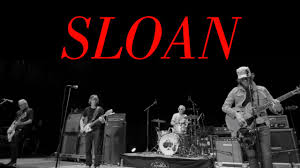
SOUNDTRACK: SLOAN-Live at Massey Hall (September 11, 2015).

Having now seen Sloan twice, it’s nice to compare this earlier show with mine.  And I get  to say that my shows were longer!  Much longer.

This edited for the web version leaves out 11 songs (including the ones which drummer Andrew Scott sings on–so there’s no switching instruments).  Having said that, the band sounds great and the set list is really strong.  I also had no idea that Gregory MacDonald had been touring with them for that long.

Jay Ferguson compares Massey Hall to Carnegie Hall and then regrets comparing something Canadian to something American).  Chris Murphy says “I don’t often use the word “hallowed,” but it is a “hallowed hall.”

He continues, “We are quite loud, we wondered, Do we try to tailor our set for Massey Hall–more like a theater set of songs?  We didn’t do that essentially because we’re incapable:   everybody turn down and then its like a volume war everybody turning up until we’re as loud as ever.”

They start with a great Jay song “You’ve Got a Lot on Your Mind.”  The band sounds great although the dominance of keyboards from Greg is surprising as the first song.

Introducing “The Rest of My Life,” Chris says, “You don’t have to stand but… sing along please.  Of course everyone sings “I know that I’ll be living it in Canada.”  As the song rings out, Chris starts a clap which segues into Patrick singing “Ill Placed Trust.”

Chris says, “We never got giant but we enjoy an audience that has followed us for a long time.  Thank you.”

The start the great guitar riff on the dark “The Other Man.”  There’s lots of sing-alongs in this one, too.

Jay is back with the super catchy “Who Taught You to Live Like That.”  And as the song fades out the siren roars the intro for “Money City Manis.”  Chris notes, “You actually have to stand up for this one.  You have to.”

Patrick and Chris take turns on lead vocals and then during the instrumental break Chris calls a six-year-old girl up on stage who dances, plays the tambourine and knows all the words.  Patrick says, “like I’m gonna be able to solo over that–that’s the solo right there.”  Chris wonders, “When you look at this stage, where does your eye go?”  She is amazingly self-possessed.

They end with the obvious–but a wonderful obviousness with “Underwhelmed.”  They (and the audience) have a ripping time of it.

It’s interesting just how long the band played in reality.  But yes, even after all this time, Sloan is a dynamic live act.  And this is great proof of that.

  1. O Canada
  2. Deeper Than Beauty
  3. If It Feels Good Do It
  4. C’mon C’mon (We’re Gonna Get It Started)
  5. Carried Away
  6. Keep Swinging (Downtown)
  7. Snowsuit Sound
  8. Fading Into Obscurity
  9. Forty-Eight Portraits
  10. Unkind
  11. You’ve Got a Lot on Your Mind
  12. The Rest of My Life
  13. Ill Placed Trust
  14. The Other Man
  15. Who Taught You to Live Like That
  16. Money City Maniacs
  17. encore
  18. People of the Sky
  19. Underwhelmed

[READ: May 10, 2018] “Dinner Party”

This is an excerpt from a novel Kudos.  It being an excerpt does explain some of the sparseness, but it feels like such a unique event that I can’t imagine even who the main character is supposed to be involved with in previous and future pages.

A writer enters a restaurant.  She is at a writing conference and she and the other delegates are to be treated to dinner.  I love this line “The delegates were reluctant to [sit], knowing their fate would thus be settled for the duration of the meal.”

The narrator recognized a woman from an all-female panel discussion who recognized her and instantly came over to talk to her.  The woman introduced herself “with the pragmatic directness of someone who accepts rather than fears the likelihood of such things being forgotten.” (more…)

Read Full Post »

« Newer Posts - Older Posts »