Feeds:
Posts
Comments

Archive for the ‘LGBTQ’ Category

heartSOUNDTRACK: CHELSEA LIGHT MOVING-“The Ecstasy” (2013).

clmWhen Chelsea Light Moving played at KEXP, they went out for a break before playing live on air.  One of the DJs had a chocolate bar.  And Thurston was inspired.  According to the NPR [page:

The Sonic Youth veteran and his bandmates in Chelsea Light Moving had been jamming off-air in the KEXP studios. When they stepped outside to get some fresh air, KEXP’s DJ Sharlese followed, offering them some of her chocolate bar. At first, Moore politely declined, but as the candy got eaten away, piece by piece, a poem (John Donne’s “The Ecstasy”) was revealed underneath, printed on the candy wrapper.

“Can I have that?” he asked, and the next thing we knew, he was sprinting back into the studio, taping the tattered wrapper to a mic stand, and belting out his own version of the poem against discordant guitar chords.

The music is great.  It works perfectly with the meter of Donne’s poem and, the way Thurston delivers it, it sounds like he could have written it.  There’s some great screaming guitars, a very cool discordant chord or two and wailing solo.  I really enjoyed that Thurston doesn’t play guitar through much of the song (he leaves that to the other guitarist), he just comes in when some wildness is needed.  Awesome.

It’s a great song and hard to believe it was tossed off so easily.

Check it out here.

The lyrics are indeed from Donne’s poem, which begins:

WHERE, like a pillow on a bed,
A pregnant bank swell’d up, to rest
The violet’s reclining head,
Sat we two, one another’s best.

[You can read the rest here].

[READ: April 14, 2013] The Heart of Thomas

I brought this home from work because Sarah loves boarding school books.  But this is a manga book, and it is set up to be read right to left.  Sarah admitted that she can’t easily get her mind to work that way.  Which I understand. So I gave it a go.  I found it rough going, but after about 20 pages it became pretty natural.

The Heart of Thomas is an early example of Shōjo manga (少女漫画) which is manga marketed to a female audience roughly between the ages of 10 and 18. The name romanizes the Japanese 少女 (shōjo), literally “little female”. Shōjo manga covers many subjects with a strong focus on human and romantic relationships and emotions.   Shōjo manga does not comprise a style or a genre per se, but rather indicates a target demographic.  shōnen-ai.  The stories were published mostly in magazines targeted at girls–which had a huge audience.  And that is where The Heart of Thomas was originally published in 1974.

The Heart of Thomas is a fascinating story—it’s set in a German boys boarding school (written by a Japanese woman!). The story opens with the death of a character named Thomas.  He falls off a bridge and the story is predicated upon wondering whether he jumped or he fell.  There are a lot of clues that he committed suicide because of his unrequited love for Juli, the prefect of boys at the school.  Juli is quite different from the other boys, he has dark hair and Greek features, he is not golden haired and blue eyed like so many of the other boys.  This makes him stand out.  Indeed, he even stands out in his own home, where he lives with his mother and grandmother.  His grandmother is disgusted by his coloring and believes him to have impure genes (yikes!).  She even tells him as much!  But Juli is a serious student and a hard worker, with no time for nonsense from his grandmother or his classmates.  He also has no time for farce.

The farce refers to a game that Thomas and Ante created in which they would both vie for Juli’s love.  Thomas pursued this heavily but was never successful.  And that may be why he killed himself (if indeed he did). (more…)

Read Full Post »

mouldbookSOUNDTRACK: BOB MOULD-Silver Age (2012).

silverage

I was a huge fan of everything Bob Mould put out.  And then he more or less gave up on music.  So I just enjoyed his past and ignored what else he did.  But then I heard great reviews of his new album Silver Age.  So great in fact, that I couldn’t help but listen to it.  And it is amazing.  It’s a major return to his punkier roots.  The guitars are loud and fast but the melodies are still present.  And what’s more important, his voice sounds great and the album is mixed really well–previous Mould records have suffered in production quality.  But this is a great great record.

“Star Machine” opens the disc with loud guitars, a simple melody and lots of attitude.  I love the repeated “Said It” that appears throughout the song.  “Silver Age” is something of a manifesto for Mould.  The guitars are harsh and jagged with lots of distortion and the lyrics tell you everything: “Never too old to contain my rage  This is how I’m gonna spend my days gonna fight gonna fuck gonna feed gonna walk away.”

“The Descent” is classic Mould–big guitars, great catchy vocals and really nice harmonies/backing vocals.  “Briefest Moment” starts with a thudding drum and a sparse fast guitar (which somehow reminds me of Cheap Trick).  The bass comes in with a galloping line rather than playing the same notes and it adds a lot of depth to the album.  “Steam of Hercules” slows things down a bit but “Fugue State” comes crashing back in with more fast thumping drums and sparse but effective guitars.

“Round the City Square” picks up the noise level and includes a wild guitar solo.  “Angels Rearrange” again sounds like classic Mould.  While “Keep Believing” has a great bridge that reminds me a lot of Hüsker Dü (yes I mentioned the band that should not be named).  “First Time Joy” ends the disc on a gentle note.  It’s a ballad (where you can really hear Mould’s voice and how clean and strong it sounds).  There’s keyboards on this song that add some nice dimension.  By the end the song gets bigger and more powerful, ending on a really strong chord.  It’s an awesome return to the rock fold for Mould and I look forward to more from him.

[READ: March 5, 2013] See a Little Light

After getting The Silver Age, I remembered that Mould had written an autobiography and that I’d heard it was quite good.  I don’t really read a lot of autobiographies, but my history with Mould is pretty deep and I was curious to see what had happened in his life to make him abandon his rock roots.  So I tracked it down.  And I really enjoyed it.

The fascinating thing is what a reasonable man Mould presents himself as.  I’m not disputing this–I don’t know really anything else about the guy–but every time someone dumps on him, he accepts partial responsibility for the problem and moves on.  If he’s really like that, that’s very cool.  But he almost seems too nice sometimes.

As I’ve said, I didn’t know much about Mould.  My friend Al got me into Hüsker Dü and I’ve been a fan ever since.  I’ve bought some of his solo records and all of his band records, but I kind of lost interest in him the last decade or so (during his experimental phase).  But I didn’t even really know why Hüsker Dü broke up.

Some interesting things about Bob: he was born numerically gifted–I really enjoyed the section about his childhood and the genius-y stuff he did.  Although he had a pretty rough childhood–his older brother died when Bob was young and so Bob was seen as a golden child (especially after something that happened to him which he didn’t learn about until much later).  And he started drinking at a very young age.

When he got to college he formed Hüsker Dü with Grant Hart (Greg Norton came a little later).  I enjoyed hearing about the early days of Hüsker Dü because I only learned of them much later.  And man were they productive!  They’d release an album and have new material ready to record before they even toured for the album that came out already.  It’s cool reading about the punk scene back in the days before the internet when bands had to rely on each other for support.  There’s also a lot of people who Bob name checks and it’s fun to hear all of the punk names again, especially the names of people who are still active.  (There’s also some bad vibes against SST, but since this is Mould, the bad vibes are pretty mild). (more…)

Read Full Post »

CV1_TNY_02_04_13Schossow.inddSOUNDTRACK: GARBAGE-Bleed Like Me (2005).

Wbleedhat happens when you take something slick and shiny and remove the shine?  You get something slick and dull.  And that’s the overall feel of Garbage’s fourth album.  After the dance pop of Beautiful Garbage, Bleed Like Me was d described as a return to the rock roots of Garbage.  And it’s true that there’s a lot more guitar.  But as in the production of Beautiful, the guitars feel really anemic–again, coming from Bitch Vig who made Nirvana’s guitars roar, this is a major surprise.

Worse than the production though s the utterly generic feel of the songs and the lyrics.  Manson was most powerful when she was personal.  Even if the songs were oblique, you knew they were about something.  But these songs just feel like words, and she sings them as if they were just words.

The single was “Why Do You Love Me” and it opens with a powerful heavy metal guitar riff.  But the verses quiet down and the chorus is fast but without any oomph.  It’s quickly forgotten and even the lyrics: “Why do you love me it’s driving me crazy” don’t really make you want to learn more about it.  “Run Baby Run” had potential for a radio friendly hit but it’s also quickly forgotten.

Then there’s the songs that seem to be about something.  “Sex is Not the Enemy” seems like it could be transgressive but it’s really not–it feels like a last stand from a beaten person rather than a rocking anthem.  Musically it’s mediocre and even lyrically it’s not that shocking/surprising.

“Boys Wanna Fight” brings some of that electronic feel back and it injects some life into the disc, but again the song isn’t that inspiring.

I wonder how much I would have liked this album without the history behind it.  I know that bands need to experiment and try different things, but it felt like Garbage fell especially far from the heights that I held them.  Garbage tool a pretty lengthy hiatus after this album–Shirley went into acting (catch her on Terminator: The Sarah Connor Chronicles) and it seemed like the band was finished.

[READ: February 7, 2010] “Zusya on the Roof”

I read a story with a very similar setup recently (not implying that Krauss read it or anything).  In Russell Banks’ story “Christmas Party” a divorced man goes to his ex-wife’s new house and takes her newborn baby and…  the story ends.  [Spoiler, sort of].  This story has a similar arc.  And I guess I don’t understand this arc.  Or maybe, although I’m usually okay with endings that are vague, when you have a person with a baby, there are so many different possible endings that not leaning in one way or the other is just unfair–yes we can get clues from the story, but one never fully knows what a person’s intentions are.

This story also relies a lit on Jewish tradition.  And I find a lot of Orthodox behavior inscrutable (as Zusya seems to).  So I tend to get lost in the traditions.  Especially when, as in this story, names are used to indicate a tradition that I simply don;t know (and yes, this is my fault, not the author’s, unless she wanted to appeal to a goyish crowd).

So in this story, Zusya is about to become a grandfather.  But he falls ill just as his grandson is about to be born.  In his haze of hospital care, the grandson is born and he imagines that he gave birth to the boy–a kind of my life for his deal.  And when the grandfather recovers, he has strong emotional ties to the boy. (more…)

Read Full Post »

McSweeney’s #13 (2006)

13SOUNDTRACKPARTS & LABOR-Stay Afraid (2006).

partslaborParts & Labor have changed t heir style over the years going from noisemakers who have a melody to being melodious noisemakers.  This album is one of their earlier releases when noise dominated.  Right from the opening you know the album is going to be a challenge.  The first song has pounding drums (electronics that sound like bagpipes) and heavy distorted shouty vocals.  By the end of the songs there is squealing feedback, punk speed drums and screaming distorted vocals (complete with space sound effects).  It’s an aggressive opening for sure.  Song two opens with a long low rumbling and then “Drastic Measures” proves to be another fast-paced song.

“A Pleasant Stay” is 5 minutes long (most of the rest of the album’s songs are about 3 minutes).  It continues in this fast framework, although it has a bit more open moments of just drums or just vocals.  The way the band plays with feedback in the last minute or so of the song  very cool.

“New Buildings” has a hardcore beat with a guitar part that sounds sped up.  “Death” is a thumping song (the drums are very loud on this disc), while “Timeline” is two minutes of squealing guitars.  “Stay Afraid” has a false start (although who knows why–how do these guys know if the feedback sounds are what  they wanted anyhow?).  The song ends with 30 seconds of sheer noise).  The album ends with the 5 minute “Changing of the Guard” a song not unlike the rest of the album–noisy with loud drumming and more noise.

The album is certainly challenging, it’s abrasive and off putting, but there;s surprising pleasures and melodies amidst the chaos.   Indeed, after a listen or two you start to really look forward to the hooks.  If you like this sort of thing, this album s a joy.  It’s also quite brief, so it never overstays its welcome.

[READ: April 15, 2011] McSweeney’s #13

I have been looking forward to reading this issue for quite some time.  Indeed, as soon as I received it I wanted to put aside time for it.  It only took eight years.  For this is the fabled comics issue.  Or as the cover puts it: Included with this paper: a free 264 page hardcover.  Because the cover is a fold-out poster–a gorgeous broadside done by Chris Ware called “God.”  And as with all Chris Ware stories, this is about life, the universe and everything.  On the flip side of the (seriously, really beautiful with gold foil and everything) Ware comic are the contributors’ list and a large drawing that is credited to LHOOQ which is the name of Marcel Duchamp’s art piece in which he put a mustache on the Mona Lisa.  It’s a kind of composite of the history of famous faces in art all done in a series of concentric squares.  It’s quite cool.

So, yes, this issue is all about comics.  There are a couple of essays, a couple of biographical sketches by Ware of artists that I assume many people don’t know and there’s a few unpublished pieces by famous mainstream artists.  But the bulk of the book is comprised of underground (and some who are not so underground anymore) artists showing of their goods.  It’s amazing how divergent the styles are for subject matter that is (for the most part) pretty similar: woe is me!  Angst fills these pages.  Whether it is the biographical angst of famous artists by Brunetti or the angst of not getting the girl (most of the others) or the angst of life (the remaining ones), there’s not a lot of joy here. Although there is a lot of humor.  A couple of these comics made it into the Best American Comics 2006.

There’s no letters this issue, which makes sense as the whole thing is Chris Ware’s baby.  But there are two special tiny books that fit nearly into the fold that the oversized cover makes.  There’s also two introductions.  One by Ira Glass (and yes I’d rather hear him say it but what can you do).  And the other by Ware.  Ware has advocated for underground comics forever and it’s cool that he has a forum for his ideas here.  I’m not sure I’ve ever read prose from him before. (more…)

Read Full Post »

[ATTENDED: December 9, 2012] A John Waters Christmas

watersSarah and I were pretty excited to go see John Waters: gay icon, movie provocateur and all around oddball.  We had no idea what to expect from this show (his Christmas shows have apparently been around a long time although I have no idea how much it changes per year), but we knew it would be peculiar (and damned funny).

What we got was John Waters in a beautiful sparkly suit talking about seemingly whatever came into his mind (although I know from others that  the routine has the same elements in every show, so I it is not extemporaneous).  He had a podium and a bottle of water, but he used neither.  Instead, he walked around the stage, telling stories, telling jokes and being as filthy as he could.

Since this is a Christmas show, he talks a lot about the holiday (he really likes it, mostly because people give him presents), he talks a lot about sex (the more deviant the better), and he talks about himself.

We were surprised by the age range in the audience   Aside from a few young people (in punk garb), we were the youngest by far.  And while that certainly makes it seem like the older folks of the Branchburg area are much hipper (and dirtier) than I realized, it also makes some sense.  Waters definitely reached his most prolific peak quite some time ago.  And those earlier film were much raunchier than his more recently releases.  By now, Waters has settled in as kind of an outre celebrity but one who is more than happy taking part in pop culture (The Simpsons for instance–quite a long way from Divine eating poop).  We wondered if half of them knew what they were in for–but I didn’t hear any gasps, so I guess they did.  The older attendees could no doubt also appreciate a number of cultural references that were just too old for me. (more…)

Read Full Post »

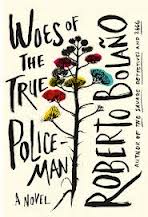
woesSOUNDTRACK: ATERCIOPELADOS-Live at Bumbershoot, September 5, 2010 (2010).

atercioA rock en Español band who have returned after a brief hiatus, Aterciopelados have changed a bit since their early more punk days.  Their last album Rio came out in 2008, I knew them back in the mid nineties.  This brief set (7 songs) at Bumbershoot showcases their more mellow tracks (there’s pan pipes) on “El Estuche.”  The Colombian band has always been political, but it seems like they are much more explicit about it on this record.  As singer Andrea Echeverri introduces a number of song, she talks about how they are “important” and are meant to bring attention to the troubles of Colombia.

“Ataque de Risa” has a wonderfully catchy melody (and I believe she says her daughter is singing with them on it).  The song “Bandera” (which means “Flag”) is pointedly directed at Arizona’s anti-immigrant law.  She introduces it as saying that all peoples are together under a rainbow flag.   It’s a more angry sound for Echeverri’s voice, but she does a great job.  Her voice is really impressive.  “Rompe Cabezas” has a rollicking chorus that’s a lot of fun and “Bolero Falaz” ends the set with a very cool and catchy song.

Here’s a video of El Estcuhe

[READ: December 2, 2012] Woes of the True Policeman 

This is yet another unfinished novel from Roberto Bolaño.  Bolaño knew that he was dying and he created a lot of work in anticipation of his legacy.  The afterword of the novel says that they found all of the various parts of this novel in various locations among his work–hand written and computer drafted.  And they all mention this titles, so they are pretty certain about the order and that it is as finished as it could be.

Unlike some of his other posthumous releases, this one must be deemed pretty significant since it was published by Farrar, Straus and Giroux instead of New Directions (publisher of most of Roberto Bolaño’s other smaller works).

And really what it reads like is a kind of prelude to 2666.  For this is the same Amalfitano as in 2666.  But it is his story from before he moves to Sonora, Mexico–before all of the murders started.  Indeed, there are parts of 2666 which make Amalfitano’s past seem like it is unknown but this story fills in the gaps quite well.  One of the details in 2666 is that Amalfitano’s teaching contract had expired at the University of Barcelona, although this book gives the behind the scenes reason why it expired.

Bolaño has many many stories in which he explores the past of a character from a different story.  Typically, it is a novella in which a minor character from a bigger novel gets his or her own story told.  And that seems to be the case with this as well.

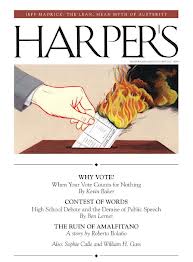
The story is set up in five sections (just like 2666).  Section I of this story (part of which was as excerpted in Harper’s recently) is called The Fall of the Berlin Wall and tells how Amalfitano, a professor, fell for a young poet named Padilla.  He wound up having an affair with him, which ended his career (I’m unclear whether it is because he is a student or because the affair was homosexual that the University wanted him out).  Amalfitano had never had homosexual desires before, and he was a proud husband and father, but he found that Padilla really affected him.

And so Amalfitano and Rosa, his daughter, moved to Sonora and the only school that would have him. (more…)

Read Full Post »

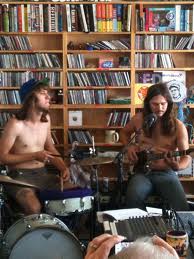
SOUNDTRACK:  JEFF THE BROTHERHOOD-Tiny Desk Concert #165 (October 8, 2011).

This was my first exposure to JEFF the Brotherhood, a rollicking duo who blast out the walls of the NPR studios.  The guitarist and drummer play simple, power punk (quite well) and they sound like a whole band, not just two guys.

“Diamond Way” reminds me of the Meat Puppets–echoey lazy-sounding punk.  ANd the oh oh oh oh oh is very catchy.  And then, after describing an NPR host as sounding like Ira Glass–if he were an old woman (and then apologizing if he offended anyone), they play “Bummer”–shirtless—presumably a first for the NPR offices.

“Bummer” is a mellower song and their sound doesn’t sound less full for the mellowess–especially when he kicks on the distortion pedal.  “Bone Jam” is one of my favorites–more ooh’s and the simple but wonderful lyrics “Gonna grind your bones to make my bread.”  It’ s amazing that two guys can sound this good.

[READ: August 17, 2010] “The Ruin of Amalfitano”

Natasha Wimmer has translated yet another posthumous work from Roberto Bolaño, this one called Woes of the True Policeman, due out this month.

This may already exist, but I hope someone is compiling a family tree of all of the Bolaño characters who have appeared in different locations.  For instance, the Amalfitano in this story appeared in 2666, indeed he has a whole chapter about himself.  And we know it’s the same Amalfitano because they both have a daughter named Rosa.  This story is set before 2666 and these fascinating events would shed some light on the state of Amalfitano when we do meet him in the novel.  Of course, Bolaño’s writings don’t seem to follow a conventional strategy so who knows if he intended any of this to be part of the “missing” Part 6 of 2666.

Anyhow, this story is about Amalfitano, but it opens with Padilla who decided to become an artist at the age of 13.  After dabbling in theater and film, he settled on poetry.  By 17, he was a sarcastic angry kid who could be easily provoked to violence (he claims that when fighting Nazis, anything is permitted).

At 18, he published his first book of poetry and when he was 21 he showed the poems to Amalfitano.  Amalfitano was a teacher of Latin America writers at the University.  He liked Padilla’s poetry, although he didn’t much like Padilla who didn’t come to class very much.  But once Amalfitano gave him praise for the poems, Padilla never missed another class. He even invited Amalfitanoto his house for parties.  After many such parties, the two became lovers.

Once the University learned of this, Amalfitano was fired.  (more…)

Read Full Post »

SOUNDTRACK:  PUBLIC ENEMY-Live at All Tomorrow’s Parties, Convention Hall, October 2, 2011 (2011).

NPR was cool enough to record and provide as a download most of the shows at the All Tomorrow’s Parties festival in Asbury Park, NJ.  (Portishead wouldn’t allow their show to be recorded, sadly).  But Public Enemy was a welcome surprise!
This tour is in celebration of the anniversary of Fear of a Black Planet.  And they play most of Fear and a lot of other things too (with almost nothing from their 2000 era CDs.

I can remember back in the early days of rap that it was hard to imagine what a rap show would be like live since they didn’t play instruments and much of the music was sampled.  Well, PE has musicians on stage and they have DJ Lord filling in for Terminator X behind the turntables (big shoes to fill, but done largely well–especially his fun “solo” in which he samples The White Stripes and Nirvana–although he should have mixed in Portishead, no?).  And mostly they have the personalities of Chuck D and Flavor Flav.

I suspect that this show would be a bit more fun to watch than it is to listen to–Flavor Flav’s antics don’t always translate well without his visuals.    Like when he asks the audience if that can all say “Ho” (which he eventually holds for 33 seconds!), it seems like a delay tactic in audio, but is probably fun to witness.

What’s especially cool about the show is that PE play so many songs, including small snippets of songs as segues to other ones (like the seventy second version of “Anti-Nigger Machine” that intros “Burn Hollywood Burn” which is practically hardcore) or the minute and a half of “He Got Game” that follows “Night of the Living Baseheads.”  I like that they even threw in some skits from the record like “Meet the G That Killed Me” and “Incident at 66.6FM.”

But of course the real joy is the full length songs, “Brothers Gonna Work It Out,” “911 is a Joke,” and of course “Bring the Noise” and “Fight the Power.”

Some of the improv sections don’t work all that well, the guitar solo in “Power to the People” leaves something to be desired (Khari Wynn maybe a legend, but he;s no Vernon Reid),  although the  “Jungle Boogie” riff is cool.   But the improv with guest drummer Denis Davis was pretty bad ass.  Flavor Flav hopped on the drums and was quite good for “Timebomb.”  We also got to meet Flav’s daughter Jasmine.  And Professor Griff was there too.

It’s also interesting that they keep saying they have no time left in the set (Portishead is next) but they play for at least 30 minutes after this.  Including a wonderful “By the Time I Get to Arizona and the set ending “Fight the Power.”

Chuck D has still got it and Flav is just as crazy and fun as ever (even if his screams and yos seems out of tune from time to time).  Of course, Flav has to get the last word in by raging  on for six and a half minutes  at the end (and about six-minutes in the beginning as well where he gave himself props about his reality show.

It’s a really good set–a little distorted from time to time, but really solid.  Here’s a link to the downloadable show.

[READ: October 2, 2012] Hocus Pocus

This book may have put me over the edge in terms of Vonnegut exhaustion.  I bought this book some time in 1992, but I never read it. It’s been in my house for twenty years and it was about time I read it.

But as I’ve been noticing, each Vonnegut book has been getting darker and more misanthropic.  And this one is no exception.  The construction of the book follows Vonnegut’s cut and paste style but it feels even more shuffled and indirect than usual (more on that later).  In many of Vonnegut’s books, the “climax” occurs somewhere in the middle and he fills in the details later.  For this one, the climax came around h.and I wouldn’t have felt like I missed anything.

In this book, the main character, Eugene Debs Hartke  is a Vietnam vet (usually his protagonists are military men, and Vonnegut has criticized Vietnam a lot, but this is the first time he’s had a Vietnam vet as protagonist).  He married his wife and had a wonderful family until he learned that his mother in law had a disease that made her crazy–but it only kicked in later in life, after he married her daughter.  And that his wife has the same disease–so by the middle of the story both of the women in his life are crazy “hags.”  And, like in his other stories, his children hate him. (more…)

Read Full Post »

SOUNDTRACK: …AND YOU WILL KNOW US BY THE TRAIL OF DEAD-Live on KEXP, March 12, 2009 (2009).

Back in 2009, …And You Will Know Us by the Trail of Dead had been hit by a truck.  Really.  Evidently no one was hurt too bad, but they did have to cancel a show in Salt Lake City. 

Nevertheless, they managed to get to KEXP to play a four song set from their latest album The Century of Self.  The opener “The Giant’s Causeway” is full of bombast and noise  and has a surprisingly catchy melody in the middle.  It merges into “The Far Pavillion” (just like on the album) which sounds like pretty typical Trail of Dead–rocking and yet melodic, with some good screaming parts.

“Luna Park” is something of a surprise to me as it’s a piano-based ballad (which I suppose Trail of Dead plays, but which I don’t associate with them).   “Bells of Creation” also opens with a piano, but it quickly grows very loud.  It’s a cool song with lots of depth.

I had actually stopped listening to Trail of Dead after Worlds Apart (and album I liked, but I guess the band fell off my radar) so it’s nice to hear they’ve still got it.  At least as of three years ago.

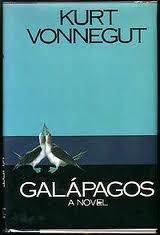
[READ: September 17, 2012] Galápagos

Each of these 1980’s era Vonnegut books gets darker than the last.  In this one the entire human race is wiped out (except for a few people who spawn what eventually becomes of the human race in a million years).  For indeed, this book is set one million years in the future and it is written by a person who was there, one million years in the past when the human race destroyed itself.  It’s not till very late in the book that we learn who the narrator is and, hilariously, what his relationship is to the Vonnegut canon.

In typically Vonnegut fashion, the story is told in that spiral style in which he tells you a bit of something and then circles back to it again later and comes back again later until finally 200 or so pages into the book you get all the details of what is happening.  Interspersed with the respawning f the human race (and flippers) is the story of the Adam and Eve and Eve and Eve and Eve and Eve who created the human race–how they got to be together, what their lives were like before and what contribution they made to humanity, such as it is now.

In another bizarre and fascinating twist, every character who is going to die in the near future gets a star next to his name so that the reader knows that that person is going to die.  We get a lot of things like ★Andrew MacIntosh for many pages until the character finally dies.  And pretty much everybody does die.  Well, obviously if it is set a million years in the future, but aside from that part, only a few of the characters survive.

So here’s how these few people managed to create a new human race in the Galápagos Islands.   (more…)

Read Full Post »

SOUNDTRACK: THE FLAMING LIPS-“Smoke on the Water” (2012).

There’s a new Deep Purple tribute album coming out shortly (is this the year of tributes?  what’s going on?).  Anyway, the lineup isn’t all that inspired, but I was curious to see what the Flaming Lips would do with that song

As with their recent reinterpretation of Dark Side of the Moon, this cover is respectful and utterly disrespectful.  Musically the song is pretty accurate. Well, the notes are the same.  But the style is very different, kind of wahwahed delicate chords–no heavy bass or anything.  But it’s the vocals that are the contentious point–he recites the entire song (which kind of works because it is a story) in a stilted, faux British accent.

The second verse has a very computerized voice singing an autotuned melody along with the recitation–sort of a harmony but not.  This voice continues through to the chorus (which the main vocals also simply recite).

I appreciate the Flaming Lips’ approaches to popular songs, but this version renders a big loud song kind of anemic.  Which is so weird because the last few Lips albums were so loud and bass-heavy.  I listened twice, I probably don’t need to listen again.

So, this is yet another tribute I won’t be buying.

[READ: August 22, 2012] Don’t Get Too Comfortable

I’m already making good on my promise to read more David Rakoff.  Indeed, as soon as I heard that he died, I put this book on hold at the library.  The strange thing about this book is that I feel like I read parts of it already.  I don’t feel like I read the whole book because some things were unfamiliar to me, and yet there was a strange feeling of déjà vu throughout the book.  But I looked in the front of the book to see where these essays had appeared and I don’t read any of the magazines where they initially showed up.  And while I like This American Life, I don’t really listen to it very often.  So either I read this book seven years ago or these pieces are inspirations for other pieces I have read (which is possible–two or three articles in here reminded me of things that A.J .Jacobs has since done).

So this collection of essays takes place during the early 2000s, George W. Bush’s first term (not the happiest time to be a gay Canadian living in New York).  But in addition to the first essay which is all about his quest for citizenship, it seems that Rakoff was now gainfully employed as a freelance writer.  Most of these essays seem to have been requested for magazines–like they sought him out to write them.  So his fame was clearly growing.  And, again, like A.J. Jacobs, he seems to have been picked as a guinea pig for certain pieces.   I don’t really know if this is a “genre” per se, I mean lots of un-knowledgeable people have gone into new experiences to write about them (insert inevitable David Foster Wallace reference here–but of course he wasn’t the first either).  But Rakoff’s subjects in the last couple essays seem to be closer to what Wikipedia calls Jacob’s “stunt” journalism. (more…)

Read Full Post »

« Newer Posts - Older Posts »