Feeds:
Posts
Comments

Archive for the ‘Law’ Category

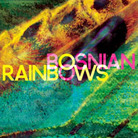
CV1_TNY_06_10_13Schossow.inddSOUNDTRACKBOSNIAN RAINBOWS-“Turtle Neck” (2013).

bosnian rainbows_cvr-a5c79faedffc0dc27b9e81b5eb566b7c02c426e9-s1I had listened to most of the preview of this album, and I was mixed about it.  But I have to say that of all the songs “Turtle Neck” is my favorite.  It begins as most of these songs do with a very simple melody.  There’s an easy vocal melody, accompanying guitars and interesting keyboard notes dropped in.  As with most of these songs it has a very 80s feel to it.  The big difference with this song is that it is 6 minutes longs and allows Omar Rodriguez-Lopez some wiggle room to goof off.  Like the weird little noises (effects, guitars what have you) that sprinkle the ends of the verses.

 But it’s at the 3 minute mark that Omar really takes over—the song turns kind of sinister with a  great dark bassline.  And then comes the guitar solo—screaming, noisy, more or less out of control, while wailing notes and off-kilter scales litter the one-minute instrumental section.  Then Teri joins the tone with a wholly new vocal section that compliments what Omar is doing.  The wildness kind of wears itself out until the end of the song recreates the beginning sweetness.

It’s probably the best encapsulation of the combination of pretty and wild that Bosnian Rainbows put together.

[READ: June 18, 2013] “Pedigree”

This is a Personal History, so I assume it is true.  I don’t know Walter Kirn at all, and really I only read this because the main person he talks about is named Clark.  Of course, the Clark in this story, Clark Rockefeller, is an unmitigated fraud.

It turns out that the story of Clark Rockefeller, and his real name Christian Gerhartsreiter, is fairly well-known  in popular culture (there was even a Lifetime movie made about him.  Of course, I don’t watch movies on that network, so this whole story passed me by.  I wonder if this narrative is more or less interesting if you already know the truth.

This narrative begins with Walter explaining how he got to know Clark.  Clark had signed up to take a dog who had been injured and rehabilitated (it was a Gordon setter who had been hit by a car and now used a wheelchair for its back legs).  Clark had been vetted and talked to Walter, who was supposed to transport the animal.  Things were complicated and the trip from Montana to Manhattan was more difficult and costly than Walter imagined.  But Clark was there with an envelope and an offer of a place to stay and fabulous people to meet and a tour of all of Rockefeller Center.  When asked about his source of income, Clark explained his job as “a freelance central banker for Thailand.”  And Walter accepted it all.

Later, the envelope proved to hold a check for $500 (not even half of what Walter spent).  None of the famous people showed and the tour didn’t materialize.  Nevertheless, the ruse was surprisingly complex–like the man who claimed to be from MOMA authenticating the Mondrians and Rothkos that Rockefeller had on his wall.  (more…)

Read Full Post »

#20SOUNDTRACK: SUGAR-File Under: Easy Listening (1994).

fuelI  always thought File Under: Easy Listening was a very funny title.  But it’s possible that people took it too literally as it didn’t sell all that well. And in Mould’s autobiography he says he didn’t have much time to write songs for this disc and he thinks it suffered.  Of the three Sugar discs, this is definitely the weakest, although there are some great moments on it.

The disc opens with “Gift” which has some ragged distorted guitars. It’s got some noises and grungy sounding solos showing that FU:EL was a joke.  Although, the overall sound is kind of a cleaner version of the angry songs on Beaster.  “Company Book” is kind of a pounder, until the voice comes in and you realize…it’s not Mould!  It’s got a catchy chorus, but after the kind of underwhelming opener, it’s a strange place for a song that’s also not so dynamic.  Especially when it’s followed by “Your Favorite Thing” another great pop song from Mould—not top tier but a really strong second tier (although that bright, simple guitar solo is a real winner).  “What You Want It To Be” is a another decent song (the addition of that extra guitar playing the melody line really makes the song shine.  “Gee Angel” is also a high point.  A catchy song, but which never quite reaches the heights of the previous albums.

“Panama City Hotel” has the same feel as the opening of Beaster: bright acoustic guitars and a similar riff.  But it never really goes anywhere, and the 4 minutes seem.  The “do do do do’s” that open “Can’t Help You Anymore” are certainly the brightest spot on the album, and a big pop song as well.  “Granny Cool” has a nicely abrasive riff although it seems kind of mean spirited.  It’s funny that he tucked “Believe What You’re Saying” at the end of the album.  It’s a minor song but it sounds so bright on this album after the other songs. It’s really quite pretty.

And the closer, “Explode and Make Up” is one of Mould’s great angry songs.  Unlike Beaster, this one has a happy acoustic field—bnright guitars with that raging distorted guitar underneath.  It’s a great slow burner of a song and at five minutes it ends a somewhat lackluster album in a great way.

[READ: March 31, 2013] McSweeney’s #20

McSweeney’s #20 is an issue that I have read before.  At least I think I have.  My recollection is that it was the last one I read before I started writing about them on this blog.  I was hesitant to read it soon again, which is why I waited until now.  And while I remember the issue itself (with all of the art), I didn’t remember the stories.  So who knows if I actually read it six years ago.

Anyhow, this issue comes jam-packed with art.  Every fourth page has full-color artwork on it–many of them are quite famous.  It makes for a very beautiful book.

In between these artworks are a number of stories–ranging in size from 2 pages to 30-some pages.  There are no letters, and the explanatory and copyright information is on the cover of the book–which would be fine, except that it is covered up by a kind of 3-D artwork.  I wonder if the whole text is available anywhere?

The book also comes with a separate pamphlet–an excerpt from Chris Adrian’s Children’s Hospital.  I intend to read the novel eventually so I didn’t read the excerpt–although maybe if I put off the novel for six years I should just read the excerpt now. (more…)

Read Full Post »

SOUNDTRACK: WILD FLAG-Live at the Black Cat, October 20, 2011 (2011).

It’s interesting to compare this show by Wild Flag with their SXSW show.  This set is longer, but they retain the same raw energy and intensity.  It also sounds as though the tour has been rough on Carrie’s voice, which sounds a bit strained and hoarse (even when she talks!).

They play most of their debut album, but they also throw in a couple of new songs and even a few covers.  Perhaps the most fascinating part is the 15 minute (!) version of “Racehorse.”  There’s a lengthy noodling section as well as a cool part where Carrie goes a little crazy asking about money.

Janet Weiss is absolutely amazing here too.  And the keyboards, definitely complement everything well, but they are always the most notable flubs, and there’s the same one as in the SXSW show (not as bad, but noticeable).

Without a doubt the most interesting thing is the hearing that Mary Timony gives guitar lessons in Washington DC.  She lives there and evidently earns extra cash by doing guitar lessons.  Wow.  How cool would that be?

Check out the show here.

[READ: January 15, 2012] The Influencing Machine

Brooke Gladstone is one of two reporters who works on NPR’s On the MediaOn the Media is an awesome show which dissects things that happen in the world and examines the way the media portrays the events.  They work pretty hard to see who is reporting bias, who is exposing bias and how things are getting out to the average media consumer.  It’s worth anyone’s time to read (it doesn’t take very long).  And it’s also fun and enjoyable.  As anyone who has heard the ending of On the Media: “and edited [dramatic pause] by Brooke” knows, there’s always a smirking grin attached to the program.

When I heard that this book came out I was pretty excited to read it.  And then I promptly forgot all about it.  Lucky for me, my wife can take a hint, and she got it for me for Christmas.

The first surprise of the book is that it is written as a graphic novel–illustrations by Josh Neufeld (who has drawn for Harvey Pekar’s American Splendor).  The funny thing about the illustrations is that I have no idea what Brooke Gladstone looks like (which I rather prefer about my NPR announcers), but I really like the cartoony style of her avatar (which reminds me of Elaine from Seinfeld and which inspired me to draw a kind of similar version on my drawing site.

On to the book.

This book works as a primer for understanding media ownership, media consolidation and media power.  The opening few chapters are going to be nothing new for anyone who has read Chomsky or Vidal on the media.  But since most people haven’t, it’s a wonderful way into some of these thorny issues of who tells us what and why. (more…)

Read Full Post »

SOUNDTRACK: REAL ESTATE-“It’s Real” (2011).

Right from the start, the combination of the fuzzy guitar picking and the whacking drums was a major draw for me.  Finding out that these guys are from Ridgewood, NJ (a town away from my hometown) was a little icing.

This is a charming little pop ditty.  It propels along at a nice clip, it’s got a catchy chorus and it makes me feel warm and sunny.  And for all of that it’s not even three minutes long. That’s a nifty little trick.

Interestingly, in NPR’s discussion of the song, the guys play the song “Easy,” but for some reason the full length song is for “It’s Real.”  And I actually like “It’s Real” more, so good for the mix up.

[READ: September 15, 2011] “The Patented Peanut Butter and Jelly Sandwich”

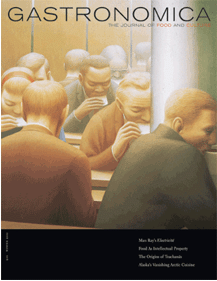
I actually read this Gastronomica article before the other one, but this seemed like a good Saturday subject.  This article is the kind of thing I don’t normally write about.  I read a bunch of non-fiction and for the most part I don’t bother ever posting about it because, really what’s the point of summarizing a nonfiction piece.  Most of them I don’t have an opinion about, I just say hmm, interesting.  But since I’m doing some special articles that were pointed out to me from JSTOR, I’m going to include this one for historical amusement (even if unlike the hobo memoir, this article is less than ten years old).

Anyhow, this brief article looks at the patented Smucker’s Uncrustable Sandwich.  At the time, these were novel, but now they are ubiquitous.  Smucker’s had taken two discs of white bread, filled them with an inner casing of peanut butter and then stuffed the PB with a splooge of jelly.  It’s the shell of PB, which keeps the jelly from touching the bread and the crimping method to squish the breads together that really seal the patent.  And, I admit, that despite the mockery they received for patenting a PB&J, I think they did hit on some novelties and have earned their unique status.

But the article proceeds to tell how other companies tried a similar idea and were summarily sued.  So Shih unpacks the patent to see what Smucker’s has protected and how a lawsuit might be avoided (in short, Smuckers covered their bases really well (as you’d expect from a corporation), so it’s unlikely that a mom and pop PB&J machine will withstand the scrutiny).  (more…)

Read Full Post »

« Newer Posts