SOUNDTRACK: SON LITTLE-Tiny Desk Concert #496 (December 18, 2015).
I know of Son Little, although only vaguely. WXPN has played his song “The River” quite a lot, although I don’t think I’ve heard anything else.
For this Tiny Desk Concert, he’s really stripped down–just his acoustic guitar, a percussionist (Jabari Exum playing a djembe with accoutrements) and a backing vocalist, his sister Megan Livingston. His playing is even pretty stripped down–his chords are minimal, almost more like accents for most of the songs (although he does play louder from time to time).
As such, this really celebrates his voice which is strong and almost gospel-like.
He plays three songs. “Lay Down,” is a quiet soulful song with perfectly spare accompaniment. When it ends, everyone seems adorably shy with Little saying, “just mildly awkward enough.”
“Your Love Will Blow Me Away When My Heart Aches” is a bit bigger–Little sings a bit louder and plays louder chords, but it is still quite minimal.
He ends with “The River” which is certainly stripped down from the radio version. It opens with some claps and he encourages everyone to clap along although “If you’re like clap challenged then maybe… don’t–you know who you are.” The song has that bluesy rock feel even in this understated form. And while I like the original better, this is a great version–that quiet clapping and percussion is really nice.
[READ: July 26, 2016] The Complete Peanuts 1981-1982
So far the 1980s see Schulz settling into a few consistent themes in his strips–regular motifs that he mines over and over again. Although it’s interesting to see how they have morphed over the decades.
Patty is constantly falling asleep in school (and getting D minuses), Snoopy continues to write funny/bad jokes and gets rejection letters about his books (this is usually pretty funny but it’s also surprising as Snoopy is usually the “successful” one); Snoopy also plays a lawyer a lot in these strips.
1981 begins where 1980 left off with Patty loving the story of Hans Brinker. 1981 also has a lengthy section about Valentines Day (a subject that gets more emphasis in some years than others), although this year Sally is the major protagonist (and her Sweet Babboo her object). 1982 also has a Valentine’s Day with Sally–she gets her hand stuck in the Valentine’s Day cards box.
Schulz used to do bible instruction which is why he quotes it so much. And he occasionally peppers his strips with religious commentary. There’s a joke about school prayer–Patty has to go up to the board and when her teacher falls ill she shouts “school prayer works, Marcie.” There’s an amusing joke that Snoopy used to teach Sunday School at the Daisy Hill Puppy Farm.
Although the running jokes are funny, I love when he gets a new idea. Like the a fun twist on the dog ate my homework joke when Snoopy as the WWI pilot steals Sally’s homework claiming it is the enemy’s secret papers and he eats them.
Sometimes Schulz gives a one-off joke that’s just silly and funny like when Woodstock “poofs” a dandelion and it “poofs” him back. (more…)
Holly Williams is a country singer. Her lineage is hard to deny: the daughter of Hank Williams Jr., half-sister of Hank Williams III, and the granddaughter of country legend, Hank Williams Sr. (she never met him, as he died long before she was born).
She sings three songs. “Drinkin'” which is very country. “Railroads” rocks a bit more and has an interesting sounding chorus. But it’s “Waitin’ on June,” a story song about her grandparents (not on the Williams side) that is beautiful and touching (although I really don’t like the way she sings the word “June,” but that’s just me).
[READ: February 18, 2016] “The House Behind a Weeping Cherry”
This story is about a young Chinese man, Wanren, who has set out for New York to try to benefit his family. He is shocked to find that he is working in a sweatshop (he left China for this?) pressing clothes.
He has been living in the upstairs apartment of a house owned by Mrs Chen. But his roommate has just left because he couldn’t handle the fact that the women who lived down the hall were prostitutes (who paid Mrs Chen).
When the roommate moves out Wanren is afraid Mrs Chen will raise the rent. But instead, she asks if he will drive the girls to their appointments at local hotels. Mrs Chen assures him that he wont get in trouble with the police and he reluctantly agrees.
The rest of the story unfolds with the narrator becoming more friendly with the three girls.
Lili is the meanest of the three. She speaks the best English and answers the phone. Nana is friendly, but it’s Huong who is the best cook and the prettiest of the three. Wanren likes her the best. Lili suggests that he should buy one of them for the night since he has no girlfriend, but he knows not get involved. He doesn’t want to play favorites even though he has one.
The two of them wind up eating dinner together and sharing their living space a lot more.
He desperately wishes the girls could stop their life and do something legal, but all three of them have serious debts to pay. Huong owes a Coyote $2000 a month for the expense of getting her to the US.
He learns about the johns and what type of people they are. Some are married looking for something different. Some are widows just looking for advice. For the most part the girls aren’t ever treated that badly. Sometimes the johns go too far–one bit Huong very hard once, and another client turned out to be two men who were both so rough with her so that she couldn’t walk the next day.
One night when a client wouldn’t leave (some made house calls) Wanren stepped in to help. And now the women like him even more.
This story is something a of a “hooker with a heart of gold” story, but the added details of their illegal status, their trying to raise money to go home and their having to pay off other men puts an interesting twist on it
Finally, the narrator finds them some honest work, but it will never pay enough. They go to the coyote to see about changing the terms of her payment but he more or less says that if they try plaything he knows where they live.
The story is hopeless. But somehow the ending adds a slight ray of hope, as unbelievable as it may be.
In writing about the story it seems less good than when I was reading it, but I really enjoyed the characters, especially Wanren, and seeing how his mind worked. Even if some parts were rather cliched.
SOUNDTRACK: RAGA ROCKERS-“Slakt” [“Slaughter”] (1988), “Hun er Fri” [“She is Free”] (1988) and “Noen å hate” [“Someone to hate”] (1990).
Karl Ove mentions many bands in his books. Raga Rockers appeared twice in this one. I can’t find a ton about them online, because they never really made it beyond Norway, but the Google translated version of their website says:
Raga Rockers is an ingenious rock ‘n roll band that has existed since 1982.
Today the band consists of: Michael Krohn (vocals, lyrics), Hugo Alvar Stein (keyboards / guitar), Eivind Staxrud (guitar), Arne Sæther (keys), Livio Aiello (bass) and Jan Kristiansen (drums).
The band came out of the punk community in the early eighties, but became such a “poppy” large parts of the Norwegian people have founded acquaintance with them. Songs like “She is free” and “Someone to hate” is almost singalong classics! Their greatest triumph came perhaps in 1999 when they played for thousands of ecstatic Norwegians at the yellow stage at Roskilde Festival. (Reviews of the show by Dagbladet (which Karl Ove wrote for) and Dagsavisen–both are in English.
Despite their punk roots and the rather violent song titles, the songs are almost poppy–heavy guitars but simple chords and a singer who doesn’t sound angry at all. In fact, if I didn’t read about their punk roots, I’d swear these songs are kinda goofy.
“Slakt” is a simple song, opening with a 4/4 drum and splashes of guitar. The middle is a bluesy riff with a chorus of “ah ha ha” The lead singer’s voice is mostly kind of deep–not quite what I expected from the heavy guitars.
“Hun Er Fri” is quite different from the others songs. It’s only 90 seconds long and features a piano. The chords are still simple the piano may be playing single notes in fact). The lyrics are pretty much nonstop and kind of fast. It seems like a silly pop trifle and I can see why it’s popular among their fans. The first time I listened to it, I was surprised it ended when it did. This bootleg live version is certainly fun.
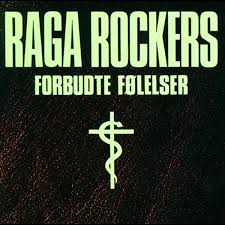
These two songs came from their 1988 album Forbudte følelser [Prohibited feelings]
“Noen å hate” has a bit more of a metal sound, but is essentially the same kind of heavy rock with simple chord progressions. There’s a good solo at the end. A black metal band called Vreid has done a cover of this song (which really only sounds different because the Vreid singer is more growly).
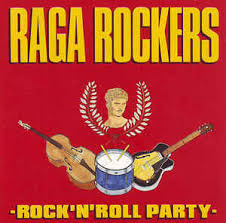
This song comes from their 1990 album Rock n’ Roll Party.
And yes, they are still around. They took a hiatus in the 2000s but came back with three albums 2007’s Übermensch, 2010’s Shit Happens and 2013’s Faktor X.
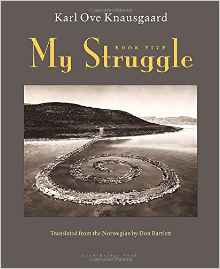
[READ: May 1, 2016] My Struggle Book Five
I realized as I read this fifth book that I should have been keeping a vague sense of the timeline of these books. Specifically, because he opens this book with this: “The fourteen years I lived in Bergen from 1988 to 2002 are long gone.” So if he was born in 1968, this book covers roughly ages 19-33.
So my general outline for the other volumes:
Book Five: 1988-2002 (19-33)
Book Four: 1987 (18)
Book Three: 1968-1981 (1-13)
Book Two: 2008 (40) (with flashbacks to meeting his second wife in 2003 or so)
Book One: 2008 (40) (with flashbacks to his father’s death in 1998 or so)
What era could Book Six possibly be about?
We’ll find out next year in what is said to be the 1,200 page final volume.
So as I mentioned above, Karl Ove talks about the fourteen years he lived in Bergen. And it made me laugh that he says:
The fourteen years I lived in Bergen, from 1988 to 2002, are long gone, no traces of them are left, other than as incidents a few people might remember, a flash of recollection here, a flash of recollection there, and of course whatever exists in my own memory of that time. But there is surprisingly little.
And then he proceeds to write 600+ pages about that time. (more…)
Karl Ove mentions many bands in this book, but the deLillos are the only Norwegian band that he plays. They sing in Norwegian and play sprightly, jangly guitar pop–they would fit in very well with some of the lighter alt bands from the late 80s and early 90s.
I have no idea what they’re singing about (well, the title translates to “love” so I guess I know what they are singing about.
The singer has a high, delicate voice and there’s some interesting harmonies. I really like the way the song transitions from verse to chorus with the picked guitar notes–very catchy.
It comes from their second album, Før var det morsomt med sne (Beforeit was funin the snow), which along with their first was quite popular and was reissued with a bonus disc in the 90s. Having said that I see that Amazon has one copy of the disc and no album cover listed. Worse yet, I can’t find many other songs online (Spotify lists the album, but I can’t get it to play).
Sorry, deLillos (even searching for you gives us more Don DeLillo than you guys).
[READ: June 24, 2014] My Struggle Book Four
I started including the British edition page numbers because at my work we received both editions of the book, and I received the British one first so I grabbed it and started reading. I noticed the page numbers were quite different (the British book is taller and the print is quite bigger, although this doesn’t explain why the previous books have fewer pages).
I had been interested in the differences between editions from the get go. I had enjoyed the American editions, but I enjoyed reading this British edition more (bigger print?). But when I noticed on one of the pages that the word “realise” was spelled as I typed it, it made me wonder if the American edition changed that to the American spelling. [Actually, I see that Don Bartlett lives in Virginia, so perhaps he translates it into American first]. While I wasn’t about to go into a deep inspection of the topic, when I saw the American edition on a shelf at work, I had to do a little comparison.
And what I found out was that even though Don Bartlett is the (amazing) translator for both editions, someone (perhaps Bartlett himself?) is translating the American into British (or vice versa). I looked at a couple of pages and noticed these changes from British to American:
BRITISH EDITION = AMERICAN EDITION
Pack it in, now = Give it up, now
roll-up = rollie [about hand rolled cigarettes]
looked daggers at = gave her a dirty look
a complete prat = completely useless
is that possible? = really?
to cook and wash up = cooking and doing the dishes
I had got = I’d gotten
had penned = had written
and yes, realised = realized.
Other than select phrases, every word is exactly the same. So somebody goes through the books and changes them to British english idioms and spellings. That’s fascinating.
I also see that this is the first book I had not read an excerpt from first. Not that it would have made any difference as to whether I read the fourth one. I couldn’t wait to get my hands on it.
So book four is set in Håfjord, a town in Northern Norway near Finnsnes (a five hour flight away–okay I had no idea Norway was so big!). Karl Ove is 18 and has decided to become a grade school teacher there for one year. The tax breaks are great if you teach, and he plans to teach and write his masterpieces and then get out. He has no interest in teaching, but the town is small (most grades are 3-7 students), so he figures it can’t be too hard.
As in most of Karl Ove’s books, the stories jump around and flash back and do not stay all in this one time, but it is largely set in this locale.
My first thought was that I have never read a story with as much semen (both nocturnal emission and premature ejaculation) in my life. It is a strange take away from the book, but there it is. Karl Ove is 18 and really wants to have sex for the first time. About 3/4 of the way through the book he reveals that he never masturbated (it just never occurred to him, apparently, and at 18 he’s too old to start–what!?). As such, he seems to have wet dreams every night. And every time he gets near a woman, he has an orgasm too soon. He is horny all the time–it’s a bit disconcerting.
And since I mentioned that, I don’t know if Karl Ove’s life is typical of Norway, but I am shocked by the number of women who take their clothes off around him (he may have never had sex, but he was about to on at least a half-dozen occasions). And he says that all through school (from around age 13 and up) it was common place for the boys to lift up the girls’ shirts and kiss and or fondle their breasts. It is mind-boggling to me. And the 16 year olds all seem to be having sex all the time–this may be skewed from Karl Ove’s perspective, but that’s what I now believe happens in Norway.
But while sex is the main theme of the book–sex, sex sex, there is more to it.
Karl Ove’s parents have split up and his father has started drinking in earnest. The dad has remarried and has just had a baby. Incidentally, I was also shocked to read that Karl Ove’s father, who is an abusive stodgy old man who is cranky and mean and abusive and all the stuff that we read about in the other volumes was only 43 at the time that Karl Ove was 18. So the old man who I pictured as a gray-haired curmudgeon in this book is actually younger than me. Great.
In Håfjord, Karl Ove is teaching kids who range from age 13 to 16. It’s disconcerting to read about him thinking lustful thoughts about his students, until he reminds us that for most of the students, he is only 2 years older than them. I am pleased to say that he behaves himself (except in his mind) with all of the students. There’s even a really interesting flash forward to eleven years later when he runs into two of them again.
He proves to be a pretty decent teacher it seems. The kids mostly like him (the girls all think he is hot) and he is young and tries to make it fun (he himself hated school and everything about it). He even seems to help out an awkward boy (although that is never resolved). We see him teaching, trying to interact with the kids and generally being a pretty good guy.
Until the booze comes out.
For in addition to semen, this book is chock full of alcohol. Before graduating from gymnas (high school), Karl Ove basically stopped caring about anything. He spent most of his time drunk. It is astonishing the amount of drinking he does–it’s practically like an Amish Rumspringa how crazy he goes. But even in this retrospective look, he talks about how much he likes it, how it loosens him up and makes him less nervous.
But really he just spends most of his time drunk, hungover or sick. He even got into the hash scene for a while. He was living with his mom at the time and she was appalled at the way he acted–especially when he threw a party which trashed their house. She even kicked him out for a time.
He seemed to be over the drink in Håfjord, but it turns out that there’s precious little else to do except drink up there, especially when it grows dark for most of the day. So there is much drinking–he only misses class once or twice because of it but he comes very close a lot.
The irony that he is appalled at his father’s drinking, while drinking so much himself, is apparently lost on him.
The other main preoccupation with Karl Ove is music. He talks a lot about his great taste in music (he reminds me of me–a little insufferable). Back when he was in gymnas, he spent a lot of time discussing his favorite bands and favorite songs. He got a job (at 16) writing reviews for a local paper (holy crap, jealous!) and then later gets a job writing a column for another paper. For the previous book I listed a lot of the bands he mentioned, and I wish I had written them down for this one. U2 features prominently (this is 1987, so I’m guessing Joshua Tree), but also Talking Heads, a Scottish post-punk/new wave band The Associates and their album Sulk which he describes as “an utterly insane LP.” he and his brother really like The Church and Simple Minds (before they got so commercial). He also has a whole thread in which he makes connections with albums:
Briano Eno, for example, started in Roxy Music, released solo records, produced U2 and worked with Jon Hassell, David Byrne, David Bowie, and Robert Fripp; Robert Fripp played on Bowie’s Scary Monsters; Bowie produced Lou Reed, who came from Velvet Underground, and Iggy Pop, who came from the Stooges, while David Byrne was in Talking Heads, who on their best record, Remain in Light, used the guitarist Adrian Belew, who in turn played on several of Bowie’s records and was his favorite live guitarist for years. (64).
He also specifically raves about “The Great Curve” from the Talking Heads album, and of course, he raves about the first Led Zeppelin album as well.
Music is a huge part of his life (and he dresses accordingly too). It’s unclear whether the kids think this is awesome or not, but he may be a bit too much for some of the locals. The locals are mostly fishermen (which makes sense), and Karl Ove is a bit intimidated that he is so wimpy compared to them–one of the women even teases him about his tiny arms.
But his main focus is writing. He writes a few shorts stories (to my knowledge he has never published any of them). We see some excerpts and they seem fine–he fancies himself Hemingway. But he also mentions a bunch of Norwegian authors (I love when he does that). Sadly again, not too many of them have been translated into English. [I really hope that some mega fan creates a database of all of the bands and authors he mentions]. He also talks briefly about his first novel which alludes to his time teaching here. I happened to read a small summary of said novel (Out of the World) and feared that it spoiled what was going to happen. But, in fact there does appear to be a difference between his fiction and non-fiction.
The book moves very quickly–from party to party, from failed sexual attempt to the next, even from his staying up all night long trying to write. And most of the time he comes off as kind of a dick–he is also very self-critical, which somehow tempers that dickishness.
As with the other books I cannot figure out exactly why I am so addicted to his writing. I brought the book home on Thursday night and finished it (all 548 pages of it) Monday night. This really completes the picture of himself as he moved from childhood to adulthood and really lays the foundation for whatever is to come next. Early in the book he talks about the books that he loved at that age, books that talk about the move from childhood to adulthood. And thus, this book becomes something of a bildungsroman as well. Although whether or not Karl Ove actually grew up at the end of this book will have to wait until volume 5 (which I have to assume is still another year away as there is no information about it online at all!).
For ease of searching, I include: Hafjord, For var det morsomt med sne.
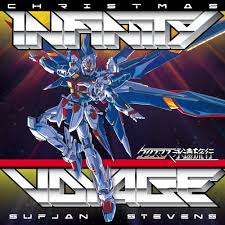
Back in 2008, a Vol. VIII of Sufjan’s Christmas recordings was leaked on the internet. It was called Astral Inter Planet Space Captain Christmas Infinity Voyage-Songs for Christmas Vol. VIII and I talked about it here. When his official release came out volume 8 was similar yet different from the leaked one. The song tracks were almost identical, but the versions (and lengths) were rather different.
The leaked version of the disc has this track listing:
Angels We Have Heard on High 5:00
Do You See What I See 4:59
It Came Upon a Midnight Clear :48
Christmas in the Room 4:50
Good King Wenceslas 2:15
Joy to the World 7:49
The Child With the Star on His Head 13:15
And the official version has this track listing
Angels We Have Heard on High 4:04
Do You Hear What I Hear 9:14
Christmas in the Room 4:32
It Came Upon a Midnight Clear :48
Good King Wenceslas 4:18
Alphabet St. 1:36
Particle Physics 1:04
Joy to the World 5:25
The Child With the Star on His Head 15:13
So what’s the difference
“Angels We Have Heard On High”—The leaked version has a lengthy warbling keyboard introduction and is the real song. The official version is an original song based on the hymn. I like the way the opening melody changes expected direction in mid line. I also enjoyed the “oh ho ho hos.” This is pretty much the only traditional sounding song on the disc because the rest get pretty unusual electronic treatments
“Do You Hear What I Hear” The leaked version (with a different title) was autotuned and slow (and only 4 minutes). The official version is also autotuned, and is filled with electronic percussion. It quickly goes weird and crazy, but I like it. It’s 9 minutes long and the last five minutes are a crazy freakout of autotuned nonsense.
“Christmas in the Room” is a song about being alone with someone you love for Christmas—pros and cons (although there seems like a lot sadness in the song). The autoharp is pretty though. [The leaked version is a bit louder with electronic music rather than autoharp].
“It Came Upon a Midnight Clear” in both version this is a short (less than a minute) electronic version of the traditional song.
“Good King Wenceslas” is also crazy and electronic with lots of strange inserted sounds and lines from other songs. [The leaked version is only 2 minutes and while still electronic is far less crazy].
“Alphabet St” continues some of the nonsense in Wenceslas—lyrics about being sexy. “Particle Physics” is also 1 minute long of space sounds that merge into
“Joy to the World” is also slightly off-sounding (with lots of different instruments). It starts kind of pretty but goes really wild with the electronics and the autotune and by the end it’s just crazy electronic freakout.
“The Child With the Star on His Head” opens the official version with someone saying “desperately seeking Santa take 3.” Despite it being super long (in both version) the song itself is really quite pretty. It’s very Sufjan with great falsetto and an unexpected melody. The two versions are similar in construct but after the opening few minutes they diverge pretty radically. At around 5 minutes an electronic sounding, totally fuzzed guitar solo begins and it adds a very strange element to it—a kind of psychedelic outer space sound, which doesn’t quite fit the mood. [Interestingly, in the leaked version, the solo is pretty much the same notes, but it is far less spacey and effects filled. It has more of a classic rock guitar solo (kind of David Gilmour-ish]. The solo lasts longer in the new version too. That pretty much accounts for the two minute discrepancy. The rest of the song plays out mostly the same, although again, the leaked version is kind of pretty and sweet (with la las and a horn solo) while the official release is all electronic and gets crazy here and there. The end of the song is a denouement–horn based in the leaked and all electronic in the official.
I’m not really sure which release I prefer, because the electronic stuff is really kind of wild and fun (although not very Christmassey). But the leaked version is really quite nice.
[READ: December 11, 2014] Superfuckers
I know Kochalka mostly from his children’s books, which are weird and warped and really really funny. Most of them seem to star his son’s head imposed on his weird cartoon style (so funny).
So imagine my surprise to discover a book of his called Superfuckers.
Superfuckers is a “collection” of “issues” of the “series” Superfuckers.
It opens with issue #271 (from 2005). And within five or six panels, we get every single curse word you can imagine from our “superheroes.” Indeed, they really don’t “do” anything. They just sit around and yell at each other (calling everyone gay or slut or some such), get high (on a staggeringly odd number of things) and plot to take over the gang. (more…)
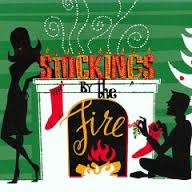
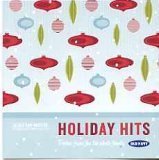
This is a Starbucks compilation (Starbucks is pretty good for Christmas compilations). But I find that the overall vibe of this disc is too mellow for my liking. Most of the songs are quite pretty, but it feels like a Christmas Party for one by your lonesome rather than a party proper. Of course, the picture on the cover suggests a romantic night in, so maybe that’s the vibe they’re going for (it’s still kind of sad though).
RAY CHARLES & BETTY CARTER-“Baby, It’s Cold Outside.” There’s are dozens of versions of this song. I like this one fine, but it’s not one of my faves (although Ray has some good turns of phrase). But I think Betty’s voice may be too squeaky for me.
SARAH McLACHLAN-“I Heard the Bells on Christmas Day” McLachlan has a beautiful voice, but I like her earlier more robust singing than her latter day TV Commercial songs. So this winds up being very pretty but a little mopey. It’s also way too long.
FRANK SINATRA-“I’ll Be Home for Christmas” is also a little slower than I remember. But I have to assume that if Frank did it this way, this is the tempo it’s meant to be.
HEM-“Have Yourself a Merry Little Christmas” has quiet, whispered version. It’s pretty, if rather stripped down (just piano and chimes).
ELLA FITZGERALD-“Sleigh Ride” is a great version, full of high spirits and fun. Ella is awesome.
RUFUS WAINWRIGHT-“What Are You Doing New Year’s Eve?” is also a slow version. Perhaps this song is slower than I realize. It’s a very Wainwright-sounding version with his wonderful warble.
HERBIE HANCOCK-“River” is pretty–Corinne Bailey Rae’s voice is lovely, although I don’t care for the jazzy accompaniment.
The next few songs are the highlight of the disc to me:
JACK JOHNSON-“Rudolph, the Red Nosed Reindeer” is a great version. Johnson’ voice suits this very well an I love that he added an extra verse about being nice to Rudolph.
THE BIRD AND THE BEE-“Carol of the Bells” has a wonderful trippy quality. I found out last year that The Bird and the Bee do my favorite version of the 12 Days of Christmas, which is sadly unavailable on record anywhere. But this version of “Carol of the Bells” has the same qualities that I love in the 12 days. Love this version.
A FINE FRENZY-“Let It Snow” there’s something wonderfully breathy about this version that I like a lot. It works very well with The Bird and the Bee song.
NAT KING COLE-“The Christmas Song” is one of my favorite Christmas songs ever.
DEAN MARTIN-“I’ve Got My Love to Keep Me Warm” is another classic version of this track.
Those few tracks are the big highlight for me.
DIANA KRALL-“Winter Wonderland” I don’t care for the way she sings this although the musical accompaniment is cool. And I do like “frolic and play the Canadian way.”
MAHALIA JACKSON-“Do You Hear What I Hear?” I feel like I am supposed to really like this version, but I really do not like it at all. It is way too melodramatic
JOHN LEGEND-“It Don’t Have to Change” not my style of music at all, I’d skip this if it came up on shuffle. It’s also not really a Christmas song even though it does mention Christmas.
AIMEE MANN-“White Christmas” Aimee tends to write beautiful downer songs. And you can tell by the opening thuds of the rums that this is not going to be an uptempo thriller. But Mann has a great voice and a great sense of arrangement and this song ends this quiet disc quite nicely.
[READ: December 4, 2014] Andre the Giant
I really enjoyed this biography of wrestler and actor Andre the Giant (released by our friends at First Second). I’ve always been a fan of him, but I really didn’t know that much about him. And, honestly I would never have wanted to read a whole biography about him. So this was a perfect bite-sized chunk of information about the legend.
Brown opens the book with a discussion of the “fakeness” of wrestling. It’s a great summary of the “controversy” and how it has been dealt with, especially now that Vince McMahon is running WWE.
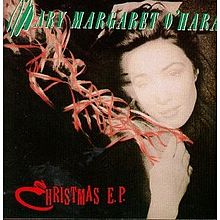
SOUNDTRACK: MARY MARGARET O’HARA-Christmas E.P. (1991)
Mary Margaret O’Hara is a fascinating recluse. She released a cool, weird album in 1988 then did nothing for three years when she released this Christmas EP. Since then she hasn’t really released anything (except for a soundtrack).
O’Hara’s voice is her most notable feature (she warbles and swoons and is almost otherworldly–sometimes crazily so). She is the backing shrieker in Morrissey’s “November Spawned a Monster.” So one expects a pretty weird Christmas album from her.
But it’s actually fairly conventional and I have to admit a bit dull. “Blue Christmas” is just too slow for me. O Hara’s voice doesn’t have any oomph here. The cheesy violin solo doesn’t help either. “Silent Night” is, I feel, too pretty of a song for O’Hara’s voice which wobbles in weird ways for this track. “What Are You Doing New Years Eve?” suffers from the same as everything else on this disc–it’s too slow and languid. I know this song can be wistful, but I need this to be faster. “Christmas Evermore” fares the best on this disc because it isn’t familiar (to me). The music is a bit more uptempo (if still eccentric). And you don’t have other version to compare it to.
So, overall this proves to be a somewhat disappointing EP.
[READ: December 5, 2014] McSweeney’s 47
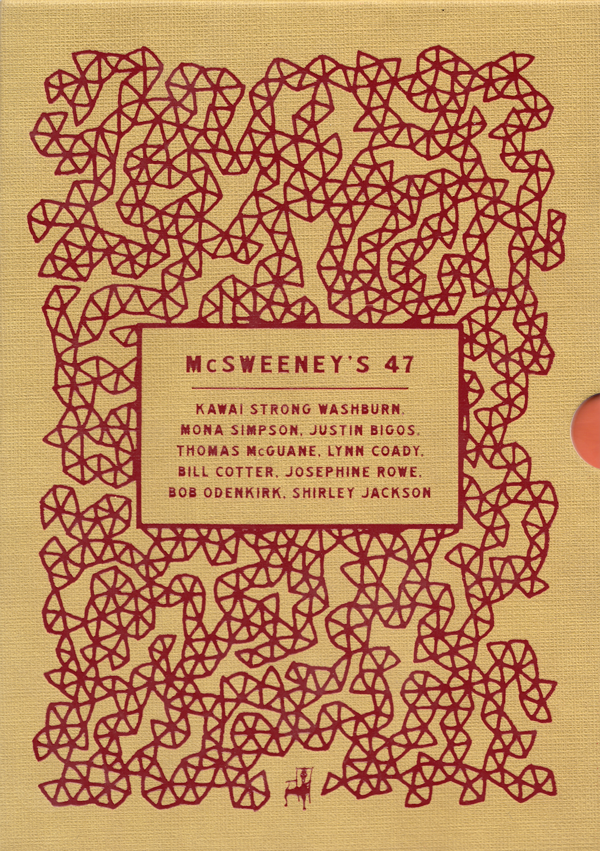
I love McSweeney’s issues that come in boxes with lots of little booklets. It somehow makes it more fun to read the stories when they are in little booklets with individual covers. In this instance, all of the booklets look basically the same–ten different cool pencil (and red) drawings on the cover done by Carson Murdach and a red back cover. The outer slipcase art is by Jason Polan.
There are ten booklets. One has a few letters and the rest are short stories. There’s even a surprise in here–the very exciting discovery of two lost Shirley Jackson stories. But there’s also the slightly disappointing realization that two of the books contain excerpts from McSweeney’s books (which I already own).
It seems that every year stores release their own Christmas mixes. I feel like Old Navy was one of the first stores to do so (especially in their weird retro style). What is surprising is just how much I enjoy this compilation. It has a great mix of traditional and unusual. There’s some cool remixes, there’s some unexpected “space-age” tracks and it’s just boppy and light and fun. Until the end where they go for an unusual (although it somehow makes sense for Old navy) but unenjoyable song to end it with.
PEGGY LEE-“Winter Wonderland” A great, slightly space age version of this song.
ANDY WILLIAMS-“Sleigh Ride” I do love an Andy Williams Christmas song—earnest and clean and lots of fun.
HOLLY COLE-“Christmas Is” I don’t know this song that well. It’s a fun, different Christmas song, done on a jaunty piano.
ELLA FITZGERALD-“Have Yourself a Merry Little Christmas” I love Ella, and I love the horn blasts as the song opens and closes.
PATTI PAGE-“Boogie Woogie Santa Claus” I don’t love this version, which is surprising as I love this era, but I think I don’t like her voice that much.
CAPITAL STUDIO ORCHESTRA-“Cha Cha All the Way” one of my favorite swinging weird holiday songs.
THE PENGUINS-“Jingle Jangle” has a fun “native” beat to it. It’ sa n odd song and I don’t love the singer’s voice, but the music is fun.
RAMSEY LEWIS-“The Twelve Days of Christmas” a piano instrumental that sounds nothing like the song…fun though and appropriately Christmassey somehow.
DIANA ROSS AND THE SUPREMES-“The Land of Make Believe” I didn’t even realize this was Diana Ross—the production is so low key. And the shuffle beat and strings seems very much unlike the Supremes to me. It fits in well with these songs.
DUKE ELLINGTON-“Jingle Bells (Robbie Hardkiss Remix)” I love this remix a lot, it’s one of my favorite Christmas songs.
JACK JONES-“Mistletoe and Holly” another retro-seeming, very clean-sounding song. It’s kind of mockable but fun at the same time—like the best Christmas stuff.
MARVIN GAYE AND TAMMI TERRELL-“Two Can Have a Party” I really don’t like this song in general and it doesn’t feel holiday enough for this disc. But it’s a harmless end to an otherwise fun collection of Christmas songs.
[READ: December 1, 2014] One More Thing
I really enjoyed Novak’s short piece “The Man Who Invented the Calendar” in the New Yorker (which is included in here). So I was pretty excited to read this collection of his “stories.”
There’s over 60 stories in this book. Many of them are really short (some are just a few lines). And typically the shorter the pieces the funnier they tend to be (the super short ones are pretty much a perfect set up for a punchline). But interestingly, there are several really long pieces (some over 10 pages) and these are more thoughtful and, while kinda funny, not meant to be laugh out loud funny. It’s an interesting mix. It’s especially interesting because at the end of the book, he has a piece called “Discussion Questions” in which he asks:
Did you flip through the book and read the shortest stories first? The author does that, too.
If you do that, you will laugh a lot at the beginning and then have precious few laughs at the end, so don’t do that! (more…)
SOUNDTRACK: THE DECEMBERISTS- We All Raise Our Voices to the Air (Live Songs 04.11–08.11) (2012).
I have been a Decemberists fan for a while, so I was bummed that they went on hiatus. Although I understand they have a new album in the works for next year. Yay!
This live album came after the tour of their then last record, The King is Dead. I had heard a number of concerts (mostly on NPR) of their previous tour in which they played the entire epic playing live for The Hazards of Love album in sequence. That was pretty awesome, both because of its complexity and because they had so many guests with them.
The King is Dead was a decidedly simpler record–one of the simplest they have made–and the live show proved to be an interesting mix of simple and complex rockers. This collection of songs is not from one show–songs were cherry picked from throughout the tour.
While the show relies heavily on the King is Dead (7 songs out of 20), there’s a bunch from their other records as well. There’s only one from Hazards of Love (a rollicking “Rakes Song”) but there’s all three parts of the titular “Crane Wife” trilogy. And then there’s a few classics thrown in as well. I love that they have an audience participation of the “Mariner’s Revenge Song” (but I do wish there was a visual as to what the signal that Chris Funk sends out is).
There are only 20 songs since three of them are over 10 minutes long,
This album is a really great summary of The Decemberists live music. The sound quality is different–rawer and less “perfect” sounding than the records. There’s also nice changes of instrumentation in some of the tracks, with Jenny Conlee’s accordion taking center stage from time to time and lord only knows how many things Chris Funk is doing.
And Colin Meloy proves to be a chatty and funny host, as you might expect from his lyrics.
This is a great document that could have been the band’s last. Although I’m glad they’ll be releasing more music next year.
[READ: October 10, 2014] Benson’s Cuckoos
My oh my this is a strange book. I am unfamiliar with Ricard’s work. Evidently she does mostly children books (a series called Anna and Froga) and this is her foray into more adult themed stories,.
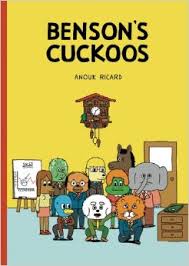
In this graphic novel all of the characters are animals with human bodies. And each character is a different species. The drawing style is simple and child-like but very effective in conveying emotions and feeling. You can tell a lot from the cover image above.
The story opens with a blue headed duck (Richard) applying for a job at the titular Cuckoo factory. He hands in his resume the boss (the big poodle looking guy on the cover) And the boss says, “What kind of lousy paper is this?” Confused, Richard replies, “Uh… printer paper.” To which the boss responds, “Yes it is. That’s one point for you.” The boss is clearly cuckoo. He draws a mustache on Richard’s picture and then tell him he look stupid. Then he asks if he can touch his toes, and then basically hires him without even actually saying that he is hired. Richard is pleased except that he has to bring his own computer to work.
The rest of the staff proves to be just as weird. The frog looking lady with the Annie wig gets mad that he doesn’t want to see her panties in the elevator and then offers curt responses to everything he says for the next few pages. But it’s during the first conference meeting (in which Richard is expected to do a presentation even though he was given no materials to work with) that we learn that he was hired because George has gone missing. (more…)
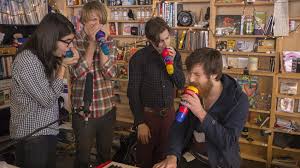
I expected Brass Bed to be a goofy band because of the snapshot image of them singing into toy microphones. I was initially disappointed by how normal they were, but I was soon won over by their interesting floating sound. They have this overall trippy underwater vibe (which seems to be accomplished by a bowed slide guitar). This is especially notable on “Yellow Bursts of Age” their best song in the set. Later the guitar solo is echoey and also underwatery. It’s a very wild sound for a fairly simple song.
They tell a funny story about being from Louisiana and encountering Washington DC snow and (of course) not having an ice scraper (although they did have bag of sand).
“Cold Chicory” is an upbeat sounding song musically although it is kind of a bummer lyrically, but again there’s the great sound of the bow on the slide guitar and the echoey lead guitar. “Please Don’t Go” is a slow song—with more interesting effects from singing into that slide guitar.
The plastic mikes do come out in the last song “Have to be Fine” in which they sing into the echoey mikes for the intro (with very nice harmonies). They sing the intro for about a minute, and then the slide guitar player takes lead vocals on this simple but pretty song (I don’t know any of their names).
At the end, the NPR folks gave them an honorary NPR ice scraper.
[READ: June 24, 2014] My Struggle Book Three
I read an excerpt of Book Three just a few weeks ago. And in the post about it I said I wouldn’t be reading this book for quite some time. But then the book unexpectedly came across my desk and I couldn’t resist grabbing it while it was here. So it appears that I will now have to wait well over a year before Book 4 (which is, I think about 1,000 pages–yipes). I also see that Book Three is fully called “Boyhood Island” in Britain.
At the end of Book Two, Karl Ove was more or less caught up to the present–writing about what he was then up to (with a few years gap, of course). So it makes sense that this book is about his childhood–showing us how he came to be the man he is.
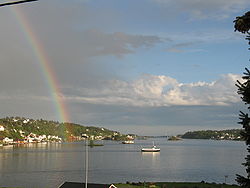
The book, amusingly enough, starts off with memories that he cannot possibly remember, and he even says as much. He is using memories of his parents and piecing together pictures from when he was an infant. In 1970, (Karl Ove was born in 1968) his family moved to the island of Tromøy (and check out the idyllic picture that Wikipedia had). This is where Karl Ove spent his (rather traumatic) formative years. Their island is small, so he knows everyone in his school, but there are some amenities around like the Fina station and the B-Max, and there’s lots of soccer to be played and bikes to be ridden.
Things seem normal at first–he runs and plays with his friends, there is ample green space to run around in, and they have boats to sail on. And we meet two of Karl Ove’s earliest friends: Geir and Trond (so many people are named in the book, I’m very curious to know if any of them remember him). In an early scene they chase the end of a rainbow looking for a pot of gold (and have a discussion about what happens to it when the rainbow vanishes (the boys even play a prank on Karl Ove that they actually found the pot,a dn while he doesn’t initially fall for it, he is compelled to go back and they tease him).
But the looming figure here and throughout the book is Karl Ove’s father, who, at least according to Karl Ove’s memory, is pretty much a monstrous dick. He is demanding and exacting, unforgiving and seemingly uncaring. He is either bipolar or a drunk, jumping from goofy to outright rage in a mater of seconds. Karl Ove and his brother Yngve fear him unconditionally and, by the end of the book they both seem to hate him. The scene where their dad tries and fails to teach Karl Ove to swim is heartbreaking, especially when the dad goes home and tells their mom right in front of him “He’s frightened of water.” There are dozens of instances of fear and intimidation (often accompanied by a wrenching of Karl Ove’s ear). Like when Karl Ove turns on the TV for his grandparents (he wasn’t allowed to touch the TV but he wanted to do something nice for them). After a few minutes, the TV fizzed out and, naturally, he was blamed for it and sent to bed without supper (after some minor physical abuse). (more…)
 SOUNDTRACK: SON LITTLE-Tiny Desk Concert #496 (December 18, 2015).
 I know of Son Little, although only vaguely. WXPN has played his song “The River” quite a lot, although I don’t think I’ve heard anything else.















 I Just Read About That...