Feeds:
Posts
Comments

Archive for the ‘Humiliation’ Category

stroppy SOUNDTRACK: LISA HANNIGAN-Tiny Desk Concert #171 (October 29, 2011).

lisahI thought that Lisa Hannigan’s name sounded familiar, but given this Tiny Desk Concert, I’m going to assume I had never heard her before.

Hannigan has a really interesting voice–kind of deep and raspy but with splashes of falsetto.  It’s really pretty.

And she plays a variety of instruments.

For “Knots” it is just her and her large ukulele (and she gets a remarkably full sound out of that tiny 4 stringed instrument).

It’s between songs that you notice her accent as she welcomes John Smith to accompany her.  Lisa switches to guitar as well.  It’s interesting that she plays a similar picking style on the guitar which of course just sounds bigger.  The two guitars play very nicely off of each other.  This song is a bit quieter, with her singing most of it in a whisper that makes you want to lean in to hear more.

Before the third song, “Passenger” Bob asks if she’d like to stay the whole day.  She says yes with all of the lovely tea. Bob says there’s plenty and she jokes “Not for long once I get going.”

John needs to tune his guitar, “it was in tune when I bought it,” and Lisa switches to a mandolin.  The high notes of the mandolin work perfectly with her deeper voice.  She shows off a powerful side with some of the sections of this song and the guitar adds some nice bass notes to the music.  For the middle section, Smith sings low harmonies and they both sing louder than before.  It’s a great transition in this song.  And she hits some lovely high notes as well.

Hannigan came to people’s attention while working with Damien Rice.  Then she put out two solo albums.  But she hasn’t put out anything since (except one-off songs).  That’s a shame, I’d love to hear more.

[READ: July 30, 2015] Stroppy

I don’t know anything about Marc Bell, although his art looks very familiar.  The telltale sign is that every character has white eyes which look a bit like capsules.  This book is put out by Drawn & Quarterly and while I thought his art looked familiar, it could just be a D&Q aesthetic.

This story is pretty bonkers.  Stroppy works for Monsieur Mustache at the remote villager processing plant.  In this plant, small villagers who look a bit like Minons (yellow capsules) have their brains removed an a new brain inserted, turning them into security guards and other roles. But then there’s a visitor.  A large shirtless man comes through the tiny opening clogging up the works.

His name is Sean and he has come to put up posters for The All-Star Schnauzer band Song Contest (meanwhile, the villagers are piling up in Stroppy’s work area.

Monsieur Mustache arrives, fires Stroppy and then, upon hearing about the song contest, he Hires Sean, in hopes of buying him off.  Turns out Monsieur is a pretty evil dude (and his songs are just as bad). (more…)

Read Full Post »

vamplove SOUNDTRACK: DO MAKE SAY THINK-You, You’re a History in Rust [CST045] (2007).

rustYou, You’re a History in Rust feels very different from DMST’s previous album.  That record felt kind of insular and tight.  This one feels expansive and experimental.  Like the first song which has multiple sections that feel completely unrelated and which are only connected by silence.  Or the fact that there are lyrics in a song, or even a fairly conventional song.

“Bound to Be That Way” This song opens in a peculiar way.  There’s a drum rhythm, that slowly builds and some piano chords are laid over the top. This goes on for about 45 seconds and then fades out.  And then a new melody–completely different–with horns and guitar peeks its way out. And then it too fades.  Then around 2 minutes a pretty guitar melody comes through followed by big crashing distorted drums. Eventually a new riff enters the song and it really starts grooving.  It’s fantastic, but it too is just a portion of a song which ends at around 4:30.  And then another new section comes in. Then acoustic guitar riff is counterpointed by some horns.  The final melody is the catchiest one of the bunch and it ends this strange song on a high.

But if that was strange, “A with Living” offers the biggest shock to fans of the band.  There are words in this song!  And they are sung! Words were co-written and sung by Alex Lukashevsky and the Great Lake Swimmers’ Tony Dekker.  Akron/Family also joins in doing “oohs” and “ahs.”  It opens with rumbling drums and then the singing begins.  The song has a conventional verse chorus verse structure with big horns.  It’s catchy (the vocals are great).   But it’s also a 9 minute song and at 4 and a half minutes the song moves way from the melody and enters a lengthy instrumental section with deep rumbling guitars.  The chorus of voices returns briefly before the mellow guitars lead us to the end.

“The Universe!” is one of my favorite DMST songs.  It rocks and rollicks.  It has two notes and then five bashing chords.  Repeated several times.  It’s one of the most straightforward songs they’ve done.  It has screaming guitar solos and a cool sliding bass. It’s also very raw sounding, with all kinds of noise floating around it.  And just like that, it’s gone.  Seguing into the quiet, “A Tender history in rust” which opens with processed guitars or keyboards, layered upon each other.   There are voices fighting through (saying all kinds of sounds—including laughing), before it switches to a pretty acoustic guitar riff.  It’s a delightfully conventional folk melody–another unusual addition for the band.

“Herstory of Glory” has another pretty acoustic guitar melody with some rattling drums (in the right ear).   Then there’s a rumbling bass and distant voices before more and more instruments add to the beautiful song–pianos, trumpets, claps.

“You, You’re Awesome,” is the shortest song on the disc at under 4 minutes.  It opens with slow electric guitars and a e-bowed solo.  After a minute or so, the rest of the band comes in with a slide guitar and banjo making a kind of sloppy folky romp.

“Executioner Blues” is another favorite.  Its 8 minutes long with some lovey guitar riffs and sounds.  It opens with some big guitars and a repeating riff.  A martial drums enters the song and keeps it moving until the next big section.  Horns repeat a similar melody and then a romping bass guitar takes over.  More instruments kick in making the song noisy and slightly distorted.  There’s piano trills, glockenspiel, electric guitar, noises and more.   and the instruments all go up the scale slowly for a few bars and then play a punch of staccato notes.  It’s rather dramatic.  After several permutations of this, they just keep going up and up the scale until the reach the top and then they gradually descend again.  The last minute is a series of quiet bass notes, as if everyone has totally come down from that intensity.

“In Mind” is a quiet disc closer.  A simple guitar melody, it is joined by banjo and trumpet.  Then some bass lines come in followed by a very distorted chorus singing “When you die, you’ll have to leave them behind/You should keep that in mind/When you keep that in mind, you’ll find a love as big as the sky.”  The disc ends with some quite banjo plucking.

This disc goes all over the place and really explores different avenues.

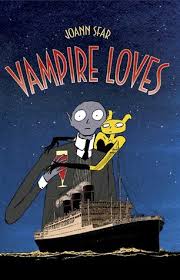
[READ: February 10, 2016] Vampire Loves

Joann Sfar created Little Vampire (and apparently about 100 other comics, some of which have been translated into English by Alexis Siegel and published by First Second).  Of the things I’ve read by him, (and there have been a few) I enjoyed this the most.  It seems like a lot of his books (like Little Vampire) are for kids, bu this one is absolutely for adults (there;’s curses in it and talk of sex and everything).

There are four stories in this book (I just learned that Sfar has written six in total, so maybe there will be more translated). After the third book in this collection, there’s a question as to whether or not Ferdinand, the vampire in this story is Little Vampire.  There’s a little drawing of Little Vampire which says that Ferdinand is him.  “But vampires don’t grow up!  No, but they can grow little.  Ferdinand was me before!  You mean that before being little you were grownup? Yes.”  So there’s that sorted.

“Could Cupid Care Less?” starts us off with Ferdinand the vampire’s woes.  His girlfriend, Lana, (a kind of plant creature) has just come back.  She cheated on him, but turns the conversation around to say that it is his fault–if he weren’t so jealous he never would have found out.  He freaks about this and she storms off again.  Furious, he sets off for his nightly feeding.  Ferdinand is a nice vampire–he takes little sips and only with one fang so it looks like mosquito.  While he is feeding on a woman, a red-haired vampire storms in and shows him how to do it right.  She is a vixen with an ankh necklace and after feeding, she comes on to Ferdinand hard.  She says she likes old, proper-looking vampires–not goth wannabes.  She brings him back to her house but before they can do anything, her sister walks in.  She’s also red-haired and has a shapely figure and actually has more in common with Ferdinand.  And that’s when we learn that the first woman’s name was Aspirine and her sister’s name is Ritaline (ha!).

All of the stories cut back and forth to different sections.  So we cut over the Lani who is staying with the Tree Man.  He is trying to hit on her, but she’s having nothing to do with it.

We return to Ferdinand where he just can’t get rid of Aspirine, even when he wants some alone time.  He can’t get a woman he wants and can’t get rid of the ones he doesn’t.

“Mortal Maidens on My Mind” opens with a Japanese woman meeting Ferdinand in Paris and falling for him.  They do all kinds of things together and she even writes home about him.  But Ferdinand had to return home and that was the end of that.

We cut back to the Tree Man who is still pining for Lani but is having no luck with her.

Back home, Ferdinand runs into the man who slept with Lani, Michael.  He also argues that it was Ferdinand’s fault that things wound up as they did.  He says that he was just looking for fun.  He didn’t want to hurt anyone, so why did Ferdinand have to get involved?  After a fight Ferdinand leaves to go to a bar where he tries to hook up with a woman but it all falls apart.

Then we cut to a man who has created a golem.  He wanted the golem to do bad things, but the golem is so kind that he couldn’t possible have made the him do the evil things he planned.

The postscript of the story contains a few notes on the protagonists of this story which sort of retroactively tries to make sense of the seemingly disparate story lines and lets us know how these characters belong here.

“Lonely Hearts Crossing” shows Ferdinand on a cruise.  But first we meet a woman named Alas, and her spiritual ghost-creature-friend named Sigh.  Alas is looking to score with the captain of the ship (who is the invisible man).

Meanwhile Lani is going shopping with Tree Man.  He has become her buddy and he can’t get out of it.

On the ship, Ferdinand runs into a werewolf who turns into a wolf when he sees a girl.  He only transforms back if he can kiss a girl.  But he is a such charming creature that he has no problems scoring–much to Ferdinand disgust and amazement.

The story turns very exciting as there are armed criminals on board and a shootout.  And by the end of the story Ferdinand is making out with the spirit ghost creature (who teaches him how to go through walls which turns them both kind of ghostly for a time).

“Moonstruck Post Mortem” ends the book with Ferdinand trying to pick someone else up.  His conscience is bothering him lately though so he manages to get rid of it.  The woman is interested in him but already had two boyfriends so she kind of blows him off.

The scenes shifts to Ferdinand at the police station.  He’s not n any trouble.  in fact, the police would like him to help with their investigation of suspicious murders.  Since he’s nocturnal they figure he can look at night.  That’s how police work, right?

Ferdinand decides to go out drinking again. He meets a woman he likes, but she seems disinterested. So he quickly moves on and finds a  creature who is into him.  But he is quickly utterly disgusted by her.  And the first woman just came back. Oh no!

Frustrated, he leaves and goes to see the dentist–because the dentist has some secret information about the investigation. But before he will give the information to Ferdinand, he needs to give him a compete check up.  By the end, he tells Ferdinand not to get involved. And as the story progresses and the criminal is found…  Ferdinand is shot and thrown into a hole!  Can Ferdinand’s conscience come to the rescue?

The whole story concludes with Ferdinand going back to find Ritaline (but of course finding Aspirine instead).  She offers to let him bite her–but when one vampire bites another it’s “catastrophe.”

It’s a totally nuts book but very funny.  Another fun book in my #10yearsof01 February.

I think the reason I don’t enjoy the Sfar books as much as I might is because they are printed so small.  I don’t know what the original size was, but the format makes everything feel really squished.  This makes the dialogue hard to read and means you can’t see all of the details that well.  I think if these books were bigger it would really help their appeal.

Read Full Post »

little vamopSOUNDTRACK: DO MAKE SAY THINK-Winter Hymn Country Hymn Secret Hymn [CST025] (2003).

hymnThis album, at least according to the liner notes, seems to be broken into three sections, as the title suggests.  Although there is no explicit attachment of a particular hymn to the songs, there is a gap between the listings, giving each section three songs.

“Federica” is 9 minutes long and opens with a very lovely slow guitar melody.  Then the drums crash in and the song doesn’t change so much as intensify.  At around 3 minutes the song pauses before a loping bass adds to the mixture and the songs gets bigger and bigger, and even a little funkier. When the distorted guitar comes in at 5 minutes, it’s hard to believe it’s basically the same song all along.  It builds to a cacophonous explosion and then settles down again. A new style emerges—slow and plaintive with mildly distorted guitars. But they can’t stay muted for long. The distorted guitar comes back and forces the song forward with some distorted bass and other noises until it resumes a reprise of the original guitar melody.

“War on Want” is only 2 minutes long.  It is mostly strings that seemed to be looped in some way.  There haven’t been a lot of strings in DMST records so far, so this is new.  They drift slightly out of tune as they introduce the 3rd song “Auberge le Mouton Noir.”  The song opens with some crackling noises and some pretty, slow chords. which resolve into a simple riff.  The song builds, growing faster with a great propulsive beat. I like that it switches back and forth between the chords and the guitar riff.  Is that a slightly out of tune bass guitar before the ringing guitar solo takes over?

The second section begins with “Outer Inner & Secret.”  It’s ten minutes long and opens with an interesting bass line and guitar motif. It’s quiet and insistent, kind of dreamy. After exploring some quieter avenues some feedback squalls float in and out.  About 4 minutes in the song builds, but it quickly recedes only to build again and recede once more.  For the third build the drums kick in and the song launches in a louder direction for a few measures.  But just as you think it’s going to take off for a while, it settles down and then comes back to a quitter style with martial beat and keyboards.   The remainder of the song switches between loud building guitarists and quitter moments with just bass and drums.  For the last-minute or so horns burst forth and then the music drops away except for the horns, which end the song with a plaintive melody.

The 4 minute “107 Reasons Why” is a slow horn & guitar melody song.  There’s some interesting sounds that play over the top of the delicate melody, including a nice horn line.

“Ontario Plates” is 7 minutes long and opens with very jazzy drums and bass–it’s rather noir with a quiet saxophone.   Once the sax plays over the top it just increases the jazziness. DMST has always had a jazz feel but this one really pushes it about as far as the band has gone. The drums start to come to the fore and I love the way about 3 minutes in the drums morph into something else and the song almost imperceptibly switches into a new song entirely. The bass takes over and a new riff enters the piece. About 5 minutes in, the song switches to a very bright and uplifting motif–big horns, bright guitars and a catchy riff.  It’s quite lovely.

The third section opens with “Horns of a Rabbit.”  This song introduces big drums and kind of electronic bass sound.  About two minutes in the noise beaks through—bashing guitars and intense drums.  It even includes a pretty wild guitar solo. I like how the song (which is only 4 minutes (kind of disintegrates on itself before merging into the two-minute “It’s Gonna Rain,” which may indeed be simply the sound of rain on a tin roof.

The final track, the 7 minute “Hooray! Hooray! Hooray!” opens with some synths sounds—unlike anything else on the record.  And then a pretty guitar intro mixes with some lovely horns.  It’s probably the most delicate thing they have created.  After 3 minutes the occasional guitar swirls grow louder and it grinds it way to a happy and uplifting keyboard riff.   Then a bunch of surprises for DMST: A slide guitar plays a little solo and then, most surprisingly, a chorus of voices sings the melody.  The ending slide guitar sounds like it could come from Mercury Rev or The Flaming Lips.  If you listen closely, you can hear people shouting Hooray! in the background.

This album feels a bit more claustrophobic than their others, and while I like pretty much all of the songs, I really like their other albums more.

[READ: December 20, 2015] Little Vampire

Joann Sfar is responsible for the Sardine comics which I kind of liked but mostly didn’t (I think that may have been because of the uglyish drawing style).  But here Sfar has another series called Little Vampire.  (I also just learned that Joann Sfar is a man, so apologies earlier, but I think that’s an understandable mistake).

This book collects three stories into one volume, all translated by Alexis Siegel.  Each story is about 30 pages.  And they follow the “life” of little vampire.  He is a sweet boy with a bald head, big eyes and pointy ears.  He lives in a castle with call all kinds of undead people including his dog Phantomato (he is bright red and rather devious) and several other monsters.

“Little Vampire Goes to School” introduces us to the home where the monsters live.  As the undead are partying, Little Vampire comes down and says he wants to go to school.  The others are horrified, but he won’t give up the idea. He says he’s bored and wants to meet other children (most of the undead are adults).

Little Vampire’s mother (who is strangely pretty in her weird design) and the other elders allow him to go to school, but he can only go at night when it is closed.  So the undead come and all attend school with him.  The class is taught by The Captain of the Dead who is an old dead pirate. (more…)

Read Full Post »

aareentry SOUNDTRACK: THE BLACK ANGELS-Tiny Desk Concert #132 (June 8, 2011).

I hblakangelsave The Black Angels’ 2013 album Indigo Meadow and I like it a lot.  It has a cool retro psychedelic vibe while still retaining a heaviness that sounds great.

For this Tiny Desk Concert, which is more or less in support of their 2010 album Phosphene Dream, the band strips down to almost a folk band.

There is an acoustic guitar, and hollow-bodied electric which I think is not plugged in (one guitar plays the bass lines and other one plays the solo notes), there’s a harmonium (the second one in a few weeks on the Tiny Desk), there’s a drummer (with basically a floor tom) and the lead singer with a tambourine.

No one is amplified except the singer–whose voice is processed to sound extra trippy (note especially the first lines of the second song, where he sounds like he’s singing from outer space).  His singing is very gentle (especially since they are basically unplugged, which makes the effects seem even more powerful).

The band plays four songs, “Bad Vibrations” which is a great way to start off.  “Haunting At 1300 McKinley” showcases that echoing voice very well.  One of the guitarist sings nice harmony vocals as well.  The harmonium has that vibrato sound that also makes the song seem trippy.

“Entrance Song” has the other guitarist singing harmony (deeper voice compared to the singer’s rather high voice).

For the final song, “Too Much Hate,” the singer plays the guitar (leaving the former guitar player with nothing to do).  The sentiment of the song is excellent, really showing off a hippy vibe.

I really like The Black Angels a lot, and this makes me think I need to check out their earlier stuff too.

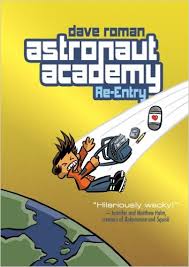
[READ: February 3, 2016] Astronaut Academy: Re-Entry

I enjoyed Book 1 a lot but I enjoyed this sequel so much more.  I’m glad that I put off reading this one until after the first because even though there were no mysterious things that I wouldn’t have gotten, the whole experience is definitely greater if you read these in order.

This book opens with a similar style–brief episodes about each person–and what they have been up to over the summer.  I enjoyed that Hakata Soy has been spending his time on earth (such a novel idea).  But that’s when he gets the devastating news that Princess Boots, the girl he gave his second heart to in the backstory, actually gave it away and is now dating his arch-nemesis Rick Raven.

Scab Wellington was released from prison (which makes Maribelle Mellonbelly happy).  And Thalia Thistle still hasn’t told her dad that she plays Fireball. (more…)

Read Full Post »

1182016SOUNDTRACK: DAMIEN JURADO–Tiny Desk Concert #114 (February 28, 2011).

damienI had always assumed that Damien Jurado was someone else entirely.  I had no idea that he was (as the blurb describes him) “a big dude playing sad songs.”

And he is.

For this Tiny Desk it’s just him and his guitar.  He keeps his eyes closed tightly as he sings these sad songs.  His guitar playing is simple–just strummed chords and his voice is simple as well–there’s no tricks.  It’s all about his songwriting.

I liked all four of these songs: “Cloudy Shoes,” “Newspaper Gown” (that was my favorite), “Arkansas,” and “Beacon Hill.”

The strangest thing about him was how uncommunicative he seemed to be–almost nervous.  He barely spoke and when he did it was hard to hear.  And as soon as the set was done he immediately stood up to leave.

Although he does say it’s “nice.”

His songs were lovely although I don’t think I’ll be seeking him out anytime soon.

[READ: January 12, 2016] “The Story of a A Painter”

This story was translated by Anna Summers and, as the title suggests, it is about a painter.

But this story delves into surreal territory pretty quickly.  It may even be a fairy tale as the opening line is “There once lived a painter….”

This painter has had some bad fortune as of late.  His landlord promised to get him a lot of money if he would sell his large apartment.  But the landlord sold the place and kept the money (a lawsuit is pending).  Then the landlord offered him a place under the stairs–no running water–which the painter accepted.  But he can’t pay the landlord, so the landlord gives him grief every day.

On another day a man asked if he would rent him his “apartment.”  The painter said yes for money up front.  The man gave him the money then moved his entire family into the tiny, below-the-stairs place and planned to never leave.  Now the painter was destitute and homeless. (more…)

Read Full Post »

dq25SOUNDTRACK: ARCHER PREWITT-“O, KY” (2005).

wikldernessArcher Prewitt formed The Coctails (a kitschy lounge act) in the early 90s, several years before the lounge revival.  Then he joined The Sea and Cake and has been making amazing music with them.  And he has also released several solo albums.

He has also published some comics (Sof’ Boy) with Drawn & Quarterly.

This song comes from his album Wilderness.  The title of the song is clever, too.

It’s upbeat and folky with a little psychedlia and rock thrown in.  I like Prewitt’s voice quite a bit–it’s simple but really strong.  But the selling point on this song (and others from this album that I have listened to) is the composition and arrangement of these songs.

I like the way this one goes from simple guitar to orchestration (although presumably not a real orchestra) for the chorus.  And how post chorus there are flutes and other instruments to pick up the momentum which adds a vaguely psychedelic feel to it.

At four minutes (the song is five) it changes direction entirely and turns into a nearly new song with big guitars and drums. And it rather rocks.

And just to make Archer the all around dude that he is.  He also drew the cover art.  Jeez.  He’s probably super nice and friendly, too.

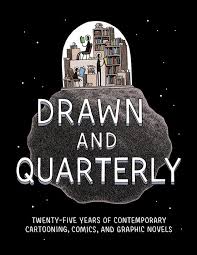
[READ: January 3, 2016] Drawn and Quarterly: Twenty Five Years 

I have liked a lot of D+Q books for a long time, although I never really considered a comprehensive look at their publishing house.  This book–about 775 pages long–is about as comprehensive as it gets.

This book contains a few previously published cartoons and excerpts as well as a whole slew of previously unpublished pieces.  There are essays and histories and reminiscences and love love love for the little Montreal graphic novel publisher.

I didn’t know much about the history of D+Q–that Chris Oliveros started the publisher in 1989 out of his house.  That he was the only employee for years.  And that he was essential in getting the term “graphic novel” used by everyone–including the library of congress!

He weathered distribution problems, he weathered the rise and fall of indie comics in the late 90s and he has come through with some of the most beautiful books published.  D+Q has also brought attention to foreign artists as well as out of print artists.

Really, if you have any respect for graphic novels (that aren’t superhero-based) you owe thanks to D+Q. (more…)

Read Full Post »

bpSOUNDTRACK: GRIMES-“Kill v. Maim” (2015).

grimesI don’t know Grimes very well at all.  When I first heard this song I didn’t really know what to think, but after repeated listens, I think it’s great.

It opens with a synth riff (and air horns) and one of Grimes’s many voices (this one is kind of childlike).  But by the end of the second line, she screams “they don’t know me” and that seems to set up the various personas in this song.

It’s the pre-chorus that I find so catchy–sung like the cheerleader chant “B-E-H-A-V-E aggressive.  B-E-H-A-V-E nevermore.”  And then the super fast chorus (with her voice lifted to an incredibly high pitch).

There’s a slower section with what I assume is her natural voice (which is quite lovely).  But it’s soon back to the fun chorus.  I need to hear more from her, but if this is her only good song, that’s okay.  It’s angry and you can dance to it.  Welcome to 2016!

[READ: December 20, 2015] Bitch Planet

This series is a great manifesto for the new year–don’t take shit from anybody.

Kelly Sue DeConnick is a force to be reckoned with.  In addition to presenting Captain Marvel as a woman (in the amazing series of that name) and making some other cool looking series that I intend to read, she has created this feminist masterpiece.  Bitch Planet addresses violence and injustice against women and the whole “prison culture” that is always titillating for men.  It pushes Orange is the New Black to even further extreme that a comic book can.

Designed in a retro style by Valentine De Landro, the book comes complete with ads for “crap” in the back of each issue.   Which you may actually be able to buy. (more…)

Read Full Post »

dramaSOUNDTRACK: SHARON JONES AND THE DAP-KINGS-Tiny Desk Concert #497 (December 21, 2015).

sharonTo end out the Tiny Desk Christmas season, I chose this year’s entry.  And for this year’s Christmas show, they went all out.  There’s lights strung around the office, there’s twinkling gold tinsel behind them, presenting a wall of glitter, and a sign that says Dappy Holidays.

I don’t love Sharon Jones and the Dap-Kings (I often feel like I am the only person who doesn’t).  I’m not a big fan of the blues or of soul music, so there is that.  But then I heard her blues version of “Silent Night” and it is a travesty.  “Silent Night” is a beautiful tender song.  If done right, it can make you cry.  But this is just dreadful. You don’t make “calm” a ten syllable word.  You don’t sing “talkin ’bout a Silent Night.”  You don’t make this song fun.  You don’t show off you crooning skills with this song.  You just sing it.  Perfectly.

When she’s not tinkering with classics, though, Jones has some good fun with two originals.  The first is the fun “8 Days of Hanukkah” She sings about all the things they’ll do on each day–spin the dreidel, roll out the latkes, and the best: “we’re cooking up the brisket the kosher butcher sold my uncle Saul,”  It’s a lot of fun (when the horns launch into the dreidel song amid their jamming it’s a good time).  This is the kind of soul that I like–lots of swinging horns and good times.

And Sharon herself seems like a fun person–she asks for help remembering the lyrics to the final song and plays it off in a fun way.

“Big Bulbs” is another original.  It’s also funny with the lyrics, “Baby you got them big bulbs flashing in your windows tonight.”  IT seems like it’s a double entendre but I don’t really think it is, it’s just fun.

Despite my aversion to the first song, she totally won me over with the second two songs, and I’d happily add those to any holiday mix.

[READ: December 10, 2015] Drama

I really enjoyed Telgemeier’s Smile and Sisters.  But I enjoyed Drama even more.

This story is an ode to everyone who works behind the scenes at the drama club.  But it’s also a chance for the stars to shine and the shy kids to come out too.  All done in Telgemeier’s delightfully simple yet effective drawing and storytelling style.

Callie is in love with the drama club.  She works late on sets, she loves seeing things come to completion.  She also knows she has no talent to be on stage.

And things are good.  Until the drama arises.  Greg and Matt are her friends.  Greg is a little older and Callie has a crush on him.  When Greg tells her that his girlfriend Bonnie broke up with him, she is pretty excited.  And they share a kiss.  But from that moment on, not only does Greg avoid her, but Matt is a jerk to her, too.  Not bad for the first few pages. (more…)

Read Full Post »

stitches SOUNDTRACK: SON LUX-Tiny Desk Concert #464 (August 21 2015).
sonlux
I really only know about Son Lux from NPR.  And the more I hear from them, the more I like them.

Recently Son Lux has become a trio (it was originally the project of singer/instrumentalist Ryan Lott).  But in this Tiny Desk, rather than staying small, Son Lux went big, adding off-duty, civilian horn players from the United States Marine Band.

I love the opening of “You Don’t Know Me” with the unexpected stops and starts amid the whole section of horns.  And then Lott’s voice comes in, it’s unusual, dramatic and theatrical.  While the horns are more powerful than everything else in this song, as it nears the middle, the guitar line comes in and is groovy and simple.  And then of course there’s the drummer, Ian Chang.  It’s a shame he’s stuck in the back corner because he is incredible.  The rhythms and rolls are tight and furious, but never overwhelming, they are like perfect accents.  And the accessories he uses–simple and effective—all on such at tiny kit. It’s amazing.  All of this goes on for half the song before Lott sits at the piano and plays along.  I love how the song drops out and leaves just the horns to play the end.

For “Now I Want” Chang plays piano.  He plays a simple set of notes moving the song along until he jumps back to drums and Lott takes over on piano (a much more accomplished melody).  There’s great guitar sounds by Rafiq Bhatia (who knew you could get a guitar to do that–he even has a dollar bill under some strings for some of the song) and more amazing drum work.  I love the way the song completely slows down for a gentle piano melody in the middle and the builds back up again.

Lott is a fun and charismatic lead, whether he’s clapping for his band mates, or encouraging people to sing along.

For “Your Day Will Come” some of the horns leave, with only a trio remaining.  Lott opens on piano, with some guitar sounds played over the top.  This song is primarily Lott’s as he sings his heart out (some really loud sections) as the music gently swells.

[READ: July 10, 2015] Stitches

I’m not sure what attracted me to this book, but as soon as I brought it home Sarah said she knew it.

This is a memoir of the young life of David Small.  His drawing and painting style is very dark, and the people he draws are pretty creepy–which just makes his upbringing seem all the more horrible.

His drawings of himself as a baby are unflattering.  And his mother and father both wear glasses so we never really see their eyes–just white where the glass is (their faces are a little darker, so the white really stands out).

He was born tiny and with bad sinuses and a bad digestive system.  His father was a doctor and did all kinds of technological things to him to try to cure him.  Which at that time consisted primarily of radiation.  His father seemed caring, but he was totally committed to his science and had little time for his family.

This meant that he sent most of his time with his mother.  And she didn’t speak very much.  She communicated by slamming doors.  Unless she was very mad and then the screaming began.
(more…)

Read Full Post »

zambraSOUNDTRACK: NICK BUZZ-Arnold Schoenberg and the Berlin Cabaret (2003).

schoenIn 1901, Arnold Schoenberg wrote eight Brettl-Lieder (Cabaret Songs).  The songs were short and fun with naughty (cabaret influenced) lyrics.  Some 100 years later, inspired by the Art of Time Ensemble who commissioned Nick Buzz to play pieces for their Schoenberg show.

So the guys from Nick Buzz got together and recorded four of the eight pieces.  Then Martin Tielli released this disc as number 2 of his Subscription Series.  Some of us were a little disappointed when this came out since it was only 15 minutes of music, but the art is wonderful and I have recently rediscovered this disc and have enjoyed it immensely.

Basically the Buzz guys have interpreted the songs in their own style, but they have remained faithful to the original melodies and lyrics (which were in German but are now in English).

“Gigerlette” explores electronic manipulations (presumably by Hugh Marsh) and offers lots of fun samples (what I assume is some earlier recordings of the song in German).  It opens with sampled female singing and staccato piano as well as other unusual effects. Then Martin’s vocals come in and the effects clear out and the song becomes simple piano ballad for a brief moment.  Then the noises come back in again, playing around with this amusing song.  It’s a song of romance and love with the sweet punchline being that cupid is driving their coach and four.  At over 5 minutes this is the longest song by far, even if the basic song is just over two minutes.

“Der genugsame Liebhaber” (The Modest Lover) opens with what sounds like a distorted harp (presumably the piano) and scratchy records (from Marsh).  This song is about a man going to see his lover, but his over’s pussy loves his bald head so much that she continually climbs atop it.  It is charmingly naughty. There’s some wonderful violin from Hugh Marsh on this song

“Galathea” is the most conventional of the three songs.  A lovely piano ballad to Galatea.

“Arie aus dem Spiegel von Arcadien” (Aria from the Arcadian Mirror) is super fun. The music is weird and goofy with a very drunken feel.  And the chorus is just wonderful “my heart begins to thump and dance just like a hammer’s blow it goes boom boom boom boom boom boom boom boom boom (getting faster and faster).  I’ve listened to the original and it is very much the same, although Nick Buzz’s version is much better.

You can find some of these songs on line from a recording at Lula’s Lounge (Dec 9, 2010)

It’s cool to see how they recreate the album so faithfully in a live setting. It’s only a shame that the video isn’t a little closer so you could see just what they are doing.

Nick Buzz-December 9 2010 Lula’s Lounge

[READ: September 1, 2015] My Documents

I have enjoyed some of Zambra’s stories in other locations, so I was pretty excited that McSweeney’s released this collection (translated by Megan McDowell).  The book is pretty much all short stories, although the first items feels a bit less fictional and more memoirish.

“My Documents”
This is a brief historical account of Alejandro as a child and as a writer.  He talks about when he started working on computers and what happens when the computer dies with the information inside.  He explains that this file is in his My Documents folder and he’s going to publish it “even though it’s not finished.  Even though it’s impossible to finish it.”

“Camilo”
I read this story in the New Yorker.  It concerns the relation of a man and his godfather, whom he has not seen since his father and godfather had a falling out years ago.  See my link for a more complete synopsis.  I enjoyed it just as much the second time.

“Long Distance”
The narrator worked as a phone operator in 1998.  He liked the job–his boss was cool and would let him do anything he wanted so long as he answered the phones quickly. The job was in a travel insurance office and one day he received a call from a man named Juan Emilio. After speaking for a time about various things, the narrator realized it had been 40 minutes since they first started talking.  They were expected to call clients back 14 days later as a follow-up and this time Juan Emilio talked with him foe a while and, upon learning that the narrator studied literature, asked if they could meet and discuss books.   The narrator was already teaching classes at night, and these two situations overlapped somewhat.  I loved the way all of this information is used as backdrop to a romance he has with a student known as Pamela.  And the final line is great.

“True or False”
The titular phrase is uttered by a boy, Lucas,  who declared, based on an inscrutable internal feeling, that things were True or False.  An armchair might be true, while a lamp might be false.  Hid father Daniel had a cat, Pedra, even though pets were forbidden in his building.  Lucas loved the cat.  Then the cat had kittens.  There is a metaphor at work about the fatherless kittens and Daniel’s own behavior toward his son. I really enjoyed this story and the strangeness of the true or false brought a fascinating childlike quality to the story

“Memories of a Personal Computer”
The conceit of this story is great.  A PC remembers what it was like to observe a relationship as it begins and then ebbs–and how the PC was moved around into different rooms as things changed in the relationship.

“National Institute”
At the school where the narrator went, they were called by number.  He was 45.  The main subject of his story was 34, although he doesn’t know the boy’s real name.  34 had failed the grade and was made to repeat it, but rather than being sullen about it, he was popular and fun.  All of the students were worried about failing–the final test was very hard.  But one day 34 approached 45 and told him he had nothing to worry about.  The other students didn’t know what to make of it, but he slowly assessed everyone and told them whether they had anything to worry about.  By the end of the story, when 45 is brought to the inspector of schools, he is told a lesson he will should never forget.

“I Smoked Very Well”
A look back on smoking and how quitting smoking made him a different (though not necessarily better) person.

“Thank You”
She is Argentine, he is Chilean and they are not together (even though they sleep together).  They were in Mexico City when they were kidnapped together.  The incident has unexpected moments. It’s a weird story (with some really unexpected moments) but a really good one.

“The Most Chilean Man in the World”
A Chilean couple has decided to separate once she was accepted to school in Belgium.  After several months he is convinced that she wants him to visit, so he spends a ton of money and heads out to Belgium.  Without telling her.  And it goes very badly.  But he can’t just leave Belgium, now can he?  So he goes to a pub where he meets some new friends who call him the chilliest man in the world.  The story hinges on a joke, but the story itself is not a punchline.

“Family Life”
I read this story in Harper’s.  I thought it was fantastic–it was one of the stories that made me want to read more of his works.  This is story of a man house sitting and the false life that he constructs around him.  It was surprisingly moving.

“Artist’s Rendition”
I loved the way this story began.  It tells us that Yasna has killed her father.  But we slowly learn that Yasna is character in a detective story that an author is trying to write.  We learn how the author constructs details about this character and the things that she has experienced which make her who she is.  As this story unfolds we see how those first lines proved to be true after all.

This was a great collection fo short works and I really hope to see more from him translated into English.

Read Full Post »

« Newer Posts - Older Posts »