Feeds:
Posts
Comments

Archive for the ‘History’ Category

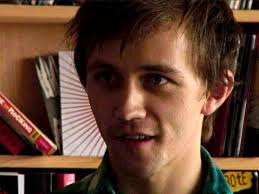
boxersSOUNDTRACK: ANDREW W.K.-Tiny Desk Concert #37 (November 30, 2009).

wkWhen I saw Andrew W.K. on the list of Tiny Desk players I was intrigued to say the least. W.K. is a maniac.  His first album was packed with full throttle, really dumb party anthems.  Later he made an albums of… piano instrumentals.  Then he became a motivational speaker.  He’s done children’s shows and he recently did an anthem for an internet cat.  He even played drums for 24 hours straight–setting a world record.  So who knew what to expect.

Well, I didn’t expect two lengthy piano improvisations (quite pretty, if a little scattered).  Holy cow, does he attack that keyboard!  The improvs are really unexpected–meandering and interesting (mostly), especially at the end where they kind of decay.

Then he plays a keyboard version of “I Get Wet” which sounds almost symphonic especially compared to the pummeling version on the record.

He ends with a faithful cover of “The Moon Is a Harsh Mistress” made famous by Linda Ronstadt.  He sings in a proper voice and if you didn’t know it was Andrew W.K., it would be a pretty normal song.

Nothing like what I expected, this is a most unusual (and slightly awkward–for a motivational speaker, Andrew seems a little distracted) Tiny Desk.

 [READ: February 19, 2014] Boxers & Saints

Gene Luen Yang is a wonderful artist and storyteller.  He has written several books that I’ve enjoyed quite a lot.  This is a two volume set that is meant to be read together (although each story is more or less independent).  I assume that Boxers should be read first since Saints has an epilogue, at least that’s the order I read them.

This story is about the Boxer Rebellion.  I knew literally nothing about the Boxer Rebellion, so for those who don’t, here’s Britannica: (more…)

Read Full Post »

 bluffSOUNDTRACK: SONDRE LERCHE-Tiny Desk Concert #33 (November 2, 2009).

lercheSondre Lerche is a Norwegian singer songwriter.  For some reason, without knowing anything about him, I pictured him as someone totally different–perhaps a French woman?  So I was quite surprised to hear him play these great folky songs.

“Hearbeat Radio” is a catchy love song, with a great melody and many chord changes.  I mention this because after the second song, “Good Luck” Bob Boilen also mentions the “handful” of chords in that song.  And there are a lot, which really makes for an interesting melody.  And indeed, Lerche is a very good guitarist, throwing interesting chords all over the place (although in his banter he complains that he puts too many chords in the songs).

Speaking of banter, Lerche is quite funny, introducing the first song by complaining about radio (but not you guys).  And also that a reviewer felt the second song was funny, even thought he thought it was depressing.

The final song, “Easy to Persuade” is a fast-moving, multi-chord song with a fun chorus.  It completes the set very nicely.

I have enjoyed this Tiny Desk Concert many times, and am interested to hear more by him.

[READ: February 13, 2014] Bluffton

I want to call this book Bluffington for some reason, but that’s my fault.  Because Bluffton is the name of the (actual) location where the book is set, so I just need to deal with it.

The subtitle of the book was not readily visible when I read it, so I didn’t know it was about Buster Keaton (sorry for the spoiler).  It quickly became apparent that that’s who it was about though.  But what I really liked about the story was that it wasn’t about Keaton per se, it was about a boy who knew Keaton during the summers and how this enigmatic performer impacted his life.

This story is a delightful graphic novel, drawn in very delicate colors (like the cover).  Set in the summer of 1908, in Muskegon, Michigan, young Henry is pretty excited to learn that a troupe of vaudevillians is coming to stay for the summer in the artists’ colony at Bluffton.  The whole town is aware of them–how could they not be when a zebra and an elephant got off the train with them?  But Henry is more interested in a boy named Buster.  He’s Henry’s age, and although he’s a star of the show, Buster is far more interested in paying baseball.  And Henry is more than happy to do that too. (more…)

Read Full Post »

Pete Seeger [1919-2014]

seegerPete Seeger died last night at the age of 94.  I love his anti-war quote: “Sometimes I think [about] that old saying,’The pen is mightier than the sword.’ Well, my one hope is the guitar is gonna be mightier than the bomb.”

When I was a kid, I knew a few of his songs (and didn’t really like them) because of an organ songbook we had (did everyone have an organ in the 70s?).  I can remember pounding on the wheezing organ and making up silly lyrics to “If I Had a Hammer” and “Where Have All the Flowers Gone?”  It’s amazing to think that these songs, which were written in the sixties, are often seen as eternal classics.  It’s also amazing to think that Seeger wrote “Turn! Turn! Turn!” which I never associated with him.  Indeed, like Woody Guthrie, much of American folk music can be traced to Pete Seeger (even if he adapted much of it himself).

I really started getting into Seeger when I had kids, as I found his music was fun to teach the kids to sing along to–it was designed for singing along to.  In fact, he wrote a ton of children’s music as well. (He released FIFTY-TWO studio albums, along with 22 live albums and 23 compilations).  His first solo album was a collection of traditional folk songs for children (he didn’t write them, which may be why it’s confusing to know which songs were actually his).  And I don’t even know anything about his first band The Weavers, who had hits with “Goodnight Irene,” “On Top of Old Smokey,” “So Long (It’s Been Good to Know You)” and “Wimoweh.”

(more…)

Read Full Post »

bomarsSOUNDTRACK: SIGUR RÓS-“Ný batterí” (2000).

nyThe single opens with “Rafmagnið búið” a kind of brass introductory piece.  There’s lots of horns building slowly, growing louder but not really playing a melody.  By the end of five minutes, it segues into “Ný batterí” which opens with horns as well.  Then the bass comes in, a slow, deep rumble of simple melody.  After 4 and a  half minutes, the drums are a powerful counterpoint to the sweet melody.

“Bíum bíum bambaló” is a slow piece (aren’t they all) that is mostly percussion.  Apparently it is an Icelandic lullaby.  The final track, “Dánarfregnir og jarðarfarir” was a theme used for death announcements on Icelandic radio.  I love the way it builds from a simple melody into a full rock band version and then back again.  It’s very dramatic.

Both tracks were used in the film Angels of the Universe (and appear on the soundtrack).

That certainly makes this single less interesting than the first one (although I’m not sure that the soundtrack was readily available at the time).

[READ: December 1, 2013] Breakfast on Mars

This is a collection of 38 essays (and an introduction by Margaret Cho).  It also includes an introduction geared toward teachers–an appeal that essays do not need to be dull or, worse yet, scary.  The editors encourage teachers to share these essays with students so they get a feel for what it’s like to write compelling personal nonfiction.  The introduction proper gives a brief history of the essay and then talks about the kind of fun and funny (and serious) essays that are included here.

This was a largely fun and largely interesting collection of essays.  When I grabbed it from the library I didn’t realize it was essays (I was intrigued by the title and then looked at the author list and immediately brought it home).  I know it says essays on the cover, but I chose to ignore that apparently.  When Sarah saw the authors (she knows more of them than I do) she had to read it first.  This proved to be a great counterpoint to the very large novel that I was reading at the same time.

The essays each take on different topics.  And what I liked was that before each essay, they include the question that inspired the essay.  I have included the questions here. (more…)

Read Full Post »

feb2003SOUNDTRACK: LAURA GIBSON-Tiny Desk Concert #1 (April 22, 2008).

gibsonI have enjoyed many of NPR’s Tiny Desk Concerts over the years.  And while I was listening to an All Songs Considered show, it was mentioned that there have been over 200 shows (I believe it is now over 300).  And I realized that I had missed dozens of good ones.  So, being the kind of person I am, I decided to start watching/listening to them all.  I don’t typically watch most of them as they’re usually not very visually interesting–they’re fun to watch for a minute or so, but most of the artists are there to sing, not to do visual entertainment.  So usually I just listen while doing something else.

I toyed with the idea of writing about one a day until I was done.  But the logistics of that made my head hurt.  So instead, I will write about them all over the course of however long it takes.  (And since they don’t post one every day, I will catch up eventually).

Laura Gibson had the first ever Tiny Desk show, and there’s some notable things about the show itself.  First, look how empty Bob’s shelves are!   And the camera work is a little wonky, I think.  I also enjoy how they introduce this performance without a clue as to whether there would be more of them!

I had never heard of Laura Gibson before listening to this.  She plays simple but beautiful guitar (I enjoyed watching how confidently she played the chords and individual strings).  But the big selling point is her voice.  Her voice is very quiet (this was the impetus for the Tiny Desk concept–they saw her in a club and the crowd was too loud for them to enjoy her so they invited her up to their office).  But her voice is also slightly peculiar (in a very engaging way), which you can especially hear on “A Good Word, An Honest Man,” where she is practically a capella.

She sings four songs: “Hands in Pockets,” “A Good Word, An Honest Man,” “Come by Storm,” “Night Watch.”  The sing-along at the end of the last song is really pretty–shame the audience wasn’t mic’d.  All four songs are beautiful and slightly haunting–her delivery is so spare you kind of lean in to hear more.  She currently has three albums out, and I’d like to investigate her music further.

[READ: October 31, 2013] “A Comet’s Tale”

Despite the fact that this article talks about and more or less guarantees the end of the world by asteroid or comet it was incredibly enjoyable and staggeringly informative.

Bissell begins by talking about the Biblical Apocalypse and how in 1862 Premillennial Dispensationalism (premillennialism is the belief that Christ will return before setting up his millennial kingdom and dispensationalism divides up the Bible and human history into various eras or dispensations, based on how God deals with humanity) was smuggled into the Americas and it has never left.  Fully 59% of Americans now believe that Revelations will come to pass (although what that could possibly literally mean is another question).  [Incidentally the book is not called Revelations, it is Revelation or more specifically Revelation to John.  And all of that numerology (666) must mean something right?  Well, yes, it means that the Ancient world was obsessed with numerology. The bible makes great use of the trick of predicting the future by describing the past.

Bissell pulls back from the bible to look at planet Earth “the most ambitious mass murderer in the galaxy.”  He then lists all the atrocities that have happened from natural causes to all species in the history of the planet.  But even recent tragedies (which seem to only happen to people in far off countries says the westerner) are only by happenstance happening there.  Between overpopulation and global warming we are preparing for our own apocalypse.  Although we also mustn’t look too crazy like in The Late Great Planet Earth (which still sells around 10,00 copies a year).  In that book Hal Lindsey predicted the end of the world but also the rise of a single world religion, a Soviet Ethiopian invasion of Israel and the obliteration of Tokyo, London and New York.  But astonishingly, Lindsey also worked for the Reagan administration, much like Tim LeHaye (famed “author” of the Left Behind series) was co-chairman of Jack Kemp’s 1988 presidential campaign.  Apocalyptos have way too much power in this country.

But even if we weren’t preparing for our own doom, there would still be space items to do it for us. Like 1950DA an asteroid that has near-missed the earth fifteen times and may just not miss us in the future. (more…)

Read Full Post »

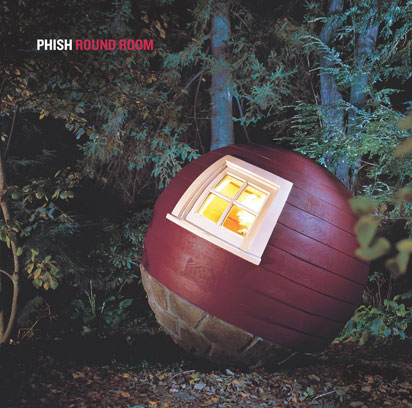
wallsSOUNDTRACK: PHISH-Round Room (2002).

round After Farmhouse, Phish went on a hiatus.  No one knew it would be quite so brief, but there was really a feeling that they were done.

And then they quietly released Round Room in 2002.  And it bursts forth with an 11 minute song.

“Pebbles and Marbles” has an interesting riff—complex and pretty.  And when I listened to it again recently I didn’t really quite recognize it.  But that’s because it’s nearly 12 minutes long and the really catchy part comes later in the song.  At around 5 minutes, the catchy chorus of “pebbles and marbles and things on my mind” announces itself.  And it is a good one.

“Anything but Me” is a pretty, mature song that is slow and piano heavy.  “Round Room” is a boppy little ditty (clearly a song written by Mike).  It is sweet and a little weird.  “Mexican Cousin” sounds a lot like a cover (maybe an old song by The Band) except for the solo which is very Trey.  It’s a funny, silly ode to Tequila.  “Friday” is a slow six minute song with two sections.  The verses are spaced out a bit, delicate riffs that are mostly piano once again.  The middle section is sung by Mike (which makes it more mellow somehow).

“Seven Below” is an 8 minute song.  It has another great riff (and the intro music is cool and bouncey).  When the vocals come in, it’s got gentle harmonies as they croon the sweet song).  Most of the 8 minutes are taking up with a guitar solo.  “Mock Song” is another of Mike’s songs.  This one seems to be a random selection of items sung to a nice melody.  Then when the chorus comes it’s quite nice, how this is a “just a mock song.”  The first verse is sung by Mike, then Trey does a kind of fugue vocal with different words in verse two.

“46 Days” opens with funky cowbells and turns into what seems like a classic rocking folk song—few words but a great classic rock melody (complete with 70s era keyboards).  “All of These Dreams” is a mellow piano piece, another mature song.  “Walls of the Cave” has an interesting piano melody that opens the song. The song is nearly ten minutes long and the middle part has a nice flowing feel to it.  There’s also a few sections that are separated be drum breaks—something that doesn’t often happen in Phish songs.  When the third part opens (to almost exclusively percussion, their vocals all work in a very nice harmony.  It’s a long song but with so many parts it always stays interesting.  “Thunderhead” is another piano-based song with some guitar riffs thrown on top. But it is largely a slow, mellow piece.

“Waves” is an 11 minute song with long instrumental passages.  It also begins with a kind of Santana feel to it, but it is a largely meandering song, with a simple melody that they stretch out for much of the song.  So this album proves to be an interesting mix of long jams and mellow ballady type songs.  It seems like Phish had a big mix of things to let loose.

[READ: November 1, 2013] If Walls Could Talk

This book reminds me of the work of Mary Roach—exploring a topic in great detail and including lots of amusing insights.  The two big differences here are that Worsley is British and that she goes back very far in British history to give us this fascinating information about the development of certain rooms of the house.

Worsley begins with the bedroom.  She looks at the furniture—the history of the bed from lumps with straw to fantastically ornate full poster beds that were made for kings who might never actually use them.

Then she moves on to more personal matters—sex (including deviant sex and venereal disease); breast feeding (for centuries mothers felt they were not equipped to take care of and nurse their own children, hence wet-nurses) and knickers (royalty had an entourage designed specifically to assist with underthings).  Indeed, privacy was an unknown thing in olden times.  Even royalty was expected to receive people in all of the rooms in the house.  Initially the bed chamber was for their most intimate friends, not just for sleeping.

The section on old medicine was also fascinating, they believed that it was vaporous miasma that did you more harm than say, excrement-filled water.

The section on Sleep discusses what was also in a recent article by Gideon Lewis-Kraus—that there were two sleep times at night.  With no electricity there was no artificial light to keep people up late so they would go to sleep early, wake up in the middle of the night (the best time for conception of children) and then sleep again. (more…)

Read Full Post »

april 2002SOUNDTRACK: PHISH-The Siket Disc (1999).

siketThis is an (almost) entirely instrumental disc.  It’s exactly the kind of thing that people think of when they imagine Phish—long jams with no structure.  But unlike some of their more frenetic jams, this is a kind of enjoyable chilling out disc.  The compositions are actually select excerpts from the long-form improvisations of the “Ghost Sessions.”

There are 9 songs and most of them are short.  Except for “Whats the Use” which is an 11 minute track with a very cool guitar riff (that reminds me again of Frank Zappa) and some cool accompanying keyboard sounds.

“Me Left Toe” is about 5 minutes and has a nice build up within  it.  And “The Name is Slick” is a bit more staccato and less smooth than the other songs and it holds up for 4 minutes.

Most of the other songs are short jams (with 4 tracks being about 2 minutes or less).  Although there are a couple of weird, nonsensey tracks like “Fish Bass” which is just a weird series of noises.  Or “Quadrophonic Toppling” which has some spoken words (just the title repeated) as does “Title Track” which has the repeated word “Siket”and laughing.  “Insects” is a little unsettling as well.

“The Happy Whip and Dung Song” is 5 minutes long and, despite some weird effect on the keyboards, feels like a full song.  “Albert” is a short, pretty, gentle ballad.  It’s a nice ending to this disc.  While this is by no means an essential Phish disc, it is an interesting insight into their recording process and is as I said, a good chill out album.

[READ: October 28, 2013] “Eternal Winter”

I had never heard of the Aral Sea before reading this article and I am surprised that I haven’t and I’m shocked by what has happened there.  Near the city of Karalpakistan (no connection to Pakistan), near Uzbekistan and Kazakhstan, lies the Aral Sea. It was once the fourth largest body of water on Earth, larger than lake Michigan.  It is now shrunk by approximately 74%.

It was through the Soviet Union’s thirst for development and “progress” that canals were built which diverted water away from the Sea.  This effectively slowly dried out the lake (which the Soviet Union knew would happen).  The Soviet Union also dumped insecticides and toxic waste into it, rendering what is left of the sea bed largely poisonous. Anything that is not poisonous is heavily salinated making it worse than useless.  And to make it worse (if that is possible), the windstorms that frequently occur simply pick up the toxic dirt and dust and blow it all around the land.  Without the water, the temperature soars in the region–often reaching 120 degrees.

One of the reasons for the diversion of the water was cotton.  Cotton is a thirsty crop and it was discovered that Uzbekistan was well suited to the climate for the crop.  They just needed more water.  And so in the 1950s, the Amu Darya river was diverted away from the Aral Sea and into the Uzbekistan deserts.  And cotton flourished there.  Then in 1960, the Aral Sea began to shrink. (more…)

Read Full Post »

aug2013SOUNDTRACK: KISS-MTV Unplugged (1996).

unpluggedEver ones to jump on a bandwagon, Kiss did an Unplugged special in 1996.  They had been laying low for a while.  Conventional wisdom says they were working on the follow-up to Revenge (and the successful Alive III tour) when they got called in to do this Unplugged.  (The follow-up Carnival of Souls would eventually be released to little fanfare).

And so here we have Kiss in an unplugged setting.  The big surprise for this show was that Peter Criss and Ace Frehley were invited back on stage to play some songs.  And things went so well (and there was clearly money to be made in a reunion) that the original guys got together, made an album and even toured it (which I saw).

But to me the real surprise is what a great set list this is.  I would love to go to a Kiss show and hear these selections because the diversity is fantastic and there’s very few of the obnoxious hits that I’m tired of.  It’s true that the bulk of these songs are their more mellow offerings (which is smart since the heavier ones wouldn’t work so well with the big acoustic guitar sound), but the choices are so unexpected.  I mean look what they start with.

“Comin’ Home” a deep cut off of Hotter Than Hell that, well I won’t say Kiss fans wouldn’t know, but that contemporary Kiss fans may not know.  And it sounds fantastic in this recording.  The heavier songs don’t sound quite as good with the big acoustic guitar treatment—so “Plaster Caster” seems a little odd.  However, “Goin Blind” (however absurd the lyrics) works great in this setting (you can really hear the complex bass that Gene plays).  Surprisingly, “Do You Love Me” falls a little flat here because in the studio version the choruses are so big, but here they are gentle and it kind of undermines the intensity.  I keep reiterating how much I really dislike “Domino” lyrically.  But musically it’s pretty interesting and it works fine in this setting.

The biggest musical surprise comes with “Sure Know Something” from Dynasty.  Even though the original is very discoey, the acoustic treatment sounds great.  “World Without Heroes” is another huge surprise and it also works very well in this setting (I’m trying to imagine how all of them needed to relearn all of these songs).  With the intro to “Rock Bottom” being a sweet melody the acoustic version works well.  Surprisingly the louder part works pretty well here too.  And then woah, “See You Tonite” from the Gene solo album!  They pulled some crazy things out for this show. I suppose this set wouldn’t be very exciting in the full makeup stage show, but it would be very cool to hear these tracks live.

“I Still Love You” is an aching ballad that works well in this context because really the main feature of the song is Paul’s voice which sounds great here.  “Every Time I Look at You “ is a cheesy ballad which of course is tailor-made for Unplugged.

And then comes the surprise—Peter and Ace.  It’s the first time they’ve all played without makeup and the first reunion in years.  And as a nice treat they play “2,000 Man” the track that Ace sang on Unmasked (surprising that they didn’t do “Shock Me,” but that is not really right for an Unplugged).  “Beth” is not really a surprise as it is Peter’s song, although it is surprising to hear it on guitar which changes the song quite a bit and makes it sound quite good.  The real treat is “Nothin’ to Lose” in which everyone comes out on stage and takes a verse.  It’s always fun to hear how into it Peter is.  The set ends with “Rock n Roll All Nite” and even in this more stripped down setting the song sounds good (although they must be so tired of singing this song).

Unplugged albums tend to get forgotten in artist’s catalogs, but this is a really enjoyable set and a must for any Kiss fan.  Incidentally there are some “uncut” versions of the show online that are worth checking out for the extra tracks.

[READ: September 17, 2013] “The Exiled Queen”

This is the kind of story that makes me wonder why someone would write about the things they do.  Not because it’s bad or not worth writing about, I just can’t imagine where the idea came from.  This is a story about a boy named Filippino who is an art prodigy.  He could draw a Madonna before he knew what a Madonna was.  He learned to paint and gild frames before he could talk and his work was impeccable.

This was a challenging story for me to read because there are no paragraph breaks (and I love my paragraph breaks).  It is just an endless stream of prose about this painting prodigy.  But some details do come through the verbiage.

It is 1469 (!), the boy’s father has died, and he was soon taken under the wing of the great painter Battigello.  And Battigello began to teach him more and more, but young Filippino would learn so quickly.  he could just watch the master’s arms and imitate his brush strokes.  We later learn that Battigello would come to be called Botticelli. (more…)

Read Full Post »

2013-10SOUNDTRACK: VOIVOD-The Best of Voivod (1992).

bestvoivodMost Best of records promise you a selection of popular songs from a band.  Voivod never really had any popular songs, so this is an interesting choice to start with.  This may also be the only Best of compilation of a band where people who like some of the songs almost assuredly will not like other songs.

As my posts about the band have indicated, Voivod changed drastically over their first six records (which is the  period this collection covers).  And so in twelve tracks and 50 some minutes you get the very diverse history of this very unusual band.  I’m not going to talk about each track (already done that), but I will list the songs

  • Voivod [War and Pain] classic screaming metal.

  • Ripping Headaches [Rrröööaaarrr] brutal, but I must say sounds a ton better than the original CD.  I wonder if this was remastered for the compilation).

  • Korgull the Exterminator [Rrröööaaarrr] hard to believe they used two songs from this album.

  • Tornado [Killing Technology] heavy but quite catchy.

  • Ravenous Medicine [Killing Technology] signs of complexity enter the heaviness.

  • Cockroaches [EP] a strange inclusion, almost a rarity.

  • Tribal Convictions [Dimension Hätross] very complex with some heaviness.

  • Psychic Vacuum  [Dimension Hätross] I’m surprised they didn’t pick other songs though from this album.

  • Astronomy Domine [Nothingface] their hit.

  • The Unknown Knows [Nothingface] very hard to choose just two songs from this masterpiece.

  • Panorama [Angel Rat] Their newest single and quite a departure from everything that has come before.

  • The Prow [Angel Rat] their prettiest number ever.  If you buy this CD for this song you’ll hate the early stuff.

Although Voivod fans (like Dave Grohl)

are diehard, anyone who would buy only a Best of record from the band is sure to be disappointed. There are so many phases of the band and they are so radically different from “Voivod” to “The Prow” that it’s almost not even the same band.  I’m very curious as to what sales for this album were like.  (Even the cover isn’t that inspired)

[READ: September 2013] The Walrus: Tenth Anniversary Issue

It’s hard for me to believe that The Walrus has been around for ten years (even they seem a bit surprised).  I still remember hearing about the magazine on Book TV from some Canadian channel that I just happened upon.

When I heard about it The Walrus seemed interesting–kind of like Harper’s and elements of the New Yorker but all about Canada.  I’ve been a Canuckophile for decades now, so it seemed like an interesting prospect.  And over the ten years of the magazine, while I haven’t written about every issue, I have read every article.  I have written about all of the short stories that they’ve published.

This issue eschews some of my favorite elements (the short articles in the front and the arts section in the back), but they make up for it with an oversized issue (twice as long as usual and the articles are all packed with content) and some fascinating articles.

And while there are none of the short articles from the front, there are “Time Capsules,” one page articles about things that have happened in the last ten years: The iPhone, Sports Concussions, Armed Drones, The Residential School Apology, Justin Bieber, Foodies, Hand Sanitizer and Cyberbullying.  It’s interesting to read about these phenomena from a slightly different perspective.  We know that Canada and the U.S. share many similarities but there are, at heart some core differences.  And it’s these differences that make you rethink a subject.  (more…)

Read Full Post »

vanSOUNDTRACK: FRANK TURNER-Tiny Desk Concert #287 (July 13, 2013).

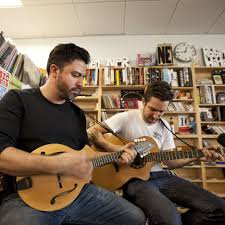
turnertinydeskNPR introduced me to Frank Turner and I’m pretty delighted that they did.  I really enjoyed his set at the Newport Folk Festival.  And here’s another live recording (a Tiny Desk Concert).

In this brief set, Frank and mandolin player Matt Nasir (he’s only been playing it for 6 months) blast through 3 of his rockingest folk songs.  “Recovery,” “The Way I Tend to Be,” (with a very funny lead story) and a rousing mandolin solo-filled and a (reluctant) NPR audience singalong. of the great “Photosynthesis.”  I imagine it was quite loud in their offices that day.

Turner is fantastic live—he’s personable and funny and even more so in this intimate setting.  It’s a wonderful set.

Check it out.

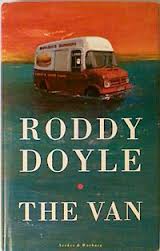
[READ: August 23, 2013] The Van

This is the final book in the “Barrytown Trilogy” (except for the new one coming out next year).  Whereas The Snapper was tied to The Commitments by virtue of it being the same family, The Van is tied to The Snapper because it follows the same guy—Jimmy Rabbitte Sr.

It’s 1990 (a few years after The Snapper because the baby from that book is now talking and mobile) and like many older people in Ireland, Jimmy Sr. has been laid off.  The first third of the book looks at life on the dole in Ireland—skimpy Christmas presents and getting handouts from your son.  And yet there’s always money for a pint or two—so Jimmy still gets to hang out with his mates at the pub a few nights a week.  He also goes out with the baby from time to time and occupies himself in various ways (pitch n putt).  There’s a lot of humor and silliness in this section–especially within the family when the twin girls start getting older and even cheekier.  And the focal point is the World Cup—because Ireland is actually going to be in it this year—Italia ’90!

And the Jimmy’s mate Bimbo gets laid off.  And that’s where the titular van comes in (over 100 pages into the story).  Bimbo is crushed to be laid off, but Jimmy is a little pleased.  He’s not happy that Bimbo is laid off, but he is happy that he has someone to waste the day with.  They go golfing together (and win a prize or two) and they do their best trying to stay happy.  But they’ve noticed that the fish and chips van that used to be parked outside of the bar is no longer there.  It’s a sad state of affairs when you’re drunk and hungry at midnight and can’t get a fish n chips.

And that’s when their friend Bertie (who can get anything for anyone) comes through on Bimbo’s half serious question–could Bertie get him a chipper van?  Bertie finds one—an unholy filthy mess of a thing with no engine.  And Bimbo uses his redundancy money, £800, to buy the mess.  Jimmy is appalled until Bimbo starts talking about the two of them being partners—working together to makes some money and sell chips to their drunken mates and—even better—to the punters who are enjoying the World Cup!  And suddenly it seems like a real idea. (more…)

Read Full Post »

« Newer Posts - Older Posts »