Feeds:
Posts
Comments

Archive for the ‘Gods’ Category

arborSOUNDTRACK: DAVID BYRNE-uh oh (1992).

uhohI received this CD free when it came out (radio station perk), and I listened to it a few times, but not really all that much.  I never really thought that much about it because I didn’t really like the cover–it looked too babyish.  It’s been a while since I listened to it and I am delighted at what a good, solid, Talking Heads-ish album this is (with David Byrne, you never know exactly what you’ll get from a record, but this is poppy).

“Now I’m Your Mom” opens with an early 90s funky electronic bass and some crazy guitar sounds.  But as soon as the bridge kicks in, the song is pure Byrne/Talking Heads.  And that world music style chorus means that this song could have been huge (even if it is about a transvestite or transgendered person–I didn’t listen that carefully).  However, the extended section at the end makes the song feel a little long.  “Girls on My Mind” is a strange (but good) song from start to finish—a weird cheesy synth sound pervades the song, and yet once again, it’s very Byrne—especially the crazy singing of the chorus.

“Something Ain’t Right” opens with an odd chant but then turns very conventional—with choral voices giving big oohs.  “She’s Mad” opens as a kind of sinister song.  And yet, after some verses about her being mad, the chorus is as bright as anything else on the record—a very schizophrenic song.  “Hanging Upside Down” has a very commercial Talking Heads Feel, like “Stay Up Late.”

“Twistin’ in the Wind” has more of those big choruses of voices to “well well well” up the song.  “The Cowboy Mambo” has another weird sound that circulates through the song, but it’s got a good beat and a great chorus and it would be fun to dance to.  “Monkey man” is a horn-heavy track that opens in a sinister vein once again.  “A Million Miles Away” just gets stuck with you and makes you want to sing along.  “Somebody” ends the disc with more Latin horns and rhythms.  It’s a fun song, and a good ending.

Overall, this is a surprisingly good record.  All of the songs are a little long–Byrne songs should really max out around 4 minutes.  For that extra time, he either tends to repeat himself or add superfluous codas that drag out the end.  But aside from that, this is a real treat, especially for Talking Heads fans.

[READ: May 20 2013] Arboretum

The back of the book describes this as a collection of enigmatic, enchanting mental maps.

And that is kind of what the book is.  It is a collection of drawings–tree and branch-style drawings mostly–that endeavor to map relationships.  But the subject matter is crazily diverse–oftentimes nonsensical or at the very least unparseable.  The good news is that many of the drawings have an explanatory text in the back of the book.  I acknowledge that ideally the drawings should make sense without needing an explanation, but the explanations were really useful–they really give you the frame of mind that Byrne was trying to explain through the pictures. (more…)

Read Full Post »

snuffSOUNDTRACK: SINÉAD O’CONNOR-How About I Be Me (and you be you)? (2012) .

sineadI was a huge fan of Sinéad’s first album.  And I liked her second one too (the one that made her a star).  I even followed her through a few of her later albums (while she was getting a bit more publicly odd).  But then it just got to be too much work (she released a bunch of albums which I couldn’t keep up with).

But this album promised to be a nice return to form.   And so it is–her voice sounds great and there’s many of the elements of good ol’ Sinéad here–the jangly guitars, great backing vocals and awesome mixture of gentleness and rage that really marks Sinéad’s best work.

“4th and Vine” is a boppy reggaeish song about love and marriage.  It’s nice to hear that kind of cheer from Sinéad (even if it didn’t all work out).  It’s followed by “Reason with Me” a sympathetic song from the POV of a junkie who plans to call that number one of these days.  “Old Lady” is a simply beautiful song–in which you can really hear how well Sinéad’s voice has stood up through all the troubles she’s been through.  But more than that, when the guitars kick in, you can hear that she still has the chops to write a great song.

“Take Off Your Shoes” is one of those great Sinead songs that gives you chills.  I’m not sure what she’s on about with the blood of Jesus and all, but when the song kicks in and “you’re running out of battery” wow, what a great song.  “Back Where You Belong” is one of Sinéad’s more delicate songs–a plea for peace from men on behalf of boys–the chorus is soaring and gorgeous.

“The Wolf is Getting Married” is being released as a second single this month (good for an album to have that long of a shelf life).  It starts a little slow but once the verse really starts it’s pure Sinéad–that guitar backing is just like Sinéad’s earlier hits).  And the lyrics, which are simple enough, are fun to sing with.  “Queen of Denmark” is a stunning, vulgar track that is really amazing.  It’s great to hear her when she is passionate and angry and indeed here she is–soaring voice and loud guitars and all.

“Very Far from Home” and “I Had a Baby” are sweet songs, they are enjoyable, but feel like decent end-of-disc songs, especially after the power of “Denmark.”  The final track, “V.I.P.”  ends the disc quietly, with a gently sung, almost a capella track about the true nature of very important people.  The song  ends with a whispered prayer and a chuckle.    It’s a really solid album and I’ve enjoyed listening to it many times (but I really don’t like the cover).

Perhaps, as my friend Louise has been telling me all along, I should check out those discs that I missed.

[READ: February 1, 2013] Snuff

I can’t believe I have two books in a row that deal so largely with poo!

Terry Pratchett is back with Snuff (actually, he has a book of short stories and a new novel named Dodger since Snuff came out).  Sarah gave me this for Christmas two years ago and I have just gotten around to reading it.  Which is a surprise as I love Pratchett and have read all of his books (for the most part).

This book seemed a little big.  It is 400 pages, as long as Unseen Academicals, and I was a little daunted by it.  But as soon as I read the first few pages (again, no chapters here, just section breaks), I was back in the world of Commander Vimes (or arch Duke or something) and back in Discworld.

Commadner Vimes is a wonderful character–a policeman who is street smart and very wise, even if he’s not proper smart.  He’s an excellent everyman character and the kind of person you wish was running things in your town.  Or someone else’s town.  For Vimes is off on vacation to the Shire, the childhood home of his wife Lady Sybil.  And Vimes is out of his element (which is always funny).  And he also senses that something is amiss here in the idyllic countryside.  So, despite Sybil’s gentle warnings to be on vacation and come in and be social, Vimes is on the case.

The case, as it were, is about goblins.  Goblins are a new race in Discworld.  Everyone always treated goblins like vermin–they smell bad, they steal chickens, they live underground  they are worthless.  And the goblins seem to agree (well, that’s what generations of maltreatment will do to your self-respect).  But Vimes gets mixed up in a murder–and when a goblin pleads for mercy but is killed anyway, that is murder vermin or not.  And when Vimes discovers that goblins can talk, emote and, indeed, play the harp–well that makes them a little less verminous, no?

Wait, what’s this got to do with poo?  Well, Miss Felicity Beedle, Discworld’s premier children’s author, has written a book called The World of Poo (which is actually for sale on its own too, ha) which Young Sam Vimes loves.  It is his favorite book after Beedle’s earlier book Wee.  And so Young Sam is off collecting samples of poo to dissect, and the Shire is a great place for it.  Well, when Vimes meets Beedle, he learns that in addition to being a children’s book author, Beedle has been teaching goblins how to be more…well, not human exactly, but more approachable to humans so that they may be recognized as valuable creatures. (more…)

Read Full Post »

SOUNDTRACK: THE FLAMING LIPS: AUSTIN CITY LIMITS FESTIVAL 2010 (on Palladia TV 2011).

It must be tough to take a festival like Austin City Limits and truncate it into 2 hours.  It must also be tough to be a pretty much headling band like The Flaming Lips and to be playing in the middle of the day when your cool stage stuff is probably less impressive (but good for them for going all out!).

Some fun things to see during their set: the camera mounted on Wayne Coyne’s microphone (huge close-ups of his face); the guns that shoot streamers, Cliph the drummer makes the sample sound effects that you need to make during the songs, tons of back up dancers (who I believe are fans that won a contest or something), the amazing multi-instrumental skills of Steven Drozd.

This broadcast only showed two Lips songs (criminally underrepresented, but I understand).  They played “I Can be a Frog” which is a wonderful audience participation song even if it’s nowhere near their best song. 

And “She Don’t Use Jelly” which I understand as it was their hit and the crowd (and even the band) always seem into it, but that song is like twenty years old and they didn’t play any other bands’ old singles.   I won’t complain to hear that song, but there are just so many good ones to choose from that it seems silly to play that one.

[READ: November 6, 2011] “The Mermaid of Legend and Art”

A while back I read a few old articles that I got from JSTOR, the online archiving resource.  This month, I received some links to three new old articles that are available on JSTOR.  So, since it’s the holiday weekend, I thought it would be fun to mention them now.

I wrote the review of this article before I realized that I had only read part 3 of 3.  There were some clues (like the start mentioning “the first few lines of my opening chapter”), but since the link I was given went here, I assumed that the other chapters were not available (until I saw the tiny footnote that said this was continued from pg 172).

So, I’m including my original post at the bottom for history’s sake, but I’m going to write the revised review here.

I don’t quite understand why this article was broken up into three sections.  This is especially egregious because of the figures included in the articles.  They do not really correspond to the sections where they are written about.  So, for instance he mentions Figure 13 on the last page of the article when we are already up to Figure 36 (and Figure 13 is fifty-some pages away).  For most of the other figures, he always seems to be a few pages behind, as if they needed to put the pictures throughout the article rather than where they are mentioned–it was bad enough having it in three sections (in my print puts) but imagine having to flip back thirty some pages to see what the hell he’s talking about!  Of course, this was 1880, they had more free time.

So, anyhow, the beginning of this article talks about the history of the mermaid in folk tales and the Bible.  Evidently Brahma visited Menu (Aka Noah) in the guise of a fish–which is how he was able to build the ark.  There is also a lengthy discussion about the importance of fish in the Old Testament.  In addition to the whole IXTHUS thing, fish were a very useful form of currency.  So it is nor surprise that they used representations of fish and sea creatures in ancient Rome and Greece. (more…)

Read Full Post »

SOUNDTRACK: SUFJAN STEVENS-The Age of Adz (2010).

Sufjan Stevens has released a bunch of albums of beautiful orchestral rock.  It is multi-layered and complex with classical elements and all kinds of cool instruments.

And this album starts out with a beautiful acoustic guitar melody and Sufjan’s delicate vocals.  Although it is a far more stripped down song than usual, “Futile Devices” seems like it is heading in the standard direction.  But anyone who heard Sufjan’s Christmas album number VIII knows that he has been having some fun with electronics.  And they show up with a vengeance on track two, “Too Much.”

All of the multilayered noise that was once orchestral and (some might say) precious has been replaced by a cacophony of gorgeous electronic noises.  The beginning of the song reminds me of the sounds in Skinny Puppy’s “Stairs and Flowers” (how many Sufjan Stevens reviews mention Skinny Puppy?).  The song is nothing like Skinny Puppy once the vocals kick in–it’s catchy and delicate–but those electronics underpin the whole thing, bringing his pastoralia into the twenty-first century.  When I first reviewed this song I didn’t like it but once you get absorbed by Sufjan’s world, it’s an enticing place to be,

“Age of Adz” takes this electronic nonsense even further with an 8 minute brew of strange sounds and choral voices.  But he always manages to throw in some catchy parts, no matter how strange the song gets.

For me one of the highlights of the disc is “I Walked” it features one of my favorite Sufjan things–falsetto vocals in a beautiful but unexpected melody.  And this song has them in spades.  “Now That I’m Older” has a very disconcerting sound–his voice is slowly warbled and mournful.  It’s a beautiful melody that is alienating at the same time.

“Get Real Get Right” returns to his earlier style somewhat (there’s more layers of music, although the electronica is still in place).   “Vesuvius” is a beautiful song and “All for Myself” is another of those great falsetto tracks that I like so much.

“I Want to Be Well” eventually turns into a manic electronic workout in which he repeats the chorus “I’m not fucking around.”

But nothing compares  to “Impossible Soul” a twenty-five minute (!) multi-part suite of electronic chaos.  It’s a fantastic song complete with autotune (used to very cool effect), repeated swelling choruses (it’s like a Polyphonic Spree tribute), electronic freakouts, and acoustic comedowns.  All in a positive, happy message.  I can’t stop listening to it.  “It’s not so impossible!”

Sufjan continues to impress me.

[READ: November 10, 2011] McSweeney’s #9

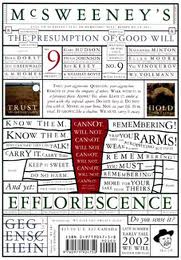
After the excesses of McSweeney’s #8, I was excited to get to the brevity (and urgency) of McSweeney’s #9.  This one is a paperback and looks like the first couple of issues.  The cover is mostly text with a hodgepodge of phrases and pleas.  You get things like: Thankful, Emboldened, The (Hot-Blooded/Life-Saving) Presumption of (Perpetual/Irrational (or More Likely, Irreducibly Rational) Good Will, Efflorescence, Our motto this time: We Give You Sweaty Hugs,” Alternative motto: ” We Are Out Looking,” GEGENSCHEIN (no more), and the promise: “We will Do Four This Year.”

This is the kind of issue that makes me love McSweeney’s.  There are some wonderful short stories, there are some nice essays and there are some dark moments all centered vaguely and tangentially around a theme.  There are some great authors here, too.

The back cover image is called Garden Variety by Scott Greene and it’s a fantastic painting.  You can see it here (navigate through the 2000-2004 paintings, but I have to say I really like the style of all of his work.

There are no letters and no nonsense in this issue.  So let’s get to it. (more…)

Read Full Post »

SOUNDTRACK: MOGWAI-Happy Songs for Happy People (2003).

Happy Songs for Happy People follows up Rock Action with more sedate music from Mogwai.  In fact, while Rock Action was pretty mellow (with a few bursts of noise) HMFHP is even more mellow.

Although it does open with a rocking track: “Hunted By a Freak.”  “Hunted” is one of Mogwai’s best songs.  It opens the disc with a catchy riff, some cool synthesized vocals and great washes of sounds.  It’s great on record and even better live.  But starting with “Moses I Am’n’t” the album takes a decidedly more mellow approach.  “Moses” is a song of slow washes layered on each other. There’s interesting textural sounds on display, but not a lot of melody.  It leads to “Kids Will Be Skeletons,” another mellow layered song.  It has a simple melody with delicate (!) keyboard washes.

But just when you think Mogwai have gone all soft, “Killing All the Flies” adds some intense sounds to the disc. It is similarly structured to the earlier songs on the disc, although it has some rather happy-sounding guitar lines in it.  It also grows in intensity about two-thirds of the way through.

“Boring Machines Disturbs Sleep” (sic) is a short, quiet song with subdued vocals.  It’s followed by “Ratts of the Capital” the only really long song here (8 and a half minutes).  It opens in this more subdued vein (is that a glockenspiel I hear?), but by 4 and a half minutes all you hear is guitar–growing louder and louder.  There are solos buried in the noise that threaten to explode out of the speakers, but they ultimately seem to hold back a wee bit.

“Golden Porsche” mellows things out again with a very pretty, very simple song (almost 3 minutes of beautiful melody) that reminds me of the interludes in Twin Peaks.  “I Know You Are But What Am I?” opens with a tense kind of piano (with some slightly off chords).  They merge with pretty keyboard notes which counteract the somewhat sinister feel of the main riff.

The disc ends with “Stop Coming to My House” (Mogwai have always excelled at song titles).  It’s a very subdued track (quiet drums propel waves of keyboards) and as the songs continues, more and more waves layer on each other until it just all fades away.

I obviously prefer the louder, more raucous Mogwai tracks, so these two albums are not what I think of when I think Mogwai.  These two albums feel like the work of a more mature, more restrained band–as if they are deliberately trying to put constraints on their music to see what they can achieve.  But even if they are less intense, the songs are wonderfully structured and show a still show a great emotional range.

[READ: June 07, 2011] “Clever Girl”

This was a fascinating story and is yet another story by Tessa Hadley that I really enjoyed.  And it’s another story that I didn’t realize was set in England until the fourth paragraph, which opens “Mum unpacked.”

Anyhow, this story follows Stella, a young girl whose family moves to a small suburb that has recently been developed (trees were cut down and none newly planted).  Stella and her mother used to live alone together for many years, but recently Stella’s mom met Norbert.  They married and moved into this new suburban house.

The story is told in past tense about the events from Stella’s childhood.  But there are occasional moments where the narrator pops in and offers some moments of “grown up Stella” perspective–like maybe she could have been nicer to Norbert.  Grown up Stella realizes that Nortbert was really perfect for her mom (especially since she was an older woman,  with a grown daughter).  At the time, she thought that Norbert seemed okay, but the whole move has upset her sensibilities.  [I also love that Norbert is known as “Nor,” which is wonderfully contradictory.] (more…)

Read Full Post »

SOUNDTRACK: A HOUSE-Zop (1991).

This is an EP that came out just after I Am the Greatest.  Released only in the UK, I found it used at Amoeba Records (I must have been on an A House binge at the time).

The EP has 6 tracks.  The opener sounds like a slightly remixed version of “You’re Too Young.”  And “Take It Easy on Me” also sounds remixed (the wah wah seems downplayed somewhat, although the song is still strong).

The other tracks are good songs from this experimental period of A House.

But for me the highlight is “When I Last Saw You,” the 5 minute version of “When I First Saw You” from Greatest.  I’d always liked the album versions’ fascinating concision and almost a capella feel.  This version tacks on a proper song, and it changes the song in wonderful ways.  I will always enjoy that short version, but this EP version is really great.

What’s interesting is that there’s virtually no record of this disc on the web.  Even though the A House homepage is known as ZOP.  The site, sadly, has not been updated for two years.  Although it does answer the question of what Dave Couse has been up to since the late 1990s.

[READ: August 22, 2010] Bloom County: Vol. 2: 1982-1984

This volume of the collection covers a lot of the comics that I know very well.  There are a number of strips that I drew (not traced) and hung in my locker in high school (I wasn’t about to cut up Loose Tales, was ?).  It also covers what I think of as my first era of social and political awareness.

I know I wasn’t totally aware of what was going on, but, via punk music mostly, I became aware of criticisms of Reagan.  And to a lesser degree, so does Bloom County.  I’m actually surprised at how apolitical it seems in retrospect.  My recollection was that it was a massively political strip.   And yes, there are a lot of political references, but for the most part it’s sort of political pop culture jokes.  Reagan gets teased a bit (although again less than you might expect), but it’s not the raging left-wingedness that I fondly recall. (That said, the strip is imbued with leftie political ideas, but they’re sort of mellow compared to now).

Rather, the political jokes are aimed at politicians as a class.  And there are commentaries about political events (couched in terms of local politicians, or, more often, in terms of Bloom County’s nonsensical “scandals” that are based on what really happened (although often the real scandals seem as absurd as the Bloom County ones). (more…)

Read Full Post »

SOUNDTRACK: THERAPY?: Music Through a Cheap Transistor: The BBC Sessions (2007).
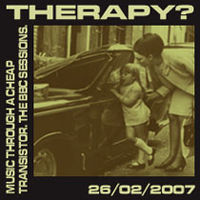
I enjoy the title of this disc quite a bit.  Fortunately, I also enjoy the music quite a bit.  This is a collection of BBC recordings from Therapy?

It’s a strange collection in that they recorded songs on five separate occasions and yet there is a lot of duplication of tracks (the liner notes deal with this issue).

John Peel Sessions (and there’s much made in the liner notes about the fact that they thought they’d be meeting Peel himself when they went in, when in fact it was just a random engineer) are essentially live recordings done in the studio.  They tend to be slightly more experimental (done after a band has toured and messed around with the songs some) and for some bands (like Therapy?) they tend to be more raucous.

This collection was recorded from 1991-1995 with a final show in 1998.  Obviously the band isn’t thinking about the future CD release of the sessions when they recorded these sessions, so it probably didn’t seem strange to record “Totally Random Man” 3 times.  But it does seem strange to listen to it like that.

The songs are definitely rawer than the studio versions.  Even their more poppy tracks from 1998 are a bit harsher.  However, their first EPs were really raw, so these songs sound much better (much cleaner).  They also include a lot of fun/weird unreleased tracks and covers.

My only complaint is that neither version of  “Teethgrinder” features that awesome drum sound that is my favorite part of the track.  Otherwise, it’s a great collection.

[READ: June 1, 2010] Lost in the Funhouse

I checked out this book so I could read the title story.  I enjoyed that one quite a bit so I decided to read the whole collection.  The Author’s Note says, “while some of these pieces were composed expressly for print, others were not. For instance: “‘Glossolalia” will make no sense unless heard in live or recorded voices, male and female, or read as if so heard.”  Um, yeah.

The first story: “Frame-Tale” consists entirely of this: “Cut on dotted line, twist end once and fasten AB to ab, CD to cd.” The cut part is a strip of paper that reads: “Once Upon a Time There/Was a Story That Began.”  It’s cute.

The next story, “Night-Sea Journey” is a proper story of a night sea journey. The secret to the story is gradually revealed, and is rather amusing. (more…)

Read Full Post »

SOUNDTRACK: THE FLAMING LIPS & STARDEATH AND WHITE DWARFS featuring HENRY ROLLINS and PEACHES doing The Dark Side of the Moon (2010).

You’ve got to have balls to cover the most popular album of all time.  Everyone knows Dark Side of the Moon, according to Billboard charts everyone probably owns a copy of Dark Side of the Moon.  So, you’re taking on a pretty big task here.  But the Flaming Lips aren’t called The Fearless Freaks for nothing.

What delights me about this album is that it is utterly unfaithful to the original.  There’s nothing worse than a cover song that just apes the original version.  With that in mind, the Lips have put their bizarro stamp on the classic album, oftentimes rendering the songs almost unrecognizable–but more on that in a moment.

The two guest stars on the disc are Henry Rollins and Peaches.  Rollins recites all the spoken word bits from the original.  He actually makes a lot of those weird ramblings clear for me for the firs time.  The originals were spoken by a (presumably) high Englishman.  Rollins’ delivery is much more abrasive (but then so is the music).  It works pretty well, especially since Rollins’ laugh is maniacal, although if he sounded a bit more drunken I think it would work even better.  Peaches sings a few of the female vocal bits.  I’ve never been much of a fan of hers but, man, she does an awesome job in covering “The Great Gig in the Sky,” the track from the disc that features a wondrous diva singing and screaming her heart out.  Peaches really lets loose and showcases the power of her voice.

The Lips play on 7 songs and StarDeath play on 6.  They work together on 2 tracks.

StarDeath is fronted by Wayne Coyne’s nephew, Dennis.  I’d only heard one track from them before, and I liked it.  Dennis’ voice is a higher register, like Wayne, but he’s also a bit more subtle. Musically they are less noisy as well, and it’s a good counterpoint to the static of the Lips’ tracks.

So the opener, “Breathe” (Lips) is distinct right away, because the main focus of this version is a loud throbbing bassline. “On the Run” (Stardeath) is completely indistinguishable from the original.  You would never suspect it was a cover.  It’s a bass-propelled, very cool song, but there’s almost no similarity.

“Money” (Lips) stays fairly faithful to the original, except that the vocals are totally auto-tuned.  It makes the song sound really alien, as if coming, yes, from the other side of the moon.

“Time” (Stardeath) on the other hand, is a very delicate, acoustic track, (sounding somewhat like Mercury Rev, actually).  It is something of a counter to the rocking version on the original.

“Us and Them” (Lips) is probably the closest sounding to the original.  It has simple washes of sound and Wayne’s delicate voice.  But, once again, the louder sections of this song are left out.  “Any Colour You Like” (Stardeath) is a much closer instrumental to the original than “On the Run” was.  And “Brain Damage” (Stardeath) is really quite spot on (and may be even creepier than the original).

The ender, “Eclipse” is like a distorted indie rock version of the original.  It works pretty well.

There’s surprisingly little in the way of sound effects (which are all over the original).  I’d have thought they’d populate the disc with all kinds of fun things, but no, they actually play it pretty straight.

My one real complaint about the disc (and actually about Embryonic as well).  The Lips have always pushed the envelope of music.  But lately, they seem to be redlining  a lot of their sounds, making them distort and crackle.  Now, I love distortion when it’s used well, but this “too loud” distortion actually hurts my ears, even if the volume is low.  I find the sound to be unpleasant, and not in a good way.  And I think it’s a shame because the Lips write such great music, that I hate to have it obscured by clouds of noise.

So, yeah, this will never replace the original for anyone.  But it’s a fun experiment and actually sounds a bit like a rough demo for the final release.  In fact, in many ways it sounds like it’s coming from outer space and may be conceptually more accurate for the title.

I saw The Lips and Star Death on Jimmy Fallon.  They played “Breathe” and all eight (or more) guys were on stage.  It was a big wonderful mess.  And they sounded really good together.

[READ: May 11, 2010] ; or The Whale

In 2007, a book was published called Moby Dick in Half the Time.  And, as the title implies, it took Herman Melville’s Moby Dick; or The Whale and truncated it.  The editors basically kept in all of the “plot” and excised most of the “wandering” parts of the story.

So, in 2009, Damion Searls decided to print all of the excised material as a book itself.  This exercise was published in The Review of Contemporary Fiction, Summer 2009 | Vol. XXIX.  So, this “book” is Moby Dick without the “plot” or as the introduction puts it, “all Moby, no Dick.”

This book includes “every chapter, sentence, word, and punctuation mark that Anonymous removed to produce [Moby Dick in Half the Time]” (10).

And so what we get is a very surreal story indeed.  It comes across as a fascinating look into the mind of the (in this version) not named until Chapter 11 or so narrator (since we’ve obviously lost “Call me Ishmael”).  It also comes across in many sections as bizarre poetry.

; or the Whale’s opening line is:

“methodically.” (31). (more…)

Read Full Post »

SOUNDTRACK: FUGAZI-13 Songs (1990).

I was so blown away by that first Fugazi disc that I immediately ran out and got this collection of their first two EPs.
The strange thing to me is that even though I enjoy the disc, nothing on it really stands out as all that memorable.  I feel like Repeater was such a strong release that these earlier tracks pale somewhat.

I’ve listened to this disc a number of times over the last few days and nothing really stands up and grabs me like Repeater still does.

I wound up buying two more Fugazi discs after this, but I’m pretty sure the reason I stopped buying their music was from this same feeling: the songs were all good, rocking, indie music, but there was nothing terribly memorable about them.

[READ: April 15, 2010] Stephen Fry in America

I first heard about this book when Stephen Fry appeared on The Late Late Show.  This book was very casually plugged as Fry’s attempt to visit every State in the U.S.  It turns out that this book is the companion piece to a six part BBC TV series of the same title (which I have not seen).  Although the TV series makes the existence of this document much more understandable.  Because although everyone wants to travel to every state in the union, the only way it would ever be accomplished in the fashion is for a TV show (even a book wouldn’t get quite this treatment if there were no TV show).

Stephen Fry was almost born in America (in New Jersey, in fact, where he believes he would have been Steve, rather than Stephen).  And he has always felt a connection to the States.  So, Stephen Fry, (in my head the quintessential Brit) brings a film crew and his classic British Big Black Taxi to see all of the States.  He begins in Maine and travels in an interesting manner, zig-zagging across the country.   He tends to visit the places/events/sites that each state is known for.  And, like any good TV show, he participates in the activities (he lobsters, he rides horses, his deals blackjack) and makes a tit of himself. (more…)

Read Full Post »

SOUNDTRACK: New Moon Original Motion Picture Soundtrack (2010).

Back in the 90s, it seemed like every week there was a new soundtrack featuring an unreleased song from some great alt rock band.  This meant huge sales for soundtracks, even if for the most part they weren’t solid start to finish.  In fact, mostly you got three great new songs, three pieces of rubbish, one great song by a band you’d never heard before and two or three okay tracks.

The inclusion of a new Death Cab for Cutie song was the big news about this soundtrack.  And overall, the reviews were positive.  And I’m pleased to say there aren’t really any horrible songs here.  (I have no idea how the soundtrack fits in with the movie as I haven’t seen it and probably never will).

But as with that old soundtrack formula: we get a few good songs by reasonably well-known bands: Death Cab for Cutie, Thom Yorke, Bon Iver & St, Vincent, Muse, Grizzly Bear.  And then there’s a whole bunch of good rock songs.  The disc plays as something of a sampler of downcast, mellow alt rock. In fact, the back half of the disc sounds like a pretty decent alt rock radio station from the last decade or so.

Some of the tracks even sound like 90s alt tracks (Hurricane Bells, that song is 16 years old right?  And Sea Wolf, you’re channeling Peter Murphy, I know.)  The final two tracks are okay.  The Editors is kind of a Nick Cave via Joy Division sorta spoken word ballad.  And I admit I’m a little disappointed in the Lykke Li track–they got hyped beyond their ability.  The final track is a piano score, which is fine.

The biggest surprise to me is how much that Death Cab for Cutie songs sounds like a Rush song.  I’ve never considered that the bands sound anything alike before, and yet from the moment the song opens, that could be Geddy Lee singing, and that whole guitar structure is very Rush-like.  Maybe they should do a cover of it.

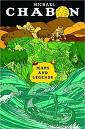
[READ: April 20, 2010] Maps and Legends

This is a collection of 17 non-fiction pieces by Michael Chabon.  The pieces cover everything from book reviews, essays about reading and writing, comic book and comic book artists and golems.

The opening essay is about the modern short story and it sets the tone for the entire book.  Interestingly, this essay talks about the state of entertainment and how “Entertainment has a bad name.  Serious people learn to mistrust and revile it.  The word wears spandex, pasties, a leisure suit studded with blinking lights. (13).  This very topic is at the heart of the David Lipsky/David Foster Wallace book (and in fact Chabon is mentioned in that book as well.)  Ah, serendipity. (more…)

Read Full Post »

« Newer Posts - Older Posts »