Feeds:
Posts
Comments

Archive for the ‘Ghosts’ Category

zooms SOUNDTRACK: NOVALIMA-Tiny Desk Concert #208 (April 12, 2012).

novalimaNovalima is a band from Peru.  And the blurb really captures them quite well:

Something about tradition inspires reverence and creativity. Throughout Latin America and parts of the U.S., musicians are exhuming centuries-old musical cultures and infusing them with new life to create songs that sound both familiar and new. Peru’s Novalima is doing just that with Afro-Peruvian music.

Over the course of three superb albums, the group has addressed the legacy of slavery in Peru in the form of the traditional lando, a dance rhythm with roots in West Africa. The slow, deliberate beats are played out on a variety of traditional instruments — most notably the cajon, a big rectangular box that drummers hit before drawing sounds out with their palms and fingers. The result can be as deep as a bass drum, but can also hit the high-pitched pops of finely tuned bongos or Middle Eastern dumbeks.

They play three songs which feature acoustic guitar and five string bas anda  lot of percussion–including a donkey jawbone.

“Karimba”is sung by one of the men drumming.  There’s lots of group singing as well–a real party feel.

“Guayabo” and “Festejo” are sung by the female singer.  The bass line for “Guayabo” is just great–weird and almost punk.  It’s kind of sinister even if they don’t sound sinister singing over it.  He’s also wearing a strange kind of drum around his neck–like a box that opens and closes (and you store the sticks in it, apparently.  The middle of the song is all percussion and voice–a celebration of sorts, before that bass returns.

“Festejo” also has a strange, interesting guitar riff.  There’s some great call and response parts of the song–the men really getting into it.  As the song ends the guy with the box and the woman get up and dance in the crowd.  By the end of the song, you realize that it’ sa lot of fun–a groovy dance song like no song you’ve ever head before.

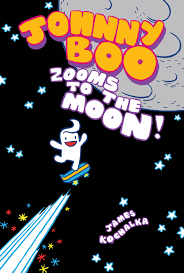
[READ: March 7, 2016] Johnny Boo Zooms to the Moon

As this fifth book opens Johnny is riding a skateboard and Squiggle is towing him.  They are going to go to the moon.  But even Squiggle Power cant get the skateboard to move more than a few inches.  But Squiggles never give up so they wind up falling asleep, no further than when they started.

In the dark, stars come down to see what Johnny is doing.  They tell him he needs star shaped wheels to go to the moon, and that “almost makes sense.”

The stars prove to be very funny–fighting over counting and them fixing his skateboard by braking the wheels of so the stars are now wheels.

And off they zoom, going very fast! (more…)

Read Full Post »

meanSOUNDTRACK: ENDANGERED BLOOD-Tiny Desk Concert #214 (May 7, 2012).

bloodThe Brooklyn jazz quartet Endangered Blood was formed so its members could play benefit concerts for their friend, saxophonist Andrew D’Angelo, who’d been diagnosed with a brain tumor. D’Angelo eventually made a full recovery, but the group — Trevor Dunn (bass), Jim Black (drums), Chris Speed (tenor saxophone) and Oscar Noriega (alto saxophone) — realized that this ensemble had potential to become a real working band. In 2011, the four released a self-titled debut album.

Endangered Blood’s music draws from the members’ diverse backgrounds and influences, combining post-bop, 20th-century chromaticism, traditional New Orleans funeral marches, avant-garde jazz and post-punk to create a sort of mad-scientist concoction. Its compositions are cerebral, but they’re also gritty and full of energy.

The band plays two songs and the description above really gives a feel for what they sound like–kind of all over the place

“Iris” is a slow song that has a real Tom Waits feel (although no vocals).  It has a slow nightclub jazz feel and I love watching the drummer do that kind of swaying lots of arms but quiet hitting drum sound.  There’s an interesting (although quiet) bowed upright bass solo in the middle of the piece.

“Uri Bird” opens with a lengthy bass and drum solo (the drummer seems to be having a ton of fun–including hitting his sticks off the walls and floor).  Then the two saxes come in playing the exact same riff.  This has a bit more bebop feel with the saxes trading off solos.  It ends with a fast wail and a solid beat.

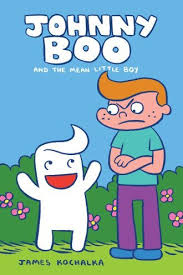
[READ: March 6, 2016] Johnny Boo and the Mean Little Boy

I love how the Johnny Boo universe is so small that characters keep returning.  Like in this one, the fourth book, Johnny Boo tells Squiggle that they can’t play today because his playing with his new friend Rocky the Rock.  This is the same rock that he threatened to make his best friend in the first book.

Johnny promises Squiggle that they will play together soon, as long as Squiggle can give him a “hooray.”  But Squiggle’s hooray is not very enthusiastic.

Squiggle says that he will go off and find other friends, too.  But it turns out to be not so easy.  And then a butterfly starts flying around him.  At first Squiggle is annoyed by it but then he thinks they can be friends. (more…)

Read Full Post »

applesSOUNDTRACK: SO PERCUSSION-Tiny Desk Concert #205 (April 2, 2012).

So Percussion is a quartet who plays nothing but percussion.  When we think percussion we often think rhythm, but these guys (Eric Beach, Josh Quillen, Adam Sliwinski and Jason Treuting) also provide great melody.

The band is inspired by John Cage.  He’s “their guy.”  They have written songs inspired by him and also perform his pieces.

Though audiences are still often puzzled or even infuriated by Cage, the composer brought essential joy and optimism to his work. Music is everywhere, Cage taught; frame sound, even the sounds of everyday life, and hear what is there. In the signature mix of serious play (or is that playful seriousness?) that So Percussion brought to this unusual Tiny Desk Concert, the group mixed a work by Cage (the first movement of his Living Room Music) with two pieces by Treuting: Life Is [ ] and 24 X 24, in which the text Quillen reads aloud comes from Cage’s own writings. Inasmuch as many of their instruments are quotidian tools, the sounds they create can be magical.

The first piece was written by the band’s Jason Treuting, called “Life Is [ ].”  It’s just under three minutes and is primarily wood blocks.  But there are also xylophones and bells (and many other things).

All four have mallets and are clacking on the wood blacks.  But each player has something else that makes a melody–tiny cymbals, the xylophone, bells that you tap with your hand–and they create a pretty melody (and the wood blocks provide interesting counterpoint rhythm).

Since John Cage is their guy they made a piece that celebrates the way he made music: “24 X 24.” Cage celebrated “time-based structures and task-based sound things.”  So this piece is flexible and malleable.  They are going to play an 8 minute version of the song which includes a spoken word of a Cage lecture [the entire lecture is reprinted at the bottom of the post].

The narrator counts down from 8, which is interesting.  Then he recites (including coughs and other noises) a piece by Cage about music and art.  While he is reciting, instruments include the melodica and harmonium, a musical saw, a coffee cup full of change (at one point instead of tapping the cup, he takes the change out and state each denomination out loud).  They also play the side of the desk, a cactus plant (that is pretty cool to see), even plucking the Emmy on the desk.

The final piece is a John Cage composition.  It is the first part of a longer piece called “Living Room Music.”  Back in the early 40s Cage wrote a piece called “Living Room Music” which was supposed to take place in a living room.  And this is our living room.  They play the first part   called “To Begin.” It’s just under a minute, but the sounds they get from a waste basket (like a bass drum), a package of paper towels, a stapler, the desk and the coffee mug is really cool.

Even people who don’t like John Cage have to appreciate what he was going for with this kind of music.

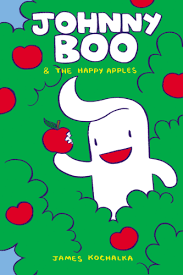
[READ: March 3, 2016] Johnny Boo & The Happy Apples

In this third book of the series, Johnny Boo, Squiggle and the Ice Cream Monster are back.

Johnny eats some ice cream and then shows off how strong it has made him. But when Squiggle accidentally “pops” Johnny’s muscle and it gets all floppy, there is much concern.  Things are even worse for Johnny when the ice cream monster (from the first book) comes and shows off his huge muscles that he got from eating apples.  If Squiggle laughs at Johnny’s floppy muscle you know there will be hurt feelings.  And there are.

Johnny runs off to find some happy apples to make his muscles strong, but he winds up eating apples from the ground, which makes his muscles super floppy (pretty hilarious looking). (more…)

Read Full Post »

johnny-twinkleSOUNDTRACK: SOWETO GOSPEL CHOIR-Tiny Desk Concert #209 (April 16, 2012).

sgcDressed all in black with pink accents the Soweto Gospel Choir certainly looks striking.  And their voices are superb.

The blurb notes that they

managed to tie the all-time record for most musicians squashed behind Bob Boilen’s desk for a single performance in the NPR Music offices. (They join the early-music a cappella ensemble Stile Antico, also with 12).

[I wonder if they keep statistics like this–I’d like to see numbers].

The Choir sings

in a number of South African languages, as well as English, Soweto Gospel Choir fuses the praise music of many Christian cultures, with nods to traditional African songs of celebration — complete with occasional clicks and bird songs.  To watch and sway along was to be blasted with some sort of ray gun that shoots beams of joy and hope.

They sing four pieces.   I don’t know what the songs area bout except for what the brief introductions tell us.

Two different women are the lead singers for the first two songs (no names are given). “Seteng Sediba” and “Emarabeni” which is a wedding song.  A man introduces the rest of the songs.  He says that “Emlanjeni/Yelele” is a traditional song and then he sings lead.  The final song “Kae le Kae” translates to Wherever I Go I Go with Jesus.

For each song the Choir sounds amazing together.  They only person not singing is the guy on the end who is playing the djembe to keep rhythm.  They sway in sync and hold hands up at the same time. They are something to watch.

As the final song ends, the Choir walks out of the room past everyone singing all the while.  It’s a great ending (and gives us a peek into the NPR offices).

[READ: March 3, 2016] Johnny Boo: Twinkle Power

This is the second Johnny Boo book and Johnny, Squiggle and the Ice Cream Monster are all back.

One thing that really cracks me up about the Johnny Boo books is how easily he and Squiggle get mad at each other.  And they always threaten to be mad forever.

In this book, Squiggle flies around Johnny’s head and makes his “hair” stand straight up.  This cracks up Squiggle and makes Johnny very angry and he threatens to never be friends with Squiggle again.

Of course this all started because Squiggle thinks that the stars have amazing Twinkle Power and he thinks it’s even better than Johnny’s Boo Power (GASP!).  Squiggle wants to go up to the stars to see if he can learn Twinkle Power. (more…)

Read Full Post »

johnny-1  SOUNDTRACK: RUDRESH MAHANTHAPPA-Tiny Desk Concert #201 (March 8, 2012).

rudreshRudresh Mahanthappa is a saxophonist whom I had not heard of but who is obviously very highly regarded (he won a Guggenheim Fellowship).

He plays jazz in very different styles, and totally wails (“a swarm of locusts rampaging through an irregular beat”), but has also experimented with different styles.  As the blurb says:

That latest album, 2011’s Samdhi, borrows a bit from … electric funk excesses … and integrates ideas from South Indian scales and modes, hip-hop and computer music programming.

The quartet here is top-notch:

Drummer Rudy Royston and Mahanthappa played in a Denver-based band together some 20-odd years ago, and have since reconnected in New York; electric bassist Rich Brown has played in just about every conceivable setting from his home base of Toronto, including the Canadian Indo-jazz group Autorickshaw; guitarist Rez Abbasi is a long-time confrere in the dual worlds of jazz and South Asian music.

They play two fairly long songs.

“Killer” starts the show.  I really loved the sound that the guitar had–a kind of electric organ/funk sound. Mahanthappa takes off right away.  One thing that was very cool was when I thought he was playing an improvised solo, but the guitarist was able to play exactly what he played both right after him and then with him (clearly it was part of the song–but it sounded great with the two of them together).  After about 4 minutes of wild noisy soloing it mellows out with a long groovy guitar solo–Rez is really impressive.  About a minute after that, the song picks up with some great drumming behind a wild guitar solo.   Around 8 minutes, the drummer gets his own impressive solo.  The ending is great and super fast.  The band sounds amazingly tight throughout.

I really love the sound of his backing band and while his sax playing is amazing and insanely fast, I actually prefer the middle section without the sax–it’s a little too frenetic for me (which is surprising, as I usually like this–I must not have been in the mood when listening).

“Playing With Stones” opens with a lengthy bass “solo” it’s a series of very quickly plucked notes that sounds almost like drums–its very cool. It lasts almost a minute and a half before the rest of the band kicks in.  There’s a great bass line throughout this track too–bouncy and a little funky.  I enjoyed the moment where Rich notices he’s on camera and gives a little smile.  As the song ends you hear them say “pretty pretty good” like Larry David.

Between songs Mahanthappa explains that all of the music on the album resulted from the Guggenheim Fellowship.  It went for research in India, looking for new ways to bridge certain areas of South Indian music and jazz with hip-hop and funk.  There’s also a funny moment when he introduces Rich and says, “He’s Canadian, don’t hold it against him.”  He mentions the CBC and then Rez says “And Tim Horton’s.”  Rich snaps “that’s not funny,” to much amusement.

[READ: February 1, 2016] Johnny Boo

Johnny Boo is a fun children’s series by James Kochalka.

Johnny Boo is a white ghost with a big swirl of “hair?” on top.  Has a pet ghost named Squiggle.  I love how simply these characters are drawn (as Kochalka tends to) and yet they are totally consistent.

As the story opens Johnny and Squiggle are playing around in the field.  Johnny is running while Squiggle is floating around   Squiggle has Squiggle Power and is able to float and swirl.  While Johnny has Boo power which is him shouting Boo very loudly and frightening Squiggle.

Squiggle is upset hat Johnny does this.  Squiggle gets mad, but Johnny says that they will get ice cream.  Which makes everything okay. (more…)

Read Full Post »

storiesSOUNDTRACKPOLYPHONIC SPREE-Tiny Desk Concert #259 (December 21, 2012).

The Polyphonic Spree performs a Tiny Desk Concert.I really enjoyed Polyphonic Spree’s first album (and their strange robes and cult-like following (apparently even within the band).

They put out a Christmas album some time ago, and since we have a big pile of Christmas albums, I grabbed that one.  I didn’t love it, but it was a fun addition to our collection.

This Tiny Desk Concert is notable for just how many members of the band are behind (and on the side of) the Tiny Desk (perhaps 18?).

And the band is suitably musical–trombone, trumpet, keys, drums, bass, cello, violin and a ten (or so) piece choir.

Interestingly, I find that the weak link in this whole thing is leader Chris DeLaughter.  It’s just that his voice is really not that interesting. It’s especially notable on “The Christmas Song” where he sings some high notes unaccompanied.  When the choir comes in (and they change the melody) it sounds really cool.  I especially love the way they make “reindeer really know how to fly” into a high note.

The first song is “Happy Xmas (War Is Over)” which I feel is the Christmas song they might be best known for.  It’s pretty traditional to the original, with the choir filling in for the kids.  The addition of horns really adds a lot to it.

“Silver Bells” gets a pretty rocking treatment–the buildup at the beginning is pretty cool.  They change the main melody to an almost circus-like waltz. I love the way it sounds when everyone joins in–and when the choir is singing along to the rocking end (with a very different melody) it sounds great.  But once again DeLaughter’s voice doesn’t seem up to the task of leading this larger group.

But it’s festive and fun, especially with everyone in red robes (and DeLaughters green one).

[READ: December 2016] Christmas Stories (1854-1864)

Last year, I started reading some Charles Dickens Christmas Stories in December.  I imagined that I’d finish the whole book this season (all 750 pages of it), but I didn’t come close.  I enjoy these stories but they are not quick reads by any standard.

The fascinating thing with a lot of these stories is that they appeared in All the Year Round, a Victorian periodical founded and owned by Dickens and published between 1859 and 1895 throughout the United Kingdom.  But just because these stories came out for the Christmas issue doesn’t mean they have anything to do with Christmas directly.

I thought I’d be reading a whole chunk of the book in a row, but I wound up skipping around a bit.  Maybe next year I’ll finish the remaining stories. (more…)

Read Full Post »

thrilignSOUNDTRACK: ADIA VICTORIA-Tiny Desk Concert #545 (June 30, 2016).

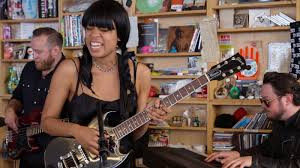
adiaAdia Victoria has a rough, raw voice that goes well with her simple, exposed guitar sound.  The blurb says her music “carries the singular perspective of a Southern black woman with a Seventh Day Adventist upbringing, who never felt like she’d fit in.”

She sings three song, mostly in a great, raspy voice.  For “Stuck in the South” she actually seems to be gritting her teeth as she sings: “I don’t know nothing ’bout Southern belles / but I can tell you something ’bout Southern hell.”  When the first verse ends, and her band kicks in, it adds such interesting textures.  A distorted bass and a lead guitar playing quietly distorted sounds.  This song is really captivating.

“And Then You Die” with its swirling sounds and keyboards has a very distinctly Nick Cave feel–gothic in the Southern sense of the word.  Indeed, the first verse is spoken in a delivery that would make Nick proud. This is no to say she cribbed from Cave but it would work very well as a companion song  I really like the way it builds, but the ending is so abrupt–I could have used some more verses.

After the second song the band heads away and Bob says “They’re all leaving you.”  She looks at them and growls, “Get off the stage!” to much laughter.

She sings the final song “Heathen” with just her on acoustic guitar.  It is a simple two chord song.  It’s less interesting than the others, but again, it’s the lyrics that stand out: “I guess that makes me a heathen, something lower than dirt / I hear them calling me heathen, ooh like they think it hurts.”

I’m curious to hear just what Adia would do with these songs when she’s not in this Tiny format.  I imagine she can be really powerful.

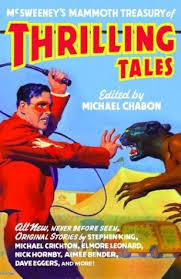
[READ: November 23, 2016] McSweeney’s Mammoth Treasury of Thrilling Tales

For some reason or another I have put off reading this McSweeney’s volume for many years.  This is technically McSweeney’s #10, although it was also released in this printing from a  major publisher. Sadly for me, my McSweeney’s subscription had expired sometime around here so I’ve never actually seen the “official” Volume 10 which I understand has the exact same content but a slightly different cover.

One of the reasons I’ve put off reading this was the small print and pulpy paper–I don’t like pulpy paper.  And it was pretty long, too.

But I think the big reason is that I don’t really like genre fiction.  But I think that’s the point of this issue.  To give people who read non-genre fiction some exposure to genre stuff.

Interestingly I think I’ve learned that I do enjoy some genre fiction after all.  And yet, a lot of the stories here really weren’t very genre-y.  Or very thrilling.  They seemed to have trappings of genre ideas–mystery, horror–but all the while remaining internal stories rather than action-packed.

Which is not to say I didn’t enjoy anything here. I enjoyed a bunch of the stories quite a bit, especially if I didn’t think of them as genre stories.  Although there were a couple of less than exiting stories here, too. (more…)

Read Full Post »

decomposSOUNDTRACK: COLIN STETSON & SARAH NEUFELD-Never Were the Way She Was [CST113] (2015).

colinThis is kind of a show offy disc because both Stetson and Neufeld proudly state:  “All songs performed live (no overdubs/loops).”  And so we get Neufeld ’s cycling violin and Stetson’s cycling saxophone playing seemingly endless series of trills and melodies.

Despite Neufeld’s excellence on the instrument, the violin does play a kind of support role to Stetson’s sax (mostly because the sax is louder and more obtrusive).  But while the disc does sound like a Stetson disc, the violin adds some really interesting textures.  The disc opens with “The sun roars into view” and the violin playing a fast two note melody as the sax seems to rise up from the initial static slowly overtaking the song.  About 2 minutes in, the violin plays some loud trills that remind you it’s there, but when the sax quiets a few seconds later, the repetitive violin picks up the melody.  About half way through the 7 minute song the violin soars.   Around five minutes the sax drops away to a single bass note repeated while the violin takes some fanciful runs.  A voice, (not sure whose, but I assume Sarah’s) then soars above the music.

“Won’t be a thing to become” begins with a slow bass melody (with audible sax clicks).  The violin plays a similar melody—slightly different to accentuate the notes.  It’s a shorter piece (only 3 and a half minutes) and these shorter pieces tend to explore quieter moments in an interesting way.  “In the vespers” starts with some fast violin notes once the sax kicks in, it adds a new sense of urgency to the melody.  It’s all very pretty.  The middle turns into rapid fire violin alternating with some noisy sax.  As the song winds down, the fast sax notes continue but a bit more quietly and they are accented by long slow bows of the violin.

“And still they move” is a slow piece.  It’s primarily violin with the occasional sax note adding low end.  It’s barely 3 minutes long.  “With the dark hug of time” stays slow but with some incredibly deep rumbling bass notes underneath the squeaky violin.  It’s a cool and menacing sound.  There is a quiet section near the end which resolves as a low rumble and Stetson’s unusual vocalizations through his sax.

“The rest of us” is a kind of bouncing,thumping song with some high tense violin strings running along it.   I love the part where Stetson “sings” the four note discerning riff and the violin plays along with it—it’s the highlight of the disc for me.  The 8 minute “Never were the way she was” opens with a low rumble and feedbacky sounds.  The melody comes in slowly with some incredibly low notes from the sax.  After about 6 minutes the sax drops out leaving just the bowed violin.  The last two minutes are a pretty, somewhat mournful violin section with the sax providing low bass notes.

Flight is only a minute and a half and it opens with a gentle static/rain and slow notes.

Given these two great musicians, I expected a bit more from this.  Either Neufeld really keeping up with Stetson (rather than accompanying him, which i what it feels like) or perhaps Stetson playing differently to accommodate someone else.  I suspect I have just been spoiled by their other works to expect something mind blowing.

[READ: February 15, 2016] Princess Decomposia and Count Spatula

I have really enjoyed Andi Watson’s work in the past.  I haven’t read much from him lately, but when I was really into graphic novels twenty years ago, he was an artist I would always gravitate towards.

This is his first book for First Second (he used to do a lot of his books for Oni Pres).  It’s a romance (like many of his stories) but with a twist.

The story is set in the underworld.  Princess Decomposia is the overworked daughter of King Wulfrun.  The kind is old and infirm and never gets out of bed.  Indeed, he won’t even eat, declaring that any food is too much for his poor stomach.  Of course, he reads Wellness Weekly to get new ideas for broths to eat–but he never likes them.

Since he never gets out of his bed that leaves the Princes to do all of his diplomatic work.

She meets with the lycanthrope delegation and almost has a disaster on her hands because her father has fired the chef.  But when they see uncooked meat the werewolves are quite pleased. (more…)

Read Full Post »

margoSOUNDTRACK: COLIN STETSON-New History Warfare Vol. 3: To See More Light [CST092] (2013).

stetson3 After the raucous wildness of Stetson’s Vol. 2, I wasn’t expecting the first song to be so gentle.  Justin Vernon sings (with many layers of processing) the rather pretty opening track.  When I first heard it I didn’t like it—I wanted Stetson to do Stetson and it seemed like the track was all voice (nad very different from Stetson).  But Stetson is there, and he plays his normal unceasing melodies behind the voices.  The track seems especially light since it is followed by the aggressive “Hunted” which prominently features Stetson’s “voice” (he has a microphone on his throat or something to pick up his grunts), making an almost growling noise as he plays.   It’s worth repeating that Stetson does circular breathing, is able to play nonstop and can somehow to play different things at the same time (no overdubs) as well as vocalize in interesting ways.  You can also hear him taking breaths while he platys—the breaths are part of the percussive nature of his playing. It’s pretty amazing.  About four minutes in, the tone changes a bit, becoming a little sharper which seems to make the growl even more pronounced.

“High Above A Grey Green Sea” is a quieter song with more vocalizing, but this one feels mournful and lonely as opposed to intense and scary.  “In Mirrors” opens with a deep breath as he plays a slow quiet 90 second song full of unexpected high notes.

“Brute” is appropriately named as it sounds like he is forcing the song out of his sax.  He places mics on his sax so you can hear the clacking of the keys.  And that is readily apparent on this song which is full of clacking and clicking and grunting all the way.  After about a minute, a discordant melody comes in and establishes a tone that plays or a few bars until Justin Vernon returns, but this time with growled words.  It’s a pretty intense and rather scary track—and nothing like Bon Iver at all.

“Among The Sef (Righteous II)” is a brighter song—higher notes played in a very fast style.  There are some vocalized melodies as well.  But the main song is a rolling series of high notes.  “Who The Waves Are Roaring For (Hunted II)” opens with an interesting vocalized melody—he is really using that technique a lot on this record.  It also featured Justin Vernon.  “To See More Light” opens with slow echoed notes as he begins to build a melody out of a four note string.  He starts adding more and more notes.  The melody grows faster and faster until about five minutes when it starts to really slow down—dramatically so.  Around 7 minutes in, the song slows to a crawl, almost drunkenly it seems.  And the song feels like it has ended.  But Stetson has more on his mind.  The notes are held longer and shift more slowly.   Then the song starts to build up again with a different 4-note pattern that adds some squeaky feedback notes and then a catchy melody.  All 15 minute of this song done nonstop, pretty impressive.

“What Are They Doing In Heaven Today?” begins with voices from Vernon (in a softer voice than we’ve come to expect) as he sings a verse before the sax comes in.  “Bed” features some loud key clacking a great rhythmic pattern and some quiet notes from both the sax and his voice.

The final song is “Part Of Me Apart From You.” It really emphasize his “singing” the melody in his throat while playing the repeating lines on the sax.   The song seems to emphasize the lower notes in this song even as he “sings” higher notes.

[READ:October 20, 2016] The Creepy Case Files of Margo Maloo

The title of this book implies that it is a series, and I rather hope it is.  I loved the premise of this book.  Most of the characters were interesting and the mystery behind Margo herself was really cool.

I didn’t love Weing’s drawing style, though.  It really never resonated with me at all, and at times I found it off-putting.  Which is a shame since the story is so fun.

Charles is moving to Echo City and he hates it.  His mom tries to convince him that big cities are fun.  Plus, his dad is fixing up a big old hotel and they get to live there for free (suspension of disbelief there).  There are already some people living there, too.

Charles’ dad is hip and cool (he is seen with Dead Kennedys and Black Flag logo tattoos).  All of the things that Charles finds creepy about the place, his dad calls “character.”   Like the giant chandelier that was in a closet.  Whatever his dad says, Charles’s comment is simply, “This place is definitely haunted.” (more…)

Read Full Post »

sardine6SOUNDTRACK0 Tonne Seize [CST bonus] (2016).

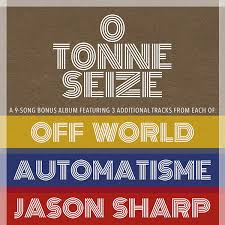
tonne0 Tonne Seize is a bonus compilation of three tracks each from Off World, Automatiste and Jason Sharp.  The collection is 41 minutes of music (not too shabby) and came with a pre-order of the three records (and is available on Soundcloud as well).

The first three songs are by Off World and the first two of those are remixes.  The original “Wonder Farm” is dominated by popping drum sounds.  There are some other sounds that go through the track but the base is mostly a kind of slow Asian melody.  The “Wonder Farm (Summer Crop)” mix removes those snaps and percussion entirely.  It focuses just on the music, which I have to say is far more enjoyable without the bangs.  “Primitive Streak” is a slow droning piece, while this compilation’s “Primitive Streak (Silver Mix)” doesn’t sound all that different.  It also removes the drums, and highlights the squeaky synth sounds and the overall drone tone.  It seems to emphasize and de-emphasize different instruments but otherwise sounds pretty similar. The final track  “Lost Meadow” is a pretty, delicate piano based piece with some twinkling of spacey synth notes.  It’s easily the prettiest piece.

The three Automatiste tracks do not quite follow the same naming convention as the actual disc, although the first track is called “Simultanéité 5.” It has slow beats and is basically two-note washes building on top of each other.  “Fragments continus” is a noisy piece with layered thudding drums (like heartbeats especially around the 1 minute mark) and drone noises that wash in and out.   About half way through what sounds like a melody appears amid the din, but it feels like it formed organically around the synths and drums which is pretty cool.   “Le Silence 3” opens with some jackhammer sounding drums and then almost easy listening synths.  The juxtaposition is interesting and by the end the song feels nicely dancey.

The final three songs are from Jason Sharp.  These three are quite different from his album because they really feature the saxophone to a larger degree.  “Plummeting Veins” opens with a heartbeat and some rumbling sax (that sounds like the opening of the Speed Racer TV show).   This track is under 2 minutes, the shortest he’s done by far, and the way the heartbeat speeds up as the sax plays some low rumbling notes is pretty cool. “Hear a Fading Cry” is a much longer number.  The heartbeat is quieter but the sax is much louder.  It sounds a lot like Colin Stetson in the low rumbling and noisy barking that the bass sax can produce.  It ends with some rather high-pitched squeaky sounds that I assume come from the sax, but which I can’t imagine coming from such a bass instrument.  It’s 7 minutes long although it takes almost 2 minutes to really get going.  And it swerves between loud and rumbling and then sort of menacing by the end,  “Ride On Into the Sweetening Dark” is perhaps the most conventional of Sharp’s songs.  It is a series of sax solo lines over a gentle tinkling backing drone.  Some of the solos lead to noisy wailing, but for the most part the line are pretty and jazzy.

It’s interesting how different these bonus tracks tend to be from the actual releases.  I enjoyed listening to these variants to see what else these artists are capable of.

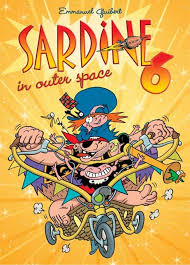
[READ: April 9, 2016] Sardine in Outer Space 6

Sardine is a children’s book published by First Second.  It was originally published in France (and in French) and was translated by Sasha Watson.  There are six Sardine books out.

The inner flap says “No Grownups Allowed (Unless they’re pirates or space adventurers).”  This is the final Sardine book.  And while I didn’t enjoy the first book much, by now I’m sorry to see the series end.

This book also has the fewest stories in it (only 9). (more…)

Read Full Post »

« Newer Posts - Older Posts »