Feeds:
Posts
Comments

Archive for the ‘Futility’ Category

SOUNDTRACK: ALICE RUSSELL-Tiny Desk Concert #288 (July 15, 2013).

I read the name Alice Russell and pictured some kind of folk artist.  Boy, was I surprised to see a woman with  bleached blonde hair, a leather jacket and a funny t-shirt.  And then her band started playing low groovy soulful music.

Turns out:

Russell is a classic soul-infused singer — close your eyes and it’s easy to hear a Southern drawl, but truth be told, she’s a Brit. American-style R&B from Britain has a long history dating back to the 1960s with Dusty Springfield and on up through 21st-century artists like Adele. As for Alice Russell, she’s been making great soul music for 10 years, and her arrangements on To Dust often include a dose of electronics.

I didn’t love her voice when the first song “To Dust” started.  But as soon as the chorus kicked in I was hooked–wow, what a great voice she has and with the full band playing behind her it sounded amazing (the sampled backing singers was a bit flat, but otherwise OK).  And by the second chorus, man she is belting out the song—it’s great.  The Adele comparisons are spot on.

Then she hit Bob’s gong at the end of the song and told us that it was an ode to the taxman.

“For a While” is a great big soul song.  The drummer gets some great sounds out of that one drum he has.  And they keys sound great too.  I love the middle part where there’s some seriously long pauses in between beats–they are all wonderfully in sync.  At the end of the song she yells “I didn’t gong!” and then makes a peculiar hand gesture about a turtle.

“Heartbreaker” has such a classic-sounding riff it’s hard to believe it’s a new song.  I like it a lot (although I don’t care for the chanted “when it falls, when it breaks” by the guys).

I have to agree with this blurb about her:

To Dust is Russell’s fifth album, but the hiatus that followed 2008’s Pot of Gold may be the reason too many people don’t yet know what she’s doing. This stuff is as powerful as the work of any American singer making soul music in the 21st century. If you haven’t heard of her yet, think of this as a well-overdue introduction.

[READ: May 15, 2016] I Kill the Mockingbird

I bought this book from the bookstore in Bethlehem, PA.  I don’t buy too many books these days but I saw this one in the PA authors section (and it was 20% off) and the title sounded intriguing.  So I grabbed it.

And I’m I glad I did. This book was outstanding.  I loved it from the first chapter and was thrilled that the ending was also very satisfying–not easy given the way the story was heading for a conclusion that could have gone in many different directions.

So what’s this about?  Well, there are three kids, Lucy Elena and Michael.  They are at the heart of the story.  I loved loved loved that these three were great friends who’d known each other forever.  And they were all big big big readers. Such an awesome start to a story. (more…)

Read Full Post »

index SOUNDTRACK: LYLE LOVETT-Tiny Desk Concert #257 (December 10, 2012).

lyleLyle Lovett was the first country musician I ever enjoyed.  And that came mostly from his Large Band recordings.  Lovett, while clearly of the country ilk, is a different kind of country—perhaps it’s because his country comes from Texas.  He is not afraid to bend genres and sing about whatever is on his mind (with a great, unique voice that eschews country flavors.

For this tiny desk it is just Lyle and a fiddle by Luke Bulla.

One of the things I’ve always liked about Lyle is his sense of humor. He doesn’t write funny songs, but some of his songs are funny.  And he himself is very funny–very deadpan–which he demonstrates amply here.

And, according to the blurb, he’s also rather humble

Lovett not only showed up at NPR Music’s offices without an entourage, but also booked his Tiny Desk Concert himself, emailing us out of the blue to express his interest. (Our reply: “We would only agree to have you perform a Tiny Desk Concert if it’s under any conceivable circumstance.”)

So it’s appropriate that Lovett would open this performance at the NPR Music offices by performing “Cowboy Man,” the first track on his 1986 debut: He may be a music-industry veteran, but in many ways, he’s starting over. With a fresh-faced accompanist in fiddler and backup singer Luke Bulla, Lovett gives a loose, engaging performance that feels like both an introduction and a victory lap.  He follows “Cowboy Man” with two songs from 1989’s Lyle Lovett and His Large Band, so this is no mere promotional appearance.

He’s charming right up front.  After the “Cowboy Man,” which sounds great, he looks up and laughs, “thank you very much,” with a sense of wonder.  He starts right into the second song and then stops and stop again and then says “I just about got it.”  He plays the melody for a few bars and the violin comes in and they play a few bars together and then, I gather, Lyle screwed up because he kind of smiles over at Luke and then stops playing and says “you sure you want to play that?”

Everyone laughs, some tension is broken.  And he looks up at everyone.

“This is…it’s kinda weird, right?”  Someone shouts out “Good weird!”  He laughs, “Good for sure, no question.”

Then he picks up a CD off the desk and says, “Just one of those chance meetings.”  He holds up the CD, “Iris Dement, she was just right here.”  To much laughter.  Stephen, who booked the show shouts, “We’ve got all those inventoried, so don’t even think about it.” Which cracks everyone up.

Then he tells a story about meeting Iris’ daughter  He asks them is they know about the Cayamo Folk Cruises.  No one replies so he says “It’s a popu….it’s not that popular.”  He says it is a festival on the water (it must have been one of the first music cruises).  He describes it and says its fun a deal.  And then stops and says “I don’t know why we’re talking about it.”  Then they remind him about Iris Dement’s daughter.

His story about her is very funny, told in a great deadpan way:  I saw this cool chick, about ten years old, leaning against the elevator.  Wearing skinny pants and a hat.  She looked at me in that skeptical way, and I said, so you in a band?  She rolled her eyes, gave me a sideways look.  She said, No.  So I said, Well, you oughta be.  She said, My mom’s in a band.  Who’s your mom?  She said Iris, just like that.  She was cool.

Finally starts playing “If You Were To Wake Up” again and jokes, “Pretend like this is going well.”  It is, the song is very pretty with gorgeous violin.

The final song is “Good Intentions”  He looks at Luke and says. “Play it just…do it however you want.”  Lyle starts the song,  “It’s a sunny day in Sunny…” and he stops and looks at Luke and says “Don’t mess me up anymore, alright?”  To more laughter.  It’s one of his great songs–jazzy and with swell lyrics.  There’s even a plucked violin solo.

I have loved Lyle and his Large Band, but I also like him in this small duet as well.

[READ: January 21, 2015] “Youngthing”

Boy I hated this story.

It is the story of a young Somali thug (nicknamed Youngthing) who has been conscripted into a the Shabaab-led insurgency.

He is sent on a mission for the insurgents.  He is meant to secure (steal) a house for the group.

He doesn’t pay attention, winds up going to wrong place and inadvertently “captures” the wrong house.

There is an innocent old man living there.  We see the story from the man’s point of view we see for half of the story; we see it from Youngthing’s point of view for the other half).  The old man doesn’t realize the trouble he is in right away.  He even manages to convinces Youngthing that everything will be okay. (more…)

Read Full Post »

2016-12-05-21-06-09SOUNDTRACK: LAURA MARLING-Tiny Desk Concert #230 (July 12, 2012).

I’d published these posts without Soundtracks while I was reading the calendars.  But I decided to add Tiny Desk Concerts to them when I realized that I’d love to post about all of the remaining 100 or shows and this was a good way to knock out 25 of them.

marlingSince I first heard this Tiny Desk Concert, I have become a huge fan of Laura Marling.  Her album Once I Was an Eagle is dynamite.  Her voice is unique and beautiful.  She sounds so mature and sophisticated in her singing style.  It is astonishing to learn that she was only 22 when she recorded this (and she looks it).

Her guitar playing is wonderful—nothing fancy but the sounds she gets out of the acoustic are magnificent.  And they work perfectly with her voice.  Her guitar is as warm as her voice is distant.  It’s a great combination and I could listen to her sing all day.

She plays two songs from her then current album A Creature I Don’t Know.  “Don’t Ask Me Why” and “Sophia” highlight some of those great moment when she sings along to the chords she strums.  And I love when she switches from delicate falsetto to almost spoken deep-voiced dismissals.   She’s so compelling.

“Once” is a song she hadn’t officially recorded yet. So consider this performance a premiere of sorts.  It did come out on Eagle.

She’s very quiet between songs–hard to tell if she’s nervous or just incredibly composed.  The blurb tells us that she “once held a series of unplugged and unrecorded concerts in a near-empty room, each consisting of a single song performed for two strangers at a time.”  (Seriously, click on that link and read about her amazing concert experience).

[READ: December 12, 2016] “Oneness Plus One”

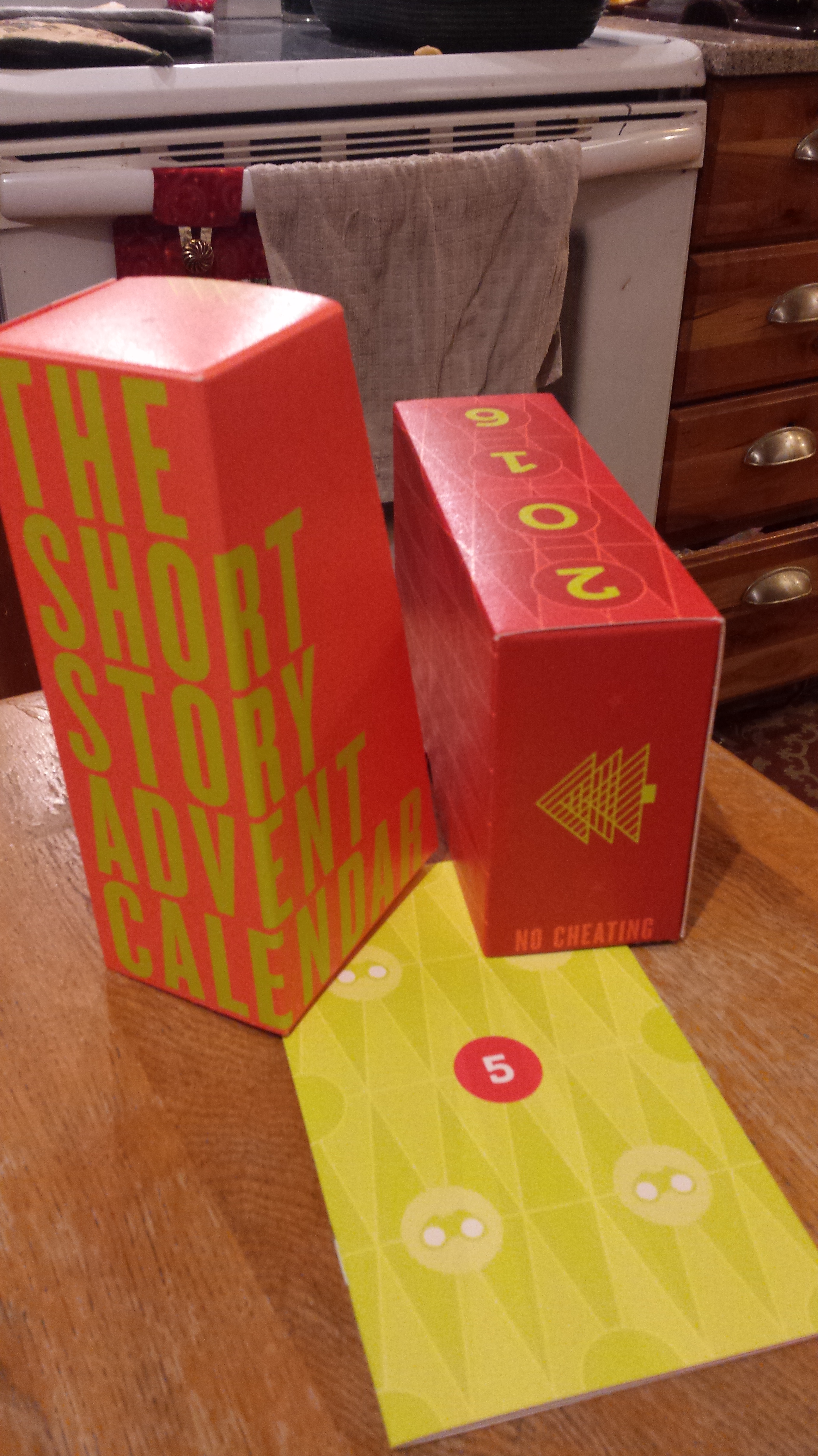
Near the end of November, I found out about The Short Story Advent Calendar.  Which is what exactly?  Well…

The Short Story Advent Calendar returns, not a moment too soon, to spice up your holidays with another collection of 24 stories that readers open one by one on the mornings leading up to Christmas.  This year’s stories once again come from some of your favourite writers across the continent—plus a couple of new crushes you haven’t met yet. Most of the stories have never appeared in a book before. Some have never been published, period.

I already had plans for what to post about in December, but since this arrived I’ve decided to post about every story on each day.

I’ve enjoyed Aimee bender’s stories in the past, although I don’t usually love them. She tends to look at things in a rather different way.

In this case, this story is all about a speck of dirt.  It had lived on the apartment floor for quite some time and had managed to avoid the broom.  It had not been attached to any of its kin and just wanted to be left alone.  So every day it huddled under the book case and tried not to be seen. (more…)

Read Full Post »

vamplove SOUNDTRACK: DO MAKE SAY THINK-You, You’re a History in Rust [CST045] (2007).

rustYou, You’re a History in Rust feels very different from DMST’s previous album.  That record felt kind of insular and tight.  This one feels expansive and experimental.  Like the first song which has multiple sections that feel completely unrelated and which are only connected by silence.  Or the fact that there are lyrics in a song, or even a fairly conventional song.

“Bound to Be That Way” This song opens in a peculiar way.  There’s a drum rhythm, that slowly builds and some piano chords are laid over the top. This goes on for about 45 seconds and then fades out.  And then a new melody–completely different–with horns and guitar peeks its way out. And then it too fades.  Then around 2 minutes a pretty guitar melody comes through followed by big crashing distorted drums. Eventually a new riff enters the song and it really starts grooving.  It’s fantastic, but it too is just a portion of a song which ends at around 4:30.  And then another new section comes in. Then acoustic guitar riff is counterpointed by some horns.  The final melody is the catchiest one of the bunch and it ends this strange song on a high.

But if that was strange, “A with Living” offers the biggest shock to fans of the band.  There are words in this song!  And they are sung! Words were co-written and sung by Alex Lukashevsky and the Great Lake Swimmers’ Tony Dekker.  Akron/Family also joins in doing “oohs” and “ahs.”  It opens with rumbling drums and then the singing begins.  The song has a conventional verse chorus verse structure with big horns.  It’s catchy (the vocals are great).   But it’s also a 9 minute song and at 4 and a half minutes the song moves way from the melody and enters a lengthy instrumental section with deep rumbling guitars.  The chorus of voices returns briefly before the mellow guitars lead us to the end.

“The Universe!” is one of my favorite DMST songs.  It rocks and rollicks.  It has two notes and then five bashing chords.  Repeated several times.  It’s one of the most straightforward songs they’ve done.  It has screaming guitar solos and a cool sliding bass. It’s also very raw sounding, with all kinds of noise floating around it.  And just like that, it’s gone.  Seguing into the quiet, “A Tender history in rust” which opens with processed guitars or keyboards, layered upon each other.   There are voices fighting through (saying all kinds of sounds—including laughing), before it switches to a pretty acoustic guitar riff.  It’s a delightfully conventional folk melody–another unusual addition for the band.

“Herstory of Glory” has another pretty acoustic guitar melody with some rattling drums (in the right ear).   Then there’s a rumbling bass and distant voices before more and more instruments add to the beautiful song–pianos, trumpets, claps.

“You, You’re Awesome,” is the shortest song on the disc at under 4 minutes.  It opens with slow electric guitars and a e-bowed solo.  After a minute or so, the rest of the band comes in with a slide guitar and banjo making a kind of sloppy folky romp.

“Executioner Blues” is another favorite.  Its 8 minutes long with some lovey guitar riffs and sounds.  It opens with some big guitars and a repeating riff.  A martial drums enters the song and keeps it moving until the next big section.  Horns repeat a similar melody and then a romping bass guitar takes over.  More instruments kick in making the song noisy and slightly distorted.  There’s piano trills, glockenspiel, electric guitar, noises and more.   and the instruments all go up the scale slowly for a few bars and then play a punch of staccato notes.  It’s rather dramatic.  After several permutations of this, they just keep going up and up the scale until the reach the top and then they gradually descend again.  The last minute is a series of quiet bass notes, as if everyone has totally come down from that intensity.

“In Mind” is a quiet disc closer.  A simple guitar melody, it is joined by banjo and trumpet.  Then some bass lines come in followed by a very distorted chorus singing “When you die, you’ll have to leave them behind/You should keep that in mind/When you keep that in mind, you’ll find a love as big as the sky.”  The disc ends with some quite banjo plucking.

This disc goes all over the place and really explores different avenues.

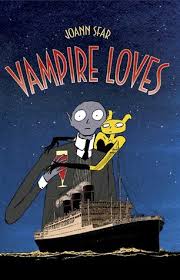
[READ: February 10, 2016] Vampire Loves

Joann Sfar created Little Vampire (and apparently about 100 other comics, some of which have been translated into English by Alexis Siegel and published by First Second).  Of the things I’ve read by him, (and there have been a few) I enjoyed this the most.  It seems like a lot of his books (like Little Vampire) are for kids, bu this one is absolutely for adults (there;’s curses in it and talk of sex and everything).

There are four stories in this book (I just learned that Sfar has written six in total, so maybe there will be more translated). After the third book in this collection, there’s a question as to whether or not Ferdinand, the vampire in this story is Little Vampire.  There’s a little drawing of Little Vampire which says that Ferdinand is him.  “But vampires don’t grow up!  No, but they can grow little.  Ferdinand was me before!  You mean that before being little you were grownup? Yes.”  So there’s that sorted.

“Could Cupid Care Less?” starts us off with Ferdinand the vampire’s woes.  His girlfriend, Lana, (a kind of plant creature) has just come back.  She cheated on him, but turns the conversation around to say that it is his fault–if he weren’t so jealous he never would have found out.  He freaks about this and she storms off again.  Furious, he sets off for his nightly feeding.  Ferdinand is a nice vampire–he takes little sips and only with one fang so it looks like mosquito.  While he is feeding on a woman, a red-haired vampire storms in and shows him how to do it right.  She is a vixen with an ankh necklace and after feeding, she comes on to Ferdinand hard.  She says she likes old, proper-looking vampires–not goth wannabes.  She brings him back to her house but before they can do anything, her sister walks in.  She’s also red-haired and has a shapely figure and actually has more in common with Ferdinand.  And that’s when we learn that the first woman’s name was Aspirine and her sister’s name is Ritaline (ha!).

All of the stories cut back and forth to different sections.  So we cut over the Lani who is staying with the Tree Man.  He is trying to hit on her, but she’s having nothing to do with it.

We return to Ferdinand where he just can’t get rid of Aspirine, even when he wants some alone time.  He can’t get a woman he wants and can’t get rid of the ones he doesn’t.

“Mortal Maidens on My Mind” opens with a Japanese woman meeting Ferdinand in Paris and falling for him.  They do all kinds of things together and she even writes home about him.  But Ferdinand had to return home and that was the end of that.

We cut back to the Tree Man who is still pining for Lani but is having no luck with her.

Back home, Ferdinand runs into the man who slept with Lani, Michael.  He also argues that it was Ferdinand’s fault that things wound up as they did.  He says that he was just looking for fun.  He didn’t want to hurt anyone, so why did Ferdinand have to get involved?  After a fight Ferdinand leaves to go to a bar where he tries to hook up with a woman but it all falls apart.

Then we cut to a man who has created a golem.  He wanted the golem to do bad things, but the golem is so kind that he couldn’t possible have made the him do the evil things he planned.

The postscript of the story contains a few notes on the protagonists of this story which sort of retroactively tries to make sense of the seemingly disparate story lines and lets us know how these characters belong here.

“Lonely Hearts Crossing” shows Ferdinand on a cruise.  But first we meet a woman named Alas, and her spiritual ghost-creature-friend named Sigh.  Alas is looking to score with the captain of the ship (who is the invisible man).

Meanwhile Lani is going shopping with Tree Man.  He has become her buddy and he can’t get out of it.

On the ship, Ferdinand runs into a werewolf who turns into a wolf when he sees a girl.  He only transforms back if he can kiss a girl.  But he is a such charming creature that he has no problems scoring–much to Ferdinand disgust and amazement.

The story turns very exciting as there are armed criminals on board and a shootout.  And by the end of the story Ferdinand is making out with the spirit ghost creature (who teaches him how to go through walls which turns them both kind of ghostly for a time).

“Moonstruck Post Mortem” ends the book with Ferdinand trying to pick someone else up.  His conscience is bothering him lately though so he manages to get rid of it.  The woman is interested in him but already had two boyfriends so she kind of blows him off.

The scenes shifts to Ferdinand at the police station.  He’s not n any trouble.  in fact, the police would like him to help with their investigation of suspicious murders.  Since he’s nocturnal they figure he can look at night.  That’s how police work, right?

Ferdinand decides to go out drinking again. He meets a woman he likes, but she seems disinterested. So he quickly moves on and finds a  creature who is into him.  But he is quickly utterly disgusted by her.  And the first woman just came back. Oh no!

Frustrated, he leaves and goes to see the dentist–because the dentist has some secret information about the investigation. But before he will give the information to Ferdinand, he needs to give him a compete check up.  By the end, he tells Ferdinand not to get involved. And as the story progresses and the criminal is found…  Ferdinand is shot and thrown into a hole!  Can Ferdinand’s conscience come to the rescue?

The whole story concludes with Ferdinand going back to find Ritaline (but of course finding Aspirine instead).  She offers to let him bite her–but when one vampire bites another it’s “catastrophe.”

It’s a totally nuts book but very funny.  Another fun book in my #10yearsof01 February.

I think the reason I don’t enjoy the Sfar books as much as I might is because they are printed so small.  I don’t know what the original size was, but the format makes everything feel really squished.  This makes the dialogue hard to read and means you can’t see all of the details that well.  I think if these books were bigger it would really help their appeal.

Read Full Post »

little vamopSOUNDTRACK: DO MAKE SAY THINK-Winter Hymn Country Hymn Secret Hymn [CST025] (2003).

hymnThis album, at least according to the liner notes, seems to be broken into three sections, as the title suggests.  Although there is no explicit attachment of a particular hymn to the songs, there is a gap between the listings, giving each section three songs.

“Federica” is 9 minutes long and opens with a very lovely slow guitar melody.  Then the drums crash in and the song doesn’t change so much as intensify.  At around 3 minutes the song pauses before a loping bass adds to the mixture and the songs gets bigger and bigger, and even a little funkier. When the distorted guitar comes in at 5 minutes, it’s hard to believe it’s basically the same song all along.  It builds to a cacophonous explosion and then settles down again. A new style emerges—slow and plaintive with mildly distorted guitars. But they can’t stay muted for long. The distorted guitar comes back and forces the song forward with some distorted bass and other noises until it resumes a reprise of the original guitar melody.

“War on Want” is only 2 minutes long.  It is mostly strings that seemed to be looped in some way.  There haven’t been a lot of strings in DMST records so far, so this is new.  They drift slightly out of tune as they introduce the 3rd song “Auberge le Mouton Noir.”  The song opens with some crackling noises and some pretty, slow chords. which resolve into a simple riff.  The song builds, growing faster with a great propulsive beat. I like that it switches back and forth between the chords and the guitar riff.  Is that a slightly out of tune bass guitar before the ringing guitar solo takes over?

The second section begins with “Outer Inner & Secret.”  It’s ten minutes long and opens with an interesting bass line and guitar motif. It’s quiet and insistent, kind of dreamy. After exploring some quieter avenues some feedback squalls float in and out.  About 4 minutes in the song builds, but it quickly recedes only to build again and recede once more.  For the third build the drums kick in and the song launches in a louder direction for a few measures.  But just as you think it’s going to take off for a while, it settles down and then comes back to a quitter style with martial beat and keyboards.   The remainder of the song switches between loud building guitarists and quitter moments with just bass and drums.  For the last-minute or so horns burst forth and then the music drops away except for the horns, which end the song with a plaintive melody.

The 4 minute “107 Reasons Why” is a slow horn & guitar melody song.  There’s some interesting sounds that play over the top of the delicate melody, including a nice horn line.

“Ontario Plates” is 7 minutes long and opens with very jazzy drums and bass–it’s rather noir with a quiet saxophone.   Once the sax plays over the top it just increases the jazziness. DMST has always had a jazz feel but this one really pushes it about as far as the band has gone. The drums start to come to the fore and I love the way about 3 minutes in the drums morph into something else and the song almost imperceptibly switches into a new song entirely. The bass takes over and a new riff enters the piece. About 5 minutes in, the song switches to a very bright and uplifting motif–big horns, bright guitars and a catchy riff.  It’s quite lovely.

The third section opens with “Horns of a Rabbit.”  This song introduces big drums and kind of electronic bass sound.  About two minutes in the noise beaks through—bashing guitars and intense drums.  It even includes a pretty wild guitar solo. I like how the song (which is only 4 minutes (kind of disintegrates on itself before merging into the two-minute “It’s Gonna Rain,” which may indeed be simply the sound of rain on a tin roof.

The final track, the 7 minute “Hooray! Hooray! Hooray!” opens with some synths sounds—unlike anything else on the record.  And then a pretty guitar intro mixes with some lovely horns.  It’s probably the most delicate thing they have created.  After 3 minutes the occasional guitar swirls grow louder and it grinds it way to a happy and uplifting keyboard riff.   Then a bunch of surprises for DMST: A slide guitar plays a little solo and then, most surprisingly, a chorus of voices sings the melody.  The ending slide guitar sounds like it could come from Mercury Rev or The Flaming Lips.  If you listen closely, you can hear people shouting Hooray! in the background.

This album feels a bit more claustrophobic than their others, and while I like pretty much all of the songs, I really like their other albums more.

[READ: December 20, 2015] Little Vampire

Joann Sfar is responsible for the Sardine comics which I kind of liked but mostly didn’t (I think that may have been because of the uglyish drawing style).  But here Sfar has another series called Little Vampire.  (I also just learned that Joann Sfar is a man, so apologies earlier, but I think that’s an understandable mistake).

This book collects three stories into one volume, all translated by Alexis Siegel.  Each story is about 30 pages.  And they follow the “life” of little vampire.  He is a sweet boy with a bald head, big eyes and pointy ears.  He lives in a castle with call all kinds of undead people including his dog Phantomato (he is bright red and rather devious) and several other monsters.

“Little Vampire Goes to School” introduces us to the home where the monsters live.  As the undead are partying, Little Vampire comes down and says he wants to go to school.  The others are horrified, but he won’t give up the idea. He says he’s bored and wants to meet other children (most of the undead are adults).

Little Vampire’s mother (who is strangely pretty in her weird design) and the other elders allow him to go to school, but he can only go at night when it is closed.  So the undead come and all attend school with him.  The class is taught by The Captain of the Dead who is an old dead pirate. (more…)

Read Full Post »

aboveSOUNDTRACK: DO MAKE SAY THINK-& Yet & Yet [CST020] (2002).

DmstandyetandyetAfter the previous album, keyboardist Jason McKenzie departed the band.  I’m not entirely sure how this impacted the band, but this album is warmer and a little more delicate feeling.  It’s also their first album that was recorded all in the same place (in band member Justin Small’s house).

The disc opens with static and effects before a jazzy drumbeat comes in.   “Clasic Noodlanding” is mellow with a complex (for them) riff on the guitar and nice washes of keyboards.  It is primarily atmospheric until about two minutes in when it suddenly changes with the introduction of a great bass line.  And then this atmospheric song turns really catchy. The five and a half-minutes feel too short in this song.

“End of Music” opens with jazzy drums and keyboards.  It’s a slow piece that stretches to nearly 7 minutes.  About half way through the song, the drums come crashing in and a brighter, noisier melody takes over.  This end section is really catchy with some great chords and excellent drumming.

“White Light Of” opens with a cool slow bass line and drum pattern.  As the song grows in complexity I like the new bass rumble that is added and the way the guitar lines seem to intertwine. About half way through horns get added to the mix, quietly at first and then they slowly take over the song. About five minutes in the song comes to abrupt halt with some interesting echoed effects on the drums. It resumes again with a stranger version of the song—it feels unsettled and really interesting, with a nice riff interspersed with one that feels off somewhat.

“Chinatown” opens unlike any DMST song.  The bass sounds electronic and skittery with some interesting keyboard sounds over the top (it actually sounds a bit like later period Radiohead).  The song is slow and moody for all of its 5 and half minutes with keyboard washes and skittery guitars.  There are quotes thrown in throughout the song but I can’t tell what they are saying.  This song was features in the film Syriana.

“Reitschule” is one of two songs that are 9 minutes long. It opens with a slow meandering guitar line interspersed with another guitar playing an interesting counterpoint.  A cool bassline comes in around 2:30 which takes the song in a new direction.  Horns propel the song along until about 4 minutes when a jangly guitar takes over the song. It builds with some abrasive guitar chords until everything washes away except the bass.  And then it rebuilds as something else.  Distant horns play in the back as the guitars play overlapping lines.  It’s an epic song that demonstrates how much this band can do.

“Soul and Onward” has a pretty conventional melody line. It’s warm and friendly It also features wordless vocals by Tamara Williamson. I love the little tiny guitar lick that works as a bridge between the two sections.  This is my favorite song on this record.

“Anything for Now” is the other 9 minute song. It is slow and pastoral to start with a beautiful multi-guitar piece with gentle drums. At around 4:30 all the instrument vanish except for a single organ note. It plays for a bout a minute and it seems like the disc will end that way but then the chords build up again from the drone.  An acoustic guitar lick begins around 7 minutes in and runs through the end of the song.

Overall this album is more mellow than their previous discs, and there are some amazingly beautiful sections of music on this album.

[READ: February 8, 2016] Above the Dreamless Dead

I’m continuing with books that I wouldn’t normally read, to celebrate First Second’s #10yearsof01 challenge and to read something out of my comfort range.

This is a collection of poetry about World War I, written before during and just after the war.  Each of the poems is illustrated by a different contemporary artist.

As you can imagine, the book is pretty gloomy.  But the poetry is pretty spectacular and the illustrations were really interesting.  Obviously this book is not going to be a happy one.  But some of the artists do add a more positive spin on the poems (while some are just brutally violent as well). (more…)

Read Full Post »

july 28SOUNDTRACK: THE BEATLES-Sgt. Pepper’s Lonely Heart’s Club Band (1967).

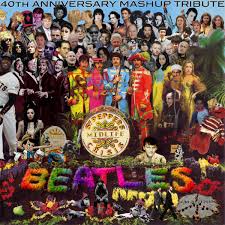
pepper A few years ago I started writing about Beatles records–a thankless task if ever there was.  I got held up at Sgt Pepper, so it seems fitting to get back to the Beatles after enjoying the cover album from the Flaming Lips.

I have long thought that this was my favorite Beatles album–it was the first one I bought on vinyl, after all.  But when I was writing about the records last time, I discovered that I like Revolver a little better.  I’m surprised by this especially since I really enjoy all of the amazing musical advances the band made with this album (and the psychedelics too).  I mean, to pretend to be another band, to add a full orchestra–the band had pretty much given up touring at this point–and to have added so many interesting things to this record is really amazing.  And I don’t mean to say that I dislike the record, just that I think Revolver is better.

The title opening is great with the horns and sound effects (just so you know, Paul’s voice is all in the right channel, something that sounds really weird if you only listen to the left!).  In fact the whole album has all kinds of fun stereo manipulations.

“With a Little Help from My Friends” has so many great vocal parts and I love the bass–slow and simple but playing unexpectedly high notes.  This apparently also means that Ringo is Billy Shears.  Speaking of the concept, this album doesn’t really work as a concept album–I mean, overall, what’s the “message”?  There are some songs about love (the lonely hearts club) but there’s also some songs that are not at all about love.  And how does say “She’s Leaving Home” connect to “Mr. Kite?”  It doesn’t really matter, I suppose.

“Lucy in the Sky with Diamonds” is just great–everything about it from the harpsichord to the weirdo processed vocals and the big drums for the chorus (the chorus could actually be a bit bigger) still sound tremendous.  “Getting Better” sounds very old school Beatles to me–I like it but it doesn’t really fit the psychedelic nature of the album.  The harmonies are great (“it can’t no worse”).  It’s also a strangely simply love song I believe, even though it seems like it’s about life in general.  On a sour note, what’s with the Beatles beating their women?

“Fixing a Hole” has a great melody line and instrumentation.  I have always liked “She’s Leaving Home,” I think it’s pretty and the lyrics are great.  But I suddenly find it to be a bit too slow and string-heavy–guess I’m just a rocker at heart?  Interestingly there’s no other Beatles playing instruments on the song.  “Being for the Benefit of Mr. Kite!” is all sung in the right speaker. It’s a wonderfully weird song with great instrumentation.

I’m constantly surprised by “Within You Without You” just because it is completely Indian–no Beatle plays on the song at all, expect for George.  There are also uncredited Indian musicians on swarmandal, dilruba, tabla, and tambura–imagine that there are Indian musicians who can actually say they played on Sgt Pepper, and be telling the truth!  I feel like with a 5 minute song (twice the length of any other song on the disc, except the closing) that Indian music should have become much more popular (or maybe people just skipped the track–it was track 1 on side 2 after all.

The delightfully silly, but somehow profound “When I’m 64”–vocals sped up a bit and bouncing from left to right ear seems like a trifle but is still fun.  “Lovely Rita” is a fun jaunty song.  I like that he thought she was cute dressed as a military man.  Interestingly, she pays for dinner.  “Good Morning” I feel is more known for the chorus, while the verses are a bit obscure.  Although it’s interesting to hear the kind of fast verses that Lennon sings (and that scorching guitar solo (from Paul!) is pretty cool).

I’m intrigued that “A Day in the Life” comes after the song that seems like it should end the record (the Pepper reprise).  “A Day in the Life” really does get better with each listen–the closer you listen, the better it gets, too.  It’s a great way to end any disc.

So yes this album is great and incredibly influential.  I love listening to it.  The biggest surprise to me is that the album is only 39 minutes.

Thirty-nine minutes!

[READ: January 24, 2015] “Last Meal at Whole Foods”

This story is set in a Whole Foods (duh). The narrator is eating dinner with his poor mother.  He says that she is till young which is the tragedy, since she is close to death.  They had a doctor’s appointment earlier which was meant to be “a formality.”

While they are eating he tells us that she has maintained an appetite even though she was always just a nibbler.  But as of late her apatite has been voracious.

The man then reflects back on the location of the Whole Foods.  Twenty years ago this street was apart of a dicey neighborhood.  The only building was the Goodwill.  The Goodwill that he and his other shopped at when they first moved to the area.

On their first outing there (his mother was so excited to get to building) she bought him a football jersey–even though he didn’t follow the local team. But the jersey proved to be a very cool item and the boys all talked to him about football because he wore it–there was even a rumor that he was related to the name of the back of his shirt. (more…)

Read Full Post »

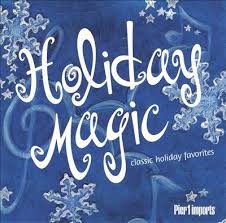
ballopeenSOUNDTRACK: PIER 1 IMPORTS: Holiday Magic: classic holiday favorites (2001).

pier1 This collection is a mixed bag for me.  I love a bunch of the songs but dislike a number of others.  It starts out poor but picks up by the end.

EARTHA KITT-“Santa Baby” I hate this song in general, and dislike this version (but less than some others).  NANCY WILSON-“What Are You Doing New Year’s Eve?” a slower version than I like for this song, but it’s fine.  LOU RAWLS-“Have Yourself a Merry Little Christmas” I’m mixed about this version as I don’t really like his delivery so much.  BENNY GOODMAN-“Winter Weather” I like Benny although I don’t always love his vocalists. Peggy Lee is cool, but I’m less thrilled by Art Lund’s verse.  ELLA FITZGERALD-“Frosty the Snowman” The first verse is so unexpected (like a prelude that I’ve never heard anywhere else). I like Ella’s version quite a lot.  NAT “KING” COLE-“All I Want for Christmas (Is My Two Front Teeth)” Because Nat is awesome, I like his version of this song (which I dislike in general), but Nat can make anything sound good.

BING CROSBY-“Winter Wonderland” Now we’re talking.  Bing makes everything alright.  JOHNNY MERCER AND THE PIED PIPERS-“Santa Claus is Comin’ to Town” This is a weird version that I’m not really familiar with.  They add some weird verses and call and response.  Like the opening “fat man’s coming fat mans coming” (which sounds like it was on a Bugs Bunny cartoon and is pretty naughty in my book).  I especially enjoy the way the lyrics gets even more threatening as the song goes on.  HOLLY COLE TRIO-“I’d Like to Hitch a Ride with Santa Claus” I’ve never really thought too much about this song but I like it.  DEAN MARTIN-“I’ve Got My Love to Keep Me Warm” a classic version, excellent.  LENA HORNE-“Jingle All the Way” She has fun with this and plays around with conventions, I think it’s cool.  PEGGY LEE-“Happy Holiday” Peggy is back.  I like it even if it is a little stiff.

So overall, this is a pretty solid collection of “classic” songs.  I would have picked a few different versions, but it’s solid.

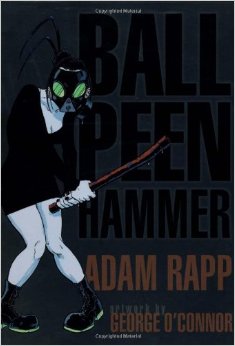
[READ: December 7, 2014] Ball Peen Hammer

My experience with First Second books has been very positive.  The stories tend to focus on people who may not ft in, and who may not get a voice in every day society.  They’re usually pretty satisfying and/or positive.  Either that or they were children’s books that were largely funny.

So imagine my surprise upon reading Ball Peen Hammer and discovering a violent, nasty story about a dystopian future in which there is really no hope of redemption for anyone.  It is dark dark dark.

The story is pretty simple (although it is told in a convoluted way so you don’t really know what’s going on for much of the book). (more…)

Read Full Post »

holoSOUNDTRACK: SIGUR RÓS-() (2003).
rosAfter a staggeringly successful tour, Sigur Rós took some time off. They returned about four years after their successful album with ().  I like to think they were trying to make it easier for English speakers to not have to pronounce their Icelandic words, but perhaps they were just being more difficult.  For they have made an album title that is hard to search for and hard to say.  To make it worse, there are no song titles on the record either.  (Although the band did have I guess unofficial titles for them):

  • 1.”-” (“Vaka”) 6:38
  • 2.”-” (“Fyrsta”) 7:33
  • 3.”-” (“Samskeyti”) 6:33
  • 4.”-” (“Njósnavélin”) 6:57
  • 5. “-” (“Álafoss”) 9:57
  • 6. “-” (“E-Bow”) 8:48
  • 7. “-” (“Dauðalagið”) 12:52
  • 8. “-” (“Popplagið”) 11:43

While looking for these song tracks, I learned that a lot of people think this album is mopey and depressing.  And I couldn’t disagree more.  I find the songs to be wonderful builders of drama.  Track 1 opens with lovely piano and vocals.  It’s a pretty melody that is punctuated with odd, squeaky voices.   Track 2 is slower, with a nice guitar melody instead of pianos. Track 3 opens with organs and more lovely pianos.  The pianos are slow which I usually don’t like, but there’s something about the simplicity and solitariness of their pianos that I find really captivating.  I love that it is repetitive and building, edging towards a dramatic conclusion.  Track 4 has low drumming that propels the echoing song.

Each of these 4 songs is around 7 minutes long.  And while they are not vastly different from Ágætis byrjun, they show the band experimenting within the form.  Also, Ágætis byrjun contained several different styles mixed between their epics, whereas this album is all epic.

After the 4th song there is 30 seconds of silence.  Which signifies something of a change for the second half of the album.

Track 5 is the slowest, saddest music on the album.  But it builds slowly, growing out of that sadness with a cathartic explosion at the end.  Track 6 opens with very loud drums (the percussion is spectacular on this album) and drones.  It builds and builds with more catharsis at the end.  Track 7 is the 12 minute epic that opens with organs and washes of guitars.  The opening is slow but you get the sense that it is building towards something–there is tension in the music, especially when it shifts to a minor key around 3:30.  It takes over 4 minutes to get to the chorus.  And then the song repeats and builds again.  The end is an unholy racket until Jonsi is left singing by himself.  It’s incredibly satisfying.  The final track is 11 minutes long and opens with an upbeat guitar sound.  It’s a good song and then the drums kick in around 6:20 and the song gets even better.

So yes, this is a long album full of long songs.  And none of it is in English.  Not exactly a pop seller, and yet there is something magical about the music on it.

[READ: October 10, 2013] A Hologram for the King

I had been putting off reading this book because I didn’t really like or get the title.  Sarah laughed at me when I said this, because the title is very explicit, but I honestly didn’t know what it was supposed to mean.  My mind reeled with the metaphorical possibilities.  So imagine my surprise when the title is indeed very literal.

The book is about a man named Alan Clay who is an IT sales person.  He will be doing a presentation–which will include an interactive hologram–to Saudi Arabia’s King Abdullah.  So, a hologram for the king.  Simple.

And indeed, the story is quite simple.  I had read an excerpt from it in McSweeney’s 38 and enjoyed it quite a bit–not realizing that it was from this book, of course.  The excerpt has been changed since then but most of the elements have been incorporated.  About the excerpt I said:

a man named Alan is on a flight to Saudi Arabia for business.  We learn through the course of the chapter that he has very little money left, that he is divorced and that his daughter is now fighting with her mother (his ex-wife).  He composes letters in his head to her trying to figure out the best way to placate the scenario.  But he also knows how important this deal is, both for him and for his daughter who needs money for school.  So he tries to put everything out of his mind so he can sleep.  There’s a lot of wonderful details in this chapter.

None of those details have changed, except we don’t really see as much of the flight.

Alan has landed in Saudi Arabia after not sleeping for 60 hours.  He misses the shuttle bust to KAEC (pronounce cake) the King Abdullah Economic Center.  So he calls for a taxi.  Instead, he gets a young man name Yousef who drives him the 60 or so miles to KAEC.  Along the way, Alan and Yousef talk a lot and they hit it off. Yousef has been to America (he studied for a year there) so he understands Americans.  He also has no hope for the future of the KAEC.  Alan likes Yousef and is dismayed by his attitude about KAEC, but finds him to be enjoyable company (Yousef enjoys jokes and, as a salesman, Alan is full of them). (more…)

Read Full Post »

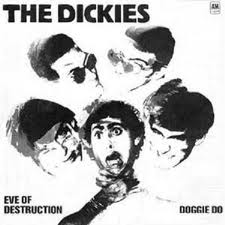
peach6SOUNDTRACK: THE DICKIES-“Eve of Destruction” (1979).

dickiesI didn’t know the original of this song until I listened to it just now (man it is depressing).  I have known this Dickies cover since the 90s, which speeds up the original almost twice as fast and makes the lyrics pretty much inaudible (which makes it less depressing).

The Dickies have done a lot of great covers, and while this one was never one of my favorites (I’m a “Town without Pity” and “Hair” man, myself), I always enjoyed the “over and over and over again my friend” part (and the squeaky guitars).   And now after listening to the original, I really prefer the cover.

[READ: April 2013] Lucky Peach Issue 6

I haven’t been reviewing Lucky Peach issues in their entirety because they are mostly about food and cooking and recipes and I don’t really have anything to say about that (I enjoy the articles a lot, but I don’t need to comment on them).

But I wanted to bring special attention to this issue, which is all about the Apocalypse.  And there’s a couple reasons for that.  Zombies are huge, that Mayan end of the world business was all fun, and of course everyone seems to think that Obama will cause the end of the world.  But on a more serous level, global warming is unchecked and no one seems to care about the environment at all, and with the weather being as crazy as it is, all bets are off as to what our world will look like even ten years from now.  So why not read a magazine that has recipes for all kinds of things that might still be around in a decade.

The first half of the magazine is all about preparing for the apocalypse.  There’s a degree of tongue in cheekedness in it but it is entirely sincere: there’s plenty of recipes for canning, there’s information about seed savers and a fascinating article about Seafarming, which I seriously hope takes off, as it sounds like it could be a real solution.  There’s some fascinating information about Shelf Life and even a recipe entitled “pollution” which looks like a polluted sea but seems very expensive to make.  I also really enjoyed the brief story about the couple who won a honeymoon in a bomb shelter for two weeks (compete with all of the canned food they could eat–oh, the Fifties). (more…)

Read Full Post »

« Newer Posts - Older Posts »