Feeds:
Posts
Comments

Archive for the ‘Funny (ha ha)’ Category

manner SOUNDTRACK: BEN GIBBARD-Tiny Desk Concert #251 (November 19, 2012).

benBen Gibbard is the voice of Death Cab for Cutie.  His voice is instantly recognizable and his melodies are surprisingly catchy.

This Tiny Desk Concert (they say it’s number 250, but I count 251) is just him and his acoustic guitar.  I didn’t know he did solo work, but apparently he does (in addition to being in The Postal Service and All-Time Quarterback).

Gibbard just released a solo album, Former Lives, which he’s said is a repository for material that didn’t work as Death Cab for Cutie songs; from that record, only “Teardrop Windows” pops up in his Tiny Desk Concert. For the rest, he draws from Death Cab’s most recent album (“St. Peter’s Cathedral,” from Codes and Keys) and, of all places, last year’s Arthur soundtrack (“When the Sun Goes Down on Your Street”).

As mentioned he plays three songs and his voice is so warm and familiar I felt like I knew these songs even if I didn’t.

I knew “St. Peter’s Cathedral.” It is a lovely song with very little in the way of chord changes.  But the melody is gentle and pretty.  And the song appears to be entirely about this church.  Which is interesting because the second song is also about a building in Seattle.  “Teardrop Windows” is a surprisingly sad song about an inanimate object.  It’s written from the building’s point of view as he mourns that no one uses him anymore.  And such beautiful lyrics too:

Once built in boast as the tallest on the coast he was once the city’s only toast / In old postcards was positioned as the star, he was looked up to with fond regard / But in 1962 the Needle made its big debut and everybody forgot what it outgrew

The final song “When the Sun Goes Down on Your Street” was indeed for the Russel Brand movie Arthur.  Somehow I can’t picture those two together.  It’s a lovely song, too.

I prefer Gibbard’s more upbeat and fleshed out music, but it’s great to hear him stripped down as well.

[READ: January 2017] “My Writing Education: A Time Line,” “The Bravery of E.L. Doctorow,” “Remembering Updike,” and “Offloading for Mrs. Schwartz” 

I had been planning to have my entire month of February dedicated to children’s books.  I have a whole bunch that I read last year and never had an opportunity to post them.  So I thought why not make February all about children’s books.  But there is just too much bullshit going on in our country right now–so much hatred and ugliness–that I felt like I had to get this post full of good vibes out there before I fall completely into bad feelings myself. It;s important to show that adults can be kind and loving, despite what our leaders demonstrate.  Fortunately most children’s books are all about that too, so the them holds for February.

George Saunders is a wonderful writer, but he is also a very kind human being.  Despite his oftentimes funny, sarcastic humor, he is a great humanitarian and is always very generous with praise where it is warranted.

The other day I mentioned an interview with Saunders at the New York Times.  Amid a lot of talk with and about Saunders, there is this gem:

Junot Díaz described the Saunders’s effect to me this way: “There’s no one who has a better eye for the absurd and dehumanizing parameters of our current culture of capital. But then the other side is how the cool rigor of his fiction is counterbalanced by this enormous compassion. Just how capacious his moral vision is sometimes gets lost, because few people cut as hard or deep as Saunders does.”

These first three pieces are all examples of his love and respect for other writers–both for their skill and for their generosity.

“My Writing Education: A Time Line”

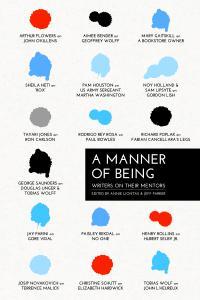
“My Writing Education” comes from a book called A Manner of Being: Writers on Their Mentors.  Saunders’ mentor was Tobias Wolff.  And for this essay, his admiration takes the form of a diary.  (more…)

Read Full Post »

2008_03_24-400SOUNDTRACK: MILAGRES-Tiny Desk Concert #198 (February 27, 2012).

milagresI hadn’t heard of Milagres before this set.  Bob mentions how they are a band with many layers of music–practically a wall of sound.

The big sound of Milagres is built from small, simple elements: the boom of the kick drum, the clack of the claves, the repetitive tap-tap-tapping of a piano. This is a band of selective minimalism — which, in the end, somehow gets me thinking about the big sounds Phil Spector made. It’s all about attention to detail, and Milagres is a band that cares.

And yet for this Tiny Desk:

Frankly, I worried more when the band’s list of gear didn’t include a single amp and its members said they didn’t need to use our keyboard. They came armed with a red toy piano, an autoharp, a shaker egg, a melodica, a glockenspiel, a few acoustic guitars and not much else.

But in the end, that same attention to detail made this a great Tiny Desk Concert. In spite of the tiny sound, the songs were big and strong — delicately built, yet sturdy enough for the emotive sounds of Kyle Wilson’s voice.

Wilson’s voice is kind of  loud whisper, but the band, with all of their funny gear sounds really full and the elements come together very nicely.

“Hard to Stay” starts out nicely, but when the band adds the lovely “ooohs” during the first verse it sounds amazing.  And you can hear all of the instruments perfectly balanced—the authoharp, the melodica and then the xylophone.  Couple that with some lovely lyrics

All the leaves are glowing green / as the seasons rage all the birds seem to sing in the key of A

“Halfway” opens with a toy piano—which doesn’t sound cheesy.  Wilson hits lots of delicate falsetto notes that work perfectly with the piano and xylophone.  The chorus “Halfway, halfway, I could be halfway” is all sung in gentle falsetto.  And then add more of those beautiful ooohs during the second verse.  I also really like at the end when he keeps playing his chords higher and higher up the neck–getting kind of noisy–until it all abruptly stops

“Glowing Mouth” opens with shaker and melodica and again, the sound is nice not cheesy.  he sings wonderful falsetto “haaas” in the middle and the autoharp returns with the great sound.   He play a simple but pretty riff on the acoustic guitar as the song ends (its fun to watch his fingers playing it close up).

The band really won me over with their sound here and now I’m very curious to hear what they’re “supposed” to sound like.

[READ: January 27, 2017] Y’all Torture Me Home”

I am astonished that this essay had to be written at all back in 2008.  But I am even more upset that now, 8 years later, issues of torture are being considered again.  Really the only word that should be coming up regularly is impeachment.

When I was in college I wrote a humorous piece for my college newspaper that was all about Deconstruction.  There had been a debate going back and forth about it (seriously), with the people who were opposed to it saying that it led to a belief that nothing had meaning–which could cause a spiritual crisis.  (Ah, the 90s).

Since no one was winning this argument, I jumped in with my piece which was all about “de construction” at “da University” (our school was expanding and there was orange construction fencing everywhere).  It was hailed and enjoyed (at least by one of the professors in the philosophy department).

I bring this up only because Saunders takes a similar mis-understanding approach in the essay, which, sadly, is timely once again.  His piece begins:

I was overjoyed that Congress refused to override President Bush’s veto of a bill outlawing the washboarding of prisoners, a technique that some have described as torture—a ridiculous notion if I’ve ever heard one.

[After you unpack the negatives, the ruling was that “washboarding” can continue]

And thus begins Saunders detailed account of his own experience with being washboarded. (more…)

Read Full Post »

rand SOUNDTRACKPISTOLERA-Tiny Desk Concert #199  (March 1 2012).

pistolPistolera is the brain child of a woman from Brooklyn who wanted to showcase music made in Mexico. [RESIST THE WALL].

The motivation was a longing for Mexican music on the part of the band’s principal songwriter and lead vocalist, Sandra Velasquez, a California native who was studying music in New York. Her solution: to form a band that played the music of her youth.

Sandra plays acoustic guitar and sings.   She is accompanied by a five string bass, accordion, electric guitar and percussion.  She has a delicate voice and sings everything in Spanish.

“Polvo” is pretty song.  She plays a lovely finger-picked guitar while everyone else adds flourishes to flesh out the song–never overpowering her voice or guitar.  The song has a louder moment with some oh oh oh ohs before growing quiet again.  It ends as prettily as it began with the delicate finger picking.

“Ponle Frenos” means put on the brakes.  She wrote this after having her first child when she realized that she needed to rest from time to time.  It is upbeat and bouncey with a reggae feel in the verse.  And there’s a fun refrain of what I hear as “beep beep beep.”

“La Despedida” is the final song, appropriately translated as “The Goodbye.”   This song feature “the symbol of the dessert,” the donkey jaw.  It is a quiet and slow ballad with bongos as the featured percussion.  There is great work from the (mostly unseen) electric guitar–nothing fancy but adding great textures and melodies over the main acoustic guitar.  He also adds a beautiful, lonesome-sounding guitar solo.  About 3 minutes in, the percussion starts playing the jaw bone along with the bongos.  He just hits it with his fist to make the rattle sound,  And then, she walks “off stage” with her guitar—standing in the audience watching.  And then the accordionist puts her instrument down and walks off—leaving just bass guitar and percussion. Then the bass departs.  After the last chords ring out the guitarist leaves just the bongo and donkey jawbone.  After a measure or two, he gets up and walks through the audience with the jaw.  It’s a great ending to the set.

It’s wonderful hearing music from other cultures, especially one that is so close to us, yet which we tend to spurn.  RESIST THE WALL.

[READ: January 27, 2017] “I Was Ayn Rand’s Lover”

This story was written near the election of Obama’s first term when Paul Ryan was a weasel with bad ideas but little power.  Now, sadly he is a weasel with worse ideas, no spine whatsoever and access to a lot of power.  But this essay is at least a fun way to make fun of him.  It begins like this:

Many of my Republican friends have said to me, “George, why are you voting for Barack Obama?” They assume it is because I believe in his radical socialist agenda of being fair to everyone, even the poor. But that’s not it at all. I could actually care less about the poor. We have some living near us, and pee-yew. They are always coming and going to their three or four jobs at all hours of the day and night. Annoying! No, the reason I am voting for Obama is more complicated.

The reason is that back in 1974, when he was just 17 and she was an internationally famous author, he and Ayn Rand were lovers: (more…)

Read Full Post »

tny 5.26.08 cvr.indd SOUNDTRACK: KEVIN MORBY-Tiny Desk Concert #554 (August 1, 2016).

morby

I didn’t know Kevin Morby before listening to this concert.  He was in two bands that I’ve also never heard of: Woods and The Babies.

Morby plays a kind of smooth folk (but somehow not really folky because the low end feels a bit more rocking).  I found at least the song “Dorothy” to be kind of like Lou Reed–same style of delivery and groove, but on an acoustic guitar (and sounding far less like a disaffected New Yorker).

He plays three songs and his band consists of a drummer a bassist and a lead guitarist.  He sings and plays acoustic guitar.

“Cut Me Down” is a mostly acoustic-feeling song (you can barely hear the electric guitar).  He even takes the few leads that are there.  The song has  some good dramatic pauses, and then about half way through, it shifts to a new melody–the bassist and the electric guitar playing similarly high notes.

“Dorothy” is a much more interesting song to me.  Even if I do feel lit sounds bit like Lour Reed.  It’s on this song that guitarist Meg Duffy shines more.  Her guitar has a cool echo effect on it.  And while she’s not playing loud or hard, she’s got a cool sound, especially when she plays lead.  On this song her lead guitar “substitutes” for other instruments.  He sings that he could “get that piano” or “that trumpet” to play something like… and she gives a little solo (I particularly like the “trumpet” one).  She also gets a chill proper  solo.

But it’s the final song, “I Have Been to the Mountain” which is the most dramatic and interesting.  In addition to the minor keys chords he plays, the bass comes in with a cool riff.  And the chorus is intense.  With good reason.  The song is about the 2014 chokehold death of Eric Garner at the hands of a New York City police officer:

 That man lived in this town / Till that pig took him down / And have you heard the sound / Of a man stop breathing, pleading?

But it’s not overstated or melodramatic.  And Meg gets a cool solo in the middle as well.

[READ: February 23, 2016] “Over, Around, and Through, Your Highness”

I have gotten to the point where I pretty much don’t even read the New Yorker’s Shouts & Murmurs column anymore.  Most of the pieces are an extended joke that could best be summed up by a few paragraphs rather than a whole page.  But there are some authors who I will always give time to and Woody Allen is one of them.

His short funny pieces are not musings on a joke, they are actual stories that develop and usually reflect back on themselves by the end.

This piece opens with a movie producer bemoaning the state of things.  In typical Woody Allen fashion, he plays with pop culture, talking about the latest film “Mourning Becomes Electra on Ice.” He notes that if he’s not careful his next job will be an easy one in which he answers the questions “Did you work last week?  Did you look for work?” (more…)

Read Full Post »

talkingSOUNDTRACK: HOSPITALITY-Tiny Desk Concert #212 (April 30, 2012).

hospitalHospitality are a four piece band from New York.  They play fairly quiet, kind of delicate music.  Most of the songs have a delicately picked out guitar line on the electric guitar and strummed chords on the acoustic.  Amber Papini is the lead singer and rhythm guitarist.

“Sleepover” the first song, starts out even more quietly, with Papini picking out notes on the acoustic guitar while singing in what is practically a whisper.   There’s an interesting part in the middle where both guitars are picking out melodies and its the bass that is playing the most prominent line of the melody.

“The Birthday” picks things up a bit with a relatively more intense song.  The chords are louder and Papini sings more intensely.  This song ends with a whole series of “la da de das.”  Some songs can’t pull that off, but it works perfectly with this one–especially when the bassist adds harmony vocals–it’s super catchy.

“Betty Wang” opens with just the acoustic guitar and drums as Papini sings.  She won me over immediately with the echoed and rising notes of “so shy so shy so shy.”  With the electric guitar bursts and rather loud drumming this song is practically raucous.

The band is quite but their melodies are really catchy.

[READ: December 28, 2016] Talking as Fast as I Can

I was so excited that they were making a continuation of Gilmore Girls.  And while it was no doubt hard to live up to all the expectations of all of the fans, I thought the new series was great.  It captured the old show very nicely even though everyone had moved on ten years.

I wasn’t expecting a new book from Graham, and certainly not a memoir.  But, with some down time, she was able to push this book out as well as doing everything else she’s been doing lately.

For a memoir, this book is a little skimpy (208 pages), and yet, if that’s all she had to say I’m glad it wasn’t padded out with a ton of fluff.  Plus, Graham doesn’t tell us everything about everything.  She talks about her childhood, about acting, about being single and about Parenthood and Gilmore Girls.  It’s all done in what has become Graham’s trademark style (although since we are reading it and not hearing her, the pace is probably much slower). (more…)

Read Full Post »

rek2SOUNDTRACK: OF MONTREAL-Tiny Desk Concert #263 (January 28, 2013).

of-montrealWhen I saw that Of Montreal was doing a Tiny Desk Concert I really had no idea what to expect.  I mean, it could have been anything.  The blurb even jokes that Of Montreal concerts have been described as “wildly theatrical,” “flamboyant,” “synchronized dancing” and having “strange, wandering creatures that look like amoebas.”

So I was absolutely not expecting to see two guys with acoustic guitars and a woman singing a gentle folk song.  I actually double checked to make sure I was watching the right show.

Evidently around this time, Kevin Barnes (the man behind Of Montreal) had been working on quieter, more personal work. And so we get these three songs which are, more or less, Barnes solo.

The first song, “Feminine Effects” has the assistance of singer Rebecca Cash and guitarist Bryan Poole.  Cash sings the entire song, and it’s quite lovely, if not a little dark.

The next two songs “Imbecile Rages” and “Amphibian Days” are Barnes by himself, strumming guitar and singing.  The music is fairly straightforward, although he does throw in some unexpected chords which makes the songs stand out. And, of course, his lyrics and delivery are quirky. His enunciation is peculiar and even more pronounced in this setting.

This is a real surprise for Of Montreal fans, and frankly almost a red herring for anyone new to the band.

[READ: December 31, 2016] The Impossible Fortress

Sarah received an advanced reader’s copy of this book from her friend Mary Lynn and thought I would like it.  And boy did I ever.  I read this book in half a day.  It’s a quick read and while not profound of life-changing, it was really fun and funny–with a fairly dark twist.

There are two major plots in this book and they intertwine very nicely.

The first–the “action” plot–involves the Vanna White Playboy issue.  The second–the main character plot–involves coding a video game on a Commodore 64.  For this book is set in 1987 in the suburban New Jersey town of Wetbridge.  Our protagonists are 14-year-old boys who never really fit into other cliques.

The story is about Billy Marvin.  He never knew his father and his mother has started working the overnight shift at the Food Mart to make an extra dollar an hour.  Billy’s mom has really high hopes for Billy.  But his school life is pretty dismal.  His mom believes that Billy is really smart and she tries to get Billy into honors classes.  But his grades indicate remedial classes.  If he can succeed in these classes he can get moved up.  But he does not succeed. At all. (more…)

Read Full Post »

 doubledownSOUNDTRACK: JAKE SCHEPPS’ EXPEDITION QUARTET-Tiny Desk Concert #187 (January 19, 2012).

jakeJake Schepps’ Expedition Quartet is a somewhat unusual string quartet in that the instruments are violin and upright bass (normal) but also guitar and banjo.  And so the songs have a classical feel–melodies repeated in a fugue style, but with the prominence of the banjo, it feels more like a folk song.  The violin takes on a kind of fiddle sound.  And that’s interesting enough, but it’s the story of the music that they are playing which makes it even more fascinating:

About 100 years ago, Béla Bartók was traipsing through his native Hungary (Romania and Slovakia, too) with a bulky Edison phonograph, documenting folk songs and dances. There’s a priceless photo of the young composer, his contraption perched on an outside windowsill with a woman singing into the horn while anxious villagers stare at the camera. By 1918, Bartók had amassed almost 9,000 folk tunes. He made transcriptions of some; others he arranged for piano, while elements of still others found their way into his orchestra pieces and chamber music.

This was the country music of Eastern Europe, and its off-kilter rhythms and pungent melodies continue to captivate music lovers and musicians like Colorado-based banjo player Jake Schepps, who has recorded an entire album of Bartok’s folk-inspired music.

For this concert, with fellow members of Expedition Quartet — violinist Enion Pelta-Tiller, guitarist Grant Gordy and bass player Ian Hutchison, they played a Bartók hoe-down of sorts.

They play three pieces:

“Romanian Folk Dances: ‘Stick Game'”  Bartók (arr. Flinner).  This is a quieter piece with moments of bounce.  Indeed, Schepps doesn’t feel like the leader of this group because everyone shares the spotlight.  The guitar takes a lengthy solo–its got a very jazzy feel (which is a little weird on an acoustic guitar).  The violin takes a pizzicato solo, which is neat.  When Schepps finally does do a solo it’s not a showoffy banjo solo, it just fits in well with what everyone else is playing.

“For Children (Hungarian Folk Tunes): ‘Stars, Stars Brightly Shine'” Bartók (arr. Schepps).  This is a slower tune and it is much shorter as well—it doesn’t really lend itself to soloing.  Although the violin takes on the lead melody and it sounds mournful and beautiful.

“Mikrokosmos No. 78 / ‘Cousin Sally Brown'” Bartók / traditional (arr. Schepps).  Before this track, when someone tells Schepps that No 78 is his favorite of the Mikrokosmos, he says that he prefers 79.  The bassist says that 79 has gotten too commercial.  The end of the song has a tag of “Cousin Sally” a rollicking traditional dance number.  The four seems to play somewhat at odds with each other briefly and when they all rejoin for the end—it’s pretty great.

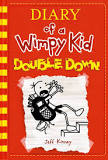
[READ: December 27, 2016] Diary of a Wimpy Kid: Double Down

I keep expecting the quality of the jokes in the Wimpy Kid books to decline.  But rather, this book was not only hilarious, but it worked really well as a book, too.

What I mean is that, I know that the Wimpy Kid series is online and that Kinney does a new story every day (or at least he did , I don’t know if he still does).  These books had always been taken from the online site (and I assume they still are).  But somehow, this book has jokes that circle back to jokes earlier in the book.  There’s at least a half a dozen callbacks which makes this book more than just a collection of diary entries…it’s a perfectly contained unit with a satisfying ending.

(more…)

Read Full Post »

922SOUNDTRACK: SAUL WILLIAMS-Tiny Desk Concert #565(September 16, 2016).

saulSaul Williams sings three songs in this Tiny Desk Concert.  He is accompanied by two guys on acoustic guitars.  But his songs are so much more than the few chords played guitars.

I was unfamiliar with Williams before this Concert.  He is a rapper, poet, activist, writer and much more.  All of his songs include impassioned spoken sections in which he (presumably) free verses eloquently.

He opens the set with a series of statements/accusations.  And when he announces the title of the song, “Burundi” he tells us that the song is called… an astonishing list of cities that have similar problems.  He explains that the chorus contains stanzas from the Sufi poet Rumi: I’m a candle, you can chop my neck a million times but I still burn bright and stand.  The middle of the song is a lengthy spoken section in which he talks about everything that is going on in the world.  And he ends with this excellent thought: “The voice and vision that counters power cannot be wiped out.”

For “Think Like They Book Say,” one of the guitarists plays out a rhythmic tapping on the body of the guitar while the other plays the melody.  It’s a menacing sort of melody and it is dedicated to Chelsea Manning.

Before the final song Saul grabs Bob Boilen’s James Brown doll.  He cradles the doll, kisses his forehead and then has his guitarist play a lullaby “Down For Some Ignorance.”  It begins as a very mellow song.  And then mid way through the song, he presses a button on his computer and the song turns into an electronic wildstorm of sounds and samples.

During the end of the song, he recites a phenomenal list of grievances.  And as the song ends, you can see that he has brought a tear to his own eye.

It’s a very powerful Tiny Desk.

[READ: March 10, 2016] “My Gal”

I’ve mentioned before that I really like George Saunders’ work, and I find his funny pieces to be especially funny.

What’s odd about this piece (which was in Shouts and Murmurs) is that it was topical.  Nothing odd about that exactly, except that reading it nearly 8 years later, in another election cycle, it seems almost quaint.  Especially since Trump has replaced Sarah Palin as the Republican’s (and now the country’s) biggest idiot and liar.

This essay is by a guy who loves Sarah Palin–she’s his gal. (more…)

Read Full Post »

slowreadSOUNDTRACK: DIRTY THREE-Tiny Desk Concert #245 (October 15, 2012).

dirty-3For a Murakami collection I should really have picked a jazz Tiny Desk Concert.  But none jumped out at my on my list.  So I decided to do something that might be jazzy in spirit, even if it is nothing like jazz at all.

Dirty Three are a three-piece band which consists of violinist Warren Ellis (who works closely with Nick Cave), drummer Jim White (who I had the pleasure of seeing live with Xylouris White), and guitarist Mick Turner (who has released a string of gorgeous instrumental solo albums and worked a lot with Will Oldham).

I’ve liked Dirty Three for years, although I kind of lost touch with them back around 2000.  So it was fun to see that they are still working.  (They’ve released all of 3 albums since 2000).

Jim White plays an eccentric but very cool style of drum–it always feels improvised and random, and maybe it is, but it’s never “wrong.”  Turner is the only one who is keeping the song, shall we say, “stable.”  He’s got the rhythm and melody both with his strumming.  And Ellis is all over the place with melody lines and bowing.

For this Tiny Desk, they play three songs.  Their music is ostensibly instrumental although Warren Ellis is not above shouting and yelling and keening when appropriate.

The first two songs are from their 2012 album and the last one is from Ocean Songs.

“Rain Song” opens with Ellis strumming the violin while Turner plays slightly different chords.  Then Ellis takes off on a series of spiralling violin rolls.  As always, White is back there waving his arms around with the loosest grip on drumsticks I’ve ever seen.  He plays brushes on this song but the drums are far from quiet.  Meanwhile Ellis is soloing away, yelling where appropriate and doing high kicks when White hits the cymbals.   As the song comes to an end, White is going nuts on the drums and Ellis takes off his jacket (revealing a wonderful purple shirt) .  He starts screaming wildly as he physically gets into his violin playing.

“The Pier” is about realizing that it’s the rest of the world that is driving you crazy.  It’s about “trying to undermine Facebook and realize a new way of communicating with people beyond the internet.”  It’ about… are you ready Mick?  Okay.  “The Pier” is a slower song with some plucked violin.  Ellis climbs up on the desk and dances around as he plays.  This one feels a but more controlled but in no way staid.

For “Last Horse in the Sand,” white switches to mallets and adds a tambourine to his cymbal.  It’s really interesting to watch White play around with things–moving his gear around as he plays.  He switches sticks and seems to be not even paying attention, but without ever really losing momentum or timing.  For this song, Ellis and Turner are the mellow ones while White is just all over the place with his amazing drumming.

I haven’t said anything about Turner because he is really the grounding of the band, while the other two are taking flights of fancy.

This is a wild and untamed set and it’s a lot of fun.  It’s also amusing to watch the audience witnessing this seeming chaos.

[READ: December 16, 2016] Slow Reader Vol. 1

Madras Press had released 16 small books, which I enjoyed reading quite a lot.  I have posted about some and will post about more in the new year.  But word is that they have given up on the small books and have switched their attention to a new magazine/journal called Slow Reader.  The first issue came out this month and it collects stories, essays, poems, illustrations, and other things that center around novelist Haruki Murakami.

Support this small press!  You can order this issue directly (and name your price, although I think the asking price is $6).

From an article elsewhere I’ve learned that future issues will cluster around M.F.K. Fisher, Kazuo Ishiguro, and Patricia Highsmith.

This issue contains essays, fiction and illustrations, some dating back as far as 2000.

CHIP KIDD-cover illustration (wind-up bird)
Chip Kidd is awesome

GRANT SNIDER-Murakami Bingo Board
This bingo is hilariously apt–covering most of the bases of Murakami’s writing: cats, jazz, running, and even a Chip Kidd cover.

JESSE BALL-Sheep Man
A line drawing of a sheep standing upright with the caption “The sheep man’s peculiar tail was never visible to me.”

HARRIET LEE-MERRION-Diner illustration
A nice line drawing of a corner diner

KAREN MURPHY-Sputnik and two moon illustrations
Two simple drawings of Sputnik and two moons.

BEIDI GUO-Hard Boiled Wonderland and the End of the World map
A cool map of the locations of the novel.

DINA AVILA–Murakami Tasting Menu at Nodoguro in Portland, OR
I don’t really get if the menu items are related to the stories but it’s a neat idea that there are foods named after his works. But why are so many called IQ84?

EUGENIA BURCHI–IQ84 menus
A drawing of foods with what I think are character names (I haven’t read the novel yet).

FABIO VALESINI-train illustrations taken from the book trailer for Colorless Tsukuru Tazaki and His Years of Pilgrimage
No idea what the original context is, but it’s a neat, clean drawing of a train station.

JEFFREY BROWN-“In Conversation” What Jeffrey Brown Thinks About
The first piece is an amusing cartoon in which Brown scores a job at an indie bookstore by mentioning Murakami.  The little blurb says that it is an only slightly exaggerated account. There’s also a later picture by Brown of Murakami’s face posted on a bulletin board (with a lost cat flier), that’s really great.

DANIEL HANDLER-“I Love Murakami”
Handler begins his piece by apologizing to dozens of authors before saying that Murakami is our greatest living practitioner of fiction.  He mentions a few books but heaps a ton of praise on Wind Up Bird Chronicles and mentions his excitement at  finally getting Norwegian Wood in English (it had been untranslated for many years).  He wrote this essay in 2000.

YOKO OGAWA-“On Murakami’s “The Last Lawn of the Afternoon” [Translated from the Japanese by Stephen Snyder]
Ogawa writes about a house in her neighborhood which has a lawn that she finds unsettling–it’s perfectly manicured and a pale, cool shade of green.  She is reminded of the Murakami story in which a boy mows a woman’s lawn and she asks him an unexpected question.  Ogawa imagines a woman in that home asking the same kinds of questions.

ETGAR KERET-“What Do We Have in Our Pockets?”
This was inspired by Murakami’s story “On Seeing the 100% Perfect Girl One Beautiful April Morning.”  This story is about a man whose pockets are always bulging with unusual items.  People often say to him, “What the fuck do you have in your pockets?”  And his answer is that he carries things that he imagines the perfect woman needing–a stamp or a toothpick.  It is a wonderfully charming story.

RIVKA GALCHEN-“The Monkey Did It”
Of all of the items in this collection, this is  the only piece I’d read before.  I remembered parts of it (particularly the excerpts from “A Shinagawa Monkey,” and her talking about Colorless Tsukuru Tazaki.  I also recalled her saying that she liked his short stories better than his novels, but that she was perhaps wrong in thinking that.  The one thing I didn’t pick up on last time was that in the beginning of the essay she writes about Toricelli’s Trumpet or Gabriel’s Horn–an item with finite volume but infinite surface area.  She says this perfect describes Murakami’s work.  And I love that she ties it to translator Philip Gabriel who is a gentle and modest translator–perfect for the watery novel.

TESS GALLAGHER-“Murakami and Carver Meet at Sky House”
Before he had written any substantial works, Murakami translated Raymond Carver’s works into Japanese.  Ray was excited and bemused that Haruki and his wife Yoko would travel from Japan to meet with him.  This essay tells us that the following poem came about as Ray tried to imagine how his poems could possibly be appreciated in Japan.  Murakami told him how both the Japanese and American people of the 1980s were experiencing humiliation at being unable to make a decent living.  Gallagher says that if they were to meet today Ray would be awkward about Haruki’s stature.  But he would have loved knowing that Murakami had translated everything he had written.

RAYMOND CARVER-“The Projectile”
This poem is wonderful. It begins with Carver speaking about his meeting with Murakami and then flashing back to when he was 16 and was hit with an ice ball.  It was thrown from someone in the street through a small crack in the window of the car he was riding in–a chance in a million.

RICHARD POWERS-“The Global Distributed Self-Mirroring Subterranean Neurological Soul-Sharing Picture Show”
This is the most abstract and “intellectual” of the essays here.  It speaks of a team of neuroscientists discovering a lucky accident–that neurons in the brain fire when someone else makes a motion that we recognize.  Similarly, in Murakami–representation is the beginning of reality.  He speaks of the parallel narratives in Hard Boiled Wonderland.  He wonders at the universality of dreams and ideas in Murakami.  “But if his own stories are steeped in the endless weirdness hiding just inside everyday life, how then to account for Murakami’s astonishing popularity throughout the world?”

MARY MORRIS-“The Interpreter”
I loved this story.  An American business woman is giving a series of lectures in Japan.  She is assigned a translator who goes with her nearly everywhere.  She is a little annoyed that he is always there, but he is very respectful of her and only speaks when spoken to.  She assumes he is translating her speeches correctly, but during one, the audience laughs where there was nothing funny.  She doesn’t want to disrespect him, but she can’t imagine what he said to them.  In the next one, they are practically doubled over with laughter at what he says.  Finally she has to confront him about it.  He reveals astonishing insights into her personal life.  And the next day he is called away–just as she has begun to feel close to him.

In the author’s note, she says that the she was at an writer’s meeting in Princeton (where she teaches) and Murakami was there eating with them. He was by himself, and she talked to him because she was a fan of his work.  She relates a story of holding up a sign for him when he ran the New York City Marathon.  She says that the part about the translator and his family (which I didn’t mention) is from an actual translator she met in Japan.

AIMEE BENDER-“Spelunking with Murakami”
Bender speaks of trusting Murakami.  She says when the cat started speaking in one of his books, she began to mistrust him.  Nevertheless, she says, she loves a lot of writers but only trusts a few of them.  She’s not trusting Murakami’s honesty or his ability to make her smarter.  Rather, she trusts him like a man with a torch in a cave–someone who is willing to explore–and to be in front leading the way.

SUMANTH PRABHAKER-Editor’s Note
Prabhaker would like to ask the world’s philosophers why some things seem to happen to us in a random fashion.

Read Full Post »
[LISTENED TO: December 2016] A Boy Called Christmas

boyS. brought his audiobook home for us and we started it the night we went to pick out our Christmas tree.

This is a delightful story of Nikolas, an 11-year-old boy living in Finland in the olden days.  His parents called him Christmas, because he was born on Christmas day.

Nikolas’ life has been one of terrible hardship.  His mother was killed when she was attacked by a bear (a bear that lingers around their house to this day).  His father, Joel, is a woodcutter.  He cuts enough wood for them to survive, but otherwise things are bleak.  They eat mushroom soup for every meal and, in Nikolas’ whole life, he has received just two toys: a sled and a doll with a turnip head.

The only friend that Nikolas has is a mouse named Mika.  Now, this may be a fairy-tale kind of story but even Nikolas can’t understand Mika’s squeaks (although we can).  Mika is constantly on a quest for cheese–even though he has never tasted it.

Joel has noticed a man, a hunter, in their vicinity.  He turns out to be an excellent bowman with silver arrows.  In fact, once, when the bear that killed Nikolas’ mother is nearby, an arrow flies through the air and scares off the bear, saving Nikolas’ life.  The hunter finally comes to their house with a proposition for Joel.

The hunter is on a quest on behalf of the king.  They are setting off to prove that Elfhelm, the mythical land of elves, really does exist.  If they can bring proof to the king, they will be incredibly rich men. Joel and Nikolas believe very strongly in magic and in Elfhellm, and after much hemming and hawing, Joel decides to go on the quest.

This leaves Nikolas alone (with Mika).  So Joel calls his sister Aunt Carlotta to watch over Nikolas while he is gone.

There’s a lot of villains in the story, but Aunt Carlotta might be the worst of them.  She is mean from the start.  She takes all of the cushions for herself and forces Nikolas to sleep outside.  He is put to work immediately–gathering food and firewood–and cooking for her.  And finally she reveals that the only reason she came is because if his father does return–which she doubts–he will give her a lot of money.  As the section with Aunt Carlotta continues, she commits the gravest sin imaginable.  And that’s when the last straw is broken and Nikolas leaves. (more…)

Read Full Post »

« Newer Posts - Older Posts »