Feeds:
Posts
Comments

Archive for the ‘Funny (ha ha)’ Category

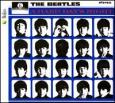
SOUNDTRACK: THE BEATLES-A Hard Day’s Night (1964).

Despite my CD player trying to eat this disc, I still managed to listen to the whole thing.

This album came out just a few months after their second disc.  But it is quite a leap forward musically.  Rather than the simple rock and roll sound of the first two discs, there’s more depth of sound (attributable to George’s 12 string guitar?)  Perhaps also because of the use of the 4 track, rather than the 2 track mixer.  Also, Lennon and McCartney wrote all of the songs, so they weren’t bogged down by covers,

At first I thought that I had gotten to my first Beatles disc where I knew all the songs.  But that turned out not to be true.  I knew the first half of the disc (the songs that are in the movie).  But when we got to the second half (and I learned that the US version was different in that in included George Martin’s score for the movie (!)) there were a couple of tracks I didn’t know at all.

With the tracks sequenced as they are, you don’t get a big crunching finale at the end of the disc, like on the first two.  However, those first few songs are pretty classic (even if “Can’t Buy Me Love” completely contradicts the sentiment of “Money” from the previous album.  This is a really enjoyable fun disc from start to finish, even the songs I didn’t know.

I was pretty certain that after this disc, I’d recognize all of the songs.  But I had one more surprise waiting for me.

I also brought the movie home from the library one night but I couldn’t get through most of it.  Guess you had to be there.

[READ: May 13, 2010] “The Flight Album”

This is a memoir of the a Vancouver author’s stay in New York City.   I wasn’t really sure how interesting this story would be, I mean, there are a million stories in the City, so why should this transplant’s story be worth reading?

The piece starts with the author’s awkward assimilation to New York (and the almost offensive Dave Chapelle joke she relates to a cabbie).  His mild reaction lets her know that maybe she can make it there.

For me the best part was the author’s insert of Shit: A Guide to Canadian Usage.  The most notable difference between Canadians and Americans, she has found, is that Canadians use the word “shit” all over the place, and in many ways that Americans do not (in fact it is more all purpose than fuck.  The things that started it all was her use of the phrase “What the shit.”)  It is quite a funny section. (more…)

Read Full Post »

SOUNDTRACK: MEATLOAF with JACK BLACK-“Like A Rose” (2010).

My friend Matt is the biggest Meat Loaf fan I know.  He may be the only person in the United States who owns all of Meat Loaf’s CDs (yes, he has ones other than those two Bat Out of Hell discs).  So it came as no surprise to me when he sent me a link to a new Meat Loaf song.  What surprised me was that Jack Black is singing a duet with him!

The Meat Loaf/Jack Black connection is not new; Meat Loaf appeared in The Pick of Destiny.  And Meat Loaf and Jack Black are both waaaaay over the top.   So, really, the pairing makes a lot of sense.  And, when you put the two together, it’s amazing how well their voices work.

I’ve always loved Meat Loaf’s Bat Out of Hell, but I don’t have a lot of patience for the rest of his music.  He played a show at my college, and I left mid way through (mostly because the acoustics were godawful and he sounded terrible, although also because he didn’t play anything I knew–that is until after I left when he played like all of Bat Out of Hell).  But since then I have seen him in a Storytellers setting (also in Scranton) and he put on a hell of a show.

The song itself is pretty good.  It starts with a rocking acoustic guitar (not unlike Tenacious D) and then turns into a metal rocker (like Tenacious D).  Meat Loaf’s voice sounds a bit like a preacher (and to my ears, Jack is not loud enough in the mix).  Lyrically, it’s not that great (I can do without the “bitch” bit) but it’s a good rocker.

It’s available here.

[READ: May 5, 2010] “Will the Real Avatar Please Stand Up”

I think I’m missing something with this title.  Because I’m sure that you, like me, were expecting this to have something to do with the James Cameron film that is sweeping the nation.  And yet, this is actually about Warren Beatty and his claim that he has slept with some 12,000 women.  [Heh, heh, I just looked up the definition…very funny.  Sorry for my ignorance].

After an introduction (which may be in the persona of Allen himself–quite the rarity), the story follows a young woman as she looks to be next in line–number 12,989!

The story was quite amusing.  The character herself is not terribly well drawn (she’s hot and defiant and definitely not going to sleep with him).  But the story itself comes to life when we get into the Beatty mansion and learn that he has helpers to take care of so many of those pesky things that will keep his numbers down: foreplay, cuddling etc. (more…)

Read Full Post »

SOUNDTRACK: FUGAZI-13 Songs (1990).

I was so blown away by that first Fugazi disc that I immediately ran out and got this collection of their first two EPs.

The strange thing to me is that even though I enjoy the disc, nothing on it really stands out as all that memorable.  I feel like Repeater was such a strong release that these earlier tracks pale somewhat.

I’ve listened to this disc a number of times over the last few days and nothing really stands up and grabs me like Repeater still does.

I wound up buying two more Fugazi discs after this, but I’m pretty sure the reason I stopped buying their music was from this same feeling: the songs were all good, rocking, indie music, but there was nothing terribly memorable about them.

[READ: April 15, 2010] Stephen Fry in America

I first heard about this book when Stephen Fry appeared on The Late Late Show.  This book was very casually plugged as Fry’s attempt to visit every State in the U.S.  It turns out that this book is the companion piece to a six part BBC TV series of the same title (which I have not seen).  Although the TV series makes the existence of this document much more understandable.  Because although everyone wants to travel to every state in the union, the only way it would ever be accomplished in the fashion is for a TV show (even a book wouldn’t get quite this treatment if there were no TV show).

Stephen Fry was almost born in America (in New Jersey, in fact, where he believes he would have been Steve, rather than Stephen).  And he has always felt a connection to the States.  So, Stephen Fry, (in my head the quintessential Brit) brings a film crew and his classic British Big Black Taxi to see all of the States.  He begins in Maine and travels in an interesting manner, zig-zagging across the country.   He tends to visit the places/events/sites that each state is known for.  And, like any good TV show, he participates in the activities (he lobsters, he rides horses, his deals blackjack) and makes a tit of himself. (more…)

Read Full Post »

SOUNDTRACK: ALANIS MORISETTE-Jagged Little Pill (1995).

In this book, DFW considers himself to be absolutely useless when it comes to music.  He doesn’t know anything at all.  He says he listens to Bloomington country radio stations until he can’t take it anymore and then he switches over to the alt rock station.  He’d never even heard of Nirvana until after Cobain’s suicide.

And so, the soundtrack for the book is R.E.M., Bush (two songs) and Alanis.  In fact, there’s a surprisingly long section devoted to Alanis in the book, including DFW’s admittance that he would love to have a date with her for tea.  He admits that she is pretty much manufactured angst and yet there’s something about her that he finds irresistible.

At this stage (2010), the whole Alanis thing seems almost adorable in it’s “controversy” or “hype” or whatever.  It’s still hard for me to be objective about the quality of Jagged Little Pill (I mean, Flea plays bass on it so it must be good, right?).  I really enjoyed it at the time, perhaps because of its rawness or its honesty (which was pretty novel at the time, especially from a woman), all packed in a clean production of course.  There’s also something weirdly appealing to me about her (really not very good) voice.  She seems just off enough for all of this to be really sincere.

And of course, the nastiness of “You Oughta Know” was pretty astonishing for pop radio at the time.  True, there’s songs on here that make me cringe now (there’s a lot about her that makes me cringe) and yet there’s still some really enjoyable stuff here.  Even the perennially mocked “Ironic” for all of its flaws has a stellar chorus.

Now that the “women in rock” phase of alternative music has passed, there’s very little music like this being made anymore.  So it’s kind of fun to reminisce about this stage of my musical life, warts and all.

Oh, and by the way, I also grew up watching Alanis on “You Can’t Do That on Television,” so it was pretty exciting to see a child star that I knew make it big.

I never liked Bush though.

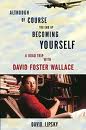
[READ:April 21, 2010] Although of Course You End Up Becoming Yourself

As I mentioned, I was super excited to get this book and I treated it like the artifact it is: trying to read it in one sitting (impossible) or at least in as compressed a time as possible to preserve the stream of consciousness attitude of the book.

For, as the subtitle doesn’t quite state, this is five-day conversation between David Lipsky and David Foster Wallace.  The tape recorder was running for most of these five days and what we get is a literal transcript of the conversation (with much of Lipsky’s parts excised).  It is an all-access pass to the mind of the man who wrote Infinite Jest as the hype of the book was really taking off and as his brief promotional tour for the book was winding down.

Lipsky was (is) a reporter for Rolling Stone. DFW’s Infinite Jest was the huge media hit (#15 on the bestseller list) and the hype was outrageous.  DFW had begun a (sold out) reading tour which actually began the day before the book came out, so he rightfully notes that no one could have actually read the book by then, they were just there because of the hype.  And Lipsky himself is part of this hype.

Lipsky was sent to do a profile of the wunderkind, literature’s next great hope (RS hadn’t (hasn’t?) covered a young author like this in a decade at least).  The idea was that Lipsky would tag along with DFW, go to the last readings on the tour, an NPR interview, and spend most of their time together: planes, rental cars, hotel rooms, etc generally just hanging out with tape recorder running. (more…)

Read Full Post »

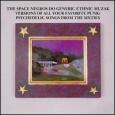
SOUNDTRACKTHE SPACE NEGROS Do Generic Ethnic Muzak Versions of All Your Favorite Punk/Psychedelic Songs from the Sixties (1987).

I stumbled upon this CD again when I was looking for a Sparklehorse disc (alphabetical you see).  I originally discovered this album when I was a DJ in college and the absurdity of the title instantly grabbed me.

And never has a title so accurately described the music within (except for “the space negros” part which is just weird).  Anyhow, the disc is indeed a collection of generic ethnic muzak recordings.  But it predates that late 90’s “ironic” muzaky recordings of hipster songs.

Nevertheless, it is muzaky background versions of songs from the sixties (and a few originals).  The difference comes in the instrumentation: zithers, harpsichords, clarinets, autoharp, etc.  In other words, this isn’t a guy making cheesy Casio recordings of classic songs.  This is a collection of musicians reinterpreting songs for fun (and presumably to get high to?).

The most noteworthy songs for me are “Silas Stingy/Boris the Spider” medley and The Stooges’ “We Will Fall.”  In fact, I didn’t recognize any of the other songs on the disc (the 13th Floor Elevators and The Electric Prunes are the only bands that I recognize aside from The Who and The Stooges).

So, this is clearly a labor of love.  Whether or not you will love it depends on your tolerance for trippy muzaky renditions of songs that sound like they’re from an Indian restaurant/hash shop circa 1964 (that exists on the moon?).  The CD reissue includes thirty more minutes of tunes which are all just listed as More Generic Muzak (no covers here).   It’s strange that these more nebulous bonus tracks really tend to show off how good the rest of the disc is.  Sure in part that’s because the other tracks are actual songs, but it also shows how well the weird musical approach to these songs works when it is focused with a good starting point.

The Space Negros (headed by Erik Lindgren) made several discs, but it’s hard to find a lot of information about them online.  Even their own website is surprisingly devoid of information (although you can buy the disc!)

[READ: April 19, 2010] “Prefiguration of Lalo Curo”

Even when I try to stop reading Bolaño, the stories keep arriving in my mailbox.  This story (to be released in his forthcoming story collection The Return) looks at the history of Lalo Curo.  For those of us reading 2666, Lalo Curo figures prominently in The Part About the Crimes.  And in 2666 his history is given.  So this short story is a bit confusing within the canon of Bolaño.  2666

In this one, Lalo’s mother, rather than being raped and impregnated as a young girl (as had all of her mother’s mothers) was a porn star.  Lalo was born Olegario Cura (surname Cura (The Priest) because his father was a priest).  And, as with all my favorite Bolaño stories, there’s all kinds of fun questions regarding narrator and intended reader.  Lalo’s mother “Connie Sánchez was her name, and if you weren’t so young and innocent it would ring a bell” along with her sister and friend were all stars in a series of porn movies.  The man behind the movies was a German [another thing that recurs in Bolaño] named Helmut Bittrich.  Helmut treated them well, and the whole production company felt like a (weird, certainly) family.  In fact, Connie made films even when she was pregnant with Lalo (lacto-porn!).

Connie had tried legitimate theater (even Broadway!), but eventually, her career went towards porn.  The bulk of the story is given over to (graphic) descriptions of all of her films.  But the most interesting section is about Bittrich’s understanding of “the sadness of the phallus.”  After all those graphic scenes we get this remarkably poetic moment:

he’s naked from the waist down, his penis hangs flaccid and dripping. Behind the actor, a landscape unfolds: mountains, ravines, rivers, forests, towering clouds, a city, perhaps a volcano, a desert.

Pajarito Gómez is the male actor described above.  He is the primary male in all of the porn films.  He wasn’t well endowed, but he had a special kind of presence on screen.  As the story ends, Lalo goes in search of Gómez and finds him easily. They share a moment, watching movies and reconstructing the past.

It’s an interesting story, one that fully fits within the Bolaño landscape.  Bolaño is pretty obsessed with porn, and this story is obviously no exception.  It may not be the best introduction to Bolaño’s work, and yet in many ways, it’s pretty much Bolaño in a nutshell.

For ease of searching I include: Bolano, Sanchez, Gomez

Read Full Post »

[WATCHED: 2010]  The Inbetweeners

I don’t often write about one TV show at a time, but I’m on vacation this week, so I’m taking it easy.

One of our favorite new shows is (big surprise) a  British comedy (that is airing in the States on BBC America) called The Inbetweeners.  There’s not much terribly original about the premise of the show: four unpopular blokes in secondary school grouse about being unpopular and hatch ways of scoring with the [insert staggering variety of vulgar words for women here] in their class.  And I’m not exactly sure what it is about the show that is so [bleeping] funny.  Perhaps it is the simply brutally vulgar humor, or the excessively horny attitudes, or maybe it is the self-awareness of the vulgarity (by the not exactly prudish but at the same time creeped-out-by-his-friends narrator (“That sounds a bit rape-y, Jay”)), but the show never stops being stomach-hurtingly funny. (more…)

Read Full Post »

SOUNDTRACK: THE DEAD MILKMEN-Soul Rotation (1992).

And lo, the Milkmen grow up.

This disc is not funny (well maybe, a little funny); mostly it is  “thoughtful” (and sometimes absurd).  But what is most striking about it is how mature (mellow) it is.  For this is the first album by The Dead Milkmen on Hollywood Records (a subsidiary of Disney).  This combination raises far more questions than is worth looking at.  But suffice it to say that even though this disc is the Milkmen, its a very different Milkmen.

The most obvious difference is that the majority (10 out of 13) of the songs are sung by the artist formerly known as Joe Jack Talcum, now known as Butterfly Fairweather (perhaps Hollywood knew that “”Punk Rock Girl” was their big hit?).  Past DM records were mostly sung by Rodney Anonymous (who goes by H.P. Lovecraft on this disc).  And his were the heavier, weirder, funnier, absurdist tracks, for the most part.  So, when the first four songs here are sung by Butterfly, you know something different is afoot.  Oh, there’s horns on the disc as well!

The disc feels like a pretty typical alt-rock band from the 90s.  But it’s missing the sass, it’s missing the vulgarity.  Basically, it’s kind of dull.

That’s not to say there aren’t good songs on here, because there are.  “If I Had a Gun” is a great screamy Butterfly song, and “Wonderfully Colored Plastic War Toys” is full of Lovecraft’s snark. As is “The Conspiracy Song” a lengthy rant of absurdity.

The rest of the songs drift between mellow and alt-rock rockers.  And it works as a product of the alt rock 90s.  It’s just not much of a DM album.

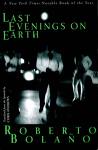
[READ: April 8, 2010] Last Evenings on Earth

I have been reading Bolaño’s short stories for a while now.  And so I have read a couple of the stories in this collection already. The stories in this collection were taken from his two Spanish collections of short stories: Llamadas telefônicas (1997) and Putas aseinas (2001).  And I have looked at about a dozen sources but I can’t find which stories came from which original collection (I like  to know these hings).  I can’t even find a table of contents for the original books.  Anyone want to help out?

I enjoyed these stories more than I expected to.  I have read some of his stories in The New Yorker and elsewhere, and I’ve been okay with them, but this collection blew me away.  Whether it’s being immersed in his writings or just having them all in one place, I was thrilled by this book.

There so many delightful little things that he does in his stories that I find charming or funny or something.  Like that his narrators are usually two or three people removed from the details.  Or if they’re not, they act like its been so long they doesn’t need to get all the details right:  “U insults and challenges him, hits the table (or maybe the wall) with his fist” (“Days of 1978”).

I also get a kick out of all the stories with the protagonist named B.  Which seems a not so subtle way of saying he’s the narrator (even though I ‘m sure these things never happened to him quite like it says (despite all the biographical consistencies with his own life).

The opening story “Sensini” has the narrator working as a night watchman at a campground (much like Enric in The Skating Rink…a bit of biography perhaps?).  A number of his stories are simply biographies of interesting characters (something he went to extremes with in Nazi Litearture in the Americas): “Henri Simon LePrince” a failed writer in Post-WWII France.  “Enrique Martin” a delightfully twisted story about jealousy (aren’t they all, though?) and acting impulsively and foolishly (aren’t they all though?).  This one featured  a riddle that I’m not even sure we’re meant to get:

3860+429777-469993?+51179-588904+966-39146+498207853

which the narrator thinks is a word puzzle. (more…)

Read Full Post »

SOUNDTRACK: THE DEAD MILKMEN-Bucky Fellini (1987).

C’mon, I’m the walrus, damnit.

Bucky Fellini ups the ante from Eat Your Paisley in that the band sounds really accomplished at this point.  The songs are still silly, but they’re not quite as jokey (except for the hit single, but more on that in a second). There’s even lap steel guitar, violin and backing vocals!

Dave Blood’s bass is really something of a force at this point, propelling songs with interesting riffs.  Rodney  “Cosloy” Anonymous sounds great.  And, Joe Jack Talcum gets quite a number of songs to sing: the mellow (and very twisted) “Watching Scotty Die” and the more rocking “Rocketship.”

“Big Time Operator” is a supremely silly song based on a very simple blues riff.  It features the first (utterly wretched) DM guitar solo (look out Stevie Ray Vaughn!) and even showcases a “humming” solo from Rodney (just me!).  While  on the other end of the spectrum, “Surfin’ Cow” is mostly instrumental which is catchy and full of surprising intricacy.

“Instant Club Hit (You’ll Dance to Anything)” was indeed a club hit.  It’s snarky and silly (complete with a drum machine) and it name-checks some of the most prominent college radio bands of the time.  You could easily have built a good collection of British college rock from their list of who you’ll dance to. (instead of giving your money to a decent American artist like himself).

The Dead Milkmen keep getting better and better.  They’re still funny, but they’ve proven themselves to be far more than a novelty act.  Blow it out your hairdoo cause you work at Hardees.

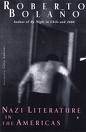
[READ: April 1, 2010] Nazi Literature in America

I’ve read a lot of books that are, shall I say, weird.  But this one is definitely the most unusual when I think:  what would possess a person to write it?

Nazi Literature in the Americas is written as an encyclopedia of Nazis writers who have lived in North, Central and South America.  Except that all of the writers are fake.  So, essentially Bolaño has invented 30 characters, and created rich, fully detailed biographies about all of them.

Some of them are very short (a couple of pages) while a few are over ten pages long, with details of books/poems published, critical reception and even untimely deaths.   The biographies are grouped according to categories (The Mendiluce Clan; Itinerant Heroes or the Fragility of Mirrors, Forerunners and Figures of the Anti-Enlightenment; Poètes Maudis; Wandering Women of Letters; Two Germans at the End of the earth; Speculative and Science Fiction; Magicians, Mercenaries and Miserable Creatures; The Many Masks of Max Mirebalais; North American Poets; The Aryan Brotherhood; The Fabulous Schiaffino Boys; The Infamous Ramírez Hoffman).

And although they are not chronological, Luz Mendiluce (whose bio I read separately) features prominently as a constant “reference point” and creator of one of the prominent Nazi publishing houses.  She had created a publishing empire where Nazi works were spread throughout the continent, and it seems that everyone had a title published by her company Fourth Reich.

What’s so weird about the book is that the people are fake, everything about them is fake (although they are placed firmly within history) and yet their stories are still compelling.  Bolaño has employed a mildly sympathetic tone to these people.  Not sympathizing with the Nazi aspect, but sympathizing with them as humans.

There were one or two who I didn’t really enjoy.  And I admit that I enjoyed the North Americans more; since I know more about North than South America, the facts surrounding these authors resonated more.  But I thoroughly enjoyed most of these biographies.

Of course, just when you think the book is all the same, the final biography changes everything.  In this one, Bolaño himself appears as the writer of the book.  He writes about Ramírez Hoffman in the first person, mentioning himself by name and getting personally involved in the story of this final, skywriting author.  It completely subverts the work before it and leaves you more confused than when you started (although a lot happier for having read it).

The final section of the book is an Epilogue foe Monsters.  It provides a brief biography for all of the secondary characters mentioned in the main body.  It also details the publishing houses and magazines, and finally lists  a bibliography of all books published.  The amount of detail that Bolaño created here is staggering.

But aside from all the Nazism, the book can be quite funny.  Like the conclusion for Luz Mendiluce Thompson, which ends with her driving a car into a gas station.  The final line: “The explosion was considerable.”

It’s tempting to say that this “novel” is not representative of Bolaño’s writing, but I think that’s false.  From what I’ve read so far, Bolaño doesn’t conform to any style in his books: each book is designed differently.  But like this one, they all deal with South America, with violence, with politics and are filled with humor.  So, yes, I guess this is pretty representative.

Oh, and the translation by Chris Andrews is, once again, fantastic.

For ease of searching I include: Bolano

Read Full Post »

Sarah and I watched a bit of the third or fourth episode of this show when it aired on CBC.  But jumping into the middle of this show is difficult.  The characters are established pretty quickly, their quirks are all explained in the first episode, and it’s a bit hard to care about them without knowing their whole story.

So, when the show released on DVD, I decided to give the whole series a shot. And it has now given me a new favorite actor of the month: Sherry Miller who plays Mrs Jarlewski is just fantastic.  She’s like an older,  subtler version of perennial  favorite Portia de Rossi.

The show also introduced a cast of relative unknowns (who have all gone on to do more since then), and gave a wonderfully twisted role to former Growing Pains dad Alan Thicke (he’s an alcoholic, a philanderer and a wannabe (but not very good) actor).  And in a (presumably) unintentional nod to Growing Pains, his wife’s name is Carol, too.   (more…)

Read Full Post »

SOUNDTRACK: KISS-Sonic Boom (2009).

Kiss has been kicking around in one incarnation or another for the last few years: original line up with make up, another line up with no make up and now this new line up: original makeup with two new people in the Peter and Ace positions (I wonder what happened to Bruce Kulick?).

There’s something disingenuous about having a fake Ace and a fake Peter, because in the past they always changed makeup for new members. So, this gives the impression that the original members are here (even though you can see that they are different men under the makeup).

But, Gene says it’s about the band, not the people.  So, whatever.  The first song, “Modern Day Delilah” is as good as any song they’ve done in two decades.  It’s heavy and catchy and the band sounds great.  But I feel like each song produces diminishing returns.  “Russian Roulette” loses me because the lyrics are seemingly for two different songs: one in the verses, one in the chorus (not that one should ever look too deeply at Kiss lyrics).

“Never Enough” sounds like a pretty typical 90’s Kiss song (except the melody is totally Ozzy’s “Flying High Again.”  “Nobody’s Perfect” is one of those poppy Gene songs that’s kind of throwaway but works well as a light-metal song.

The most egregious errors on this disc are the two anthems.  If ever there was a band who thrives on anthems, it’s Kiss.  But their best anthems are about partying and rocking.  These anthems are about standing united together (and we’ll ask the former members of Kiss about that).  “Stand” is about being there when you’re down. “All for the Glory” is a similar theme (we’re all for one), but it fares better musically.  It is weird though that fake Peter sings it in  voice that sounds a little bit like real Peter.  It’s also weird that “When the Lightning Strikes” features fake Ace that sounds a wee bit like real Ace.

On some better notes, I rather like the silly pun of “Danger You, Danger Me, Dangerous.”  And, “I’m an Animal” sounds a like Creatures of the Night era Kiss, which is a good thing.  The final song is an anthem that they got right.  It’s about partying and features a silly “Say Yeah!” chorus.  And that’s what Kiss does best.

The bonus disc is this new lineup re-recording classic Kiss songs. It’s a weird thing and  number of  bands seem to be doing it lately. I’m not entirely sure why.  Most of the songs sound exactly the same, but where they deviate from the original I don’t think they work as well (yes, I’m  traditionalist).  Although I like the less disco-ey version of “I Was Made for Lovin’ You.”  But if you’re not going to radically change anything, then why bother?

And to hear the by now 60-something year-old Gene Simmons singing about a 16-year-old is just majorly creepy (before it was statutory, now it’s statutory and gross) if he keeps going, he’ll be living the lyrics of “Goin’ Blind,” “I’m 93, you’re 16.”

So, this is a good effort from the band.  It has received pretty rave reviews, which I don’t think it quite deserves.  But it’s better than a lot of their middle period discs.

[READ: March 20, 2010] School of Fear

I ordered this book for our library’s Spanish collection.  When it arrived it looked intriguing, so I found an English copy and set out to read it.  I enjoy this sort of children’s book: adventure, schooling, fears, books that don’t insult kids’ intelligence.

And this book doesn’t.  I’m not even sure exactly what the age range is supposed to be because some of the jokes are quite sophisticated.  However, as I will get to shortly, the older the reader is, the less likely that she will fall for the “surprise” of the book.

But let’s start at the beginning.  The premise of the book is that if you have a terrifying, crippling fear, The School of Fear will cure you of it.  But the school is incredibly secretive, so secretive, in fact, that no one knows about it (except for the precious few who can help you get help there). (more…)

Read Full Post »

« Newer Posts - Older Posts »